Instructor-led live Angular training courses, available both online and onsite, provide hands-on practice to develop web applications using Angular. These courses cover all versions of Angular, including Angular 1 (also known as AngularJS), Angular 2, Angular 4 through Angular 17.
Angular training can be delivered as "online live training" or "onsite live training." Online live training, also referred to as "remote live training," is conducted via an interactive remote desktop. Onsite live training can be arranged at customer premises in Alabama or at NobleProg corporate training centers in Alabama.
NobleProg is committed to providing high-quality training solutions for government and other public sector organizations, ensuring alignment with the specific needs and workflows of these entities.
Birmingham, AL – Regus at Shipt Tower (Downtown)
420 20th St S, Suite 2200, Birmingham, United States, 35203
The venue is located in downtown Birmingham within the prominent Shipt Tower at 420 North 20th Street, easily reached by car via I‑59, I‑20, or I‑65, with nearby public parking garages. From Birmingham–Shuttlesworth International Airport (BHM), a taxi or rideshare typically takes 10–15 minutes via I‑20 West and US‑31 North. Public transit users can take MAX bus routes stopping on 20th Street or near 4th Avenue North, placing the centre within a few minutes’ walk—offering good access for attendees without cars.

Birmingham, AL – Regus at Chase Corporate Center
1 Chase Corporate Drive, Suite 400, Birmingham, United States, 35244
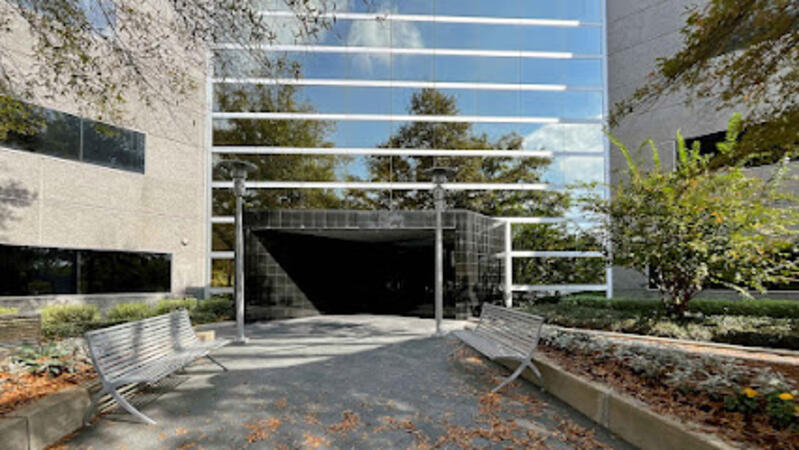
The venue sits in the Chase Corporate Center just off Highway 31 near I‑459 and Highway 280, within a serene, landscaped corporate campus. Visitors arriving by car benefit from plentiful free parking on-site and adjoining garages. From Birmingham–Shuttlesworth International Airport (BHM), taxis or rideshares take around 15–20 minutes via I‑459 North and Highway 280. Public transit riders can use MAX bus routes stopping close to the corporate park, though most attendees prefer driving or rideshare. The tranquil campus setting offers easy access to nearby gyms, retail, and restaurants for break or post-session gatherings.
Birmingham, AL - Regus at One Perimeter Park
1 Perimeter Park South, Birmingham, United States, 35243
The venue is located in the Perimeter Park business complex off I‑459 near Highway 280, offering easy access by car with ample on-site parking. Visitors arriving by air from Birmingham‑Shuttlesworth International Airport (BHM), about 15 miles away, can expect a traditional taxi or rideshare ride of approximately 20–25 minutes via I‑459 South and Highway 280. Public transit options include nearby Jefferson County Transit buses that run along Valleydale Road, with stops within a few blocks of Perimeter Park, making it reasonably accessible without a car.
Huntsville, AL – Regus at Cummings Research Park
7027 Old Madison Pike NW, Suite 108, Huntsville, United States, 35806
The venue is located in Cummings Research Park, a premier business and technology hub with easy access by car via I‑565 or U.S. Highway 72, and plenty of on-site parking available. From Huntsville International Airport (HSV), approximately 10 miles southeast, taxis or rideshares take around 15–20 minutes heading northwest on U.S. 72. Those relying on public transit can take Rocket City Transit route 22, which stops near the park entrance, offering a convenient option for attendees without a car.
Montgomery, AL - Regus at RSA Dexter Avenue
445 Dexter Avenue, Suite 4050, Montgomery, United States, 36104
The venue is located in the heart of downtown Montgomery on Dexter Avenue, easily accessible by car via I‑65 and US‑80; nearby surface and garage parking are available in the RSA building complex. From Montgomery Regional Airport (MGM), about 9 miles southeast of downtown, a taxi or rideshare typically takes 15–20 minutes via I‑65 North and I‑85 North. Public transit is available via the Montgomery Transit System (MTS) with bus routes running along Court Street and Commerce Street, both within a few blocks’ walk of the venue.
Angular 20 is a robust front-end framework designed for building scalable, high-performance web applications.
This instructor-led, live training (available online or on-site) is tailored for advanced-level developers who aim to develop sophisticated, enterprise-grade Angular 20 applications for government use.
Upon completing this course, participants will gain the skills to:
Implement advanced state management using modern Angular patterns.
Optimize rendering and performance across large-scale applications.
Architect reusable, maintainable, and scalable Angular 20 modules.
Integrate advanced routing, signals, and reactive patterns effectively.
Format of the Course
Expert-led lectures and collaborative discussions.
Extensive hands-on coding exercises.
Practical implementation in a real-world development environment.
Course Customization Options
Custom training options are available upon request for teams with specialized requirements.
Angular is a modern, TypeScript-based framework designed for building scalable and high-performance web applications.
This instructor-led, live training (available online or onsite) is aimed at beginner to intermediate-level developers who wish to build, structure, and deploy applications using Angular 20.
After completing this course, participants will be able to:
- Create Angular 20 applications following best practices.
- Work with components, templates, and standalone APIs.
- Implement routing, state management, and HTTP communication.
- Build production-ready applications with optimized performance.
**Format of the Course**
- Instructor-guided demonstrations and discussions.
- Extensive hands-on exercises and coding practice.
- Real-world implementation in an interactive development environment.
**Course Customization Options for Government**
If you require a tailored version of this course, please reach out to arrange a custom program designed to meet specific needs and align with public sector workflows.
This instructor-led, live training in Alabama (online or onsite) is designed for intermediate-level web developers who wish to build, test, and deploy Angular 19 applications using the latest tooling, component architecture, and best practices.
By the end of this training, participants will be able to:
Set up and configure an Angular 19 development environment using the Angular CLI for government projects.
Create components, directives, services, and reactive forms to enhance application functionality.
Implement routing, HTTP client, and state management with RxJS and signals for efficient data handling.
Build, test, and deploy production-ready Angular applications that meet the highest standards of performance and security.
This instructor-led, live training in Alabama (online or onsite) is aimed at beginner to intermediate level developers who wish to build dynamic, modern web applications using Angular 18.
By the end of this training, participants will be able to:
- Set up and configure Angular 18 projects.
- Utilize Angular 18's new features and enhancements, including optimized TypeScript 4.7 capabilities and zoneless change detection.
- Develop robust, scalable applications using Angular 18.
- Implement best practices for code organization and architecture.
- Integrate Angular applications with RESTful APIs.
This training is designed to align with the needs of developers working on projects for government, ensuring that they are equipped with the latest tools and techniques to enhance public sector workflows and governance.
This instructor-led, live training in Alabama (online or onsite) is aimed at beginner to intermediate developers who wish to leverage the latest features of Angular 17 for building, testing, and deploying web applications for government use.
By the end of this training, participants will be able to:
Set up a development environment that includes Node.js, Visual Studio Code, and Angular CLI for efficient coding practices in the public sector.
Create a basic Angular 17 application that displays data and handles user interactions, aligning with government standards for web applications.
Utilize components, directives, pipes, services, and modules to organize and reuse code effectively within government projects.
Implement data binding, dependency injection, routing, forms, and HTTP client functionalities to ensure seamless communication with backend services in government systems.
Apply the new template control block syntax to simplify common tasks such as conditional rendering, looping, and handling empty collections for enhanced user experience in government applications.
Leverage the new @defer control block to enable lazy-loading of content and its dependencies, optimizing performance for government websites.
Customize view transitions using the new view transitions API to enhance the user interface and experience for government users.
Debug and test Angular 17 applications using tools such as Chrome DevTools, Jest, Karma, and Protractor to ensure robust and reliable government web applications.
This instructor-led, live training in [location] (online or onsite) is designed for government developers at the beginner to intermediate level who wish to leverage the latest features of Angular 16 to build, test, and deploy web applications for government use.
By the end of this training, participants will be able to:
- Set up a development environment that includes Node.js, Visual Studio Code, and Angular CLI.
- Create a basic Angular 16 application that displays data and handles user interactions.
- Utilize components, directives, pipes, services, and modules to organize and reuse code effectively.
- Implement data binding, dependency injection, routing, forms, and HTTP client functionalities to communicate with backend services.
- Debug and test Angular 16 applications using tools such as Chrome DevTools, Jest, Karma, and Protractor.
This instructor-led, live training in Alabama (online or onsite) is designed for experienced developers and programmers who aim to enhance their Angular 15 skills and utilize the advanced features of Angular 15 to build, test, and deploy high-performance web applications for government use.
By the end of this training, participants will be able to:
- Employ advanced techniques for constructing Angular 15 applications.
- Comprehend best practices for scaling and maintaining large-scale Angular 15 applications in a public sector environment.
- Develop efficient applications using the advanced features of Angular 15.
- Troubleshoot and optimize Angular 15 applications to meet government standards.
- Explore advanced topics such as server-side rendering, lazy loading, and more.
This instructor-led, live training (available online or onsite) is designed for experienced testers and developers who wish to delve deeper into Angular testing.
By the end of this training, participants will be able to:
- Gain a comprehensive understanding of Angular testing.
- Conduct advanced component and integration testing.
- Execute end-to-end testing using Cypress and visual regression techniques.
This training aligns with best practices for government agencies, ensuring that participants are equipped with the skills needed to enhance software quality and reliability for government applications.
This instructor-led, live training in Alabama (online or onsite) is aimed at developers and programmers who wish to utilize the latest features of Angular 14 to build, test, and deploy web applications for government use.
By the end of this training, participants will be able to:
- Install and configure Angular 14.
- Develop applications using Angular 14's component-based architecture.
- Utilize Angular 14's built-in directives, services, and pipes.
- Communicate with a RESTful API using Angular 14's HttpClient module.
- Implement authentication and authorization in Angular 14 applications for government systems.
- Test and debug Angular 14 applications to ensure reliability and security.
This instructor-led, live training (online or onsite) is aimed at experienced developers and programmers who wish to enhance their Angular 14 skills and leverage the advanced features of Angular 14 to build, test, and deploy high-performance web applications for government use.
By the end of this training, participants will be able to:
- Construct advanced applications using Angular 14.
- Understand and implement the more complex features and techniques of Angular 14.
- Develop maintainable and scalable code in Angular 14.
- Create custom libraries and modules to extend the functionality of Angular 14.
This instructor-led, live training in Alabama (online or onsite) is designed for developers and programmers who wish to leverage the latest features of Angular 15 to build, test, and deploy web applications for government use.
By the end of this training, participants will be able to:
Install and configure Angular 15 in a secure and efficient manner.
Develop robust applications using Angular 15's component-based architecture.
Leverage Angular 15's built-in directives, services, and pipes for enhanced functionality.
Communicate with RESTful APIs using Angular 15's HttpClient module to ensure data integrity.
Implement authentication and authorization in Angular 15 applications to meet stringent security requirements.
Test and debug Angular 15 applications to ensure reliability and performance.
Understand the new features of Angular 15, such as the Image Directive, CDK List for Building UI Components, Boilerplate Reduction in Guards, and Improvements in esbuild for Faster Builds, to optimize development workflows for government projects.
This instructor-led, live training in [location] (online or onsite) is designed for experienced developers and programmers who aim to harness the advanced features of Angular 13 to build, test, and deploy high-performance web applications for government use.
By the end of this training, participants will be able to:
- Effectively utilize TypeScript and Angular CLI to develop complex Angular 13 applications.
- Create, test, and deploy Angular 13 web applications optimized for performance.
- Develop web components to enhance the reusability and maintainability of Angular 13 applications.
This instructor-led, live training in Alabama (online or onsite) is aimed at developers who wish to delve into the advanced features of Angular 12 for government applications, including custom components, directives, advanced data binding, lazy loading, and more.
By the end of this training, participants will be able to:
- Develop Angular 12 applications using advanced techniques and concepts.
- Implement custom components and directives.
- Explore advanced data binding methods.
- Apply lazy loading and dynamic imports.
- Optimize the performance of an Angular 12 application for government use.
This instructor-led, live training in Alabama (online or onsite) is designed for government programmers who wish to utilize the latest features of Angular 13 to develop, test, and deploy web applications.
By the end of this training, participants will be able to:
- Use TypeScript and Angular CLI to create Angular 13 applications.
- Develop, test, and deploy Angular 13 web applications for government use.
- Create reusable web components that can be integrated into any web application or page.
This instructor-led, live training in Alabama (online or onsite) is aimed at programmers who wish to create, test, and deploy an Angular application using the latest features in Angular 12 for government projects.
By the end of this training, participants will be able to:
- Develop Angular 12 applications using TypeScript and the Angular CLI.
- Create loosely coupled web components that can be integrated into any web application or HTML page.
- Test, debug, and deploy an Angular 12 application in a secure and efficient manner.
- Organize Angular 12 projects following best practices for government workflows.
This instructor-led, live training (online or onsite) is designed for developers who wish to utilize Angular 11's advanced developer tools to design, build, test, and deploy applications. The course aims to enhance the skills of government personnel in developing robust and efficient web solutions.
By the end of this training, participants will be able to:
- Set up the necessary development environment to create advanced Angular 11 applications for government use.
- Build complex applications using parent-child structures and nested components.
- Utilize RxJS and observables to manage real-time events and asynchronous programming effectively.
- Develop scalable form and data models to handle user inputs and data-entry tasks efficiently.
- Implement advanced dependency injection, routing, and security best practices in Angular 11.
In this instructor-led, live training in Alabama (online or onsite), participants will learn how to create, test, and deploy an Angular application using the latest features in Angular 11 for government projects.
By the end of this training, participants will be able to:
Develop Angular 11 applications using TypeScript and the Angular CLI for government use cases.
Create loosely coupled web components that can be integrated into any HTML page for government websites.
Test, debug, and deploy an Angular 11 application in alignment with public sector workflows and governance.
Organize Angular 11 projects following best practices to ensure accountability and efficiency for government initiatives.
In this instructor-led, live training in [location] (online or onsite), participants will learn how to create, test, and deploy an Angular application using the latest features in Angular 10.
By the end of this training, participants will be able to:
- Develop Angular 10 applications using TypeScript and the Angular CLI.
- Create loosely coupled web components that can be integrated into any HTML page.
- Connect these components with services, modules, and directives.
- Consume REST web services and WebSocket data within an Angular 10 application.
- Build custom validation using Reactive Forms.
- Test, debug, and deploy an Angular 10 application.
- Organize Angular 10 projects following best practices for government use.
In this instructor-led, live training, participants will learn how to develop and maintain tests for Angular applications.
By the end of this training, participants will be able to:
Determine the most suitable testing strategy for an Angular application
Conduct unit testing, component testing, A/B testing, and end-to-end testing on an Angular application
Select the appropriate tools for testing: Jasmine, Karma, Protractor, Mocha, etc.
Compose tests using Protractor and Jasmine
Execute and debug tests with Karma and Protractor
Create a sustainable test suite
Implement best practices for unit testing in Angular
Format of the Course
A combination of lectures, discussions, exercises, and extensive hands-on practice
Note
Angular is known by various names and versions, including Angular.js, AngularJS, AngularJS 1, Angular 1, Angular 2, etc. To tailor the training to a specific version, please contact us to arrange.
This training is designed to enhance the testing capabilities of developers and ensure robust, reliable applications for government use.
Reactive programming is an asynchronous programming paradigm that focuses on data streams and the propagation of data by establishing a defined dependency between the underlying execution models and the emitted data streams from one component to another. Many inefficiencies in Angular application design when building asynchronous user interfaces can be mitigated by leveraging the reactive patterns provided by the RxJS library.
In this instructor-led, live training, participants will learn how to integrate Observable patterns into their Angular application designs as they work through a series of scenarios that highlight common Angular design challenges and demonstrate the benefits of reactive programming approaches.
By the end of this training, participants will be able to:
Understand the reactive programming paradigm and the RxJS library for government applications.
Develop UI-intensive Angular applications with scalability, flexibility, and responsiveness using reactive programming patterns.
Format of the Course
Interactive lecture and discussion.
Extensive exercises and practice sessions.
Hands-on implementation in a live-lab environment.
Course Customization Options
To request a customized training for this course, please contact us to arrange.
This instructor-led, live training in [location] (online or onsite) is designed for web developers who wish to utilize Angular and Spring Boot to develop comprehensive full-stack applications for government.
By the end of this training, participants will be able to:
- Develop a full-stack application using Angular and Spring Boot.
- Build backend applications with Spring Boot.
- Create frontend applications with Angular.
- Use Spring Security to configure authentication for a full-stack application.
This hands-on course is designed for individuals seeking to develop websites using AngularJS. Throughout the course, participants will use the latest stable version of AngularJS. If a pre-release version is desired, it must be noted in the remarks section of the booking form. The use of older versions requires prior approval before enrollment. This training is tailored to meet the needs of developers and professionals for government and other sectors who are looking to enhance their web development skills.
Angular JS is a JavaScript library designed for rapid application development.
Audience
Developers
Programmers
JavaScript Architects
Objectives
To transition the mindset from procedural or object-oriented programming to the Angular approach.
To enable participants to use AngularJS for creating Single Page Applications.
Format of the Course
40% lectures, 60% hands-on labs
This course is tailored to meet the needs of professionals in various sectors, including those working for government agencies, ensuring that participants gain practical skills aligned with modern development practices.
This instructor-led, live training (online or onsite) is aimed at developers who wish to reduce the cost and complexity of managing state in large data-driven web applications for government.
By the end of this training, participants will be able to:
Decrease the complexity of very large projects where managing state is challenging to maintain.
Optimize an application's state processes.
Reduce the time required to develop complex data-oriented web applications.
Format of the Course
Interactive lecture and discussion.
Extensive exercises and practice sessions.
Hands-on implementation in a live-lab environment.
Course Customization Options
To request a customized training for this course, please contact us to arrange.
For more information about NgRx, visit: https://ngrx.io/
In this instructor-led, live training in [location] (onsite or remote), participants will learn how to create, test, and deploy an Angular application using the latest features in Angular 6.
By the end of this training, participants will be able to:
- Develop Angular 6 applications using Angular CLI.
- Create web components that can be integrated into any HTML page.
- Consume REST web services and WebSocket data within an Angular 6 application.
- Implement animations using the latest animation features in Angular 6.
- Test, debug, and deploy an Angular 6 application.
- Organize Angular 6 projects following best practices for government use.
This instructor-led, live training in Alabama (online or onsite) is aimed at beginner to intermediate level developers who wish to build dynamic, modern web applications using Angular 2.
By the end of this training, participants will be able to:
- Set up and configure Angular 2 projects for government use.
- Utilize Angular 2's features and improvements effectively.
- Develop robust, scalable applications using Angular 2.
- Implement best practices for code organization and architecture.
- Integrate Angular applications with RESTful APIs.
Read more...
Last Updated:
Testimonials (8)
all the important part were covered
carlo capuano - ITER Organization
Course - Angular 18
The trainer’s attitude – helping you feel comfortable, making jokes to lighten the mood, and answering everyone’s questions.
Ana Fedeles
Course - Angular 20
I truly appreciated how thorough this course was! It covered so many aspects in depth, making the learning experience incredibly enriching.
Andrei
Course - NgRx
I mostly liked the training flow; she went through the topic, and at the end of the topic, she had well-defined practice sessions for us. She was able to guide us promptly with the issues we faced in the practice sessions.
Rabin Byanjankar - Lument
Course - Angular 17
In only three days were covered all the subjects from training material, even extra.
Ovidiu
Course - Angular 2 Fundamentals
- I really like the course and the Trainor is very accommodating and has a great knowledge on the topic. It just that not all topics are discussed in the 4-day training.
Allan - Tribal Software Philippines Inc
Course - Angular 14
Explaining while coding - approach of showing in practice wrong behavior/pattern first and then showing how it can be improved and how it should look like in better way.
Online Angular training in Alabama, Angular training courses in Alabama, Weekend Angular courses in Alabama, Evening Angular training in Alabama, Angular instructor-led in Alabama, Angular boot camp in Alabama, Angular coaching in Alabama, Weekend Angular training in Alabama, Angular on-site in Alabama, Angular classes in Alabama, Evening Angular courses in Alabama, Angular one on one training in Alabama, Angular private courses in Alabama, Angular instructor in Alabama, Angular trainer in Alabama, Angular instructor-led in Alabama, Online Angular training in Alabama