NobleProg delivers specialized Amazon Web Services (AWS) training courses in Georgia, catering to professionals across the US Florida sales area. These sessions are designed to enhance technical expertise and leadership skills tailored to the local industry demands. By leveraging our extensive network, participants gain access to high-quality instruction and practical learning experiences within the region.
Delivered either remotely or on-site, instructor-led AWS (Amazon Web Services) courses utilize interactive, hands-on exercises to illustrate foundational and advanced technical principles. These training programs are designed specifically for government entities.
AWS instruction is accessible via "online live training" or "onsite live training." The online modality, also referred to as remote live training, is facilitated through an interactive remote desktop connection. On-site sessions may be conducted locally at client facilities in Georgia or at NobleProg’s corporate training centers in Georgia.
NobleProg -- Your Local Training Provider
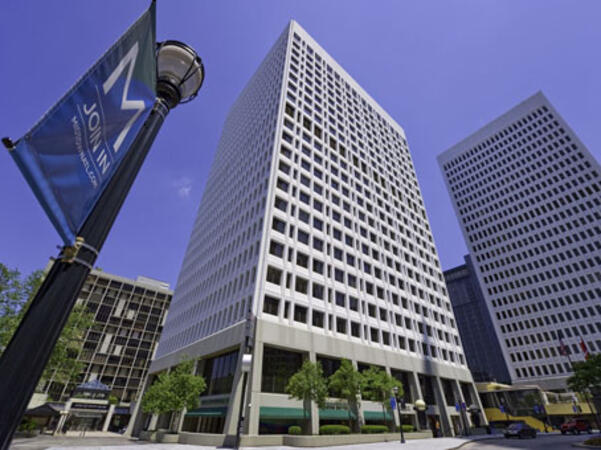
Atlanta, GA – Regus at Colony Squar
1201 Peachtree Street NE, Suite 200, Atlanta, United States, 30361
The venue is centrally located in Midtown Atlanta within the prominent Colony Square complex at 1201 Peachtree Street NE, easily accessed by car via I‑75/85 or GA‑400, with several parking garages nearby. From Hartsfield–Jackson Atlanta International Airport (ATL), around 15 miles south, a taxi or rideshare typically takes 20–30 minutes north along I‑75/85 N. Public transit users can take MARTA Rail to the Arts Center or Midtown stations (0.3–0.5 miles away) and walk easily, and numerous MARTA bus routes along Peachtree Street stop directly outside the entrance.
Atlanta, GA – The Proscenium
1170 Peachtree Street NE, Atlanta, United States, 30309
The venue is located in the heart of Midtown Atlanta in the Proscenium high–rise at 1170 Peachtree Street NE, easily accessible by car via I‑75/85 and GA‑400 with several parking garages nearby. Visitors arriving from Hartsfield–Jackson Atlanta International Airport (ATL), about 15 miles south, can expect a taxi or rideshare ride taking 20–30 minutes via I‑75/85 North. Public transit is seamless with MARTA Rail service; the Arts Center and Midtown stations are within walking distance (approximately 0.3–0.4 miles), and multiple MARTA bus routes also serve Peachtree Street.
Decatur, GA – Regus at One West Court Square
One West Court Square, Suite 750, Decatur, United States, 30030
The venue is located in the heart of downtown Decatur within One West Court Square, easily reached by car via I‑20 and I‑285, with several public parking decks directly adjacent. Travelers from Hartsfield–Jackson Atlanta International Airport (ATL), approximately 17 miles southwest, can expect a taxi or rideshare ride of around 25–30 minutes via I‑20 East. Public transit is particularly convenient: MARTA rail users can disembark at Decatur Station (about 0.15 miles away) and walk a few minutes to the building entrance. Local bus routes also serve Trinity Place and Swanton Way, putting the center within easy reach.
Atlanta, GA – Regus at One Hartsfield
100 Hartsfield Centre Parkway, Suite 500, Atlanta, United States, 30354
The venue is located in the One Hartsfield Center office building, adjacent to Hartsfield–Jackson Atlanta International Airport, easily reached by car via I‑75/I‑85 or GA‑138, with abundant on-site parking. Visitors arriving from ATL airport can walk or take a shuttle to the building, or opt for a quick 2–3‑minute taxi or rideshare ride. Public transit users can board MARTA from the Airport Station and ride one stop to College Park Station, then catch a connecting shuttle or enjoy a brief walk of about half a mile.
Atlanta, GA – Regus at Peachtree
260 Peachtree Street NW, Suite 2200, Atlanta, United States, 30303
The venue is situated in the iconic Coastal States Building at 260 Peachtree Street in downtown Atlanta, accessible by car via I‑75/85 or I‑20 with convenient parking garages nearby. From Hartsfield–Jackson Atlanta International Airport (ATL), about 12 miles south, a taxi or rideshare along I‑75/85 North takes approximately 15–20 minutes. For public transit, MARTA rail users can disembark at Five Points Station and walk 0.5 miles northeast, or exit at Peachtree Center Station and walk two blocks north—both routes offering easy access.
Augusta, GA – At Broad Street
823 Broad Street, Augusta, United States, 3090
The venue is located in the heart of downtown Augusta on Broad Street, easily accessible by car via I‑20 with several public parking garages nearby. From Augusta Regional Airport (AGS), about 9 miles west, taxis or rideshares typically take 15–20 minutes via I‑20. Public transit is available through Augusta Public Transit buses with routes along Broad Street, stopping within a few blocks of the venue, offering a convenient option for attendees without a car.
Savannah, GA – Regus at Bull Street
100 Bull St Downtown, Suite 200, Savannah, United States, 31401
The venue is located in the historic downtown area on Bull Street in the Altmayer Building, easily accessible by car via I‑16 and U.S. 17, with several public garages nearby. From Savannah/Hilton Head International Airport (SAV), about 12 miles west, taxis or rideshares typically take 15–20 minutes via U.S. 17 South. Public transit is available via Chatham Area Transit (CAT) buses, with frequent service along Bull and Broughton Streets; Johnson Square Station is just a couple minutes’ walk from the venue.
This instructor-led, live training in Georgia (available online or onsite) targets intermediate-level IT professionals aiming to harness AWS resources for the efficient development and deployment of AI models.
By the conclusion of this session, participants will be able to:
Comprehend the range of AI/ML services offered by AWS.
Configure and administer AI/ML environments within the AWS platform.
Demonstrate hands-on capability in constructing, training, and releasing AI models via Amazon SageMaker.
Implement specific AWS AI services tailored to distinct operational scenarios.
This workshop facilitates candidate preparation for the AWS Certified Solutions Architect examination by correlating assessment criteria with practical expertise and applied scenarios.
Delivered by certified instructors in a live environment (remote or on-site), this training targets intermediate to advanced cloud professionals seeking to refine architect-level competencies, practice examination-style assessments, and establish confidence for certification for government roles.
Upon completion, participants will demonstrate the ability to:
Correlate AWS services and architectural patterns with specific examination domains and learning objectives.
Construct resilient, high-performance, secure, and fiscally efficient architectures on AWS.
Apply Well-Architected Framework best practices to real-world operational contexts.
Analyze and resolve examination-style multiple-choice and scenario-based questions using proven strategic methods.
Identify individual knowledge deficiencies and formulate a targeted preparation strategy for the certification assessment.
Instructional Format
Interactive instruction mapped to the official examination blueprint and competency requirements.
Guided laboratory demonstrations and structured architectural design exercises.
Time-constrained practice assessments, detailed question reviews, and strategic test preparation techniques.
Curriculum Customization
To initiate a customized training program for this curriculum, please engage with our team to discuss specific requirements.
Cloud migration to AWS involves the systematic evaluation, strategic planning, and secure transfer of applications, data assets, and infrastructure from on-premises environments or other cloud providers into AWS, utilizing established tools, architectural patterns, and specialized migration services.
This instructor-led, live training session (available online or on-site) is designed for mid-career IT professionals and cloud practitioners seeking to plan and execute secure, fiscally responsible migrations to AWS with minimal disruption to business continuity.
Upon completion of this training, participants will be equipped to:
Evaluate application portfolios and formulate structured migration strategies and sequencing waves.
Utilize AWS discovery tools and migration services, including MGN and DMS, to execute lift-and-shift and data migration tasks.
Architect network, security, and data transfer frameworks to support compliant migration activities.
Execute test cutovers, validate migrated workloads against performance standards, and implement robust rollback plans.
Optimize migrated workloads for cost efficiency, performance reliability, and operational readiness for government use.
Training Delivery Methodology
Interactive instruction and facilitated discussion.
Instructor-led practical demonstrations using the AWS console and command-line interface (CLI).
Hands-on laboratory exercises and a comprehensive capstone migration scenario.
Customization Options for Specific Agencies
To arrange a customized training curriculum tailored to specific agency requirements, please contact the provider to schedule details.
AWS Migration Essentials is a practical instructional program covering the fundamental procedures, tools, and best practices for migrating on-premises applications, server infrastructure, and databases to the AWS environment.
This instructor-led, live training (available online or on-site) is designed for intermediate-level IT professionals and cloud practitioners seeking to assess, plan, execute, and validate migrations to AWS with minimal disruption to business operations for government entities.
Upon completion of this training, participants will possess the competence to:
Define a strategic migration approach and evaluate workloads for cloud readiness utilizing discovery tools and established migration frameworks.
Employ AWS Application Migration Service (MGN) to perform lift-and-shift server migrations with a focus on safety and efficiency.
Plan and execute database migrations using AWS Database Migration Service while minimizing operational downtime.
Design network, security, and data transfer architectures to support migration and cutover activities in a compliant manner.
Validate migrated workloads, implement robust rollback plans, and apply post-migration optimization and cost control measures.
Instructional Format
Interactive lecture sessions and facilitated discussions.
Instructor-led demonstrations utilizing the AWS console and Command Line Interface (CLI).
Hands-on laboratory exercises and a capstone migration scenario.
Customization Options for Training
To request a customized training program for this course for government use, please contact the provider to arrange specific requirements.
AWS provides a comprehensive cloud infrastructure supporting compute, storage, networking, monitoring, and automation capabilities that facilitate robust, scalable, and resilient operational frameworks for public sector needs.
This instructor-led, live training program, available online or onsite, is designed for intermediate to advanced operations and platform engineers tasked with managing, monitoring, automating, and securing production workloads on AWS for government use cases.
Upon completion of this training, participants will be equipped to:
Effectively operate and monitor AWS workloads by leveraging CloudWatch, CloudTrail, and established observability best practices.
Automate infrastructure provisioning and configuration using Infrastructure-as-Code tools such as Terraform and AWS CloudFormation.
Design and manage CI/CD pipelines, deployment strategies, and release automation for secure cloud services.
Amazon Web Services (AWS) constitutes a comprehensive cloud infrastructure platform providing compute, storage, database, networking, analytics, and managed services that facilitate the development of scalable and fiscally efficient solutions.
This instructor-led live training, available in online or on-site formats, is designed for business and technical stakeholders ranging from beginner to intermediate levels. It focuses on understanding core AWS services, cloud value propositions, fiscal models, security fundamentals, and the alignment of AWS capabilities with organizational strategic objectives.
Upon completion of this training, participants will be able to:
Articulate the functions of core AWS services and standard cloud architectures.
Evaluate the operational benefits and fiscal implications of migrating workloads to AWS.
Select appropriate AWS services to address common operational challenges in compute, storage, databases, networking, and analytics.
Identify foundational security, compliance, and governance requirements within the AWS environment.
Formulate a basic migration or cloud adoption strategy incorporating high-level fiscal and risk assessments.
Instructional Methodology
Interactive instructional lectures and facilitated discussions.
Instructor-guided demonstrations within the AWS console.
Collaborative exercises and scenario-based practical workshops.
Customization of Training Content
To initiate a customized training program tailored to specific needs for this course, please contact us to arrange details.
AWS serves as Amazon’s cloud computing platform, offering a comprehensive suite of services for computing, storage, networking, and application integration.
This instructor-led, live training (available online or on-site) is designed for entry-level cloud professionals seeking to master AWS fundamentals through hands-on practice.
Upon completion of this training, participants will be able to:
Comprehend cloud computing concepts and AWS global infrastructure.
Deploy and configure compute, storage, and networking services within AWS.
Implement IAM policies and security best practices.
Integrate services and construct a simple cloud-based web application.
Course Format
Interactive lectures and discussions.
Extensive exercises and practice opportunities.
Hands-on implementation in a live lab environment.
Course Customization Options
To request a customized training tailored for government, please contact us to arrange.
This instructor-led, live instructional program in Georgia (delivered online or on-site) is designed for senior cloud professionals seeking to master infrastructure management and automation using AWS Cloud9 and AWS CDK.
Upon completion of this training, participants will be capable of:
Configuring and managing AWS Cloud9 for effective infrastructure oversight.
Applying AWS CDK methodologies to automate the provisioning of cloud resources.
Designing robust and scalable cloud infrastructure architectures.
Optimizing resource allocation to enhance operational performance and reduce expenditure.
Implementing sophisticated security and compliance frameworks within AWS environments.
This instructor-led, live instruction in Georgia (online or onsite) targets intermediate-level software professionals aiming to master the construction and deployment of microservices using AWS Cloud9 and allied AWS services.
Upon completion of this training, participants will be capable of:
Evaluating the operational advantages of microservices architecture.
Establishing a microservices development environment on AWS Cloud9.
Implementing, testing, and releasing microservices through Docker and AWS services.
Synchronizing AWS Lambda, ECS, and API Gateway with microservices for government use cases.
Applying DevOps principles to manage microservices deployments.
This instructor-led, live training in Georgia (online or onsite) is directed at intermediate-level data scientists and analysts who intend to utilize AWS Cloud9 for streamlined data science workflows.
Upon completion of this training, participants will be capable of:
Establishing a data science environment in AWS Cloud9.
Executing data analysis using Python, R, and Jupyter Notebook in Cloud9.
Integrating AWS Cloud9 with AWS data services such as S3, RDS, and Redshift.
Leveraging AWS Cloud9 for the development and deployment of machine learning models.
Optimizing cloud-based workflows for data analysis and processing.
Discover AWS fundamentals in this instructor-led training in Georgia. Learn about core services, security, and pricing models through interactive lectures and hands-on exercises. Build a solid conceptual foundation to prepare for certification and real-world cloud architecture tasks for government.
This instructor-led, live training in Georgia (online or onsite) is aimed at intermediate-level Python developers who wish to enhance their Python development experience using AWS Cloud9.
By the end of this training, participants will be able to:
Set up and configure AWS Cloud9 for Python development.
Understand the AWS Cloud9 IDE interface and features.
Write, debug, and deploy Python applications in AWS Cloud9.
Collaborate with other developers using the AWS Cloud9 platform.
Integrate AWS Cloud9 with other AWS services for advanced deployments.
This instructor-led, live training in Georgia (delivered online or onsite) is intended for introductory-level developers who require proficiency in setting up and utilizing AWS Cloud9 for cloud-based projects. This preparation is critical for maintaining technological readiness for government missions.
Upon completion of this training, participants will be capable of:
Comprehending the AWS Cloud9 environment and its constituent components.
Establishing a personalized AWS Cloud9 development workspace.
Developing and executing basic applications within AWS Cloud9.
Utilizing the collaborative capabilities of AWS Cloud9.
This instructor-led, live training in Georgia (available online or onsite) is intended for system administrators and IT professionals at beginner to intermediate levels who aim to obtain practical experience in managing AWS cloud services and preparing for the AWS Certified SysOps Administrator – Associate examination.
Upon completion of this training, participants will be prepared to:
Establish and configure AWS services and resources with secure protocols.
Administer user identities, permissions, and access controls for AWS resources.
Architect and deploy scalable, highly available, and fault-tolerant systems within AWS.
Implement and oversee data ingress and egress to and from AWS environments.
Optimize the utilization of AWS services to guarantee operational efficiency and fiscal responsibility.
This instructor-led, live training in Georgia (online or onsite) is designed for IT professionals from beginner to intermediate levels who aim to conduct AWS security audits with precision and efficiency.
Upon completion of this training, participants will be equipped to:
Comprehend the fundamental concepts and strategic benefits of AWS security auditing.
Leverage AWS tools and services to execute comprehensive security audits.
Analyze and interpret audit outcomes and associated recommendations.
Apply audit findings and remediate identified security issues.
This instructor-led, live training in Georgia (online or onsite) is tailored for intermediate to advanced full-stack developers aiming to optimize development workflows with AWS Cloud9 for government.
Following the completion of this training, participants will be able to:
Configure AWS Cloud9 for full-stack development purposes.
Develop and debug front-end applications using Cloud9.
Build and deploy back-end services using AWS Cloud9.
Integrate Cloud9 with AWS services for advanced deployment tasks.
Collaborate with colleagues in a cloud-based development setting.
This instructor-led, live training in Georgia (online or onsite) is aimed at advanced-level professionals who wish to deepen their understanding of DevOps practices and streamline development processes using AWS Cloud9.
By the end of this training, participants will be able to:
Set up and configure AWS Cloud9 for DevOps workflows.
Implement continuous integration and continuous delivery (CI/CD) pipelines.
Automate testing, monitoring, and deployment processes using AWS Cloud9.
Integrate AWS services such as Lambda, EC2, and S3 into DevOps workflows.
Utilize source control systems like GitHub or GitLab within AWS Cloud9.
This instructor-led, live training in Georgia (online or onsite) is targeted at intermediate-level professionals seeking to effectively build, deploy, and maintain serverless applications on AWS Cloud9 and AWS Lambda.
Upon completion of this training, participants will be capable of:
Understanding the fundamental concepts of serverless architecture.
Configuring AWS Cloud9 for serverless application development.
Developing, testing, and deploying serverless applications using AWS Lambda.
Integrating AWS Lambda with other AWS services such as API Gateway and S3.
Optimizing serverless applications for performance and cost efficiency.
AWS Advanced Architecture encompasses the design, configuration, and deployment of enterprise-grade infrastructure and applications on the AWS platform.
This instructor-led, live training program (available online or on-site) is designed for cloud engineers seeking to master and implement complex AWS architectural components. The curriculum addresses topics parallel to those found in AWS Certified Solutions Architect (Professional) level curricula. However, this course is not intended for exam preparation. It is a practical, hands-on program that demonstrates how to execute, within a live lab environment, the configurations, implementations, and deployments required of an AWS Solutions Architect for government operations.
Upon completion of this training, participants will be able to:
Design complex cloud solutions on AWS.
Deploy software applications on AWS that are scalable, highly available, and fault-tolerant.
Integrate the most appropriate AWS services with an application for government requirements.
Migrate complex software applications to AWS.
Apply best practices to the design, implementation, optimization, and deployment of infrastructure and applications on AWS.
Course Format
Interactive lecture and discussion.
Extensive exercises and practice sessions.
Hands-on implementation in a live-lab environment.
Course Customization Options
To request a customized training for this course, please contact us to arrange details.
This on-demand AWS Architecture certification training program is designed to equip professionals with the skills necessary to implement cloud-based solutions using Amazon Web Services. The curriculum utilizes real-world scenarios to provide participants with a comprehensive understanding of practical applications, including cloud computing fundamentals, AWS core services, Infrastructure as a Service (IaaS), Platform as a Service (PaaS), Software as a Service (SaaS), and private cloud environments. Upon completion, participants will possess the competency to deploy and manage their own cloud implementations, utilizing resources such as EC2 instances and S3 buckets for government operations.
This four-day curriculum is designed to establish proficiency for government use cases in the following areas:
A comprehensive understanding of core AWS services, operational applications, and fundamental architecture best practices.
Competence in the design, development, and deployment of cloud-based solutions utilizing AWS infrastructure.
Practical experience in developing and maintaining applications integrated with Amazon Simple Storage Service, Amazon DynamoDB, Amazon Simple Queue Service, Amazon Simple Notification Service, Amazon Simple Workflow Service, AWS Elastic Beanstalk, and AWS CloudFormation.
Target Audience:
Cloud engineers, center of excellence personnel, Windows Server administrators, Unix/Linux system administrators, storage specialists, network administrators, and virtualization professionals.
Upon successful completion of this training program, participants will be equipped to deploy and manage AWS services from a developer perspective, ensuring alignment with public sector operational standards.
This instructor-led, live training in Georgia (delivered on-site or remotely) is designed for engineering professionals seeking to deploy and manage IoT devices on the AWS cloud platform for government use.
Upon completion, participants will be equipped to develop an IoT platform encompassing the deployment and management of backend infrastructure, gateways, and devices within the AWS environment.
This instructor-led, live training in Georgia (onsite or remote) is designed for developers seeking to utilize AWS Lambda to build and deploy cloud services for government. It removes the necessity of managing the underlying execution environment, such as servers, virtual machines, containers, availability, scalability, and storage.
Upon completion of this training, participants will be capable of:
Configuring AWS Lambda to execute functions.
Understanding Functions as a Service (FaaS) and the advantages of serverless development.
Building, uploading, and executing AWS Lambda functions.
Integrating Lambda functions with diverse event sources.
Packaging, deploying, monitoring, and troubleshooting Lambda-based applications.
This instructor-led, live training in Georgia provides a comprehensive overview of Amazon Web Services (AWS) products, services, and solutions. It is designed for individuals and teams for government who are:
assessing or preparing for the initial deployment of IT infrastructure on AWS.
assessing or preparing to migrate existing IT infrastructure to the AWS public cloud.
Upon completion of this training, participants will possess a thorough understanding of the key components comprising Amazon’s cloud services. The practical exercises, discussions, and in-class implementations will equip participants with the necessary experience and feedback to confidently execute live deployments to AWS.
This instructor-led live session in Georgia (conducted online or on-site) is designed for technical personnel seeking to comprehend AWS products and services in order to make evidence-based determinations regarding the implementation of AWS cloud solutions for government entities.
Upon completion, participants will be equipped to:
Identify and interpret the function of each AWS service offering.
Comprehend the specific terminology and architectural concepts associated with AWS.
Utilize the AWS Management Console.
Securely establish and oversee user account credentials for teams.
Align AWS service capabilities with specific institutional challenges and operational requirements.
Make informed selections regarding the deployment of specific AWS services.
Develop a comprehensive cloud solution strategy suitable for the organization.
This instructor-led, live training conducted in Georgia (online or onsite) is tailored for engineers seeking to utilize AWS CloudFormation to automate the management of AWS cloud infrastructure for government applications.
Upon completion of this training, participants will be capable of:
Enabling AWS services to initiate infrastructure management procedures.
Implementing the "infrastructure as code" methodology to ensure consistency.
Improving deployment quality and reducing costs associated with government infrastructure.
Develop practical IoT capabilities in this 8-hour instructor-led training in Georgia. Participants will examine IoT architecture, MQTT protocols, and AWS IoT Core integration. Hands-on exercises include constructing smart devices with Raspberry Pi, establishing AWS connectivity, and visualizing sensor data for effective government operations.
Read more...
Last Updated:
Testimonials (5)
I've find out new interesting things about Lambda and Serverless
Oleg Buldumac - PUBLIC COURSE
Course - AWS Lambda for Developers
Basical concepts about AWS services
Susana - TAP Portugal
Course - AWS Technical Essentials
I liked how well organized the trainer was and also how well the material was structured and presented.
Ana - Ness Digital Engineering
Course - AWS: A Hands-on Introduction to Cloud Computing
Sounds knowledgeable, and interacts with his leaners
Shuko Ndhlovu - BMW
Course - AWS Developer Associate
Showing the different features of AWS and help the audience in case something doesn't work properly.
Issam IEBOUBEN - HSBC Service Delivery (Polska) Sp. z o o.
Online Amazon Web Services (AWS) training in Georgia, AWS (Amazon Web Services) training courses in Georgia, Weekend AWS courses in Georgia, Evening Amazon Web Services (AWS) training in Georgia, Amazon Web Services instructor-led in Georgia, AWS (Amazon Web Services) instructor-led in Georgia, Amazon Web Services (AWS) trainer in Georgia, AWS (Amazon Web Services) instructor in Georgia, AWS (Amazon Web Services) classes in Georgia, AWS (Amazon Web Services) on-site in Georgia, AWS coaching in Georgia, Amazon Web Services boot camp in Georgia, Weekend Amazon Web Services training in Georgia, Amazon Web Services private courses in Georgia, Evening Amazon Web Services courses in Georgia, Online AWS training in Georgia, AWS (Amazon Web Services) one on one training in Georgia