Thank you for sending your enquiry! One of our team members will contact you shortly.
Thank you for sending your booking! One of our team members will contact you shortly.
Course Outline
Introduction
Overview of Aerial Robotics for Government Use
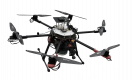
- Drones, Unmanned Aerial Vehicles (UAVs), and quadrotors in government operations
- Key components enabling autonomous flight
- Sectors where UAVs can enhance public sector efficiency and effectiveness
Modeling UAVs for Government Applications
- Fundamental mechanics of UAVs and quadrotors
- Dynamics specific to multirotor micro aerial vehicles (MAVs) and fixed-wing UAVs
Designing UAVs for Government Use
- Essential design considerations for government missions
- Enhancing agility and maneuverability in governmental operations
- Selecting appropriate components and sizes for mission requirements
Understanding the Kinematics of Quadrotors for Government Applications
- Transformations and rotations in aerial robotics
- Utilizing Euler angles and angular velocity in government UAVs
- Equations of motion specific to quadrotors
Understanding State Estimation for Government UAVs
- Leveraging on-board sensors (inertial sensors) to estimate vehicle state
- Implementation of inertial navigation systems in government applications
- Application of Kalman Filter concepts for enhanced accuracy
Developing Models of Quadrotors for Government Use
- 2D quadrotor control and modeling techniques for governmental operations
- Advanced 3D quadrotor control and modeling methods
Exploring the Basic Concepts of Flight Control for Government UAVs
- Control methodologies tailored for aerial robotics in government missions
- Application of linear model predictive control in governmental contexts
Motion Planning for Aerial Robotics in Government Operations
- Various techniques and methods for effective motion planning in government UAVs
Testing UAVs and Quadrotors using Simulators for Government Applications
- Utilizing MATLAB for simulation and testing
- Employing SimPy for discrete event simulations
- Using RotorS for realistic UAV simulations
Summary and Conclusion for Government Use
Requirements
- A foundational knowledge of computer science and engineering for government applications.
- Practical experience with electrical and mechanical engineering principles.
Audience
- Computer engineers
- Electrical engineers
- Mechanical engineers
- Software developers
21 Hours