Cyber Defence (SOC) Analyst Foundation Training Course
Cyber Defense (SOC) is a comprehensive approach designed to protect information systems and networks from cyber threats through proactive monitoring, incident detection and response, vulnerability management, and continuous enhancement of security measures.
This instructor-led, live training (online or onsite) is targeted at beginner to intermediate-level security analysts and system administrators who seek to develop a foundational understanding of Cyber Defense (SOC) analysis for government applications.
By the end of this training, participants will be able to:
- Understand the principles of Security Management within a Cyber Defense context.
- Implement effective Incident Response strategies to mitigate security incidents.
- Apply Security Education practices to enhance organizational awareness and preparedness.
- Manage and analyze Security Information for proactive threat identification.
- Utilize Event Management techniques to monitor and respond to security events.
- Implement Vulnerability Management processes to identify and address system vulnerabilities.
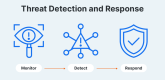
- Develop skills in Threat Detection to identify and respond to potential cyber threats.
- Participate in Simulated Attacks to test and improve incident response capabilities.
Format of the Course
- Interactive lecture and discussion.
- Extensive exercises and practice sessions.
- Hands-on implementation in a live-lab environment.
Course Customization Options
- To request a customized training for this course, please contact us to arrange.
Course Outline
- Security Management for government operations ensures robust policies and procedures are in place to protect sensitive information and assets.
- Incident Response for government agencies involves the systematic approach to handling security breaches, ensuring a swift and effective recovery process.
- Security Education for government employees is crucial to fostering a culture of cybersecurity awareness and best practices.
- Security Information for government stakeholders provides essential updates and resources to stay informed about emerging threats and mitigation strategies.
- Event Management for government IT systems involves the proactive monitoring and management of security events to detect and respond to potential issues in real-time.
- Vulnerability Management for government networks focuses on identifying, assessing, and mitigating vulnerabilities to enhance overall system resilience.
- Threat Detection for government agencies leverages advanced technologies to identify and neutralize cyber threats before they can cause harm.
- Simulated Attacks for government organizations help test and improve the effectiveness of security protocols through controlled and realistic scenarios.
Requirements
- A comprehensive understanding of cyber threats and risk management for government is essential.
Audience
- Security analysts
- System administrators
- IT professionals
Runs with a minimum of 4 + people. For 1-to-1 or private group training, request a quote.
Cyber Defence (SOC) Analyst Foundation Training Course - Booking
Cyber Defence (SOC) Analyst Foundation Training Course - Enquiry
Cyber Defence (SOC) Analyst Foundation - Consultancy Enquiry
Testimonials (2)
Clarity and pace of explanations
Federica Galeazzi - Aethra Telecomunications SRL
Course - AI-Powered Cybersecurity: Advanced Threat Detection & Response
It did give me the insight what I needed :) I am starting teaching on a BTEC Level 3 qualification and wanted to widen my knowledge in this area.
Otilia Pasareti - Merthyr College
Course - Fundamentals of Corporate Cyber Warfare
Upcoming Courses
Related Courses
AI-Powered Cybersecurity: Threat Detection & Response
21 HoursAI-Powered Cybersecurity: Advanced Threat Detection & Response
28 HoursBlue Team Fundamentals: Security Operations and Analysis
21 HoursBug Bounty Hunting
21 HoursBug Bounty Hunting is the practice of identifying security vulnerabilities in software, websites, or systems and responsibly reporting them for rewards or recognition.
This instructor-led, live training (online or onsite) is designed for government agencies and aimed at beginner-level security researchers, developers, and IT professionals who wish to learn the fundamentals of ethical bug hunting and how to participate in bug bounty programs.
By the end of this training, participants will be able to:
- Understand the core concepts of vulnerability discovery and bug bounty programs for government systems.
- Utilize key tools such as Burp Suite and browser development tools for testing applications.
- Identify common web security flaws, including XSS, SQLi, and CSRF.
- Submit clear, actionable vulnerability reports to bug bounty platforms.
Format of the Course
- Interactive lecture and discussion.
- Hands-on use of bug bounty tools in simulated testing environments.
- Guided exercises focused on discovering, exploiting, and reporting vulnerabilities.
Course Customization Options
- To request a customized training for this course based on your organization's applications or testing needs, please contact us to arrange.
Bug Bounty: Advanced Techniques and Automation
21 HoursBug Bounty: Advanced Techniques and Automation is an in-depth exploration of high-impact vulnerabilities, automation frameworks, reconnaissance techniques, and tooling strategies utilized by top bug bounty hunters.
This instructor-led, live training (available online or on-site) is designed for intermediate to advanced security researchers, penetration testers, and bug bounty hunters who aim to automate their workflows, scale reconnaissance efforts, and uncover complex vulnerabilities across multiple targets.
By the end of this training, participants will be able to:
- Automate reconnaissance and scanning processes for multiple targets.
- Utilize cutting-edge tools and scripts for bounty automation.
- Identify complex, logic-based vulnerabilities that go beyond standard scans.
- Develop custom workflows for subdomain enumeration, fuzzing, and reporting.
Format of the Course
- Interactive lectures and discussions.
- Hands-on use of advanced tools and scripting for automation.
- Guided labs focused on real-world bounty workflows and advanced attack chains.
Course Customization Options
- To request a customized training for government or other specific contexts based on your unique bounty targets, automation needs, or internal security challenges, please contact us to arrange.
CHFI - Certified Digital Forensics Examiner
35 HoursCertified Incident Handler
21 HoursThe Certified Incident Handler course provides a structured approach to managing and responding to cybersecurity incidents effectively and efficiently.
This instructor-led, live training (available online or onsite) is designed for intermediate-level IT security professionals who wish to develop the tactical skills and knowledge needed to plan, classify, contain, and manage security incidents for government agencies.
By the end of this training, participants will be able to:
- Understand the incident response lifecycle and its phases.
- Execute incident detection, classification, and notification procedures.
- Apply containment, eradication, and recovery strategies effectively.
- Develop post-incident reporting and continuous improvement plans.
Format of the Course
- Interactive lecture and discussion.
- Hands-on use of incident handling procedures in simulated scenarios.
- Guided exercises focused on detection, containment, and response workflows.
Course Customization Options
- To request a customized training for this course based on your organization's specific incident response procedures or tools, please contact us to arrange.
Mastering Continuous Threat Exposure Management (CTEM)
28 HoursCyber Emergency Response Team (CERT)
7 HoursCyber Threat Intelligence
35 HoursThis instructor-led, live training in US (online or onsite) is designed for advanced-level cybersecurity professionals who seek to deepen their understanding of Cyber Threat Intelligence and acquire the skills necessary to effectively manage and mitigate cyber threats for government operations.
By the end of this training, participants will be able to:
- Understand the foundational principles of Cyber Threat Intelligence (CTI).
- Assess the current landscape of cyber threats relevant to government agencies.
- Gather and process intelligence data to support decision-making.
- Conduct advanced threat analysis to identify and respond to potential risks.
- Utilize Threat Intelligence Platforms (TIPs) and automate threat intelligence processes for enhanced operational efficiency.
Fundamentals of Corporate Cyber Warfare
14 HoursDeepSeek for Cybersecurity and Threat Detection
14 HoursThis instructor-led, live training (available online or onsite) is designed for intermediate-level cybersecurity professionals who seek to leverage DeepSeek for advanced threat detection and automation.
By the end of this training, participants will be able to:
- Utilize DeepSeek AI for real-time threat detection and analysis in their operations.
- Implement AI-driven anomaly detection methods to enhance security protocols.
- Automate security monitoring and response processes using DeepSeek technology.
- Integrate DeepSeek into existing cybersecurity frameworks for government and other public sector entities.
Ethical Hacker
35 HoursCertified Lead Ethical Hacker
35 HoursWhy Should You Attend?
The Certified Lead Ethical Hacker training course equips you with the essential expertise to conduct information system penetration tests by applying recognized principles, procedures, and techniques. This course will help you identify potential threats on computer networks and manage a penetration testing project or team effectively. During the training, you will learn how to plan and perform both internal and external penetration tests in compliance with standards such as the Penetration Testing Execution Standard (PTES) and the Open Source Security Testing Methodology Manual (OSSTMM). Additionally, you will gain a comprehensive understanding of drafting reports and proposing countermeasures. Through practical exercises, you will master penetration testing techniques and develop skills in managing a pentest team, customer communication, and conflict resolution.
This training provides a technical overview of information security through ethical hacking, using common methods like information gathering and vulnerability detection within and outside business networks. The course is aligned with the NICE (National Initiative for Cybersecurity Education) Protect and Defend framework, ensuring that it meets industry standards and best practices.
After acquiring the necessary knowledge and skills in ethical hacking, you can take the exam to earn the "PECB Certified Lead Ethical Hacker" credential. Holding this certificate demonstrates your proficiency in performing and managing penetration tests according to established best practices, which is crucial for government and private sector roles alike.
Who Should Attend?
- Individuals interested in IT security and ethical hacking, whether to deepen their knowledge or explore a career change.
- Information security officers and professionals seeking to master ethical hacking and penetration testing techniques.
- Managers and consultants who want to learn how to oversee the penetration testing process effectively.
- Auditors aiming to conduct professional penetration tests.
- Personnel responsible for maintaining the security of information systems in an organization.
- Technical experts looking to prepare for and execute pentests.
- Cybersecurity professionals and members of information security teams who need advanced skills for their roles.
MasterClass Certified Ethical Hacker Program
28 HoursThe Certified Ethical Hacker (CEH) certification is highly sought after in the field of cybersecurity, both domestically and internationally.
This program includes comprehensive instruction and practical exercises designed to prepare students for the CEH certification exam and the CEH Practical Exam. Successfully passing both exams confers the CEH Master credential along with the CEH certification.
Students have the option to add either the CPENT or the CHFI course to their training package.
The Certified Penetration Testing Professional (CPENT) course or the Computer Hacking Forensic Investigator (CHFI) course will be provided to each student through EC-Council’s online, self-paced, streaming video program for government use.
CPENT (Pen-test):
This course teaches students how to apply the concepts and tools covered in the CEH program to a penetration testing methodology within a live cyber range environment.
CHFI (Computer Forensics):
This course provides a methodological approach to computer forensics, including techniques for searching and seizing digital evidence, maintaining chain-of-custody, acquiring, preserving, analyzing, and reporting on digital evidence.
Course Description
The CEH program offers an in-depth understanding of ethical hacking phases, various attack vectors, and preventative countermeasures. It will equip you with the knowledge to understand how hackers think and operate maliciously, thereby enabling you to better secure your organization’s infrastructure and defend against future attacks. An awareness of system weaknesses and vulnerabilities helps organizations enhance their security controls and minimize the risk of incidents.
The CEH curriculum is designed to provide a hands-on environment and systematic process across each ethical hacking domain and methodology, giving students the opportunity to demonstrate the knowledge and skills necessary to earn the CEH credential. You will gain a new perspective on the responsibilities and measures required to maintain security.
Who Should Attend
- Law enforcement personnel
- System administrators
- Security officers
- Defense and military personnel
- Legal professionals
- Bankers
- Security professionals
About the Certified Ethical Hacker Master
To earn the CEH Master certification, you must pass the CEH Practical exam. The CEH Practical Exam is designed to assess students' ability to apply the principles taught in the CEH course. This practical exam requires you to demonstrate ethical hacking techniques such as threat vector identification, network scanning, OS detection, vulnerability analysis, system hacking, and more.
The CEH Practical does not include simulations; instead, it involves challenging a live range that mimics a corporate network using live virtual machines, networks, and applications. Successfully completing the challenges in the CEH Practical Exam is the next step after obtaining the Certified Ethical Hacker (CEH) certification. Passing both the CEH exam and the CEH Practical will earn you the additional certification of CEH Master.
About the Certified Ethical Hacker Practical
To demonstrate your proficiency in ethical hacking, we assess your abilities through real-world challenges in a realistic environment. This involves using labs and tools to complete specific ethical hacking tasks within a time limit, mirroring real-world scenarios.
The EC-Council CEH (Practical) exam features a complex network that simulates a large organization’s real-life network infrastructure, including various systems such as DMZs and firewalls. You must apply your ethical hacking skills to discover and exploit live vulnerabilities while also auditing the systems.
About CPENT
EC-Council’s Certified Penetration Tester (CPENT) program focuses on penetration testing in an enterprise network environment that requires attack, exploitation, evasion, and defense. If you have experience working only in flat networks, CPENT’s live practice range will elevate your skills by teaching you to test IoT systems, OT systems, write your own exploits, build custom tools, conduct advanced binary exploitation, double pivot to access hidden networks, and customize scripts and exploits to penetrate the innermost segments of a network.
About CHFI
The Computer Hacking Forensic Investigator (CHFI) course provides a vendor-neutral perspective on digital forensics. This comprehensive program covers major forensic investigation scenarios and equips students with hands-on experience in various forensic techniques and standard forensic tools necessary for conducting successful computer forensic investigations.