NobleProg offers comprehensive GIT training courses tailored to professionals across Michigan. Whether you are in Detroit, Ann Arbor, or Grand Rapids, our expert-led programs provide the skills needed to thrive in today's competitive landscape. Discover how NobleProg can help your organization succeed with targeted GIT education.
Instructor-led virtual and on-premises GIT certification programs utilize interactive dialogue and practical exercises to convey the core principles of version control systems.
This instruction is delivered through two primary modalities: online live sessions or onsite corporate training. Online delivery (also referred to as remote instruction) leverages an interactive remote desktop interface. Onsite programs may be conducted locally at client facilities in Michigan or within NobleProg’s dedicated Michigan facilities.
NobleProg -- Your Local Training Provider
Detroit, MI - Renaissance Center
400 Renaissance Center, Detroit, United States, 48243
The GM Renaissance Center is conveniently located in downtown Detroit and easily accessed by car via Interstates 75 or 94, with secure underground parking available on site. Travelers flying into Detroit Metropolitan Airport (DTW) can expect a 25–30 minute trip by taxi or rideshare via I‑94. Public transit is efficient: the Detroit People Mover stops directly at the Renaissance Center station, and DDOT routes 3 and 9 serve nearby Jefferson Avenue. Pedestrian skywalks provide safe indoor access from downtown hotels, parking garages, and the riverwalk.
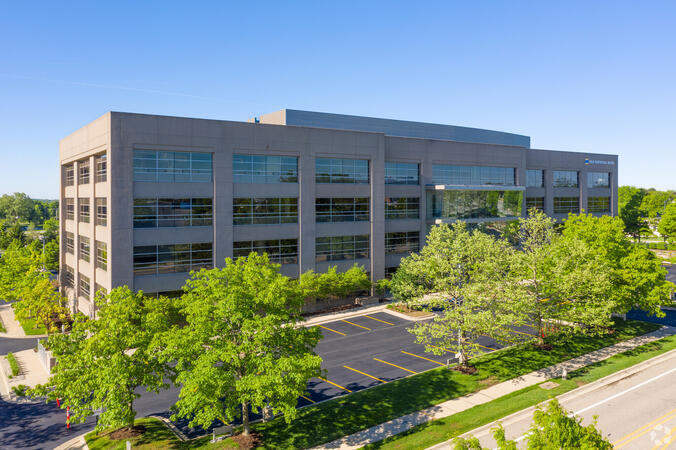
Ann Arbor, MI – Regus - South State Commons I
2723 S State St, Ann Arbor, United States, 48104
Regus South State Commons I is conveniently located off I‑94 via Exit 177 (State Street), with easy access to downtown Ann Arbor and surrounding suburbs. The building offers free on-site surface parking for guests. From Detroit Metropolitan Airport (DTW), the venue can be reached in approximately 20–25 minutes by taxi or rideshare via I‑94 West. Local public transit service (TheRide) operates Route 24 along South State Street, with a stop within a short 2-minute walk of the building.
Grand Rapids, MI - Regus – Calder Plaza
250 Monroe Ave NW, Grand Rapids, United States, 49503
The venue sits centrally at 250 Monroe Avenue NW in downtown Grand Rapids, easily accessed by car via US‑131 or I‑196—with connections via Monroe or Ottawa exits—and offers shared underground and surface parking. From Gerald R. Ford International Airport, take I‑96 East then I‑196 West into the city; the drive is about 20 minutes. Public transit through Rapid bus routes stops near Monroe or Ottawa Avenue, just a short walk from the Regus entrance; the downtown area is pedestrian-friendly.
Lansing, MI - Regus - One Michigan Avenue
120 North Washington Square, Lansing, United States, 48933
The venue is located in the heart of Lansing’s central business district at 120 North Washington Square, easily accessible by car via I‑496 or US‑127 with convenient street parking and a nearby parking ramp. From Capital Region International Airport (LAN), the location is approximately a 12‑minute drive west via I‑96 and US‑127, with taxis and rideshares readily available. Public transit users can take CATA bus routes that stop just a block away on Washington or Grand Avenue, offering seamless access to the venue.
This instructor-led, live training program, delivered in Michigan (online or onsite), is designed for intermediate-level developers and DevOps engineers seeking to gain practical proficiency with Git and Azure DevOps. The curriculum emphasizes branch management, merge strategies, conflict resolution, and the effective use of graphical clients to support secure and compliant operations for government entities.
Upon completion of this training, participants will be equipped to:
Comprehend fundamental Git concepts and established workflows.
Manage branches and merges effectively within collaborative, regulated environments.
Resolve conflicts by adhering to best practices in realistic operational scenarios.
Leverage graphical clients (SourceTree and GitKraken) for systematic Git management.
Execute practical Git operations via both command-line consoles and graphical interfaces.
Integrate Git with Azure DevOps for secure repository management and version control for government systems.
This instructor-led, live training in Michigan (online or onsite) is designed for intermediate to advanced professionals who intend to utilize GitLab for complex CI/CD workflows, structured project management, and collaborative development using the Free edition of GitLab.
Upon completion of this training, participants will possess the following competencies:
Implementation of advanced GitLab CI/CD pipelines utilizing custom runners and reusable templates.
Effective organization of projects through the strategic use of groups and namespaces.
Collaboration on code, issues, and documentation utilizing Markdown and native GitLab tools.
Application of GitLab Pages, release management workflows, and secure configuration practices in real-world operational contexts.
This virtual or on-site instructor-led training in Michigan is intended for software engineers and personnel seeking to master the use of Gerrit as a Git repository and for conducting code reviews.
By the conclusion of the training, participants will be capable of:
Understanding the functional mechanisms of Gerrit and managing its web interface.
Implementing best practices for managing code review workflows in Gerrit.
This instructor-led, live training session in Michigan (available online or onsite) is tailored for intermediate developers and DevOps professionals aiming to strengthen the security, governance, and automation of their GitHub environments, particularly when operating within an enterprise framework for government.
By the conclusion of this training, participants will be equipped to:
Manage and configure GitHub security settings and repository access permissions.
Enforce security best practices by utilizing GitHub tools such as Dependabot and CodeQL.
Create, reuse, and maintain GitHub Actions and operational workflows.
Audit and monitor activity to ensure compliance and governance at an enterprise scale.
This instructor-led, live training session, offered in Michigan (online or onsite), is designed for DevOps engineers aiming to utilize Kubernetes and GitLab to automate the DevOps lifecycle for government operations.
By the conclusion of this training, participants will be equipped to:
Automate application builds, testing cycles, and deployment processes.
Construct an automated build infrastructure for public sector use.
Deploy applications to containerized cloud environments with precision.
This advanced, hands-on curriculum is tailored for developers, DevOps engineers, technical leads, and engineering teams with established practical experience in Git and GitHub. The instruction emphasizes advanced collaboration workflows, repository governance for government, GitHub Actions, CI/CD, security, and automation protocols.
This 21-hour practical course on Michigan addresses distributed version control via Git, spanning from local repository configuration and branching methodologies to server-side deployment and collaborative operations. It prepares developers with the necessary technical acumen to manage rigorous source control standards for government projects.
Gitea is a lightweight, open-source, self-hosted Git service offering repository management, code review, issue tracking, and CI/CD integration. It is an increasingly preferred alternative to GitHub and GitLab.com for teams requiring full sovereignty over source code, free from third-party service terms or data export restrictions.
This instructor-led, live training conducted in Michigan (online or on-site) is intended for developers and software engineers new to the GitHub ecosystem. The course focuses on applying GitHub features alongside Git to enhance versioning and source code management for enterprise applications.
Upon completion of this training, participants will be equipped to:
Establish and configure accounts for secure access to the GitHub web-based platform.
Comprehend the operational mechanics of Git and master the foundational concepts underlying GitHub.
Create and administer GitHub repositories while executing standardized Git workflows.
Implement source code modifications within GitHub and synchronize external revisions.
Manage Pull Requests, Tags, Releases, and other essential GitHub components.
Execute version control tasks using Git and utilize the GitHub bash environment.
Create repository branches to facilitate collaborative defect resolution with team members.
Gain proficiency in the Git and GitHub structural framework to support best programming practices.
GitLab serves as a comprehensive application for overseeing the software development lifecycle. Its primary capabilities encompass project management, source code governance, continuous integration and delivery (CI/CD), performance monitoring, and security assurance for government and public sector entities.
This instructor-led training, delivered either online or on-site, is designed for developers seeking to implement GitLab for version control and continuous integration initiatives.
Upon completion, participants will possess the competence to:
Install and configure GitLab in accordance with organizational standards.
Implement GitLab as a robust alternative to other platform solutions for government use.
Leverage GitLab to manage and optimize the DevOps lifecycle.
Execute Continuous Integration and Continuous Delivery processes using GitLab.
Develop, release, and test software efficiently within a GitLab environment.
Instructional Methodology
Interactive lectures facilitated by discussion-based learning.
Extensive exercise modules and practical application opportunities.
Hands-on implementation within a live-laboratory environment.
Customization Options
For tailored training requirements, please contact the administration team to coordinate arrangements.
Additional technical resources are available at: https://about.gitlab.com/
This instructor-led, live training course, available in both online and onsite formats, is designed for introductory-level users. It provides an introduction to Git from a user-centric perspective, focusing on common collaboration frameworks and branching strategies relevant to public sector operations.
By the end of this training, participants will be able to:
Differentiate between second-generation (e.g., SVN) and third-generation (e.g., Git) version control systems.
Utilize Git for effective version control.
Manage changes to files and configurations.
Comprehend the processes of staging and committing.
Configure and manage branch structures.
Work with remote and local repositories.
Resolve merge conflicts to maintain consistency.
Apply version tags for identification and release management.
Collaborate effectively with teams and perform code reviews for planned changes.
Implement project planning strategies.
Apply best practices for collaborative feature development.
GitLab Self-Managed is the on-premises deployment of the complete GitLab DevSecOps platform, encompassing source code management, CI/CD, container registry, security scanning, and monitoring. It represents a premier option for government and public sector organizations seeking comprehensive tooling capabilities without reliance on SaaS vendors or the risk of data exiting controlled networks.
This resource for government professionals establishes foundational version control competencies using Git to support secure and transparent collaborative development. It addresses the core principles underlying the Git data model, object classifications, and strategic branching and merging protocols. The content examines validated methodologies for maintaining commit history, conducting diff analysis, executing stash operations, and implementing distributed development patterns within hosted environments. It assists software teams in effectively managing version histories, resolving merge conflicts, and ensuring full code traceability across agency projects.
This specialized training facilitates a seamless transition from Subversion to Git, tailored for SVN users seeking to implement distributed version control capabilities for government. The course provides practical instruction on fundamental Git principles, standard operational workflows, advanced branch management, full system migration, internal architecture, and integration methodologies. It aims to reduce operational errors and enable the efficient adoption of modern distributed workflows, thereby enhancing collaborative development standards and accountability in public sector environments.
Designed for managers and architects in Michigan, this seven-hour session outlines how to manage software changes from requirements through testing to production for government applications. The course covers automating deployments, maintaining release branches, and structuring central repositories to ensure clean, traceable updates aligned with public sector standards.
Woodpecker CI operates as a concise yet capable continuous integration system developed expressly for self-hosted Git forges including Gitea and Forgejo. It offers a low-footprint, Docker-native CI/CD experience that eliminates the administrative burden and licensing expenses inherent in enterprise-grade commercial platforms.
Read more...
Last Updated:
Testimonials (7)
I like that I've got immediately answer to my questions.
Szabolcs Kriston - Ericsson
Course - Advanced GitLab
Repeat the important takeaway
Milly Chen - Logitech
Course - Gerrit Code Review
Exercises that we were able to do on VMs
Atif Bhatti
Course - Git Hands-on Workshop with Azure DevOps
I liked the easy communication between trainer and us, care given to our problems, insights and additional knowledge provided in anwers to our questions. I liked the pace, it didn't feel rushed at any point, even with technical problems. Each subject was taken care of properly.
Melania Mieczkowska - IAV Poland
Course - Gitlab and Gitlab CI
not standard explanation
Nicola - OHB System AG
Course - Git for Victims of Subversion
Exceptional subject matter expertise, and the hands on exercise system worked well.
Online GIT training in Michigan, GIT training courses in Michigan, Weekend GIT courses in Michigan, Evening GIT training in Michigan, GIT instructor-led in Michigan, GIT coaching in Michigan, GIT trainer in Michigan, GIT on-site in Michigan, GIT instructor-led in Michigan, Evening GIT courses in Michigan, GIT instructor in Michigan, GIT private courses in Michigan, GIT classes in Michigan, GIT one on one training in Michigan, Online GIT training in Michigan, Weekend GIT training in Michigan, GIT boot camp in Michigan