Online or onsite, instructor-led live MLOps training courses demonstrate through interactive hands-on practice how to use MLOps tools to automate and optimize the deployment and maintenance of ML systems in production for government.
MLOps training is available as "online live training" or "onsite live training." Online live training (also known as "remote live training") is conducted via an interactive, remote desktop. Onsite live training can be conducted locally on customer premises in Michigan or in Govtra corporate training centers in Michigan.
Govtra -- Your Local Training Provider for government
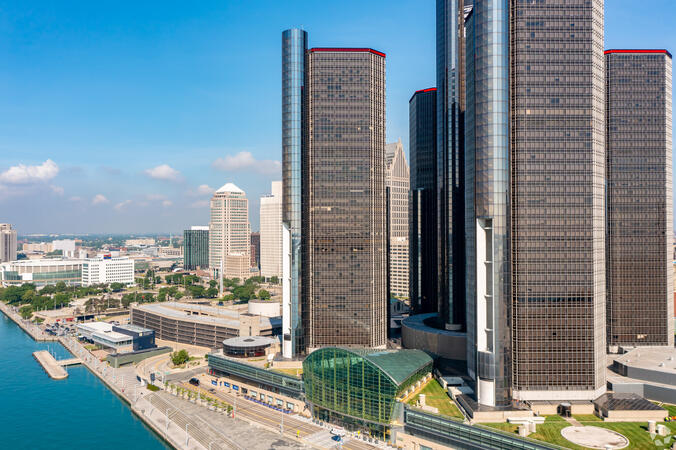
Detroit, MI - Renaissance Center
400 Renaissance Center, Detroit, United States, 48243
The GM Renaissance Center is conveniently located in downtown Detroit and easily accessed by car via Interstates 75 or 94, with secure underground parking available on site. Travelers flying into Detroit Metropolitan Airport (DTW) can expect a 25–30 minute trip by taxi or rideshare via I‑94. Public transit is efficient: the Detroit People Mover stops directly at the Renaissance Center station, and DDOT routes 3 and 9 serve nearby Jefferson Avenue. Pedestrian skywalks provide safe indoor access from downtown hotels, parking garages, and the riverwalk.
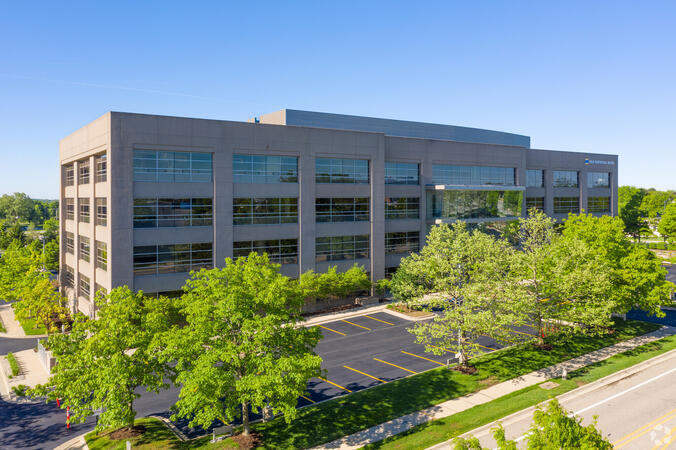
Ann Arbor, MI – Regus - South State Commons I
2723 S State St, Ann Arbor, United States, 48104
Regus South State Commons I is conveniently located off I‑94 via Exit 177 (State Street), with easy access to downtown Ann Arbor and surrounding suburbs. The building offers free on-site surface parking for guests. From Detroit Metropolitan Airport (DTW), the venue can be reached in approximately 20–25 minutes by taxi or rideshare via I‑94 West. Local public transit service (TheRide) operates Route 24 along South State Street, with a stop within a short 2-minute walk of the building.
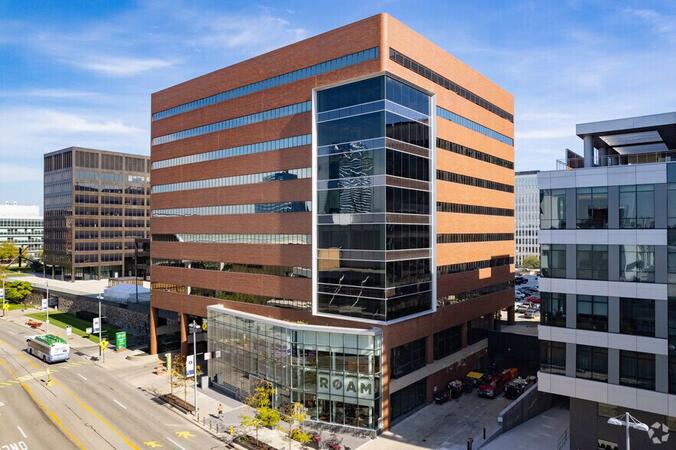
Grand Rapids, MI - Regus – Calder Plaza
250 Monroe Ave NW, Grand Rapids, United States, 49503
The venue sits centrally at 250 Monroe Avenue NW in downtown Grand Rapids, easily accessed by car via US‑131 or I‑196—with connections via Monroe or Ottawa exits—and offers shared underground and surface parking. From Gerald R. Ford International Airport, take I‑96 East then I‑196 West into the city; the drive is about 20 minutes. Public transit through Rapid bus routes stops near Monroe or Ottawa Avenue, just a short walk from the Regus entrance; the downtown area is pedestrian-friendly.
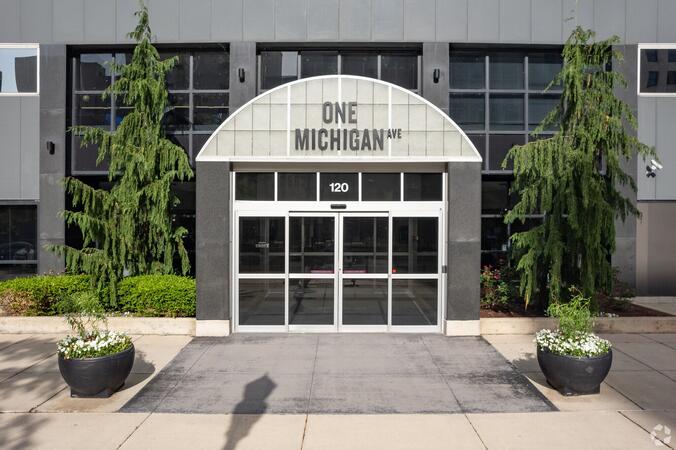
Lansing, MI - Regus - One Michigan Avenue
120 North Washington Square, Lansing, United States, 48933
The venue is located in the heart of Lansing’s central business district at 120 North Washington Square, easily accessible by car via I‑496 or US‑127 with convenient street parking and a nearby parking ramp. From Capital Region International Airport (LAN), the location is approximately a 12‑minute drive west via I‑96 and US‑127, with taxis and rideshares readily available. Public transit users can take CATA bus routes that stop just a block away on Washington or Grand Avenue, offering seamless access to the venue.
This instructor-led, live training in Michigan (online or onsite) is aimed at advanced-level AI engineers and data scientists with intermediate-to-advanced experience who wish to enhance DeepSeek model performance, reduce latency, and deploy AI solutions efficiently using modern MLOps practices for government.
By the end of this training, participants will be able to:
Optimize DeepSeek models for efficiency, accuracy, and scalability in alignment with public sector workflows.
Implement best practices for MLOps and model versioning to ensure governance and accountability.
Deploy DeepSeek models on cloud and on-premise infrastructure to support government operations.
Monitor, maintain, and scale AI solutions effectively to meet the needs of government agencies.
Kubeflow is an open-source platform designed to streamline the building, training, and deployment of machine learning workloads on Kubernetes.
This instructor-led, live training (online or onsite) is aimed at beginner-level to intermediate-level professionals who wish to build reliable machine learning workflows using Kubeflow for government applications.
Upon completion of this training, attendees will gain the skills to:
Navigate the Kubeflow ecosystem and its core components.
Build reproducible workflows with Kubeflow Pipelines.
Run scalable training jobs on Kubernetes.
Serve machine learning models efficiently using Kubeflow Serving.
Format of the Course
Guided presentations and collaborative discussions.
Hands-on labs with real Kubeflow components.
Practical exercises to build end-to-end machine learning workflows for government use cases.
Course Customization Options
Customized versions of this training can be arranged to align with your team’s technology stack and project requirements, ensuring they meet the specific needs for government operations.
This instructor-led, live training in Michigan (online or onsite) is aimed at developers and data scientists who wish to build, deploy, and manage machine learning workflows on Kubernetes for government.
By the end of this training, participants will be able to:
Install and configure Kubeflow on premise and in the cloud using AWS EKS (Elastic Kubernetes Service).
Build, deploy, and manage ML workflows based on Docker containers and Kubernetes for government.
Run entire machine learning pipelines on diverse architectures and cloud environments for government.
Use Kubeflow to spawn and manage Jupyter notebooks for government.
Build ML training, hyperparameter tuning, and serving workloads across multiple platforms for government.
This instructor-led, live training in Michigan (online or onsite) is aimed at engineers who wish to deploy Machine Learning workloads to an AWS EC2 server for government use.
By the end of this training, participants will be able to:
Install and configure Kubernetes, Kubeflow, and other necessary software on AWS for government applications.
Use EKS (Elastic Kubernetes Service) to streamline the initialization of a Kubernetes cluster on AWS for government operations.
Create and deploy a Kubernetes pipeline for automating and managing ML models in production environments for government.
Train and deploy TensorFlow ML models across multiple GPUs and machines running in parallel for government projects.
Leverage other AWS managed services to enhance an ML application for government use cases.
This instructor-led, live training in Michigan (online or onsite) is aimed at engineers who wish to deploy Machine Learning workloads to the Azure cloud for government use.
By the end of this training, participants will be able to:
Install and configure Kubernetes, Kubeflow, and other necessary software on Azure.
Utilize Azure Kubernetes Service (AKS) to streamline the process of initializing a Kubernetes cluster on Azure for government operations.
Create and deploy a Kubernetes pipeline for automating and managing ML models in production environments for government applications.
Train and deploy TensorFlow ML models across multiple GPUs and machines running in parallel, enhancing efficiency for government projects.
Leverage other AWS managed services to extend an ML application's capabilities for government use cases.
This instructor-led, live training in Michigan (online or onsite) is aimed at developers and data scientists who wish to build, deploy, and manage machine learning workflows on Kubernetes for government.
By the end of this training, participants will be able to:
Install and configure Kubeflow on-premises and in the cloud.
Build, deploy, and manage ML workflows based on Docker containers and Kubernetes.
Run entire machine learning pipelines on diverse architectures and cloud environments for government use.
Use Kubeflow to spawn and manage Jupyter notebooks for government projects.
Build ML training, hyperparameter tuning, and serving workloads across multiple platforms for government applications.
This instructor-led, live training (online or onsite) is aimed at data scientists who wish to go beyond building machine learning (ML) models and optimize the entire ML model creation, tracking, and deployment process for government use.
By the end of this training, participants will be able to:
Install and configure MLflow and related ML libraries and frameworks for government.
Understand the importance of trackability, reproducibility, and deployability of an ML model in a public sector context.
Deploy ML models to different public clouds, platforms, or on-premise servers suitable for government operations.
Scale the ML deployment process to accommodate multiple users collaborating on a project within a government environment.
Set up a central registry to experiment with, reproduce, and deploy ML models in alignment with government workflows and governance requirements.
This instructor-led, live training in Michigan (online or onsite) is designed for engineers who wish to evaluate the current approaches and tools available to make an informed decision on adopting MLOps within their organization.
By the end of this training, participants will be able to:
Install and configure various MLOps frameworks and tools for government use.
Assemble a team with the appropriate skills for constructing and supporting an MLOps system.
Prepare, validate, and version data for use by machine learning models.
Understand the components of an ML Pipeline and the tools required to build one.
Experiment with different machine learning frameworks and servers for deployment in a production environment.
Operationalize the entire Machine Learning process to ensure it is reproducible and maintainable.
This instructor-led, live training (online or onsite) is aimed at machine learning engineers who wish to utilize Azure Machine Learning and Azure DevOps to implement MLOps practices for government.
By the end of this training, participants will be able to:
Construct reproducible workflows and machine learning models.
Manage the entire machine learning lifecycle effectively.
Track and report on model version history, assets, and other relevant data.
Deploy production-ready machine learning models in any environment.
Read more...
Last Updated:
Testimonials (2)
the ML ecosystem not only MLFlow but Optuna, hyperops, docker , docker-compose
Guillaume GAUTIER - OLEA MEDICAL
Course - MLflow
I enjoyed participating in the Kubeflow training, which was held remotely. This training allowed me to consolidate my knowledge for AWS services, K8s, all the devOps tools around Kubeflow which are the necessary bases to properly tackle the subject. I wanted to thank Malawski Marcin for his patience and professionalism for training and advice on best practices. Malawski approaches the subject from different angles, different deployment tools Ansible, EKS kubectl, Terraform. Now I am definitely convinced that I am going into the right field of application.
Guillaume Gautier - OLEA MEDICAL | Improved diagnosis for life TM
Online MLOps training in Michigan, MLOps training courses in Michigan, Weekend MLOps courses in Michigan, Evening MLOps training in Michigan, MLOps instructor-led in Michigan, Online MLOps training in Michigan, MLOps one on one training in Michigan, MLOps on-site in Michigan, MLOps boot camp in Michigan, MLOps instructor-led in Michigan, MLOps trainer in Michigan, MLOps instructor in Michigan, MLOps private courses in Michigan, MLOps coaching in Michigan, Weekend MLOps training in Michigan, MLOps classes in Michigan, Evening MLOps courses in Michigan