




Online or onsite, instructor-led live Neural Network training courses demonstrate through interactive discussion and hands-on practice how to construct Neural Networks using a number of mostly open-source toolkits and libraries. These courses also cover how to leverage the power of advanced hardware (GPUs) and optimization techniques involving distributed computing and big data. Our Neural Network courses for government are based on popular programming languages such as Python, Java, R language, and powerful libraries, including TensorFlow, Torch, Caffe, Theano, and more. These courses cover both the theoretical foundations and practical implementation of various neural network architectures, such as Deep Neural Networks (DNN), Convolutional Neural Networks (CNN), and Recurrent Neural Networks (RNN).
Neural Network training is available as "online live training" or "onsite live training." Online live training (also known as "remote live training") is conducted via an interactive remote desktop. Onsite live Neural Networks training can be carried out locally on customer premises in Iowa or in NobleProg corporate training centers in Iowa.
Govtra -- Your Local Training Provider for government
Des Moines, IA - Hub Tower
699 Walnut Street, Des Moines, United States, 50309
The Hub Tower location is easily accessible by car via Interstates 35 and 80, with underground and nearby public parking available; simply head downtown to Walnut Street. Guests arriving from Des Moines International Airport (DSM) can expect a 10‑ to 15‑minute taxi or rideshare journey via I‑235 and I‑35 into downtown. For public transportation users, DART buses stop close to the building, and it also connects via the downtown skywalk to neighboring business and cultural venues.

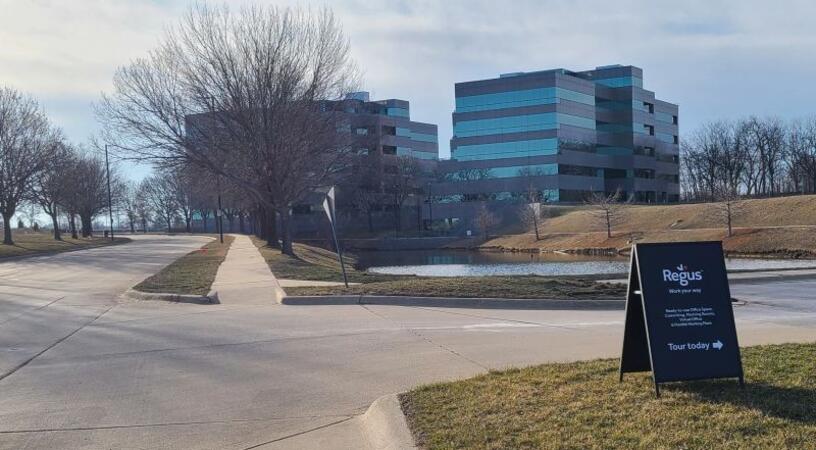
IA, Johnston - Regus - Foxboro Square
6165 Northwest 86th Street, Johnston, United States, 50131
Regus Foxboro Square enjoys a highly accessible suburban location—and is easily reached by car via Interstates 80/35. Ample free parking is available in the surface lots surrounding the building. For those arriving from Des Moines International Airport (DSM), the venue is approximately 16.6 km (about a 15–20 minute drive) via I‑35 north. Public transit users can take Johnston-area bus services to nearby stops; the facility is also adjacent to Dover Park’s walking and biking trails, providing a healthy commute option.
Cedar Rapids, IA - Regus – Edgewood Pointe
4515 N River Blvd NE #200, Cedar Rapids, United States, 52411
Regus Cedar Rapids is easily accessible by car via I‑380 or I‑80 toward northeast Cedar Rapids, exiting at Edgewood Road and traveling south on River Boulevard. Complimentary on-site surface parking ensures convenience for event attendees. For travelers arriving at Des Moines International Airport (DSM), the venue is approximately a 90‑minute drive via I‑80 and I‑380. Local participants can reach the centre using Cedar Rapids Transit Route 10, with stops near River Boulevard and Edgewood Pointe.
This instructor-led, live training (online or onsite) is designed for government professionals at an advanced level who wish to explore state-of-the-art XAI techniques for deep learning models, with a focus on building interpretable AI systems for government.
By the end of this training, participants will be able to:
- Understand the challenges of explainability in deep learning.
- Implement advanced XAI techniques for neural networks.
- Interpret decisions made by deep learning models.
- Evaluate the trade-offs between performance and transparency.
This four-day course provides an introduction to artificial intelligence (AI) and its applications using the Python programming language. An optional fifth day is available for participants to complete an AI project upon finishing the course. This training is designed to enhance skills and capabilities for government professionals, ensuring they are well-equipped to integrate AI solutions into their workflows.
Deep Reinforcement Learning (DRL) integrates the principles of reinforcement learning with deep learning architectures, enabling agents to make decisions through interaction with their environments. This technology is pivotal in driving many modern artificial intelligence advancements, including self-driving vehicles, robotics control, algorithmic trading, and adaptive recommendation systems. DRL allows an artificial agent to learn strategies, optimize policies, and make autonomous decisions based on trial-and-error learning using a reward system.
This instructor-led, live training (online or onsite) is designed for intermediate-level developers and data scientists who wish to gain proficiency in Deep Reinforcement Learning techniques. The goal is to build intelligent agents capable of autonomous decision-making in complex environments, which can be particularly useful for government applications.
By the end of this training, participants will be able to:
Understand the theoretical foundations and mathematical principles underlying Reinforcement Learning.
Implement key RL algorithms such as Q-Learning, Policy Gradients, and Actor-Critic methods.
Develop and train Deep Reinforcement Learning agents using TensorFlow or PyTorch.
Apply DRL to real-world scenarios, including games, robotics, and decision optimization for government use cases.
Troubleshoot, visualize, and optimize the training performance of DRL models using modern tools.
Format of the Course
Interactive lectures and guided discussions.
Hands-on exercises and practical implementations.
Live coding demonstrations and project-based applications.
Course Customization Options
To request a customized version of this course, such as using PyTorch instead of TensorFlow, please contact us to arrange.
This course has been designed for government managers, solutions architects, innovation officers, CTOs, software architects, and any other professionals interested in gaining an overview of applied artificial intelligence and the near-term forecast for its development for government.
This course provides an overview of artificial intelligence, with a focus on machine learning and deep learning, as applied to the automotive industry. It is designed to help participants identify which technologies can potentially be utilized in various scenarios within a vehicle, ranging from basic automation to image recognition and autonomous decision-making for government applications.
This instructor-led, live training in Iowa (online or onsite) is aimed at beginner-level participants who wish to learn essential concepts in probability, statistics, programming, and machine learning, and apply these to AI development for government.
By the end of this training, participants will be able to:
- Understand basic concepts in probability and statistics, and apply them to real-world scenarios relevant to public sector workflows.
- Write and understand procedural, functional, and object-oriented programming code suitable for government applications.
- Implement machine learning techniques such as classification, clustering, and neural networks to support data-driven decision-making for government.
- Develop AI solutions using rules engines and expert systems for problem-solving in governance and accountability contexts.
Artificial Neural Networks are computational models utilized in the creation of Artificial Intelligence (AI) systems designed to perform tasks that require "intelligent" capabilities. These networks are frequently employed in Machine Learning (ML) applications, which represent one approach to implementing AI. Deep Learning, a specialized subset of ML, further advances these techniques for government and other sectors.
This four-day course provides an introduction to artificial intelligence (AI) and its applications for government. Participants have the option to extend their learning by one additional day to work on an AI project upon completing the initial course.
This instructor-led, live training in Iowa (online or onsite) is aimed at intermediate-level data scientists and statisticians who wish to prepare data, build models, and apply machine learning techniques effectively for government and other professional domains.
By the end of this training, participants will be able to:
Understand and implement various Machine Learning algorithms for government use cases.
Prepare data and models for machine learning applications in a public sector context.
Conduct post hoc analyses and visualize results effectively for government reporting.
Apply machine learning techniques to real-world, sector-specific scenarios, including those relevant to government operations.
Artificial Neural Networks are computational models utilized in the development of Artificial Intelligence (AI) systems designed to perform complex and intelligent tasks. These networks are frequently employed in Machine Learning (ML) applications, which represent one form of AI implementation. Deep Learning, a specialized subset of ML, further enhances these capabilities by leveraging multi-layered neural network architectures for government and other sectors.
This instructor-led, live training in Iowa (online or onsite) is aimed at researchers and developers who wish to use Chainer to build and train neural networks in Python, ensuring that the code is easy to debug.
By the end of this training, participants will be able to:
- Set up the necessary development environment to begin creating neural network models.
- Define and implement neural network models using clear and understandable source code.
- Execute examples and modify existing algorithms to optimize deep learning training models while leveraging GPUs for high performance. This training is designed to align with best practices for government research and development initiatives.
This instructor-led, live training (online or onsite) provides an introduction to the field of pattern recognition and machine learning. It covers practical applications in statistics, computer science, signal processing, computer vision, data mining, and bioinformatics for government use.
By the end of this training, participants will be able to:
- Apply core statistical methods to pattern recognition tasks.
- Utilize key models such as neural networks and kernel methods for data analysis.
- Implement advanced techniques to address complex problem-solving scenarios.
- Enhance prediction accuracy by integrating different models.
In this instructor-led, live training, participants will learn how to use MATLAB to design, build, and visualize a convolutional neural network for image recognition.
By the end of this training, participants will be able to:
- Construct a deep learning model
- Automate data labeling processes
- Integrate models from Caffe and TensorFlow-Keras
- Train data using multiple GPUs, cloud resources, or clusters
**Audience**
- Developers
- Engineers
- Domain experts
**Format of the Course**
- Part lecture, part discussion, with exercises and substantial hands-on practice for government applications.
This classroom-based training session for government will include presentations and computer-based examples, as well as case study exercises utilizing relevant neural and deep network libraries.
This course provides an introduction to utilizing neural networks for solving real-world problems with R-project software. It is designed to equip participants with the skills necessary to apply these advanced techniques effectively and efficiently, particularly in contexts relevant to government operations and data analysis.
This course begins with an introduction to the conceptual knowledge of neural networks and machine learning algorithms, including deep learning (algorithms and applications).
Part-1 (40%) of this training focuses on fundamental concepts, which will assist in selecting the appropriate technology: TensorFlow, Caffe, Theano, DeepDrive, Keras, etc.
Part-2 (20%) introduces Theano, a Python library that simplifies the process of writing deep learning models.
Part-3 (40%) is extensively based on TensorFlow, Google's open-source software library for deep learning. All examples and hands-on exercises will be conducted using TensorFlow.
**Audience**
This course is designed for engineers who intend to use TensorFlow for their deep learning projects for government.
Upon completing this course, participants will:
- Have a comprehensive understanding of deep neural networks (DNN), convolutional neural networks (CNN), and recurrent neural networks (RNN).
- Understand the structure and deployment mechanisms of TensorFlow.
- Be capable of performing installation, production environment setup, architecture tasks, and configuration.
- Be able to assess code quality, perform debugging, and monitoring.
- Be proficient in implementing advanced production tasks such as training models, building graphs, and logging.
Read more...
Last Updated:
Testimonials (6)
Hunter is fabulous, very engaging, extremely knowledgeable and personable. Very well done.
Rick Johnson - Laramie County Community College
Course - Artificial Intelligence (AI) Overview
The trainer was a professional in the subject field and related theory with application excellently
Fahad Malalla - Tatweer Petroleum
Course - Applied AI from Scratch in Python
Very flexible.
Frank Ueltzhoffer
Course - Artificial Neural Networks, Machine Learning and Deep Thinking
I liked the new insights in deep machine learning.
Josip Arneric
Course - Neural Network in R
Ann created a great environment to ask questions and learn. We had a lot of fun and also learned a lot at the same time.
Gudrun Bickelq
Course - Introduction to the use of neural networks
It was very interactive and more relaxed and informal than expected. We covered lots of topics in the time and the trainer was always receptive to talking more in detail or more generally about the topics and how they were related. I feel the training has given me the tools to continue learning as opposed to it being a one off session where learning stops once you've finished which is very important given the scale and complexity of the topic.
Jonathan Blease
Course - Artificial Neural Networks, Machine Learning, Deep Thinking
Online Neural Networks training in Iowa, Neural Networks training courses in Iowa, Weekend Neural Networks courses in Iowa, Evening Neural Networks training in Iowa, Neural Networks instructor-led in Iowa, Neural Networks one on one training in Iowa, Neural Networks boot camp in Iowa, Neural Networks instructor-led in Iowa, Neural Networks private courses in Iowa, Online Neural Networks training in Iowa, Neural Networks instructor in Iowa, Neural Networks coaching in Iowa, Neural Networks trainer in Iowa, Neural Networks on-site in Iowa, Evening Neural Networks courses in Iowa, Weekend Neural Networks training in Iowa, Neural Networks classes in Iowa