Online or onsite, instructor-led live Computer Programming training courses demonstrate through interactive hands-on practice the fundamentals and advanced topics of programming.
Programming training is available as "online live training" or "onsite live training." Online live training (also known as "remote live training") is conducted via an interactive remote desktop. Onsite live training can be delivered locally at customer premises in Virginia or in Govtra corporate training centers in Virginia.
Govtra -- Your Provider for Government Training
VA, Stafford - Quantico Corporate
800 Corporate Drive, Suite 301, Stafford, united states, 22554
The venue is located between interstate 95 and the Jefferson Davis Highway, in the vicinity of the Courtyard by Mariott Stafford Quantico and the UMUC Quantico Cororate Center.
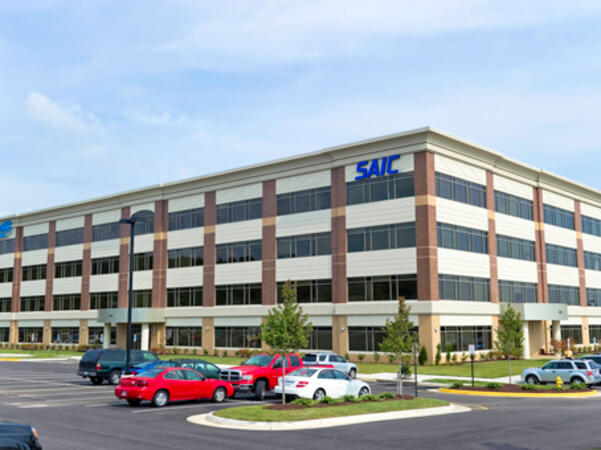
VA, Fredericksburg - Central Park Corporate Center
1320 Central Park Blvd., Suite 200, Fredericksburg, united states, 22401
The venue is located behind a complex of commercial buildings with the Bank of America just on the corner before the turn leading to the office.

VA, Richmond - Two Paragon Place
Two Paragon Place, 6802 Paragon Place Suite 410, Richmond, United States, 23230

The venue is located in bustling Richmond with Hampton Inn, Embassy Suites and Westin Hotel less than a mile away.
VA, Reston - Sunrise Valley
12020 Sunrise Valley Dr #100, Reston, United States, 20191

The venue is located just behind the NCRA and Reston Plaza Cafe building and just next door to the United Healthcare building.
VA, Reston - Reston Town Center I
11921 Freedom Dr #550, Reston, united states, 20190

The venue is located in the Reston Town Center, near Chico's and the Artinsights Gallery of Film and Contemporary Art.
VA, Richmond - Sun Trust Center Downtown
919 E Main St, Richmond , united states, 23219
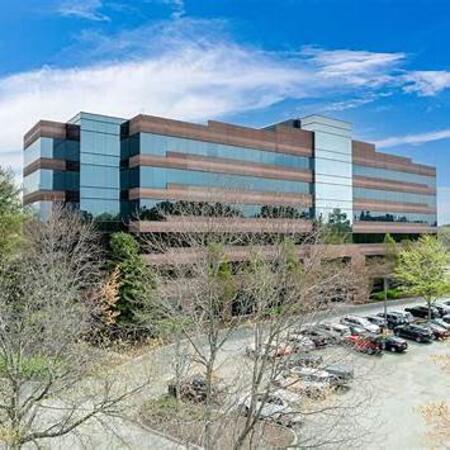
The venue is located in the Sun Trust Center on the crossing of E Main Street and S to N 10th Street just opposite of 7 Eleven.
Richmond, VA – Regus at Two Paragon Place
6802 Paragon Place, Suite 410, Richmond, United States, 23230

The venue is located within the Two Paragon Place business campus off I‑295 and near Parham Road in North Richmond, offering convenient access by car with free on-site parking. Visitors arriving from Richmond International Airport (RIC), approximately 16 miles northwest, can expect a taxi or rideshare ride of around 20–25 minutes via I‑64 West and I‑295 North. Public transit is available via GRTC buses, with routes stopping along Parham Road and Quioccasin Road, just a short walk to the campus.
Virginia Beach, VA – Regus at Windwood Center
780 Lynnhaven Parkway, Suite 400, Virginia Beach, United States, 23452
The venue is situated within the Windwood Center along Lynnhaven Parkway, featuring modern concrete-and-glass architecture and ample on-site parking. Easily accessible by car via Interstate 264 and the Virginia Beach Expressway, the facility offers a hassle-free commute. From Norfolk International Airport (ORF), located about 12 miles northwest, a taxi or rideshare typically takes 20–25 minutes via VA‑168 South and Edenvale Road. For those using public transit, the HRT bus system includes stops at Lynnhaven Parkway and surrounding streets, providing convenient access by bus.
This instructor-led, live training in Virginia (online or onsite) is aimed at advanced-level developers who wish to master the latest features in Next.js 14, optimize performance, and implement modern React techniques for government projects.
By the end of this training, participants will be able to:
- Implement advanced React hooks and concurrent features.
- Understand and effectively utilize Next.js routing strategies.
- Leverage Server Components, Server Actions, and hybrid rendering approaches.
- Optimize data fetching, caching, and incremental static regeneration.
- Use Next.js as a backend solution with Edge Functions and Edge Runtime for government applications.
- Manage state using React Context, Redux, and atomic state libraries.
- Optimize application performance for Web Core Vitals.
- Test, monitor, and deploy Next.js applications efficiently.
This instructor-led, live training (online or onsite) is aimed at web developers who wish to learn how to use Progressive Web Application (PWA) development features to create an app-like experience in a website using Entity Framework (EF) Core and Blazor.
By the end of this training, participants will be able to:
- Utilize the EF package for database operations.
- Implement Blazor components, services, dependency injection, layout, and routing.
- Develop service workers to enable PWA features in an application.
- Leverage push notifications and other PWA functionalities for government projects.
This course offers an in-depth exploration of advanced Vue.js concepts, with a focus on scalability, maintainability, and real-world performance optimization within modern frontend ecosystems.
This instructor-led, live training (available online or onsite) is designed for intermediate to advanced-level developers who seek to enhance their Vue.js expertise, adopt modern workflows, and integrate ecosystem tools such as Pinia, Quasar, and Vite effectively.
By the end of this training, participants will be able to:
- Build scalable, modular Vue.js applications using advanced reactivity and composition patterns.
- Design and manage complex global states efficiently with Pinia.
- Integrate APIs, handle errors, and manage data flow between stores and components.
- Apply advanced TypeScript and testing strategies for maintainability and reliability.
- Optimize build performance, CI/CD workflows, and production deployments.
**Format of the Course**
- Interactive lecture and discussion.
- Hands-on exercises and code labs.
- Practical implementation using real-world project scenarios.
**Course Customization Options**
- To request a customized training for government or other specific needs, please contact us to arrange.
This instructor-led, live training (online or onsite) is designed for intermediate to advanced web developers and technical architects who wish to explore the advancements of Next.js 14 and acquire the knowledge necessary to build cutting-edge web applications for government.
By the end of this training, participants will be able to:
- Harness the full potential of Next.js 14 for developing complex applications.
- Utilize the latest features such as Middleware, React Server Components, and Edge Functions.
- Implement best practices for performance, scalability, and SEO in government web applications.
- Effectively troubleshoot common issues in Next.js applications.
This instructor-led, live training in [location] (online or onsite) is aimed at intermediate-level software developers and automation engineers who wish to build applications that communicate with Programmable Logic Controllers (PLCs) and interact with SQL databases using Visual Studio.
By the end of this training, participants will be able to:
- Develop .NET applications in Visual Studio for industrial automation.
- Communicate with PLCs using industrial protocols such as OPC UA.
- Implement database interactions with SQL Server for storing and retrieving PLC data.
- Optimize application performance for real-time industrial environments, ensuring alignment with standards and practices for government use.
This instructor-led, live training (online or onsite) is aimed at web developers who wish to use Blazor Web Assembly to build a web application for government.
By the end of this training, participants will be able to:
- Understand forms and authentication in Blazor WebAssembly.
- Create a Blazor WebAssembly project.
- Learn various methods to run their web application.
This instructor-led, live training (available online or on-site) is designed for developers who aim to utilize the FARM (FastAPI, React, and MongoDB) stack to create dynamic, high-performance, and scalable web applications for government use.
By the end of this training, participants will be able to:
- Set up a development environment that seamlessly integrates FastAPI, React, and MongoDB.
- Understand the fundamental concepts, features, and benefits of the FARM stack.
- Learn how to develop REST APIs using FastAPI.
- Gain proficiency in designing interactive applications with React.
- Develop, test, and deploy both front-end and back-end components of applications using the FARM stack.
This instructor-led, live training in [location] (online or onsite) is designed for developers who wish to learn and utilize Livewire to create modern and dynamic application interfaces for government.
By the end of this training, participants will be able to:
- Develop and test Livewire components.
- Build applications using the Livewire library.
- Create dynamic components within PHP.
This instructor-led, live training (online or onsite) is designed for intermediate-level developers who aim to develop micro-frontend applications using Vue.js.
By the end of this training, participants will be able to:
- Gain a deeper understanding of micro-frontends.
- Learn techniques for dividing large applications into micro-frontends.
- Implement micro-frontends using various approaches.
- Construct micro-frontend applications with Vue.js, tailored for government and public sector use.
This instructor-led, live training (available online or onsite) is designed for government web developers who wish to use Next.js to create React applications. By the end of this training, participants will be able to:
- Develop server-side web applications and static sites using Next.js.
- Manage and store data with MongoDB.
- Secure a web application with Auth0 authentication.
This course aligns with the technical needs for government agencies, ensuring that developers are equipped to build robust and secure web solutions.
JavaScript is a dynamic, high-level programming language extensively utilized in web, mobile, and desktop development. With the advancement of modern frameworks and TypeScript, JavaScript has become an essential component of full-stack application development.
This instructor-led, live training (online or onsite) is designed for government agencies and aimed at beginner to intermediate developers who wish to master JavaScript, TypeScript, and full-stack development using contemporary tools and practices.
By the end of this training, participants will be able to:
- Write clean and modern JavaScript and TypeScript code.
- Build interactive front-end applications with React.
- Develop scalable back-end APIs using Node.js and Express.
- Create desktop applications using Electron.
- Test, document, and deploy full-stack applications for government use.
**Format of the Course**
- Interactive lecture and discussion.
- Extensive exercises and practice sessions.
- Hands-on implementation in a live-lab environment.
**Course Customization Options**
To request a customized training for this course tailored to specific needs, please contact us to arrange.
Unity, Blender, and Visual Studio together provide a robust toolkit for creating and programming industrial virtual environments. Unity enables interactive simulation and visualization, Blender offers advanced 3D modeling capabilities, and Visual Studio serves as the programming backbone for integrating control systems and industrial logic.
This instructor-led, live training (online or onsite) is designed for government professionals at beginner to intermediate levels who wish to design, model, and program industrial environments for simulation, training, and integration purposes.
By the end of this training, participants will be able to:
- Design and model industrial equipment and scenarios using Blender.
- Import and optimize 3D models in Unity for visualization.
- Program system logic and integration workflows in Visual Studio.
- Create interactive industrial virtual environments with control system connections.
**Format of the Course**
- Interactive lecture and discussion.
- Hands-on 3D modeling and environment development.
- Programming and integration exercises with live demonstrations.
**Course Customization Options**
- To request a customized training for government purposes, please contact us to arrange.
This instructor-led, live training (online or onsite) is designed for government developers at the beginner to intermediate level who wish to develop applications using Visual Studio.
By the end of this training, participants will be able to:
- Utilize Visual Studio 2022 features effectively.
- Run and manage unit tests.
- Debug applications and collaborate with code in remote repositories.
This instructor-led, live training in Virginia (online or onsite) is aimed at intermediate-level Python developers and data analysts who wish to enhance their skills in data analysis and manipulation using Pandas and NumPy for government applications.
By the end of this training, participants will be able to:
Set up a development environment that includes Python, Pandas, and NumPy.
Create a data analysis application using Pandas and NumPy for government workflows.
Perform advanced data wrangling, sorting, and filtering operations.
Conduct aggregate operations and analyze time series data.
Visualize data using Matplotlib and other visualization libraries.
Debug and optimize their data analysis code to ensure compliance with public sector governance standards.
This instructor-led, live training in Virginia (online or onsite) is designed for data scientists and software engineers who wish to utilize Dask within the Python ecosystem to build, scale, and analyze large datasets for government.
By the end of this training, participants will be able to:
- Set up the necessary environment to begin building big data processing systems using Dask and Python.
- Explore the features, libraries, tools, and APIs available in Dask.
- Understand how Dask enhances parallel computing capabilities in Python.
- Learn techniques for scaling the Python ecosystem (including Numpy, SciPy, and Pandas) using Dask.
- Optimize the Dask environment to ensure high performance when handling large datasets.
This instructor-led, live training in (online or onsite) equips participants with the essential skills needed to leverage the capabilities of C# 6.0 within the Visual Studio 2015/2017 environment for government.
By the end of this training, participants will be able to:
Navigate and utilize the Integrated Development Environment (IDE) in Visual Studio 2015/2017.
Implement basic C# functionalities such as Console.WriteLine, Console.ReadLine, and Hello C# World!.
Understand the process of compiling and debugging C# code.
Apply comments in C# for code documentation and readability.
Explore the fundamentals of .NET 6.0, including CLR, GC, DLL, EXE, and technologies within .NET.
Review the history of C# from version 1.0 to 6.0 and grasp C# fundamentals such as keywords, literals, operators, and statements.
Work with numeric and boolean types, classes, objects, fields, properties, indexers, operators, methods, and more in C# 6.0.
Explore .NET Class Library features, including collections, file handling, data streams, communication between systems, dates, serialization, and parallel programming.
Access and manipulate data using ADO.NET, LINQ, ORM (Entity Framework), and data in Service-Oriented Architecture (SOA).
Review applications that can be developed in C# and .NET Framework 6, such as Windows Presentation Foundation, ASP.NET MVC 2, and Silverlight.
The purpose of this training is to provide a foundational understanding of programming concepts and general syntax across various paradigms. The training utilizes examples from programming languages such as C, Java, Python, Scala, C#, Clojure, and JavaScript. Throughout the course, participants will gain a comprehensive understanding of programming patterns, best practices, and commonly used design principles. These topics are reinforced through practical implementation on different platforms. Each issue discussed during the course is illustrated with examples ranging from basic to advanced, all grounded in real-world problems relevant to applications for government and other sectors.
This instructor-led, live training (online or onsite) is designed for data scientists and software engineers who wish to utilize AdaBoost to develop boosting algorithms for machine learning with Python.
By the end of this training, participants will be able to:
- Set up the required development environment to begin building machine learning models with AdaBoost.
- Understand the ensemble learning methodology and how to implement adaptive boosting techniques.
- Learn how to construct AdaBoost models to enhance machine learning algorithms in Python.
- Utilize hyperparameter tuning to improve the accuracy and performance of AdaBoost models, ensuring they meet the standards required for government applications.
This instructor-led, live training session introduces advanced features of C# and examines its use as both a desktop application programming language and a web programming language for addressing real-world challenges. Programming techniques and principles are illustrated and practiced through in-class, hands-on exercises and guided walkthroughs, ensuring that participants gain practical skills applicable to their roles for government.
This instructor-led, live training in [location] (online or onsite) is aimed at developers who wish to build React components and design complex applications for government use.
By the end of this training, participants will be able to:
- Understand advanced React concepts, including context APIs, Higher-Order Components (HOCs), external state management, asynchronous APIs, and more.
- Develop composable components using React.
- Implement server-side and client-side authentication mechanisms.
- Utilize React and Redux libraries to manage complex stateful applications for government projects.
- Optimize an application’s performance by reducing code bloat and improving efficiency.
- Test and deploy applications in a secure and compliant manner.
This instructor-led, live training in Virginia (online or onsite) is aimed at developers who wish to leverage TypeScript's advanced features to create and build JavaScript applications for government use.
By the end of this training, participants will be able to:
Set up the necessary development environment to start developing TypeScript and Node.js applications tailored for government projects.
Utilize TypeScript's advanced capabilities to write clean, expressive code with fewer errors, enhancing software reliability for government systems.
Configure and use Webpack with TypeScript to build complex front-end user interfaces that meet the stringent requirements of public sector workflows.
Use custom data types (Union, Intersection, Tuple Types, etc.) to extend existing generic types, ensuring robust data management in government applications.
Implement asynchronous code patterns and APIs for error handling and validating responses, critical for maintaining high standards of governance and accountability in public sector software.
Deploy TypeScript and Node.js applications to production environments (AWS EC2, Heroku, etc.), ensuring compliance with government IT policies and security protocols.
This instructor-led, live training in [location] (online or onsite) is designed for Vue.js developers who aim to create advanced components that are simpler, more flexible, and easier to maintain.
By the end of this training, participants will be able to:
- Write Vue.js code that is maintainable and resilient.
- Develop application logic that is portable and reusable.
- Create customized components and widgets while minimizing unnecessary complexity, ensuring alignment with best practices for government workflows and governance.
This instructor-led, live training in Virginia (online or onsite) is aimed at developers who wish to use .NET Core to create, build, test, debug, and deploy optimized applications that can run on different systems for government.
By the end of this training, participants will be able to:
Set up the development environment based on .NET Core to start developing applications tailored for government use.
Utilize the ASP.NET Core framework and libraries to build new applications or optimize existing ones for government operations.
Monitor and enhance the performance of applications using advanced .NET Core tools, ensuring they meet the stringent requirements of public sector workflows.
Understand the principles behind .NET Core features and apply this knowledge to other business implementations within the government context.
Why do we need Clean Code for government systems? Programs evolve over time, necessitating continuous updates. Navigating and maintaining unclean code can be exceedingly challenging. On average, the initial cost of writing the original code represents only 40% of a system's total lifecycle cost; the remaining 60% is typically spent on maintenance and updates. Poorly written code can significantly skew this ratio, sometimes reaching a disproportionate 20/80 split in the most severe cases. The cleaner the code, the more efficient and cost-effective the maintenance process becomes, ensuring that government resources are used efficiently and effectively.
.NET Core is an open-source framework designed for creating .NET applications on Windows, macOS, and Linux platforms.
This instructor-led, live training program is designed to provide participants with a comprehensive understanding of the fundamentals of .NET Core. Participants will engage in the development of a sample application that highlights the unique features of ..NET Core compared to other frameworks.
By the end of this training, participants will be able to:
Set up .NET Core along with the necessary tooling and IDEs to begin development immediately.
Utilize .NET Core to build a variety of software types, including web applications, console applications, microservices, and libraries.
Gain an understanding of .NET Core's components, such as class libraries, packages, metapackages, and frameworks.
Build, debug, and deploy a sample web application.
Audience
Developers
Format of the Course
The course combines lectures, discussions, practical exercises, and extensive hands-on practice in a live-lab environment.
Note
This training is based on .NET Core 2.x and is available for both Windows and Linux environments.
To request a customized training program for government or other specific needs, please contact us to arrange.
For more information about .NET Core, visit: https://github.com/dotnet/core
In this instructor-led, live training in [location], participants will learn how to use Entity Framework Core 2.0 to develop an ASP.NET Core application for government use.
By the end of this training, participants will be able to:
Set up the required framework and tools for creating Entity Framework Core 2.0 MVC web applications.
Execute database operations on MS SQL Server.
Apply both "code first" and "data first" approaches in application development.
Conduct migration and seeding operations.
Grasp advanced data modeling concepts.
Build a sample ASP.NET Core application for government purposes.
This instructor-led, live training (online or onsite) is aimed at developers who wish to use FastAPI with Python to build, test, and deploy RESTful APIs more efficiently and rapidly for government projects.
By the end of this training, participants will be able to:
- Set up the necessary development environment to create APIs using Python and FastAPI.
- Develop APIs more quickly and easily leveraging the FastAPI library.
- Understand how to create data models and schemas based on Pydantic and OpenAPI standards.
- Integrate APIs with a database using SQLAlchemy.
- Implement security and authentication in APIs utilizing FastAPI tools.
- Build container images and deploy web APIs to a cloud server for government use.
This instructor-led, live training (online or onsite) is designed for government web developers who wish to utilize Blazor to create full-stack C# web applications. By the end of this training, participants will be able to:
- Develop web applications using C# and Blazor.
- Integrate C# code with JavaScript APIs and libraries.
- Execute client-side C# code and client logic directly in a browser or server.
- Deploy Blazor web applications on Azure for government use.
This instructor-led, live training in Virginia provides an introduction to the fundamentals of Laravel and guides participants through the development of a Laravel-based web application for government use. The training emphasizes best practices for government workflows, governance, and accountability.
This instructor-led, live training in Virginia (online or onsite) is aimed at web developers who wish to utilize Laravel and Vue JS for full-stack web development for government applications.
By the end of this training, participants will be able to:
- Develop web applications using Laravel and Vue JS.
- Integrate the Laravel backend API with Vue JS.
- Deploy a Laravel application in a secure and efficient manner.
ASP.NET MVC 6 is a significant addition to Visual Studio 2015, representing the latest advancement in Microsoft’s web development framework. This course provides an in-depth look at the new APIs and development techniques essential for creating dynamic, modular, and testable websites. We will delve into the innovative features of MVC 6 and demonstrate how to maximize the capabilities of the latest tools and integration options.
### What You Will Learn
- Understand the principles and benefits of MVC architecture.
- Create views, view components, and tag helpers.
- Utilize ASP.NET dependency injection.
- Develop RESTful services using Web API.
- Optimize the use of GruntJS, NPM, and Bower integration.
- Build Single Page Applications (SPAs).
This course is designed to equip developers with the skills necessary for government projects, ensuring they can leverage the latest technologies to enhance efficiency and effectiveness in web development.
This instructor-led, live training in Virginia (online or onsite) is aimed at web developers who wish to use Quasar Framework and Vue JS to create cross-platform applications for government.
By the end of this training, participants will be able to:
- Develop a cross-platform application suitable for iOS, Windows, and other platforms.
- Manage states and data effectively using Vuex.
- Create a backend application leveraging Firebase.
In this instructor-led, live training in [location], participants will gain a comprehensive understanding of React's capabilities and flexibility. The course includes a detailed comparison with alternative frameworks and guides attendees through the process of developing their own React application.
By the end of this course, participants will be able to:
- Comprehend React’s design philosophy.
- Determine when and where it is appropriate to use React, and when to reconsider traditional MVC models.
- Grasp key React concepts such as components, props, state, and lifecycle.
- Implement related technologies such as Babel, Webpack, and JSX.
- Build, test, and deploy an interactive web application for government use.
This training is designed to align with public sector workflows, governance, and accountability standards.
In this instructor-led, live training session, participants will gain the skills necessary to develop React applications using Flux and GraphQL. The course covers essential topics such as installation, setup, integration, testing, deployment, and best practices, guiding participants through the creation of several sample applications that showcase advanced toolkits and techniques.
Developing applications with React requires a different approach compared to other frameworks like AngularJS and Bootstrap. This training provides a deep understanding of the technologies used at each step, ensuring that participants not only build functional applications but also grasp the rationale behind specific methodologies. This foundational knowledge supports independent and creative thinking, enabling participants to design and achieve desired results when building their own applications for government and beyond.
In this instructor-led, live training, participants will learn the core principles and methodologies behind React Native as they develop their own mobile applications for government use across both Android and iOS platforms.
In this instructor-led, live training session, participants will gain proficiency in utilizing React Native Expo for government applications through interactive discussions and practical exercises. Upon completion of the course, attendees will be prepared to develop and deploy their own React Native applications using React Native Expo, tailored specifically for government use.
React Native is an open-source framework designed for building cross-platform mobile applications. Developed by Facebook, it allows developers to create apps that offer a native user experience on both Android and iOS platforms. React Native for Web extends the platform-agnostic components and APIs of React Native to web application development.
React Native provides a consistent developer experience based on JavaScript and the React library, enabling efficient rapid development across all platforms with the principle of “learn once, write anywhere.”
This instructor-led, live training is designed to help participants understand the fundamentals of React Native for Web. By the end of this training, participants will be able to:
Install and configure React Native developer tools
Understand the core principles of React Native for Web
Build, test, deploy, and troubleshoot an application that is compatible with iOS, Android, and the web using React Native for Web
Audience
Web developers
Mobile application developers
Format of the Course
Part lecture, part discussion, with exercises and extensive hands-on practice
Note
To request a customized training for government or any other specific needs, please contact us to arrange.
This instructor-led, live training (online or onsite) is aimed at developers with React skills who wish to optimize and improve their creation of React applications by understanding and applying React's component patterns for government projects.
By the end of this training, participants will be able to:
Understand the different types of React Patterns
Use React Context API for web applications
Format of the Course
Interactive lecture and discussion.
Extensive exercises and practice sessions.
Hands-on implementation in a live-lab environment.
Course Customization Options
To request a customized training for government needs, please contact us to arrange.
To learn more about React, please visit: https://reactjs.org
React is a widely-used library for developing single-page applications using JavaScript and HTML. It is employed by organizations such as Facebook, Instagram, Netflix, and the New York Times. This course will introduce the foundational concepts that underpin React and other libraries like Angular and Vue.js, while also highlighting the unique features of React. Additionally, it will cover complementary technologies frequently used with React, such as Redux and React-Router.
By the end of this course, participants will be equipped to build applications of varying complexity using React, adhering to best practices for government and other sectors.
This instructor-led, live training (available online or onsite) is designed for web developers who wish to develop middleware and web services using Laravel.
By the end of this training, participants will be able to:
- Utilize Laravel PHP Artisan to generate code and components.
- Construct RESTful APIs in Laravel that support browsing, reading, editing, adding, and deleting data.
- Filter and sort results based on URL parameters through RESTful APIs.
This training aligns with the need for robust and efficient web development practices for government agencies.
This instructor-led, live training in Virginia (online or onsite) is aimed at web developers who wish to build functional front-end and back-end web applications with Spring Boot, React, and Redux for government use.
By the end of this training, participants will be able to:
- Construct a front-end application using React and Redux.
- Develop RESTful APIs with Spring Boot.
- Implement secure web services with Spring Security and JWT web tokens.
This instructor-led, live training in Virginia is designed to introduce participants to TypeScript’s key features and guide them through the development of a real-world JavaScript application for government use. The course emphasizes practical application and alignment with public sector workflows, ensuring that participants gain a comprehensive understanding of TypeScript's capabilities in a governmental context.
This instructor-led, live training (available online or on-site) is designed for government developers at the beginner to intermediate level who wish to use VSTO to create customized solutions for Microsoft Office applications.
By the end of this training, participants will be able to:
- Develop add-ins and document-level customizations for Office applications.
- Access and manipulate the Office object model and its associated events.
- Design custom ribbons, task panes, and dialogs for Office applications.
- Incorporate Windows Forms controls and .NET components into Office documents.
- Integrate Office applications with web services and databases.
- Deploy and secure Office solutions for government use.
This instructor-led, live training in Virginia (online or onsite) is aimed at developers and programmers who wish to leverage the framework changes and new features in Vue 3 to develop applications for government.
By the end of this training, participants will be able to:
Migrate and update from Vue 2 to Vue 3.
Utilize new features to enhance the development of applications.
Test and implement Vue 3 to build maintainable and reliable applications for government use.
In this instructor-led, live training in Virginia (online or onsite), participants will learn how to leverage Vue JS’s incrementally adoptable architecture to develop a complex, single-page application (SPA) for government use.
By the end of this training, participants will be able to:
Create web applications that process and render data conditionally.
Design interactive web applications that respond efficiently to user events.
Write modular and reusable code for government projects.
Gradually evolve a view into a full-fledged single-page application.
Integrate Vue JS into an existing webpage for government.
Utilize Vue’s ecosystem to enhance the framework’s capabilities for government applications.
In this instructor-led, live training in Virginia (online or onsite), participants will learn the essential JavaScript skills needed to leverage Vue JS's incrementally adoptable architecture for building complex, single-page applications (SPAs) for government use.
By the end of this training, participants will be able to:
- Understand and utilize JavaScript and the VueJS framework to develop interactive web applications.
- Design responsive web apps that efficiently react to user events.
- Write modular and reusable code.
- Gradually evolve a view into a fully functional single-page application.
This instructor-led, live training in [location] (online or onsite) is designed for developers who wish to utilize Vuetify.js to create visually appealing interfaces for single-page applications.
By the end of this training, participants will be able to:
- Install and configure Vuetify.js.
- Comprehend the principles underlying Material Design.
- Develop a single-page application with an advanced user interface using Vue.js and Vuetify.js, aligned with best practices for government use.
This instructor-led, live training in [location] (onsite or remote) is aimed at developers who need to determine the most suitable JavaScript framework for developing front-end applications for government use.
By the end of this training, participants will be able to:
- Set up an optimal development environment to begin creating front-end applications.
- Implement demonstration applications to evaluate the limitations and benefits of various JavaScript frameworks.
- Decide which JavaScript framework is the best fit for their specific requirements.
Learning to utilize Microsoft Visual Studio as an integrated development environment (IDE) with VB.NET (Visual Basic .NET), a multi-paradigm, object-oriented programming language, is essential for government professionals working within the 4.7.2 .NET Framework. This skill enhances efficiency and effectiveness in developing robust applications that align with public sector workflows, governance, and accountability requirements.
This instructor-led, live training in Virginia (online or onsite) is aimed at data scientists and developers who wish to use Modin to build and implement parallel computations with Pandas for faster data analysis.
By the end of this training, participants will be able to:
- Set up the necessary environment to start developing Pandas workflows at scale with Modin.
- Understand the features, architecture, and advantages of Modin for government applications.
- Differentiate between Modin, Dask, and Ray in terms of their suitability for various data processing tasks.
- Perform Pandas operations more efficiently using Modin.
- Implement the entire Pandas API and functions to enhance data analysis capabilities.
Read more...
Last Updated:
Testimonials (25)
It was 1-on-1 so the training was specialized to my specific needs. Shane highlighted elements of WPF/C# that could potentially be beneficial to my development projects.
Warren Nolan - Northrop Grumman
Course - Programming in WPF
all the important part were covered
carlo capuano - ITER Organization
Course - Angular 18
The trainer vibe, in-depth and strong angular features presentations
George Gidoiu
Course - Angular 20
I learned some new things that I didn't know and also I revised basic aspects.
Jurj
Course - Advanced C++ Custom 2 days
Very interactive. The trainer was very knowledgeable and patient.
Robert
Course - Event Driven Architecture Custom
Trainer was very knowledgable, was very helpful.
Thilini Alwis - Te Manawa Taki Trauma System
Course - Visual Studio 2022 IDE
Training style and the overall knowledge of the trainer.
Kenosi - NWK Limited
Course - Laravel: Middleware Development
The lessons was very interactive and the excersices was good practical
Heino - NWK Limited
Course - Laravel and Vue.js
The pace and explanations
Wiliam - DB Global Technology
Course - PowerShell Master Class
Good rapport, Łukasz had time for everyone's questions and was able to help anyone who had any issue
Kelly Morris - Titian Software Poland Sp. z o.o.
Course - Selenium WebDriver in C#
Multiple examples for each module and great knowledge of the trainer.
Sebastian - BRD
Course - Secure Developer Java (Inc OWASP)
It was very interactive and informative. The trainer was very patient with us when we didn't understand something and ensured no one was left behind throughout the training.
Daniel - INIT Innovations in Transportation Ltd.
Course - Angular 17
That we got a complex overview also about the context - for example why do we need some annotations and what they mean.
I liked the practical part of the training - having to manually run the commands and call the rest api's
Alina - ACCENTURE SERVICES S.R.L
Course - Quarkus for Developers
I liked that the training focused more on the practical side.
Mihaela - Ness
Course - NgRx
Class was informative and easy to follow.
Najeeda Motala - Multichoice
Course - Advanced C# for Automation Test Engineers
Patience and pace
vuyisa - Vodacom
Course - Introduction to Programming
Tailored to our needs
Rafal - Haleon
Course - C#.Net
The fact of having more practical exercises using more similar data to what we use in our projects (satellite images in raster format)
Matthieu - CS Group
Course - Scaling Data Analysis with Python and Dask
- The trainer's willingness to answer out questions and to help us with the issues
- The initial basic part of the course, where the trainer gave us initial information to prepare us for the examples
Lora
Course - Bazel
I liked the interactive examples we worked on, the trainer was extremely knowledgeable in almost every subject we had questions about, and gave excellent advise for our real-world use-cases relating to some of the material in the training.
Tracy - GenesysGo
Course - Rust Advanced
Hands on building of the code from scratch.
Igor - Draka Comteq Fibre B.V.
Course - Introduction to Image Processing using Matlab
Friendly environment. Also, I liked one on one training. It’s very productive. I would definitely recommend it to my friends and colleagues.
Zeed - Tamkeen Technologies
Course - Building Microservices with NodeJS and React
The Trainor gives more samples which really helps a lot.
Online Programming training in Virginia, Programming training courses in Virginia, Weekend Programming courses in Virginia, Evening Programming training in Virginia, Programming instructor-led in Virginia, Programming coaching in Virginia, Programming classes in Virginia, Weekend Programming training in Virginia, Programming on-site in Virginia, Programming boot camp in Virginia, Programming instructor in Virginia, Programming instructor-led in Virginia, Evening Programming courses in Virginia, Programming trainer in Virginia, Online Programming training in Virginia, Programming one on one training in Virginia, Programming private courses in Virginia