Online or onsite, instructor-led live TensorFlow training courses demonstrate through interactive discussion and hands-on practice how to use the TensorFlow system to facilitate research in machine learning and to streamline the transition from research prototype to production systems for government.
TensorFlow training is available as "online live training" or "onsite live training." Online live training (also known as "remote live training") is conducted via an interactive, remote desktop. Onsite live training can be conducted locally on customer premises in Michigan or in Govtra corporate training centers in Michigan.
Govtra — Your Local Training Provider for government
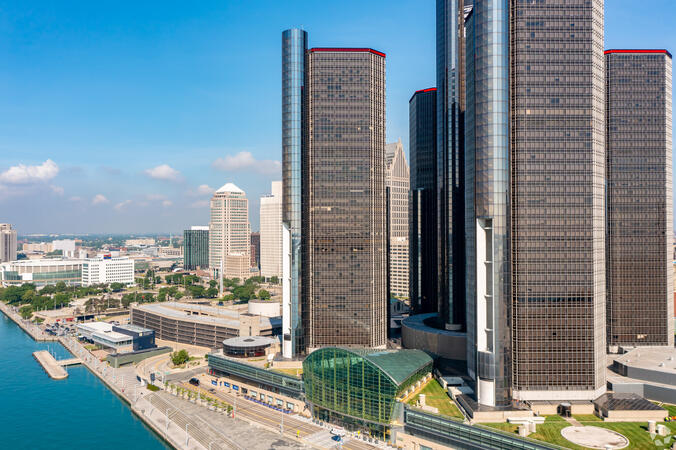
Detroit, MI - Renaissance Center
400 Renaissance Center, Detroit, United States, 48243
The GM Renaissance Center is conveniently located in downtown Detroit and easily accessed by car via Interstates 75 or 94, with secure underground parking available on site. Travelers flying into Detroit Metropolitan Airport (DTW) can expect a 25–30 minute trip by taxi or rideshare via I‑94. Public transit is efficient: the Detroit People Mover stops directly at the Renaissance Center station, and DDOT routes 3 and 9 serve nearby Jefferson Avenue. Pedestrian skywalks provide safe indoor access from downtown hotels, parking garages, and the riverwalk.
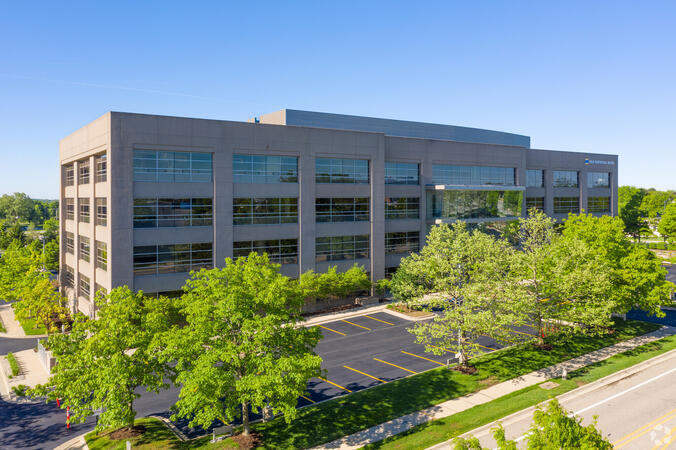
Ann Arbor, MI – Regus - South State Commons I
2723 S State St, Ann Arbor, United States, 48104
Regus South State Commons I is conveniently located off I‑94 via Exit 177 (State Street), with easy access to downtown Ann Arbor and surrounding suburbs. The building offers free on-site surface parking for guests. From Detroit Metropolitan Airport (DTW), the venue can be reached in approximately 20–25 minutes by taxi or rideshare via I‑94 West. Local public transit service (TheRide) operates Route 24 along South State Street, with a stop within a short 2-minute walk of the building.
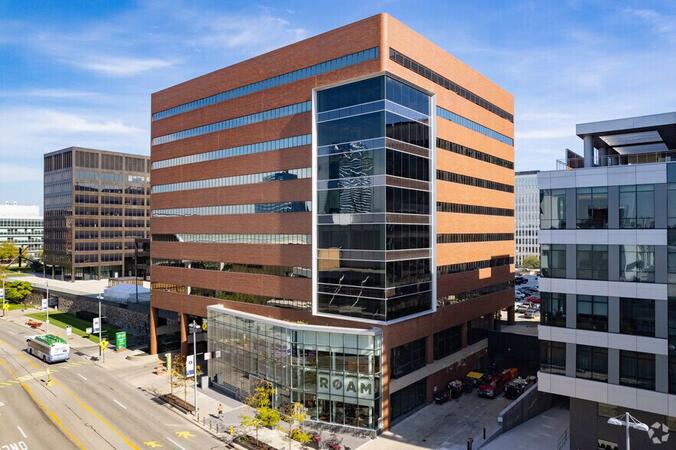
Grand Rapids, MI - Regus – Calder Plaza
250 Monroe Ave NW, Grand Rapids, United States, 49503
The venue sits centrally at 250 Monroe Avenue NW in downtown Grand Rapids, easily accessed by car via US‑131 or I‑196—with connections via Monroe or Ottawa exits—and offers shared underground and surface parking. From Gerald R. Ford International Airport, take I‑96 East then I‑196 West into the city; the drive is about 20 minutes. Public transit through Rapid bus routes stops near Monroe or Ottawa Avenue, just a short walk from the Regus entrance; the downtown area is pedestrian-friendly.
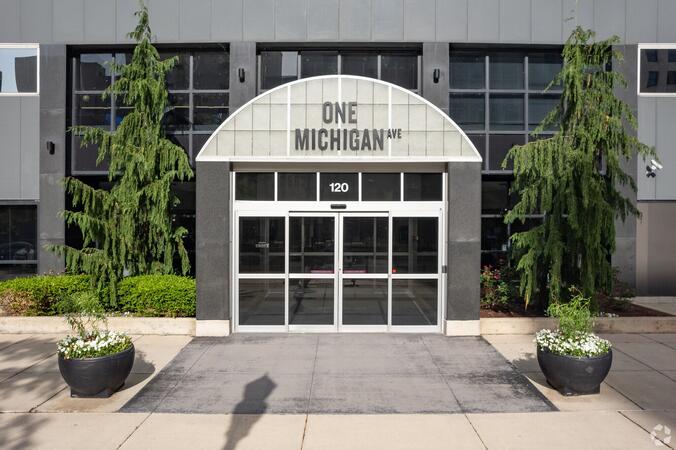
Lansing, MI - Regus - One Michigan Avenue
120 North Washington Square, Lansing, United States, 48933
The venue is located in the heart of Lansing’s central business district at 120 North Washington Square, easily accessible by car via I‑496 or US‑127 with convenient street parking and a nearby parking ramp. From Capital Region International Airport (LAN), the location is approximately a 12‑minute drive west via I‑96 and US‑127, with taxis and rideshares readily available. Public transit users can take CATA bus routes that stop just a block away on Washington or Grand Avenue, offering seamless access to the venue.
This instructor-led, live training in Michigan (online or onsite) is aimed at advanced-level professionals who wish to deepen their understanding of computer vision and explore TensorFlow's capabilities for developing sophisticated vision models using Google Colab for government.
By the end of this training, participants will be able to:
Build and train convolutional neural networks (CNNs) using TensorFlow.
Leverage Google Colab for scalable and efficient cloud-based model development for government applications.
Implement image preprocessing techniques for computer vision tasks in a public sector context.
Deploy computer vision models for real-world, government-specific applications.
Use transfer learning to enhance the performance of CNN models for government projects.
Visualize and interpret the results of image classification models in a manner that supports public sector decision-making.
This instructor-led, live training in Michigan (online or onsite) is designed for intermediate-level data scientists and developers who wish to understand and apply deep learning techniques using the Google Colab environment.
By the end of this training, participants will be able to:
Set up and navigate Google Colab for government deep learning projects.
Understand the foundational principles of neural networks.
Implement deep learning models using TensorFlow.
Train and evaluate deep learning models effectively.
Utilize advanced features of TensorFlow to enhance deep learning applications for government use.
This four-day course provides an introduction to artificial intelligence (AI) and its applications for government. An optional fifth day is available for participants to engage in an AI project following the conclusion of the course.
In this instructor-led, live training in Michigan, participants will learn to utilize Python libraries for Natural Language Processing (NLP) as they develop an application that processes a set of images and generates descriptive captions.
By the end of this training, participants will be able to:
Design and implement Deep Learning models for NLP using Python libraries.
Create Python code that analyzes a large collection of images and extracts relevant keywords.
Develop Python code that generates captions based on the identified keywords, enhancing efficiency and accuracy for government applications.
This course is designed for deep learning researchers and engineers who are interested in leveraging available tools, primarily open source, for the analysis of computer images. This training provides practical examples to enhance skills and capabilities for government applications.
The course includes working examples to facilitate hands-on learning and application.
This instructor-led, live training in Michigan (online or onsite) is aimed at data scientists who wish to utilize TensorFlow to analyze potential fraud data for government.
By the end of this training, participants will be able to:
Create a fraud detection model using Python and TensorFlow for government applications.
Construct linear regressions and linear regression models to predict fraudulent activities.
Develop an end-to-end artificial intelligence application for analyzing fraud data within public sector workflows.
This instructor-led, live training in Michigan (online or onsite) is aimed at developers and data scientists who wish to utilize TensorFlow 2.x for government applications such as building predictors, classifiers, generative models, neural networks, and more.
By the end of this training, participants will be able to:
Install and configure TensorFlow 2.x for government use.
Understand the benefits of TensorFlow 2.x over previous versions in a public sector context.
Build deep learning models for government projects.
Implement an advanced image classifier for government applications.
Deploy a deep learning model to the cloud, mobile, and IoT devices for government use.
In this instructor-led, live training in Michigan (online or onsite), participants will learn how to configure and use TensorFlow Serving to deploy and manage machine learning models in a production environment for government.
By the end of this training, participants will be able to:
Train, export, and serve various TensorFlow models.
Test and deploy algorithms using a unified architecture and set of APIs.
Extend TensorFlow Serving to support other types of models beyond those developed with TensorFlow.
TensorFlow is a second-generation API of Google's open-source software library for deep learning. The system is designed to facilitate research in machine learning and to enable a smooth transition from research prototype to production systems.
Audience
This course is intended for engineers seeking to use TensorFlow for their deep learning projects for government.
After completing this course, delegates will:
understand TensorFlow’s structure and deployment mechanisms
be able to carry out installation, production environment, architecture tasks, and configuration
be able to assess code quality, perform debugging, and monitoring
be able to implement advanced production tasks such as training models, building graphs, and logging
This instructor-led, live training in Michigan (online or onsite) is aimed at data scientists who wish to transition from training a single machine learning (ML) model to deploying multiple ML models into production environments for government.
By the end of this training, participants will be able to:
Install and configure TFX along with supporting third-party tools.
Utilize TFX to create and manage a comprehensive ML production pipeline for government.
Work with TFX components to perform modeling, training, serving inference, and managing deployments in public sector workflows.
Deploy machine learning capabilities to web applications, mobile applications, IoT devices, and other platforms relevant to government operations.
TensorFlow™ is an open-source software library for numerical computation using data flow graphs.
SyntaxNet is a neural-network Natural Language Processing framework for TensorFlow.
Word2Vec is used for learning vector representations of words, known as "word embeddings." Word2vec is a computationally-efficient predictive model for learning word embeddings from raw text. It comes in two variants: the Continuous Bag-of-Words (CBOW) model and the Skip-Gram model (Chapter 3.1 and 3.2 in Mikolov et al.).
When used together, SyntaxNet and Word2Vec enable users to generate learned embedding models from natural language input.
Audience
This course is designed for developers and engineers who intend to work with SyntaxNet and Word2Vec models in their TensorFlow graphs for government applications.
After completing this course, delegates will:
understand TensorFlow’s structure and deployment mechanisms
be able to perform installation, production environment configuration, architecture tasks, and system setup
be capable of assessing code quality, performing debugging, and monitoring performance
be able to implement advanced production tasks such as training models, embedding terms, building graphs, and logging data
This course begins by providing conceptual knowledge in neural networks and a broad understanding of machine learning algorithms and deep learning (both algorithms and applications).
Part-1 (40%) of this training focuses on the fundamentals, which will assist you in selecting the appropriate technology: TensorFlow, Caffe, Theano, DeepDrive, Keras, etc.
Part-2 (20%) of this training introduces Theano, a Python library that simplifies the writing of deep learning models.
Part-3 (40%) of the training is extensively based on TensorFlow, the API of Google's open-source software library for Deep Learning. All examples and hands-on exercises will be conducted using TensorFlow.
Audience
This course is designed for engineers who intend to use TensorFlow for their deep learning projects for government.
After completing this course, participants will:
have a solid understanding of deep neural networks (DNN), convolutional neural networks (CNN), and recurrent neural networks (RNN)
understand TensorFlow’s architecture and deployment mechanisms
be capable of performing installation, production environment setup, architectural tasks, and configuration
be able to evaluate code quality, perform debugging, and monitor systems
be proficient in implementing advanced production tasks such as training models, building graphs, and logging
Read more...
Last Updated:
Testimonials (4)
The trainer explained the content well and was engaging throughout. He stopped to ask questions and let us come to our own solutions in some practical sessions. He also tailored the course well for our needs.
Robert Baker
Course - Deep Learning with TensorFlow 2.0
Tomasz really know the information well and the course was well paced.
Raju Krishnamurthy - Google
Course - TensorFlow Extended (TFX)
Organization, adhering to the proposed agenda, the trainer's vast knowledge in this subject
Ali Kattan - TWPI
Course - Natural Language Processing with TensorFlow
Very updated approach or CPI (tensor flow, era, learn) to do machine learning.
Online TensorFlow training in Michigan, TensorFlow training courses in Michigan, Weekend TensorFlow courses in Michigan, Evening TensorFlow training in Michigan, TensorFlow instructor-led in Michigan, Weekend TensorFlow training in Michigan, Evening TensorFlow courses in Michigan, Online TensorFlow training in Michigan, TensorFlow coaching in Michigan, TensorFlow one on one training in Michigan, TensorFlow boot camp in Michigan, TensorFlow instructor-led in Michigan, TensorFlow instructor in Michigan, TensorFlow classes in Michigan, TensorFlow on-site in Michigan, TensorFlow private courses in Michigan, TensorFlow trainer in Michigan