AI is transforming the way software is developed — not by replacing developers, but by working alongside them, line by line.
In these instructor-led courses, participants learn to code using AI copilots, auto-generate tests, identify bugs before they impact production, and translate plain English into functional code.
Online live training is delivered via interactive remote desktop, while onsite sessions in Florida pair developers with hands-on labs inside real integrated development environments (IDEs) and version-controlled projects.
Onsite courses can be hosted in your own engineering space in Florida, or held at a Govtra training center designed for collaborative, tool-driven learning.
Also known as AI-Assisted Programming, AI-Integrated Development, AI-Augmented Software Development, AI-Enhanced Coding, or Intelligent Software Development, this training empowers teams to build faster — with confidence and clarity. This approach is particularly beneficial for government agencies looking to enhance their software development processes while maintaining high standards of governance and accountability.
Govtra – Your Local Training Provider for government
Jacksonville, FL – Deerwood Park
10151 Deerwood Park Blvd 200, Suite 250, Jacksonville, United States, 32256
The venue is nestled in the Deerwood Park campus at 10151 Deerwood Park Boulevard, just off J. Turner Butler Boulevard (JTB) and I‑295, with free on-site parking and adjacent lots. From Jacksonville International Airport (JAX), approximately 18 miles north, a taxi or rideshare takes about 25 minutes via I‑95 South and JTB West. Public transit is available via Jacksonville’s JTA bus routes stopping within walking distance, making the landscaped campus—complete with fountains, cafes, and scenic walkways—easily accessible for attendees without a car.

Miami, FL – Regus at Waterford at Blue Lagoon
6303 Blue Lagoon Drive, Suite 400, Miami, United States, 33126
The venue is set within the Waterford business park at 6303 Blue Lagoon Drive, just minutes from Miami International Airport. It’s accessible by car via I‑95, Florida Turnpike, 826, or Dolphin Expressway, with abundant covered and surface parking on-site. From Miami International Airport (MIA), a taxi or rideshare takes approximately 10 minutes via the Dolphin Expressway. Public transit options include TheBus routes and nearby Tri-Rail stations, with the property a short walk from bus stops—making it convenient even for attendees without a car.

Tampa, FL – Regus at Wells Fargo Center
100 S. Ashley Drive, Suite 600, Tampa, United States, 33602
The venue is located in the 22-story Wells Fargo Center in downtown Tampa, easily accessible by car via I‑275, I‑4, I‑75, or the Selmon Expressway, with covered garage parking (610+ spaces) directly connected to the building. From Tampa International Airport (TPA), a taxi or rideshare takes about 15 minutes via I‑275 East and Ashley Drive. Public transit is excellent with the Downtown Tampa Station (NFTA Metro Rail) just a block away and several bus routes running along Ashley and Brorein Streets, making it ideal for attendees arriving without cars.
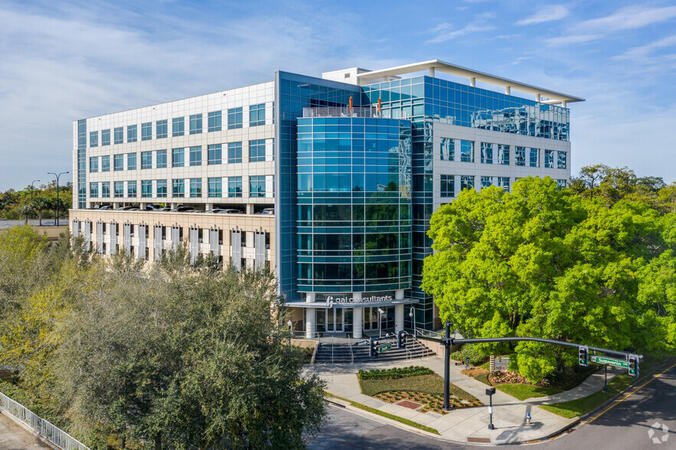
FL, Orlando – GAI Building
618 E. South Street Suite 500, Orlando, United States, 32801
The venue is located in the GAI Building with the CNS Healthcare logo at the front.
FL, Jacksonville - Bank of America Tower
50 N. Laura Street Suite 2500, Jacksonville, United States, 32202
The office is located in a premier office tower in Downtown Jacksonville on the 42nd floor. This Class A LEED Certified building is situated in the Northbank Office Market Preeminent location that provides commanding views. Downtown Trolley and Bus stops are located just across the street on Forsyth with easy access to I-95 leading to I-10 and I-295. Convenient to Jacksonville International Airport, the building is also just minutes to Everbank Field, Jacksonville Landing, Times Union Performing Arts Center, Jacksonville Veterans Memorial Arena and Jacksonville Public Library. Spectacular views of the St John's River in Jacksonville, Florida are one of many features that make the Bank of America Tower office space stand out. The office space occupies a blue granite tower in the heart of the city's central business district. The iconic tower is one of the best-known business premises in the southeastern United States and includes a statement lobby and class-A workspace. Businesses of all kinds appreciate Jacksonville's location at the crossroads of three major railroads and three interstates, and its international airport.
FL, Tallahassee – Alliance Center
113 South Monroe Street 1st Floor, Tallahassee, united states, 32301
The venue is located in the Alliance Center across the street from FUBA and the Florida Optometric Association.
FL, West Palm Beach - Philips Point
777 South Flagler Drive, West Palm Beach, United States, 33401
The venue is located in the Philips Point building just off the Royal Park Bridge.
FL, Aventura - Corporate Center
20801 Biscayne Blvd., Miami, united states, 33180
The venue is located in the Grove Bank & Trust building just off Biscayne Blvd.
FL, Fort Lauderdale - Corporate Center
Corporate Center, 110 East Broward Blvd., Fort Lauderdale, United States, 33301
The venue is located in the Corporate Center across the street from the Uniform Advantage Corporate Office and just next door to Colliers International.
Miami Beach, FL – Regus at Meridian Center
1688 Meridian Avenue, Suites 600/700, Miami Beach, United States, 33139
The venue is located on the corner of Meridian Avenue and 17th Street in Miami Beach’s vibrant City Center district, accessible by car via I‑195 and the MacArthur Causeway with underground and street parking nearby. From Miami International Airport (MIA), taxis or rideshares typically take 15–20 minutes via I‑195 East and Biscayne Boulevard. Public transit is seamless: several Metrobus routes serve Meridian Avenue, and the nearby 17th Street trolley stop makes it easy to reach without a car. The central location places the venue steps from the Miami Beach Convention Center, Lincoln Road Mall, restaurants, galleries, and retail.
Tampa, FL - Regus - One Urban Centre at Westshore
4830 W Kennedy Blvd #600, Tampa, United States, 33609
The venue is located in the Westshore business district at 4830 West Kennedy Boulevard, seamlessly accessible by car via I‑275 or I‑75 with secure underground and surface parking on-site. From Tampa International Airport (TPA), take Memorial Highway to I‑275 South and exit at West Kennedy Boulevard—taxi or rideshare typically takes about 15–20 minutes. Public transit users can reach the venue via HART bus routes (such as Route 2 or 32) stopping nearby, followed by a short walk into the building lobby.
GitHub Copilot is an AI-powered code completion tool designed to enhance development speed while improving the quality and productivity of software projects. When integrated with other Artificial Intelligence applications in projects, infrastructure, and software, it can significantly optimize resource allocation, streamline workflows, and enhance decision-making processes.
This instructor-led, live training (available online or on-site) is targeted at advanced-level managers who wish to deepen their understanding of GitHub Copilot while exploring practical AI applications in corporate environments. The training includes examples relevant to large-scale projects and industries such as oil and gas, ensuring that participants gain insights applicable to their specific contexts.
By the end of this training, participants will be able to:
Apply advanced Copilot functionalities in large-scale corporate projects for government and private sectors.
Integrate Copilot into multidisciplinary workflows to achieve maximum efficiency.
Leverage AI tools to optimize project management, infrastructure, and software acquisition processes.
Implement AI-based strategies to improve planning, estimation, and time optimization in their projects.
Recognize practical AI applications in industry-specific scenarios, such as those found in the oil and gas sector.
Format of the Course
Interactive lectures and discussions.
Hands-on exercises and case studies.
Live-lab demonstrations of AI tools and Copilot workflows.
Course Customization Options
To request a customized training for government or corporate needs, please contact us to arrange.
Artificial Intelligence (AI) is a suite of technologies designed to emulate human intelligence within machines and applications, enhancing the capabilities of software to be more intelligent and adaptive.
This instructor-led, live training (conducted online or on-site) is targeted at intermediate-level developers who aim to develop AI-powered applications using real-world tools and platforms for government.
By the end of this training, participants will be able to:
- Understand fundamental AI and machine learning concepts.
- Develop AI features using Python and widely-used libraries.
- Apply AI methodologies to practical software development projects.
- Assess models and deploy intelligent services.
**Format of the Course**
- Interactive lectures and discussions.
- Extensive exercises and practice sessions.
- Hands-on implementation in a live-lab environment.
**Course Customization Options**
- To request a customized training for this course, please contact us to arrange.
GitHub Copilot is an AI-powered coding assistant designed to help automate various development tasks, including DevOps operations such as writing YAML configurations, GitHub Actions, and deployment scripts.
This instructor-led, live training (online or onsite) is aimed at beginner-level to intermediate-level professionals who wish to utilize GitHub Copilot to streamline DevOps tasks, enhance automation, and increase productivity for government and other public sector workflows.
By the end of this training, participants will be able to:
Use GitHub Copilot to assist with shell scripting, configuration, and CI/CD pipelines.
Leverage AI code completion in YAML files and GitHub Actions.
Accelerate testing, deployment, and automation workflows.
Apply Copilot responsibly with an understanding of AI limitations and best practices for government use.
Format of the Course
Interactive lecture and discussion.
Extensive exercises and practice sessions.
Hands-on implementation in a live-lab environment.
Course Customization Options
To request a customized training for this course, please contact us to arrange.
The Huawei Ascend family of AI processors is designed for high-performance inference and training applications.
This instructor-led, live training (online or onsite) is aimed at intermediate-level AI engineers and data scientists who wish to develop and optimize neural network models using Huawei’s Ascend platform and the CANN toolkit. The course is tailored to align with public sector workflows, governance, and accountability for government.
By the end of this training, participants will be able to:
Set up and configure the CANN development environment.
Develop AI applications using MindSpore and CloudMatrix workflows.
Optimize performance on Ascend NPUs using custom operators and tiling techniques.
Deploy models to edge or cloud environments, ensuring compliance with government standards.
Format of the Course
Interactive lecture and discussion sessions.
Hands-on use of Huawei Ascend and the CANN toolkit in sample applications relevant to government operations.
Guided exercises focused on model building, training, and deployment within a governmental context.
Course Customization Options
To request a customized training for this course based on your specific infrastructure or datasets, please contact us to arrange. We can tailor the content to meet the unique needs of government agencies.
This instructor-led, live training (available online or onsite) is designed for intermediate-level software professionals who seek to enhance efficiency and innovation in software development through the use of artificial intelligence (AI) and machine learning.
By the end of this training, participants will be able to:
- Comprehend the role of AI and machine learning in automating various tasks within software development.
- Utilize AI tools for generating code, tests, and documentation.
- Employ AI techniques for optimizing code, ensuring quality, and debugging.
- Incorporate AI into DevOps and CI/CD pipelines to improve deployment strategies.
- Address ethical considerations and challenges associated with AI-augmented software engineering for government.
This instructor-led, live training in Florida (online or onsite) is designed for intermediate to advanced participants who aim to optimize team workflows, enhance collaborative coding practices, and effectively manage GitHub Copilot usage in multi-developer environments.
By the end of this training, participants will be able to:
Set up GitHub Copilot for team environments.
Utilize Copilot to improve collaborative coding practices.
Optimize team workflows using Copilot’s features.
Manage Copilot’s integration in multi-developer projects.
Maintain consistent code quality and standards across teams.
Leverage advanced Copilot features to meet team-specific needs.
Combine Copilot with other collaborative tools for enhanced efficiency.
This training is tailored to support the unique requirements and workflows of teams, ensuring alignment with public sector standards and governance for government operations.
This instructor-led, live training (conducted online or onsite) is designed for intermediate-level QA engineers, developers, and team leads who aim to utilize GitHub Copilot for more efficient debugging, code quality improvement, and streamlined code review processes.
By the end of this training, participants will be able to:
- Configure GitHub Copilot for debugging and code review purposes.
- Utilize Copilot to identify and resolve bugs effectively.
- Enhance code quality through AI-assisted suggestions.
- Streamline code review workflows with Copilot's capabilities.
- Foster effective collaboration using Copilot in team environments.
This training is tailored to support the needs of professionals working in technical roles, ensuring they can leverage advanced tools for government projects.
By the end of this training, participants will be able to:
Prompt Engineering for Software Development is a hands-on course designed to teach developers how to craft effective prompts that optimize the usefulness, precision, and safety of AI-generated outputs in software engineering tasks.
This instructor-led, live training (available online or onsite) is aimed at intermediate-level developers who wish to integrate prompt engineering techniques into their use of AI coding assistants, code analyzers, and intelligent automation tools.
Create precise prompts for code generation, review, and optimization tasks.
Use prompt chaining and refinement to enhance AI responses in iterative workflows.
Generate structured outputs such as test cases, SQL queries, and documentation from minimal input.
Mitigate hallucination and improve control over LLM behavior in technical environments.
Interactive lecture and discussion.
Extensive exercises and practice sessions.
Hands-on implementation in a live-lab environment.
To request a customized training for government or other organizations, please contact us to arrange.
This instructor-led, live training (online or onsite) is designed for intermediate-level front-end developers who wish to utilize GitHub Copilot to automate repetitive coding tasks, enhance UI/UX design, and optimize front-end workflows.
By the end of this training, participants will be able to:
Configure GitHub Copilot for front-end development projects.
Utilize Copilot to generate HTML, CSS, and JavaScript code more efficiently.
Improve UI/UX design processes with AI-generated code suggestions.
Enhance front-end workflows through practical integration of Copilot strategies.
Troubleshoot and debug front-end code using Copilot's assistance.
This training aligns with the needs for government agencies looking to streamline their development processes and ensure efficient use of resources.
Responsible AI in Software Development is a foundational course that addresses the ethical, legal, and governance considerations when using AI tools in the software development process. The course emphasizes transparency, fairness, intellectual property concerns, and the safe deployment of AI-generated code.
This instructor-led, live training (online or onsite) is designed for beginner-level technical and non-technical professionals who wish to ensure ethical, compliant, and risk-aware use of AI in their software projects.
By the end of this training, participants will be able to:
Identify and mitigate ethical and legal risks associated with AI-assisted development.
Understand bias in AI-generated code and how to evaluate fairness.
Manage software licenses and attribution related to AI-generated content.
Establish governance, policy, and compliance frameworks for AI use in development teams.
Format of the Course
Interactive lecture and discussion.
Extensive exercises and practice sessions.
Hands-on implementation in a live-lab environment.
Course Customization Options for Government
To request a customized training tailored to the specific needs of your government agency, please contact us to arrange.
AI for Software Requirements and User Story Generation is a practical course designed to leverage generative AI in transforming stakeholder input into structured requirements, epics, user stories, and acceptance criteria suitable for Agile development workflows.
This instructor-led, live training (online or onsite) is tailored for beginner-level product and project professionals who seek to utilize tools such as ChatGPT or Claude to enhance the clarity, speed, and traceability in requirement gathering and refinement processes for government projects.
By the end of this training, participants will be able to:
Utilize AI prompts to gather and refine business requirements effectively.
Convert feature requests into well-structured user stories and epics.
Generate acceptance criteria, edge cases, and definitions of done with the assistance of AI.
Collaborate with development teams using AI-generated documentation.
Format of the Course
Interactive lecture and discussion sessions.
Extensive exercises and practice opportunities.
Hands-on implementation in a live-lab environment.
Course Customization Options
To request a customized training for this course, please contact us to arrange.
Cursor is an AI-powered development environment designed to enhance productivity and reliability across data and machine learning workflows for government. It offers intelligent code generation, context-aware suggestions, and streamlined documentation.
This instructor-led, live training (available online or onsite) is aimed at intermediate-level data and ML professionals who wish to integrate Cursor into their daily workflows to achieve faster prototyping, scalable pipeline development, and improved model operations.
Upon completing this training, participants will be able to:
- Use Cursor to accelerate notebook development and code exploration.
- Generate, refactor, and document ETL and feature engineering pipelines.
- Leverage AI-assisted code for model training, tuning, and evaluation.
- Enhance reproducibility, collaboration, and operational consistency in ML workflows.
**Format of the Course:**
- Interactive lectures and demonstrations.
- Practical, hands-on exercises in live coding environments.
- Case studies integrating Cursor with ML pipelines and model operations tools.
**Course Customization Options:**
- This training can be tailored to specific frameworks such as TensorFlow, PyTorch, or scikit-learn, or to organizational MLOps platforms for government.
This instructor-led, live training (available online or on-site) is designed for government personnel who are beginner to intermediate-level Python developers looking to leverage GitHub Copilot for Python-specific tasks, debugging, and implementing machine learning workflows.
By the end of this training, participants will be able to:
- Set up and configure GitHub Copilot for Python development in a government setting.
- Utilize Copilot to write efficient and compliant Python code for government applications.
- Debug Python applications using AI-generated suggestions to enhance accuracy and reliability.
- Automate repetitive coding tasks to improve workflow efficiency for government projects.
- Leverage Copilot for implementing machine learning initiatives in Python, tailored to meet the needs of public sector workflows.
Graphite is a developer productivity and code review platform designed to optimize pull request workflows, enhance team collaboration, and integrate seamlessly with tools such as GitHub and AI-based code review assistants.
This instructor-led, live training (available online or on-site) is tailored for intermediate-level software engineering teams aiming to streamline their development processes, boost review efficiency, and implement Graphite effectively within enterprise DevOps pipelines for government.
By the end of this training, participants will be able to:
- Deploy and configure Graphite for enterprise-scale development environments.
- Automate pull request management and enhance code review throughput.
- Integrate Graphite with GitHub, CI/CD systems, and AI assistants such as OpenAI, Deepseek, LlaMA, Qwen, and Mistral Small.
- Measure developer productivity using Graphite analytics and dashboards.
**Format of the Course**
- Interactive lecture and discussion.
- Extensive exercises and practice sessions.
- Hands-on implementation in a live-lab environment.
**Course Customization Options**
- To request a customized training for this course, please contact us to arrange.
Cursor is an advanced AI-powered development environment designed for engineers to extend, fine-tune, and customize its coding intelligence for specialized use cases and enterprise workflows, including those for government.
This instructor-led, live training (available online or onsite) is aimed at advanced-level developers and AI engineers who wish to design tailored prompt systems, fine-tune model behavior, and build custom extensions to support internal development automation processes.
By the conclusion of this training, participants will be able to:
- Design and test advanced prompt templates for precise AI behavior.
- Connect Cursor to internal APIs and knowledge bases for context-aware code generation.
- Develop fine-tuned or domain-adapted AI models for specialized tasks.
- Build and deploy custom tools or adapters that extend Cursor’s functionality securely.
**Format of the Course**
- Technical presentations and guided demonstrations.
- Hands-on development and prompt optimization labs.
- Practical projects integrating Cursor with real-world enterprise systems, including those used in government contexts.
**Course Customization Options**
- This course can be customized to align with specific internal architectures, AI frameworks, or security compliance requirements for government.
This instructor-led, live training in Florida (online or onsite) is designed for advanced-level participants who wish to customize GitHub Copilot for government team projects, utilize its advanced features, and integrate it seamlessly into CI/CD pipelines to enhance collaboration and productivity.
By the end of this training, participants will be able to:
- Customize GitHub Copilot to meet specific project needs and team workflows.
- Utilize advanced features of Copilot for complex coding tasks.
- Integrate GitHub Copilot into CI/CD pipelines and collaborative environments.
- Optimize team collaboration using AI-powered tools.
- Effectively manage and troubleshoot Copilot settings and permissions.
Generative AI for Front-End Development examines how large language models and AI-powered tools can enhance front-end development through prompt-based code generation, layout prototyping, and UI optimization.
This instructor-led, live training (online or onsite) is designed for beginner to intermediate-level front-end professionals who seek to leverage generative AI to build and iterate user interfaces more efficiently and creatively.
By the end of this training, participants will be able to:
Utilize AI tools to generate HTML, CSS, and JavaScript from natural language prompts.
Develop and refine UI components and layouts using generative models.
Rapidly prototype responsive web designs without writing all code from scratch.
Optimize front-end code using AI suggestions and automation workflows.
Format of the Course
Interactive lecture and discussion.
Extensive exercises and practice sessions.
Hands-on implementation in a live-lab environment.
Course Customization Options for Government
To request a customized training for this course, please contact us to arrange.
This instructor-led, live training in [location] (online or onsite) is aimed at developers ranging from novices to experts who wish to leverage AI for code generation with Tabnine.
By the end of this training, participants will be able to:
- Understand the fundamentals of AI-powered code generation.
- Install and configure Tabnine in their development environment.
- Utilize Tabnine for efficient code completion and error correction.
- Create and train custom AI models with Tabnine for specialized tasks, enhancing productivity for government projects.
Vibe coding is an emerging paradigm where developers collaborate with large language models to generate, refine, and optimize code through natural language interactions.
This instructor-led, live training (online or onsite) is aimed at intermediate-level developers and technical leads who wish to master the use of AI coding assistants and open-source LLMs to improve productivity, creativity, and workflow automation for government projects.
By the end of this training, participants will be able to:
- Understand the principles and philosophy of vibe coding and its impact on software development.
- Implement LLM-assisted coding environments using tools such as Replit, DeepSeek, LlaMA, Qwen, Mistral, and GitHub Copilot.
- Design and execute prompt engineering strategies for effective AI collaboration.
- Integrate vibe coding workflows into enterprise CI/CD pipelines and governance frameworks.
**Format of the Course**
- Interactive lecture and discussion.
- Extensive exercises and practice sessions.
- Hands-on implementation in a live-lab environment.
**Course Customization Options**
- To request a customized training for this course, please contact us to arrange.
AI-Augmented Test Generation and Quality Engineering examines how artificial intelligence tools and large language models (LLMs) can enhance test coverage, accelerate test creation, and improve quality assurance processes.
This instructor-led, live training (online or onsite) is designed for intermediate-level QA professionals who seek to automate and refine their testing strategies using AI-driven tools and practices.
By the end of this training, participants will be able to:
Generate unit, integration, and user interface tests using AI tools and prompts.
Utilize LLMs for exploratory testing, edge-case identification, and regression analysis.
Cluster and prioritize test failures and anomalies through AI-assisted triage.
Integrate AI-based testing into CI/CD pipelines to enhance release confidence.
Format of the Course
Interactive lecture and discussion.
Extensive exercises and practice sessions.
Hands-on implementation in a live-lab environment.
Course Customization Options
To request a customized training for government or other organizations, please contact us to arrange.
Cursor is an AI-powered development environment designed to enhance team collaboration, automate code reviews, and integrate seamlessly into modern CI/CD workflows for government.
This instructor-led, live training (available online or onsite) is targeted at intermediate-level technical professionals who wish to incorporate Cursor into their team environments to improve collaboration, streamline reviews, and maintain quality across automated pipelines for government.
Upon completing this training, participants will be able to:
- Set up and manage team environments in Cursor for collaborative development.
- Utilize AI tools for automated code reviews, pull request generation, and merge validation.
- Implement code governance, review policies, and security guardrails using Cursor’s capabilities.
- Integrate Cursor with CI/CD systems to ensure continuous delivery and consistent quality standards.
**Format of the Course**
- Instructor-led presentations and team-based discussions.
- Hands-on labs using real-world team collaboration scenarios.
- Live integration exercises with CI/CD and version control tools.
**Course Customization Options**
- The course can be tailored to specific CI/CD platforms, repository tools, or enterprise security requirements for government.
This instructor-led, live training (online or onsite) is designed for government agencies and aimed at beginner to intermediate-level programmers and developers who wish to leverage DeepSeek Coder to enhance coding efficiency and productivity.
By the end of this training, participants will be able to:
- Understand the capabilities and limitations of DeepSeek Coder.
- Generate high-quality code snippets using AI assistance.
- Utilize DeepSeek Coder for debugging and optimizing code.
- Automate repetitive programming tasks using AI tools.
This instructor-led, live training (online or onsite) is aimed at intermediate-level participants who wish to leverage GitHub Copilot to manage advanced coding scenarios, enhance productivity, and integrate Copilot into their development workflows for government.
By the end of this training, participants will be able to:
- Optimize their use of GitHub Copilot for complex coding tasks.
- Write more efficient, error-free, and maintainable code using Copilot suggestions.
- Integrate GitHub Copilot into their preferred integrated development environments (IDEs) and workflows.
- Utilize Copilot for debugging and code refactoring.
- Understand the limitations and ethical considerations associated with using AI-powered coding tools.
This instructor-led, live training (online or onsite) is designed for advanced-level developers and team leads who aim to master the advanced features of Tabnine for government applications.
By the end of this training, participants will be able to:
- Implement Tabnine in complex software projects for government.
- Customize and train Tabnine's AI models for specific governmental use cases.
- Integrate Tabnine into team workflows and development pipelines within public sector organizations.
- Enhance code quality and accelerate development cycles using Tabnine's insights, ensuring alignment with government standards and practices.
This instructor-led, live training (online or onsite) is designed for government software developers at beginner to intermediate levels who wish to integrate AI coding assistants into their development workflows.
By the end of this training, participants will be able to:
- Understand the role and capabilities of AI coding assistants in software development for government.
- Utilize various AI coding assistant tools to automate routine coding tasks.
- Integrate AI coding assistants into their software development lifecycle to enhance efficiency.
- Improve productivity by focusing on more complex and creative programming tasks.
- Address ethical considerations and ensure responsible use of AI in government software development.
Devstral is an open-source framework designed for building and running coding agents that can interact with codebases, developer tools, and APIs to enhance engineering productivity.
This instructor-led, live training (online or onsite) is aimed at intermediate to advanced-level ML engineers, developer-tooling teams, and SREs who wish to design, implement, and optimize coding agents using Devstral for government applications.
By the end of this training, participants will be able to:
- Set up and configure Devstral for coding agent development.
- Design agentic workflows for codebase exploration and modification.
- Integrate coding agents with developer tools and APIs.
- Implement best practices for secure and efficient agent deployment in alignment with public sector standards.
**Format of the Course**
- Interactive lecture and discussion.
- Extensive exercises and practice sessions.
- Hands-on implementation in a live-lab environment.
**Course Customization Options**
- To request a customized training for this course, please contact us to arrange.
Cursor is an AI-powered code editor designed to enhance developer productivity through intelligent code completions, contextual edits, and adaptive assistance for government projects.
This instructor-led, live training (online or onsite) is aimed at beginner-level developers and engineering teams within the public sector who wish to streamline their coding workflow and safely leverage AI suggestions for improved efficiency.
Upon completion of this training, participants will be able to:
- Install and configure Cursor for optimal use in development projects.
- Understand and apply AI-assisted code completion, in-editor chat, and refactoring tools.
- Evaluate, accept, or modify AI-generated code suggestions effectively and securely.
- Adopt best practices for team onboarding, collaboration, and version control integration.
**Format of the Course**
- Interactive lecture and discussion.
- Hands-on demonstrations and guided exercises.
- Real-world coding challenges and lab practice using Cursor.
**Course Customization Options**
- This course can be tailored to specific programming languages or frameworks used by your government team.
This instructor-led, live training in Florida (online or onsite) is designed for government beginner-level developers who wish to understand the capabilities of GitHub Copilot, set it up, and use it effectively to enhance their coding experience.
By the end of this training, participants will be able to:
Understand what GitHub Copilot is and how it functions.
Set up GitHub Copilot with a supported code editor for government use.
Utilize GitHub Copilot to write, refactor, and debug code more efficiently.
Leverage Copilot to explore coding techniques and solutions.
Apply best practices for integrating GitHub Copilot into daily workflows for government operations.
The LLMs for Code Understanding, Refactoring, and Documentation is a technical course designed to leverage large language models (LLMs) to enhance code quality, reduce technical debt, and automate documentation tasks across software teams in the public sector.
This instructor-led, live training (available online or onsite) is targeted at intermediate to advanced-level software professionals who seek to utilize LLMs such as GPT to analyze, refactor, and document complex or legacy codebases more effectively for government applications.
By the end of this training, participants will be able to:
Use LLMs to explain code, dependencies, and logic in unfamiliar repositories.
Identify and refactor anti-patterns to improve code readability.
Automatically generate and maintain inline comments, README files, and API documentation.
Integrate LLM-driven insights into existing continuous integration/continuous deployment (CI/CD) and review workflows for government projects.
Format of the Course
Interactive lectures and discussions.
Extensive exercises and practice sessions.
Hands-on implementation in a live-lab environment.
Course Customization Options
To request a customized training for this course tailored to specific government needs, please contact us to arrange.
This instructor-led, live training in [location] (online or onsite) is aimed at intermediate-level Python developers and data scientists who wish to enhance their productivity using Tabnine.
By the end of this training, participants will be able to:
- Install and configure Tabnine in their Python development environment.
- Utilize Tabnine's autocomplete features to write Python code more efficiently.
- Tailor Tabnine's settings to align with their coding preferences and project requirements.
- Gain an understanding of how Tabnine's AI model functions specifically with Python code, ensuring it meets the needs for government projects.
This instructor-led, live training in [location] (online or onsite) is designed for government personnel at the beginner level who wish to understand AI coding assistants, their capabilities, how they can enhance the development process, and the ethical considerations surrounding their use.
By the end of this training, participants will be able to:
- Comprehend the purpose and capabilities of AI coding assistants.
- Identify various AI coding assistant tools and their features for government applications.
- Utilize AI coding assistants for basic coding tasks in a public sector environment.
- Address fundamental ethical considerations and responsible use of AI in development for government.
The AI-Driven Software Development Lifecycle (SDLC) is a practical course designed to explore how artificial intelligence can enhance each phase of the software development process. From automating requirement analysis to intelligent test generation and deployment optimization, participants will learn how to integrate AI tools and techniques across the full lifecycle.
This instructor-led, live training (available online or onsite) is aimed at intermediate-level software leaders who wish to modernize their SDLC with AI-assisted workflows and tools for government.
By the end of this training, participants will be able to:
- Leverage AI to convert business input into structured requirements and user stories.
- Use large language models (LLMs) to improve code documentation, review, and refactoring.
- Automate test case generation and coverage analysis using AI tools.
- Apply AI-driven monitoring and deployment decision-making in CI/CD pipelines.
**Format of the Course**
- Interactive lecture and discussion.
- Extensive exercises and practice sessions.
- Hands-on implementation in a live-lab environment.
**Course Customization Options**
- To request a customized training for this course, please contact us to arrange.
This instructor-led, live training (online or onsite) is aimed at intermediate-level software developers who wish to enhance productivity and code quality using AI-assisted coding with Cursor.
By the end of this training, participants will be able to:
- Install and configure Cursor for AI-assisted software development.
- Integrate Cursor with Git repositories and development workflows for government.
- Use natural language to generate, debug, and optimize code.
- Leverage AI capabilities for refactoring, documentation, and testing.
This instructor-led, live training, available online or on-site, is designed for government developers ranging from beginners to intermediates. The course aims to equip participants with the skills necessary to leverage GitHub Copilot effectively within contemporary development workflows for government projects.
This instructor-led, live training (available online or on-site) is designed for beginner-level developers in the public sector who wish to enhance their coding efficiency with the help of Tabnine.
By the end of this training, participants will be able to:
- Install and configure Tabnine in their preferred Integrated Development Environment (IDE).
- Utilize Tabnine's autocomplete features to accelerate coding processes.
- Customize Tabnine's settings for optimal support in government workflows.
- Understand how Tabnine’s AI technology learns from their code to provide more accurate suggestions, improving productivity and efficiency for government projects.
This immersive one-day workshop empowers software teams to integrate advanced AI tools throughout the Software Development Lifecycle (SDLC). Structured as an interactive game with progressive “levels,” this experience combines technical skill-building, creativity, and collaboration.
Participants will address real-world challenges across all stages of the SDLC — from requirement gathering and design to coding, testing, deployment, and monitoring — using AI-powered tools such as ChatGPT, GitHub Copilot, and ML-based log analysis systems.
Designed for modern development environments, this workshop fosters AI fluency, team synergy, and a deep understanding of how to enhance software delivery pipelines with generative AI and machine learning capabilities. This training is tailored to support the unique needs and workflows for government agencies, ensuring alignment with public sector governance and accountability.
Upon completion of this course, participants will be able to:
- Gain a comprehensive understanding of the architecture and functionality of modern Large Language Models (LLMs).
- Create structured and robust technical prompts for styling, testing, refactoring, and automated quality assurance.
- Develop AI-aware wrappers and microservices that integrate seamlessly within enterprise development ecosystems for government.
- Implement comprehensive Retrieval-Augmented Generation (RAG) pipelines for organizational knowledge retrieval.
- Manage the security, privacy, and audit aspects of AI-driven code and data interactions.
Read more...
Last Updated:
Testimonials (2)
The way you use the copilot, more rule more close to what you need.
Carey Fan - Logitech
Course - Introduction to AI Coding Assistants
Lecturer's knowledge in advanced usage of copilot & Sufficient and efficient practical session
Online AI-Assisted Programming training in Florida, Intelligent Software Development training courses in Florida, Weekend AI-Integrated Development courses in Florida, Evening Intelligent Software Development training in Florida, AI for Software Development instructor-led in Florida, AI-Assisted Programming coaching in Florida, AI-Assisted Programming private courses in Florida, AI-Assisted Programming on-site in Florida, Evening AI-Enhanced Coding courses in Florida, Online AI-Enhanced Coding training in Florida, AI for Software Development trainer in Florida, AI-Augmented Software Development instructor in Florida, Intelligent Software Development classes in Florida, Weekend AI-Augmented Software Development training in Florida, AI-Augmented Software Development boot camp in Florida, AI-Integrated Development one on one training in Florida, AI-Augmented Software Development instructor-led in Florida