NobleProg delivers specialized AI for Software Development training courses in Georgia, catering to professionals across the US Florida sales area. These sessions are designed to enhance technical expertise and leadership skills tailored to the local industry demands. By leveraging our extensive network, participants gain access to high-quality instruction and practical learning experiences within the region.
Artificial intelligence is transforming software development methodologies by augmenting developer capabilities rather than displacing them, facilitating collaborative, line-by-line integration.
Through these instructor-led curricula, personnel acquire the skills to utilize AI-driven coding assistants, automatically generate test suites, identify defects prior to deployment, and translate natural language requirements into executable code for government applications.
Synchronous online instruction is conducted via interactive remote desktop platforms, whereas in-person engagements in Georgia connect developers with practical laboratories situated within standard integrated development environments (IDEs) and version-controlled repositories.
In-person programs may be hosted at an agency’s engineering facilities in Georgia, or conducted at a NobleProg training center engineered for collaborative, tool-centric learning.
Referenced as AI-Assisted Programming, AI-Integrated Development, AI-Augmented Software Development, AI-Enhanced Coding, or Intelligent Software Development, this instruction enables teams to accelerate delivery cycles while maintaining operational confidence and clarity.
NobleProg – Your Local Training Provider
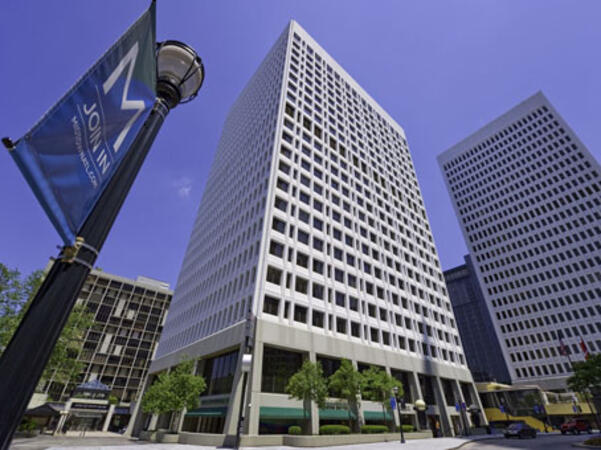
Atlanta, GA – Regus at Colony Squar
1201 Peachtree Street NE, Suite 200, Atlanta, United States, 30361
The venue is centrally located in Midtown Atlanta within the prominent Colony Square complex at 1201 Peachtree Street NE, easily accessed by car via I‑75/85 or GA‑400, with several parking garages nearby. From Hartsfield–Jackson Atlanta International Airport (ATL), around 15 miles south, a taxi or rideshare typically takes 20–30 minutes north along I‑75/85 N. Public transit users can take MARTA Rail to the Arts Center or Midtown stations (0.3–0.5 miles away) and walk easily, and numerous MARTA bus routes along Peachtree Street stop directly outside the entrance.
Atlanta, GA – The Proscenium
1170 Peachtree Street NE, Atlanta, United States, 30309
The venue is located in the heart of Midtown Atlanta in the Proscenium high–rise at 1170 Peachtree Street NE, easily accessible by car via I‑75/85 and GA‑400 with several parking garages nearby. Visitors arriving from Hartsfield–Jackson Atlanta International Airport (ATL), about 15 miles south, can expect a taxi or rideshare ride taking 20–30 minutes via I‑75/85 North. Public transit is seamless with MARTA Rail service; the Arts Center and Midtown stations are within walking distance (approximately 0.3–0.4 miles), and multiple MARTA bus routes also serve Peachtree Street.
Decatur, GA – Regus at One West Court Square
One West Court Square, Suite 750, Decatur, United States, 30030
The venue is located in the heart of downtown Decatur within One West Court Square, easily reached by car via I‑20 and I‑285, with several public parking decks directly adjacent. Travelers from Hartsfield–Jackson Atlanta International Airport (ATL), approximately 17 miles southwest, can expect a taxi or rideshare ride of around 25–30 minutes via I‑20 East. Public transit is particularly convenient: MARTA rail users can disembark at Decatur Station (about 0.15 miles away) and walk a few minutes to the building entrance. Local bus routes also serve Trinity Place and Swanton Way, putting the center within easy reach.
Atlanta, GA – Regus at One Hartsfield
100 Hartsfield Centre Parkway, Suite 500, Atlanta, United States, 30354
The venue is located in the One Hartsfield Center office building, adjacent to Hartsfield–Jackson Atlanta International Airport, easily reached by car via I‑75/I‑85 or GA‑138, with abundant on-site parking. Visitors arriving from ATL airport can walk or take a shuttle to the building, or opt for a quick 2–3‑minute taxi or rideshare ride. Public transit users can board MARTA from the Airport Station and ride one stop to College Park Station, then catch a connecting shuttle or enjoy a brief walk of about half a mile.
Atlanta, GA – Regus at Peachtree
260 Peachtree Street NW, Suite 2200, Atlanta, United States, 30303
The venue is situated in the iconic Coastal States Building at 260 Peachtree Street in downtown Atlanta, accessible by car via I‑75/85 or I‑20 with convenient parking garages nearby. From Hartsfield–Jackson Atlanta International Airport (ATL), about 12 miles south, a taxi or rideshare along I‑75/85 North takes approximately 15–20 minutes. For public transit, MARTA rail users can disembark at Five Points Station and walk 0.5 miles northeast, or exit at Peachtree Center Station and walk two blocks north—both routes offering easy access.
Augusta, GA – At Broad Street
823 Broad Street, Augusta, United States, 3090
The venue is located in the heart of downtown Augusta on Broad Street, easily accessible by car via I‑20 with several public parking garages nearby. From Augusta Regional Airport (AGS), about 9 miles west, taxis or rideshares typically take 15–20 minutes via I‑20. Public transit is available through Augusta Public Transit buses with routes along Broad Street, stopping within a few blocks of the venue, offering a convenient option for attendees without a car.
Savannah, GA – Regus at Bull Street
100 Bull St Downtown, Suite 200, Savannah, United States, 31401
The venue is located in the historic downtown area on Bull Street in the Altmayer Building, easily accessible by car via I‑16 and U.S. 17, with several public garages nearby. From Savannah/Hilton Head International Airport (SAV), about 12 miles west, taxis or rideshares typically take 15–20 minutes via U.S. 17 South. Public transit is available via Chatham Area Transit (CAT) buses, with frequent service along Bull and Broughton Streets; Johnson Square Station is just a couple minutes’ walk from the venue.
This advanced training in Georgia covers GitHub Copilot and AI applications for corporate and government infrastructure. It equips managers with skills to optimize project management, streamline workflows, and enhance decision-making using AI tools, with a focus on large-scale projects.
Artificial Intelligence (AI) comprises technologies that emulate human cognitive functions within machines and applications, facilitating more advanced and adaptive software solutions.
This instructor-led training session, available either online or onsite, is designed for intermediate-level developers who intend to construct AI-enabled applications using established real-world tools and platforms.
Upon completion of this training, participants will be equipped to:
Comprehend fundamental concepts of AI and machine learning.
Develop AI functionalities utilizing Python and standard libraries.
Apply AI methodologies to practical software development projects.
Assess model performance and deploy intelligent services.
Course Format
Interactive instruction and facilitated discussion.
Extensive practical exercises and skill reinforcement.
Applied implementation within a live laboratory environment.
Customization Options for Government Training
To request customized training for government needs, please contact us to coordinate arrangements.
GitHub Copilot functions as an AI-enabled assistant designed to automate development tasks, including DevOps operations such as the creation of YAML configurations, GitHub Actions, and deployment scripts.
This guided training session, available online or in person, is tailored for professionals at the beginner to intermediate level who seek to utilize GitHub Copilot to optimize DevOps processes, enhance automation, and increase operational efficiency.
Upon completion of this program, participants will be equipped to:
Employ GitHub Copilot to support shell scripting, system configuration, and CI/CD pipeline management.
Utilize AI-driven code completion within YAML files and GitHub Actions.
Expedite testing, deployment, and automation workflows.
Apply Copilot with adherence to established best practices and awareness of AI limitations.
Instructional Format
Interactive lectures and facilitated discussions.
Extensive practical exercises and reinforcement activities.
Hands-on implementation within a controlled lab environment.
Customization Options
To request a tailored training curriculum for this course, please submit an inquiry for coordination.
The Huawei Ascend series comprises AI processors engineered for high-performance inference and training operations.
This instructor-led, live training session, available online or in-person, is designed for intermediate-level AI engineers and data scientists seeking to develop and optimize neural network models utilizing Huawei’s Ascend platform and the CANN toolkit. This curriculum is tailored for government agencies requiring advanced AI infrastructure expertise.
Upon completion of this training, participants will be equipped to:
Establish and configure the CANN development environment.
Develop AI applications through MindSpore and CloudMatrix workflows.
Enhance performance on Ascend NPUs by implementing custom operators and tiling techniques.
Deploy models to edge or cloud environments for government use cases.
Course Format
Interactive lectures and facilitated discussions.
Hands-on application of Huawei Ascend and the CANN toolkit within sample applications.
Guided exercises emphasizing model construction, training, and deployment.
Course Customization Options
To request a customized training program aligned with specific infrastructure or dataset requirements, please contact us to arrange a consultation for government stakeholders.
This instructor-led, live training in Georgia (online or onsite) is intended for intermediate-level software professionals seeking to leverage AI and machine learning to enhance efficiency and innovation in software development.
Upon completion of this training, participants will be able to:
Understand the role of AI and machine learning in automating software development tasks.
Implement AI tools to generate code, tests, and documentation.
Apply AI techniques for code optimization, quality assurance, and debugging.
Integrate AI into the DevOps and CI/CD pipelines for improved deployment strategies.
Address ethical considerations and challenges in AI-augmented software engineering.
This instructor-led, live training in Georgia (available online or onsite) is designed for intermediate to advanced participants seeking to refine team workflows, enhance collaborative coding standards for government, and manage Copilot usage within multi-developer configurations.
Upon completion of this training, participants will be equipped to:
Establish GitHub Copilot within team-based environments.
Employ Copilot to strengthen collaborative coding protocols.
Refine team operational processes utilizing Copilot’s available features.
Oversee Copilot’s integration within projects involving multiple developers.
Uphold consistent code quality and adherence to standards across teams.
Apply advanced Copilot capabilities to meet specific team requirements for government.
Integrate Copilot with other collaborative tools to maximize efficiency.
This live, instructor-led training program, conducted in Georgia (online or on-site), is targeted at intermediate-level quality assurance engineers, developers, and team leaders who intend to deploy GitHub Copilot for government purposes to enhance diagnostic efficiency, improve code standards, and optimize review procedures.
By the conclusion of this training, participants will be proficient in:
Setting up GitHub Copilot for government-focused debugging and code review operations.
Applying Copilot to systematically identify and resolve software bugs.
Improving code integrity through AI-driven technical suggestions.
Refining code review processes by utilizing Copilot’s functional capabilities.
Fostering effective team collaboration using Copilot in shared development environments.
This instructor-led, live training in Georgia addresses the fundamental concepts and practical essentials of the course, enabling participants to develop applied skills directly relevant to public sector operations, modern business requirements, and professional work environments through expert instruction.
This instructor-led, live training in Georgia (conducted online or onsite) is designed for intermediate-level front-end developers aiming to utilize GitHub Copilot for automating repetitive coding tasks, enhancing UI/UX design, and optimizing front-end workflows.
Following the completion of this training, participants will be capable of:
Implementing GitHub Copilot configurations for front-end development projects.
Utilizing Copilot to efficiently generate HTML, CSS, and JavaScript code.
Advancing UI/UX design processes through AI-generated code insights.
Streamlining front-end workflows through the application of practical Copilot integration strategies.
Resolving and debugging front-end code with the assistance of Copilot.
Conducted in Georgia, this instructor-led training examines the ethical, legal, and governance frameworks for AI in software development. The focus is on bias mitigation, licensing compliance, and regulatory adherence. Participants will develop the capability to mitigate risks and establish policies for the secure and responsible use of AI in government projects.
AI for Software Requirements and User Story Generation is a practical training module designed for government professionals, focusing on the use of generative AI to transform stakeholder input into structured requirements, epics, user stories, and acceptance criteria suitable for Agile development workflows.
This instructor-led, live training, available online or on-site, is targeted at entry-level product and project management professionals within the public sector who seek to leverage tools such as ChatGPT or Claude to enhance the clarity, efficiency, and traceability of requirement gathering and refinement for government operations.
Upon completion of this training, participants will be equipped to:
Employ AI prompts to collect and refine business requirements in a compliant manner.
Translate feature requests into well-structured user stories and epics for project execution.
Produce acceptance criteria, edge cases, and definitions of done with AI assistance to ensure quality.
Coordinate with development teams using AI-structured documentation to support accountability and delivery.
Instructional Format
Interactive presentations and facilitated discussions.
Extensive exercises and practical application tasks.
Hands-on implementation within a live-laboratory environment.
Customization Options for Government
To request a tailored training curriculum for this course, please initiate contact to coordinate specific requirements.
This instructor-led training in Georgia introduces Cursor as an AI-enhanced environment to accelerate data and ML workflows for government. Participants will learn to streamline notebook development, ETL pipelines, and model operations through practical exercises that enhance productivity and operational consistency.
This instructor-guided, live instructional module in Georgia (delivered virtually or in-person) is designed for Python professionals, from entry-level to mid-career, who intend to utilize GitHub Copilot for language-specific programming, diagnostic operations, and the execution of machine learning processes.
Upon successful completion of this instruction, participants will possess the capacity to:
Establish and configure GitHub Copilot specifically for Python development cycles.
Apply Copilot to generate optimized and efficient Python code constructs.
Resolve defects in Python applications by leveraging AI-derived diagnostic suggestions.
Automate repetitive procedural tasks to elevate overall workflow efficiency.
Deploy Copilot to facilitate the implementation of machine learning initiatives within the Python environment.
This instructor-led, live training in Georgia addresses the core principles and practical fundamentals of Graphite, enabling participants to develop applied skills in code review, automation, and DevOps integration that align with real-world enterprise development environments and modern operational needs for government.
This instructor-led training in Georgia equips advanced developers to master prompt engineering, fine-tuning, and custom tooling within the Cursor environment. Participants will design precise AI behaviors, integrate internal knowledge bases, and build secure, domain-adapted extensions for enterprise workflows for government.
This instructor-led, live training in Georgia (available online or onsite) targets advanced-level participants seeking to customize GitHub Copilot for team projects, exploit its advanced capabilities, and integrate it seamlessly into CI/CD pipelines to bolster collaboration and productivity.
Upon completion of this training, participants will be equipped to:
Customize GitHub Copilot to align with specific project needs and team workflows.
Leverage advanced Copilot features for complex coding tasks.
Integrate GitHub Copilot into CI/CD pipelines and collaborative environments for government.
Optimize team collaboration through AI-powered tools.
Effectively manage and troubleshoot Copilot settings and permissions.
This 14-hour live training in Georgia assists front-end professionals in leveraging generative AI to enhance development efficiency. Participants will acquire skills in prompt-based code generation, UI prototyping, and performance optimization. Practical lab sessions are included to ensure competent application of modern user interface development for government.
This instructor-led, live training in Georgia (online or onsite) is aimed at developers ranging from novices to experts who wish to leverage AI for code generation with Tabnine.
By the end of this training, participants will be able to:
Understand the basics of AI-powered code generation.
Install and configure Tabnine in their development environment.
Utilize Tabnine for efficient code completion and error correction.
Create and train custom AI models with Tabnine for specialized tasks.
Explore AI-driven software development in this instructor-led training. This live course in Georgia is designed to help intermediate developers master LLMs, prompt engineering, and hands-on coding environments for government. Integrate vibe coding into CI/CD pipelines to enhance productivity.
This module on AI-Augmented Test Generation and Quality Engineering examines the application of artificial intelligence tools and large language models (LLMs) to enhance test coverage, accelerate test creation, and strengthen quality assurance protocols.
This instructor-led training, available in online or onsite formats, is designed for intermediate-level quality assurance professionals seeking to leverage AI-driven tools to optimize and enhance their testing strategies.
Upon completion of this training, participants will possess the capability to:
Generate unit, integration, and user interface tests using AI tools and structured prompts.
Apply LLMs for exploratory testing, edge-case discovery, and regression analysis.
Cluster and prioritize test failures and anomalies using AI-assisted triage methods.
Integrate AI-based testing into CI/CD pipelines to strengthen release confidence.
Instructional Format
Interactive lectures facilitated by open discussion.
Extensive exercises and practical application activities.
Hands-on implementation within a live-lab environment.
Customization Options for the Course
To request a customized training program for this course, please contact the administration team to coordinate arrangements.
This live, instructor-led training assists teams in integrating Cursor to optimize collaboration and code reviews for government. Participants will learn to manage workspaces, automate AI-assisted pull requests, enforce governance policies, and connect Cursor to CI/CD pipelines to ensure consistent quality.
This instructor-led, live training in Georgia (online or onsite) is aimed at beginner-level to intermediate-level programmers and developers who wish to leverage DeepSeek Coder to enhance coding efficiency and productivity for government operations.
By the end of this training, participants will be able to:
Understand the capabilities and limitations of DeepSeek Coder for government use.
Generate high-quality code snippets using AI assistance for government projects.
Utilize DeepSeek Coder for debugging and optimizing code for government systems.
Automate repetitive programming tasks using AI tools for government efficiency.
This instructor-led, live training program delivered in Georgia (online or on-site) is intended for intermediate-level professionals seeking to deploy GitHub Copilot for advanced coding scenarios, enhance operational productivity, and integrate the tool into established development workflows for government.
Upon completion of this training, participants will be capable of:
Optimizing the deployment of GitHub Copilot for complex coding tasks.
Producing efficient, error-free, and maintainable code through Copilot recommendations.
Incorporating GitHub Copilot into designated Integrated Development Environments and procedural workflows.
Employing Copilot for diagnostic troubleshooting and code refactoring.
Comprehending the operational limitations and ethical considerations inherent in AI-driven coding utilities.
This instructor-led, live training session in Georgia (online or onsite) is intended for advanced developers and team leads who require mastery of Tabnine's advanced features.
By the conclusion of this training, participants will be able to:
Deploy Tabnine within complex software projects.
Customize and train Tabnine's AI models for specific operational use cases.
Integrate Tabnine into team workflows and development pipelines.
Improve code quality and accelerate development cycles leveraging Tabnine's analytical insights.
This instructor-led live training in Georgia (offered online or onsite) is targeted at software developers with entry-level to intermediate experience who intend to incorporate AI coding assistants into their professional development practices.
Following completion of this training, participants will be equipped to:
Evaluate the functional role and technical capabilities of AI coding assistants in software development.
Apply various AI coding assistant tools to streamline and automate routine coding tasks.
Integrate AI coding assistants effectively into the existing software development lifecycle.
Boost overall productivity and dedicate resources to complex and creative programming tasks.
Address ethical frameworks and promote responsible usage of AI in software development.
Devstral is an open-source framework engineered for the development and deployment of coding agents. These agents interact with codebases, developer tools, and application programming interfaces to improve engineering efficiency and operational standards for government systems.
This instructor-led training, available online or on-site, targets intermediate to advanced machine learning engineers, developer tooling specialists, and site reliability engineers. The objective is to enable participants to design, implement, and optimize coding agents using Devstral within a formal operational context.
Upon completion of this training, participants will be capable of:
Installing and configuring Devstral for the development of coding agents.
Designing agentic workflows for codebase analysis and modification.
Integrating coding agents with developer tools and external APIs.
Applying best practices for the secure and efficient deployment of agents.
Instructional Methodology
Interactive lectures and facilitated discussions.
Extensive practical exercises and skill-building activities.
Hands-on implementation within a live laboratory environment.
Customization Options for Government
Contact our team to arrange a customized training session tailored to specific government requirements.
This instructor-led training in Georgia equips developers with the skills to adopt Cursor, an AI-enhanced editor that increases productivity through intelligent completions and contextual editing. Participants acquire practical proficiency in refactoring, secure review of AI suggestions, and team collaboration to optimize operational workflows.
This instructor-led, live training in Georgia (online or onsite) is aimed at beginner-level developers who wish to understand GitHub Copilot's capabilities, set it up, and use it effectively to enhance their coding experience.
By the end of this training, participants will be able to:
Understand what GitHub Copilot is and how it works.
Set up GitHub Copilot with a supported code editor.
Use GitHub Copilot to write, refactor, and debug code faster.
Leverage Copilot to explore coding techniques and solutions.
Apply best practices for integrating GitHub Copilot into daily workflows.
LLMs for Code Understanding, Refactoring, and Documentation is a specialized technical curriculum designed to apply large language models (LLMs) for enhancing code quality, mitigating technical debt, and automating documentation tasks within software organizations.
This instructor-led, live training session (available online or onsite) is tailored for intermediate-to-advanced software professionals seeking to utilize LLMs, such as GPT, to analyze, refactor, and document complex or legacy codebases more effectively.
Upon completion of this training, participants will be able to:
Employ LLMs to clarify code logic, dependencies, and workflows within unfamiliar repositories.
Identify and remediate design anti-patterns to improve overall code readability.
Automate the generation and maintenance of inline comments, README files, and API documentation.
Integrate LLM-driven insights into existing CI/CD pipelines and code review workflows.
Course Delivery Format
Interactive instruction and facilitated discussion.
Extensive exercises and practical application.
Hands-on implementation within a live-lab environment.
Customization Options
For organizations requiring a customized training program tailored to specific operational needs, please contact us to arrange a solution.
This instructor-led, live training, delivered at Georgia (either online or on-site), is intended for intermediate-level Python developers and data scientists seeking to optimize productivity for government projects using Tabnine.
Upon completion of this training, participants will be equipped to:
Install and configure Tabnine within their respective Python development environments.
Leverage Tabnine's autocomplete capabilities to increase the efficiency of Python code generation.
Adapt Tabnine's operational parameters to align with individual coding styles and specific project mandates.
Analyze the functionality of Tabnine's AI model in the context of Python code for government applications.
This instructor-led, live training in Georgia (conducted online or on-site) is intended for entry-level participants who aim to grasp the functionality of AI coding assistants, evaluate their capabilities, determine how they can optimize the development lifecycle, and understand the ethical implications of their deployment.
By the conclusion of this training, participants will be able to:
Define the objective and functional capabilities of AI coding assistants.
Recognize distinct AI coding assistant tools and their specific features.
Implement AI coding assistants to perform basic coding operations.
Address fundamental ethical considerations and establish protocols for the responsible use of AI in development.
This instructor-led training in Georgia explores how to enhance the software development lifecycle using AI. Participants will learn to automate requirements, optimize code review, generate tests, and improve CI/CD pipelines through hands-on exercises and practical implementation with AI tools.
This instructor-led, live training session (available online or onsite) is designed for intermediate-level software developers seeking to enhance operational efficiency and code integrity through AI-assisted coding with Cursor.
Upon completion of this training, participants will be proficient in:
Installing and configuring Cursor for AI-assisted software development.
Integrating Cursor with Git repositories and established development workflows.
Employing natural language processing to generate, debug, and optimize code.
Utilizing AI capabilities for refactoring, documentation management, and testing.
This instructor-led, live training in Georgia (conducted online or on-site) is designed for developers ranging from beginner to intermediate levels who seek to effectively leverage the capabilities of GitHub Copilot within modern development workflows for government applications.
This instructor-led, live training in Georgia (online or onsite) is intended for entry-level developers aiming to enhance coding efficiency through the use of Tabnine.
Upon completion of this training, participants will be equipped to:
Install and configure Tabnine within their designated IDE.
Leverage Tabnine’s autocomplete capabilities to accelerate coding processes.
Adjust Tabnine’s configuration parameters for optimal support.
Comprehend how Tabnine’s AI adapts to individual code patterns to refine suggestions.
This one-day immersive workshop empowers software teams to integrate advanced AI tools throughout the Software Development Lifecycle (SDLC). Structured as a progressive, interactive engagement, the session combines technical skill development with collaborative problem-solving.
Participants will address practical challenges across all stages of the SDLC—including requirement gathering, design, coding, testing, deployment, and monitoring—utilizing AI-powered tools such as ChatGPT, GitHub Copilot, and machine learning-based log analysis systems.
Tailored for modern development environments, this workshop promotes proficiency in AI application, enhances team cohesion, and provides a comprehensive understanding of how to augment software delivery pipelines with generative AI and machine learning capabilities.
This instructor-led, live training session, delivered in Georgia (either online or onsite), is targeted at beginner-level professionals who intend to utilize Replit AI to streamline the development, testing, and deployment of simple applications for government use.
By the conclusion of this training, participants will be equipped to: generate applications from prompts, enhance code quality through AI assistance, manage configuration securely, and deploy a fully operational application.
This instructor-led, live training in Georgia (online or onsite) is intended for beginner to advanced level product teams, developers, and technical business users seeking to use Lovable to build production-ready applications more rapidly with enhanced structure, quality, and deployment practices suitable for government and enterprise sectors.
By the end of this training, participants will be able to: plan and generate functional applications, improve user flows and data handling, implement key production features, and prepare applications for deployment and collaborative team use.
The objective of this instructor-led, live training is to equip professionals with no coding or technical background to effectively utilize Claude Code — Anthropic's AI-powered coding and automation tool — for building practical projects, automating workflows, and integrating daily tools using plain English.
Participants will utilize the Claude application (claude.ai and Claude Desktop) to complete hands-on tasks ranging from initial interaction to connecting Claude to external services via MCP (Model Context Protocol) connectors. The 7-hour format includes a dedicated Live Build Session where the group collaboratively constructs workflows addressing real problems volunteered by participants — a high-energy segment designed to teach prompt judgment effectively. By the course's conclusion, every participant will have built a working project and connected Claude to at least one external service.
Course Format
Interactive lecture and live demonstration
Guided hands-on exercises following every concept (participants follow along in real time)
Collaborative Live Build Session addressing real participant-submitted workflow problems
This four-hour instructor-led training in Georgia enables non-developers to utilize Claude Code with confidence. Participants will construct functional projects and automate workflows using plain English, progressing from initial configuration to the integration of external services via MCP connectors to address practical operational needs.
This instructor-led, live training session conducted in Georgia (online or onsite) is designed for intermediate-level software engineers and technical leads seeking to utilize Claude Code to accelerate development workflows and enhance team productivity through AI-assisted coding.
Upon completion of this training, participants will be capable of: installing and configuring Claude Code, navigating, generating, and improving code using AI tools, integrating AI workflows with Git version control, and designing scalable AI-assisted development processes.
This instructor-led live training in Georgia is tailored for intermediate-level developers aiming to progress a project from initial idea to a deployed, production-ready application using Claude Code.
By the conclusion of this training, participants will be able to:
Configure Claude Code and effectively guide its operations via a CLAUDE.md file.
Develop application scaffolding and integrate data sources and CMS components.
Create test suites and execute quality assurance tasks using subagents.
Establish automated deployment pipelines to Vercel or Cloud Run.
This instructor-led live training in Georgia (online or onsite) is designed for developers aiming to utilize GitHub Copilot Agent Mode for autonomous feature development, test execution, and management of complex coding tasks.
Upon completion, participants will be able to activate Agent Mode, execute planning and iteration within the agent loop, perform terminal commands, and implement enterprise governance protocols.
Course objectives to transform software and AI engineers into legal engineers — professionals who can build AI solutions for legal work such as eDiscovery, review, and investigations.
In two days, participants build the full core stack: ingest and extract messy real-world legal data, search and retrieve it, add retrieval-augmented generation (RAG) with citations, keep it private on a local model and prove it, run a defensible AI review with court-ready metrics, and package the result for deployment.
This instructor-led, live training in Georgia (delivered online or on-site) is designed for professionals ranging from beginner to advanced levels who intend to utilize Bolt.new for the rapid development and optimization of web application prototypes.
Upon completion of this training, participants will be able to: generate prototypes from structured prompts, refine functional features and interface flows, test and diagnose application behavior, and publish prototypes for official review.
This instructor-led, live training program in Georgia (available online or onsite) is intended for developers aiming to leverage Windsurf for conversational feature construction, in-IDE terminal workflow execution, and cross-codebase refactoring.
By the conclusion of this training, participants will be able to utilize Cascade for navigation, execute terminal commands within the editor, apply predictive edits, and configure Windsurf for proprietary technology stacks.
The course was very useful, and the trainer was clear, well-prepared, and engaging. I liked the fact that it was very practical with labs and real use cases.
Overall, it was a valuable training experience.
Mattia Dettori - MFM INVESTMENT Ltd Italian branch
Course - LLM Engineering Bootcamp
The way you use the copilot, more rule more close to what you need.
Online AI-Integrated Development training in Georgia, AI-Assisted Programming training courses in Georgia, Weekend AI-Assisted Programming courses in Georgia, Evening AI for Software Development training in Georgia, AI-Integrated Development instructor-led in Georgia, Online AI-Augmented Software Development training in Georgia, AI-Enhanced Coding private courses in Georgia, AI for Software Development boot camp in Georgia, Evening AI-Integrated Development courses in Georgia, AI-Enhanced Coding trainer in Georgia, Weekend AI-Integrated Development training in Georgia, AI-Augmented Software Development coaching in Georgia, AI-Assisted Programming one on one training in Georgia, AI-Assisted Programming instructor-led in Georgia, Intelligent Software Development instructor in Georgia, AI-Augmented Software Development classes in Georgia, AI-Assisted Programming on-site in Georgia