Online or onsite, instructor-led live CI/CD (Continuous Integration / Continuous Delivery) training courses provide a comprehensive understanding of both the fundamentals and advanced concepts of CI/CD through interactive hands-on practice.
CI/CD training is available as "online live training" or "onsite live training." Online live training, also known as "remote live training," is conducted via an interactive remote desktop. Onsite live training can be arranged at customer premises in Michigan or at Govtra corporate training centers in Michigan.
Govtra -- Your Training Provider for Government
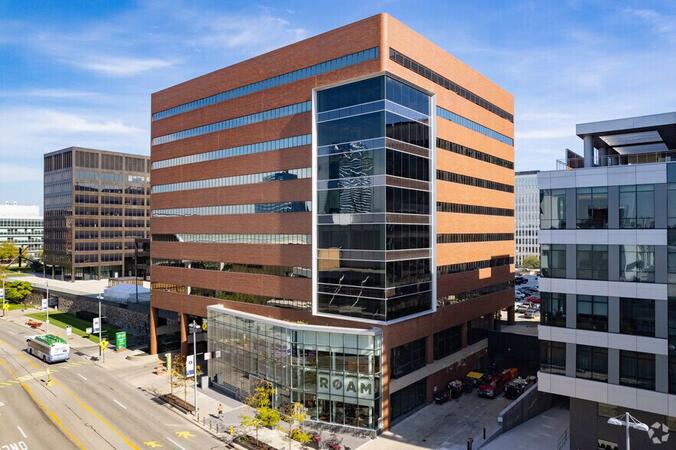
Detroit, MI - Renaissance Center
400 Renaissance Center, Detroit, United States, 48243
The GM Renaissance Center is conveniently located in downtown Detroit and easily accessed by car via Interstates 75 or 94, with secure underground parking available on site. Travelers flying into Detroit Metropolitan Airport (DTW) can expect a 25–30 minute trip by taxi or rideshare via I‑94. Public transit is efficient: the Detroit People Mover stops directly at the Renaissance Center station, and DDOT routes 3 and 9 serve nearby Jefferson Avenue. Pedestrian skywalks provide safe indoor access from downtown hotels, parking garages, and the riverwalk.
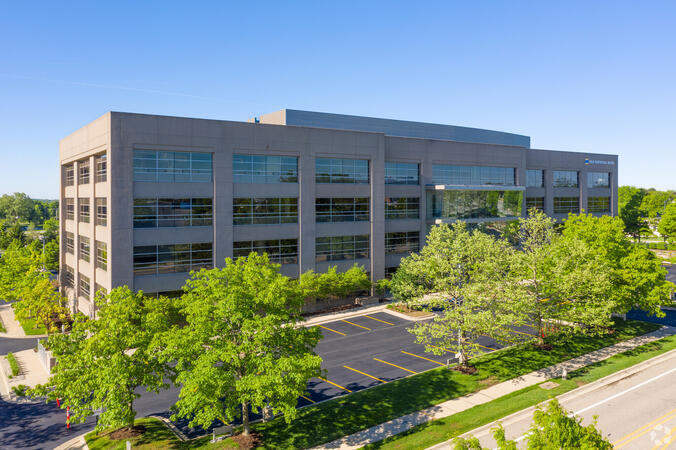
Ann Arbor, MI – Regus - South State Commons I
2723 S State St, Ann Arbor, United States, 48104
Regus South State Commons I is conveniently located off I‑94 via Exit 177 (State Street), with easy access to downtown Ann Arbor and surrounding suburbs. The building offers free on-site surface parking for guests. From Detroit Metropolitan Airport (DTW), the venue can be reached in approximately 20–25 minutes by taxi or rideshare via I‑94 West. Local public transit service (TheRide) operates Route 24 along South State Street, with a stop within a short 2-minute walk of the building.
Grand Rapids, MI - Regus – Calder Plaza
250 Monroe Ave NW, Grand Rapids, United States, 49503
The venue sits centrally at 250 Monroe Avenue NW in downtown Grand Rapids, easily accessed by car via US‑131 or I‑196—with connections via Monroe or Ottawa exits—and offers shared underground and surface parking. From Gerald R. Ford International Airport, take I‑96 East then I‑196 West into the city; the drive is about 20 minutes. Public transit through Rapid bus routes stops near Monroe or Ottawa Avenue, just a short walk from the Regus entrance; the downtown area is pedestrian-friendly.
Lansing, MI - Regus - One Michigan Avenue
120 North Washington Square, Lansing, United States, 48933
The venue is located in the heart of Lansing’s central business district at 120 North Washington Square, easily accessible by car via I‑496 or US‑127 with convenient street parking and a nearby parking ramp. From Capital Region International Airport (LAN), the location is approximately a 12‑minute drive west via I‑96 and US‑127, with taxis and rideshares readily available. Public transit users can take CATA bus routes that stop just a block away on Washington or Grand Avenue, offering seamless access to the venue.
This instructor-led, live training in Michigan (online or onsite) is designed for intermediate to advanced-level developers, DevOps professionals, and architects who aim to design, deploy, and manage resilient applications using microservices, containers, and continuous integration/continuous deployment (CI/CD) pipelines.
By the end of this training, participants will be able to:
Comprehend and implement microservices architecture for government projects.
Deploy and manage containerized applications with Docker and Kubernetes in a public sector environment.
Set up and optimize CI/CD pipelines for automated deployments that align with government workflows and governance requirements.
Apply best practices for security, monitoring, and observability to ensure accountability and compliance in government systems.
This instructor-led, live training in Michigan (online or onsite) covers advanced Jenkins configurations, security, and scaling techniques, designed for government DevOps engineers and software architects who wish to gain expertise in customizing Jenkins for complex public sector projects.
By the end of this training, participants will be able to:
Optimize Jenkins for enterprise-level software initiatives within the government context.
Implement robust security measures to ensure compliance with government standards.
Build and manage complex, scalable pipelines that align with public sector workflows.
Troubleshoot and maintain Jenkins installations effectively to support continuous integration and deployment processes for government.
This instructor-led, live training in Michigan (online or onsite) is aimed at developers who wish to learn and apply the fundamentals of Continuous Integration for government projects using Java.
By the end of this training, participants will be able to:
Understand and implement CI for a Java project in a public sector context.
Construct a CI system tailored for government Java applications.
This instructor-led, live training in Michigan (online or onsite) is designed to cover the fundamental concepts and usage of Jenkins. It is aimed at software developers and DevOps engineers who wish to set up Jenkins, create and configure jobs, and automate key aspects of the software development process for government.
By the end of this training, participants will be able to:
Understand the principles of continuous integration and continuous delivery (CI/CD) in a public sector context.
Install and configure Jenkins to support software automation practices.
Create and manage Jenkins jobs for building and testing applications within government workflows.
Set up and customize automated pipelines for software deployment, ensuring alignment with governance and accountability standards.
SonarQube is a platform for continuous inspection of code quality and security through static analysis and developer-focused reporting.
This instructor-led, live training (online or onsite) is aimed at intermediate-level developers, DevOps engineers, and security practitioners who wish to implement static code analysis, integrate SonarQube into Azure DevOps pipelines, and strengthen secure development practices for government.
By the end of this training, participants will be able to:
Explain SonarQube architecture, core features, and security-focused rulesets.
Configure SonarScanner with common build tools such as Maven, Gradle, and Ant.
Integrate SonarQube into Azure DevOps pipelines and import Azure Repos for continuous analysis.
Define and tune analysis parameters, add custom rules via the SonarQube API, and interpret security reports.
Apply secure development methodology improvements and map responsibilities within the CI/CD process.
Run hands-on analyses across sample repositories (Java + Quarkus and Angular) and resolve identified issues.
Format of the Course
Interactive lecture and discussion.
Guided, practical hands-on labs with real repositories.
Live configuration, testing, and troubleshooting in an Azure DevOps + SonarQube environment.
Course Customization Options
To request a customized version of this training (different language stacks, deeper DevOps integration, or expanded labs), please contact Govtra to arrange.
This course provides training for handling testing projects using the Selenium test suite and continuous testing with Jenkins, tailored specifically for government.
Intended Audience:
Software Test Engineers
Software Developers Involved in Agile Development
Release Managers
Quality Assurance (QA) Engineers
Upon Completion of the Selenium Training, Participants Will Be Able to:
Utilize the Selenium test suite effectively in real-world projects for government.
Conduct cross-browser testing using Selenium.
Distribute tests across multiple environments with Selenium Grid.
Execute regression testing within Jenkins.
Generate and manage test reports and periodic reports using Jenkins.
This instructor-led, live training in Michigan (online or onsite) is aimed at engineers who wish to utilize Spinnaker for frequent and continuous deployment of software to AWS or Kubernetes for government operations.
By the end of this training, participants will be able to:
Install and configure Spinnaker for advanced operational tasks.
Integrate Spinnaker with existing continuous integration tools such as Jenkins.
Comprehend Spinnaker's internal architecture and deployment workflow constructs.
Create pipelines for deploying software on Kubernetes.
Create pipelines for deploying software on AWS.
Diagnose and resolve common issues encountered with Spinnaker.
Agile Software Testing is a series of testing practices that provide feedback on software quality issues in a timely and continuous manner, adhering to the principles of agile development for government projects.
Continuous Integration (CI) refers to all developers within a team merging their work multiple times a day to ensure seamless integration and maintain high standards of code quality for government applications.
This instructor-led, live training in Michigan (online or onsite) is aimed at system administrators and developers who wish to utilize Argo CD for government to automate the deployment and lifecycle management of applications.
By the end of this training, participants will be able to automate, monitor, audit, and roll back their Kubernetes systems using Argo CD, ensuring alignment with public sector workflows and governance requirements.
This instructor-led, live training in Michigan (online or onsite) is aimed at developers who wish to build, test, deploy, and monitor containerized software to the cloud without having to provision or manage infrastructure for government.
By the end of this training, participants will be able to:
Understand and apply a configuration-as-code approach to setting up infrastructure for government operations.
Create custom-configured Docker containers for deploying software applications to the cloud in alignment with public sector workflows.
Deploy software to multiple environments, ensuring compliance with governance standards.
Monitor deployments via the Bitbucket Pipelines Deployment Dashboard to maintain accountability and transparency.
This instructor-led, live training Michigan (online or onsite) is aimed at developers or DevOps engineers who wish to build automation pipelines using CI/CD practices with Python for government.
By the end of this training, participants will be able to:
Set up the necessary development environment to start building CI/CD pipelines with Python.
Build automated pipelines for testing and publishing Python packages using Travis-CI.
Automate the deployment of containerized applications with Docker and Heroku.
Continuous Integration (CI) is a development practice where developers frequently merge their code changes to promptly identify and resolve errors.
In this instructor-led, live training, participants will gain an understanding of Continuous Integration for JavaScript as they work through setting up a CI process for a JavaScript project.
By the end of this training, participants will be able to:
Comprehend the core principles of Continuous Integration
Create their own Continuous Integration system for their JavaScript projects
Audience
Developers
IT Professionals
DevOps Engineers
Business Managers
Format of the Course
Part lecture, part discussion, with exercises and extensive hands-on practice
This training is designed to align with public sector workflows and governance standards for government.
This instructor-led, live training in Michigan (online or onsite) is aimed at engineers who wish to utilize open source tools to automate the process of building, testing, and deploying PHP applications and services for government.
By the end of this training, participants will be able to:
Install and configure various open source tools to enable continuous integration, testing, and deployment.
Understand the advantages and disadvantages of using different open source CI tools such as GitLab CI and Jenkins for government workflows.
Integrate CI tools with open source tools for unit testing and integration testing of PHP applications in a public sector environment.
This course emphasizes practical implementation and tooling for government. It assumes a strong foundational understanding of theoretical principles (as covered in the DEVOPS course) and focuses on the latest tools and methodologies for implementing DevOps practices within public sector workflows.
This instructor-led, live training in Michigan (online or onsite) is aimed at DevOps engineers who wish to optimize and simplify the CI/CD process with Docker and Jenkins for government.
By the end of this training, participants will be able to:
Automate code delivery and pipeline deployment using Jenkins.
Construct an application utilizing Docker and Dockerfile.
Configure authentication options to enhance security measures.
This instructor-led, live training in Michigan (online or onsite) is aimed at DevOps engineers who wish to establish, deploy, and manage a Git-based software deployment workflow for their Kubernetes applications for government use.
By the end of this training, participants will be able to:
Install and configure Spinnaker and Terraform for government systems.
Understand the advantages of GitOps over traditional CI/CD and Infrastructure-as-Code (IAC) practices.
Transition from maintaining scripts to configuring and executing well-defined deployment processes.
Apply best practices for cloud-native deployment, management, and monitoring in a government context.
Recover deployments from partial failures without manual intervention, ensuring continuity of operations.
Develop a GitOps strategy for application development that aligns with public sector workflows and governance requirements.
This instructor-led, live training in Michigan covers the concepts, tools, and techniques needed to carry out continuous integration of your software projects in an Agile environment for government. Participants engage in a series of hands-on exercises throughout the course to apply their knowledge in real-world scenarios. Interaction between the instructor and participants is encouraged. Real-world cases are discussed, and specific issues and questions are addressed and resolved in class.
This instructor-led, live training in Michigan (online or onsite) is aimed at engineers who wish to use Jenkins 2 to build pipelines that automate the process of moving an application from development to production for government use.
By the end of this training, participants will be able to:
Install and configure Jenkins 2 for government environments.
Adopt a script-based approach to automating every step of the software deployment process for government systems.
Automatically generate application builds when software is checked into a version control system, ensuring compliance with public sector workflows.
Automatically initiate the compiling, testing, and packaging of a software application in alignment with government standards.
Respond promptly to notifications and reports when issues arise, maintaining accountability and governance.
Install additional plugins to extend Jenkins, enhancing its capabilities for government operations.
When developers complete writing a piece of code, they typically integrate it into an application, copy the application into a directory, run the installation process, and then initialize the application to verify its functionality. This manual approach is inefficient, tedious, error-prone, and lacks mechanisms for tracking changes during the integration process.
An improved method involves automating these tasks through Continuous Integration (CI). CI encompasses the processes, tools, and infrastructure necessary to automate the building, deployment, and testing of software applications.
In this instructor-led, live training (onsite or remote), participants will learn how to transform a traditional, manual (or semi-manual) approach to software deployment into an agile, Continuous Integration process using Jenkins. Throughout the course, participants will engage in hands-on exercises, applying their new knowledge to various software development and deployment challenges. Interaction between the instructor and participants is encouraged, with real-world cases discussed and specific issues addressed and resolved throughout the training. The focus of this training is particularly on .Net application development.
By the end of this training, participants will be able to:
Install and configure Jenkins for .Net application development
Use Jenkins to automate the process of checking in and merging .Net source code into a version control repository
Use Jenkins to automate the downloading, compiling, and deployment of an application to a release server
Integrate Jenkins with other software development tools such as issue trackers
Audience for government
.Net developers
Build engineers
QA engineers
Project managers
Release managers
DevOps engineers
Format of the Course
Part lecture, part discussion, exercises, and extensive hands-on practice
Note
To request a customized training for government, please contact us to arrange.
This instructor-led, live training in Michigan (online or onsite) is aimed at engineers who wish to use Jenkins X to create automated, cloud-ready CI/CD pipelines for government on Kubernetes.
By the end of this training, participants will be able to:
Install and configure Jenkins X for government use.
Develop resilient CI/CD pipelines using a flexible Domain Specific Language (DSL).
Create CI/CD pipelines that integrate with popular technologies such as GitHub, Kubernetes, and Docker containers.
Combine Jenkins X with other essential tools such as Helm, Prow, and Skaffold for government workflows.
Deploy applications to any environment, whether in the cloud or on-premises, ensuring compliance with public sector standards.
In this instructor-led, live training in Michigan (online or onsite), participants will learn how to create, update, and maintain applications using OpenShift Container Platform for government environments.
By the end of this training, participants will be able to:
Understand OCI (Open Containers Initiative) and its implications for utilizing container engines such as Docker within OpenShift for government operations.
Grasp the relationship between the different versions of OpenShift (OKP, OpenShift Container Platform, Red Hat OpenShift, etc.) in the context of public sector workflows.
Automate the software delivery pipeline to enhance efficiency and security for government applications.
Apply DevOps principles to deliver software continuously, ensuring alignment with governance and accountability standards for government projects.
Training is open to developers, Scrum Masters, Product Owners, and representatives from business departments. The purpose of this training is to introduce the topics of Quality Assurance and Continuous Integration and their roles in projects utilizing agile methodologies. Participants will gain a comprehensive understanding of these issues as well as practical knowledge of the tools and processes used in software development aligned with QA/CI standards. Business representatives will learn how implementing these tools and processes can translate into time and cost savings for software development. The content presented is based on PHP or Java, depending on the specific requirements for government.
This instructor-led, live training (available online or on-site) is designed for DevOps engineers who wish to utilize Selenium to conduct Selenium tests within Docker containers.
By the end of this training, participants will be able to:
Establish test automation infrastructure for on-demand testing.
Develop a test automation framework using Java.
Construct a CI/CD pipeline from scratch with Jenkins and Docker, tailored for government use.
This instructor-led, live training in Michigan (online or onsite) is aimed at DevOps engineers and developers who wish to utilize SonarQube to conduct comprehensive code reviews that are fully integrated into development toolchains, such as Jenkins, GitHub, Azure DevOps, etc., for government.
By the end of this training, participants will be able to:
Configure the required development environment to initiate automated code reviews.
Integrate SonarQube with continuous integration tools, including Jenkins and Azure DevOps.
Conduct ongoing code inspections to eliminate bugs and security vulnerabilities.
Gather and analyze data to inform improvements in code quality, maintenance, and security.
This instructor-led, live training in Michigan (online or onsite) is aimed at developers and DevOps engineers who wish to leverage Tekton Pipelines for supporting complex software development workflows and building automated CI/CD pipelines for government.
By the end of this training, participants will be able to:
Install and configure Tekton Pipelines and other foundational Tekton components for government use.
Design and create the building blocks of pipelines for software development within the Tekton framework.
Automate existing pipelines and development processes using Tekton framework concepts and principles tailored for government operations.
Run and manage Tekton Pipelines for various workload types across multiple platforms in a government context.
Implement CI/CD systems based on the Tekton framework to enhance future software development projects for government agencies.
By the end of this training, participants will be able to:
Install and configure Maven.
Automate testing using Selenium.
Manage Git repositories.
Integrate continuous integration processes.
Format of the Course for Government
Interactive lectures and discussions tailored to public sector workflows.
Extensive exercises and practice sessions to reinforce learning.
Hands-on implementation in a live-lab environment, ensuring practical application of skills for government tasks.
Course Customization Options
To request a customized training for this course, please contact Govtra to arrange.
Read more...
Last Updated:
Testimonials (8)
Engaging, and hands on practise.
Balavignesh Elumalai - Scottish Power
Course - SonarQube for DevOps
Trainer has in depth experince and well narreated in deed. The depth of the knowledge and the passion for teaching is highly appriciated.
Anup Kumar - SMR Automotive Mirrors Stuttgart
Course - Jenkins 2: Building CI/CD Pipelines
Trainer is very knowledgeable on the subject and able to provide real world examples through his experience.
Nouf
Course - Agile Software Testing with Continuous Integration
The trainer was very well organized. He explained about all the tools required for the training in the beginning. The trainer happily clarified all the doubts and practical use cases were discussed.
Vivek Verma - Global Knowledge Network Training Ltd
Course - DevOps Practical Implementation and Tools
Very detailed, trainer knows the subject very well and has covered a lot of topics
Gabriel Kelly Navarro - Opswerks
Course - Advanced Spinnaker
Everything. It was very understandable, and if we didn't understand something, Adriano explained it.
Zsolt Nagy - W.UP Kft
Course - OpenShift Container Platform for Developers
Luke was very knowledgeable, patient, and very open to satisfy my curiosity, for example I asked him to generate errors to see how system will response, etc. He would go above and beyond to answer questions or demonstrate the functionalities, even some of my questions were out of the class scope. He gave me a real experience with the system. I definitely will take another class with him and recommend him as a teacher for others. Thank you Luke!.
Tina Henderson
Course - Test Automation with Selenium and Jenkins
All of it. Having had no previous exposure to Jenkins, I was a little concerned about my ability to keep up. IPad provided appropriate coaching/support, when I asked for help, so that I was able to follow the presentation at a level I was happy with.
Graham Congdon
Course - Jenkins: Continuous integration for Agile development