NobleProg offers comprehensive Cloud Computing training courses tailored to the dynamic professional landscape of Virginia. Our programs are designed to empower organizations in this region with cutting-edge skills and strategic insights, driving innovation and operational excellence. By leveraging our local expertise, we ensure that participants receive high-quality education relevant to the specific needs of the Virginia market.
Instructor-led Cloud Computing workshops, offered through both virtual and on-premises modalities, utilize practical exercises to illustrate core cloud computing principles and demonstrate strategic advantages for government entities. These courses are designed to ensure technical proficiency and operational readiness.
Training delivery options include "online live instruction" and "onsite live instruction." Online live sessions (also referred to as "remote live training") are conducted via an interactive remote desktop interface. Onsite live training can be administered locally at client facilities in Virginia or within NobleProg’s corporate training centers located in Virginia.
NobleProg -- Your Local Training Provider
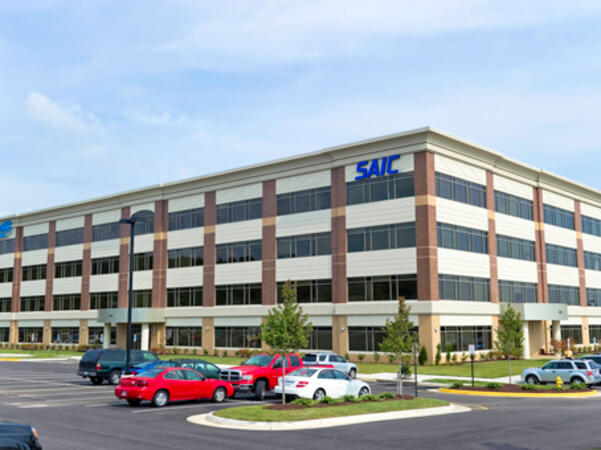
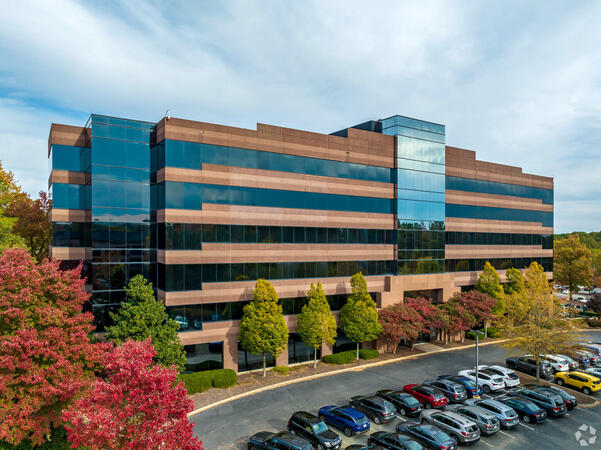
VA, Stafford - Quantico Corporate
800 Corporate Drive, Suite 301, Stafford, united states, 22554
The venue is located between interstate 95 and the Jefferson Davis Highway, in the vicinity of the Courtyard by Mariott Stafford Quantico and the UMUC Quantico Cororate Center.
VA, Fredericksburg - Central Park Corporate Center
1320 Central Park Blvd., Suite 200, Fredericksburg, united states, 22401
The venue is located behind a complex of commercial buildings with the Bank of America just on the corner before the turn leading to the office.
VA, Richmond - Two Paragon Place
Two Paragon Place, 6802 Paragon Place Suite 410, Richmond, United States, 23230
The venue is located in bustling Richmond with Hampton Inn, Embassy Suites and Westin Hotel less than a mile away.
VA, Reston - Sunrise Valley
12020 Sunrise Valley Dr #100, Reston, United States, 20191
The venue is located just behind the NCRA and Reston Plaza Cafe building and just next door to the United Healthcare building.
VA, Reston - Reston Town Center I
11921 Freedom Dr #550, Reston, united states, 20190
The venue is located in the Reston Town Center, near Chico's and the Artinsights Gallery of Film and Contemporary Art.
VA, Richmond - Sun Trust Center Downtown
919 E Main St, Richmond , united states, 23219
The venue is located in the Sun Trust Center on the crossing of E Main Street and S to N 10th Street just opposite of 7 Eleven.
Richmond, VA – Regus at Two Paragon Place
6802 Paragon Place, Suite 410, Richmond, United States, 23230
The venue is located within the Two Paragon Place business campus off I‑295 and near Parham Road in North Richmond, offering convenient access by car with free on-site parking. Visitors arriving from Richmond International Airport (RIC), approximately 16 miles northwest, can expect a taxi or rideshare ride of around 20–25 minutes via I‑64 West and I‑295 North. Public transit is available via GRTC buses, with routes stopping along Parham Road and Quioccasin Road, just a short walk to the campus.
Virginia Beach, VA – Regus at Windwood Center
780 Lynnhaven Parkway, Suite 400, Virginia Beach, United States, 23452
The venue is situated within the Windwood Center along Lynnhaven Parkway, featuring modern concrete-and-glass architecture and ample on-site parking. Easily accessible by car via Interstate 264 and the Virginia Beach Expressway, the facility offers a hassle-free commute. From Norfolk International Airport (ORF), located about 12 miles northwest, a taxi or rideshare typically takes 20–25 minutes via VA‑168 South and Edenvale Road. For those using public transit, the HRT bus system includes stops at Lynnhaven Parkway and surrounding streets, providing convenient access by bus.
This instructor-directed live training session, delivered in Virginia (either online or on-site), is designed for junior-level data engineers who intend to leverage Azure Data Factory to deploy scalable and high-performance data integration solutions in cloud environments for government operations.
Upon completion of this training, participants will be equipped to:
Grasp the fundamental concepts and architectural components of Azure Data Factory (ADF).
Develop, automate, and monitor data pipeline execution.
Establish connections with diverse data sources, execute data transformation workflows, and manage data flow controls.
Apply recognized best practices for error management and system performance optimization.
Ensure the security and ongoing monitoring of data pipelines within production-grade environments.
This instructor-led, live training in Virginia (online or onsite) is intended for mid-level information technology professionals seeking to acquire the competencies required to deploy, manage, and operate workloads on Google Cloud, as well as to prepare for the Google Certified Associate Cloud Engineer credential. This course is for government professionals seeking to enhance their technical proficiency in cloud environments.
Upon completion of this training, participants will be able to:
Establish and oversee Google Cloud projects, resources, network configurations, and storage services.
Deploy and manage applications utilizing Compute Engine, Google Kubernetes Engine (GKE), Cloud Run, and App Engine.
Configure identity and access management, security measures, and billing budgets, alerts, and cost monitoring mechanisms.
Provision and automate cloud infrastructure using Terraform and Cloud Build tools.
Monitor, diagnose, and optimize Google Cloud environments using Cloud Monitoring and Cloud Logging tools.
Comprehend the features of Vertex AI and Google Cloud AI services applicable to standard business and operational scenarios.
Google Colab Pro provides a cloud-based infrastructure for scalable Python development, delivering high-performance GPUs, extended runtime durations, and expanded memory capacity to support complex AI and data science requirements.
This instructor-led training program, available in online or onsite formats, is designed for intermediate-level Python professionals seeking to utilize Google Colab Pro for machine learning, data processing, and collaborative research within an advanced notebook interface.
Upon completion, participants will possess the capability to:
Configure and administer cloud-based Python notebooks utilizing Colab Pro.
Provision and utilize GPU and TPU resources for accelerated computational tasks.
Optimize machine learning workflows employing standard libraries such as TensorFlow, PyTorch, and Scikit-learn.
Integrate with Google Drive and external data sources to facilitate collaborative project initiatives.
Instructional Methodology
Interactive instructional lectures and facilitated discussions.
Extensive practice exercises and applied assignments.
Hands-on implementation within a live laboratory environment.
Customization Options for Training
To request a tailored training curriculum for government or specific operational needs, please contact us to arrange details.
This instructor-led, live training in Virginia (available online or onsite) is designed for intermediate-level data scientists and healthcare professionals seeking to deploy AI for advanced applications for government and public sector efficiency using Google Colab.
Upon completion of this training, participants will possess the competency to:
Deploy AI models within healthcare systems utilizing Google Colab.
Apply AI to predictive modeling initiatives for healthcare data.
Conduct analysis of medical images using AI-driven technical methods.
Assess ethical considerations inherent in AI-based healthcare solutions.
This instructor-led, live training in Virginia (online or in-person) is intended for intermediate-level data scientists and engineers aiming to utilize Google Colab and Apache Spark for big data processing and analytics for government needs.
Upon completion of this training, participants will be capable of:
Establishing a big data environment utilizing Google Colab and Spark.
Processing and evaluating large datasets efficiently via Apache Spark.
Visualizing big data within a collaborative framework.
Integrating Apache Spark with cloud-based service tools.
This instructor-led, live training program in Virginia (available online or onsite) is directed at entry-level system administrators who intend to develop the core competencies and practical abilities required for the rigorous management and optimization of Nutanix environments within the public sector.
Upon completion of this training, participants will possess the ability to:
Analyze the Nutanix Enterprise Cloud Platform and its integrated components.
Execute the deployment, configuration, and administrative control of Nutanix clusters.
Exhibit proficiency in the administration of the Acropolis Hypervisor (AHV).
Conduct advanced administrative functions and systematic troubleshooting.
Enforce industry-standard practices for high availability, disaster recovery, and security, ensuring alignment with government operational standards.
This facilitated, live instruction session in Virginia (delivered remotely or on-site) targets introductory-level information technology specialists seeking to administer and sustain the Google Cloud Platform for government.
Upon completion of this instructional program, attendees will be equipped to:
Comprehend the foundational services and architectural components of GCP.
Acquire proficiency in governing network structures and virtual compute resources.
Apprehend and execute standard security protocols within the GCP environment.
Investigate Kubernetes orchestration and container lifecycle management on GCP.
Master the array of persistence options and their configuration methodologies.
Provision and tune database services within the GCP framework.
This instructor-led, live training in Virginia (delivered online or onsite) is tailored for advanced-level professionals aiming to advance their proficiency in computer vision and leverage TensorFlow’s capabilities for the development of sophisticated vision models using Google Colab.
Upon completion of this training, participants will possess the ability to:
Construct and train convolutional neural networks (CNNs) using the TensorFlow framework.
Utilize Google Colab to facilitate scalable and efficient cloud-based model development.
Execute image preprocessing protocols required for computer vision tasks.
Deploy computer vision models suitable for real-world operational use.
Apply transfer learning methods to optimize the performance of CNN models.
Analyze and interpret the outcomes of image classification systems.
This instructor-led, live training in Virginia (delivered online or onsite) is tailored for senior-level professionals aiming to augment their proficiency in machine learning models, strengthen their hyperparameter tuning skills, and acquire advanced deployment competencies using Google Colab for government applications.
Upon completion of this training, participants will demonstrate the ability to:
Develop advanced machine learning models using established frameworks such as Scikit-learn and TensorFlow.
Enhance model performance through systematic hyperparameter optimization.
Implement machine learning models in practical operational contexts using Google Colab.
Coordinate and oversee large-scale machine learning initiatives within the Google Colab environment.
Cloud Computing serves as a scalable and flexible framework for delivering IT resources and services on demand.
This instructor-led, live training program (available online or on-site) is designed for cloud practitioners ranging from beginner to advanced levels who seek to master AWS and Azure technologies while preparing for globally recognized certifications.
Upon completion of this program, participants will be equipped to:
Comprehend foundational cloud principles across AWS and Azure platforms.
Configure, secure, and manage Azure resources with operational efficiency.
Implement AWS compute, storage, networking, and security services effectively.
Apply architectural best practices and integrate generative AI concepts for executive-level planning.
Format of the Course
Instructor-guided sessions supported by practical cloud demonstrations.
Comprehensive hands-on exercises conducted in both AWS and Azure environments.
Practical labs designed to ensure readiness for multiple certification examinations.
Course Customization Options
For tailored content aligned with your organizational cloud roadmap, please contact us to customize this training for government-specific requirements.
This instructor-led, live training session in Virginia (online or onsite) is designed for intermediate-level data scientists and developers seeking to implement NLP techniques using Python within the Google Colab environment for government.
Upon completion of this training, participants will possess the ability to:
Demonstrate proficiency in the fundamental concepts of natural language processing.
Execute preprocessing and cleansing procedures on text data for NLP operations.
Conduct sentiment analysis using the NLTK and SpaCy libraries.
Manage text data utilizing Google Colab to support scalable and collaborative development initiatives.
This live instructional program, conducted in Virginia (either virtually or on-site), targets intermediate-level data scientists and developers aiming to comprehend and implement deep learning methodologies within the Google Colab environment.
Following the completion of this training, participants will be equipped to:
Establish and navigate Google Colab for the execution of deep learning projects for government purposes.
Grasp the essential principles underlying neural network design.
Construct and deploy deep learning models utilizing TensorFlow.
Perform the training and rigorous evaluation of deep learning models.
Leverage advanced TensorFlow functionalities to enhance deep learning outcomes.
This instructor-led, live training in Virginia (online or onsite) is targeted at intermediate-level data engineers, cloud architects, and business intelligence professionals seeking to enhance their proficiency in data management for government operations within industry-specific cloud environments.
Upon completion of this training, participants will be able to:
Analyze the foundational principles and constituent elements of data fabrics.
Architect and deploy data integration and orchestration frameworks.
Uphold data integrity and governance standards within industry cloud platforms.
Apply data fabric solutions to support sector-specific data analysis and operational decision-making.
Monitor and adapt to evolving trends and technologies in cloud data administration.
VMware vSphere 8 serves as a premier virtualization platform, supporting the operational integrity of contemporary data center infrastructures.
This instructor-led, live training program (available online or onsite) is designed for intermediate-level IT professionals seeking to deploy, configure, and oversee VMware vSphere environments in preparation for VCP certification.
Upon completion of the course, participants will possess the competencies to:
Install and configure ESXi hosts.
Deploy and administer vCenter Server.
Configure vSphere networking and storage systems.
Create, deploy, and optimize virtual machines.
Course Delivery Format
Instructor-led presentations and technical discourse.
Comprehensive laboratory exercises and scenario-based simulations.
Practical configuration and management within a dedicated vSphere environment.
Course Customization Options
To obtain tailored VMware vSphere training solutions, please contact our office to discuss customization options for government.
This live, instructor-led program, conducted in Virginia (remotely or on-site), is designed for entry-level information technology professionals, business analysts, and project managers seeking to understand the foundational concepts of cloud computing and its application across various industries.
Upon completion of this training, participants will be able to:
Identify the defining characteristics and strategic advantages of cloud computing.
Distinguish between the various cloud service and deployment models.
Recognize the significance of industry-specific cloud solutions.
Assess the security and compliance dimensions of cloud platforms.
Explore emerging trends and future developments in cloud technology.
This live, instructor-led training held in Virginia (online or in person) is designed for intermediate-level cloud engineers and operations managers looking to enhance their cloud infrastructure oversight using Kubiya AI for government operations.
Upon completion of this training, participants will be capable of:
Integrating Kubiya AI into cloud infrastructure frameworks.
Automating the provisioning and management of cloud resources.
Optimizing cloud costs through AI-driven analytics.
Bolstering cloud security via AI-enabled monitoring.
This instruction-led session, conducted in Virginia (online or on-site), is intended for intermediate-level data scientists and developers seeking to apply machine learning algorithms within the Google Colab environment, specifically for government data operations.
Upon completion of this program, participants will be capable of:
Configuring and managing the Google Colab environment for machine learning initiatives.
Demonstrating proficiency in applying diverse machine learning algorithms.
Leveraging libraries such as Scikit-learn for data analysis and predictive modeling.
Deploying supervised and unsupervised learning frameworks.
Executing rigorous optimization and evaluation of machine learning models.
This 35-hour course in Virginia covers advanced VMware vSphere operations, focusing on security, performance, and scalability. Ideal for intermediate IT professionals, it includes hands-on labs in encryption, RBAC, and lifecycle management to optimize large-scale environments efficiently and securely.
This instructor-led, live training conducted in Virginia (online or onsite) is tailored for beginner-level data scientists and professionals who require the ability to create meaningful and visually effective data visualizations.
By the conclusion of this training, participants will possess the capability to:
Configure and operate Google Colab for visualization purposes.
Generate various plot types utilizing Matplotlib.
Leverage Seaborn for advanced visualization techniques.
Customize plots to ensure optimal presentation and clarity.
Interpret and present data accurately using visual tools, supporting data-driven decision-making.
VMware vSphere serves as a primary virtualization platform, facilitating the efficient administration of virtual infrastructure within both datacenter and hybrid cloud contexts.
This live, instructor-led curriculum (delivered online or onsite) is designed for IT professionals at entry to intermediate levels seeking to install, configure, and oversee VMware vSphere environments.
Upon completion of this program, participants will possess the capability to:
Deploy and configure ESXi hosts and vCenter Server instances.
Provision and administer virtual machines and vApps.
Establish virtual networking and storage configurations.
Apply user permission models, monitoring controls, and fundamental troubleshooting techniques.
Instructional Delivery Model
Interactive instruction and facilitation of discussion.
Practical laboratory exercises and demonstrative activities.
Application of real-world implementation scenarios.
Options for Tailored Instruction
For requests regarding customized training for government, please contact the program office to coordinate arrangements.
This instructor-led, live training in Virginia (online or onsite) is aimed at advanced-level professionals who wish to deepen their understanding of DevOps practices and streamline development processes using AWS Cloud9.
By the end of this training, participants will be able to:
Set up and configure AWS Cloud9 for DevOps workflows.
Implement continuous integration and continuous delivery (CI/CD) pipelines.
Automate testing, monitoring, and deployment processes using AWS Cloud9.
Integrate AWS services such as Lambda, EC2, and S3 into DevOps workflows.
Utilize source control systems like GitHub or GitLab within AWS Cloud9.
This instructor-led, live training, conducted in Virginia (online or on-site), is intended for entry-level developers and data analysts who intend to learn Python programming from the beginning using Google Colab.
By the conclusion of this training, participants will be able to:
Comprehend the fundamentals of the Python programming language.
Execute Python code within the Google Colab environment.
Utilize control structures to manage the flow of Python programs.
Construct functions to organize and reuse code efficiently.
Explore and apply basic libraries for Python programming.
VMware vSphere serves as a foundational virtualization platform for establishing resilient information technology infrastructure for government applications.
This instructor-led, live training session, available in online or onsite formats, is designed for intermediate-level information technology professionals seeking to develop proficiency in identifying and resolving operational deficiencies within VMware vSphere environments.
Upon completion of this training, participants will be equipped to:
Diagnose and remediate common operational issues associated with virtual machines and vSphere services.
Leverage VMware diagnostic tools to analyze and correct performance and configuration irregularities.
Troubleshoot virtual networking and storage configurations to ensure system reliability.
Execute root cause analysis within production environments to enhance accountability.
Course Delivery Format
Interactive instruction and facilitated discussion.
Extensive practical exercises and scenario-based practice.
Hands-on implementation within a controlled live-lab environment.
Course Customization Options
To request a tailored training program for this course, please contact the training provider for scheduling arrangements.
This instructor-led, live training in Virginia (online or onsite) is aimed at intermediate to advanced-level integration developers and system administrators who wish to learn advanced Boomi techniques for building, managing, and deploying cloud-based solutions on integration platforms.
By the end of this training, participants will be able to:
Use AtomSphere and work with Boomi documents.
Create and design complex integration processes for advanced logic and data processing.
Manage deploy integration processes, logging, and reporting.
Capture and handle errors.
Apply best practices and techniques for integrating with Boomi.
This instructor-led live training in Virginia (delivered online or in-person) is designed for beginner-level data scientists and information technology professionals seeking to acquire foundational data science skills using Google Colab.
Upon completion of this training, participants will be proficient in:
This instructor-led, live training in Virginia (online or onsite) is targeted at intermediate-level professionals seeking to effectively build, deploy, and maintain serverless applications on AWS Cloud9 and AWS Lambda.
Upon completion of this training, participants will be capable of:
Understanding the fundamental concepts of serverless architecture.
Configuring AWS Cloud9 for serverless application development.
Developing, testing, and deploying serverless applications using AWS Lambda.
Integrating AWS Lambda with other AWS services such as API Gateway and S3.
Optimizing serverless applications for performance and cost efficiency.
This instructor-led live training in Virginia (available online or onsite) is targeted at developers, system administrators, and cloud specialists seeking to acquire practical proficiency in OpenNebula to support cloud solution initiatives.
Upon completion of this training, participants will be equipped to:
Establish a development environment that incorporates OpenNebula.
Create and manage virtual machines within the OpenNebula framework.
Comprehend the lifecycle stages of a virtual machine.
Integrate OpenNebula with existing IT infrastructure.
Diagnose and resolve common issues in an OpenNebula deployment.
This instructor-led, live training program in Virginia (delivered online or onsite) is designed for intermediate-level system administrators seeking to leverage VMware vCenter for the management of complex virtual environments for government.
Upon completion of this training, participants will be capable of:
Comprehending the architecture and constituent components of VMware vSphere and vCenter Server.
Installing, configuring, and administering VMware ESXi and vCenter Server.
Implementing sophisticated networking and storage configurations.
Creating, managing, and migrating virtual machines.
Safeguarding high availability and disaster recovery within a virtualized environment.
Automating vSphere tasks and overseeing lifecycle management and upgrades.
Resolving common issues and applying established best practices.
This course is designed to provide comprehensive proficiency in the OpenStack environment from both operational and administrative perspectives. Following a foundational overview of cloud computing principles, participants will utilize a dedicated OpenStack instance to execute practical administrative and operational tasks. The curriculum encompasses all essential OpenStack components, ranging from high-level architectural concepts to detailed cloud administration procedures. The instructional format allocates approximately 75% of the course content to hands-on workshop activities conducted within a live OpenStack environment, ensuring relevant practical skills for government IT operations.
This course provides comprehensive training on OpenStack infrastructure. It begins with an overview of the system, followed by hands-on workshops that develop practical skills in managing private clouds based on OpenStack. The curriculum also addresses troubleshooting methodologies and advanced architectural topics. The objective is to ensure proficiency in the OpenStack ecosystem and to establish a robust foundation for the expansion and refinement of OpenStack clouds for government operations. The course covers all subjects required to prepare for the Certificate OpenStack Administrator exam. Seventy-five percent of the instruction is delivered through hands-on workshops in a realistic OpenStack training environment.
This intensive OpenStack training provides practical, hands-on experience in deploying, managing, troubleshooting, and optimizing private cloud environments based on OpenStack. Designed as an extended bootcamp, the course covers core administration topics, real-world troubleshooting scenarios, and advanced architectural concepts aligned with the Certified OpenStack Administrator exam objectives. With 75% workshop-based learning in a live OpenStack lab, participants build the skills needed to confidently administer and further develop enterprise OpenStack infrastructures for government use.
This curriculum provides comprehensive technical training on OpenStack networking, specifically tailored for government operations. The program begins with an overview of OpenStack architecture and proceeds to detailed examination of core services, including Identity (Keystone), Image (Glance), Compute (Nova), and Block Storage (Cinder). This foundation contextualizes the Networking project (Neutron), which is the primary focus of the instruction. The course details virtual network infrastructure based on the Open Virtual Network (OVN) project, Open vSwitch, and OpenFlow standards. The objective is to ensure a thorough understanding of OpenStack operations and architecture, while familiarizing participants with the underlying networking technologies, OVN flows, and resource management tools relevant to public sector infrastructure.
Customization options
The training module can be condensed to a two-day schedule, emphasizing core aspects critical for the specific government agency's requirements. Alternatively, the curriculum can be expanded to cover advanced administrative, design, networking, or troubleshooting topics related to OpenStack deployments. The instruction can also incorporate alternative SDN solutions, such as Linux Bridge or Open vSwitch, to address diverse technical environments.
This instructor-led, live training in Virginia (delivered on-site or remotely) is designed for engineering professionals seeking to deploy and manage IoT devices on the AWS cloud platform for government use.
Upon completion, participants will be equipped to develop an IoT platform encompassing the deployment and management of backend infrastructure, gateways, and devices within the AWS environment.
This instructor-led, live training in Virginia (onsite or remote) is designed for developers seeking to utilize AWS Lambda to build and deploy cloud services for government. It removes the necessity of managing the underlying execution environment, such as servers, virtual machines, containers, availability, scalability, and storage.
Upon completion of this training, participants will be capable of:
Configuring AWS Lambda to execute functions.
Understanding Functions as a Service (FaaS) and the advantages of serverless development.
Building, uploading, and executing AWS Lambda functions.
Integrating Lambda functions with diverse event sources.
Packaging, deploying, monitoring, and troubleshooting Lambda-based applications.
This instructor-led, live training conducted in Virginia (delivered online or onsite) is designed for integration developers, system administrators, and system integrators seeking to utilize Boomi to establish, manage, and deploy integration platforms for cloud-based solutions for government use.
Upon completion of this training, participants will be equipped to:
Establish the requisite environment for initiating integration development with Boomi.
Comprehend the features, architecture, and core principles of Boomi AtomSphere.
Acquire the ability to design, construct, and deploy integration processes using Boomi.
Leverage Boomi dashboards and reporting modules to monitor application performance.
Administer configurations and deployments for Atom, Molecule, and Atom Cloud.
Implement web services and API integration and management capabilities within Boomi.
Acquiring hands-on proficiency in cloud computing establishes a foundational pathway to mastering modern public sector infrastructure. This curriculum examines core paradigms, including virtualization, hypervisor management, network segmentation, and distributed architectures, while integrating practical strategies for fiscal responsibility and security compliance. It provides participants with an operational understanding of major platforms such as AWS, Azure, and Google Cloud, encompassing compute services, virtual networking, managed databases, and serverless architectures. The program is designed to build the competency necessary to design high-availability solutions within public cloud ecosystems for government use.
This seven-day program offers a comprehensive, hands-on approach to the design, deployment, and operation of cloud-native applications, incorporating modern DevOps best practices suitable for government use.
Participants will examine methods for designing scalable microservices architectures, optimizing container environments, and managing production workloads within Kubernetes. The curriculum covers advanced deployment strategies, GitOps-driven automation, and observability frameworks essential for ensuring system reliability and performance.
Emphasis is placed on addressing real-world operational challenges, including incident response, failure simulation, and root cause analysis. The program concludes with the integration of AI-powered tools to support troubleshooting and accelerate operational decision-making processes.
Upon completion of the training, participants will possess a clear understanding of how to build, deploy, monitor, and maintain resilient distributed systems within a Kubernetes-based infrastructure.
This program is structured to provide non-technical professionals, including managers, business analysts, quality assurance testers, and operations staff, with a fundamental understanding of cloud computing for government applications. Participants will examine core concepts, operational benefits, and practical implementations to facilitate informed decision-making and active participation in cloud migration efforts. The curriculum prioritizes clarifying technical terminology, contrasting cloud and on-premises infrastructure, detailing service models, and assessing the impact of cloud technology on various organizational roles.
Upon completion, participants will be able to:
Define key cloud computing concepts and terminology
Identify cloud service models, including IaaS, PaaS, and SaaS
Distinguish between public, private, hybrid, and multi-cloud deployment models
Compare on-premises infrastructure with cloud-based solutions
Evaluate cloud advantages such as scalability, agility, availability, and cost-efficiency
Recognize major cloud platforms (AWS, Azure, GCP) and their respective services
Understand the shared responsibility model and role-based access controls
Analyze the impact of cloud technology on software testing, deployment, and monitoring
Contribute effectively to cloud adoption and migration initiatives
Appreciate fundamental cloud security, compliance, and governance principles
This three-day professional development program is developed to establish a robust foundation in cloud computing principles and provide hands-on proficiency with major cloud service providers, including Amazon Web Services (AWS), Microsoft Azure, and Google Cloud Platform (GCP). The curriculum comprises four distinct sessions, with the initial segment devoted to foundational cloud computing theory and subsequent sessions focusing on specific platforms. Upon completion, participants will possess a comprehensive understanding of cloud fundamentals, detailed knowledge of the architectural and service capabilities of each provider, and the requisite skills to deploy and manage resources for government operations in practical environments.
This instructor-led, live training program, conducted in Virginia (either online or on-site), is targeted at IT architects and IT consultants who intend to adopt best practices for cloud infrastructure and services for government use.
Upon completion of this training, participants will be equipped to:
Utilize cloud infrastructure and services to support business implementation for government entities.
Implement advanced cloud security measures in alignment with Cloud Security Alliance standards.
Migrate legacy systems into the cloud by leveraging the synergy between SOA and PaaS.
Automate on-demand resource provisioning for asynchronous cloud services.
Establish a robust base in the design and administration of resilient edge computing infrastructure. Acquire knowledge regarding open hybrid cloud frameworks, the management of workloads across varied cloud platforms, and the assurance of agility and redundancy. This training delivers essential understanding for constructing a scalable and secure infrastructure for government that accommodates the dynamic requirements of modern applications through edge computing.
This instructor-led, live training in Virginia (delivered online or on-site) targets cloud administrators, architects, technology leaders, and financial analysts tasked with governing, monitoring, and processing financial assets in the cloud for government.
Upon completion, participants will be prepared to utilize FinOps practices to forecast costs, optimize workflows, and conduct financial management operations in the cloud environment.
This instructor-led, live training in Virginia is designed for entry-level business professionals seeking to prepare for the Google Cloud Digital Leader certification.
Upon completion of this training, participants will be able to:
Articulate how Google Cloud facilitates digital and data transformation.
Describe Google Cloud AI/ML, infrastructure, security, and operations at a strategic business level.
Prepare for the certification assessment through simulated questions and systematic review.
Develop practical IoT capabilities in this 8-hour instructor-led training in Virginia. Participants will examine IoT architecture, MQTT protocols, and AWS IoT Core integration. Hands-on exercises include constructing smart devices with Raspberry Pi, establishing AWS connectivity, and visualizing sensor data for effective government operations.
OpenTelemetry comprises a collection of APIs, SDKs, and tools designed to instrument, generate, collect, and export telemetry data (metrics, logs, and traces) for the purpose of analyzing application performance and integrity. As an open-source initiative, it provides a cohesive and vendor-neutral methodology for observing system behavior, thereby enhancing transparency and accountability.
This instructor-led, live training in Virginia (online or onsite) is targeted at intermediate-level IT specialists and technology decision-makers who seek to leverage open-source platforms and open standards to design portable, resilient, and sovereign software environments for government use.
Upon completion of this training, participants will be equipped to: explain digital sovereignty concepts, assess portability risks, evaluate Kubernetes and open-source platform options, and define practical adoption steps.
This course provides comprehensive training on OpenStack infrastructure. It commences with an introductory overview of the system, followed by practical workshops that impart essential skills for managing private clouds based on OpenStack. The curriculum concludes with sessions focused on troubleshooting and advanced architectural topics relevant to government operations. The objective of this course is to ensure proficiency in the OpenStack ecosystem and to provide a strong technical foundation for the expansion and refinement of government cloud services.
The course covers all topics required to prepare for the Certified OpenStack Administrator (COA) examination.
This instructor-led, live training session, delivered either online or onsite, targets system administrators and infrastructure engineers engaged in the design, deployment, and management of private OpenStack cloud infrastructure for enterprise operations.
By the conclusion of this training, participants will demonstrate proficiency in understanding OpenStack architecture, deploying private cloud infrastructure, managing compute and storage resources, implementing security controls via Keystone, and applying enterprise-grade best practices.
This advanced Virginia course covers storage, backup, high availability, and security in Proxmox VE. Through practical exercises, participants learn to manage clusters, integrate Ceph and ZFS, and implement effective and secure disaster recovery strategies.
This instructor-led, live training in Virginia (delivered online or onsite) is targeted at intermediate-level IT leaders, architects, and governance professionals aiming to leverage sovereign cloud strategy principles to design governance models, select suitable cloud architectures, and prepare realistic exit plans for government use.
By the conclusion of this training, participants will be prepared to: define sovereignty requirements, evaluate architectural alternatives, establish governance controls, and construct a practical exit roadmap.
This instructor-led, live training in Virginia (delivered online or on-site) is intended for intermediate-level virtualization administrators seeking to utilize open-source platforms to transition away from VMware.
Upon completion of this training, participants will be able to:
Install and configure KVM, oVirt, and Proxmox VE.
Migrate virtual workloads from VMware.
Implement high availability and disaster recovery protocols.
Optimize performance in open-source virtualization environments.
Read more...
Last Updated:
Testimonials (9)
How easily is to see everything as a resource
Ilie Danut - Mihai - DB Technology
Course - Terraform : Fundamentals
Caring for everyone's needs
Gabriel Mototolea - OSE
Course - Cloud Fundamentals
pacing for the most part was fantastic. Michal was very good at ensuring the audience were engaged and ensured everyone was following along for the most part
Asif Shaikh - Carpmaels & Ransford
Course - Terraform on Microsoft Azure
All of the training was great. Especially liked the training documentation to reference. Looking forward to the Advanced Training, when we are ready.
Amy Gregg - Qualfon
Course - Boomi Integration Fundamentals
Checking all the details in practice - by writing real code
Michal Pipala - EY
Course - Advanced Terraform: Efficient Infrastructure as Code
The part of the LAB. Trying failing redo success ... Is needed for courage that is needed to work with Nutanix.
Online Cloud Computing training in Virginia, Cloud Computing training courses in Virginia, Weekend Cloud Computing courses in Virginia, Evening Cloud Computing training in Virginia, Cloud Computing instructor-led in Virginia, Evening Cloud Computing courses in Virginia, Cloud Computing on-site in Virginia, Cloud Computing classes in Virginia, Cloud Computing one on one training in Virginia, Cloud Computing boot camp in Virginia, Cloud Computing private courses in Virginia, Online Cloud Computing training in Virginia, Cloud Computing coaching in Virginia, Cloud Computing instructor-led in Virginia, Weekend Cloud Computing training in Virginia, Cloud Computing instructor in Virginia, Cloud Computing trainer in Virginia