NobleProg delivers comprehensive Deep Learning training courses across the diverse landscapes of Iowa, catering to professionals in both urban centers and rural communities. These tailored programs are designed to meet the unique technological and professional development needs of the region. Participants benefit from expert-led instruction that supports career growth and organizational success throughout the state.
Instructor-led live Deep Learning (DL) training courses, whether delivered remotely or on-site, utilize hands-on exercises to demonstrate the fundamentals and applications of Deep Learning. These programs cover topics such as deep machine learning, deep structured learning, and hierarchical learning for government.
Deep Learning training is available in two formats: "online live training" or "onsite live training". Online live training (also known as "remote live training") is conducted via an interactive, remote desktop. Onsite live training can be provided locally on customer premises in Iowa or at NobleProg corporate training centers in Iowa.
NobleProg -- Your Local Training Provider
Des Moines, IA - Hub Tower
699 Walnut Street, Des Moines, United States, 50309
The Hub Tower location is easily accessible by car via Interstates 35 and 80, with underground and nearby public parking available; simply head downtown to Walnut Street. Guests arriving from Des Moines International Airport (DSM) can expect a 10‑ to 15‑minute taxi or rideshare journey via I‑235 and I‑35 into downtown. For public transportation users, DART buses stop close to the building, and it also connects via the downtown skywalk to neighboring business and cultural venues.
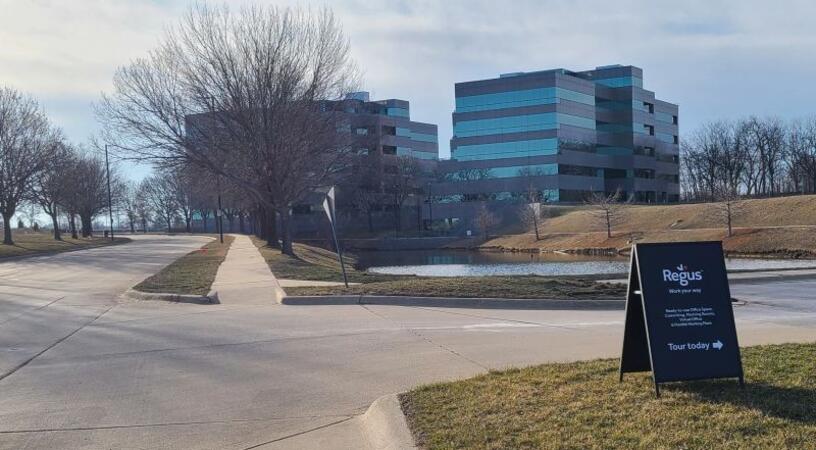
IA, Johnston - Regus - Foxboro Square
6165 Northwest 86th Street, Johnston, United States, 50131
Regus Foxboro Square enjoys a highly accessible suburban location—and is easily reached by car via Interstates 80/35. Ample free parking is available in the surface lots surrounding the building. For those arriving from Des Moines International Airport (DSM), the venue is approximately 16.6 km (about a 15–20 minute drive) via I‑35 north. Public transit users can take Johnston-area bus services to nearby stops; the facility is also adjacent to Dover Park’s walking and biking trails, providing a healthy commute option.
Cedar Rapids, IA - Regus – Edgewood Pointe
4515 N River Blvd NE #200, Cedar Rapids, United States, 52411
Regus Cedar Rapids is easily accessible by car via I‑380 or I‑80 toward northeast Cedar Rapids, exiting at Edgewood Road and traveling south on River Boulevard. Complimentary on-site surface parking ensures convenience for event attendees. For travelers arriving at Des Moines International Airport (DSM), the venue is approximately a 90‑minute drive via I‑80 and I‑380. Local participants can reach the centre using Cedar Rapids Transit Route 10, with stops near River Boulevard and Edgewood Pointe.
This instructor-led, live training session in Iowa (available online or on-site) is targeted at intermediate-level developers, data scientists, and AI specialists aiming to utilize TensorFlow Lite for Edge AI applications.
Upon completion of this training, participants will be capable of:
Grasping the basic concepts of TensorFlow Lite and its application in Edge AI.
Building and refining AI models with TensorFlow Lite.
Employing tools and techniques for model conversion and optimization.
Implementing functional Edge AI applications via TensorFlow Lite.
This instructor-led, live training in Iowa (delivered online or onsite) is tailored for advanced-level professionals aiming to advance their proficiency in computer vision and leverage TensorFlow’s capabilities for the development of sophisticated vision models using Google Colab.
Upon completion of this training, participants will possess the ability to:
Construct and train convolutional neural networks (CNNs) using the TensorFlow framework.
Utilize Google Colab to facilitate scalable and efficient cloud-based model development.
Execute image preprocessing protocols required for computer vision tasks.
Deploy computer vision models suitable for real-world operational use.
Apply transfer learning methods to optimize the performance of CNN models.
Analyze and interpret the outcomes of image classification systems.
This live instructional program, conducted in Iowa (either virtually or on-site), targets intermediate-level data scientists and developers aiming to comprehend and implement deep learning methodologies within the Google Colab environment.
Following the completion of this training, participants will be equipped to:
Establish and navigate Google Colab for the execution of deep learning projects for government purposes.
Grasp the essential principles underlying neural network design.
Construct and deploy deep learning models utilizing TensorFlow.
Perform the training and rigorous evaluation of deep learning models.
Leverage advanced TensorFlow functionalities to enhance deep learning outcomes.
This instructor-led, live training in Iowa (available online or onsite) is targeted at advanced-level professionals aiming to specialize in cutting-edge deep learning techniques for NLU.
Upon completion of this training, participants will be equipped to:
Analyze the fundamental differences between NLU and NLP models for government contexts.
Implement advanced deep learning methods to solve NLU tasks.
Utilize deep architectures, including transformers and attention mechanisms.
Incorporate future trends in NLU to develop sophisticated AI systems for government use.
This live, instructor-led training session (delivered online or in-person) is tailored for senior-level professionals seeking to master state-of-the-art explainable AI (XAI) methodologies for deep learning, with an emphasis on constructing interpretable and accountable AI systems for government.
Upon completion of this training, participants will possess the ability to:
Analyze the structural challenges associated with explainability in deep learning.
Apply advanced XAI methodologies to neural network architectures.
Interpret the underlying logic of deep learning model decisions.
Assess the operational trade-offs between model performance and transparency.
This instructor-led, live training in Iowa (online or onsite) is designed for intermediate to advanced-level data scientists, machine learning engineers, deep learning researchers, and computer vision experts seeking to enhance their expertise in deep learning for text-to-image synthesis.
Upon completion of this training, participants will possess the ability to:
Comprehend advanced deep learning architectures and methodologies for text-to-image generation.
Implement complex model configurations and optimizations for high-quality image synthesis.
Optimize system performance and scalability for large-scale datasets and complex models.
Tune hyperparameters to enhance model performance and generalization capabilities.
Integrate Stable Diffusion with complementary deep learning frameworks and toolsets.
This instructor-led, live training in Iowa (online or onsite) is tailored for advanced professionals aiming to apply AI techniques for government efficiency in drug discovery and development operations.
Upon completion of this training, participants will be equipped to:
Comprehend the application of AI in drug discovery and development.
Implement machine learning methods to forecast molecular properties and interactions.
Utilize deep learning models for virtual screening and lead refinement.
Integrate AI-driven strategies into the clinical trial process.
This instructor-led, live training in Iowa (online or onsite) is intended for biologists who wish to understand the operational mechanics of AlphaFold and utilize its models as guides in their experimental studies for government and public sector research initiatives.
Upon completion of this training, participants will be able to:
Comprehend the fundamental principles underlying AlphaFold.
Understand the technical processes by which AlphaFold generates predictions.
Learn how to interpret AlphaFold predictions and resulting data.
This instructor-led, live training session in Iowa (available online or onsite) is tailored for developers with beginner to intermediate experience who aim to implement Large Language Models for operational natural language tasks.
Upon completion of this training, participants will be able to:
Establish a development environment equipped with a widely adopted LLM.
Construct a basic LLM and perform fine-tuning on custom datasets.
Utilize LLMs for various natural language tasks, including text summarization, question answering, and text generation.
Debug and assess LLM performance using tools such as TensorBoard, PyTorch Lightning, and Hugging Face Datasets.
This instructor-led, live training (available online or onsite) is specifically designed for data scientists, machine learning engineers, and computer vision researchers. The program focuses on leveraging Stable Diffusion to generate high-quality images suitable for a variety of public sector use cases.
Upon successful completion, participants will be equipped to:
Explain the fundamental principles of Stable Diffusion and its mechanisms for image synthesis.
Develop and train Stable Diffusion models for targeted image generation tasks.
Apply Stable Diffusion across various scenarios, including inpainting, outpainting, and image-to-image translation, for government contexts.
Enhance the performance metrics and operational stability of Stable Diffusion models.
In this instructor-led, live training session delivered in Iowa, participants will develop expertise in advanced machine learning techniques using Python. The course focuses on the construction of demonstrative applications that process image, audio, textual, and financial data, aligning with technical requirements for government digital transformation initiatives.
Upon completion of this training, participants will be able to:
Implement machine learning algorithms and techniques to address complex, multi-dimensional problems.
Apply deep learning and semi-supervised learning methodologies to data streams involving image, audio, text, and financial information relevant for government operations.
Maximize the efficiency and capability of Python algorithms.
Employ essential libraries and packages, such as NumPy and Theano, to support robust software development.
Applied AI from Scratch in Python equips programmers and data analysts with foundational techniques for building machine learning solutions from the ground up using Python. It covers core principles of supervised learning, including classification and regression, as well as unsupervised learning methods for clustering and anomaly detection. The curriculum also addresses advanced neural network architectures for for government use cases. The course examines proven methods for working with scikit-learn, Apache Spark MLlib, and Jupyter notebooks for hands-on AI development. It helps professionals implement practical ML models, evaluate algorithm limitations, and complete applied projects for real-world problem solving for government operations.
Deep Reinforcement Learning (DRL) integrates reinforcement learning principles with deep learning architectures to facilitate autonomous decision-making through environmental interaction. This technology underpins significant advancements in AI, including self-driving vehicles, robotic control, algorithmic trading, and adaptive recommendation systems, which are increasingly relevant for government efficiency and service delivery.
This instructor-led live training (online or onsite) is designed for intermediate-level developers and data scientists. It focuses on acquiring the skills necessary to apply Deep Reinforcement Learning techniques for building intelligent agents capable of autonomous decision-making in complex operational environments for government and public sector use.
Upon completion, participants will be able to:
Comprehend the theoretical foundations and mathematical principles underlying Reinforcement Learning.
Implement core RL algorithms, including Q-Learning, Policy Gradients, and Actor-Critic methods.
Construct and train Deep Reinforcement Learning agents using TensorFlow or PyTorch.
Apply DRL to practical scenarios such as simulation, robotics, and decision optimization.
Troubleshoot, visualize, and optimize training performance utilizing modern analytical tools.
Course Format
Interactive lectures and guided professional discussions.
Hands-on exercises and practical implementation tasks.
Live coding demonstrations and project-based applications.
Course Customization Options
To request a customized curriculum (e.g., utilizing PyTorch instead of TensorFlow), please contact the training administrator for arrangement.
This course examines the fundamental principles of artificial intelligence, analyzing how intelligent technologies drive digital transformation, operational automation, and data-driven decision-making within public sector agencies. It provides a comprehensive overview of core domains, including the historical development of AI, structured problem-solving methods, logical knowledge representation, reasoning under uncertainty, and machine learning frameworks, along with capabilities for natural language processing, perception, and autonomous robotics. The curriculum is designed for government officials and technical leaders, offering insights into evaluating AI adoption opportunities, assessing technological trends, and integrating intelligent systems to enhance service delivery, accountability, and organizational efficiency for government operations.
This curriculum provides a comprehensive examination of Artificial Intelligence, with specific focus on Machine Learning and Deep Learning within the Automotive Industry. It establishes criteria for identifying appropriate technologies across various operational scenarios for government, ranging from basic automation and image recognition to complex autonomous decision-making frameworks.
This three-day program in Iowa addresses the theoretical and practical aspects of Artificial Neural Networks, Machine Learning, and Deep Learning. Participants will examine network architectures, learning mechanisms, and mathematical foundations, progressing from fundamental perceptrons to advanced deep learning techniques for government applications.
This instructor-led, live training in Iowa (online or onsite) delivers a comprehensive introduction to pattern recognition and machine learning. It addresses practical applications relevant to public sector operations, including statistics, computer science, signal processing, computer vision, data mining, and bioinformatics.
Upon completion of this training, participants will be capable of:
Applying core statistical methods to pattern recognition challenges for government.
Utilizing key models such as neural networks and kernel methods for data analysis.
Implementing advanced techniques for resolving complex operational problems.
Enhancing prediction accuracy through the integration of diverse models.
This instructor-led, live training in Iowa (available online or onsite) is designed for software developers, data analysts, and technical professionals seeking to utilize TensorFlow 2.x and Keras to construct, train, and deploy robust deep learning models for computer vision, natural language processing, and multimodal applications for government.
This instructor-led live training, delivered in Iowa (online or onsite), is tailored for data scientists aiming to utilize TensorFlow for the analysis of potential fraud data.
Upon completion of this training, participants will be equipped to:
Develop fraud detection models utilizing Python and TensorFlow.
Construct linear regression models to enhance fraud prediction capabilities.
Implement comprehensive AI applications for the systematic analysis of fraud data.
In this instructor-led, live training program, participants will acquire the skills necessary to utilize MATLAB for the design, construction, and visualization of convolutional neural networks for image recognition tasks.
Upon completion of this training, participants will be equipped to:
Develop a deep learning model for operational use
Implement automated data labeling processes
Integrate and manage models originating from Caffe and TensorFlow-Keras frameworks
Execute training operations using multiple GPUs, cloud infrastructure, or distributed clusters
Audience
Developers
Engineers
Domain experts
Format of the course
A balanced curriculum comprising lectures, discussions, exercises, and extensive hands-on practice
This instructor-led live training in Iowa (available online or onsite) is tailored for developers and data scientists who intend to leverage TensorFlow 2.x to construct predictors, classifiers, generative models, and neural networks for government purposes.
By the conclusion of this training, participants will be equipped to:
Install and configure the TensorFlow 2.x environment.
Comprehend the operational benefits of TensorFlow 2.x relative to previous versions.
Develop deep learning models.
Implement advanced image classifiers.
Deploy deep learning models to cloud, mobile, and IoT devices.
This 35-hour course on Iowa covers deep neural network fundamentals, including CNNs, RNNs, and generative models such as GANs. Participants gain hands-on experience with Theano and TensorFlow, learning to build, train, and deploy production-grade deep learning models for real-world applications for government use cases.
Read more...
Last Updated:
Testimonials (5)
Getting people that never used AI some repetition in prompting and people that do use AI to consider different methods to using it.
Matthew Gay - Tarsus Pharmaceuticals
Course - Artificial Intelligence (AI) Overview
The training was organized and well-planned out, and I come out of it with systematized knowledge and a good look at topics we looked at
Magdalena - Samsung Electronics Polska Sp. z o.o.
Course - Deep Learning with TensorFlow 2
Working from first principles in a focused way, and moving to applying case studies within the same day
Maggie Webb - Department of Jobs, Regions, and Precincts
Course - Artificial Neural Networks, Machine Learning, Deep Thinking
That it was applying real company data.
Trainer had a very good approach by making trainees participate and compete
Jimena Esquivel - Zaklad Uslugowy Hakoman Andrzej Cybulski
Course - Applied AI from Scratch in Python
In-depth coverage of machine learning topics, particularly neural networks. Demystified a lot of the topic.
Online Deep Learning (DL) training in Iowa, Deep Learning (DL) training courses in Iowa, Weekend Deep Learning (DL) courses in Iowa, Evening Deep Learning training in Iowa, DL (Deep Learning) instructor-led in Iowa, Deep Learning (DL) private courses in Iowa, Evening Deep Learning courses in Iowa, Deep Learning one on one training in Iowa, Online DL (Deep Learning) training in Iowa, DL (Deep Learning) boot camp in Iowa, Weekend Deep Learning (DL) training in Iowa, Deep Learning instructor-led in Iowa, Deep Learning instructor in Iowa, Deep Learning (DL) classes in Iowa, Deep Learning (DL) coaching in Iowa, DL (Deep Learning) trainer in Iowa, DL (Deep Learning) on-site in Iowa