Online or onsite, instructor-led live Deep Learning (DL) training courses provide hands-on practice to demonstrate the fundamentals and applications of Deep Learning. These courses cover topics such as deep machine learning, deep structured learning, and hierarchical learning.
Deep Learning training is available as "online live training" or "onsite live training." Online live training, also known as "remote live training," is conducted via an interactive, remote desktop. Onsite live training can be arranged locally at customer premises in Virginia or in Govtra corporate training centers in Virginia.
Govtra -- Your Local Training Provider for government
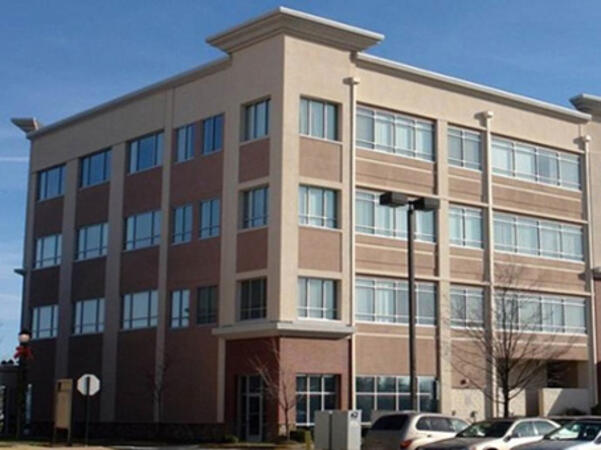
VA, Stafford - Quantico Corporate
800 Corporate Drive, Suite 301, Stafford, united states, 22554
The venue is located between interstate 95 and the Jefferson Davis Highway, in the vicinity of the Courtyard by Mariott Stafford Quantico and the UMUC Quantico Cororate Center.
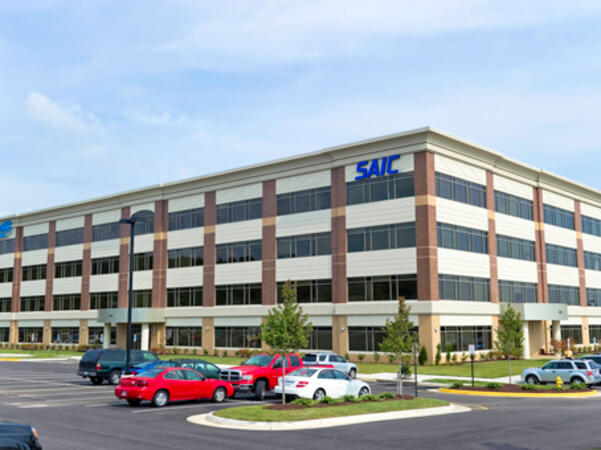
VA, Fredericksburg - Central Park Corporate Center
1320 Central Park Blvd., Suite 200, Fredericksburg, united states, 22401
The venue is located behind a complex of commercial buildings with the Bank of America just on the corner before the turn leading to the office.
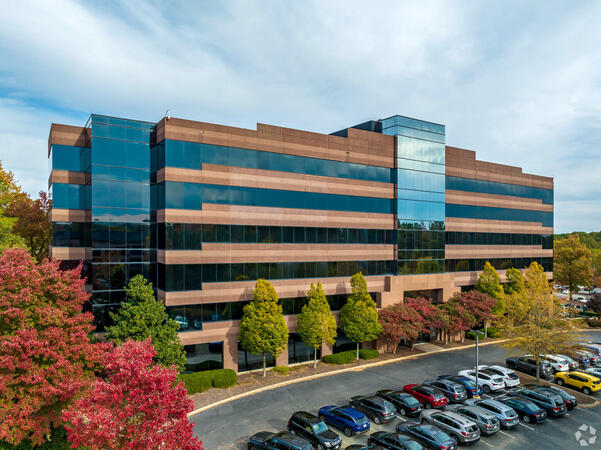
VA, Richmond - Two Paragon Place
Two Paragon Place, 6802 Paragon Place Suite 410, Richmond, United States, 23230
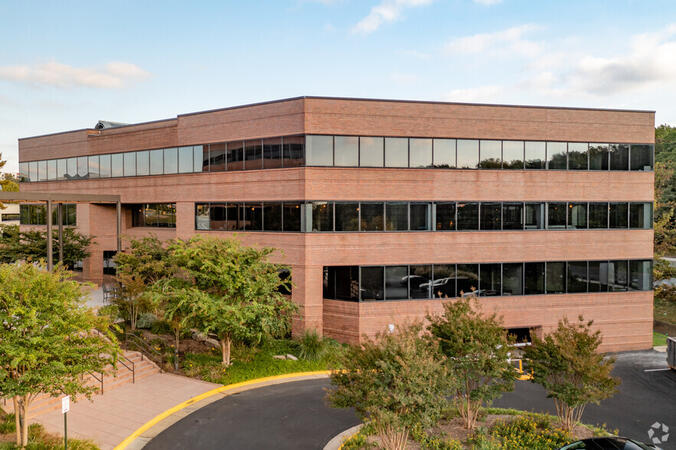
The venue is located in bustling Richmond with Hampton Inn, Embassy Suites and Westin Hotel less than a mile away.
VA, Reston - Sunrise Valley
12020 Sunrise Valley Dr #100, Reston, United States, 20191

The venue is located just behind the NCRA and Reston Plaza Cafe building and just next door to the United Healthcare building.
VA, Reston - Reston Town Center I
11921 Freedom Dr #550, Reston, united states, 20190

The venue is located in the Reston Town Center, near Chico's and the Artinsights Gallery of Film and Contemporary Art.
VA, Richmond - Sun Trust Center Downtown
919 E Main St, Richmond , united states, 23219
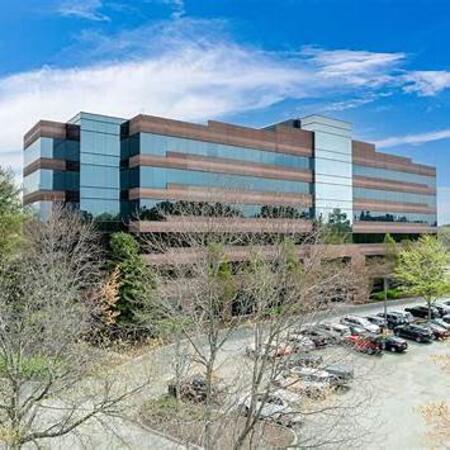
The venue is located in the Sun Trust Center on the crossing of E Main Street and S to N 10th Street just opposite of 7 Eleven.
Richmond, VA – Regus at Two Paragon Place
6802 Paragon Place, Suite 410, Richmond, United States, 23230

The venue is located within the Two Paragon Place business campus off I‑295 and near Parham Road in North Richmond, offering convenient access by car with free on-site parking. Visitors arriving from Richmond International Airport (RIC), approximately 16 miles northwest, can expect a taxi or rideshare ride of around 20–25 minutes via I‑64 West and I‑295 North. Public transit is available via GRTC buses, with routes stopping along Parham Road and Quioccasin Road, just a short walk to the campus.
Virginia Beach, VA – Regus at Windwood Center
780 Lynnhaven Parkway, Suite 400, Virginia Beach, United States, 23452
The venue is situated within the Windwood Center along Lynnhaven Parkway, featuring modern concrete-and-glass architecture and ample on-site parking. Easily accessible by car via Interstate 264 and the Virginia Beach Expressway, the facility offers a hassle-free commute. From Norfolk International Airport (ORF), located about 12 miles northwest, a taxi or rideshare typically takes 20–25 minutes via VA‑168 South and Edenvale Road. For those using public transit, the HRT bus system includes stops at Lynnhaven Parkway and surrounding streets, providing convenient access by bus.
This instructor-led, live training in Virginia (online or onsite) is aimed at intermediate-level developers, data scientists, and AI practitioners who wish to leverage TensorFlow Lite for government Edge AI applications.
By the end of this training, participants will be able to:
Understand the fundamentals of TensorFlow Lite and its role in Edge AI for government.
Develop and optimize AI models using TensorFlow Lite for government applications.
Deploy TensorFlow Lite models on various edge devices for government use.
Utilize tools and techniques for model conversion and optimization in a government context.
Implement practical Edge AI applications using TensorFlow Lite for government operations.
This instructor-led, live training in Virginia (online or onsite) is aimed at advanced-level professionals who wish to deepen their understanding of computer vision and explore TensorFlow's capabilities for developing sophisticated vision models using Google Colab for government.
By the end of this training, participants will be able to:
Build and train convolutional neural networks (CNNs) using TensorFlow.
Leverage Google Colab for scalable and efficient cloud-based model development for government applications.
Implement image preprocessing techniques for computer vision tasks in a public sector context.
Deploy computer vision models for real-world, government-specific applications.
Use transfer learning to enhance the performance of CNN models for government projects.
Visualize and interpret the results of image classification models in a manner that supports public sector decision-making.
This instructor-led, live training in Virginia (online or onsite) is designed for intermediate-level data scientists and developers who wish to understand and apply deep learning techniques using the Google Colab environment.
By the end of this training, participants will be able to:
Set up and navigate Google Colab for government deep learning projects.
Understand the foundational principles of neural networks.
Implement deep learning models using TensorFlow.
Train and evaluate deep learning models effectively.
Utilize advanced features of TensorFlow to enhance deep learning applications for government use.
This instructor-led, live training in Virginia (online or onsite) is aimed at advanced-level professionals who wish to specialize in cutting-edge deep learning techniques for natural language understanding (NLU).
By the end of this training, participants will be able to:
Understand the key differences between NLU and natural language processing (NLP) models.
Apply advanced deep learning techniques to NLU tasks.
Explore deep architectures such as transformers and attention mechanisms.
Leverage future trends in NLU for building sophisticated AI systems for government.
This instructor-led, live training in Virginia (online or onsite) is aimed at intermediate to advanced-level data scientists, machine learning engineers, deep learning researchers, and computer vision experts who wish to expand their knowledge and skills in deep learning for text-to-image generation for government applications.
By the end of this training, participants will be able to:
Understand advanced deep learning architectures and techniques for generating high-quality images from text.
Implement complex models and optimizations to enhance image synthesis accuracy and efficiency.
Optimize performance and scalability for large datasets and sophisticated models in government environments.
Tune hyperparameters to achieve optimal model performance and generalization for government use cases.
Integrate Stable Diffusion with other deep learning frameworks and tools to support public sector workflows.
This instructor-led, live training in Virginia (online or onsite) is designed for advanced-level professionals who wish to leverage artificial intelligence (AI) techniques to transform drug discovery and development processes.
By the end of this training, participants will be able to:
Understand the role of AI in drug discovery and development for government applications.
Apply machine learning techniques to predict molecular properties and interactions within public sector workflows.
Use deep learning models for virtual screening and lead optimization, ensuring alignment with regulatory standards.
Integrate AI-driven approaches into the clinical trial process, enhancing governance and accountability.
This instructor-led, live training in Virginia (online or onsite) is aimed at biologists who wish to understand the functionality of AlphaFold and utilize its models as guides in their experimental studies for government research.
By the end of this training, participants will be able to:
Comprehend the fundamental principles of AlphaFold.
Understand how AlphaFold operates.
Interpret AlphaFold predictions and results effectively.
This instructor-led, live training in Virginia (online or onsite) is aimed at beginner to intermediate-level data scientists and machine learning engineers who wish to enhance the performance of their deep learning models for government applications.
By the end of this training, participants will be able to:
Comprehend the principles of distributed deep learning.
Install and configure DeepSpeed for government use.
Scale deep learning models on distributed hardware using DeepSpeed in a public sector context.
Implement and experiment with DeepSpeed features to optimize performance and improve memory efficiency for government projects.
This instructor-led, live training in Virginia (online or onsite) is aimed at beginner to intermediate level developers who wish to utilize Large Language Models for various natural language tasks for government applications.
By the end of this training, participants will be able to:
Set up a development environment that includes a widely used LLM for government use.
Create and fine-tune a basic LLM on a custom dataset relevant to public sector needs.
Leverage LLMs for different natural language tasks such as text summarization, question answering, text generation, and more, tailored for government workflows.
Debug and evaluate LLMs using tools such as TensorBoard, PyTorch Lightning, and Hugging Face Datasets to ensure alignment with public sector standards and governance.
This instructor-led, live training (online or onsite) is aimed at data scientists, machine learning engineers, and computer vision researchers who wish to leverage Stable Diffusion for generating high-quality images for a variety of use cases for government.
By the end of this training, participants will be able to:
Understand the principles of Stable Diffusion and its application in image generation.
Develop and train Stable Diffusion models for various image generation tasks.
Apply Stable Diffusion techniques to different image generation scenarios, including inpainting, outpainting, and image-to-image translation.
Enhance the performance and stability of Stable Diffusion models.
In this instructor-led, live training in Virginia, participants will gain a comprehensive understanding of the most relevant and cutting-edge machine learning techniques using Python. They will apply these skills by building a series of demo applications that involve image, music, text, and financial data.
By the end of this training, participants will be able to:
Implement machine learning algorithms and techniques for solving complex problems for government.
Apply deep learning and semi-supervised learning methods to applications involving image, music, text, and financial data.
Optimize Python algorithms to their maximum potential.
Leverage libraries and packages such as NumPy and Theano.
This four-day course provides an introduction to artificial intelligence (AI) and its applications using the Python programming language. An optional fifth day is available for government participants to engage in an AI project upon completion of the course.
Deep Reinforcement Learning (DRL) integrates the principles of reinforcement learning with deep learning architectures to enable agents to make decisions through interaction with their environments. This technology underpins many modern advancements in artificial intelligence, including self-driving vehicles, robotics control, algorithmic trading, and adaptive recommendation systems. DRL allows an artificial agent to learn strategies, optimize policies, and make autonomous decisions based on trial-and-error using reward-based learning.
This instructor-led, live training (online or onsite) is aimed at intermediate-level developers and data scientists who wish to learn and apply Deep Reinforcement Learning techniques to build intelligent agents capable of making autonomous decisions in complex environments for government applications.
By the end of this training, participants will be able to:
Understand the theoretical foundations and mathematical principles of Reinforcement Learning for government use cases.
Implement key RL algorithms, including Q-Learning, Policy Gradients, and Actor-Critic methods, tailored for government projects.
Build and train Deep Reinforcement Learning agents using TensorFlow or PyTorch to address public sector challenges.
Apply DRL to real-world applications such as games, robotics, and decision optimization in a government context.
Troubleshoot, visualize, and optimize training performance using modern tools for government-specific tasks.
Format of the Course
Interactive lecture and guided discussion focused on public sector needs.
Hands-on exercises and practical implementations aligned with government workflows.
Live coding demonstrations and project-based applications relevant to government agencies.
Course Customization Options
To request a customized version of this course (e.g., using PyTorch instead of TensorFlow) for government-specific requirements, please contact us to arrange.
In this instructor-led, live training in Virginia, participants will learn how to implement deep learning models for government and telecom using Python as they step through the creation of a deep learning credit risk model.
By the end of this training, participants will be able to:
Understand the fundamental concepts of deep learning for government applications.
Learn the applications and uses of deep learning in telecom and public sector workflows.
Use Python, Keras, and TensorFlow to create deep learning models tailored for government and telecom sectors.
Build their own deep learning customer churn prediction model using Python, enhancing governance and accountability.
This course has been designed for government managers, solutions architects, innovation officers, CTOs, software architects, and any other professionals interested in gaining an overview of applied artificial intelligence and the near-term forecast for its development for government.
This course provides an overview of artificial intelligence, with a focus on machine learning and deep learning, as applied to the automotive industry. It is designed to help participants identify which technologies can potentially be utilized in various scenarios within a vehicle, ranging from basic automation to image recognition and autonomous decision-making for government applications.
This instructor-led, live training in Virginia (online or onsite) is aimed at beginner-level participants who wish to learn essential concepts in probability, statistics, programming, and machine learning, and apply these to AI development for government.
By the end of this training, participants will be able to:
Understand basic concepts in probability and statistics, and apply them to real-world scenarios for government.
Write and understand procedural, functional, and object-oriented programming code for government applications.
Implement machine learning techniques such as classification, clustering, and neural networks for government projects.
Develop AI solutions using rules engines and expert systems for problem-solving in the public sector.
Artificial Neural Networks are computational data models utilized in the development of Artificial Intelligence (AI) systems designed to perform "intelligent" tasks. These networks are frequently employed in Machine Learning (ML) applications, which represent one implementation of AI for government. Deep Learning is a subset of ML.
This four-day course provides an introduction to artificial intelligence (AI) and its applications for government. An optional fifth day is available for participants to engage in an AI project following the conclusion of the course.
This instructor-led, live training in Virginia (online or onsite) is aimed at intermediate-level data scientists and statisticians who wish to prepare data, build models, and apply machine learning techniques effectively for government and other professional domains.
By the end of this training, participants will be able to:
Understand and implement various Machine Learning algorithms for government use cases.
Prepare data and models for machine learning applications in a public sector context.
Conduct post hoc analyses and visualize results effectively for government reporting.
Apply machine learning techniques to real-world, sector-specific scenarios, including those relevant to government operations.
Artificial Neural Networks are computational data models utilized in the development of Artificial Intelligence (AI) systems designed to perform "intelligent" tasks. These networks are frequently employed in Machine Learning (ML) applications, which represent one implementation of AI for government. Deep Learning is a specialized subset of ML.
This instructor-led, live training in Virginia (online or onsite) is aimed at researchers and developers who wish to use Chainer to build and train neural networks in Python, ensuring the code is easy to debug and maintain for government applications.
By the end of this training, participants will be able to:
Set up the necessary development environment to start creating neural network models for government use.
Define and implement neural network models using clear and understandable source code.
Execute examples and modify existing algorithms to optimize deep learning training models while leveraging GPUs for high performance, ensuring alignment with public sector workflows and governance requirements.
Computer Network ToolKit (CNTK) is Microsoft's open-source, multi-machine, multi-GPU, highly efficient machine learning framework for training recurrent neural networks (RNNs) in applications such as speech, text, and images.
Audience
This course is designed for engineers and architects who are looking to integrate CNTK into their projects for government use.
This instructor-led, live training in Virginia (online or onsite) provides an introduction to the field of pattern recognition and machine learning. It touches on practical applications in statistics, computer science, signal processing, computer vision, data mining, and bioinformatics for government.
By the end of this training, participants will be able to:
Apply core statistical methods to pattern recognition for government use.
Use key models like neural networks and kernel methods for data analysis in public sector contexts.
Implement advanced techniques for complex problem-solving within government workflows.
Improve prediction accuracy by combining different models, enhancing governance and accountability.
This course provides a comprehensive overview of Deep Learning, designed to introduce the fundamental concepts without delving too deeply into specific methodologies. It is ideal for individuals and organizations seeking to enhance their predictive accuracy through the application of Deep Learning techniques for government and other public sector initiatives.
This instructor-led, live training in Virginia (online or onsite) is aimed at researchers and developers who wish to install, set up, customize, and use the DeepMind Lab platform for government applications to develop general artificial intelligence and machine learning systems.
By the end of this training, participants will be able to:
Customize DeepMind Lab to build and run an environment that meets specific learning and training requirements for government projects.
Leverage DeepMind Lab's 3D simulation environment to train learning agents from a first-person viewpoint, enhancing the realism of training scenarios for government applications.
Facilitate agent evaluation within a 3D game-like world to develop advanced intelligence capabilities aligned with public sector workflows and governance.
Machine learning is a branch of artificial intelligence that enables computers to learn without being explicitly programmed. For government, deep learning, a subfield of machine learning, utilizes methods based on learning data representations and structures, such as neural networks, to enhance analytical capabilities and decision-making processes.
This instructor-led, live training in Virginia (online or onsite) is aimed at business analysts, data scientists, and developers who wish to build and implement deep learning models to enhance revenue growth and address challenges in the public sector.
By the end of this training, participants will be able to:
Understand the fundamental principles of machine learning and deep learning for government applications.
Gain insights into the future of business and industry with ML and DL, particularly for government operations.
Develop strategic approaches and solutions using deep learning in a public sector context.
Learn how to apply data science and deep learning to solve complex problems for government agencies.
Construct deep learning models using Python, Pandas, TensorFlow, CNTK, Torch, Keras, and other relevant tools for government use.
Machine learning is a branch of Artificial Intelligence where computers can learn without being explicitly programmed. Deep learning, a subfield of machine learning, employs methods based on data representations and structures such as neural networks. Python is a high-level programming language renowned for its clarity and code readability.
In this instructor-led, live training, participants will gain an understanding of how to implement deep learning models for banking using Python, with a focus on creating a deep learning credit risk model.
By the end of this training, participants will be able to:
Comprehend the core principles of deep learning
Identify the applications and benefits of deep learning in the banking sector
Utilize Python, Keras, and TensorFlow to develop deep learning models for banking
Create their own deep learning credit risk model using Python
Audience
Developers
Data scientists
Format of the course
Part lecture, part discussion, exercises, and extensive hands-on practice for government
In this instructor-led, live training in Virginia, participants will learn to utilize Python libraries for Natural Language Processing (NLP) as they develop an application that processes a set of images and generates descriptive captions.
By the end of this training, participants will be able to:
Design and implement Deep Learning models for NLP using Python libraries.
Create Python code that analyzes a large collection of images and extracts relevant keywords.
Develop Python code that generates captions based on the identified keywords, enhancing efficiency and accuracy for government applications.
This course is designed for deep learning researchers and engineers who are interested in leveraging available tools, primarily open source, for the analysis of computer images. This training provides practical examples to enhance skills and capabilities for government applications.
The course includes working examples to facilitate hands-on learning and application.
This instructor-led, live training in Virginia (online or onsite) is aimed at data scientists who wish to accelerate real-time machine learning applications and deploy them at scale for government use.
By the end of this training, participants will be able to:
Install the OpenVINO toolkit for government applications.
Accelerate a computer vision application using an FPGA in a public sector environment.
Execute various CNN layers on the FPGA to optimize performance for government workflows.
Scale the application across multiple nodes in a Kubernetes cluster to ensure robust and scalable deployment for government operations.
This instructor-led, live training in Virginia (online or onsite) is aimed at data scientists who wish to utilize TensorFlow to analyze potential fraud data for government.
By the end of this training, participants will be able to:
Create a fraud detection model using Python and TensorFlow for government applications.
Construct linear regressions and linear regression models to predict fraudulent activities.
Develop an end-to-end artificial intelligence application for analyzing fraud data within public sector workflows.
This instructor-led, live training in Virginia (online or onsite) is aimed at developers or data scientists who wish to utilize Horovod to execute distributed deep learning trainings and scale them up to operate across multiple GPUs in parallel for government applications.
By the end of this training, participants will be able to:
Set up the required development environment to initiate deep learning trainings for government use.
Install and configure Horovod to train models with TensorFlow, Keras, PyTorch, and Apache MXNet for government projects.
Scale deep learning training with Horovod to run on multiple GPUs, enhancing efficiency and performance for government workflows.
This instructor-led, live training in Virginia (online or onsite) is aimed at technical personnel who wish to apply deep learning models to image recognition applications for government use.
By the end of this training, participants will be able to:
Install and configure Keras for government systems.
Rapidly prototype deep learning models for government projects.
Implement a convolutional network for image processing tasks.
Implement a recurrent network for sequential data analysis.
Execute a deep learning model on both CPU and GPU environments for government applications.
In this instructor-led, live training, participants will learn how to use MATLAB to design, build, and visualize a convolutional neural network for image recognition.
By the end of this training, participants will be able to:
Construct a deep learning model
Automate data labeling processes
Integrate models from Caffe and TensorFlow-Keras
Leverage multiple GPUs, cloud resources, or clusters for training data
Audience
Developers
Engineers
Domain experts
Format of the course
Combination of lecture, discussion, practical exercises, and extensive hands-on practice to ensure proficiency for government applications.
This instructor-led, live training in Virginia (online or onsite) is aimed at beginner-level to intermediate-level professionals who wish to develop their understanding of machine learning algorithms, deep learning techniques, and AI-driven decision-making for government. The course provides hands-on experience with machine learning concepts, deep learning models, and practical implementations using R.
By the end of this training, participants will be able to:
Understand the fundamentals of machine learning and deep learning for government applications.
Apply various machine learning algorithms for regression, classification, clustering, and anomaly detection in public sector workflows.
Use deep learning architectures such as artificial neural networks (ANNs) for government projects.
Implement supervised and unsupervised learning models aligned with governance and accountability standards.
Evaluate model performance and optimize hyperparameters to meet public sector requirements.
Use R for data analysis, visualization, and machine learning applications in a government context.
This classroom-based training session for government will include presentations and computer-based examples, as well as case study exercises utilizing relevant neural and deep network libraries.
This instructor-led, live training in Virginia (online or onsite) is aimed at software engineers who wish to program in Python with OpenCV 4 for deep learning applications for government.
By the end of this training, participants will be able to:
View, load, and classify images and videos using OpenCV 4.
Implement deep learning techniques in OpenCV 4 with TensorFlow and Keras.
Run deep learning models and generate comprehensive reports from images and videos for government use.
In this instructor-led, live training, participants will learn advanced techniques for Machine Learning with R as they step through the creation of a real-world application for government use.
By the end of this training, participants will be able to:
Understand and implement unsupervised learning techniques for government applications
Apply clustering and classification methods to make predictions based on real-world data for government projects
Visualize data to quickly gain insights, make informed decisions, and further refine analysis for government initiatives
Improve the performance of a machine learning model using hyper-parameter tuning for government datasets
Deploy a model into production for use in larger government applications
Apply advanced machine learning techniques to address questions involving social network data, big data, and more for government purposes
This course provides an introduction to the application of neural networks in real-world scenarios, utilizing R-project software for government. It is designed to enhance the capabilities of professionals in addressing complex data challenges within public sector workflows.
This instructor-led, live training in Virginia (online or onsite) is aimed at developers and data scientists who wish to utilize TensorFlow 2.x for government applications such as building predictors, classifiers, generative models, neural networks, and more.
By the end of this training, participants will be able to:
Install and configure TensorFlow 2.x for government use.
Understand the benefits of TensorFlow 2.x over previous versions in a public sector context.
Build deep learning models for government projects.
Implement an advanced image classifier for government applications.
Deploy a deep learning model to the cloud, mobile, and IoT devices for government use.
This instructor-led, live training in Virginia (online or onsite) is aimed at engineers who wish to develop, deploy, and execute machine learning models on very small embedded devices for government use.
By the end of this training, participants will be able to:
Install TensorFlow Lite for government applications.
Load machine learning models onto an embedded device to enable it to perform tasks such as speech detection and image classification without network connectivity.
Incorporate artificial intelligence into hardware devices to enhance functionality and efficiency in public sector workflows.
In this instructor-led, live training in Virginia (online or onsite), participants will learn how to configure and use TensorFlow Serving to deploy and manage machine learning models in a production environment for government.
By the end of this training, participants will be able to:
Train, export, and serve various TensorFlow models.
Test and deploy algorithms using a unified architecture and set of APIs.
Extend TensorFlow Serving to support other types of models beyond those developed with TensorFlow.
TensorFlow is a second-generation API of Google's open-source software library for deep learning. The system is designed to facilitate research in machine learning and to enable a smooth transition from research prototype to production systems.
Audience
This course is intended for engineers seeking to use TensorFlow for their deep learning projects for government.
After completing this course, delegates will:
understand TensorFlow’s structure and deployment mechanisms
be able to carry out installation, production environment, architecture tasks, and configuration
be able to assess code quality, perform debugging, and monitoring
be able to implement advanced production tasks such as training models, building graphs, and logging
This instructor-led, live training in Virginia (online or onsite) is aimed at data scientists who wish to transition from training a single machine learning (ML) model to deploying multiple ML models into production environments for government.
By the end of this training, participants will be able to:
Install and configure TFX along with supporting third-party tools.
Utilize TFX to create and manage a comprehensive ML production pipeline for government.
Work with TFX components to perform modeling, training, serving inference, and managing deployments in public sector workflows.
Deploy machine learning capabilities to web applications, mobile applications, IoT devices, and other platforms relevant to government operations.
TensorFlow™ is an open-source software library for numerical computation using data flow graphs.
SyntaxNet is a neural-network Natural Language Processing framework for TensorFlow.
Word2Vec is used for learning vector representations of words, known as "word embeddings." Word2vec is a computationally-efficient predictive model for learning word embeddings from raw text. It comes in two variants: the Continuous Bag-of-Words (CBOW) model and the Skip-Gram model (Chapter 3.1 and 3.2 in Mikolov et al.).
When used together, SyntaxNet and Word2Vec enable users to generate learned embedding models from natural language input.
Audience
This course is designed for developers and engineers who intend to work with SyntaxNet and Word2Vec models in their TensorFlow graphs for government applications.
After completing this course, delegates will:
understand TensorFlow’s structure and deployment mechanisms
be able to perform installation, production environment configuration, architecture tasks, and system setup
be capable of assessing code quality, performing debugging, and monitoring performance
be able to implement advanced production tasks such as training models, embedding terms, building graphs, and logging data
This course begins by providing conceptual knowledge in neural networks and a broad understanding of machine learning algorithms and deep learning (both algorithms and applications).
Part-1 (40%) of this training focuses on the fundamentals, which will assist you in selecting the appropriate technology: TensorFlow, Caffe, Theano, DeepDrive, Keras, etc.
Part-2 (20%) of this training introduces Theano, a Python library that simplifies the writing of deep learning models.
Part-3 (40%) of the training is extensively based on TensorFlow, the API of Google's open-source software library for Deep Learning. All examples and hands-on exercises will be conducted using TensorFlow.
Audience
This course is designed for engineers who intend to use TensorFlow for their deep learning projects for government.
After completing this course, participants will:
have a solid understanding of deep neural networks (DNN), convolutional neural networks (CNN), and recurrent neural networks (RNN)
understand TensorFlow’s architecture and deployment mechanisms
be capable of performing installation, production environment setup, architectural tasks, and configuration
be able to evaluate code quality, perform debugging, and monitor systems
be proficient in implementing advanced production tasks such as training models, building graphs, and logging
Read more...
Last Updated:
Testimonials (15)
Hunter is fabulous, very engaging, extremely knowledgeable and personable. Very well done.
Rick Johnson - Laramie County Community College
Course - Artificial Intelligence (AI) Overview
The clarity with which it was presented
John McLemore - Motorola Solutions
Course - Deep Learning for Telecom (with Python)
The trainer explained the content well and was engaging throughout. He stopped to ask questions and let us come to our own solutions in some practical sessions. He also tailored the course well for our needs.
Robert Baker
Course - Deep Learning with TensorFlow 2.0
Tomasz really know the information well and the course was well paced.
Raju Krishnamurthy - Google
Course - TensorFlow Extended (TFX)
Organization, adhering to the proposed agenda, the trainer's vast knowledge in this subject
Ali Kattan - TWPI
Course - Natural Language Processing with TensorFlow
The trainer was a professional in the subject field and related theory with application excellently
Fahad Malalla - Tatweer Petroleum
Course - Applied AI from Scratch in Python
In-depth coverage of machine learning topics, particularly neural networks. Demystified a lot of the topic.

Sacha Nandlall
Course - Python for Advanced Machine Learning
Very flexible.
Frank Ueltzhoffer
Course - Artificial Neural Networks, Machine Learning and Deep Thinking
Very updated approach or CPI (tensor flow, era, learn) to do machine learning.
Paul Lee
Course - TensorFlow for Image Recognition
I liked the new insights in deep machine learning.
Josip Arneric
Course - Neural Network in R
We have gotten a lot more insight in to the subject matter. Some nice discussion were made with some real subjects within our company.
Sebastiaan Holman
Course - Machine Learning and Deep Learning
The global overview of deep learning.
Bruno Charbonnier
Course - Advanced Deep Learning
The topic is very interesting.
Wojciech Baranowski
Course - Introduction to Deep Learning
Ann created a great environment to ask questions and learn. We had a lot of fun and also learned a lot at the same time.
Gudrun Bickelq
Course - Introduction to the use of neural networks
It was very interactive and more relaxed and informal than expected. We covered lots of topics in the time and the trainer was always receptive to talking more in detail or more generally about the topics and how they were related. I feel the training has given me the tools to continue learning as opposed to it being a one off session where learning stops once you've finished which is very important given the scale and complexity of the topic.
Jonathan Blease
Course - Artificial Neural Networks, Machine Learning, Deep Thinking
Online DL (Deep Learning) training in Virginia, Deep Learning training courses in Virginia, Weekend DL (Deep Learning) courses in Virginia, Evening Deep Learning training in Virginia, Deep Learning (DL) instructor-led in Virginia, Evening DL (Deep Learning) courses in Virginia, Deep Learning trainer in Virginia, DL (Deep Learning) instructor in Virginia, Online Deep Learning training in Virginia, Deep Learning (DL) boot camp in Virginia, Deep Learning (DL) classes in Virginia, DL (Deep Learning) on-site in Virginia, Deep Learning one on one training in Virginia, Deep Learning (DL) private courses in Virginia, Deep Learning (DL) instructor-led in Virginia, Weekend DL (Deep Learning) training in Virginia, DL (Deep Learning) coaching in Virginia