NobleProg delivers tailored Java training courses across Alabama, helping professionals in cities like Birmingham, Montgomery, and Huntsville acquire essential skills. Our flexible learning options support local businesses and individuals seeking to enhance their expertise in Java methodologies. Whether online or in-person, we empower Alabamians to stay competitive in the evolving job market through high-quality Java education.
Instructor-led Java training programs, offered in both remote and on-site modalities, utilize hands-on exercises to demonstrate practical application development techniques. These educational offerings are designed to support professional standards for government.
Instruction is delivered via two primary formats: online live training and onsite live training. Remote instruction employs interactive remote desktop technology to facilitate real-time engagement. Alternatively, onsite sessions may be conducted at designated locations in Alabama or within NobleProg corporate facilities in Alabama.
NobleProg -- Your Local Training Provider
Birmingham, AL – Regus at Shipt Tower (Downtown)
420 20th St S, Suite 2200, Birmingham, United States, 35203
The venue is located in downtown Birmingham within the prominent Shipt Tower at 420 North 20th Street, easily reached by car via I‑59, I‑20, or I‑65, with nearby public parking garages. From Birmingham–Shuttlesworth International Airport (BHM), a taxi or rideshare typically takes 10–15 minutes via I‑20 West and US‑31 North. Public transit users can take MAX bus routes stopping on 20th Street or near 4th Avenue North, placing the centre within a few minutes’ walk—offering good access for attendees without cars.

Birmingham, AL – Regus at Chase Corporate Center
1 Chase Corporate Drive, Suite 400, Birmingham, United States, 35244
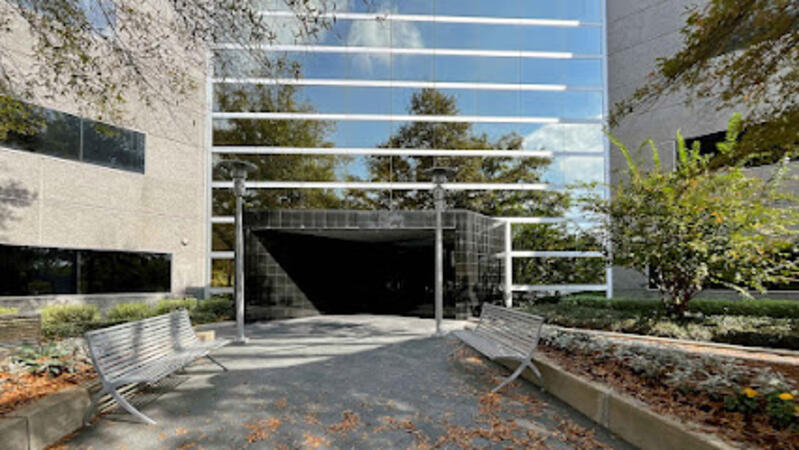
The venue sits in the Chase Corporate Center just off Highway 31 near I‑459 and Highway 280, within a serene, landscaped corporate campus. Visitors arriving by car benefit from plentiful free parking on-site and adjoining garages. From Birmingham–Shuttlesworth International Airport (BHM), taxis or rideshares take around 15–20 minutes via I‑459 North and Highway 280. Public transit riders can use MAX bus routes stopping close to the corporate park, though most attendees prefer driving or rideshare. The tranquil campus setting offers easy access to nearby gyms, retail, and restaurants for break or post-session gatherings.
Birmingham, AL - Regus at One Perimeter Park
1 Perimeter Park South, Birmingham, United States, 35243
The venue is located in the Perimeter Park business complex off I‑459 near Highway 280, offering easy access by car with ample on-site parking. Visitors arriving by air from Birmingham‑Shuttlesworth International Airport (BHM), about 15 miles away, can expect a traditional taxi or rideshare ride of approximately 20–25 minutes via I‑459 South and Highway 280. Public transit options include nearby Jefferson County Transit buses that run along Valleydale Road, with stops within a few blocks of Perimeter Park, making it reasonably accessible without a car.
Huntsville, AL – Regus at Cummings Research Park
7027 Old Madison Pike NW, Suite 108, Huntsville, United States, 35806
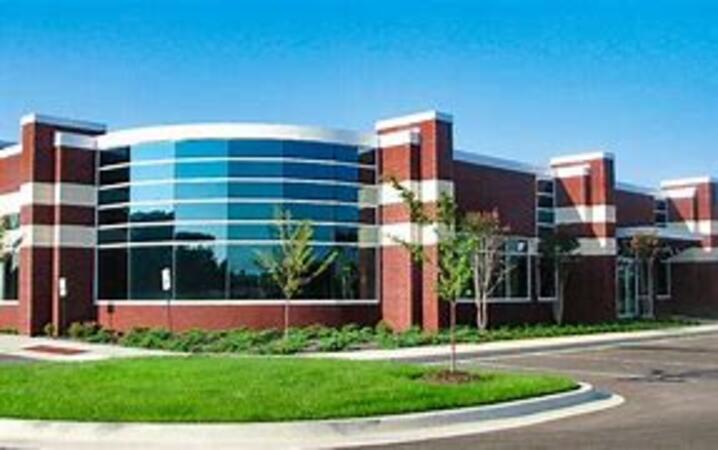
The venue is located in Cummings Research Park, a premier business and technology hub with easy access by car via I‑565 or U.S. Highway 72, and plenty of on-site parking available. From Huntsville International Airport (HSV), approximately 10 miles southeast, taxis or rideshares take around 15–20 minutes heading northwest on U.S. 72. Those relying on public transit can take Rocket City Transit route 22, which stops near the park entrance, offering a convenient option for attendees without a car.
Montgomery, AL - Regus at RSA Dexter Avenue
445 Dexter Avenue, Suite 4050, Montgomery, United States, 36104
The venue is located in the heart of downtown Montgomery on Dexter Avenue, easily accessible by car via I‑65 and US‑80; nearby surface and garage parking are available in the RSA building complex. From Montgomery Regional Airport (MGM), about 9 miles southeast of downtown, a taxi or rideshare typically takes 15–20 minutes via I‑65 North and I‑85 North. Public transit is available via the Montgomery Transit System (MTS) with bus routes running along Court Street and Commerce Street, both within a few blocks’ walk of the venue.
This guided, live instruction offered Alabama (via remote connection or in person) is designed for intermediate-level Java engineers seeking to examine the newest capabilities of Java 21, refine their development methodologies, and effectively deploy contemporary applications. This curriculum provides specialized knowledge for government.
Upon completion of this program, attendees will be capable of:
Comprehending and applying the latest features released in Java 21.
Optimizing application performance through the utilization of advanced Java functionalities.
Constructing modular and scalable systems using current libraries.
Adhering to established best practices for Java 21 to ensure robust and efficient code implementation.
This facilitated instructional program in Alabama (virtual or location-based) is designed for mid-level Java engineers seeking to engineer, implement, operate, and sustain application architectures leveraging microservices through Spring Boot and Spring Cloud. This curriculum is intended for government audiences.
Upon completion, learners will be equipped to:
Comprehend the foundational concepts and advantages inherent in microservices design.
Create and release microservices utilizing Java and the Spring Boot framework.
Execute service discovery protocols, centralized configuration administration, and API gateway implementations.
Ensure the security, observability, and scalability of microservice deployments.
Orchestrate microservice containerization and deployment via Docker and Kubernetes environments.
Java Production Support encompasses the specialized discipline of maintaining, diagnosing, and sustaining the operational integrity of Java-based systems within live production environments.
This instructor-led, live training (delivered online or onsite) targets intermediate support engineers and developers seeking to strengthen their capacity to maintain, troubleshoot, and optimize Java infrastructure in banking sectors.
Upon completion of this instruction, participants will be able to:
Address technical issues across Java, Unix, database, and middleware platforms.
Utilize monitoring utilities to detect and respond to production incidents.
Adhere to established escalation protocols and accurately document root causes.
Engage in release and rollback procedures while coordinating with cross-functional teams.
Course Delivery Format
Interactive lectures and collaborative discussions.
Practical application of real-world support tools and systems.
Live simulation of incident response and troubleshooting scenarios.
Training Customization Options
To request a customized training for this course based on your specific stack, toolset, or support workflows, please contact us to arrange.
The Spring framework serves as an extensive Java ecosystem designed to streamline enterprise application development through robust dependency injection, modular design principles, and efficient configuration management.
This instructor-led live training, available online or onsite, targets entry-level Java developers seeking to construct modern, production-grade web applications utilizing the latest Spring Framework and Spring Boot 3.5.5 versions with Java 21. This curriculum is structured for government professionals requiring precise technical alignment for government operational needs.
Upon completion of this training, participants will be equipped to:
Grasp core Spring concepts such as Inversion of Control (IoC), Dependency Injection (DI), and Aspect-Oriented Programming (AOP).
Configure Spring applications utilizing XML schemas, annotations, and Java-based configuration.
Construct RESTful services employing Spring Boot in conjunction with Java Persistence API (JPA).
Execute CRUD operations, manage transactional integrity, and oversee data persistence mechanisms.
Leverage advanced Spring capabilities including environment profiles, exception handling protocols, and data serialization techniques.
Course Structure
Concise theoretical overview followed by comprehensive practical exercises.
This instructor-led, live training session in Alabama (available online or onsite) is designed for intermediate Java developers seeking to leverage design patterns to enhance software architecture, maintainability, and scalability. This program provides resources specifically tailored for government technical teams.
Upon completion of this course, participants will be able to:
Articulate the purpose and advantages of employing design patterns.
Effectively implement Creational, Structural, and Behavioral patterns within Java applications.
Enhance code reusability, scalability, and maintainability.
Refactor existing codebases by applying appropriate design patterns.
This instructor-led, live training provided Alabama (online or onsite) is designed for novice developers seeking foundational knowledge of the Groovy programming language. This curriculum is tailored for government personnel requiring clear and structured instruction.
Upon completion of this session, participants will be able to:
Comprehend fundamental programming principles.
Create elementary Groovy scripts and leverage core Groovy functionalities.
Implement basic object-oriented programming concepts within the Groovy environment.
Apply essential error-handling methods to address routine programming errors and exceptions in Groovy.
The instructor-led, live training conducted at Alabama (accessible via remote or on-site formats) is specifically designed for intermediate to advanced software engineers who wish to master the development of microservices utilizing Spring Boot, Docker, and Kubernetes.
Upon completion of this program, participants will be equipped to:
Analyze the fundamental principles of microservices architecture.
Develop production-grade microservices using Spring Boot.
Evaluate the essential function of Docker in containerizing microservices.
Configure Kubernetes clusters for the deployment and orchestration of microservices.
This instructor-led, live training in Alabama (online or onsite) is designed for intermediate to advanced developers and architects seeking to create Java native applications and microservices with Quarkus, focusing on optimized memory consumption and rapid startup times. This curriculum is tailored for government professionals requiring robust, efficient solutions.
Upon completion of this training, participants will be equipped to:
Spring WebFlux constitutes a reactive programming component of the Spring Framework, engineered to facilitate the development of non-blocking, event-driven web applications.
This instructor-led training, available online or on-site, targets beginner to intermediate Java developers seeking to construct scalable and responsive applications via Spring WebFlux. These programs are structured to support workforce development needs for government entities requiring specialized technical competencies for government operations.
Upon completion of this instruction, participants will demonstrate the ability to:
Comprehend the core principles of reactive programming utilizing Project Reactor.
Develop and validate non-blocking RESTful APIs using Spring WebFlux methodologies.
Execute integrations between WebFlux, database systems, and external service providers.
Implement reactive design patterns within practical application contexts.
Course Delivery Format
Interactive lectures and technical discussions.
Comprehensive exercises and hands-on practice scenarios.
Live laboratory implementation in a controlled environment.
Training Customization Options
To arrange a customized training program, please contact us to coordinate requirements.
This instructor-led, live training, available Alabama, is designed for software architects and web developers seeking to utilize RabbitMQ as middleware and implement Java applications with the Spring framework.
Upon completion of this course, participants will be equipped to:
Develop applications leveraging Java, Spring, and RabbitMQ.
Architect asynchronous message-driven systems utilizing RabbitMQ.
Implement and configure queues, topics, exchanges, and bindings within RabbitMQ.
This instructor-led, live training offered in Alabama is tailored for professionals seeking to acquire Java proficiency specifically for test automation applications. The curriculum provides an accelerated, intensive learning experience enriched with practical exercises designed to rapidly develop the essential programming competencies required for software automation testing. Emphasis is placed on core Java fundamentals that can be immediately utilized within test automation initiatives.
This program does not provide comprehensive coverage of test automation frameworks such as Selenium. Additionally, it avoids the standard introductory "Hello World" methodology, as the objective is application development rather than software engineering instruction. The primary goal is to enable participants to begin executing test automation tasks with efficiency. For individuals who possess existing Java expertise and wish to proceed directly to testing using Selenium, we recommend reviewing: Introduction to Selenium (https://www.nobleprog.com/introduction-selenium-training). This course is developed specifically for government and public sector entities requiring targeted technical upskilling.
Participants will acquire a comprehensive understanding of specific issue resolutions, fundamental challenges associated with application models, and the underlying mechanisms of the language standard library. Instruction assumes familiarity with integrated development environments (IDEs) for Java, such as Eclipse or NetBeans. The curriculum is designed to address technical requirements for government software development and does not cover user interface design.
Even experienced Java programmers may not fully master all the security services provided by Java, nor are they always aware of the vulnerabilities relevant to web applications written in this language.
This course introduces the security components of Standard Java Edition and delves into the security issues of Java Enterprise Edition (JEE) and web services. Before discussing specific services, the course covers the fundamentals of cryptography and secure communication. Various exercises focus on declarative and programmatic security techniques in JEE, as well as transport-layer and end-to-end security for web services. Practical exercises allow participants to use the discussed APIs and tools firsthand.
The course also examines the most frequent and severe programming flaws in the Java language and platform, along with web-related vulnerabilities. It covers both language-specific issues and problems arising from the runtime environment. Each vulnerability and associated attack is demonstrated through straightforward exercises, followed by recommended coding guidelines and mitigation techniques.
Participants attending this course will
Understand basic concepts of security, IT security, and secure coding for government applications
Learn about web vulnerabilities beyond the OWASP Top Ten and how to prevent them
Understand the security principles of web services
Learn to utilize various security features in the Java development environment
Gain a practical understanding of cryptography
Understand the security solutions offered by Java EE
Learn about common coding mistakes and how to avoid them
Receive information on recent vulnerabilities in the Java framework
Acquire practical knowledge in using security testing tools
Access sources and further readings on secure coding practices
Apache Groovy is a dynamic programming language built for the Java Virtual Machine (JVM). Key capabilities include scripting, Domain-Specific Language development, runtime and compile-time metaprogramming, and functional programming support. It is frequently utilized as a complement to Java. This instructor-led live training enables participants to master Groovy programming by building a sample application.
Audience
Software developers
Course Format
Instructional lectures, interactive discussions, practical exercises, and extensive hands-on training designed for government applications
This curriculum provides an overview of fundamental Java development principles.
The program orients participants to Java technologies and instructs them on core syntax and architectural concepts, culminating in the development of a functional application. Instruction addresses essential components of the Java programming language, including exception handling, standard input/output operations, concurrency control, regular expressions, the collections framework, and the execution environment. The training concludes upon the comprehensive coverage and practical application of these foundational features for government applications.
In this location, attendees will gain knowledge regarding methodologies and contemporary instruments utilized to generate optimized Java applications. Instruction covers common pitfalls affecting execution speed, alongside techniques for benchmarking, profiling, system tuning, memory evaluation, and leveraging collections or input/output operations for efficiency. These concepts and utilities are broadly applicable across various technology stacks, as the curriculum emphasizes language-level performance characteristics, instrumentation, and inherent libraries. Furthermore, the session addresses Java Virtual Machine parameters supplied by Oracle.
This instructor-led, live training in Alabama (online or onsite) is aimed at developers who wish to use Quarkus to build, test, and deploy applications, fully-powered with Java, but with less resource utilization.
By the end of this training, participants will be able to:
Set up the necessary development environment to start developing applications with Quarkus.
Build, compile, and run applications in native mode using GraalVM.
Utilize Quarkus tooling and extensions for building native applications using Maven.
Containerize, execute, and deploy applications with Docker.
This program instructs participants on secure Java coding principles and practices, utilizing the Open Web Application Security Project (OWASP) testing framework. OWASP is a collaborative global community dedicated to developing and disseminating open-source resources, including methodologies, documentation, tools, and technologies designed to enhance web application security for government and other public sector audiences.
This instructor-led training in Alabama (conducted online or onsite) is designed for software developers seeking to construct robust full-stack web applications using Spring Boot, React, and Redux. This curriculum addresses the needs of professionals requiring specialized knowledge for government applications.
Upon completion of this instruction, participants will be equipped to:
Develop front-end interfaces utilizing React and Redux.
Implement RESTful APIs via Spring Boot.
Protect web services through Spring Security and JWT authentication mechanisms.
This instructor-led, live training in Alabama (available online or onsite) is designed for Java developers seeking to utilize the Spring 5 framework to construct and deploy enterprise-level web applications.
Upon completion of this program, participants will be equipped to:
Install and configure Spring 5.
AlabamaUnderstand and implement the latest features of Spring 5.
Access databases using Spring Application technologies.
Leverage the new reactive web framework, WebFlow, to develop reactive applications for government purposes.
Integrate Spring applications with existing legacy Java EE systems.
Test and deploy enterprise-grade Spring applications.
This instructor-led, live session, available online or onsite at Alabama, is designed for software engineers seeking to leverage WebFlux for the creation and deployment of reactive applications. This curriculum supports professional development initiatives tailored for government teams by providing essential technical skills.
Upon completion of this training, participants will demonstrate the ability to:
Install and configure Spring 5 along with the WebFlux framework.
Build and manage reactive application services.
Read more...
Last Updated:
Testimonials (9)
Setting up Podman for effortlessly working with local containers, as well as using Kafka topics.
- Norfolk Southern
Course - Quarkus for Developers
- The course progression (from JVM internals to more high-level topics)
- Some insights from practical exercises
- Visual style (not some presentation, but a nicely styled page)
Ivan Suvorov - Deutsche Bank
Course - Java Advanced
the knowledge of the trainer was very high - he knew what he was talking about, and knew the answers to our questions
Adam - Fireup.PRO
Course - Advanced Java Security
Trainer was kind and polite, he tried to cover everything and there were a lot of info for 4 days and he did great.
Lucian
Course - Java Fundamentals
The topic is current and I needed to be updated
Damilano Marco - SIAP s.r.l.
Course - Secure Developer Java (Inc OWASP)
The extra information that was shared, the training was not straightforward groovy, which was nice.
Covenant - Vodacom
Course - Groovy Programming
Detailed information provided on the more advanced topics requested.
Farukh Khan - Tandem Solution
Course - RabbitMQ with Java and Spring
The breadth of the topis covered was quite a bit and the trainer tried to do justice to that.
Lakshmipriya Sivakumar - Deque Systems Inc
Course - Spring Boot, React, and Redux
Trainer was good at talking through topics in details and making it easy to understand
Online Java training in Alabama, Java training courses in Alabama, Weekend Java courses in Alabama, Evening Java training in Alabama, Java instructor-led in Alabama, Java instructor-led in Alabama, Java instructor in Alabama, Java private courses in Alabama, Java coaching in Alabama, Weekend Java training in Alabama, Java classes in Alabama, Java boot camp in Alabama, Java trainer in Alabama, Evening Java courses in Alabama, Java on-site in Alabama, Java one on one training in Alabama, Online Java training in Alabama