NobleProg offers comprehensive Mobile Development training courses tailored to professionals across Michigan. Whether you are in Detroit, Ann Arbor, or Grand Rapids, our expert-led programs provide the skills needed to thrive in today's competitive landscape. Discover how NobleProg can help your organization succeed with targeted Mobile Development education.
Instructor-led Mobile Development courses, delivered either virtually or in person, utilize interactive, hands-on exercises to illustrate the process of developing mobile applications.
Mobile Development instruction is offered as "online live training" or "onsite live training." Remote live sessions are conducted via an interactive remote desktop, providing a robust platform for collaborative learning designed for government and enterprise environments. In-person sessions can be hosted locally at customer facilities in Michigan or at NobleProg corporate training centers in Michigan.
NobleProg -- Your Local Training Provider
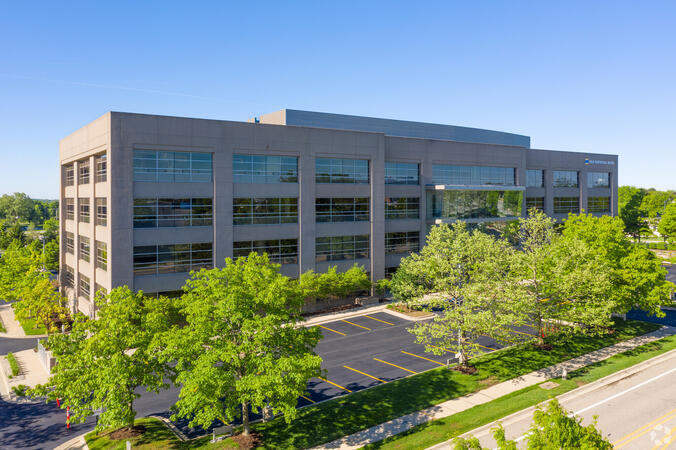
Detroit, MI - Renaissance Center
400 Renaissance Center, Detroit, United States, 48243
The GM Renaissance Center is conveniently located in downtown Detroit and easily accessed by car via Interstates 75 or 94, with secure underground parking available on site. Travelers flying into Detroit Metropolitan Airport (DTW) can expect a 25–30 minute trip by taxi or rideshare via I‑94. Public transit is efficient: the Detroit People Mover stops directly at the Renaissance Center station, and DDOT routes 3 and 9 serve nearby Jefferson Avenue. Pedestrian skywalks provide safe indoor access from downtown hotels, parking garages, and the riverwalk.
Ann Arbor, MI – Regus - South State Commons I
2723 S State St, Ann Arbor, United States, 48104
Regus South State Commons I is conveniently located off I‑94 via Exit 177 (State Street), with easy access to downtown Ann Arbor and surrounding suburbs. The building offers free on-site surface parking for guests. From Detroit Metropolitan Airport (DTW), the venue can be reached in approximately 20–25 minutes by taxi or rideshare via I‑94 West. Local public transit service (TheRide) operates Route 24 along South State Street, with a stop within a short 2-minute walk of the building.
Grand Rapids, MI - Regus – Calder Plaza
250 Monroe Ave NW, Grand Rapids, United States, 49503
The venue sits centrally at 250 Monroe Avenue NW in downtown Grand Rapids, easily accessed by car via US‑131 or I‑196—with connections via Monroe or Ottawa exits—and offers shared underground and surface parking. From Gerald R. Ford International Airport, take I‑96 East then I‑196 West into the city; the drive is about 20 minutes. Public transit through Rapid bus routes stops near Monroe or Ottawa Avenue, just a short walk from the Regus entrance; the downtown area is pedestrian-friendly.
Lansing, MI - Regus - One Michigan Avenue
120 North Washington Square, Lansing, United States, 48933
The venue is located in the heart of Lansing’s central business district at 120 North Washington Square, easily accessible by car via I‑496 or US‑127 with convenient street parking and a nearby parking ramp. From Capital Region International Airport (LAN), the location is approximately a 12‑minute drive west via I‑96 and US‑127, with taxis and rideshares readily available. Public transit users can take CATA bus routes that stop just a block away on Washington or Grand Avenue, offering seamless access to the venue.
This instructor-led, live training in Michigan (online or onsite) is designed for advanced-level developers seeking to master advanced programming techniques in Swift, Kotlin, and JavaScript, implement scalable architectures for government, and develop feature-rich applications with secure API integration, real-time communication, and advanced UI/UX.
Upon completion of this training, participants will be able to:
Master Advanced Programming Techniques in Swift, Kotlin, and JavaScript, including closures, coroutines, and async/await.
Design Scalable Mobile App Architectures using MVVM for iOS/Android and advanced state management in React Native.
Build Feature-Rich Mobile Apps with secure API integration, real-time communication, and advanced data handling (Core Data, SQLite, Room, Firebase).
Integrate Native Device Features such as camera, geolocation, and sensors, and create custom native modules in React Native.
Create Advanced UI/UX with Animations and reusable components for responsive, highly interactive mobile experiences.
Test, Debug, and Optimize Apps for performance and reliability using Xcode, Android Profiler, and React Native Debugger.
Deploy Apps Using CI/CD Pipelines for continuous integration and automated releases to the App Store and Google Play.
Complete a Capstone Project, developing and deploying a production-ready app to app stores.
This instructor-led, live training in Michigan (online or onsite) is designed for intermediate-level developers seeking to master mobile application development across multiple platforms for government use.
Upon completion of this training, participants will be capable of:
Establishing Development Environments for iOS, Android, and React Native utilizing Xcode, Android Studio, and React Native CLI/Expo.
Developing Native iOS and Android Applications using Swift for iOS and Kotlin for Android, creating applications with navigation and API integration.
Building Cross-Platform Applications with React Native, leveraging a single codebase to create applications for both iOS and Android.
Designing Responsive User Interfaces using Auto Layout, XML, and Flexbox for iOS, Android, and React Native.
Managing Data and State in applications using local storage solutions and handling API requests across all platforms.
Incorporating Advanced Features such as camera, geolocation, and maps into mobile applications.
Implementing Multi-Screen Navigation in iOS, Android, and React Native applications.
Debugging and Testing Applications using tools provided by Xcode, Android Studio, and React Native.
Deploying Applications to the App Store and Google Play Store.
Completing a Capstone Project showcasing the skills learned by constructing and presenting a functional mobile application.
This instructor-led, live training conducted in Michigan (either online or on-site) is tailored for developers at the introductory level who are preparing to enter the field of mobile application development.
Upon completion of this training, participants will be able to:
Establish and configure development environments for iOS (Xcode), Android (Android Studio), and React Native (Node.js, CLI, and Expo).
Differentiate between native and cross-platform development approaches and establish foundational knowledge in Swift, Kotlin, and JavaScript.
Develop responsive user interface layouts using iOS Auto Layout, Android XML structures, and React Native Flexbox.
Create basic applications using Swift for iOS, Kotlin for Android, and React Native for cross-platform compatibility.
Integrate camera, GPS, and storage features into applications utilizing React Native.
Apply debugging tools from Xcode, Android Studio, and React Native to identify and resolve issues, executing apps on simulators and real devices.
Finalize and deploy applications to the App Store (iOS) and Google Play Store (Android).
Participate in group projects and utilize peer feedback to refine app development skills.
Build and present a fully functional cross-platform React Native application.
This instructor-led, live training program held in Michigan (either online or onsite) is targeted at developers aiming to proficiently apply advanced .NET MAUI features and techniques for the development of mobile and desktop applications suitable for government use.
Upon successful completion, participants will be capable of:
Implementing advanced MVVM structures, dependency injection, and robust architectural patterns.
Tailoring and extending the .NET MAUI framework to align with specific technical requirements.
Constructing reusable components and libraries, and applying advanced debugging and profiling methodologies.
Resolving complex challenges in large-scale systems, such as data synchronization, cache management, and security enforcement.
Flutter is an open-source user interface software development toolkit provided by Google, designed for the creation of natively compiled applications across mobile, web, and desktop environments from a unified codebase. The framework utilizes Dart, a contemporary object-oriented programming language also developed by Google, which is specifically optimized for constructing rapid and expressive user interfaces for government and other public sector needs.
This instructor-led, live training program (available online or onsite) is targeted at entry-level developers seeking to develop sophisticated, high-performance mobile applications using Flutter and Dart for government initiatives.
Upon completion of this training, participants will demonstrate the ability to:
Configure the development environment for Flutter and Dart.
Develop responsive and interactive mobile user interfaces.
Access native device capabilities through plugin integration.
Deploy cross-platform applications to Android and iOS platforms.
Training Delivery Format
Facilitated lecture and interactive discussion sessions.
Extensive practical exercises and proficiency drills.
Real-time hands-on implementation within a live laboratory environment.
Course Customization Options
To request a tailored training program for this course, please contact the administration to coordinate arrangements.
This instructor-led, live training in Michigan (online or onsite) is aimed at advanced-level Android developers who wish to build complex, optimized Android applications using modern architecture patterns, asynchronous programming, data persistence, testing, and integration techniques.
By the end of this training, participants will be able to:
Implement MVVM architecture and Jetpack components.
Use Kotlin coroutines and WorkManager for async and background tasks.
Persist data using Room and DataStore.
Test apps using JUnit and Espresso.
Integrate REST APIs and apply performance optimizations.
This instructor-led, live training in Michigan (delivered online or onsite) is specifically designed for advanced-level developers for government who are committed to constructing scalable, high-performance iOS applications. The curriculum leverages advanced tools, robust architecture patterns, concurrency models, data persistence strategies, and rigorous testing practices.
Upon completion of this training, participants will possess the capability to:
Design complex application architectures utilizing MVVM and Coordinators.
Manage asynchronous tasks effectively using GCD and Swift's async/await.
Implement secure and reliable data persistence using Core Data and UserDefaults.
Develop comprehensive unit and UI tests using XCTest and XCUITest.
Integrate external APIs and apply targeted performance optimization techniques.
This live training in Michigan enables developers to construct AI-capable Flutter applications by leveraging modern architectures, UX principles, and agile methodologies. Participants will learn to design secure systems using Firebase, integrate AI features such as chatbots, and manage application state effectively for scalable, production-ready mobile solutions for government operations.
This instructor-led, live training module, conducted at Michigan (either online or on-site), targets beginner-level developers interested in creating interactive Android applications using Android Studio and Kotlin or Java.
By the conclusion of this training, participants will possess the skills to:
Analyze the basic architecture of Android applications for government operations.
Design straightforward user interfaces utilizing layouts and standard views.
Process user interaction events and manage navigation between distinct screens.
Construct a functional mobile application through an incremental development process.
This instructor-led, live training in Michigan covers the core concepts and hands-on fundamentals of the BLoC pattern, helping participants build practical skills that apply directly to real-world work environments and modern business needs for state management for government operations.
This instructor-led, live training in Michigan (online or onsite) is designed for technical professionals aiming to acquire foundational expertise in .NET MAUI for the development of basic applications.
Upon completion, participants will be proficient in the following areas:
Mastering the core principles of .NET MAUI and cross-platform development methodologies.
Building entry-level .NET MAUI applications that integrate standard layouts, UI controls, and navigation components.
Performing standard testing, debugging, and deployment tasks for .NET MAUI software.
This instructor-led, live training in Michigan (available online or on-site) is intended for junior to intermediate-level developers aiming to learn how to build and deploy applications using FlutterFlow.
Upon completion of this training, participants will be equipped to:
Master the foundational concepts of FlutterFlow.
Manage database connectivity and FlutterFlow integrations.
Develop and deploy applications utilizing the FlutterFlow platform.
This instructor-led, live instruction program in Michigan (conducted online or onsite) is designed for entry-level developers seeking to create interactive iOS applications utilizing Swift and Xcode.
Upon completion of this instruction, participants will be equipped to:
Comprehend the core architectural components of iOS applications.
Construct basic user interfaces employing UIKit and Storyboards.
Manage user interactions and standard navigation between views.
Develop a functional application through progressive implementation.
This instructor-led live training, delivered in Michigan (online or onsite), is designed for intermediate-level professionals aiming to elevate their technical competency and operational efficiency in Kotlin, a standard for modern software development.
Following the completion of this program, participants will be equipped to:
Deploy advanced Kotlin features within government software development initiatives.
Apply functional programming principles to enhance code maintainability and clarity in Kotlin.
Develop foundational Android applications using Kotlin for mobile government platforms.
Develop a comprehensive technical foundation for advanced Kotlin frameworks and specialized domains.
This instructor-led, live training in Michigan (available online or in-person) is designed for iOS developers seeking to proficiently manage iOS enterprise architectures, architectural patterns, and reactive programming frameworks.
Upon completion of this course, participants will be equipped to:
Develop robust, autonomous, and streamlined code structures.
Streamline API governance through Alamofire.
Execute reactive programming protocols within iOS environments using RxSwift.
Analyze diverse iOS architectural patterns and design specifications.
In this instructor-led, live training for government conducted in Michigan, participants will acquire the knowledge to utilize advanced capabilities within the Kotlin programming language.
Upon completion, participants will possess the ability to:
Comprehend the factors that render Kotlin highly extensible and distinctive compared to other JVM languages.
Assess advanced topics and features in Kotlin, including functions, classes, delegation, generics, metaprogramming, and asynchronous programming.
Participate in this practical training session for government to acquire proficiency in the core principles of Android application development. Learners will gain skills in constructing robust applications, leveraging the Software Development Kit, and managing user interface components, data persistence layers, and system-level APIs. This curriculum equips attendees with the necessary competencies to deploy secure, ready-for-production applications to Google Play.
A two-day curriculum comprising approximately 60% practical laboratory exercises, dedicated to the internal mechanisms, architecture, and development of the Embedded Linux kernel. The course examines methodologies for creating and integrating various types of device drivers for government applications.
Who should attend?
Engineering professionals interested in Linux kernel development for embedded systems and associated platforms.
In this instructor-led, live training session in Michigan (available online or onsite), participants will learn how to use Flutter to rapidly develop a mobile app that runs on both iOS and Android devices. This course is designed for government technical staff seeking streamlined mobile development processes.
By the end of this training, participants will be able to:
Quickly install the framework, IDE, and associated tooling to begin development.
Apply knowledge of Google’s Dart language to rapidly prototype mobile applications.
Conduct testing and deployment of mobile applications for iOS and Android using a single codebase.
Customize application interfaces using a comprehensive set of widgets, layouts, and animations.
This instructor-led live training, conducted in Michigan (either online or on-site), is designed for developers seeking to leverage Flutter to build high-quality mobile applications for Android, iOS, and other platforms using a single codebase.
By the end of this session, participants will be able to:
Establish the necessary development environment for initiating Flutter application development.
Apply the Dart programming language to construct application code.
Utilize Flutter widgets to create user interfaces that are visually appealing and functionally intuitive.
Deploy and test applications across multiple platforms, including mobile, desktop, and web.
This instructor-led, live training program in various locations (online or onsite) is aimed at experienced front-end developers who wish to use Ionic 8 and Capacitor to build production-grade hybrid mobile apps and progressive web apps from a single codebase for government.
Establishing a robust competency in Kotlin programming reveals a statically typed language specifically engineered for the JVM, Android, and web environments. This curriculum examines fundamental concepts, including syntax, control flow, object-oriented design via classes and inheritance, functional programming through functions and lambdas, null safety, generics, interfaces, and data classes. It prepares developers with the practical capabilities required to produce efficient, expressive code for server-side operations and Android applications, ensuring seamless interoperability with Java, which is critical for standardized government technology frameworks.
In this instructor-led, live training session located in Michigan, participants will acquire a thorough understanding of React Native principles and methodologies while developing a mobile application for Android and iOS.
In this instructor-led, live training in , participants learn to use React Native Expo through discussion and hands-on practice. By the end of the course, participants will be equipped to create and deploy their own React Native application using React Native Expo.
Read more...
Last Updated:
Testimonials (8)
As a Senior Java Engineer and Kotlin novice, I feel the course has given me the tools to start using Kotlin properly for future development projects.
Stewart Coates - DLA PIPER
Course - Advanced Kotlin Programming
The in-depth knowledge and the examples
Ankur Kapila - Deutsche Bank
Course - Programming with Kotlin
I really enjoyed our learning and experimenting with kotlin multiplatform.
Renzo Olivares Macias - Google
Course - Android Development
The practicality of working in the flutter and dart environment
Chrisna Pienaar - Agricultural Research Council
Course - Flutter Application Development
Developing the User Auth App and the kahoot activity (made myself sure that i'm absorbing the training lectures :) and its fun!)
Jhoanne - Pag-IBIG Fund
Course - .NET MAUI Fundamentals
practice exercises
Mateusz - DPDgroup IT Solutions sp. z o.o.
Course - React Native for iOS and Android
The knowledge of the trainer. He was able to answer all of my questions, even questions about our platform. He also continued to help until we all understood the material.
James O'Donnell - Tennant Company
Course - Embedded Linux Kernel and Driver Development
His ability to explain complex concept in simpler terms. Giving an overview of how everything ties together and how we can best apply these in our work scenarios
Online Mobile Development training in Michigan, Mobile Development training courses in Michigan, Weekend Mobile Development courses in Michigan, Evening Mobile Development training in Michigan, Mobile Development instructor-led in Michigan, Weekend Mobile Development training in Michigan, Mobile Development coaching in Michigan, Mobile Development trainer in Michigan, Mobile Development classes in Michigan, Evening Mobile Development courses in Michigan, Mobile Development private courses in Michigan, Online Mobile Development training in Michigan, Mobile Development boot camp in Michigan, Mobile Development instructor-led in Michigan, Mobile Development instructor in Michigan, Mobile Development on-site in Michigan, Mobile Development one on one training in Michigan