NobleProg offers comprehensive SQL training courses tailored to professionals across Michigan. Whether you are in Detroit, Ann Arbor, or Grand Rapids, our expert-led programs provide the skills needed to thrive in today's competitive landscape. Discover how NobleProg can help your organization succeed with targeted SQL education.
Whether delivered remotely or on-site, instructor-led SQL (Structured Query Language) workshops provide practical guidance on essential competencies for extracting and analyzing data from various database systems to generate reports. The curriculum also covers the construction of complex queries and the management of data, tables, views, and indexes. These programs are available as remote live training or in-person onsite training. Remote instruction is facilitated through an interactive remote desktop environment, while onsite training can be conducted at local client facilities in Michigan or at NobleProg corporate training centers in Michigan. These resources are designed for government agencies and public sector entities seeking specialized technical education.
NobleProg -- Your Local Training Provider
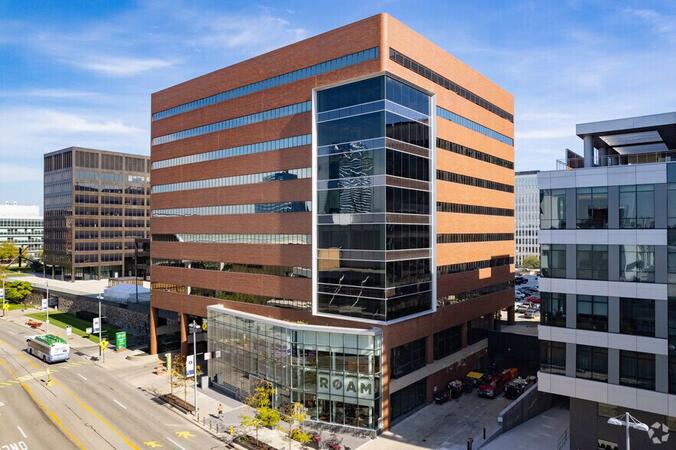
Detroit, MI - Renaissance Center
400 Renaissance Center, Detroit, United States, 48243
The GM Renaissance Center is conveniently located in downtown Detroit and easily accessed by car via Interstates 75 or 94, with secure underground parking available on site. Travelers flying into Detroit Metropolitan Airport (DTW) can expect a 25–30 minute trip by taxi or rideshare via I‑94. Public transit is efficient: the Detroit People Mover stops directly at the Renaissance Center station, and DDOT routes 3 and 9 serve nearby Jefferson Avenue. Pedestrian skywalks provide safe indoor access from downtown hotels, parking garages, and the riverwalk.
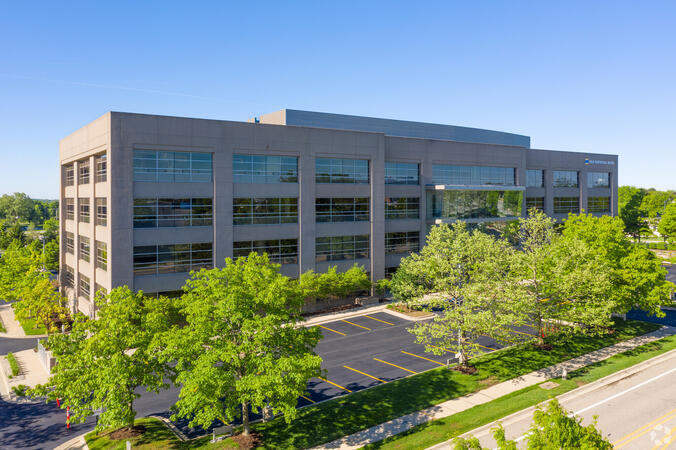
Ann Arbor, MI – Regus - South State Commons I
2723 S State St, Ann Arbor, United States, 48104
Regus South State Commons I is conveniently located off I‑94 via Exit 177 (State Street), with easy access to downtown Ann Arbor and surrounding suburbs. The building offers free on-site surface parking for guests. From Detroit Metropolitan Airport (DTW), the venue can be reached in approximately 20–25 minutes by taxi or rideshare via I‑94 West. Local public transit service (TheRide) operates Route 24 along South State Street, with a stop within a short 2-minute walk of the building.
Grand Rapids, MI - Regus – Calder Plaza
250 Monroe Ave NW, Grand Rapids, United States, 49503
The venue sits centrally at 250 Monroe Avenue NW in downtown Grand Rapids, easily accessed by car via US‑131 or I‑196—with connections via Monroe or Ottawa exits—and offers shared underground and surface parking. From Gerald R. Ford International Airport, take I‑96 East then I‑196 West into the city; the drive is about 20 minutes. Public transit through Rapid bus routes stops near Monroe or Ottawa Avenue, just a short walk from the Regus entrance; the downtown area is pedestrian-friendly.
Lansing, MI - Regus - One Michigan Avenue
120 North Washington Square, Lansing, United States, 48933
The venue is located in the heart of Lansing’s central business district at 120 North Washington Square, easily accessible by car via I‑496 or US‑127 with convenient street parking and a nearby parking ramp. From Capital Region International Airport (LAN), the location is approximately a 12‑minute drive west via I‑96 and US‑127, with taxis and rideshares readily available. Public transit users can take CATA bus routes that stop just a block away on Washington or Grand Avenue, offering seamless access to the venue.
Structured Query Language (SQL) serves as the standardized protocol for accessing, manipulating, and governing data within relational database environments.
This professionally facilitated training session, available online or on-site, is designed for professionals ranging from novice to advanced levels who seek to develop robust SQL competencies and ensure proficient management of relational data systems.
Upon completion of this instructional module, participants will be equipped to:
Develop precise SQL queries for data extraction, filtering, and sorting.
Execute data maintenance tasks, including insertion, modification, and deletion.
Formulate complex joins, subqueries, and aggregated analytical reports.
Deploy advanced SQL methodologies for comprehensive operational data analysis.
Instructional Delivery Methods
Facilitated instruction integrated with interactive professional discussions.
Practical query construction and applied technical exercises.
Demonstrations in live laboratory environments using authentic data sets.
Customization Capabilities for Agency Requirements
Agencies requiring a specialized SQL curriculum for government operations are encouraged to contact the provider for tailored arrangements.
This instructor-led, live training in Michigan provides data engineers with the technical skills necessary to integrate Large Language Models (LLMs) into SQL environments. Participants will develop natural language processing pipelines, implement AI-driven optimization techniques, and design secure, auditable enterprise workflows to support automated data analysis and governance for government and other public sector entities.
SQL serves as a robust language for the management and analysis of structured data within relational database systems.
This instructor-led, live training program (available online or on-site) is designed for intermediate-level users seeking to enhance their SQL proficiency for complex query construction, data manipulation, and performance optimization for government applications.
Upon completion of this training, participants will be equipped to:
Construct complex SQL queries utilizing advanced joins and subqueries.
Modify data records through INSERT, UPDATE, and DELETE commands.
Apply window functions for advanced analytical tasks.
Optimize query execution for improved system performance.
Instructional Methodology
Interactive lectures facilitated by discussion.
Comprehensive exercises and practice scenarios.
Practical implementation within a live-lab environment.
Course Customization Availability
To request a customized training curriculum for this course, please contact the program office to arrange details.
SQL serves as the standard language for interacting with, accessing, and managing database systems.
This instructor-led training program, available in either online or on-site formats, is designed for entry-level professionals seeking to acquire the skills necessary for data querying and reporting for government applications.
Upon completion of this training, participants will be equipped to:
Comprehend the architectural structure of relational databases.
Construct fundamental SQL statements to extract, filter, and organize data.
Employ aggregate functions to generate summary reports.
Execute basic join operations across multiple data tables.
Course Delivery Methodology
Facilitated instructional sessions with interactive discussion.
Extensive practice exercises to reinforce learning.
Practical implementation within a live laboratory environment.
Customization Services
To initiate a request for a tailored training curriculum, please contact our office for scheduling and arrangements.
This instructor-led, live training session, conducted in Michigan (either virtually or on-site), is targeted at data analysts, database professionals, and software developers from beginner to intermediate levels who seek to acquire SQL proficiency for effective database management.
Upon completion of this training, participants will be capable of:
Comprehending and executing fundamental SQL commands and queries.
Creating and managing database tables and structures.
Utilizing SQL to sort, filter, and summarize data for reporting.
Executing complex operations such as joins, subqueries, and set operations.
Applying intermediate techniques including indexes, views, stored procedures, and triggers.
This instructor-led live training in Michigan (online or onsite) is intended for data scientists and developers aiming to integrate SQL, Python, and Tableau to conduct complex data analysis, processing, and visualization for government use cases.
Upon completion, participants will be equipped to:
Configure the requisite environment for data analysis using SQL, Python, and Tableau.
Comprehend core software integration concepts, including data flow, server-client interactions, APIs, and endpoints.
Reinnowledge the foundational principles of Python and SQL.
Apply data pre-processing methodologies within Python.
Establish connections between Python and SQL to facilitate data analysis.
Generate actionable data visualizations and charts using Tableau.
Upon completion of this training, participants will be equipped to:
This course is intended for database users, developers, and administrators with existing Oracle proficiency who aim to deepen and structure their technical knowledge. It functions as an advanced extension of the ORA_S1 program.
Upon completion of this training, participants will be equipped to:
Develop the proficiency to store and process data efficiently using SQL, gaining insights into optimization, analytical methods, and varied data extraction strategies. Concurrently, the course provides a robust understanding of database architecture and advanced features essential for constructing effective applications for government operations.
Instructional Format
Interactive didactic sessions and technical discussions.
Extensive exercises and practical application.
Hands-on implementation within a live-laboratory environment.
Curriculum Customization
To request a tailored training curriculum for this course, please contact the relevant authority for coordination.
This instructor-led, live training in Michigan (online or onsite) is intended for intermediate-level database administrators, developers, and analysts seeking to master advanced SQL functionalities for complex data operations and database management for government.
By the end of this training, participants will be able to:
Perform advanced querying techniques using unions, subqueries, and complex joins.
Add, update, and delete data, tables, views, and indexes with precision.
Ensure data integrity through transactions and manipulate database structures.
Create and manage databases efficiently for robust data storage and retrieval.
Participants will develop a comprehensive understanding of advanced Transact SQL features for government environments, while acquiring the ability to execute the following tasks:
Construct queries that generate complex result sets
Administer database objects to enhance query performance
Optimize queries for increased efficiency
This curriculum is designed for professionals who currently utilize Transact SQL to retrieve data from Microsoft SQL Server databases and seek to expand their expertise in data analysis and query performance improvement for government applications.
This instructor-led training program, available in both online and onsite formats, is designed for government software developers, managers, and business analysts seeking to leverage big data systems for the secure storage and efficient retrieval of large-scale datasets.
Upon completion of this training, participants will be able to:
Execute efficient queries against large datasets.
Comprehend the storage and retrieval mechanisms of Big Data systems.
Utilize contemporary big data technologies for government operations.
Integrate data from source systems into reporting platforms.
Demonstrate proficiency in writing SQL queries using:
MySQL
Postgres
Hive Query Language (HiveQL/HQL)
Redshift
Instructional Methodology
Interactive lectures and facilitated discussions.
Extensive practical exercises and skill reinforcement.
Hands-on implementation within a live laboratory environment.
Customization Capabilities
For inquiries regarding customized training aligned with specific government requirements, please contact our office to coordinate.
This course on SQL Database Management and Design equips practitioners with advanced techniques for constructing relational databases, ranging from foundational queries to complex schema design. It addresses core principles of SQL query commands, union operations, aggregation functions, and entity relationship modeling. The curriculum examines established methods for multi-table joins, transaction management, and ACID properties. This program helps professionals normalize tables, optimize data retrieval, and design robust database architectures for reliable information systems for government.
This course aims to provide a comprehensive understanding of SQL utilization across various database platforms, including Oracle, SQL Server, and MS Access, for government applications. Mastery of analytic functions and table joining techniques enables personnel to execute data analysis operations directly within the database environment, rather than relying on external applications such as MS Excel. This capability supports the development and maintenance of IT systems that rely on relational databases, enhancing operational efficiency and data integrity.
This SQL training module is designed for government personnel seeking to acquire the proficiency required to extract, analyze, and report on data from diverse database systems. Participants will develop the following competencies:
Formulation of SQL queries
Understanding of relational databases and their operational use
Definition and creation of database relations
Comprehension of data structure principles
Differentiation among SQL dialects (Oracle, T-SQL, ANSI)
Practical techniques for query development
This course focuses on generic ANSI SQL standards. The curriculum is applicable for government use across any relational database environment, including Oracle, MySQL, Microsoft Access, Microsoft SQL Server, DB2, Informix, PostgreSQL, and other similar platforms.
This instructor-led, live training in Michigan (online or onsite) is intended for intermediate-level database administrators and IT professionals aiming to optimize the performance of Oracle Database 19c.
By the end of this training, participants will be able to:
This instructor-led live training session, available in online or on-site formats, is designed for intermediate to advanced users seeking to enhance their SQL competencies to support robust data management for government operations.
Instructional Methodology
Facilitated lectures and structured discussions.
Extensive practical exercises and applied drills.
Direct application of skills within a controlled live-lab environment.
Program Customization
Interested parties may contact the training office to coordinate tailored instruction for government requirements.
Developing efficient SQL queries for Microsoft SQL Server establishes the technical foundation for enterprise data pipelines and information governance. This curriculum examines core methodologies, beginning with relational database architectures and advancing through data retrieval, filtering, sorting, and aggregation techniques utilizing grouping functions and subqueries. The content directs professionals through multi-table joins, set operators, data manipulation language (DML) operations, and transaction control mechanisms to ensure the reliable extraction and management of business intelligence datasets for government operations.
Read more...
Last Updated:
Testimonials (6)
It was very interactive and it kept us interested.
Raluca Alexandra PUNGA
Course - SQL Fundamentals
Small group, in-person for 3 days,
Annina - Ricardo AG
Course - SQL: Basics to Intermediate
The lecture about cte
Glyssa Mae - Metropolitan Bank and Trust Company
Course - Transact SQL Advanced
I liked the pace of the training and the level of interaction. All participants were encouraged to actively partake in discussions around exercise solutions, etc.
Aaron - Computerbits
Course - SQL Advanced level for Analysts
Gunnar adjusted the content for the second day based on our feedback from day one. He checked in with us to find out what we liked, disliked, found hard and how we wanted to approach day 2.
I liked Gunnar's style of teaching: Lecture, share examples, allowed us time to practice and answer questions before moving to the next subject. It meant we could fully understand a topic before moving onto the next subject. This reduced overload of information and gave us a chance to spend more time on the topics we struggled with and less time on the stuff we found easy.
Online SQL training in Michigan, SQL training courses in Michigan, Weekend SQL courses in Michigan, Evening SQL training in Michigan, SQL instructor-led in Michigan, SQL boot camp in Michigan, SQL one on one training in Michigan, SQL trainer in Michigan, SQL coaching in Michigan, SQL on-site in Michigan, Weekend SQL training in Michigan, SQL classes in Michigan, SQL instructor-led in Michigan, Online SQL training in Michigan, SQL private courses in Michigan, SQL instructor in Michigan, Evening SQL courses in Michigan