NobleProg delivers comprehensive Threat Detection and Response (TDR) training courses across the diverse landscapes of Iowa, catering to professionals in both urban centers and rural communities. These tailored programs are designed to meet the unique technological and professional development needs of the region. Participants benefit from expert-led instruction that supports career growth and organizational success throughout the state.
Whether delivered remotely or at a dedicated facility, instructor-led Threat Detection and Response (TDR) sessions provide interactive, hands-on instruction to demonstrate the application of advanced methodologies and tools for the real-time identification, analysis, and mitigation of cybersecurity threats. These programs are designed to support operational readiness for government agencies.
Threat Detection and Response training is accessible via “online live” or “onsite live” formats. Online live sessions, also referred to as remote live training, are facilitated through an interactive remote desktop environment. Onsite live training may be conducted locally at customer facilities in Iowa or at NobleProg corporate training centers located in Iowa.
NobleProg -- Your Local Training Provider
Des Moines, IA - Hub Tower
699 Walnut Street, Des Moines, United States, 50309
The Hub Tower location is easily accessible by car via Interstates 35 and 80, with underground and nearby public parking available; simply head downtown to Walnut Street. Guests arriving from Des Moines International Airport (DSM) can expect a 10‑ to 15‑minute taxi or rideshare journey via I‑235 and I‑35 into downtown. For public transportation users, DART buses stop close to the building, and it also connects via the downtown skywalk to neighboring business and cultural venues.
IA, Johnston - Regus - Foxboro Square
6165 Northwest 86th Street, Johnston, United States, 50131
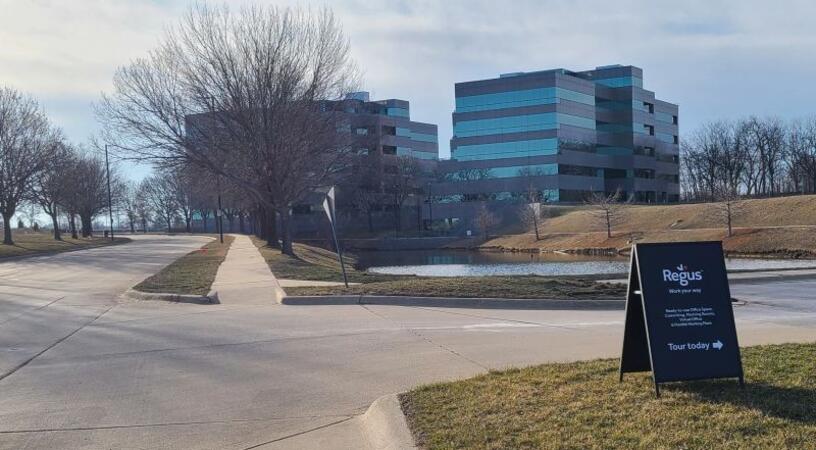
Regus Foxboro Square enjoys a highly accessible suburban location—and is easily reached by car via Interstates 80/35. Ample free parking is available in the surface lots surrounding the building. For those arriving from Des Moines International Airport (DSM), the venue is approximately 16.6 km (about a 15–20 minute drive) via I‑35 north. Public transit users can take Johnston-area bus services to nearby stops; the facility is also adjacent to Dover Park’s walking and biking trails, providing a healthy commute option.
Cedar Rapids, IA - Regus – Edgewood Pointe
4515 N River Blvd NE #200, Cedar Rapids, United States, 52411
Regus Cedar Rapids is easily accessible by car via I‑380 or I‑80 toward northeast Cedar Rapids, exiting at Edgewood Road and traveling south on River Boulevard. Complimentary on-site surface parking ensures convenience for event attendees. For travelers arriving at Des Moines International Airport (DSM), the venue is approximately a 90‑minute drive via I‑80 and I‑380. Local participants can reach the centre using Cedar Rapids Transit Route 10, with stops near River Boulevard and Edgewood Pointe.
This instructor-led, live training in Iowa (online or onsite) is designed for intermediate-level cybersecurity professionals seeking to implement CTEM within their organizational structures.
Upon completion of this training, participants will be equipped to:
Comprehend the foundational principles and operational stages of CTEM.
Identify and prioritize risks utilizing established CTEM methodologies.
Integrate CTEM practices into existing security operational protocols.
Leverage specialized tools and technologies for continuous threat management.
Formulate strategies to validate and continuously improve security measures.
This live, instructor-led training session, conducted in Iowa either virtually or in person, is designed for intermediate-level cybersecurity practitioners aiming to utilize DeepSeek for advanced threat detection and automation tasks.
By the conclusion of this program, participants will be proficient in:
Utilizing DeepSeek AI for immediate threat recognition and detailed analysis.
Implementing AI-based anomaly detection methods.
Streamlining security monitoring and response actions with DeepSeek.
Integrating DeepSeek into current cybersecurity frameworks.
Join this instructor-led training in Iowa to master OpenEDR fundamentals. Learn to deploy agents, configure telemetry, and analyze endpoint events for threat detection. Hands-on labs in Iowa focus on incident response and integrating alerts into security workflows for government operations.
This advanced training in Iowa equips SOC analysts and threat hunters with the practical skills required to deploy OpenEDR and integrate it with MITRE ATT&CK. Participants will learn to design detection logic, execute hunting workflows, and perform root cause analysis to enhance organizational security for government agencies.
Ransomware constitutes a class of malicious software engineered to encrypt critical data and compel organizations into extortion situations.
This instructor-led training program, available in both online and onsite formats, is designed for intermediate-level security professionals seeking to enhance their negotiation capabilities and strengthen their intelligence gathering efforts specifically for government operations during ransomware incidents.
Upon completion of this training, participants will be equipped to:
Assess the structure, behavior, and lifecycle of modern ransomware campaigns
Apply established negotiation frameworks to real-world ransomware scenarios
Gather, analyze, and operationalize threat intelligence to support defense for government entities
Coordinate effectively with stakeholders, law enforcement, and external partners during an attack
Course Format:
Expert-led presentations supported by real case studies
This live, instructor-led training in Iowa (online or on-site) is tailored for senior cybersecurity professionals aiming to deepen their understanding of Cyber Threat Intelligence and develop skills to effectively manage and mitigate cyber threats.
Upon completion of this training, participants will be able to:
Understand the fundamental concepts of Cyber Threat Intelligence (CTI).
Assess the current cyber threat landscape.
Collect and process intelligence data effectively.
Conduct advanced threat analysis.
Leverage Threat Intelligence Platforms (TIPs) and automate threat intelligence processes.
Detection engineering encompasses the design, implementation, and refinement of methodologies to identify malicious activity across information systems and networks.
This instructor-led live training, available in online or onsite formats, is designed for entry-level cybersecurity professionals seeking to acquire practical proficiency in developing and tuning security detection mechanisms.
Upon completion of this program, participants will possess the competencies necessary to:
Formulate effective detection rules and signatures using standard security tooling.
Analyze logs and telemetry to identify suspicious operational behaviors.
Apply threat intelligence to enhance detection logic.
Optimize alerting and mitigate false positives within a Security Operations Center (SOC) workflow.
Instructional Format
Structured guidance accompanied by practical demonstrations.
Scenario-based exercises and hands-on analytical tasks.
Practical detection construction within an interactive laboratory environment.
Program Customization
Should your agency require a tailored version of this curriculum, please contact us to discuss specific customization requirements for government operations.
The Certified Incident Handler program delivers a disciplined framework for managing and mitigating cybersecurity incidents with precision and efficiency.
This live, instructor-led training (available virtually or in-person) is designed for intermediate-level IT security personnel seeking to enhance their tactical proficiency in planning, categorizing, isolating, and resolving security events.
Upon completion of this curriculum, participants will be equipped to:
Comprehend the incident response lifecycle and its distinct operational phases.
Execute standardized procedures for threat detection, event classification, and stakeholder notification.
Implement robust strategies for containment, eradication, and system recovery.
Formulate comprehensive post-incident reporting mechanisms and continuous improvement initiatives.
Curriculum Structure
Interactive lectures and structured discussions.
Practical application of incident handling protocols within simulated environments.
Directed exercises emphasizing detection, containment, and response workflows.
Customization Provisions for Government
Organizations may request tailored training aligned with specific incident response protocols or technical assets by contacting our team for coordination.
Advanced Techniques and Automation in Vulnerability Research provides a detailed examination of high-impact security flaws, automation frameworks, reconnaissance methodologies, and tooling strategies employed by expert security professionals.
This instructor-led, live training session (available online or onsite) is designed for intermediate-to-advanced security researchers, penetration testers, and vulnerability researchers seeking to optimize workflows, expand reconnaissance capabilities, and identify complex vulnerabilities across diverse environments.
Upon completion of this training, participants will be equipped to:
Automate reconnaissance and scanning processes for multiple targets.
Utilize advanced tools and scripts for efficient security automation.
Identify complex, logic-based vulnerabilities that exceed standard scanning capabilities.
Construct custom workflows for subdomain enumeration, fuzzing, and reporting.
Course Format
Interactive instruction and facilitated discussion.
Practical application of advanced tools and scripting for automation.
Supervised laboratory exercises focused on real-world security workflows and advanced attack chains.
Course Customization Options
To request a tailored training module for government agencies based on specific target sets, automation requirements, or internal security challenges, please contact us to schedule.
Vulnerability disclosure initiatives involve the systematic identification of security weaknesses within software, web applications, or infrastructure, followed by the responsible reporting of these findings for remediation and recognition.
This instructor-led, live training session, available online or onsite, is designed for entry-level security researchers, software developers, and information technology professionals seeking to master the fundamentals of ethical security assessment and participation in formal disclosure programs.
Upon completion of this training, participants will be able to:
Comprehend the foundational principles of vulnerability discovery and the governance of disclosure programs.
Apply professional-grade tools, including Burp Suite and browser development utilities, for application testing.
Detect common web security deficiencies, including XSS, SQLi, and CSRF.
Prepare and submit clear, actionable vulnerability reports through established platforms for government and private sector use.
Instructional Delivery Model
Interactive instructional modules and facilitated discussion.
Practical application of security testing tools within controlled, simulated environments.
Supervised exercises emphasizing the identification, validation, and documentation of security flaws.
Instructional Tailoring Capabilities
To solicit a customized training curriculum aligned with your organization's specific applications or testing requirements, please contact the provider for coordination.
This instructor-led live training in Iowa (online or onsite) is tailored for intermediate-level duty managers and operational leaders aiming to establish robust cyber resilience strategies to protect public sector organizations from cyber threats.
Upon completion of this training, participants will be able to:
Comprehend the fundamentals of cyber resilience and their direct application to duty management functions.
Formulate incident response plans that ensure sustained operational continuity.
Identify specific cyber threats and vulnerabilities present within their operational environment.
Deploy security protocols to effectively minimize risk exposure.
Coordinate team responses during cyber incidents and subsequent recovery phases.
This instructor-led, live training in Iowa (available online or onsite) is tailored for intermediate-level IT security professionals seeking to refine their skills in security monitoring, analysis, and response for government applications.
Upon completion of this program, participants will be able to:
Define the strategic role of the Blue Team within cybersecurity operations.
Leverage SIEM tools for comprehensive security monitoring and log analysis.
Identify, evaluate, and execute response protocols for security incidents.
Conduct network traffic analysis and gather actionable threat intelligence.
Implement established best practices in Security Operations Center (SOC) workflows.
This instructor-led, live training in Iowa (online or onsite) is aimed at intermediate-level to advanced-level cybersecurity professionals who wish to elevate their skills in AI-driven threat detection and incident response.
By the end of this training, participants will be able to:
Implement advanced AI algorithms for real-time threat detection.
Customize AI models for specific cybersecurity challenges.
Develop automation workflows for threat response.
Secure AI-driven security tools against adversarial attacks.
This instructor-led, live training in Iowa (online or onsite) is intended for entry-level cybersecurity professionals seeking to utilize AI for enhanced threat detection and response capabilities for government.
Upon completion of this training, participants will be able to:
Understand the application of AI in cybersecurity contexts.
Implement AI algorithms for threat detection.
Automate incident response processes using AI tools.
Integrate AI capabilities into existing cybersecurity infrastructure.
The Certified Digital Forensics Examiner (vendor-neutral certification) is designed to provide advanced training to Cyber Crime and Fraud Investigators. The curriculum covers electronic discovery and sophisticated investigation techniques. This course is essential for any personnel for government who may encounter digital evidence during the course of an investigation.
The Certified Digital Forensics Examiner training instructs participants in the methodology for conducting computer forensic examinations. Learners will acquire the skill to apply forensically sound investigative techniques to assess the scene, collect and document relevant information, interview appropriate personnel, maintain chain-of-custody, and prepare findings reports.
This course benefits organizations, individuals, government offices, and law enforcement agencies engaged in litigation, establishing proof of guilt, or implementing corrective actions based on digital evidence.
This instructor-led live training session, conducted in Iowa (online or on-site), examines the critical components of enterprise security, spanning from artificial intelligence to database protection. It also provides an in-depth review of the contemporary tools, operational processes, and strategic perspectives essential for safeguarding organizations against sophisticated attacks for government and commercial purposes.
This instructor-led, live training session (delivered online or on-site) is designed for information system analysts seeking to utilize MITRE ATT&CK to mitigate the risk of security compromises for government operations.
Upon completion, participants will be capable of:
Establishing the requisite development environment to implement MITRE ATT&CK protocols.
Categorizing attacker interactions with system infrastructure.
Documenting adversary behaviors within organizational systems.
Tracking attack patterns, analyzing trends, and evaluating existing defense mechanisms.
It did give me the insight what I needed :) I am starting teaching on a BTEC Level 3 qualification and wanted to widen my knowledge in this area.
Otilia Pasareti - Merthyr College
Course - Fundamentals of Corporate Cyber Warfare
- Understanding that ATT&CK creates a map that makes it easy to see, where an organization is protected and where the vulnerable areas are. Then to identify the security gaps that are most significant from a risk perspective.
- Learn that each technique comes with a list of mitigations and detections that incident response teams can employ to detect and defend.
- Learn about the various sources and communities for deriving Defensive Recommendations.
Online TDR (Threat Detection and Response) training in Iowa, Threat Detection and Response (TDR) training courses in Iowa, Weekend TDR (Threat Detection and Response) courses in Iowa, Evening Threat Detection and Response (TDR) training in Iowa, Threat Detection and Response instructor-led in Iowa, Evening TDR (Threat Detection and Response) courses in Iowa, TDR on-site in Iowa, Threat Detection and Response (TDR) private courses in Iowa, Threat Detection and Response (TDR) one on one training in Iowa, TDR classes in Iowa, Online Threat Detection and Response training in Iowa, TDR (Threat Detection and Response) coaching in Iowa, TDR (Threat Detection and Response) trainer in Iowa, Weekend Threat Detection and Response (TDR) training in Iowa, TDR (Threat Detection and Response) instructor-led in Iowa, Threat Detection and Response (TDR) boot camp in Iowa, Threat Detection and Response instructor in Iowa