
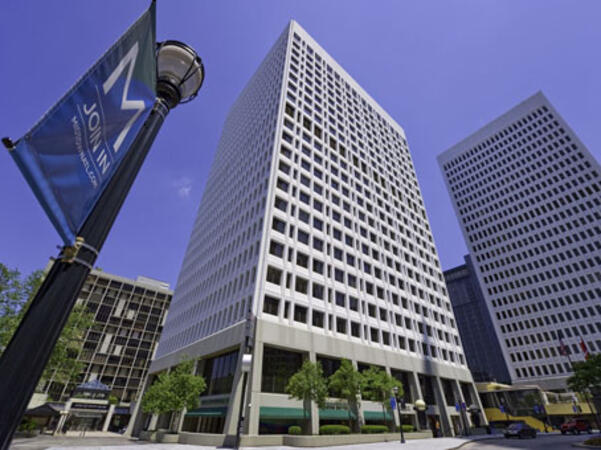




NobleProg delivers specialized AI Security training courses in Georgia, catering to professionals across the US Florida sales area. These sessions are designed to enhance technical expertise and leadership skills tailored to the local industry demands. By leveraging our extensive network, participants gain access to high-quality instruction and practical learning experiences within the region.
Guard artificial intelligence systems against emerging risks through practical, instructor-led instruction in AI Security.
These synchronous courses instruct participants on defending machine learning models, mitigating adversarial attacks, and establishing trustworthy, resilient AI frameworks for government applications.
Instruction is accessible via online live sessions using remote desktop or onsite live training in Georgia, incorporating interactive exercises and real-world scenarios.
Onsite instruction may be provided at your facility in Georgia or at a NobleProg corporate training center in Georgia.
Also referred to as Secure AI, ML Security, or Adversarial Machine Learning.
NobleProg – Your Local Training Provider
Atlanta, GA – Regus at Colony Squar
1201 Peachtree Street NE, Suite 200, Atlanta, United States, 30361
The venue is centrally located in Midtown Atlanta within the prominent Colony Square complex at 1201 Peachtree Street NE, easily accessed by car via I‑75/85 or GA‑400, with several parking garages nearby. From Hartsfield–Jackson Atlanta International Airport (ATL), around 15 miles south, a taxi or rideshare typically takes 20–30 minutes north along I‑75/85 N. Public transit users can take MARTA Rail to the Arts Center or Midtown stations (0.3–0.5 miles away) and walk easily, and numerous MARTA bus routes along Peachtree Street stop directly outside the entrance.

Atlanta, GA – The Proscenium
1170 Peachtree Street NE, Atlanta, United States, 30309
The venue is located in the heart of Midtown Atlanta in the Proscenium high–rise at 1170 Peachtree Street NE, easily accessible by car via I‑75/85 and GA‑400 with several parking garages nearby. Visitors arriving from Hartsfield–Jackson Atlanta International Airport (ATL), about 15 miles south, can expect a taxi or rideshare ride taking 20–30 minutes via I‑75/85 North. Public transit is seamless with MARTA Rail service; the Arts Center and Midtown stations are within walking distance (approximately 0.3–0.4 miles), and multiple MARTA bus routes also serve Peachtree Street.
Decatur, GA – Regus at One West Court Square
One West Court Square, Suite 750, Decatur, United States, 30030
The venue is located in the heart of downtown Decatur within One West Court Square, easily reached by car via I‑20 and I‑285, with several public parking decks directly adjacent. Travelers from Hartsfield–Jackson Atlanta International Airport (ATL), approximately 17 miles southwest, can expect a taxi or rideshare ride of around 25–30 minutes via I‑20 East. Public transit is particularly convenient: MARTA rail users can disembark at Decatur Station (about 0.15 miles away) and walk a few minutes to the building entrance. Local bus routes also serve Trinity Place and Swanton Way, putting the center within easy reach.
Atlanta, GA – Regus at One Hartsfield
100 Hartsfield Centre Parkway, Suite 500, Atlanta, United States, 30354
The venue is located in the One Hartsfield Center office building, adjacent to Hartsfield–Jackson Atlanta International Airport, easily reached by car via I‑75/I‑85 or GA‑138, with abundant on-site parking. Visitors arriving from ATL airport can walk or take a shuttle to the building, or opt for a quick 2–3‑minute taxi or rideshare ride. Public transit users can board MARTA from the Airport Station and ride one stop to College Park Station, then catch a connecting shuttle or enjoy a brief walk of about half a mile.
Atlanta, GA – Regus at Peachtree
260 Peachtree Street NW, Suite 2200, Atlanta, United States, 30303
The venue is situated in the iconic Coastal States Building at 260 Peachtree Street in downtown Atlanta, accessible by car via I‑75/85 or I‑20 with convenient parking garages nearby. From Hartsfield–Jackson Atlanta International Airport (ATL), about 12 miles south, a taxi or rideshare along I‑75/85 North takes approximately 15–20 minutes. For public transit, MARTA rail users can disembark at Five Points Station and walk 0.5 miles northeast, or exit at Peachtree Center Station and walk two blocks north—both routes offering easy access.
Augusta, GA – At Broad Street
823 Broad Street, Augusta, United States, 3090
The venue is located in the heart of downtown Augusta on Broad Street, easily accessible by car via I‑20 with several public parking garages nearby. From Augusta Regional Airport (AGS), about 9 miles west, taxis or rideshares typically take 15–20 minutes via I‑20. Public transit is available through Augusta Public Transit buses with routes along Broad Street, stopping within a few blocks of the venue, offering a convenient option for attendees without a car.
Savannah, GA – Regus at Bull Street
100 Bull St Downtown, Suite 200, Savannah, United States, 31401
The venue is located in the historic downtown area on Bull Street in the Altmayer Building, easily accessible by car via I‑16 and U.S. 17, with several public garages nearby. From Savannah/Hilton Head International Airport (SAV), about 12 miles west, taxis or rideshares typically take 15–20 minutes via U.S. 17 South. Public transit is available via Chatham Area Transit (CAT) buses, with frequent service along Bull and Broughton Streets; Johnson Square Station is just a couple minutes’ walk from the venue.
AAISM serves as a comprehensive framework for assessing, governing, and managing security risks associated with artificial intelligence systems.
This instructor-led, live training program (available online or onsite) is designed for advanced-level professionals seeking to implement robust security controls and governance practices for enterprise AI environments.
Upon completion of this program, participants will be prepared to:
Evaluate AI security risks utilizing industry-recognized methodologies.
Implement governance models that support responsible AI deployment.
Align AI security policies with organizational objectives and regulatory expectations.
Strengthen resilience and accountability within AI-driven operations.
Course Format
Facilitated lectures supported by expert analysis.
Practical workshops and assessment-based activities.
Applied exercises utilizing real-world AI governance scenarios.
Customization Options
To tailor training to your organizational AI strategy, please contact us to customize the course for government needs.
This facilitator-led instructional session, available via Georgia (virtual or in-person), is designed for IT practitioners ranging from beginner to intermediate proficiency who seek to comprehend and deploy AI Trust, Risk, and Security Management (AI TRiSM) frameworks within their respective entities.
Upon completion of this curriculum, learners will be capable of:
Understanding the fundamental principles and significance of governing trust, risk, and security in artificial intelligence.
Recognizing potential vulnerabilities linked to AI deployments and applying appropriate mitigation techniques.
Applying established security protocols specific to AI environments.
Navigating the regulatory landscape and ethical obligations pertinent to AI adoption for government and public sector applications.
Formulating robust strategies for overseeing and managing AI initiatives effectively.
This curriculum addresses governance frameworks, identity management protocols, and adversarial testing methodologies for autonomous AI systems. The instruction emphasizes enterprise-ready deployment strategies and practical red-teaming techniques suitable for federal environments, including those requiring solutions for government applications.
Designed for senior technical practitioners, this instructor-led live training—available via remote or on-premises delivery—focuses on the design, security hardening, and evaluation of agent-based artificial intelligence within production infrastructure.
Upon completion of this program, participants will demonstrate proficiency in:
Establishing governance models and compliance policies for secure autonomous AI deployments.
Architecting non-human identity credentials and authentication workflows based on least-privilege principles.
Deploying access controls, comprehensive audit trails, and observability mechanisms specific to autonomous agents.
Planning and conducting red-team operations to identify misuses, privilege escalation vectors, and data exfiltration risks.
Mitigating prevalent threats to agentic systems through policy development, engineering controls, and continuous monitoring.
Training Format
Interactive instruction combined with threat-modeling workshops.
This instructor-led, live training delivered in Georgia (online or onsite) is designed for intermediate-level artificial intelligence and cybersecurity professionals seeking to comprehend and mitigate security vulnerabilities inherent to AI models and systems, particularly within highly regulated sectors such as finance, data governance, and consulting. The program provides essential guidance for government agencies and other public sector entities requiring robust frameworks for securing AI deployments.
Upon completion of this training, participants will be equipped to:
Analyze various adversarial attacks targeting AI systems and apply appropriate defensive methodologies.
Execute model hardening techniques to enhance the security of machine learning pipelines.
Safeguard data security and integrity throughout machine learning operations.
Interpret and adhere to regulatory compliance mandates concerning AI security.
This instructor-led, live training in Georgia (online or onsite) is aimed at advanced-level security professionals and ML specialists who wish to simulate attacks on AI systems, uncover vulnerabilities, and enhance the robustness of deployed AI models.
By the end of this training, participants will be able to:
Simulate real-world threats to machine learning models.
Generate adversarial examples to test model robustness.
Assess the attack surface of AI APIs and pipelines.
Design red teaming strategies for AI deployment environments.
TinyML involves the deployment of machine learning models on low-power devices with limited resources, operating at the network edge.
This live training, led by an instructor and available online or onsite, is designed for advanced professionals seeking to secure TinyML pipelines and apply privacy-preserving methods in edge AI applications for government use.
Upon completion of this course, participants will be equipped to:
Recognize security vulnerabilities specific to on-device TinyML inference.
Deploy privacy-preserving controls for edge AI systems.
Strengthen TinyML models and embedded systems against adversarial attacks.
Execute secure data management protocols within constrained environments.
Course Structure
Instructor-led lectures complemented by expert-guided dialogue.
Practical exercises focused on real-world threat landscapes.
Direct application of embedded security and TinyML tools.
Customization Opportunities
Agencies may request a customized curriculum to address specific security and compliance requirements.
This instructor-led, live training in Georgia (online or onsite) is designed for intermediate-level engineers and security professionals seeking to safeguard AI models deployed at the edge from threats including tampering, data leakage, adversarial inputs, and physical attacks.
Upon completion of this program, participants will be equipped to:
Identify and evaluate security risks associated with edge AI deployments.
Apply tamper-resistant measures and encrypted inference methods.
Fortify edge-deployed models and secure data pipelines.
Execute threat mitigation strategies tailored to embedded and constrained systems.
This instructor-led, live training in Georgia (available online or onsite) is designed for advanced-level professionals who wish to implement and evaluate techniques such as federated learning, secure multiparty computation, homomorphic encryption, and differential privacy in real-world machine learning pipelines. The program is intended for government personnel seeking to enhance their expertise in privacy-preserving technologies.
By the end of this training, participants will be able to:
Understand and compare key privacy-preserving techniques in ML.
Implement federated learning systems using open-source frameworks.
Apply differential privacy for safe data sharing and model training.
Use encryption and secure computation techniques to protect model inputs and outputs.
The adoption of Artificial Intelligence (AI) by federal agencies and departments creates distinct operational risks, governance complexities, and cybersecurity vulnerabilities that require careful management.
This live, instructor-led program—available via online or onsite delivery—is designed for public sector information technology and risk management professionals with foundational knowledge. The curriculum focuses on the evaluation, oversight, and security of AI systems within the context of U.S. government regulations and operational standards for government operations.
Upon completion of this training, participants will be equipped to:
Analyze critical risk factors associated with AI technologies, including algorithmic bias, system unpredictability, and data drift.
Implement established governance and audit structures, such as the NIST AI Risk Management Framework (AI RMF) and ISO/IEC 42001.
Identify and mitigate cybersecurity threats directed at AI models and underlying data infrastructures.
Develop interdepartmental risk management strategies and ensure policy compliance for AI system integration.
Course Format
Interactive instruction featuring analysis of public sector application scenarios.
Practical exercises in applying AI governance frameworks and mapping policy requirements.
Scenario-based threat modeling and comprehensive risk assessment techniques.
Customization Options
Agencies seeking tailored training solutions may contact us to discuss customized arrangements.
This instructor-led, live training program delivered via Georgia (remote or on-site) is designed for mid-level corporate executives seeking to master the governance and secure deployment of artificial intelligence systems. The curriculum emphasizes adherence to evolving international standards, including the EU AI Act, GDPR, ISO/IEC 42001, and U.S. Executive Order on AI, ensuring responsible implementation.
Upon completion of this training, participants will be equipped to:
Assess legal, ethical, and regulatory risks associated with artificial intelligence adoption across various organizational units.
Interpret and implement key AI governance frameworks, such as the EU AI Act, NIST AI RMF, and ISO/IEC 42001.
Formulate comprehensive security, auditing, and oversight protocols for enterprise-wide AI deployments.
Create procurement and usage guidelines for both external vendor and internally developed AI solutions.
This facilitated, live educational program Georgia (delivered remotely or in person) is designed for intermediate to advanced artificial intelligence developers, system architects, and product managers seeking to identify and mitigate risks related to large language model (LLM) applications. The curriculum addresses vulnerabilities such as prompt injection, data exfiltration, and unregulated outputs, while implementing security controls including input validation, human-in-the-loop oversight, and output guardrails for government entities.
Upon completion of this training, participants will be able to:
Analyze the primary vulnerabilities inherent in LLM-based systems.
Implement secure design principles within LLM application architecture.
Utilize frameworks such as Guardrails AI and LangChain for validation, filtering, and safety assurance.
Incorporate techniques including sandboxing, red teaming, and human-in-the-loop review into production-grade pipelines.
This instructor-led, live course delivered via Georgia (virtual or on-premises) targets intermediate-level machine learning and cybersecurity professionals seeking to comprehend and counter emerging vulnerabilities within artificial intelligence systems. The curriculum integrates conceptual frameworks with practical mitigation strategies, such as robust training methodologies and differential privacy protocols, to secure AI models.
Upon completion of this session, participants will be equipped to:
Identify and categorize AI-specific risks, including adversarial attacks, model inversion, and data poisoning.
Utilize the Adversarial Robustness Toolbox (ART) to simulate offensive actions and assess model resilience.
Implement defensive measures such as adversarial training, noise injection, and privacy-preserving techniques.
Develop threat-aware evaluation strategies for AI models within production environments tailored for government applications.
This guided instruction, available via Georgia in online or onsite formats, is designed for entry-level information technology security, risk management, and compliance practitioners seeking to comprehend fundamental artificial intelligence (AI) security principles, potential threat vectors, and international frameworks including the NIST AI Risk Management Framework and ISO/IEC 42001.
Upon completion of this program, participants will be equipped to:
Comprehend the distinct security vulnerabilities inherent in AI systems.
Recognize threat vectors including adversarial attacks, data poisoning, and model inversion techniques.
Implement foundational governance structures such as the NIST AI Risk Management Framework for government applications.
Ensure AI deployment aligns with evolving standards, regulatory compliance requirements, and ethical guidelines.
Guided by the most recent OWASP GenAI Security Project directives, attendees will acquire proficiency in identifying, evaluating, and mitigating artificial intelligence-related risks via practical simulations and operational case studies designed for government practitioners.
This curriculum offers a foundational overview of safeguarding contemporary AI-driven applications, APIs, copilots, and autonomous agents. Attendees examine the distinctions between AI security and conventional web security, analyzing prevalent AI-specific vulnerabilities such as prompt injection, retrieval-augmented generation poisoning, and agent exploitation. The training demonstrates strategies for protecting AI infrastructure through layered defensive measures, including web application firewalls (WAFs), AI gateways, API protection mechanisms, and guardrails. Utilizing practical labs and case studies, participants acquire the expertise to detect AI attack vectors, secure large language model (LLM) applications, and implement robust runtime defenses within production environments for government.
This curriculum equips software engineers with the methodologies required to develop AI-driven solutions that adhere to secure-by-design principles. Learners acquire the skills necessary to safeguard chatbots, copilots, Retrieval-Augmented Generation (RAG) workflows, and autonomous agents against specific cyber risks, including prompt injection, data poisoning, unauthorized tool utilization, credential exposure, and unvalidated model responses. The instruction addresses critical governance areas such as secure prompt architecture, RAG integrity, least-privilege access controls, enforcement guardrails, and adversarial red-team assessments, thereby enabling the deployment of AI capabilities that are robust, dependable, and resilient for government use.
The instructor-led, live session conducted in Georgia (via remote connection or at a physical location) is designed for security engineers and compliance professionals seeking to strengthen EXO configurations, regulate model accessibility, and manage artificial intelligence workloads deployed exclusively within on-premises environments. This training provides essential guidance for government agencies aiming to secure their data infrastructure.
Georgia This instructor-led, live training session (available online or onsite) is designed for security and machine learning engineers seeking to identify, test, and mitigate attacks targeting ML models and LLM-powered applications. Tailored specifically for government professionals, the course emphasizes actionable defense strategies aligned with public sector operational needs.
Read more...
Last Updated:
Testimonials (2)
I really enjoyed learning about AI attacks and the tools out there to begin practicing and actively using for security testing. I took a lot of knowledge away which I didn't have at the beginning and the course met what I hoped it would be. My favorite part shown from the training was Comet Browser and was amazed at what it could do. Definitely something will be looking into more. Overall it was a great course and enjoyed learning all OWASP GenAI Top 10.
Patrick Collins - Optum
Course - OWASP GenAI Security
The profesional knolage and the way how he presented it before us
Online AI Security training in Georgia, Secure AI training courses in Georgia, Weekend Secure AI courses in Georgia, Evening AI Security training in Georgia, AI Security instructor-led in Georgia, Evening AI Security courses in Georgia, Weekend AI Security training in Georgia, Online Secure AI training in Georgia, Secure AI on-site in Georgia, AI Security boot camp in Georgia, AI Security trainer in Georgia, Secure AI classes in Georgia, Secure AI instructor-led in Georgia, AI Security private courses in Georgia, Secure AI coaching in Georgia, Secure AI instructor in Georgia, Secure AI one on one training in Georgia