Thank you for sending your enquiry! One of our team members will contact you shortly.
Thank you for sending your booking! One of our team members will contact you shortly.
Duration 14 hours (2 days)
Course Outline
Introduction
- Context and challenges of configuration management
- Managing changes across the system lifecycle
- Managing product diversity and variability
Key Concepts of Configuration Management
- Lifecycle review and impact of changes
- Review processes
- Baselines
- The four pillars of configuration management
- Configuration items management
- Configuration management processes
Practical Exercise – Change in Operation
- Presentation of a real-life scenario (client, project, product change)
- Group discussion on impact analysis
- Definition and sharing of an action plan
Benefits of a Product Line Approach
- Limitations of single-product adaptation
- Need for centralized variability management
- Benefits and ROI of product line engineering
PLE Concepts and Standards
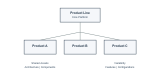
- Product line definition
- Example walkthrough
- Reference standards (ISO)
- Variation points
- Concepts of Superset and Assets
Feature Modeling Tools
- Introduction to
- Feature models
- Variants Description Model
pure::variants and Office Connector
- Feature modeling with
- Relationship between feature models and superset
- Application example with Excel
- Application example with Word
Getting Started
- Applying configuration management practices
- Introducing variability into existing systems
Integration
- Integrating CM and PLE into engineering workflows
- Tool-supported vs tool-independent approaches
Troubleshooting
- Common pitfalls in CM and PLE
- Best practices
Summary and Next Steps
- Recap of key concepts
- Recommendations for implementation
Exercises
- Case study and group work
- Hands-on exercises with and without tools
Requirements
- Familiarity with systems engineering processes and experience with requirements, architecture, and verification & validation (V&V)
- Prerequisites for participants:
- Basic knowledge of system lifecycle processes
- Familiarity with engineering workflows and product development
Audience
- Project managers
- Systems engineers
- Software engineers
- Product managers
Testimonials (2)
The explanation of all components and usages of them on the examples
Olga Elizova
Course - Enterprise Architecture in the UAF
This class presents material that will be disruptive to industry. Those who do not adopt will miss out.