NobleProg offers comprehensive MBSE training courses tailored to professionals across Michigan. Whether you are in Detroit, Ann Arbor, or Grand Rapids, our expert-led programs provide the skills needed to thrive in today's competitive landscape. Discover how NobleProg can help your organization succeed with targeted MBSE education.
Delivered through instructor-led sessions, whether online or onsite, Model-Based Systems Engineering (MBSE) programs illustrate the application of appropriate modeling methods and tools via interactive dialogue and practical exercises. These courses are designed to support structured development workflows for government.
MBSE instruction is offered as "online live training" or "onsite live training." Online live training, also referred to as "remote live training," is conducted through an interactive remote desktop interface. Onsite live training may be facilitated locally on customer premises in Michigan or at NobleProg corporate training facilities in Michigan.
NobleProg -- Your Local Training Provider
Detroit, MI - Renaissance Center
400 Renaissance Center, Detroit, United States, 48243
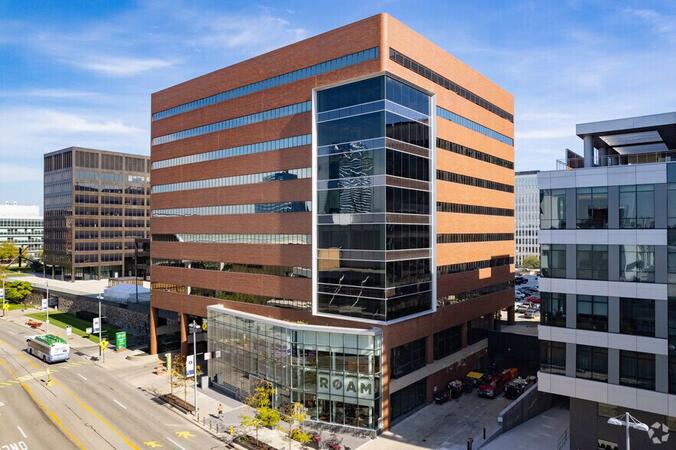
The GM Renaissance Center is conveniently located in downtown Detroit and easily accessed by car via Interstates 75 or 94, with secure underground parking available on site. Travelers flying into Detroit Metropolitan Airport (DTW) can expect a 25–30 minute trip by taxi or rideshare via I‑94. Public transit is efficient: the Detroit People Mover stops directly at the Renaissance Center station, and DDOT routes 3 and 9 serve nearby Jefferson Avenue. Pedestrian skywalks provide safe indoor access from downtown hotels, parking garages, and the riverwalk.
Ann Arbor, MI – Regus - South State Commons I
2723 S State St, Ann Arbor, United States, 48104
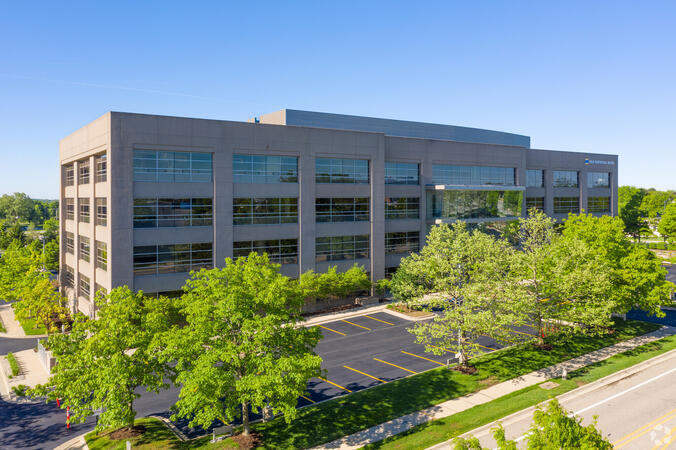
Regus South State Commons I is conveniently located off I‑94 via Exit 177 (State Street), with easy access to downtown Ann Arbor and surrounding suburbs. The building offers free on-site surface parking for guests. From Detroit Metropolitan Airport (DTW), the venue can be reached in approximately 20–25 minutes by taxi or rideshare via I‑94 West. Local public transit service (TheRide) operates Route 24 along South State Street, with a stop within a short 2-minute walk of the building.
Grand Rapids, MI - Regus – Calder Plaza
250 Monroe Ave NW, Grand Rapids, United States, 49503
The venue sits centrally at 250 Monroe Avenue NW in downtown Grand Rapids, easily accessed by car via US‑131 or I‑196—with connections via Monroe or Ottawa exits—and offers shared underground and surface parking. From Gerald R. Ford International Airport, take I‑96 East then I‑196 West into the city; the drive is about 20 minutes. Public transit through Rapid bus routes stops near Monroe or Ottawa Avenue, just a short walk from the Regus entrance; the downtown area is pedestrian-friendly.
Lansing, MI - Regus - One Michigan Avenue
120 North Washington Square, Lansing, United States, 48933
The venue is located in the heart of Lansing’s central business district at 120 North Washington Square, easily accessible by car via I‑496 or US‑127 with convenient street parking and a nearby parking ramp. From Capital Region International Airport (LAN), the location is approximately a 12‑minute drive west via I‑96 and US‑127, with taxis and rideshares readily available. Public transit users can take CATA bus routes that stop just a block away on Washington or Grand Avenue, offering seamless access to the venue.
This instructor-led, live training module (delivered online or on-site) is designed for professionals seeking to leverage AI to optimize systems and software engineering operations. For public sector entities aiming to enhance efficiency and rigor in systems engineering, this course provides essential capabilities.
Participants will model a Scanning Electron Microscope, encompassing both hardware and software components, as the primary laboratory exercise. The focus is on developing effective prompting strategies to direct AI in constructing compliant system models.
Upon completion of this three-day intensive, participants will:
demonstrate proficiency in utilizing AI as a subject matter expert to define system and software models.
exhibit familiarity with the core pillars of SysML, including Requirements, Structure, Behavior, and Parametrics.
apply structured SysML models to facilitate software integration,
generating User Interface Code from Behavioral Models,
generating Database Code from Structural Models,
generating Microcontroller Code from State Machine definitions.
Using a combination of lectures, demos, and interactive labs, this course showcases the foundations for building and maintaining an Enterprise Architecture (EA) utilizing the Unified Architecture Framework (UAF) version 1.2.
This instructor-led live training is targeted at entry-level engineers and professionals who intend to utilize MBPLE within CATIA Magic to understand and implement product line engineering concepts.
By the end of this training, participants will be able to:
Understand the key concepts and standardized vocabulary of PLE and MBPLE
Describe best practices for product line modeling
Implement a product line definition process in CATIA Magic
Use MBPLE features such as feature models, variation points, and configurations
This instructional program is designed to impart core competencies in the Systems Modeling Language (SysML), its implementation via the MagicDraw/Cameo platform, fundamental simulation techniques associated with Model-Based Systems Engineering (MBSE), and established industry best practices. The curriculum encompasses the development of documentation templates and the generation of reports within the tool suite. Furthermore, it provides a detailed examination of macro and scripting functionalities within the environment, defining their operational applications and strategic benefits for program management and system design accountability.
This curriculum is structured to impart the fundamental principles of the Systems Modeling Language (SysML), its application via MagicDraw/Cameo software, core Model-Based Systems Engineering (MBSE) simulation techniques, and industry best practices. Additionally, this training is designed to equip professionals with the technical knowledge necessary for architectural simulation, an introduction to the Simulation Toolkit plugin, the execution of simulations across multiple diagram types, and the integration of diagram simulations to facilitate automated architectural processes for government sectors.
This training program is structured to impart the core principles of the Systems Modeling Language (SysML), its application via the MagicDraw/Cameo platform, fundamental MBSE simulation methodologies, and industry-standard best practices. The curriculum focuses on the core concepts and functionalities of validation rules, validation suites, and model metrics, and is designed to introduce participants to the development and utilization of model queries in MagicDraw/Cameo, ensuring alignment with rigorous standards for government applications.
This curriculum is structured to impart the core principles of the Systems Modeling Language (SysML), its implementation via the MagicDraw/Cameo software platform, fundamental Model-Based Systems Engineering (MBSE) simulation techniques, and established best practices for MBSE execution. The training provides an introductory examination of the principal concepts and capabilities of CATIA No Magic’s Teamwork Cloud, alongside an introduction to the foundational concepts and features of Domain Specific Languages (DSL) within the MagicDraw framework.
"Automation Using Macros & Scripting in MagicDraw" is a structured course that instructs participants on the operational mechanics of macros and scripts within MagicDraw and their applicable use cases. This training utilizes a combination of module-based instruction and live, instructor-led practical demonstrations. The instructional team consists of experienced practitioners who balance theoretical depth with practical application for government and public sector contexts.
Key Outcome: Foundational proficiency in the capabilities and best practices for leveraging macros and scripting within MagicDraw for government operations.
The development of Domain-Specific Languages within MagicDraw serves as an advanced training program offering a foundational introduction to the core principles and functionalities of DSLs. The instruction combines module-based theoretical lessons with live, hands-on demonstrations led by certified instructors. The faculty comprises experienced practitioners who emphasize the integration of theoretical frameworks with practical application for government contexts.
Key Outcomes: A foundational command of the capabilities and industry best practices associated with DSL development in MagicDraw.
Employing a pedagogical mix of instructional briefings, technical demonstrations, and hands-on practical exercises, this program establishes the foundational competencies necessary for the construction and sustained maintenance of an Enterprise Architecture (EA) compliant with the Unified Architecture Framework (UAF) version 1.2, supporting robust governance and accountability for government operations.
This instructional module provides an in-depth examination of Model-Based Systems Engineering (MBSE) with a focus on model execution. The curriculum is designed to equip systems engineers and enterprise architects with the technical competencies required to simulate system behaviors utilizing the Cameo Simulation Toolkit within the MagicDraw environment. Participants will engage with core topics spanning Activity Diagrams, State Machine Diagrams, Sequence Diagrams, Parametric Diagrams, and User Interface Modeling, while applying these skills to execute trade studies and automate architecture workflows. The course guides learners through model-based simulation techniques, fUML execution, constraint-based modeling, and requirements verification to ensure efficient validation of system designs. It aims to establish proficiency in utilizing interactive graphical simulation interfaces for testing architecture decisions and effectively communicating stakeholder requirements. This training is suitable for professionals seeking to enhance their MBSE capabilities for government and public sector applications, streamlining complex system verification through established methodologies and hands-on, industry-relevant exercises.
Develop proficiency in querying MagicDraw models using Structured Expressions, covering foundational query syntax, contextual variables, and advanced metachain navigation, data retrieval, and script integration. This training equips systems engineers and MBSE professionals with practical methodologies for extracting, filtering, and analyzing structured data within UML metamodels and custom profiles. These capabilities support accelerated design validation and streamlined model management for enterprise architecture operations for government agencies, ensuring robust data integrity and efficient workflows.
A full-day instructional session featuring lectures and demonstrations on the core capabilities of Teamwork Cloud and Magic Collaboration Studio. Topics include role management, model administration, collaborative modeling protocols, and project architecture frameworks.
This course combines module-based lectures, instructor-led demonstrations, and hands-on laboratory exercises. The training staff consists of experienced practitioners who balance theoretical understanding with practical application for government and enterprise audiences.
Key Takeaways:
Comprehension of the purpose and utility of ontologies
Understanding of the advantages provided by knowledge graphs
Practical working knowledge of Protégé and Concept Modeling tools
This instructor-led, live training (online or onsite) is designed for entry- to intermediate-level professionals seeking to comprehend configuration management risks and apply product line engineering concepts for government, regardless of the use of dedicated tools.
Upon completion of this training, participants will be able to: Analyze risks associated with product changes throughout the lifecycle; Implement best practices in configuration management; Understand key concepts of product line engineering; Model variability and product lines with or without tools; Implement an end-to-end process from variability definition to product derivation; And evaluate the benefits of using tools such as pure::variants and FeatureIDE
This instructor-led, live training session (delivered online or onsite) is intended for entry-level professionals aiming to utilize pure::variants to grasp and implement product line engineering concepts for government purposes.
Following the completion of this course, participants will be proficient in:
Understanding product line engineering principles applied through pure::variants
Analyzing optimal practices for product line model development
Executing an end-to-end variability process, from initial specifications to variant creation
Integrating pure::variants with standard connectors, such as Microsoft Office, for operational efficiency
This instructor-led, live training session (available online or on-site) is designed for entry-level professionals seeking to comprehend the value, challenges, and implementation principles of MBSE using the ARCADIA method and the Capella tool for government applications.
Upon completion of this training, participants will be equipped to comprehend the foundational principles and operational benefits of MBSE; describe the ARCADIA methodology and its strategic positioning within systems engineering; explain the added value Capella offers over conventional document-based tools; identify the impacts of MBSE adoption on engineering workflows and practices; and understand the contribution of MBSE to digital continuity and multidisciplinary collaboration
This instructor-led, live training program (available online or onsite) is designed for beginner to intermediate-level professionals seeking to acquire and apply MBSE competencies using the ARCADIA method and the Capella tool.
Upon completion of this training, participants will be equipped to: Understand MBSE principles and their alignment with ISO 15288:2023 standards; Describe the ARCADIA methodology and its distinct architectural layers; Apply ARCADIA frameworks from operational needs through to physical architecture; Utilize Capella to construct, analyze, and manage system models; Implement industry best practices in system modeling through a practical case study
This instructor-led training, delivered online or on-site, is tailored for professionals and domain experts intending to acquire MBSE proficiency and perform efficient reviews of system models constructed with the ARCADIA method and the Capella tool. This curriculum supports the technical standards often required for government systems engineering.
Upon completion of this training, participants will be equipped to:
Comprehend the ARCADIA methodology and its architectural layers
Navigate and interpret Capella models
Evaluate the consistency of models with system requirements and architecture
Execute structured model reviews
Insert clear and relevant review comments within Capella
To assist Analysts and Designers within the System Engineering domain in understanding how to efficiently gather requirements and execute embedded software design implementation based on system specifications using UML 2 and SysML.
This three-day training is designed to help system analysts express needs effectively and enable designers to formulate appropriate architectural designs for government systems based on these requirements.
The resulting system architecture enhances the agility of embedded system software when facing changes, facilitating coherent traceability from business rules encapsulated in system functions and end-user usage choices (use cases) through to the software implementation level.
This instructional program is provided in two formats to deliver a comprehensive, practical understanding of how to model systems using the latest revision of the OMG Systems Modelling Language (SysML) specification. The notation and inherent semantics of SysML are detailed to enable participants to apply the acquired knowledge to any appropriate system modelling methodology or tooling environment.
As distributed systems increase in complexity, the focal point of architectural challenges shifts from individual applications to the collective architecture governing a suite of interconnected systems. This curriculum addresses the intersection of Software Architecture and Technical Enterprise Architecture, emphasizing the critical, yet often insufficiently documented, interdependence between these disciplines. For instance, decomposing a complex monolithic application into two distinct systems interacting via web services necessitates significant modifications to both the internal logic of the new components and the external architectural relationships connecting them.
This course will examine the strategic trade-offs involved in these decisions, reviewing prevailing patterns and solutions for managing complex system environments and the communication mechanisms operating within and across these frameworks, tailored for government operational standards.
Read more...
Last Updated:
Testimonials (4)
Trainer knowledge, involvement, and rapport
Adam Kuklewski - GE Medical Systems Polska
Course - Technical Architecture and Patterns
This class presents material that will be disruptive to industry. Those who do not adopt will miss out.
Mark
Course - AI Assisted MBSE with SysML
The direct correlation with our work subject in the examples
Gabriel Gutierrez - ARGOTEC S.r.l.
Course - Systems Modelling with SysML
Ms Malavika is a very good trainer. Very hard working and answering my queries well. I understand that scope for SysML and EA is very vast, she tried her best to present the training in the most suitable way. She has even spent her break time looking for answers to our queries. My respect! A great teacher!
Online MBSE (Model-Based Systems Engineering) training in Michigan, Model-Based Systems Engineering (MBSE) training courses in Michigan, Weekend Model-Based Systems Engineering courses in Michigan, Evening MBSE training in Michigan, Model-Based Systems Engineering instructor-led in Michigan, Model-Based Systems Engineering instructor in Michigan, Evening Model-Based Systems Engineering (MBSE) courses in Michigan, Model-Based Systems Engineering boot camp in Michigan, Online MBSE (Model-Based Systems Engineering) training in Michigan, Model-Based Systems Engineering (MBSE) instructor-led in Michigan, MBSE (Model-Based Systems Engineering) coaching in Michigan, Weekend MBSE (Model-Based Systems Engineering) training in Michigan, MBSE (Model-Based Systems Engineering) classes in Michigan, MBSE trainer in Michigan, Model-Based Systems Engineering private courses in Michigan, Model-Based Systems Engineering (MBSE) on-site in Michigan, MBSE (Model-Based Systems Engineering) one on one training in Michigan