Govtra offers both online and onsite, instructor-led live Python training courses that demonstrate various aspects of the Python programming language through hands-on practice. Key topics covered include the fundamentals of Python programming, advanced Python programming, Python for test automation, Python scripting and automation, and Python for data analysis and big data applications in sectors such as finance, banking, and insurance.
Govtra’s Python training courses also provide beginning and advanced instruction on the use of Python libraries and frameworks for machine learning and deep learning.
Python training is available as "online live training" or "onsite live training." Online live training (also known as "remote live training") is conducted via an interactive, remote desktop. Onsite live training can be arranged locally at customer premises in Virginia or at Govtra corporate training centers in Virginia.
Govtra -- Your Local Training Provider for Government
VA, Stafford - Quantico Corporate
800 Corporate Drive, Suite 301, Stafford, united states, 22554
The venue is located between interstate 95 and the Jefferson Davis Highway, in the vicinity of the Courtyard by Mariott Stafford Quantico and the UMUC Quantico Cororate Center.
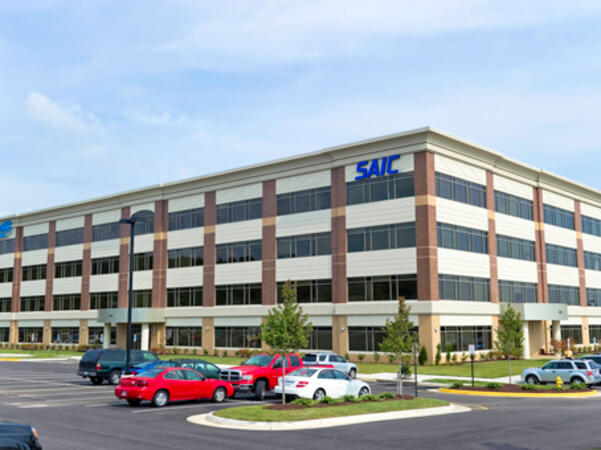
VA, Fredericksburg - Central Park Corporate Center
1320 Central Park Blvd., Suite 200, Fredericksburg, united states, 22401
The venue is located behind a complex of commercial buildings with the Bank of America just on the corner before the turn leading to the office.
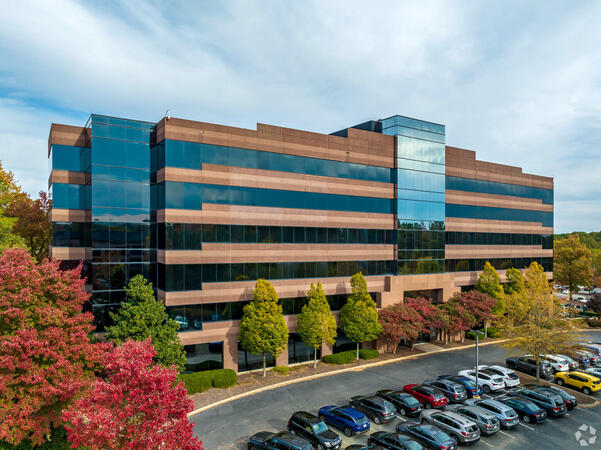
VA, Richmond - Two Paragon Place
Two Paragon Place, 6802 Paragon Place Suite 410, Richmond, United States, 23230
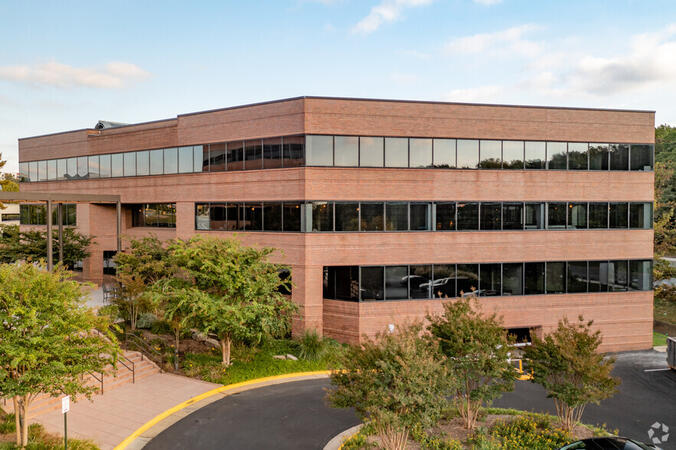
The venue is located in bustling Richmond with Hampton Inn, Embassy Suites and Westin Hotel less than a mile away.
VA, Reston - Sunrise Valley
12020 Sunrise Valley Dr #100, Reston, United States, 20191

The venue is located just behind the NCRA and Reston Plaza Cafe building and just next door to the United Healthcare building.
VA, Reston - Reston Town Center I
11921 Freedom Dr #550, Reston, united states, 20190

The venue is located in the Reston Town Center, near Chico's and the Artinsights Gallery of Film and Contemporary Art.
VA, Richmond - Sun Trust Center Downtown
919 E Main St, Richmond , united states, 23219
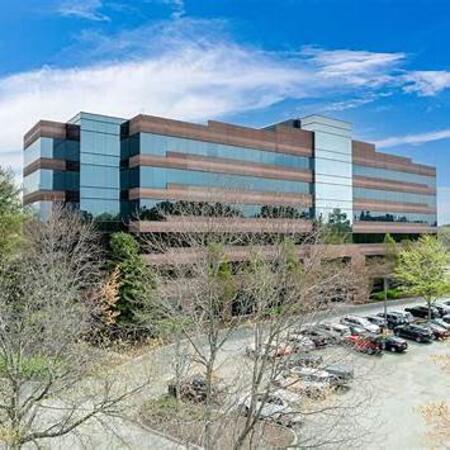
The venue is located in the Sun Trust Center on the crossing of E Main Street and S to N 10th Street just opposite of 7 Eleven.
Richmond, VA – Regus at Two Paragon Place
6802 Paragon Place, Suite 410, Richmond, United States, 23230

The venue is located within the Two Paragon Place business campus off I‑295 and near Parham Road in North Richmond, offering convenient access by car with free on-site parking. Visitors arriving from Richmond International Airport (RIC), approximately 16 miles northwest, can expect a taxi or rideshare ride of around 20–25 minutes via I‑64 West and I‑295 North. Public transit is available via GRTC buses, with routes stopping along Parham Road and Quioccasin Road, just a short walk to the campus.
Virginia Beach, VA – Regus at Windwood Center
780 Lynnhaven Parkway, Suite 400, Virginia Beach, United States, 23452
The venue is situated within the Windwood Center along Lynnhaven Parkway, featuring modern concrete-and-glass architecture and ample on-site parking. Easily accessible by car via Interstate 264 and the Virginia Beach Expressway, the facility offers a hassle-free commute. From Norfolk International Airport (ORF), located about 12 miles northwest, a taxi or rideshare typically takes 20–25 minutes via VA‑168 South and Edenvale Road. For those using public transit, the HRT bus system includes stops at Lynnhaven Parkway and surrounding streets, providing convenient access by bus.
Python serves as the foundational language driving the development and coordination of autonomous AI agents. This course emphasizes practical implementation using modern SDKs and frameworks such as LangChain and AutoGen to construct, connect, and manage agent workflows.
This instructor-led, live training (online or onsite) is designed for intermediate-level backend engineers, platform engineers, and ML engineers who aim to implement and coordinate autonomous agents using Python tooling and APIs.
By the end of this training, participants will be able to:
- Set up and configure Python-based environments for agentic systems.
- Utilize popular agent SDKs like LangChain and AutoGen to develop functional agents.
- Integrate tools and APIs to enhance agent capabilities.
- Orchestrate multi-agent workflows and communication patterns.
- Apply best practices for debugging, testing, and maintaining agentic codebases.
**Format of the Course**
- Interactive lecture and discussion.
- Hands-on programming exercises and live demonstrations.
- Practical projects building end-to-end agent workflows.
**Course Customization Options**
- To request a customized training for government or other specific needs, please contact us to arrange.
This course provides practical engineering techniques for designing, building, testing, and deploying autonomous systems using Python. It covers key topics such as the agent loop, tool integrations, memory and state management, orchestration patterns, safety controls, and production considerations.
This instructor-led, live training (available online or onsite) is designed for intermediate to advanced ML engineers, AI developers, and software engineers who wish to develop robust, production-ready autonomous agents using Python.
By the end of this training, participants will be able to:
- Design and implement the agent loop and decision-making workflows.
- Integrate external tools and APIs to enhance agent capabilities.
- Implement short-term and long-term memory architectures for agents.
- Coordinate multi-step orchestrations and ensure agent composability.
- Apply safety, access control, and observability best practices for deployed agents.
**Format of the Course**
- Interactive lecture and discussion
- Hands-on labs building agents with Python and popular SDKs
- Project-based exercises that produce deployable prototypes
**Course Customization Options for Government**
- To request a customized training tailored to specific needs, please contact us to arrange.
Artificial Intelligence with Python is the development of intelligent systems utilizing Python’s extensive ecosystem of AI and machine learning libraries.
This instructor-led, live training (online or onsite) is designed for intermediate-level Python programmers who wish to design, implement, and deploy AI solutions using Python.
By the end of this training, participants will be able to:
- Implement AI algorithms using Python’s core AI libraries.
- Work with supervised, unsupervised, and reinforcement learning models.
- Integrate AI solutions into existing applications and workflows for government.
- Evaluate model performance and optimize for accuracy and efficiency.
**Format of the Course**
- Interactive lecture and discussion.
- Extensive exercises and practice.
- Hands-on implementation in a live-lab environment.
**Course Customization Options**
- To request a customized training for this course, please contact us to arrange.
This instructor-led, live training (online or onsite) is designed for intermediate-level Python developers who aim to enhance their Python development experience using AWS Cloud9.
By the end of this training, participants will be able to:
- Set up and configure AWS Cloud9 for government Python development.
- Understand the interface and features of the AWS Cloud9 IDE.
- Write, debug, and deploy Python applications within AWS Cloud9.
- Collaborate with other developers using the AWS Cloud9 platform.
- Integrate AWS Cloud9 with other AWS services for advanced deployments.
This instructor-led, live training in Virginia (online or onsite) is aimed at expert-level data analysts who wish to leverage Python's data analysis capabilities within Power BI for government, enhancing their ability to analyze and visualize data effectively.
By the end of this training, participants will be able to:
- Understand how Python can be integrated into Power BI for data analysis.
- Utilize Python scripts to load, clean, and preprocess data within the Power BI environment.
- Enhance data visualization capabilities by creating custom and interactive visualizations using Python.
- Develop advanced data analysis skills using Python.
Python is a versatile programming language widely used for data manipulation, automation, and analytics. Libraries such as Pandas and Polars offer robust tools for handling tabular data at scale.
This instructor-led, live training (online or onsite) is designed for government professionals ranging from beginners to intermediates who wish to apply Python for everyday data analysis, file processing, and process automation using Pandas and Polars.
By the end of this training, participants will be able to:
- Use Python to read, transform, and write CSV and Excel files.
- Perform common data cleaning and transformation tasks with Pandas and Polars.
- Automate repetitive data processes with Python scripts.
- Package simple scripts into executables and adhere to best practices for projects.
**Format of the Course**
- Interactive coding demonstrations and short lectures.
- Hands-on exercises with guided code examples.
- Practical mini-projects to automate real-world tasks.
**Course Customization Options**
- To request a customized training for government, please contact us to arrange.
This instructor-led, live training in Virginia (online or onsite) is designed for experienced developers who wish to gain a comprehensive understanding of Python programming and its applications in cybersecurity for government.
By the end of this training, participants will be able to:
- Utilize Python programming for defensive cybersecurity measures.
- Understand and apply Python for ethical offensive techniques and digital forensics tasks.
- Identify and adhere to legal and ethical considerations surrounding offensive cybersecurity and vulnerability disclosure.
This comprehensive, hands-on course is designed for government professionals and covers advanced Python techniques, engineering best practices, and commonly used design patterns to build maintainable, testable, and high-performance Python applications. It emphasizes modern tooling, typing, concurrency models, architecture patterns, and deployment-ready workflows.
This instructor-led, live training (online or onsite) is aimed at intermediate-level to advanced-level Python developers within government agencies who wish to adopt professional practices and patterns for production-grade Python systems.
By the end of this training, participants will be able to:
- Apply Python typing, dataclasses, and type-checking to increase code reliability.
- Use design patterns and architecture principles to structure robust applications.
- Implement concurrency and parallelism correctly using asyncio and multiprocessing.
- Build well-tested code with pytest, property-based testing, and CI pipelines.
- Profile, optimize, and harden Python applications for production.
- Package, distribute, and deploy Python projects using modern tools and containers.
**Format of the Course**
- Interactive lectures and short demonstrations.
- Hands-on labs and coding exercises each day.
- Capstone mini-project integrating patterns, testing, and deployment.
**Course Customization Options**
- To request a customized training or focus area (data, web, or infrastructure), please contact us to arrange.
This instructor-led, live training in [location] (online or onsite) is aimed at beginner-level developers and data analysts who wish to learn Python programming from scratch using Google Colab.
By the end of this training, participants will be able to:
- Understand the fundamentals of the Python programming language.
- Implement Python code within the Google Colab environment.
- Utilize control structures to manage the flow of a Python program effectively.
- Develop functions to organize and reuse code efficiently.
- Explore and utilize basic libraries for Python programming.
This training is designed to enhance skills in programming for government and other public sector applications, ensuring participants are well-equipped to apply their knowledge in a variety of governance and accountability contexts.
This instructor-led, live training (available online or on-site) is designed for developers who aim to utilize the FARM (FastAPI, React, and MongoDB) stack to create dynamic, high-performance, and scalable web applications for government use.
By the end of this training, participants will be able to:
- Set up a development environment that seamlessly integrates FastAPI, React, and MongoDB.
- Understand the fundamental concepts, features, and benefits of the FARM stack.
- Learn how to develop REST APIs using FastAPI.
- Gain proficiency in designing interactive applications with React.
- Develop, test, and deploy both front-end and back-end components of applications using the FARM stack.
This instructor-led, live training in Virginia (online or onsite) is designed for government robotics developers at beginner to intermediate levels, as well as potentially advanced professionals, who wish to learn how to use ROS to program mobile robots using Python.
By the end of this training, participants will be able to:
- Set up a development environment that includes ROS, Python, and a mobile robot platform.
- Create and run ROS nodes, topics, services, and actions using Python.
- Utilize ROS tools and utilities to monitor and debug ROS applications.
- Leverage ROS packages and libraries to perform common tasks for mobile robots.
- Integrate ROS with other frameworks and tools for government projects.
- Troubleshoot and debug ROS applications effectively.
This course is designed for individuals seeking to learn the Python programming language, with a focus on both the core language and its libraries. It highlights the most valuable and relevant libraries developed by the Python community. Python is widely used in various sectors, including business and scientific research, making it one of the most popular programming languages.
The course can be delivered using the latest version of Python 3.x, incorporating practical exercises that leverage its full capabilities. These exercises are compatible with a variety of operating systems, including all versions of UNIX, Linux, Mac OS X, and Microsoft Windows.
Approximately 70% of the course time is dedicated to hands-on practical exercises, while 30% is allocated for demonstrations and presentations. Participants are encouraged to engage in discussions and ask questions throughout the course.
Note: The training can be customized to meet specific needs upon prior request ahead of the proposed course date, ensuring it aligns effectively with the requirements for government use.
This instructor-led, live training in Virginia (online or onsite) is designed for government developers who wish to enhance their skills in advanced Python programming techniques. The course covers the application of this versatile language to address challenges in areas such as distributed applications, data analysis and visualization, user interface programming, and maintenance scripting, all tailored to meet the specific needs for government workflows and governance.
This course is designed for individuals seeking to learn the Python programming language. The focus is on mastering the Python language, its core libraries, and the selection of the most effective and useful libraries developed by the Python community. Python is widely used in both the public and private sectors, driving innovation and efficiency in various fields, including scientific research and business operations. This course is tailored to enhance skills for government professionals and others who rely on robust programming tools to support their work.
The training course is designed to assist participants in preparing for web application development using Python programming, along with data analytics. This skill set enhances data visualization capabilities, which are invaluable tools for top management in the decision-making process for government and other public sector organizations.
The objective of this course is to provide a foundational proficiency in applying Machine Learning methods in practice. Through the use of the Python programming language and its various libraries, and based on numerous practical examples, this course teaches participants how to utilize the most essential components of Machine Learning, make informed data modeling decisions, interpret algorithm outputs, and validate results.
Our goal is to equip you with the skills necessary to confidently understand and use the core tools from the Machine Learning toolbox, while avoiding common pitfalls in Data Science applications. This course is designed to enhance your capabilities for government workflows, ensuring alignment with public sector governance and accountability standards.
This instructor-led, live training in Virginia is based on the popular book, "Automate the Boring Stuff with Python," by Al Sweigart. It is designed for beginners and covers essential Python programming concepts through practical, hands-on exercises and discussions. The focus is on learning to write code to significantly enhance productivity in office environments.
By the end of this training, participants will be able to program in Python and apply these new skills for government:
Automating tasks by writing simple Python scripts.
Creating programs that perform text pattern recognition using "regular expressions."
Generating and updating Excel spreadsheets programmatically.
Parsing PDFs and Word documents.
Crawling websites to extract information from online sources.
Developing programs that send out email notifications.
Utilizing Python's debugging tools to quickly resolve bugs.
Programmatically controlling the mouse and keyboard to automate repetitive actions.
In this instructor-led, live training for government participants in [location], attendees will gain proficiency in the most relevant and cutting-edge machine learning techniques using Python. Through hands-on exercises, they will develop a series of demo applications involving image, music, text, and financial data.
By the end of this training, participants will be able to:
- Implement machine learning algorithms and techniques for solving complex problems.
- Apply deep learning and semi-supervised learning methods to applications involving image, music, text, and financial data.
- Optimize Python algorithms to their maximum potential.
- Utilize libraries and packages such as NumPy and Theano.
This instructor-led, live training in Virginia (online or onsite) is aimed at intermediate-level Python developers and data analysts who wish to enhance their skills in data analysis and manipulation using Pandas and NumPy for government applications.
By the end of this training, participants will be able to:
Set up a development environment that includes Python, Pandas, and NumPy.
Create a data analysis application using Pandas and NumPy for government workflows.
Perform advanced data wrangling, sorting, and filtering operations.
Conduct aggregate operations and analyze time series data.
Visualize data using Matplotlib and other visualization libraries.
Debug and optimize their data analysis code to ensure compliance with public sector governance standards.
The objective of this course is to enhance proficiency in applying Machine Learning methods in practical scenarios. Utilizing the Python programming language and its various libraries, and through a wide range of practical examples, this course instructs participants on how to effectively use key Machine Learning components, make informed data modeling decisions, interpret algorithm outputs, and validate results.
Our goal is to equip you with the skills necessary to confidently understand and utilize the essential tools from the Machine Learning toolbox, while avoiding common pitfalls in Data Science applications for government.
Python is a programming language that has gained significant popularity in the financial sector. Adopted by major investment banks and hedge funds, it is used to develop a wide array of financial applications, from core trading systems to risk management platforms.
In this instructor-led, live training, participants will learn how to use Python to develop practical applications for solving a variety of finance-related challenges.
By the end of this training, participants will be able to:
Understand the fundamentals of the Python programming language
Download, install, and maintain the best development tools for creating financial applications in Python
Select and utilize the most appropriate Python packages and programming techniques to organize, visualize, and analyze financial data from various sources (CSV, Excel, databases, web, etc.)
Build applications that address issues related to asset allocation, risk analysis, investment performance, and more
Troubleshoot, integrate, deploy, and optimize a Python application
Audience
Developers
Analysts
Quants
Format of the course
Part lecture, part discussion, exercises, and extensive hands-on practice
Note
This training is designed to provide solutions for some of the primary challenges faced by finance professionals. If you have a specific topic, tool, or technique that you would like to cover or expand upon, please contact us to arrange.
Govtra offers this course for government personnel and organizations looking to enhance their financial technology capabilities and align with public sector workflows, governance, and accountability standards.
This five-day introduction to Data Science and Artificial Intelligence (AI) is designed for government professionals. The course includes practical examples and exercises using Python, ensuring that participants gain hands-on experience in applying these technologies within public sector workflows.
This four-day course provides an introduction to artificial intelligence (AI) and its applications using the Python programming language. An optional fifth day is available for participants to complete an AI project upon finishing the course. This training is designed to enhance skills and capabilities for government professionals, ensuring they are well-equipped to integrate AI solutions into their workflows.
Selenium is an open-source framework designed for automating web application testing across various browsers. Selenium 4 introduces enhanced WebDriver APIs, native relative locators, and improved grid support. Python, with its simplicity and robust integration with testing frameworks such as Pytest, is a powerful choice for developing scalable and maintainable test automation suites.
This instructor-led, live training (online or onsite) is aimed at beginner to intermediate testers and developers who wish to use Selenium with Python to automate web application testing in real-world environments for government projects.
By the end of this training, participants will be able to:
- Install and configure Selenium with Python in a test environment.
- Build robust test automation scripts using Selenium WebDriver and Pytest.
- Apply the Page Object Model (POM) for maintainable test frameworks.
- Run tests across multiple browsers using Selenium Grid.
- Integrate automated tests with CI/CD pipelines.
- Troubleshoot common issues and apply best practices for automation stability.
**Format of the Course**
- Interactive lecture and discussion.
- Extensive exercises and practice sessions.
- Hands-on implementation in a live-lab environment.
**Course Customization Options**
- To request a customized training for this course, please contact us to arrange.
In this instructor-led, live training in Virginia (onsite or remote), participants will learn how to integrate the capabilities of Python with Excel for government use.
By the end of this training, participants will be able to:
- Install and configure packages that facilitate the integration of Python and Excel.
- Read, write, and manipulate Excel files using Python.
- Call Python functions directly from Excel.
This instructor-led, live training in [location] (online or onsite) is aimed at MATLAB users who wish to explore and transition to Python for data analytics and visualization for government purposes.
By the end of this training, participants will be able to:
- Install and configure a Python development environment.
- Understand the differences and similarities between MATLAB and Python syntax.
- Use Python to gain insights from various datasets.
- Convert existing MATLAB applications to Python.
- Integrate MATLAB and Python applications within their workflows.
This instructor-led, live training (online or onsite) is aimed at individuals who wish to learn enough Python to effectively analyze and interpret data from various sources, such as sales data, traffic analytics, and customer interactions.
By the end of this training, participants will be able to:
- Install and configure the necessary software, libraries, and development environment required to begin writing Python code for data analysis.
- Analyze data from diverse sources, including Excel, CSV, JSON files, and databases.
- Clean and preprocess data to enhance its quality and utility before conducting analysis.
- Perform basic statistical analyses to derive meaningful insights.
- Generate reports that present data in various formats, ranging from numerical summaries to data visualizations.
- Extract valuable insights from data, such as performance trends and areas requiring attention, to inform decision-making processes for government and other public sector workflows.
In this instructor-led, live training, participants will learn advanced Python programming techniques for government applications, including how to apply this versatile language to solve problems in areas such as distributed applications, data analysis and visualization, UI programming, and maintenance scripting.
Format of the Course
Interactive lecture and discussion.
Extensive exercises and practice sessions.
Hands-on implementation in a live-lab environment.
Course Customization Options
If you wish to add, remove, or customize any section or topic within this course, please contact us to arrange.
This instructor-led, live training in Virginia (online or onsite) is aimed at developers who wish to use Python to automate the process of crawling multiple websites to extract data for processing and analysis.
By the end of this training, participants will be able to:
- Install and configure Python and all necessary packages.
- Retrieve and parse data from various websites.
- Understand how websites operate and the structure of their HTML.
- Develop spiders to efficiently crawl the web at scale.
- Utilize Selenium to crawl AJAX-driven web pages, enhancing data collection capabilities for government applications.
This instructor-led, live training in Virginia (online or onsite) is designed for data scientists and software engineers who wish to utilize Dask within the Python ecosystem to build, scale, and analyze large datasets for government.
By the end of this training, participants will be able to:
- Set up the necessary environment to begin building big data processing systems using Dask and Python.
- Explore the features, libraries, tools, and APIs available in Dask.
- Understand how Dask enhances parallel computing capabilities in Python.
- Learn techniques for scaling the Python ecosystem (including Numpy, SciPy, and Pandas) using Dask.
- Optimize the Dask environment to ensure high performance when handling large datasets.
This instructor-led, live training (online or onsite) is aimed at business analysts who wish to automate trade processes using algorithmic trading, Python, and R for government.
By the end of this training, participants will be able to:
Utilize algorithms to execute the buying and selling of securities at precise intervals rapidly.
Minimize costs associated with trading through algorithmic methods.
Automatically monitor stock prices and execute trades accordingly.
This instructor-led, live training in Virginia (online or onsite) is aimed at beginner to intermediate-level developers who wish to use Python to build blockchain and cryptocurrency applications for government.
By the end of this training, participants will be able to:
- Use Python to create and manipulate blockchain and cryptocurrency systems and data.
- Utilize Python libraries and frameworks such as Flask, PyCrypto, and web3.py to interact with blockchain and cryptocurrency networks and services.
- Implement smart contracts, consensus algorithms, and cryptographic protocols for blockchain and cryptocurrency applications using Python.
- Develop and deploy decentralized applications (DApps) that run on blockchain and cryptocurrency platforms using Python.
- Perform data analysis and visualization on blockchain and cryptocurrency data using Python.
Chatbots are computer programs designed to simulate human responses through chat interfaces. These tools enhance operational efficiency by providing swift and convenient interaction options for users.
In this instructor-led, live training, participants will learn how to develop chatbots using Python.
By the end of this training, participants will be able to:
- Understand the foundational principles of building chatbots.
- Construct, test, deploy, and troubleshoot various chatbot applications using Python.
**Audience**
- Developers
**Format of the Course**
- A combination of lectures, discussions, practical exercises, and extensive hands-on practice.
**Note**
- To request a customized training for government or other specific needs, please contact us to arrange.
This instructor-led, live training in Virginia (online or onsite) is aimed at intermediate-level developers who wish to use CUDA to build Python applications that run in parallel on NVIDIA GPUs for government projects.
By the end of this training, participants will be able to:
Leverage the Numba compiler to accelerate Python applications running on NVIDIA GPUs for government use.
Develop, compile, and deploy custom CUDA kernels for government applications.
Effectively manage GPU memory in government computing environments.
Transform a CPU-based application into a GPU-accelerated application suitable for government operations.
This instructor-led, live training (online or onsite) is aimed at developers who wish to use FastAPI with Python to build, test, and deploy RESTful APIs more efficiently and rapidly for government projects.
By the end of this training, participants will be able to:
- Set up the necessary development environment to create APIs using Python and FastAPI.
- Develop APIs more quickly and easily leveraging the FastAPI library.
- Understand how to create data models and schemas based on Pydantic and OpenAPI standards.
- Integrate APIs with a database using SQLAlchemy.
- Implement security and authentication in APIs utilizing FastAPI tools.
- Build container images and deploy web APIs to a cloud server for government use.
This instructor-led, live training (available online or onsite) is designed for government data scientists who wish to utilize TensorFlow to analyze potential fraud data.
By the end of this training, participants will be able to:
- Develop a fraud detection model using Python and TensorFlow.
- Construct linear regressions and linear regression models to predict fraudulent activities.
- Create an end-to-end AI application for analyzing fraud data for government use.
This instructor-led, live training (online or onsite) is designed for government network engineers who wish to maintain, manage, and design computer networks using Python.
By the end of this training, participants will be able to:
- Optimize and leverage Paramiko, Netmiko, Napalm, Telnet, and pyntc for network automation with Python.
- Master multi-threading and multiprocessing techniques in network automation.
- Utilize GNS3 and Python for network programming and simulation.
This training aligns with the standards and best practices for government IT infrastructure management.
In this instructor-led, live training in Virginia, participants will learn how to use Python to produce high-quality natural language text by building their own NLG system from scratch. Case studies relevant to public sector workflows and governance will be examined, and the concepts will be applied to hands-on lab projects for generating content tailored for government.
By the end of this training, participants will be able to:
Utilize NLG to automatically generate content for various industries, including journalism, real estate, weather reporting, and sports, with a focus on applications for government.
Select and organize source content, plan sentences, and prepare a system for the automatic generation of original content that aligns with public sector needs.
Understand the NLG pipeline and apply the appropriate techniques at each stage to ensure compliance with governmental standards.
Comprehend the architecture of a Natural Language Generation (NLG) system designed for government use.
Implement the most suitable algorithms and models for analysis and ordering, ensuring they meet the requirements of public sector workflows.
Pull data from publicly available data sources as well as curated databases to use as material for generated text that supports government operations.
Replace manual and laborious writing processes with computer-generated, automated content creation that enhances efficiency and accountability in government tasks.
This instructor-led, live training (available online or onsite) is designed for government penetration testers who wish to conduct network penetration tests using Kali Linux and Python.
By the end of this training, participants will be able to:
- Develop Python scripts to identify network vulnerabilities.
- Utilize Kali web shells and shellcode in exploit development.
- Employ a variety of Kali tools for comprehensive penetration testing.
- Execute system exploitation using Python.
This course is tailored to enhance the skills of professionals working in cybersecurity roles for government agencies, ensuring they are equipped with the latest techniques and tools for effective network security assessments.
This instructor-led, live training in Virginia (online or onsite) is aimed at developers who wish to utilize Python as the server-side language for creating web applications. Various techniques and frameworks will be explored to determine the most appropriate solution for a given challenge.
By the end of this training, participants will be able to:
Install and configure Python packages and frameworks necessary for government projects.
Set up an optimal development environment to enhance the coding process for government applications.
Write the code required to implement common functionalities expected by end users of a web application (forms, database queries, calculations, etc.).
Select from popular frameworks such as Django and Flask to automate repetitive tasks and reduce development time for government initiatives.
Computer Vision is a field that involves automatically extracting, analyzing, and understanding useful information from digital media. Python, a high-level programming language renowned for its clear syntax and code readability, is widely used in this domain.
In this instructor-led, live training, participants will gain an understanding of the fundamentals of Computer Vision as they work through the creation of several simple Computer Vision applications using Python.
By the end of this training, participants will be able to:
- Understand the basics of Computer Vision
- Use Python to implement Computer Vision tasks
- Build their own face, object, and motion detection systems
**Audience**
- Python programmers interested in Computer Vision for government projects
**Format of the Course**
- Part lecture, part discussion, with exercises and extensive hands-on practice
This course builds upon the 1-day introduction to Python and Data Visualization that was held on February 11th. It is tailored for individuals seeking to master the Python programming language, with a focus on the core language features, essential libraries, and the selection of the most effective and widely used third-party libraries developed by the Python community. Python is a leading programming language that supports both business operations and scientific research globally, making it a critical skill for government professionals and researchers alike.
This course introduces participants to the Python programming language. Upon completion, students will be capable of writing complex Python programs that address a broad range of subject matter areas. Key topics include language components, working with professional integrated development environments (IDEs), control flow structures, strings, input/output operations, collections, classes, modules, and regular expressions. The curriculum is enhanced with numerous hands-on labs, solutions, and code examples to reinforce learning.
After completing the course, students will be able to demonstrate knowledge and understanding of Python security principles for government applications.
This instructor-led, live training (online or onsite) is designed for developers and data scientists who wish to utilize spaCy to process large volumes of text to identify patterns and derive insights.
By the end of this training, participants will be able to:
- Install and configure spaCy.
- Understand spaCy’s approach to Natural Language Processing (NLP).
- Extract patterns and gain business insights from extensive data sources.
- Integrate the spaCy library with existing web and legacy applications.
- Deploy spaCy in live production environments to predict human behavior.
- Use spaCy to pre-process text for Deep Learning.
**Format of the Course**
- Interactive lecture and discussion.
- Extensive exercises and practice sessions.
- Hands-on implementation in a live-lab environment.
**Course Customization Options for Government**
- To request a customized training tailored to government needs, please contact us to arrange.
- For more information about spaCy, visit: https://spacy.io/
Tableau is a powerful business intelligence and data visualization tool, while Python is a widely used programming language that supports a broad range of statistical and machine learning techniques. When combined, Tableau's data visualization capabilities and Python's advanced analytics functions enable the rapid development of sophisticated data analytics applications for various business use cases.
In this instructor-led, live training, participants will learn how to integrate Tableau and Python using the TabPy API to perform advanced analytics.
By the end of this training, participants will be able to:
- Integrate Tableau and Python using the TabPy API
- Utilize the integration of Tableau and Python to analyze complex business scenarios with minimal Python code
**Audience**
- Developers
- Data Scientists
**Format of the Course**
- Part lecture, part discussion, exercises, and extensive hands-on practice for government applications.
In Python Machine Learning, the Text Summarization feature can process input text to generate a concise summary. This functionality is accessible both from the command line and as a Python API/library. One significant application for government is the rapid creation of executive summaries, which is particularly useful for organizations that need to review large volumes of text data before generating reports and presentations.
This instructor-led, live training will guide participants in using Python to develop a simple application that automatically generates a summary of input text.
By the end of this training, participants will be able to:
- Utilize a command-line tool for summarizing text.
- Design and implement Text Summarization code using Python libraries.
- Evaluate three Python summarization libraries: sumy 0.7.0, pysummarization 1.0.4, readless 1.0.17.
**Audience**
- Developers
- Data Scientists
**Format of the Course**
- Part lecture, part discussion, exercises, and extensive hands-on practice
This instructor-led, live training in Virginia (online or onsite) is aimed at data scientists and developers who wish to use Modin to build and implement parallel computations with Pandas for faster data analysis.
By the end of this training, participants will be able to:
- Set up the necessary environment to start developing Pandas workflows at scale with Modin.
- Understand the features, architecture, and advantages of Modin for government applications.
- Differentiate between Modin, Dask, and Ray in terms of their suitability for various data processing tasks.
- Perform Pandas operations more efficiently using Modin.
- Implement the entire Pandas API and functions to enhance data analysis capabilities.
Read more...
Last Updated:
Testimonials (19)
The fact of having more practical exercises using more similar data to what we use in our projects (satellite images in raster format)
Matthieu - CS Group
Course - Scaling Data Analysis with Python and Dask
Interactive exercises.
Andrei Damian
Course - Python Advanced
Very interactive with various examples, with a good progression in complexity between the start and the end of the training.
Jenny - Andheo
Course - GPU Programming with CUDA and Python
I thought the trainer was very knowledgeable and answered questions with confidence to clarify understanding.
Jenna - TCMT
Course - Machine Learning with Python – 2 Days
Very good preparation and expertise of a trainer, perfect communication in English. The course was practical (exercises + sharing examples of use cases)
Monika - Procter & Gamble Polska Sp. z o.o.
Course - Developing APIs with Python and FastAPI
The manner in which the lessons were organized was terrific. Easy to understand, the trainer had plenty of patience and helped everyone
Ioana Mohanu - Accenture Industrial SS
Course - Python Fundamentals plus
The explaination
Wei Yang Teo - Ministry of Defence, Singapore
Course - Machine Learning with Python – 4 Days
Very hands-on practice, engaging and good amount of breaks in between. Thus did not feel tired/lethargic.
Charles Lim - Ministry of Defence, Singapore
Course - Python for Data Analysis
Many different examples and topics has been covered, from basic investigation to login management and dynamic page management.
Daniele Tagliaferro - Creditsafe Italia Srl
Course - Web Scraping with Python
Trainer was very knowlegable and very open to feedback on what pace to go through the content and the topics we covered. I gained alot from the training and feel like I now have a good grasp of image manipulation and some techniques for building a good training set for an image classification problem.
Anthea King - WesCEF
Course - Computer Vision with Python
Trainer was accommodative. And actually quite encouraging for me to take up the course.
Grace Goh - DBS Bank Ltd
Course - Python in Data Science
Subject presentation knowledge timing
Aly Saleh - FAB banak Egypt
Course - Introduction to Data Science and AI (using Python)
Trainer develops training based on participant's pace
Farris Chua
Course - Data Analysis in Python using Pandas and Numpy
The trainer was a professional in the subject field and related theory with application excellently
Fahad Malalla - Tatweer Petroleum
Course - Applied AI from Scratch in Python
The trainer was great! If he would have more time I think we could have learned a lot more.
Zarim Jei Serrano - Cloudstaff Philippines, Inc.
Course - Python Programming Fundamentals
1:1 very intensive but learnt a lot.
Karen Dyke - BT
Course - Python: Automate the Boring Stuff
The trainer was excellent, He was always ready to answer my questions and share as much knowledge as he could.
Fahad Malalla - Tatweer Petroleum
Course - Advanced Python
In-depth coverage of machine learning topics, particularly neural networks. Demystified a lot of the topic.
Sacha Nandlall
Course - Python for Advanced Machine Learning
I preferred the exercise and learning about the nooks and crannies of Python.
Online Python training in Virginia, Python training courses in Virginia, Weekend Python courses in Virginia, Evening Python training in Virginia, Python instructor-led in Virginia, Online Python training in Virginia, Python on-site in Virginia, Evening Python courses in Virginia, Python private courses in Virginia, Python instructor in Virginia, Python boot camp in Virginia, Python one on one training in Virginia, Python classes in Virginia, Python coaching in Virginia, Weekend Python training in Virginia, Python trainer in Virginia, Python instructor-led in Virginia