

Online or onsite, instructor-led live Business Rules training courses demonstrate through interactive discussion and hands-on practice how to use business rules to assert business structure or control business behavior.
Business Rules training is available as "online live training" or "onsite live training." Online live training (also known as "remote live training") is conducted via an interactive, remote desktop. Onsite live training can be conducted locally on customer premises in Georgia or in Govtra corporate training centers in Georgia.
Govtra — Your Local Training Provider for government and public sector organizations.
Atlanta, GA – Regus at Colony Squar
1201 Peachtree Street NE, Suite 200, Atlanta, United States, 30361
The venue is centrally located in Midtown Atlanta within the prominent Colony Square complex at 1201 Peachtree Street NE, easily accessed by car via I‑75/85 or GA‑400, with several parking garages nearby. From Hartsfield–Jackson Atlanta International Airport (ATL), around 15 miles south, a taxi or rideshare typically takes 20–30 minutes north along I‑75/85 N. Public transit users can take MARTA Rail to the Arts Center or Midtown stations (0.3–0.5 miles away) and walk easily, and numerous MARTA bus routes along Peachtree Street stop directly outside the entrance.

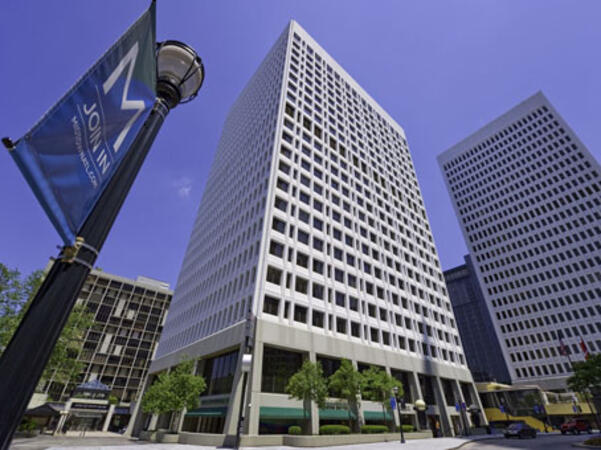
Atlanta, GA – The Proscenium
1170 Peachtree Street NE, Atlanta, United States, 30309
The venue is located in the heart of Midtown Atlanta in the Proscenium high–rise at 1170 Peachtree Street NE, easily accessible by car via I‑75/85 and GA‑400 with several parking garages nearby. Visitors arriving from Hartsfield–Jackson Atlanta International Airport (ATL), about 15 miles south, can expect a taxi or rideshare ride taking 20–30 minutes via I‑75/85 North. Public transit is seamless with MARTA Rail service; the Arts Center and Midtown stations are within walking distance (approximately 0.3–0.4 miles), and multiple MARTA bus routes also serve Peachtree Street.
Decatur, GA – Regus at One West Court Square
One West Court Square, Suite 750, Decatur, United States, 30030
The venue is located in the heart of downtown Decatur within One West Court Square, easily reached by car via I‑20 and I‑285, with several public parking decks directly adjacent. Travelers from Hartsfield–Jackson Atlanta International Airport (ATL), approximately 17 miles southwest, can expect a taxi or rideshare ride of around 25–30 minutes via I‑20 East. Public transit is particularly convenient: MARTA rail users can disembark at Decatur Station (about 0.15 miles away) and walk a few minutes to the building entrance. Local bus routes also serve Trinity Place and Swanton Way, putting the center within easy reach.
Atlanta, GA – Regus at One Hartsfield
100 Hartsfield Centre Parkway, Suite 500, Atlanta, United States, 30354
The venue is located in the One Hartsfield Center office building, adjacent to Hartsfield–Jackson Atlanta International Airport, easily reached by car via I‑75/I‑85 or GA‑138, with abundant on-site parking. Visitors arriving from ATL airport can walk or take a shuttle to the building, or opt for a quick 2–3‑minute taxi or rideshare ride. Public transit users can board MARTA from the Airport Station and ride one stop to College Park Station, then catch a connecting shuttle or enjoy a brief walk of about half a mile.
Atlanta, GA – Regus at Peachtree
260 Peachtree Street NW, Suite 2200, Atlanta, United States, 30303
The venue is situated in the iconic Coastal States Building at 260 Peachtree Street in downtown Atlanta, accessible by car via I‑75/85 or I‑20 with convenient parking garages nearby. From Hartsfield–Jackson Atlanta International Airport (ATL), about 12 miles south, a taxi or rideshare along I‑75/85 North takes approximately 15–20 minutes. For public transit, MARTA rail users can disembark at Five Points Station and walk 0.5 miles northeast, or exit at Peachtree Center Station and walk two blocks north—both routes offering easy access.
Augusta, GA – At Broad Street
823 Broad Street, Augusta, United States, 3090
The venue is located in the heart of downtown Augusta on Broad Street, easily accessible by car via I‑20 with several public parking garages nearby. From Augusta Regional Airport (AGS), about 9 miles west, taxis or rideshares typically take 15–20 minutes via I‑20. Public transit is available through Augusta Public Transit buses with routes along Broad Street, stopping within a few blocks of the venue, offering a convenient option for attendees without a car.
Savannah, GA – Regus at Bull Street
100 Bull St Downtown, Suite 200, Savannah, United States, 31401
The venue is located in the historic downtown area on Bull Street in the Altmayer Building, easily accessible by car via I‑16 and U.S. 17, with several public garages nearby. From Savannah/Hilton Head International Airport (SAV), about 12 miles west, taxis or rideshares typically take 15–20 minutes via U.S. 17 South. Public transit is available via Chatham Area Transit (CAT) buses, with frequent service along Bull and Broughton Streets; Johnson Square Station is just a couple minutes’ walk from the venue.
This instructor-led, live training in Georgia (online or onsite) is designed for government advanced-level participants who wish to integrate Drools 8 with jBPM to design, execute, and optimize business workflows and processes for government.
By the end of this training, participants will be able to:
- Set up Drools 8 and jBPM environments for development.
- Define and manage complex business rules in Drools 8.
- Design and execute workflows using jBPM.
- Integrate Drools rules into jBPM processes for dynamic decision-making.
- Optimize and troubleshoot rule-driven workflows.
This instructor-led, live training in [location] (online or onsite) is aimed at beginner to intermediate level business analysts who wish to utilize Domain-Specific Languages (DSLs) in Drools 8 to define, manage, and optimize business rules without extensive reliance on technical programming skills.
By the end of this training, participants will be able to:
- Comprehend the core concepts of Drools 8 and its architecture.
- Develop DSLs to simplify business rule definitions for non-technical users.
- Effectively manage, test, and maintain rules using Drools Workbench.
- Collaborate with technical teams to implement and refine business rules.
- Apply best practices for rule optimization and lifecycle management in alignment with public sector workflows and governance standards for government.
This instructor-led, live training in Georgia (online or onsite) is aimed at advanced-level participants who wish to optimize rule execution, integrate Drools with enterprise systems, and leverage advanced features like decision tables and domain-specific languages (DSLs).
By the end of this training, participants will be able to:
- Optimize the performance of complex rule execution for government applications.
- Utilize advanced Drools features such as decision tables, DSLs, and rule templates.
- Integrate Drools seamlessly with enterprise applications and external systems for government use.
- Implement robust version control and collaboration mechanisms for rule development in a government context.
- Design and deploy scalable Drools-based solutions to meet the needs of government agencies.
This instructor-led, live training (online or onsite) is designed for intermediate-level participants who aim to build and manage complex business rules, optimize rule execution, and handle rule dependencies effectively using Drools 8.
By the end of this training, participants will be able to:
- Create advanced business rules and manage their dependencies.
- Implement decision-making logic using Drools rule groups and agendas.
- Optimize the performance of rule execution in Drools.
- Utilize advanced features in Drools Workbench for rule management.
- Integrate Drools with external data sources and systems, enhancing capabilities for government operations.
This instructor-led, live training (online or onsite) is designed for beginner-level participants who wish to learn the fundamentals of Drools 8, set it up, and develop simple business rules to enhance decision-making and automation for government processes.
By the end of this training, participants will be able to:
- Understand the purpose and benefits of using Drools 8 in a public sector context.
- Set up the Drools environment and integrate it with existing applications for government use.
- Create, test, and deploy simple business rules to support efficient governance and decision-making.
- Utilize Drools Workbench for rule management and decision tables, ensuring alignment with public sector workflows.
- Implement Drools in real-world scenarios to automate decisions and improve service delivery for government operations.
This instructor-led, live training in Georgia (online or onsite) is aimed at beginner-level participants who wish to learn essential concepts in probability, statistics, programming, and machine learning, and apply these to AI development for government.
By the end of this training, participants will be able to:
- Understand basic concepts in probability and statistics, and apply them to real-world scenarios relevant to public sector workflows.
- Write and understand procedural, functional, and object-oriented programming code suitable for government applications.
- Implement machine learning techniques such as classification, clustering, and neural networks to support data-driven decision-making for government.
- Develop AI solutions using rules engines and expert systems for problem-solving in governance and accountability contexts.
The Business Process Model and Notation (BPMN), Decision Model and Notation (DMN), and Case Management Model and Notation (CMMN) are three Object Management Group (OMG) standards designed for process, decision, and case modeling. This course offers an introduction to these standards and provides guidance on when each should be utilized in the context of operations for government agencies.
This course is designed for government enterprise architects, business and systems analysts, and managers who wish to incorporate business rules into their solutions. Utilizing Drools, participants can craft business rules in a near-natural language format, thereby bridging the gap between business and information technology for government applications.
This instructor-led, live training in Georgia (online or onsite) is aimed at intermediate-level developers who wish to gain a solid introduction to Drools 6 and use it to implement business rules within their applications for government.
By the end of this training, participants will be able to:
- Understand the core concepts and benefits of rule engines such as Drools.
- Utilize the Drools Workbench and Eclipse for rule authoring and testing.
- Create, organize, and execute business rules with the Drools rule engine.
- Apply advanced features including decision tables, ruleflows, and domain-specific languages (DSLs).
This three-day course is designed to introduce Drools 7 to Business Analysts who are responsible for writing tests and rules. The course emphasizes the creation of pure logic, enabling analysts to develop tests and logical constructs that can be seamlessly integrated into business applications by developers. This training aligns with the needs of public sector workflows and governance, ensuring that analysts are equipped with the skills necessary for government operations.
This three-day course is designed to introduce Drools 7 to developers. The course does not cover Drools integration, performance, or any other advanced topics. It is tailored to provide a foundational understanding of the tool for government professionals who are new to this technology.
This three-day course is designed to introduce Drools 6 to Business Analysts responsible for writing tests and rules. The course emphasizes the creation of pure logic, enabling analysts to write tests and logic that can be seamlessly integrated into business applications by developers. This training supports enhanced decision-making processes and ensures alignment with public sector workflows and governance standards for government.
This course has been prepared for government professionals who are involved in administering knowledge assets (rules, processes) such as system administrators, system integrators, and application server administrators. We are using the newest stable community version of Drools to run this course, but older versions can also be accommodated if agreed upon before booking for government use.
This instructor-led, live training in Georgia (online or onsite) is designed for intermediate-level system administrators and developers who wish to configure, manage, and deploy Java applications on the JBoss platform for government use.
By the end of this training, participants will be able to:
Install and configure JBoss Application Server and its core components for government environments.
Customize JBoss AS services for monitoring, database connections, and transaction management in alignment with public sector workflows.
Develop and deploy EJB 3 session beans and web applications suitable for government applications.
Utilize the JBoss Messaging Service to deploy and manage JMS applications in a secure and compliant manner.
Manage JBoss AS through the Java Management Extension and Administration Console, ensuring governance and accountability.
Implement JBoss Drools for business rules management and utilize the Guvnor tool for rule development and testing, tailored to government requirements.
This instructor-led, live training in [location] (online or onsite) is aimed at developers and business analysts who wish to build a management suite using jBPM for government.
By the end of this training, participants will be able to:
- Detail business goals through the use of flow charts.
- Standardize processes to bridge the gap between design and implementation.
- Standardize business process models and notation.
- Exchange BPMN definitions with other team members.
This course provides instruction on designing and implementing decisions using the OMG DMN (Decision Model and Notation) standard, tailored for government applications. Participants will learn to apply this standard to enhance decision-making processes, ensuring alignment with public sector workflows, governance, and accountability.
IBM ODM (also known as WebSphere Operational Decision Manager) is a Business Rule Management System (BRMS) designed for government use. It comprises a central repository and automation engine that facilitate the creation, management, testing, and governance of business rules and events. These rules and events are stored in the central repository, allowing authorized individuals and software to access and modify them without necessitating any rebuilding of applications.
In this instructor-led, live training, participants will learn how to create, manage, and execute business rules, as well as deploy and manage an instance of IBM ODM Decision Management in a live environment for government operations.
By the end of this training, participants will be able to:
- Manage ODM components, including IBM Decision Center and IBM Decision Server.
- Manage and execute business rules and events.
- Reduce the testing cycle by enabling other software applications to detect and pick up changes to rules.
- Combine decision-making and change detection tools to facilitate adaptation, auditing, tracing, and testing.
- Separate business rules from business applications for greater flexibility.
- Build easy-to-maintain business rule client applications.
- Use Event Designer to build business event projects.
- Deploy and test business event applications.
- Build a customized dashboard for monitoring business events.
- Enable collaboration among architects, developers, and administrators for developing and maintaining decision services.
- Empower business analysts, policy managers, and rule authors to develop and maintain an application's decision logic.
**Audience**
- Developers
- Project Managers
**Format of the Course**
- Part lecture, part discussion, exercises, and extensive hands-on practice.
This course adopts a practical approach to instructing participants in the use of OptaPlanner, equipping them with the essential skills to execute its fundamental functions. The training is tailored to ensure that participants can effectively apply these tools in their respective roles for government and beyond.
This course introduces participants to the Python programming language. Upon completion, students will be capable of writing complex Python programs that address a broad range of subject matter areas. Key topics include language components, working with professional integrated development environments (IDEs), control flow structures, strings, input/output operations, collections, classes, modules, and regular expressions. The curriculum is enhanced with numerous hands-on labs, solutions, and code examples to reinforce learning.
After completing the course, students will be able to demonstrate knowledge and understanding of Python security principles for government applications.
In this instructor-led, live training in Georgia (onsite or remote), participants will learn how to use Python skope-rules to automatically generate rules based on existing data sets for government applications.
By the end of this training, participants will be able to:
- Utilize skope-rules to extract rules from available data.
- Apply skope-rules to perform classification tasks, which are particularly useful in supervised anomaly detection and imbalanced classification scenarios.
- Generate rules for classifying new incoming data.
- Develop rules to address real-world problems such as fraud detection, predictive maintenance, intrusion detection, insurance application approvals, and more, tailored specifically for government use.
In January 2022, the Ministry of Finance announced the implementation of a federal Corporate Tax (CT) on the net profits of businesses. The new corporate tax system is anticipated to take effect by July 1, 2023, or January 1, 2024. This tax will be applicable across all emirates in the UAE. The Corporate Tax Course for government provides comprehensive coverage of requirements for filing returns, registration processes, payment procedures, and methodologies for computing taxes, supported by various case studies.
This course is designed for government enterprise architects, business and system analysts, technical managers, and developers who wish to apply business rules to their solutions. The curriculum includes numerous practical exercises where participants will create functional rules. For those seeking only an overview of Drools, we recommend our other courses. This training typically uses the latest stable version of Drools and jBPM, but can be customized to a specific version for government clients upon request.
Read more...
Last Updated:
Testimonials (9)
the Labs
Frank Mhlongo - Standard Bank of South Africa
Course - JBoss
The pace was good, with a nice mixture of knowledge sharing, demonstrations and practical work. Filip was very engaging and provided the energy to get through the course. It was good that there was a lot of 1:1 tuition, with Filip going through individual training exercises.
Colin - Worldpay
Course - BPMN, DMN, and CMMN - OMG standards for process improvement
The training definitely backfilled some of the gaps in my knowledge left by reading the OptaPlanner userguide.
It gave me a good broad understanding of how to approach using OptaPlanner in our projects going forward.
Terry Strachan - Exel Computer Systems plc
Course - OptaPlanner in Practice
Shared examples of every function and/or operators are all well explained.
Brian Amlon - Thakral One, Inc.
Course - Introduction to Drools 7 for Developers
Doing hands-on and/or use case activities.
Brian A - Thakral One, Inc.
Course - jBPM and Drools
a lot of practices are very welcome, many try and learn cases are embedded
Nadia Ivaniuk - Credit Suisse (Poland) Sp.z o.o.
Course - Modelling Decision and Rules with OMG DMN
Exercises and solving problems in groups when the problems were more difficult.
Randy Comer Comer - Sandia National Labs
Course - Drools 7 and DSL for Business Analysts
I really enjoyed the good atmosphere.
Martin Jesterschawek
Course - Business Rule Management (BRMS) with Drools
Lots of exercises, which were good and which were well-administered.
Online Business Rules training in Georgia, Business Rules training courses in Georgia, Weekend Business Rules courses in Georgia, Evening Business Rules training in Georgia, Business Rules instructor-led in Georgia, Business Rules instructor in Georgia, Online Business Rules training in Georgia, Weekend Business Rules training in Georgia, Evening Business Rules courses in Georgia, Business Rules on-site in Georgia, Business Rules trainer in Georgia, Business Rules classes in Georgia, Business Rules private courses in Georgia, Business Rules instructor-led in Georgia, Business Rules coaching in Georgia, Business Rules one on one training in Georgia, Business Rules boot camp in Georgia