NobleProg offers comprehensive Business Rules training courses tailored to professionals across Michigan. Whether you are in Detroit, Ann Arbor, or Grand Rapids, our expert-led programs provide the skills needed to thrive in today's competitive landscape. Discover how NobleProg can help your organization succeed with targeted Business Rules education.
Instructor-led courses delivered either remotely or at client facilities demonstrate how business rules assert structural integrity and govern operational conduct through interactive dialogue and practical application.
Business Rules instruction is offered via "online live training" or "onsite live training". Remote sessions utilize an interactive remote desktop platform. Onsite programs are conducted at customer sites in Michigan or at NobleProg corporate facilities in Michigan, providing tailored solutions for government and enterprise audiences.
NobleProg -- Your Local Training Provider
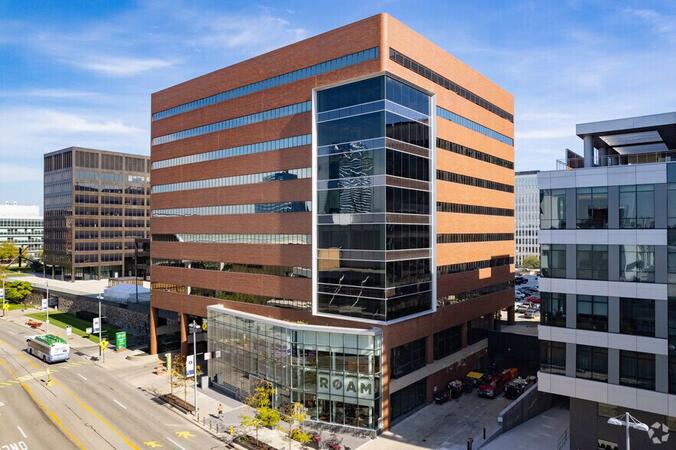
Detroit, MI - Renaissance Center
400 Renaissance Center, Detroit, United States, 48243
The GM Renaissance Center is conveniently located in downtown Detroit and easily accessed by car via Interstates 75 or 94, with secure underground parking available on site. Travelers flying into Detroit Metropolitan Airport (DTW) can expect a 25–30 minute trip by taxi or rideshare via I‑94. Public transit is efficient: the Detroit People Mover stops directly at the Renaissance Center station, and DDOT routes 3 and 9 serve nearby Jefferson Avenue. Pedestrian skywalks provide safe indoor access from downtown hotels, parking garages, and the riverwalk.
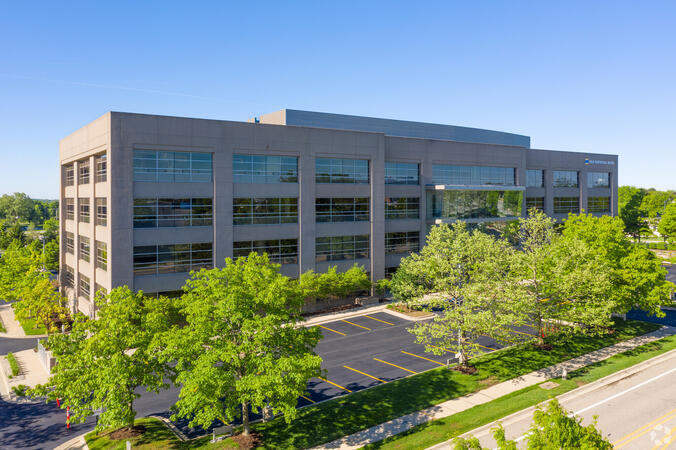
Ann Arbor, MI – Regus - South State Commons I
2723 S State St, Ann Arbor, United States, 48104
Regus South State Commons I is conveniently located off I‑94 via Exit 177 (State Street), with easy access to downtown Ann Arbor and surrounding suburbs. The building offers free on-site surface parking for guests. From Detroit Metropolitan Airport (DTW), the venue can be reached in approximately 20–25 minutes by taxi or rideshare via I‑94 West. Local public transit service (TheRide) operates Route 24 along South State Street, with a stop within a short 2-minute walk of the building.
Grand Rapids, MI - Regus – Calder Plaza
250 Monroe Ave NW, Grand Rapids, United States, 49503
The venue sits centrally at 250 Monroe Avenue NW in downtown Grand Rapids, easily accessed by car via US‑131 or I‑196—with connections via Monroe or Ottawa exits—and offers shared underground and surface parking. From Gerald R. Ford International Airport, take I‑96 East then I‑196 West into the city; the drive is about 20 minutes. Public transit through Rapid bus routes stops near Monroe or Ottawa Avenue, just a short walk from the Regus entrance; the downtown area is pedestrian-friendly.
Lansing, MI - Regus - One Michigan Avenue
120 North Washington Square, Lansing, United States, 48933
The venue is located in the heart of Lansing’s central business district at 120 North Washington Square, easily accessible by car via I‑496 or US‑127 with convenient street parking and a nearby parking ramp. From Capital Region International Airport (LAN), the location is approximately a 12‑minute drive west via I‑96 and US‑127, with taxis and rideshares readily available. Public transit users can take CATA bus routes that stop just a block away on Washington or Grand Avenue, offering seamless access to the venue.
The combined use of Drools 8 and jBPM facilitates the development of rule-based workflows that automate operational processes and enhance decision-making accuracy.
This instructor-led, live training program (delivered online or onsite) is designed for advanced-level participants seeking to integrate Drools 8 with jBPM to design, execute, and optimize business workflows and processes.
Upon completion of this training, participants will be able to:
Configure Drools 8 and jBPM environments for development purposes.
Define and govern complex business rules within Drools 8.
Design and deploy workflows using jBPM.
Integrate Drools rules into jBPM processes to support dynamic decision-making.
Optimize and troubleshoot rule-driven workflow operations.
Course Delivery Methodology
Interactive lectures and facilitated discussions.
Extensive practical exercises and skill reinforcement.
Hands-on implementation within a live laboratory environment.
Customization Options for the Course
To request a customized training program for government use, please contact us to arrange suitable provisions.
Drools 8 serves as a robust business rule management system (BRMS) designed to automate decision-making and procedural workflows. Within this ecosystem, Domain-Specific Languages (DSLs) facilitate the creation and management of rules by business analysts using straightforward, accessible terminology.
This instructor-led training program, available in both online and on-site formats, is tailored for entry-level to mid-level business analysts seeking to leverage DSLs in Drools 8. The objective is to define, administer, and optimize business rules for government operations without a heavy reliance on advanced technical programming proficiency.
Upon completion of this curriculum, participants will possess the ability to:
Comprehend the fundamental principles and architectural structure of Drools 8.
Construct DSLs that simplify rule definitions for non-technical stakeholders.
Effectively manage, test, and sustain rules using the Drools Workbench.
Coordinate with technical teams to deploy and refine business rule logic.
Implement best practices for rule optimization and lifecycle governance.
Instructional Methodology
Interactive instruction and facilitated discussion.
Extensive practical exercises and skill reinforcement.
Live implementation within a controlled laboratory environment.
Customization Provisions
Requests for customized training modules may be submitted directly to the provider for arrangement.
Drools serves as a robust business rule management system (BRMS) that supports the implementation of sophisticated decision-making workflows and system integrations in public sector environments.
This instructor-led, live training, available online or onsite, is designed for advanced-level participants seeking to optimize rule execution, integrate Drools with enterprise systems, and deploy advanced features such as decision tables and domain-specific languages (DSLs).
Upon completion, participants will be prepared to:
Enhance the performance of complex rule execution for government applications.
Leverage advanced Drools features, including decision tables, DSLs, and rule templates.
Integrate Drools effectively with enterprise applications and external systems.
Implement robust version control and collaboration mechanisms for rule development.
Design and deploy scalable Drools-based solutions to meet enterprise needs.
Instructional Format
Interactive lectures and facilitated discussions.
Extensive exercises and practical application.
Hands-on implementation within a live-lab environment.
Customization Options
To request a customized training for government, please contact the provider to arrange specific details.
Drools is a sophisticated business rule management platform designed to facilitate the construction and execution of complex operational rules and workflows.
This facilitated, live training program, available either online or in-person, is designed for intermediate-level professionals seeking to construct and administer intricate business rules, optimize execution efficiency, and manage rule dependencies within the Drools 8 environment.
Upon completion of this training, participants will be equipped to:
Develop advanced business rules and maintain their interdependencies.
Deploy decision-making logic through Drools rule groups and agenda structures.
Enhance the operational performance of rule execution processes.
Leverage advanced Drools Workbench capabilities for rule governance.
Integrate Drools with external data sources and systemic interfaces.
Instructional Methodology
Interactive briefing and discussion sessions.
Extensive exercises and practical applications.
Real-time implementation within a live laboratory environment.
Customization Services
To request a tailored training program for this curriculum, please contact the designated office to coordinate arrangements.
Drools serves as a robust business rule management system for the definition, deployment, and maintenance of operational rules.
This live, instructor-led training (available online or on-site) is designed for entry-level personnel seeking to master the fundamentals of Drools 8, including setup and the creation of simple business rules for enhanced decision-making and automation for government purposes.
Upon completion, participants will be equipped to:
Comprehend the objectives and advantages of utilizing Drools 8.
Configure the Drools environment and integrate it with existing applications.
Develop, test, and deploy elementary business rules.
Leverage the Drools Workbench for rule administration and decision table construction.
Implement Drools in practical scenarios to automate decision processes.
Training Delivery Format
Interactive lectures and facilitated discussions.
Extensive exercises and practical drills.
Live-lab implementation and hands-on application.
Curriculum Customization
Contact the training provider to arrange a tailored curriculum for this course.
The Object Management Group (OMG) has established three primary standards for modeling processes, decisions, and cases: Business Process Model and Notation (BPMN), Decision Model and Notation (DMN), and Case Management Model and Notation (CMMN). This curriculum provides a comprehensive introduction to each framework, clarifying the specific operational contexts in which each standard is most effectively applied for government operations.
This instructor-led, live training in Michigan (online or onsite) is directed at intermediate-level system administrators and developers seeking to configure, manage, and deploy Java applications on the JBoss platform for government use.
By the conclusion of this training, participants will be able to:
Install and configure the JBoss Application Server and its core components.
Customize JBoss AS services for monitoring, database connectivity, and transaction management.
Develop and deploy EJB 3 session beans and web applications.
Utilize the JBoss Messaging Service to deploy and manage JMS applications.
Manage JBoss AS through the Java Management Extension and the Administration Console.
Implement JBoss Drools for business rules management and utilize the Guvnor tool for rule development and testing.
This course on Michigan focuses on efficient data handling in Python using the Pandas and NumPy libraries. Participants learn the fundamentals of analysis, code optimization, and the automation of reports and charts in Excel, integrating various data sources into a seamless analytical process.
This instructor-led live training program, conducted in Luxembourg, is targeted at engineers, technicians, and automation professionals with beginner to intermediate experience. The course is designed to equip these professionals with the skills to utilize Python for resolving technical issues, automating routine tasks, and processing industrial data.
Upon completion of this training, participants will be equipped to:
Compose clear and structured Python scripts for specific technical requirements
Apply programming logic to solve engineering-focused challenges
Process data extracted from CSV files, system logs, and text documents using Python
Automate repetitive engineering and automation workflows for efficient operations
Read more...
Last Updated:
Testimonials (2)
the Labs
Frank Mhlongo - Standard Bank of South Africa
Course - JBoss
The pace was good, with a nice mixture of knowledge sharing, demonstrations and practical work. Filip was very engaging and provided the energy to get through the course. It was good that there was a lot of 1:1 tuition, with Filip going through individual training exercises.
Colin - Worldpay
Course - BPMN, DMN, and CMMN - OMG standards for process improvement
Online Business Rules training in Michigan, Business Rules training courses in Michigan, Weekend Business Rules courses in Michigan, Evening Business Rules training in Michigan, Business Rules instructor-led in Michigan, Business Rules instructor-led in Michigan, Business Rules coaching in Michigan, Business Rules classes in Michigan, Business Rules one on one training in Michigan, Business Rules boot camp in Michigan, Business Rules on-site in Michigan, Evening Business Rules courses in Michigan, Online Business Rules training in Michigan, Weekend Business Rules training in Michigan, Business Rules private courses in Michigan, Business Rules trainer in Michigan, Business Rules instructor in Michigan