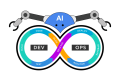
LLMs and Agents in DevOps Workflows Training Course
Large language models and autonomous agent frameworks, such as AutoGen and CrewAI, are transforming DevOps task automation—including change tracking, test creation, and alert triage—by emulating human collaborative decision-making processes.
This instructor-led, live training program (available online or onsite) is designed for advanced-level engineers seeking to architect and deploy DevOps automation workflows driven by large language models (LLMs) and multi-agent systems.
Upon completion of this training, participants will be equipped to:
- Integrate LLM-based agents into CI/CD pipelines for intelligent automation.
- Automate the generation of tests, analysis of commits, and synthesis of change summaries using agents.
- Coordinate multiple agents for alert triage, response generation, and DevOps advisory functions.
- Develop secure and sustainable agent-driven workflows utilizing open-source frameworks.
Instructional Methodology
- Interactive lectures and facilitated discussions.
- Extensive exercises and practical application.
- Live-lab implementation of hands-on technical tasks.
Customization of Training Content
- To request a tailored training curriculum for government or specific organizational needs, please contact us to arrange details.
Course Outline
Foundations of Large Language Models (LLMs) and Agent Architectures
- Application of large language models in infrastructure automation strategies
- Core principles underlying multi-agent operational workflows
- Practical applications of AutoGen, CrewAI, and LangChain in DevOps environments
Configuration of LLM Agents for DevOps Operations
- Deployment of AutoGen and establishment of agent operational profiles
- Integration of OpenAI API and alternative LLM service providers
- Establishment of workspaces and CI/CD-aligned environments
Automation of Testing and Code Integrity Processes
- Directing LLMs to produce unit and integration test cases
- Leveraging agents to enforce linting standards, commit protocols, and code review policies
- Automation of pull request synthesis and classification
LLM Agents for Alert Management and Change Analysis
- Development of responder agents for pipeline failure notifications
- Examination of logs and trace data using language models
- Predictive identification of high-risk modifications or configuration errors
Coordination of Multiple Agents in DevOps Ecosystems
- Orchestration based on functional roles (planning, execution, review)
- Management of agent communication loops and memory structures
- Incorporation of human oversight mechanisms for critical systems
Security, Governance, and System Observability
- Mitigation of data exposure risks and enhancement of LLM safety in infrastructure
- Audit trails for agent activities and limitation of operational scope
- Monitoring of pipeline performance and feedback mechanisms
Application Scenarios and Custom Implementations
- Construction of agent workflows for incident response protocols
- Integration of agents with GitHub Actions, Slack, or Jira platforms
- Recommended practices for scaling LLM integration in DevOps operations
Conclusion and Strategic Recommendations
Requirements
- Proficiency with DevOps toolsets and pipeline automation practices
- Operational knowledge of Python and Git-based development workflows
- Familiarity with large language models or prior experience with prompt engineering
Target Audience
- Innovation engineers and platform leads focused on AI integration
- LLM developers engaged in DevOps or automation projects
- DevOps professionals investigating intelligent agent frameworks
Runs with a minimum of 4 + people. For 1-to-1 or private group training, request a quote.
LLMs and Agents in DevOps Workflows Training Course - Booking
LLMs and Agents in DevOps Workflows Training Course - Enquiry
LLMs and Agents in DevOps Workflows - Consultancy Enquiry
Upcoming Courses
Related Courses
Agentic Development with Gemini 3 and Google Antigravity
21 HoursGoogle Antigravity serves as an agentic development platform engineered to create autonomous agents that demonstrate planning, reasoning, coding, and action capabilities through the multimodal features of Gemini 3.
This live, instructor-facilitated training session, available online or on-site, is intended for senior technical specialists seeking to design, construct, and deploy autonomous agents utilizing Gemini 3 and the Antigravity environment.
Upon completion of this training, participants will be equipped to:
- Construct autonomous workflows leveraging Gemini 3 for logical reasoning, planning, and execution.
- Develop agents within Antigravity capable of task analysis, code generation, and utility interaction.
- Integrate Gemini-based agents with public sector systems and service interfaces.
- Refine agent behavior, security, and reliability in complex operational environments.
Instructional Format
- Technical demonstrations accompanied by interactive dialogues.
- Practical exercises focused on autonomous agent development.
- Applied implementation using Antigravity, Gemini 3, and associated cloud tools for government applications.
Program Adaptation
- For teams requiring specialized agent behaviors or custom system integrations, please contact us to customize the curriculum for specific governmental needs.
Advanced Antigravity: Feedback Loops, Learning & Long-Term Agent Memory
14 HoursGoogle Antigravity serves as a sophisticated framework for the exploration of long-term autonomous agents and emergent interactive dynamics.
This instructor-led training, available in online or on-site formats, is designed for advanced professionals seeking to design, analyze, and optimize agents that maintain persistent memory, refine operations through feedback, and evolve over extended operational periods.
Upon course completion, participants will possess the competencies to:
- Architect long-term memory structures for agent continuity.
- Deploy effective feedback loops to direct agent performance.
- Analyze learning progressions and identify model drift.
- Integrate memory functions within complex multi-agent systems for government applications.
Instructional Methodology
- Guided technical discourse accompanied by practical demonstrations.
- Practical application through structured design exercises.
- Synthesis of concepts within simulated agent environments.
Customization Options
- Organizations requiring specialized content or specific case studies are encouraged to contact our office to tailor this training program.
AI-Driven Observability: From Logs to LLM-Powered Insights
14 HoursThis instructor-led, live training in US (available online or onsite) is designed for observability and SRE engineers seeking to integrate large language models and AI into their monitoring, alerting, and incident analysis workflows.
AIOps Foundation – Accredited Training
35 HoursAIOps is a rapidly advancing domain that addresses the requirements of modern, complex IT environments—specifically those functioning within cloud-based architectures. The AIOps Foundation course provides a thorough introduction to the concepts, technologies, and best practices associated with leveraging artificial intelligence in IT operations for government.
This program examines the background of AIOps, its underlying principles, applicable tools, and the organizational challenges encountered by IT teams implementing these methodologies.
The training is concluded with an examination. Successful completion results in the globally recognized AIOps Foundation certification, which remains valid for a period of three years.
Intended Audience
This course is tailored for professionals and managers engaged in the following areas:
IT operations
DevOps and Site Reliability Engineering (SRE)
Cloud architecture
Data analysis and Data Science
Software development
IT security
Product and project management
AIOps in Action: Incident Prediction and Root Cause Automation
14 HoursAIOps (Artificial Intelligence for IT Operations) is increasingly being used to predict incidents before they occur and automate root cause analysis (RCA) to minimize downtime and accelerate resolution.
This instructor-led, live training (online or onsite) is aimed at advanced-level IT professionals who wish to implement predictive analytics, automate remediation, and design intelligent RCA workflows using AIOps tools and machine learning models.
By the end of this training, participants will be able to:
- Build and train ML models to detect patterns leading to system failures.
- Automate RCA workflows based on multi-source log and metric correlation.
- Integrate alerting and remediation processes into existing platforms.
- Deploy and scale intelligent AIOps pipelines in production environments.
Format of the Course
- Interactive lecture and discussion.
- Lots of exercises and practice.
- Hands-on implementation in a live-lab environment.
Course Customization Options
- To request a customized training for this course, please contact us to arrange.
AIOps Advanced
21 HoursThe Advanced AIOps course builds upon foundational principles to deliver practical experience with industry-standard tools, advanced machine learning techniques, automation workflows, and operational design patterns. It equips participants to construct, configure, optimize, and extend AIOps pipelines and integrations for government contexts.
This instructor-led, live training (online or onsite) targets intermediate to advanced IT professionals who aim to design and implement robust AIOps ecosystems, conduct advanced analytics, and automate operational workflows for government using real-world tools.
Upon completion, participants will be able to:
- Correlate and standardize diverse operational data sources.
- Design and refine anomaly detection and root cause analysis models.
- Integrate AIOps with ITSM and DevOps pipelines.
- Establish closed-loop automation and predictive incident workflows.
Course Format
- Advanced lectures and architecture discussions.
- Hands-on labs with industry tools and platforms.
- Case studies and optimization exercises.
AIOps Foundation
14 HoursAIOps (Artificial Intelligence for IT Operations) represents the strategic application of machine learning, advanced analytics, and automation to optimize and enhance IT service delivery. It enables agencies to automate incident detection, correlate complex events, and elevate the quality of operational decision-making for government purposes.
This instructor-led, live training program (delivered online or onsite) is designed for entry-level IT professionals seeking to comprehend the fundamentals of leveraging AI and big data in IT operations to bolster observability, performance metrics, and incident management within public sector environments.
Upon completion of this training, participants will be equipped to:
- Articulate the historical progression and strategic significance of AIOps.
- Elucidate core technologies, including big data and machine learning, within the context of AIOps for government.
- Recognize critical operational metrics and applicable use cases for AIOps.
- Evaluate organizational impacts, implementation methodologies, and associated challenges.
Course Format
- Interactive instruction and facilitated discussion.
- Analysis of case studies and scenario-based deliberation.
- Practical exercises involving AIOps concepts and tools for government application.
AIOps Fundamentals: Monitoring, Correlation, and Intelligent Alerting
14 HoursBuilding an AIOps Pipeline with Open Source Tools
14 HoursAntigravity for Developers: Building Agent-First Applications
21 HoursAntigravity serves as a specialized development platform engineered for the construction of AI-powered, agent-centric applications for government use.
This facilitated, live instruction session (available remotely or on-site) targets mid-level technical personnel seeking to deploy functional solutions utilizing autonomous AI entities within the Antigravity ecosystem.
Upon completion, participants will possess the competencies required to:
- Engineer systems dependent on independent and synchronized AI components.
- Utilize the Antigravity IDE, including its editor, terminal, and browser interfaces, for comprehensive system development.
- Administer complex multi-agent processes via the Agent Manager module.
- Incorporate agent functionalities into enterprise-grade software infrastructures.
Instructional Methodology
- Combined theoretical presentations and detailed technical demonstrations.
- Comprehensive practical exercises and guided skill application.
- Direct implementation tasks executed within the live Antigravity environment.
Curriculum Adaptation Options
- For content tailored to specific technical stacks, coordinate with our team to establish a customized training module for government operations.
Autonomous Operations with AI Agents
14 HoursThis instructor-led, live training in US, available online or on-site, is designed for SRE and DevOps engineers tasked with designing, building, and securely deploying AI agents for autonomous IT operations for government use.
Enterprise AIOps with Splunk, Moogsoft, and Dynatrace
14 HoursEnterprise AIOps platforms, such as Splunk, Moogsoft, and Dynatrace, deliver robust capabilities for anomaly detection, alert correlation, and response automation within large-scale IT environments.
This instructor-led live training program, available online or on-site, is designed for intermediate-level enterprise IT teams seeking to integrate AIOps tools into their existing observability stacks and operational workflows.
Upon completion of this training, participants will be capable of:
- Configuring and integrating Splunk, Moogsoft, and Dynatrace into a cohesive AIOps architecture.
- Correlating metrics, logs, and events across distributed systems using AI-driven analytical methods.
- Automating incident detection, prioritization, and response using both built-in and custom workflows.
- Enhancing performance, reducing Mean Time to Resolution (MTTR), and improving operational efficiency at the enterprise level.
Course Format
- Interactive lectures and facilitated discussions.
- Extensive exercises and practical application.
- Hands-on implementation within a live laboratory environment.
Customization Options for Government
- To arrange customized training for this course, please contact us.
Implementing AIOps with Prometheus, Grafana, and ML
14 HoursPrometheus and Grafana are extensively adopted tools for infrastructure observability, while machine learning enhances these capabilities by providing predictive and intelligent insights to automate operational decision-making.
This instructor-led training program (delivered online or onsite) is designed for intermediate-level observability professionals seeking to modernize monitoring infrastructure for government through the integration of AIOps practices using Prometheus, Grafana, and machine learning techniques.
Upon completion of this training, participants will be proficient in:
- Configuring Prometheus and Grafana for comprehensive observability across systems and services.
- Collecting, storing, and visualizing high-fidelity time series data.
- Applying machine learning models for the purposes of anomaly detection and forecasting.
- Constructing intelligent alerting rules derived from predictive analytics.
Course Format
- Interactive lectures and facilitated discussions.
- Extensive exercises and practical application.
- Hands-on implementation within a live laboratory environment.
Course Customization Options
- For requests regarding customized training for government, please contact the relevant office to arrange specific details.
LLMOps: Production LLM Operations and Governance
14 HoursThis instructor-led, live training in US (online or onsite) is intended for machine learning engineers and platform teams tasked with building robust operational pipelines for LLM-powered applications at scale for government.
ML Security and AI Red Teaming
14 HoursThis instructor-led, live training in US (online or onsite) is designed for security and ML engineers who must identify, test for, and defend against attacks on ML models and LLM-powered applications.