Course Outline
Site Reliability Engineering Counter-Practices
- Identifying practices that undermine operational efficiency
- Assessing the effect of counter-practices on system reliability
- Implementing best practices and corrective measures
Service Level Objectives as a Measure of User Experience
- Defining Service Level Indicators (SLIs) and Service Level Objectives (SLOs)
- Managing error budgets and balancing innovation with stability
- Understanding the constraints of distributed architectures
Constructing Secure and Dependable Systems
- Engineering for fault tolerance and resilience
- Integrating security into reliability frameworks
- Strategies for scalability and data protection
Comprehensive System Observability
- Instrumentation and metric aggregation
- Distributed tracing and synthetic monitoring techniques
- Observability-centric development methodologies
Platform Engineering and AI-Driven Operations
- Platform-focused engineering strategies
- Automation and orchestration within SRE contexts
- Utilizing DataOps and operational intelligence
Incident Management in Site Reliability Engineering
- Roles and responsibilities in incident response for government
- Applying decision frameworks such as OODA
- Automated remediation and AI/ML-assisted resolution
Chaos Engineering
- Principles and strategies for resilience testing
- Planning and executing controlled failure exercises
- Deriving insights from managed disruption events
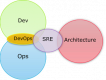
SRE as a Core Component of DevOps
- Integrating SRE into DevOps workflows
- Cultural alignment and collaborative practices
- Driving organizational transformation through SRE standards
Post-Instructional Exercises
- Case studies on large-scale system design
- Advanced instrumentation and monitoring scenarios
- Real-world reliability problem-solving applications
Review and Examination Preparation
- Comprehensive review of the DevOps Institute SRE Practitioner syllabus
- Sample questions and practice assessments
- Exam-taking strategies and professional recommendations
Summary and Subsequent Actions
Requirements
- Understanding of core Site Reliability Engineering principles
- Experience with DevOps practices and associated tooling
- Familiarity with system monitoring, incident management, and automation
Target Audience
- SRE professionals pursuing DevOps Institute SRE Practitioner certification
- DevOps engineers expanding into reliability-focused roles
- Operations leaders responsible for reliability strategy and execution in public sector environments
Testimonials (2)
Craig was extremely involved in the training, always making sure we are paying attention, adapted the examples to our day-to-day activities and always provided an answer when asked, even if the information was not added in the presentation.
Ecaterina Ioana Nicoale - BOOKING HOLDINGS ROMANIA SRL
Course - DevOps Foundation®
High level of commitment and knowledge of the trainer