Online or onsite, instructor-led live Machine Learning (ML) training courses demonstrate through hands-on practice how to apply machine learning techniques and tools for solving real-world problems across various industries. Govtra ML courses cover different programming languages and frameworks, including Python, R language, and MATLAB. Machine Learning courses are offered for a number of industry applications, including Finance, Banking, and Insurance, and they cover the fundamentals of Machine Learning as well as more advanced approaches such as Deep Learning.
Machine Learning training is available as "online live training" or "onsite live training." Online live training (also known as "remote live training") is conducted via an interactive, remote desktop. Onsite live training can be conducted locally on customer premises in Florida or in Govtra corporate training centers in Florida.
Govtra -- Your Local Training Provider for government and industry professionals.
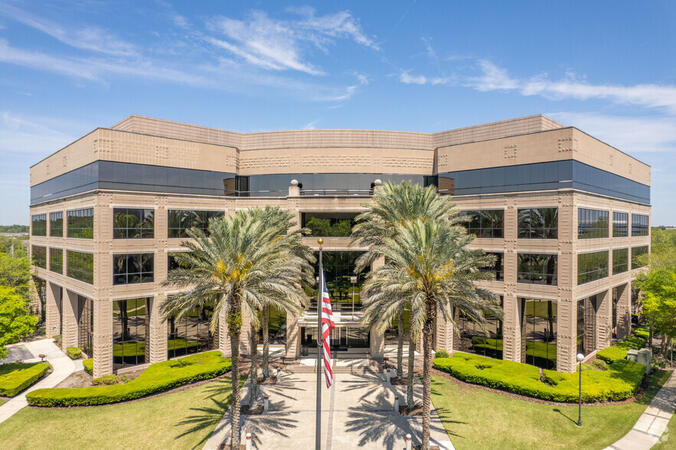
Jacksonville, FL – Deerwood Park
10151 Deerwood Park Blvd 200, Suite 250, Jacksonville, United States, 32256
The venue is nestled in the Deerwood Park campus at 10151 Deerwood Park Boulevard, just off J. Turner Butler Boulevard (JTB) and I‑295, with free on-site parking and adjacent lots. From Jacksonville International Airport (JAX), approximately 18 miles north, a taxi or rideshare takes about 25 minutes via I‑95 South and JTB West. Public transit is available via Jacksonville’s JTA bus routes stopping within walking distance, making the landscaped campus—complete with fountains, cafes, and scenic walkways—easily accessible for attendees without a car.
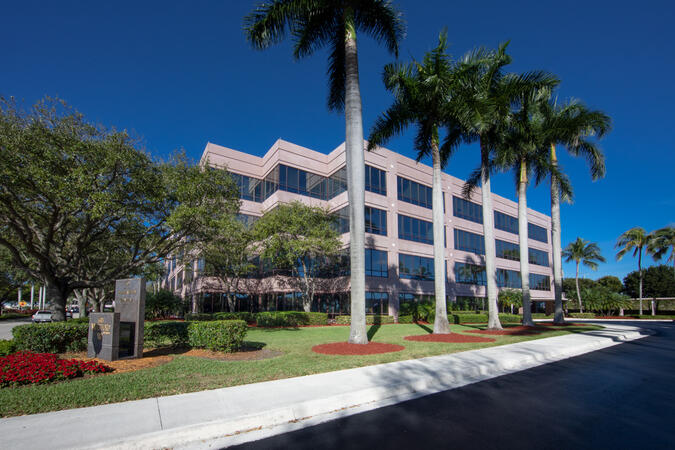
Miami, FL – Regus at Waterford at Blue Lagoon
6303 Blue Lagoon Drive, Suite 400, Miami, United States, 33126
The venue is set within the Waterford business park at 6303 Blue Lagoon Drive, just minutes from Miami International Airport. It’s accessible by car via I‑95, Florida Turnpike, 826, or Dolphin Expressway, with abundant covered and surface parking on-site. From Miami International Airport (MIA), a taxi or rideshare takes approximately 10 minutes via the Dolphin Expressway. Public transit options include TheBus routes and nearby Tri-Rail stations, with the property a short walk from bus stops—making it convenient even for attendees without a car.

Tampa, FL – Regus at Wells Fargo Center
100 S. Ashley Drive, Suite 600, Tampa, United States, 33602
The venue is located in the 22-story Wells Fargo Center in downtown Tampa, easily accessible by car via I‑275, I‑4, I‑75, or the Selmon Expressway, with covered garage parking (610+ spaces) directly connected to the building. From Tampa International Airport (TPA), a taxi or rideshare takes about 15 minutes via I‑275 East and Ashley Drive. Public transit is excellent with the Downtown Tampa Station (NFTA Metro Rail) just a block away and several bus routes running along Ashley and Brorein Streets, making it ideal for attendees arriving without cars.
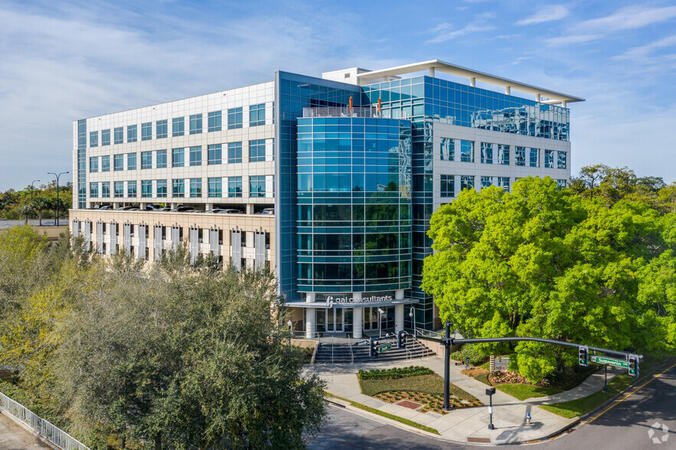
FL, Orlando – GAI Building
618 E. South Street Suite 500, Orlando, United States, 32801
The venue is located in the GAI Building with the CNS Healthcare logo at the front.
FL, Jacksonville - Bank of America Tower
50 N. Laura Street Suite 2500, Jacksonville, United States, 32202
The office is located in a premier office tower in Downtown Jacksonville on the 42nd floor. This Class A LEED Certified building is situated in the Northbank Office Market Preeminent location that provides commanding views. Downtown Trolley and Bus stops are located just across the street on Forsyth with easy access to I-95 leading to I-10 and I-295. Convenient to Jacksonville International Airport, the building is also just minutes to Everbank Field, Jacksonville Landing, Times Union Performing Arts Center, Jacksonville Veterans Memorial Arena and Jacksonville Public Library. Spectacular views of the St John's River in Jacksonville, Florida are one of many features that make the Bank of America Tower office space stand out. The office space occupies a blue granite tower in the heart of the city's central business district. The iconic tower is one of the best-known business premises in the southeastern United States and includes a statement lobby and class-A workspace. Businesses of all kinds appreciate Jacksonville's location at the crossroads of three major railroads and three interstates, and its international airport.
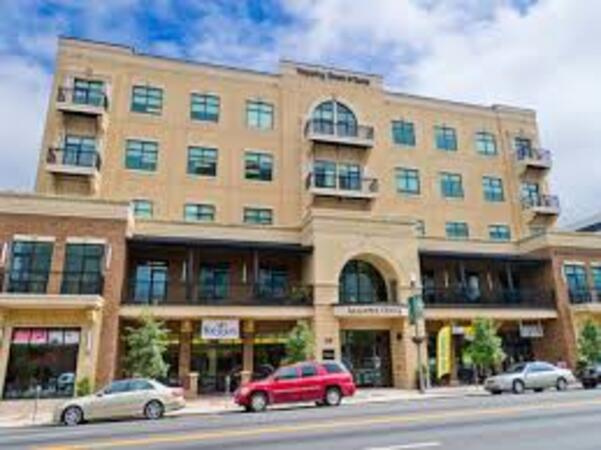
FL, Tallahassee – Alliance Center
113 South Monroe Street 1st Floor, Tallahassee, united states, 32301
The venue is located in the Alliance Center across the street from FUBA and the Florida Optometric Association.
FL, West Palm Beach - Philips Point
777 South Flagler Drive, West Palm Beach, United States, 33401
The venue is located in the Philips Point building just off the Royal Park Bridge.
FL, Aventura - Corporate Center
20801 Biscayne Blvd., Miami, united states, 33180
The venue is located in the Grove Bank & Trust building just off Biscayne Blvd.
FL, Fort Lauderdale - Corporate Center
Corporate Center, 110 East Broward Blvd., Fort Lauderdale, United States, 33301
The venue is located in the Corporate Center across the street from the Uniform Advantage Corporate Office and just next door to Colliers International.
Miami Beach, FL – Regus at Meridian Center
1688 Meridian Avenue, Suites 600/700, Miami Beach, United States, 33139
The venue is located on the corner of Meridian Avenue and 17th Street in Miami Beach’s vibrant City Center district, accessible by car via I‑195 and the MacArthur Causeway with underground and street parking nearby. From Miami International Airport (MIA), taxis or rideshares typically take 15–20 minutes via I‑195 East and Biscayne Boulevard. Public transit is seamless: several Metrobus routes serve Meridian Avenue, and the nearby 17th Street trolley stop makes it easy to reach without a car. The central location places the venue steps from the Miami Beach Convention Center, Lincoln Road Mall, restaurants, galleries, and retail.
Tampa, FL - Regus - One Urban Centre at Westshore
4830 W Kennedy Blvd #600, Tampa, United States, 33609
The venue is located in the Westshore business district at 4830 West Kennedy Boulevard, seamlessly accessible by car via I‑275 or I‑75 with secure underground and surface parking on-site. From Tampa International Airport (TPA), take Memorial Highway to I‑275 South and exit at West Kennedy Boulevard—taxi or rideshare typically takes about 15–20 minutes. Public transit users can reach the venue via HART bus routes (such as Route 2 or 32) stopping nearby, followed by a short walk into the building lobby.
This instructor-led, live training (offered online or onsite) is designed for government professionals at the beginner level who wish to understand the concept of pre-trained models and learn how to apply them to solve real-world problems without building models from scratch.
By the end of this training, participants will be able to:
- Understand the concept and benefits of pre-trained models for government applications.
- Explore various pre-trained model architectures and their use cases in public sector workflows.
- Fine-tune a pre-trained model for specific tasks relevant to governmental operations.
- Implement pre-trained models in simple machine learning projects to enhance efficiency and accuracy in government services.
This instructor-led, live training in [location] (online or onsite) is designed for participants with varying levels of expertise who wish to leverage Google's AutoML platform to build customized chatbots for various applications, including those for government use.
By the end of this training, participants will be able to:
- Understand the fundamentals of chatbot development.
- Navigate the Google Cloud Platform and access AutoML tools.
- Prepare data for training chatbot models.
- Train and evaluate custom chatbot models using AutoML.
- Deploy and integrate chatbots into various platforms and channels.
- Monitor and optimize chatbot performance over time.
This instructor-led, live training in [location] (online or onsite) is aimed at intermediate-level AI developers, machine learning engineers, and system architects who wish to optimize AI models for edge deployment for government applications.
By the end of this training, participants will be able to:
- Understand the challenges and requirements of deploying AI models on edge devices.
- Apply model compression techniques to reduce the size and complexity of AI models.
- Utilize quantization methods to enhance model efficiency on edge hardware.
- Implement pruning and other optimization techniques to improve model performance.
- Deploy optimized AI models on various edge devices for government use.
This instructor-led, live training (online or onsite) is designed for intermediate-level developers, data scientists, and technology enthusiasts who seek to acquire practical skills in deploying artificial intelligence (AI) models on edge devices for a variety of applications.
By the end of this training, participants will be able to:
- Understand the principles of Edge AI and its benefits.
- Set up and configure the edge computing environment.
- Develop, train, and optimize AI models for deployment on edge devices.
- Implement practical AI solutions on edge devices.
- Evaluate and enhance the performance of models deployed at the edge.
- Address ethical and security considerations in Edge AI applications.
This training is tailored to align with public sector workflows, governance, and accountability, ensuring that participants are well-equipped to apply these skills effectively for government projects.
Kubeflow is an open-source platform designed to streamline the development, training, and deployment of machine learning workloads on Kubernetes.
This instructor-led, live training (online or onsite) is aimed at professionals at the beginner to intermediate levels who wish to build reliable ML workflows using Kubeflow for government applications.
Upon completion of this training, attendees will gain the skills to:
- Navigate the Kubeflow ecosystem and its core components.
- Build reproducible workflows with Kubeflow Pipelines.
- Run scalable training jobs on Kubernetes.
- Serve machine learning models efficiently using Kubeflow Serving.
**Format of the Course**
- Guided presentations and collaborative discussions.
- Hands-on labs with real Kubeflow components.
- Practical exercises to build end-to-end ML workflows.
**Course Customization Options**
- Customized versions of this training can be arranged to align with your team’s technology stack and project requirements for government use.
This instructor-led, live training (online or onsite) is designed for advanced-level professionals who wish to master the technologies behind autonomous systems for government applications.
By the end of this training, participants will be able to:
- Design and implement AI models for autonomous decision-making.
- Develop control algorithms for autonomous navigation and obstacle avoidance.
- Ensure safety and reliability in AI-powered autonomous systems.
- Integrate autonomous systems with existing robotics and AI frameworks for government use.
This instructor-led, live training (conducted online or onsite) is designed for advanced-level professionals who wish to deepen their understanding of machine learning models, refine their hyperparameter tuning skills, and learn effective model deployment using Google Colab.
By the end of this training, participants will be able to:
- Implement advanced machine learning models using popular frameworks such as Scikit-learn and TensorFlow.
- Enhance model performance through hyperparameter tuning.
- Deploy machine learning models in real-world applications using Google Colab.
- Collaborate and manage large-scale machine learning projects in Google Colab, ensuring alignment with public sector workflows for government.
This instructor-led, live training in [location] (online or onsite) is designed for intermediate-level professionals who aim to apply artificial intelligence (AI) techniques to optimize yield management in semiconductor manufacturing.
By the end of this training, participants will be able to:
- Analyze production data to identify factors impacting yield rates.
- Implement AI algorithms to enhance yield management processes.
- Optimize production parameters to minimize defects and improve yields.
- Integrate AI-driven yield management into existing production workflows for government and industry applications.
This instructor-led, live training in [location] (online or onsite) is aimed at intermediate-level business and AI professionals who wish to apply machine learning in business, forecasting, and AI-driven systems using real case studies and Python-based tools for government.
By the end of this training, participants will be able to:
- Understand how machine learning fits within AI and business strategy.
- Apply supervised and unsupervised learning techniques to structured business problems.
- Preprocess and transform data for modeling.
- Use neural networks for classification and prediction tasks.
- Perform sales forecasting using statistical and ML-based methods.
- Implement clustering and association rule mining for customer segmentation and pattern discovery.
This instructor-led, live training (available online or onsite) is designed for advanced-level professionals who aim to apply cutting-edge artificial intelligence techniques to semiconductor design automation. The goal is to enhance efficiency, accuracy, and innovation in chip design and verification processes.
By the end of this training, participants will be able to:
- Implement advanced AI methods to optimize semiconductor design workflows.
- Integrate machine learning models into Electronic Design Automation (EDA) tools for improved design verification.
- Create AI-driven solutions to address complex challenges in chip fabrication.
- Utilize neural networks to enhance the precision and speed of design automation techniques, ensuring alignment with public sector workflows and governance standards for government.
This instructor-led, live training (available online or onsite) is designed for intermediate-level professionals who wish to understand and apply artificial intelligence (AI) techniques for optimizing semiconductor fabrication processes.
By the end of this training, participants will be able to:
- Understand AI methodologies for process optimization in chip fabrication.
- Implement AI models to improve yield and minimize defects.
- Analyze process data to identify critical parameters for optimization.
- Apply machine learning techniques to refine semiconductor manufacturing processes, ensuring alignment with best practices for government and industry standards.
This instructor-led, live training (available online or onsite) is designed for intermediate-level participants who wish to automate and manage machine learning workflows, including model training, validation, and deployment using Apache Airflow.
By the end of this training, participants will be able to:
- Set up Apache Airflow for government use in orchestrating machine learning workflows.
- Automate data preprocessing, model training, and validation tasks.
- Integrate Airflow with various machine learning frameworks and tools.
- Deploy machine learning models using automated pipelines.
- Monitor and optimize machine learning workflows in a production environment.
This instructor-led, live training in [location] (online or onsite) is designed for intermediate-level data scientists and developers who aim to apply machine learning algorithms efficiently using the Google Colab environment.
By the end of this training, participants will be able to:
- Set up and navigate Google Colab for government machine learning projects.
- Understand and apply various machine learning algorithms.
- Utilize libraries such as Scikit-learn to analyze and predict data.
- Implement both supervised and unsupervised learning models.
- Optimize and evaluate machine learning models effectively.
This instructor-led, live training in [location] (online or onsite) is aimed at data scientists and developers who wish to use ML.NET machine learning models to automatically generate projections from executed data analysis for government and enterprise applications.
By the end of this training, participants will be able to:
- Install ML.NET and integrate it into their application development environment.
- Understand the machine learning principles behind ML.NET tools and algorithms.
- Build and train machine learning models to perform predictions with provided data effectively.
- Evaluate the performance of a machine learning model using ML.NET metrics.
- Optimize the accuracy of existing machine learning models based on the ML.NET framework.
- Apply the machine learning concepts of ML.NET to other data science applications for government and enterprise use.
This instructor-led, live training in [location] (online or onsite) is designed for intermediate-level data professionals who seek to apply machine learning techniques to data-driven business problems, including sales forecasting and predictive modeling using neural networks.
By the end of this training, participants will be able to:
- Understand the fundamental concepts and types of machine learning.
- Apply key algorithms for classification, regression, clustering, and association analysis.
- Conduct exploratory data analysis and data preparation using Python.
- Utilize neural networks for nonlinear modeling tasks.
- Implement predictive analytics for business forecasting, including sales data.
- Evaluate and optimize model performance using visual and statistical techniques.
This training is tailored to enhance the skills of data professionals in the public sector, ensuring they are well-equipped to address complex challenges and improve decision-making processes for government.
This instructor-led, live training in Florida (online or onsite) is designed for intermediate to advanced-level data scientists, machine learning engineers, deep learning researchers, and computer vision experts who wish to expand their knowledge and skills in deep learning for text-to-image generation.
By the end of this training, participants will be able to:
- Understand advanced deep learning architectures and techniques for generating images from text.
- Implement complex models and optimizations to produce high-quality image synthesis.
- Optimize performance and scalability for large datasets and sophisticated models.
- Tune hyperparameters to enhance model performance and generalization.
- Integrate Stable Diffusion with other deep learning frameworks and tools, ensuring alignment with public sector workflows and governance requirements for government.
This instructor-led, live training (available online or on-site) is designed for intermediate to advanced cybersecurity professionals who aim to enhance their skills in AI-driven threat detection and incident response for government.
By the end of this training, participants will be able to:
- Implement advanced AI algorithms for real-time threat detection.
- Customize AI models to address specific cybersecurity challenges.
- Develop automation workflows for efficient threat response.
- Ensure the security of AI-driven tools against adversarial attacks.
This instructor-led, live training in [location] (online or onsite) is designed for beginner-level cybersecurity professionals who wish to learn how to leverage artificial intelligence (AI) for enhanced threat detection and response capabilities.
By the end of this training, participants will be able to:
- Comprehend AI applications in cybersecurity.
- Apply AI algorithms for threat detection.
- Automate incident response using AI tools.
- Integrate AI into existing cybersecurity infrastructure for government.
This instructor-led, live training (available online or on-site) is designed for technical professionals with a background in machine learning who seek to enhance their skills in optimizing models for detecting intricate patterns in large datasets using AutoML frameworks. The training aims to equip participants with the knowledge and practical tools necessary to improve model performance and efficiency, ensuring alignment with public sector workflows and governance standards for government applications.
This instructor-led, live training in [location] (online or onsite) is aimed at intermediate-level data analysts who wish to learn how to use RapidMiner to estimate and project values and apply analytical tools for time series forecasting.
By the end of this training, participants will be able to:
- Apply the CRISP-DM methodology, select appropriate machine learning algorithms, and enhance model construction and performance.
- Use RapidMiner to estimate and project values and leverage analytical tools for time series forecasting for government applications.
This instructor-led, live training (available online or onsite) is designed for data scientists, machine learning engineers, and computer vision researchers who wish to leverage Stable Diffusion to generate high-quality images for a variety of applications, including those relevant to government operations.
By the end of this training, participants will be able to:
Comprehend the principles of Stable Diffusion and its application in image generation.
Develop and train Stable Diffusion models for various image generation tasks.
Utilize Stable Diffusion for diverse image generation scenarios, such as inpainting, outpainting, and image-to-image translation.
Enhance the performance and stability of Stable Diffusion models to meet rigorous standards for government use cases.
The objective of this course is to provide a foundational proficiency in applying Machine Learning methods in practice. Through the use of the Python programming language and its various libraries, and based on numerous practical examples, this course teaches participants how to utilize the most essential components of Machine Learning, make informed data modeling decisions, interpret algorithm outputs, and validate results.
Our goal is to equip you with the skills necessary to confidently understand and use the core tools from the Machine Learning toolbox, while avoiding common pitfalls in Data Science applications. This course is designed to enhance your capabilities for government workflows, ensuring alignment with public sector governance and accountability standards.
The objective of this course is to enhance proficiency in applying Machine Learning methods in practical scenarios. Utilizing the Python programming language and its various libraries, and through a wide range of practical examples, this course instructs participants on how to effectively use key Machine Learning components, make informed data modeling decisions, interpret algorithm outputs, and validate results.
Our goal is to equip you with the skills necessary to confidently understand and utilize the essential tools from the Machine Learning toolbox, while avoiding common pitfalls in Data Science applications for government.
This instructor-led, live training (online or onsite) is designed for data scientists and software engineers who wish to utilize AdaBoost to develop boosting algorithms for machine learning with Python.
By the end of this training, participants will be able to:
- Set up the required development environment to begin building machine learning models with AdaBoost.
- Understand the ensemble learning methodology and how to implement adaptive boosting techniques.
- Learn how to construct AdaBoost models to enhance machine learning algorithms in Python.
- Utilize hyperparameter tuning to improve the accuracy and performance of AdaBoost models, ensuring they meet the standards required for government applications.
This 8-day program offers a comprehensive journey from solid Python engineering foundations to advanced AI system design. Participants will develop disciplined coding practices, master statistical and deep learning techniques, and construct production-ready generative AI and agent-based systems. The emphasis is on reliability, evaluation, safety, and real-world deployment, ensuring alignment with the stringent requirements for government and other critical sectors.
This instructor-led, live training in Florida (online or onsite) is aimed at data scientists and less technical individuals who wish to utilize Auto-Keras to automate the process of selecting and optimizing a machine learning model for government applications.
By the end of this training, participants will be able to:
- Automate the process of training highly efficient machine learning models.
- Automatically search for the best parameters for deep learning models.
- Build highly accurate machine learning models.
- Apply machine learning solutions to address real-world business challenges in a public sector context.
This course will combine theoretical instruction with practical exercises, incorporating specific examples to enhance understanding and application for government professionals.
This instructor-led, live training (online or onsite) provides an introduction to the field of pattern recognition and machine learning. It covers practical applications in statistics, computer science, signal processing, computer vision, data mining, and bioinformatics for government use.
By the end of this training, participants will be able to:
- Apply core statistical methods to pattern recognition tasks.
- Utilize key models such as neural networks and kernel methods for data analysis.
- Implement advanced techniques to address complex problem-solving scenarios.
- Enhance prediction accuracy by integrating different models.
This instructor-led, live training (online or onsite) is aimed at data scientists and data analysts who wish to automate, evaluate, and manage predictive models using DataRobot's machine learning capabilities for government applications.
By the end of this training, participants will be able to:
- Load datasets in DataRobin to analyze, assess, and quality check data.
- Build and train models to identify key variables and meet prediction targets.
- Interpret models to derive actionable insights that support informed decision-making.
- Monitor and manage models to ensure ongoing optimization and performance.
This instructor-led, live training (online or onsite) is designed for government engineers who wish to apply feature engineering techniques to enhance data processing and achieve more effective machine learning models.
By the end of this training, participants will be able to:
- Set up an optimal development environment, including all necessary Python packages.
- Gain valuable insights by analyzing the features of a dataset.
- Improve machine learning models through the adaptation of raw data.
- Clean and transform datasets in preparation for machine learning applications for government.
Machine learning is a branch of Artificial Intelligence that enables computers to learn and improve from experience without being explicitly programmed.
Deep learning is a specialized subfield of machine learning that utilizes methods based on data representation and structures, such as neural networks, to achieve advanced learning capabilities.
Python is a high-level programming language renowned for its clear syntax and code readability, making it an excellent choice for developing complex applications.
This instructor-led, live training provides participants with the skills necessary to implement deep learning models for telecom using Python. Through this course, participants will work through the creation of a deep learning credit risk model.
By the end of this training, participants will be able to:
Understand the fundamental concepts of deep learning and their applications.
Explore the specific uses and benefits of deep learning in the telecom industry.
Utilize Python, Keras, and TensorFlow to develop robust deep learning models for telecom.
Construct a deep learning customer churn prediction model using Python.
Format of the Course
Interactive lectures and discussions.
Extensive exercises and practical activities.
Hands-on implementation in a live-lab environment.
Course Customization Options for Government
To request a customized training tailored to the needs of your government agency, please contact us to arrange.
This instructor-led, live training (online or onsite) is designed for government data scientists, data analysts, and developers who wish to explore AutoML products and features to create and deploy custom ML training models with minimal effort.
By the end of this training, participants will be able to:
- Explore the AutoML product line to implement different services for various data types.
- Prepare and label datasets to develop custom ML models.
- Train and manage models to ensure they produce accurate and fair results.
- Utilize trained models to make predictions that align with business objectives and needs for government.
This course is intended for individuals who already possess a background in data science and statistics. The content is structured to either refresh the knowledge of those familiar with the concepts or provide essential information to those with an appropriate foundation. It is designed to align with the needs of professionals, including those working in government roles, ensuring that the material is relevant and applicable to their specific contexts.
This instructor-led, live training in Florida (online or onsite) is aimed at developers and data scientists who wish to build, deploy, and manage machine learning workflows on Kubernetes for government.
By the end of this training, participants will be able to:
- Install and configure Kubeflow both on-premise and in the cloud using AWS EKS (Elastic Kubernetes Service).
- Build, deploy, and manage ML workflows based on Docker containers and Kubernetes.
- Run comprehensive machine learning pipelines across various architectures and cloud environments.
- Utilize Kubeflow to spawn and manage Jupyter notebooks.
- Develop ML training, hyperparameter tuning, and serving workloads across multiple platforms.
This instructor-led, live training in Florida (online or onsite) is aimed at engineers who wish to deploy Machine Learning workloads to an AWS EC2 server for government.
By the end of this training, participants will be able to:
- Install and configure Kubernetes, Kubeflow, and other necessary software on AWS.
- Utilize EKS (Elastic Kubernetes Service) to simplify the initialization of a Kubernetes cluster on AWS.
- Develop and deploy a Kubernetes pipeline for automating and managing ML models in production environments.
- Train and deploy TensorFlow ML models across multiple GPUs and machines running in parallel.
- Leverage other AWS managed services to enhance an ML application.
This instructor-led, live training in [location] (online or onsite) is aimed at engineers who wish to deploy Machine Learning workloads to the Azure cloud for government.
By the end of this training, participants will be able to:
- Install and configure Kubernetes, Kubeflow, and other necessary software on Azure.
- Use Azure Kubernetes Service (AKS) to streamline the initialization of a Kubernetes cluster on Azure.
- Create and deploy a Kubernetes pipeline for automating and managing ML models in production environments.
- Train and deploy TensorFlow ML models across multiple GPUs and machines running in parallel.
- Leverage other Azure managed services to extend an ML application, ensuring alignment with public sector workflows and governance.
This instructor-led, live training in [location] (online or onsite) is aimed at developers and data scientists who wish to build, deploy, and manage machine learning workflows on Kubernetes for government use.
By the end of this training, participants will be able to:
- Install and configure Kubeflow both on-premise and in the cloud.
- Build, deploy, and manage ML workflows using Docker containers and Kubernetes.
- Run comprehensive machine learning pipelines across various architectures and cloud environments.
- Utilize Kubeflow to create and manage Jupyter notebooks.
- Develop ML training, hyperparameter tuning, and serving workloads across multiple platforms.
Machine Learning is a subset of Artificial Intelligence that enables computers to learn without explicit programming. Python is renowned for its clear syntax and readability, offering a robust suite of well-tested libraries and techniques ideal for developing machine learning applications.
In this instructor-led, live training, participants will gain insights into applying machine learning techniques and tools to address real-world challenges in the banking sector.
Participants will first understand the fundamental principles before applying their knowledge through hands-on activities. They will construct their own machine learning models and collaborate on team projects to reinforce their skills.
Audience
Developers
Data Scientists
Format of the course
Part lecture, part discussion, with exercises and extensive hands-on practice
This training is designed to enhance capabilities for government professionals working in data-intensive environments.
This instructor-led, live training in Florida (online or onsite) is aimed at technical personnel who wish to learn how to implement a machine learning strategy while maximizing the use of big data for government.
By the end of this training, participants will:
- Understand the evolution and trends in machine learning.
- Know how machine learning is being utilized across various industries.
- Become familiar with the tools, skills, and services available to implement machine learning within an organization.
- Understand how machine learning can enhance data mining and analysis for government operations.
- Learn about data middleware backends and their applications in business environments.
- Comprehend the role that big data and intelligent applications are playing across different sectors.
This training course is designed for individuals who wish to apply Machine Learning in practical applications for their team. The training will focus on basic concepts and business/operational applications, avoiding deep technical details.
Target Audience
Investors and AI entrepreneurs
Managers and engineers whose organizations are venturing into the AI space
Machine learning is a branch of Artificial Intelligence that enables computers to learn without explicit programming. Python, known for its clear syntax and readability, provides an extensive collection of well-tested libraries and techniques suitable for developing machine learning applications.
This instructor-led, live training aims to equip participants with the skills to apply machine learning techniques and tools to address real-world challenges in the finance sector.
Participants will first gain a foundational understanding of key principles, then apply this knowledge by constructing their own machine learning models. These models will be used to complete several team projects, fostering practical application and collaboration.
By the end of this training, participants will be able to:
Understand the fundamental concepts in machine learning
Learn the applications and uses of machine learning in finance
Develop their own algorithmic trading strategy using machine learning with Python
Audience
Developers
Data scientists
Format of the course
Part lecture, part discussion, exercises, and extensive hands-on practice
This training is designed to enhance skills for government professionals working in finance, ensuring alignment with public sector workflows, governance, and accountability.
This instructor-led, live training (available online or onsite) is designed for data scientists who aim to enhance their machine learning (ML) model creation, tracking, and deployment processes beyond the initial development phase.
By the end of this training, participants will be able to:
- Install and configure MLflow along with related ML libraries and frameworks.
- Understand the significance of trackability, reproducibility, and deployability in the context of an ML model for government applications.
- Deploy ML models to various public clouds, platforms, or on-premise servers.
- Scale the ML deployment process to support multiple users collaborating on a project.
- Set up a central registry to experiment with, reproduce, and deploy ML models efficiently.
This training course is designed for individuals who wish to apply basic Machine Learning techniques in practical applications for government.
Audience
Data scientists and statisticians with some familiarity with machine learning and experience programming in R. The focus of this course is on the practical aspects of data and model preparation, execution, post hoc analysis, and visualization. The purpose is to provide a practical introduction to machine learning for participants interested in applying these methods at work.
Sector-specific examples are used to ensure the training is relevant to the audience.
In this instructor-led, live training, participants will learn how to utilize the iOS Machine Learning (ML) technology stack as they progress through the creation and deployment of an iOS mobile application for government use.
By the end of this training, participants will be able to:
- Develop a mobile app capable of image processing, text analysis, and speech recognition.
- Access pre-trained ML models for integration into iOS applications for government purposes.
- Create a custom ML model tailored to specific public sector needs.
- Add Siri Voice support to enhance user interaction in iOS apps for government services.
- Understand and utilize frameworks such as CoreML, Vision, CoreGraphics, and GamePlayKit for efficient app development.
- Utilize languages and tools such as Python, Keras, Caffee, TensorFlow, Sci-kit Learn, LibSVM, Anaconda, and Spyder to build robust ML models.
**Audience**
- Developers
**Format of the Course**
- Part lecture, part discussion, exercises, and extensive hands-on practice.
This instructor-led, live training (available online or onsite) is designed for developers who wish to utilize Google’s ML Kit to build machine learning models optimized for mobile devices.
By the end of this training, participants will be able to:
- Set up the required development environment to begin developing machine learning features for mobile applications.
- Integrate new machine learning technologies into Android and iOS apps using the ML Kit APIs.
- Enhance and optimize existing applications using the ML Kit SDK for on-device processing and deployment, ensuring alignment with public sector workflows and governance standards for government.
This instructor-led, live training (online or onsite) is aimed at intermediate-level business and technical professionals who wish to apply machine learning techniques to address real-world government challenges using practical case studies and hands-on tools.
By the end of this training, participants will be able to:
- Understand how machine learning fits into modern AI systems and government strategies.
- Identify appropriate machine learning methods for different government-related problems.
- Preprocess and transform data from government sources for machine learning tasks.
- Apply core machine learning techniques such as classification, regression, clustering, and time series forecasting in a government context.
- Interpret and evaluate machine learning models to inform government decision-making.
- Gain hands-on experience through case studies and apply learned techniques to practical scenarios relevant to government operations.
This instructor-led, live training in Florida (online or onsite) is designed for intermediate-level data analysts, developers, and aspiring data scientists who seek to apply machine learning techniques using Python to extract insights, make predictions, and automate data-driven decisions for government.
By the end of this course, participants will be able to:
- Understand and differentiate key machine learning paradigms.
- Explore data preprocessing techniques and model evaluation metrics.
- Apply machine learning algorithms to solve real-world data problems.
- Use Python libraries and Jupyter notebooks for hands-on development.
- Build models for prediction, classification, recommendation, and clustering.
Pattern Matching is a technique utilized to identify specified patterns within an image. It can be employed to determine the presence of specific characteristics within a captured image, such as the expected label on a defective product in a factory line or the precise dimensions of a component. This differs from "Pattern Recognition," which identifies general patterns based on larger collections of related samples, as Pattern Matching specifically defines what is being sought and confirms whether the expected pattern exists or not.
Format of the Course
This course introduces the approaches, technologies, and algorithms used in the field of pattern matching as it applies to Machine Vision for government applications.
This instructor-led, live training (online or onsite) is designed for government data scientists and software engineers who wish to utilize Random Forest to develop machine learning algorithms for large datasets.
By the end of this training, participants will be able to:
Set up the required development environment to begin building machine learning models with Random Forest.
Comprehend the benefits of Random Forest and how to apply it to address classification and regression challenges.
Learn techniques for managing large datasets and interpreting multiple decision trees within Random Forest.
Evaluate and enhance machine learning model performance through hyperparameter tuning.
RapidMiner is an open-source data science software platform designed for rapid application prototyping and development. It offers an integrated environment for data preparation, machine learning, deep learning, text mining, and predictive analytics.
In this instructor-led, live training, participants will learn how to use RapidMiner Studio for data preparation, machine learning, and the deployment of predictive models.
By the end of this training, participants will be able to:
- Install and configure RapidMiner
- Prepare and visualize data using RapidMiner
- Validate machine learning models
- Combine data sources and create predictive models
- Integrate predictive analytics into business processes
- Troubleshoot and optimize RapidMiner for government applications
**Audience**
- Data scientists
- Engineers
- Developers
**Format of the Course**
- Part lecture, part discussion, exercises, and extensive hands-on practice
**Note**
- To request a customized training for this course tailored to specific needs, please contact us to arrange.
I thoroughly enjoyed the training and appreciated the deeper dive into the subject of Machine Learning. I appreciated the balance between theory and practical applications, especially the hands-on coding sessions. The trainer provided engaging examples and well-designed exercises that enhanced the learning experience. The course covered a wide range of topics, and Abhi demonstrated excellent expertise by answering all questions with clarity and ease.
Valentina
Course - Machine Learning
The training provided an interesting overview of deep learning models and related methods. The topic was quite new to me, but now I feel like I actually have an idea of what AI and ML can involve, what these terms consist of and how they can be used advantageously. In general, I liked the approach of starting with the statistical background and the basic learning models, such as linear regression, especially emphasizing the exercises in between.
Konstantin - REGNOLOGY ROMANIA S.R.L.
Course - Fundamentals of Artificial Intelligence (AI) and Machine Learning
The trainer answered my questions precisely, provided me with tips. The trainer engaged the training participants a lot, which I also liked. As for the substance, Python exercises.
Dawid - P4 Sp z o. o.
Course - Introduction to Machine Learning
We had an overview about Machine Learning, Neural Networks, AI with practical examples.
Catalin - DB Global Technology SRL
Course - Machine Learning and Deep Learning
The trainer showed that he has a good understanding of the subject.
Online Machine Learning (ML) training in Florida, ML (Machine Learning) training courses in Florida, Weekend ML (Machine Learning) courses in Florida, Evening ML (Machine Learning) training in Florida, Machine Learning instructor-led in Florida, Weekend Machine Learning training in Florida, Online Machine Learning (ML) training in Florida, Evening Machine Learning (ML) courses in Florida, Machine Learning trainer in Florida, Machine Learning instructor-led in Florida, Machine Learning boot camp in Florida, ML (Machine Learning) one on one training in Florida, Machine Learning (ML) on-site in Florida, Machine Learning instructor in Florida, Machine Learning (ML) private courses in Florida, Machine Learning (ML) coaching in Florida, ML (Machine Learning) classes in Florida