Online or onsite, instructor-led live Networking training courses provide a comprehensive understanding of both the fundamentals and advanced topics in Networking through interactive discussions and hands-on practice.
Networking training is available as "online live training" or "onsite live training." Online live training (also known as "remote live training") is conducted via an interactive remote desktop. Onsite live training can be arranged at customer premises in Florida or in Govtra corporate training centers in Florida.
Govtra — Your Local Training Provider for government and public sector organizations.
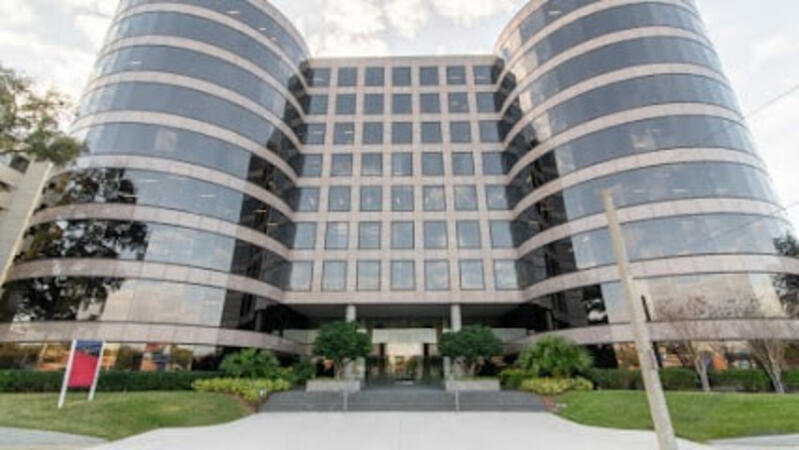
Jacksonville, FL – Deerwood Park
10151 Deerwood Park Blvd 200, Suite 250, Jacksonville, United States, 32256
The venue is nestled in the Deerwood Park campus at 10151 Deerwood Park Boulevard, just off J. Turner Butler Boulevard (JTB) and I‑295, with free on-site parking and adjacent lots. From Jacksonville International Airport (JAX), approximately 18 miles north, a taxi or rideshare takes about 25 minutes via I‑95 South and JTB West. Public transit is available via Jacksonville’s JTA bus routes stopping within walking distance, making the landscaped campus—complete with fountains, cafes, and scenic walkways—easily accessible for attendees without a car.
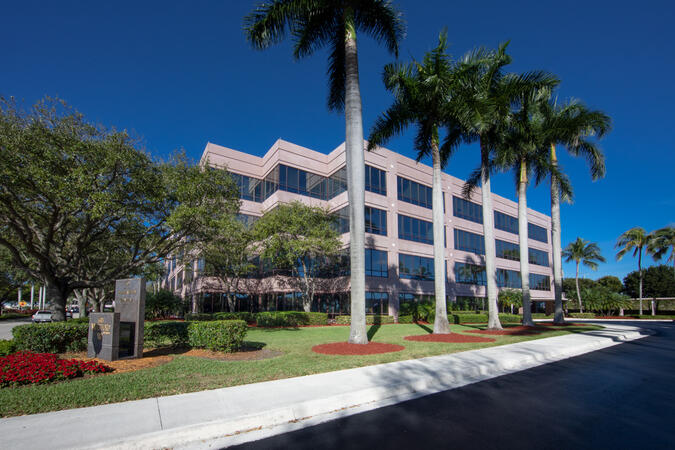
Miami, FL – Regus at Waterford at Blue Lagoon
6303 Blue Lagoon Drive, Suite 400, Miami, United States, 33126
The venue is set within the Waterford business park at 6303 Blue Lagoon Drive, just minutes from Miami International Airport. It’s accessible by car via I‑95, Florida Turnpike, 826, or Dolphin Expressway, with abundant covered and surface parking on-site. From Miami International Airport (MIA), a taxi or rideshare takes approximately 10 minutes via the Dolphin Expressway. Public transit options include TheBus routes and nearby Tri-Rail stations, with the property a short walk from bus stops—making it convenient even for attendees without a car.

Tampa, FL – Regus at Wells Fargo Center
100 S. Ashley Drive, Suite 600, Tampa, United States, 33602
The venue is located in the 22-story Wells Fargo Center in downtown Tampa, easily accessible by car via I‑275, I‑4, I‑75, or the Selmon Expressway, with covered garage parking (610+ spaces) directly connected to the building. From Tampa International Airport (TPA), a taxi or rideshare takes about 15 minutes via I‑275 East and Ashley Drive. Public transit is excellent with the Downtown Tampa Station (NFTA Metro Rail) just a block away and several bus routes running along Ashley and Brorein Streets, making it ideal for attendees arriving without cars.
FL, Orlando – GAI Building
618 E. South Street Suite 500, Orlando, United States, 32801
The venue is located in the GAI Building with the CNS Healthcare logo at the front.
FL, Jacksonville - Bank of America Tower
50 N. Laura Street Suite 2500, Jacksonville, United States, 32202
The office is located in a premier office tower in Downtown Jacksonville on the 42nd floor. This Class A LEED Certified building is situated in the Northbank Office Market Preeminent location that provides commanding views. Downtown Trolley and Bus stops are located just across the street on Forsyth with easy access to I-95 leading to I-10 and I-295. Convenient to Jacksonville International Airport, the building is also just minutes to Everbank Field, Jacksonville Landing, Times Union Performing Arts Center, Jacksonville Veterans Memorial Arena and Jacksonville Public Library. Spectacular views of the St John's River in Jacksonville, Florida are one of many features that make the Bank of America Tower office space stand out. The office space occupies a blue granite tower in the heart of the city's central business district. The iconic tower is one of the best-known business premises in the southeastern United States and includes a statement lobby and class-A workspace. Businesses of all kinds appreciate Jacksonville's location at the crossroads of three major railroads and three interstates, and its international airport.
FL, Tallahassee – Alliance Center
113 South Monroe Street 1st Floor, Tallahassee, united states, 32301
The venue is located in the Alliance Center across the street from FUBA and the Florida Optometric Association.
FL, West Palm Beach - Philips Point
777 South Flagler Drive, West Palm Beach, United States, 33401
The venue is located in the Philips Point building just off the Royal Park Bridge.
FL, Aventura - Corporate Center
20801 Biscayne Blvd., Miami, united states, 33180
The venue is located in the Grove Bank & Trust building just off Biscayne Blvd.
FL, Fort Lauderdale - Corporate Center
Corporate Center, 110 East Broward Blvd., Fort Lauderdale, United States, 33301
The venue is located in the Corporate Center across the street from the Uniform Advantage Corporate Office and just next door to Colliers International.
Miami Beach, FL – Regus at Meridian Center
1688 Meridian Avenue, Suites 600/700, Miami Beach, United States, 33139
The venue is located on the corner of Meridian Avenue and 17th Street in Miami Beach’s vibrant City Center district, accessible by car via I‑195 and the MacArthur Causeway with underground and street parking nearby. From Miami International Airport (MIA), taxis or rideshares typically take 15–20 minutes via I‑195 East and Biscayne Boulevard. Public transit is seamless: several Metrobus routes serve Meridian Avenue, and the nearby 17th Street trolley stop makes it easy to reach without a car. The central location places the venue steps from the Miami Beach Convention Center, Lincoln Road Mall, restaurants, galleries, and retail.
Tampa, FL - Regus - One Urban Centre at Westshore
4830 W Kennedy Blvd #600, Tampa, United States, 33609
The venue is located in the Westshore business district at 4830 West Kennedy Boulevard, seamlessly accessible by car via I‑275 or I‑75 with secure underground and surface parking on-site. From Tampa International Airport (TPA), take Memorial Highway to I‑275 South and exit at West Kennedy Boulevard—taxi or rideshare typically takes about 15–20 minutes. Public transit users can reach the venue via HART bus routes (such as Route 2 or 32) stopping nearby, followed by a short walk into the building lobby.
Network Synchronization — OSA 5421 and FSP Network Manager (FSP NM) provides a comprehensive introduction to the OSA 5421 platform and the FSP NM management system, focusing on their essential roles in delivering precise synchronization across packet and circuit-based networks for government.
This instructor-led, live training (online or onsite) is designed for intermediate-level network and synchronization engineers who are responsible for deploying, configuring, monitoring, and troubleshooting OSA 5421 and FSP NM-based synchronization solutions in public sector environments.
Upon completion of this training, participants will be able to:
- Explain synchronization principles and the role of OSA 5421 and FSP NM in mobile and transport networks.
- Describe the hardware and software architecture of OSA 5421.
- Configure primary interfaces and timing sources, including SyncE and PTP.
- Apply monitoring and KPI techniques within FSP NM to maintain synchronization performance.
- Troubleshoot common synchronization faults and design resilient timing architectures.
**Format of the Course**
- Interactive lecture and discussion.
- Hands-on configuration and lab exercises.
- Real-world case studies and troubleshooting scenarios.
**Course Customization Options**
To request a customized training for this course, please contact us to arrange.
The IP RAN Router is a networking device and logical element designed to aggregate, route, and manage IP traffic between radio access network elements and core network functions.
This instructor-led, live training (available online or on-site) is aimed at intermediate-level network engineers and RAN specialists who wish to deploy, configure, and troubleshoot IP RAN routing solutions for government.
Upon completion of this training, participants will be able to:
- Describe the role and architecture of IP RAN routers within mobile networks.
- Configure core interfaces and basic routing for RAN connectivity.
- Implement routing protocols used in RAN environments, including OSPF and BGP.
- Apply QoS and traffic engineering principles to prioritize RAN traffic.
- Troubleshoot common deployment and operational issues.
**Format of the Course**
- Interactive lecture and discussion.
- Hands-on configuration exercises and labs.
- Real-world case studies and troubleshooting scenarios.
**Course Customization Options**
To request a customized training for this course, please contact us to arrange.
GNS3 is a versatile network simulation tool that supports integration with automation frameworks, container-based services, and cloud environments for advanced laboratory setups for government and other sectors.
This instructor-led, live training (online or onsite) is designed for advanced-level networking professionals who aim to automate, containerize, and scale their GNS3 labs with real-world architectures involving hybrid and multi-cloud platforms for government use.
By the end of this training, participants will be able to:
Automate network tasks using Python scripts and Ansible in GNS3 environments for government applications.
Deploy Docker containers inside GNS3 to simulate network services and endpoints for enhanced realism.
Integrate GNS3 with cloud platforms such as AWS and Azure for hybrid lab environments suitable for government projects.
Design advanced, scalable topologies for multi-vendor testing and continuous integration in government networks.
Format of the Course
Interactive lecture and discussion focused on government networking needs.
Hands-on lab configuration using live GNS3 topologies tailored for government scenarios.
Integration exercises with automation and container orchestration tools to meet government standards.
Course Customization Options
To request a customized training for this course, please contact us to arrange specific content for government requirements.
GNS3 is a robust network simulation platform that enables professionals to construct, test, and validate intricate network designs in a virtualized environment.
This instructor-led, live training (online or onsite) is designed for intermediate to advanced IT professionals who wish to utilize GNS3 for network planning, testing, and production environment replication for government use.
By the end of this training, participants will be able to:
Design and simulate enterprise-grade network architectures using GNS3.
Replicate production environments for safe testing and change validation.
Integrate real operating systems and services into GNS3 topologies.
Use GNS3 for troubleshooting, documentation, and client demonstrations.
Format of the Course
Interactive lecture and discussion.
Realistic network simulations and hands-on labs.
Project-based exercises focused on design and testing use cases.
Course Customization Options
To request a customized training for government, please contact us to arrange.
This instructor-led, live training in Florida (online or onsite) is designed for intermediate-level networking professionals preparing for Cisco CCNA or CCNP certifications. The training utilizes GNS3 to simulate Cisco devices and construct topologies that align with exam objectives.
By the end of this training, participants will be able to:
- Install and configure GNS3 for government certification lab environments.
- Import and manage Cisco IOS images for routers and switches.
- Build and test topologies that are aligned with CCNA and CCNP exam requirements.
- Practice real-world routing, switching, and troubleshooting scenarios.
This instructor-led, live training (online or onsite) is designed for intermediate-level IT architects, network administrators, and engineers who aim to deploy OpenDaylight in production environments, optimize its performance for large-scale use, and address common issues in SDN deployments.
By the end of this training, participants will be able to:
- Deploy OpenDaylight in production environments for scalable SDN solutions.
- Optimize the performance of OpenDaylight deployments to manage high traffic volumes.
- Troubleshoot and resolve typical issues in SDN deployments.
- Monitor and maintain OpenDaylight environments for long-term stability.
- Scale OpenDaylight deployments to meet increasing network demands, ensuring effective resource management for government operations.
This instructor-led, live training in [location] (online or onsite) is aimed at intermediate-level SDN developers and software engineers who wish to learn how to build custom SDN applications using OpenDaylight APIs and YANG models to enhance network functionality and scalability for government operations.
By the end of this training, participants will be able to:
- Understand the architecture and components of OpenDaylight.
- Utilize OpenDaylight APIs to develop SDN applications.
- Create and manage YANG models for network customization.
- Deploy, test, and debug custom applications in an OpenDaylight environment.
- Integrate OpenDaylight with external systems and network devices.
Fiber optics is a high-speed communication technology that transmits data using light signals through thin strands of glass or plastic fibers.
This instructor-led, live training (available online or onsite) is designed for intermediate-level IT professionals and technicians who wish to gain a comprehensive understanding of fiber optic systems, perform measurements, and apply best practices for installation and maintenance for government applications.
By the end of this training, participants will be able to:
- Understand the principles and advantages of fiber optic communication.
- Identify various types of fiber cables, connectors, and splicing methods.
- Utilize key optical measurement instruments such as OTDRs and fusion splicers.
- Conduct basic troubleshooting, testing, and documentation of optical networks.
**Format of the Course**
- Interactive lecture and discussion.
- Practical demonstrations and instrument handling.
- Hands-on exercises in a live-lab environment.
**Course Customization Options**
- To request a customized training for this course tailored to specific needs, please contact us to arrange.
This instructor-led, live training in Florida (online or onsite) is aimed at beginner-level networking professionals who wish to learn how to use GNS3 to simulate basic networks and gain hands-on lab experience for certification and practical knowledge.
By the end of this training, participants will be able to:
- Install and configure GNS3 on their local system.
- Understand and utilize the GNS3 graphical interface and topology builder.
- Create and test fundamental network topologies incorporating routers, switches, and PCs.
- Integrate GNS3 with tools like Wireshark for packet analysis, enhancing skills applicable for government networking environments.
This instructor-led, live training in Florida (online or onsite) is aimed at intermediate-level IT architects and network managers who wish to deploy and optimize ONOS in production environments for government, ensuring scalability, performance, and reliability.
By the end of this training, participants will be able to:
- Understand the architecture and core features of ONOS designed for production use.
- Deploy ONOS in a production environment following best practices.
- Configure clustering, redundancy, and fault tolerance within ONOS.
- Monitor, troubleshoot, and optimize ONOS deployments to ensure scalability and performance.
- Integrate ONOS with existing network infrastructure and tools.
- Plan and execute a successful ONOS upgrade process.
This instructor-led, live training in Florida (online or onsite) is designed for intermediate-level SDN developers and network engineers who aim to develop custom applications on the ONOS platform to address specific network challenges and enhance SDN capabilities for government.
By the end of this training, participants will be able to:
- Understand the architecture and core components of ONOS.
- Set up a development environment for creating ONOS applications.
- Develop, test, and deploy ONOS applications for managing SDN networks.
- Integrate ONOS applications with external systems and APIs.
- Troubleshoot and optimize ONOS applications for performance and scalability.
This instructor-led, live training in [location] (online or onsite) is designed for intermediate-level network engineers who wish to acquire the skills necessary to design, install, and maintain fiber optic networks for government.
By the end of this training, participants will be able to:
- Understand the fundamental principles of fiber optic technology.
- Apply network design principles for point-to-point and FTTH (Fiber to the Home) networks.
- Install and maintain fiber optic cables and connectors.
- Test and troubleshoot fiber optic networks.
This instructor-led, live training in Florida (online or onsite) is designed for intermediate-level network engineers and DevOps teams who aim to deploy, configure, and manage SDN solutions using the OpenDaylight platform. The training aligns with best practices for government agencies.
By the end of this training, participants will be able to:
- Understand the architecture, components, and role of OpenDaylight in SDN ecosystems.
- Install and configure OpenDaylight for a variety of network scenarios.
- Develop and deploy network flows using OpenDaylight controllers.
- Integrate OpenDaylight with SDN-enabled devices and existing networks.
- Troubleshoot and optimize OpenDaylight deployments for real-world use cases, ensuring robustness and efficiency for government operations.
This instructor-led, live training (online or onsite) is aimed at intermediate to advanced-level database administrators, network engineers, and IT professionals who wish to optimize database performance, scalability, and reliability using Spine-Leaf architecture with VXLAN for government environments.
By the end of this training, participants will be able to:
- Understand the Spine-Leaf network topology and its benefits.
- Implement VXLAN for scalable and efficient database networking in government data centers.
- Optimize database workloads across distributed data center environments for enhanced performance.
- Deploy Spine-Leaf architecture in both cloud and on-premises government data centers.
- Enhance network security, redundancy, and fault tolerance for government database environments.
- Automate network configurations for database management using Python and Ansible to improve operational efficiency.
This instructor-led, live training in Florida (online or onsite) is aimed at intermediate to advanced networking professionals who wish to expand their expertise in advanced networking practices using Linux.
By the end of this training, participants will be able to:
- Implement advanced networking protocols and configurations under Linux.
- Configure and manage Virtual Private Networks (VPNs).
- Set up and secure firewalls for a robust network security setup.
- Monitor and troubleshoot network performance issues, ensuring alignment with public sector workflows and governance standards for government.
This instructor-led, live training (online or onsite) is designed for intermediate-level network engineers, DevOps teams, and SDN developers who wish to effectively understand and manage SDN environments using ONOS.
By the end of this training, participants will be able to:
- Comprehend the architecture and components of ONOS.
- Install and configure ONOS in a laboratory setting.
- Explore the capabilities of ONOS for managing SDN environments for government.
- Deploy, manage, and troubleshoot SDN networks using ONOS.
This instructor-led, live training in Florida (online or onsite) is designed for beginner-level network engineers and IT administrators who are interested in learning fundamental OpenDaylight concepts, understanding its role in network automation, and beginning to automate network configurations and operations.
By the end of this training, participants will be able to:
Comprehend the role of OpenDaylight in software-defined networking (SDN).
Install and configure OpenDaylight on a Linux-based system.
Examine the OpenDaylight architecture and core features.
Create basic automated network configurations using OpenDaylight.
Monitor and manage networks using OpenDaylight controllers.
This training is tailored to enhance skills in network automation, aligning with the needs for government agencies that require robust and secure network management solutions.
This instructor-led, live training in [location] (online or onsite) is designed for government personnel who wish to understand and implement network configurations and various types of servers using Linux.
By the end of this training, participants will be able to:
- Understand how networking functions under Linux.
- Set up a sample Local Area Network (LAN).
- Comprehend the various protocols used on the internet and implement each one within a Linux environment.
- Secure networking and various types of servers, such as web servers, for government use.
This instructor-led, live training in Florida (online or onsite) is designed for beginner-level networking professionals and IT administrators who wish to gain an understanding of the foundational concepts of ONOS, its architecture, and its deployment for scalable SDN solutions for government.
By the end of this training, participants will be able to:
- Understand the role of ONOS in software-defined networking (SDN) for government.
- Describe the architecture and core components of ONOS.
- Install and configure ONOS on a Linux-based system.
- Set up a basic SDN network using ONOS.
- Explore ONOS features for managing and scaling network infrastructure.
This instructor-led, live training in Florida (online or onsite) is designed for beginner-level network engineers and IT professionals who seek to gain a foundational understanding of software-defined networking (SDN) concepts, learn about the architecture of OpenDaylight, and perform basic installation and configuration tasks.
By the end of this training, participants will be able to:
- Understand the principles and benefits of SDN for government applications.
- Explore the architecture and components of OpenDaylight.
- Install and configure OpenDaylight on a Linux system.
- Integrate OpenDaylight with networking devices.
- Execute basic OpenDaylight operations and commands.
This instructor-led, live training in Florida (online or onsite) is aimed at engineers who wish to optimize networking for Kubernetes clusters for government applications.
By the end of this training, participants will be able to:
- Install and configure Calico.
- Understand how Calico differs from traditional overlay networks.
- Grasp how Calico integrates internet routing protocols with consensus-based data stores.
- Utilize Calico to create a container networking solution for Kubernetes clusters in government environments.
- Implement network policy using Calico for enhanced security and compliance in government operations.
In this instructor-led, live training for government participants, attendees will learn how to implement deep learning models for the telecommunications sector using Python. The course will guide participants through the creation of a deep learning credit risk model.
By the end of this training, participants will be able to:
- Comprehend the core principles of deep learning.
- Explore the various applications and uses of deep learning in the telecom industry.
- Utilize Python, Keras, and TensorFlow to develop deep learning models for telecom.
- Construct their own deep learning customer churn prediction model using Python.
The objective of this course is twofold: to provide a comprehensive understanding of OpenStack architecture and to equip participants with advanced troubleshooting skills. In the architectural segment, participants will learn how to design hardware for both public and private cloud environments, establish high-availability control planes, select appropriate instance sizes, and safely overcommit cloud resources. Understanding the internal workings of Neutron (Networking Service) is also a crucial component of OpenStack architecture. The course then transitions into methods for troubleshooting issues in OpenStack clusters, covering general tips, network diagnostics, and common pitfalls of key OpenStack services. Approximately 75% of the course content is dedicated to hands-on workshops conducted in a real OpenStack training environment, ensuring practical experience that aligns with public sector workflows and governance standards for government use.
The course provides comprehensive training on OpenStack, designed specifically for government agencies and professionals. It begins with an introduction to the system, followed by hands-on workshops that offer practical knowledge on managing private clouds based on OpenStack. The curriculum also covers troubleshooting techniques and advanced architectural topics. The goal of this course is to familiarize participants with the OpenStack ecosystem and provide a robust foundation for further expansion and refinement of OpenStack clouds for government use. The course includes all topics necessary to prepare for the Certificate OpenStack Administrator exam, with 75% of the content delivered through hands-on workshops in a real OpenStack training environment.
This comprehensive training course on OpenStack, an extended version of the OpenStack Bootcamp, includes additional exercises, troubleshooting sessions, and sample examination tasks. Extended content is highlighted in bold within the course outline. The course begins with an introduction to the system and progresses through hands-on workshops that provide practical knowledge on managing private clouds based on OpenStack. It also covers troubleshooting and advanced architectural topics. The primary goal of this course is to familiarize participants with the OpenStack ecosystem and equip them with a strong foundation for further expansion and refinement of OpenStack clouds. The curriculum includes all necessary topics to prepare for the Certificate OpenStack Administrator exam. Approximately 75% of the course is dedicated to hands-on workshops in a real OpenStack training environment. Upon completion, participants will receive all materials and access to the training environment for self-study and additional feature/troubleshooting exercises.
Customization Options
The full course is designed to span at least five days. It can be shortened if certain topics are not relevant to the specific needs of the participants. For beginners or those requiring a slower pace, it is recommended to extend the course to six days or remove some advanced topics. Additionally, the course can be extended by one more day to cover OVN topics, enhancing the training for government and organizational requirements.
The course provides comprehensive training on OpenStack networking. It begins with an introduction to OpenStack and its architecture, followed by a detailed overview of core OpenStack projects such as the Identity service (Keystone), Image service (Glance), Compute service (Nova), and Block storage (Cinder). This foundational knowledge sets the stage for an in-depth exploration of the Networking project (Neutron) within OpenStack. The course delves into virtual network infrastructure, with a focus on the Open Virtual Network project, Open vSwitch, and OpenFlow. Participants will gain a thorough understanding of basic operations and architecture in OpenStack, as well as familiarity with various networking technologies, including OVN and its underlying flows, resources, and tools.
**Customization Options**
The training can be tailored to fit specific needs, such as a 2-day session focusing on core aspects relevant for government. The course can also be extended to cover additional topics, including administrative tasks, design considerations, networking challenges, and troubleshooting techniques related to OpenStack deployments. Other underlying SDN solutions, such as Linux Bridge or OvS, can be included upon request.
Artificial Intelligence (AI) is a suite of technologies designed to develop intelligent systems capable of comprehending data and related activities to make informed decisions. For government and telecom providers, integrating AI into applications and services can significantly enhance operations and service delivery in areas such as maintenance and network optimization.
This course delves into the various components that constitute AI and the expertise necessary to effectively deploy these technologies. Throughout the course, we will explore specific applications of AI within the telecom industry.
**Audience**
- Network engineers
- Network operations personnel
- Telecom technical managers
**Format of the Course**
- Combination of lectures, discussions, and hands-on exercises
In this instructor-led, live training for government in Florida, participants will explore the fundamental principles underlying Blockchain technology and gain a comprehensive understanding of its architecture and functionality. Throughout the course, we will examine specific applications of Blockchain technology within the Telecom industry, including scenarios such as security enhancements, payment systems, and user verification processes. This training aims to equip attendees with the knowledge necessary to integrate Blockchain solutions effectively into public sector workflows, governance, and accountability frameworks.
This four-day instructor-led course is designed to familiarize participants with the Cisco ASA Firewall Command Line Interface (CLI) and ASDM. The curriculum covers essential commands for configuring and securing networks using the ASA Firewall, specifically version 8 of the operating system and version 6 of the ASDM.
Participants will learn to configure the ASA using various methods, including the console port, TFTP server, telnet, and SSH, with both local and RADIUS authentication. The device will also be configured to utilize Syslog and SNMP for monitoring and management purposes.
The course delves into configuring ASA Firewalls to use Access-Lists, Network Address Translation (NAT), and Virtual Private Networks (VPNs) using IPSec protocols. It includes the theoretical foundations of Public/Private Keys, shared secret keys, and their application in establishing Site-to-Site VPNs between ASA Firewalls using Internet Key Exchange (IKE) and IPSec. Students will configure units to create site-to-site VPNs, remote access VPNs using the Cisco Secure VPN Client, and Web VPNs.
Additionally, the course covers failover configurations, with participants learning to set up Active/Standby failover on the ASA. Privileged commands and protocol analyzer traces will be utilized as needed to troubleshoot protocols and ensure the proper operation of the ASA Firewall. Password recovery operations will also be covered.
This course involves interfacing the ASA with other network equipment, such as routers and switches, simulating real-world network environments for government applications.
**Audience:**
The course is suitable for anyone involved in configuring ASA firewalls and ensuring network security. Approximately 50% of the course is hands-on practical work.
The CNE6 Gold is an advanced level training program designed for IPv6 network engineering. This course provides comprehensive knowledge on how to design, implement, and operate IPv6 networks for government agencies and other public sector entities.
What will you learn?
IPv6 Refresher
IPv6 Routing
Revisiting IPv6 Transition
IPv6 Mobility
DHCPv6
IPSec
IPv6 Security Considerations
IPv6 Deployment Case Studies
Format of the Course
Interactive lectures and discussions.
Extensive exercises and practice sessions.
Hands-on implementation in a live-lab environment.
Course Customization Options
To request a customized training program for government, please contact us to arrange.
The CNE6 Silver training program is designed to provide foundational information on IPv6 technology and equip participants with the technical knowledge necessary to initiate IPv6 implementation.
**What Will You Learn**
- The necessity of transitioning to the IPv6 platform.
- IPv6 addressing architecture.
- IPv6 packet structure and header format.
- IPv6 address assignment using the Neighbor Discovery protocol.
- IPv6 transition mechanisms.
**Format of the Course**
- Interactive lectures and discussions.
- Extensive exercises and practice sessions.
- Hands-on implementation in a live-lab environment.
**Course Customization Options for Government**
To request a customized training program for government, please contact us to arrange.
This course is designed for software and computer engineers, including designers, developers, testers, and programmers who are tasked with developing and testing IP applications. It provides in-depth knowledge on building IPv6 solutions and transitioning existing IPv4 applications to support IPv6 network programming and testing. Key topics include socket API, IPv6 programming basics, IPv6 socket programming, and IPv6 network layer programming.
**What Will You Learn?**
- Review of IPv6
- Fundamentals of IPv6 Programming
- IPv6 Socket Programming
- IPv6 Network Layer Programming
**Format of the Course for Government**
- Interactive lectures and discussions
- Extensive exercises and practice sessions
- Hands-on implementation in a live-lab environment
**Course Customization Options**
- To request a customized training program tailored to specific needs, please contact us to arrange.
The CSE6 Gold training program is an advanced initiative designed to provide comprehensive information on the design and implementation of IPv6 security in network environments. This program is tailored to enhance the skills and knowledge necessary for securing IPv6 networks.
**Format of the Course**
- Interactive lectures and discussions.
- Extensive exercises and practice sessions.
- Hands-on implementation in a live-lab environment.
**Course Customization Options**
To request a customized training for government or other specific needs, please contact us to arrange.
The CSE6 Silver training program is designed to provide essential information on the implementation of security parameters during the transition from IPv4 to IPv6. It also exposes participants to the security challenges associated with deploying IPv6 in organizational networks. This course offers a fundamental understanding of the security issues surrounding IPv6 and serves as a prerequisite for the Certified Security Engineer for IPv6 (CSE6) Gold certification.
### What Will You Learn?
- Revisit IPv6 fundamentals
- Understand IPv6 security issues
- Explore IPv6 security features
- Identify and mitigate IPv6 attacks
### Format of the Course
- Interactive lectures and discussions
- Extensive exercises and practice sessions
- Hands-on implementation in a live-lab environment
### Course Customization Options
To request a customized training for government or organizational needs, please contact us to arrange.
In this instructor-led, live training in Florida, participants will learn the critical features of DNS while carrying out exercises in the setup and configuration of a BIND DNS server on Linux. The course begins with a refresher on key networking principles relevant for government, then progresses to hands-on practice with setup and configuration. Gradually, the discussion and practical exercises will cover more complex topics such as security, availability, debugging, and troubleshooting, ensuring alignment with public sector workflows and governance.
This instructor-led, live training in Florida (online or onsite) is designed for intermediate and advanced-level OT technicians and network support staff who aim to utilize practical fiber diagnostic tools to identify common fiber faults and determine when contractor support is necessary for government.
By the end of this training, participants will be able to safely inspect connectors, measure optical loss, identify potential breaks or bends, and document issues for escalation.
This course offers a condensed one-day overview of the Fundamentals of Networking and the Internet, tailored to provide essential knowledge and skills for government professionals. The content is designed to align with public sector workflows, governance, and accountability requirements. Participants will gain a comprehensive understanding of key networking concepts and internet protocols, ensuring they are well-equipped to support technology initiatives within their agencies.
This two-day course explores the theory and technology associated with IPSec Virtual Private Networks (VPNs). Participants will set up VPNs using Cisco IOS Routers and ASA Firewalls through the web interface. The course delves into the workings of the protocols by examining debug commands and protocol analyzer traces of relevant negotiations.
**Audience:**
This course is suitable for network planners, engineers, or anyone interested in IPSec VPNs within a government context.
The course is approximately 40% hands-on practical work.
This two-day theoretical course, complemented by practical demonstrations, provides a thorough introduction to Internet Protocol version 6 (IPv6). The curriculum covers essential topics such as addressing schemes, protocol formats, ICMPv6, discovery processes, and IPv6 routing.
Audience:
The course is designed for network planners, designers, and engineers who need a comprehensive understanding of IPv6. It is also suitable for individuals requiring a detailed overview of IPv6 and the transition process from an IPv4 environment, particularly those working in roles that involve planning and implementing network infrastructure for government agencies.
This instructor-led, live training in [location] (online or onsite) is designed for government network engineers who wish to utilize Linux for network engineering. By the end of this training, participants will be able to:
- Configure Linux services to support networking.
- Replace traditional switches with Linux-based switches.
- Manage processes using Linux commands.
- Set up a Software-Defined Network (SDN) to automate network maintenance and enhance operational efficiency for government operations.
This instructor-led, live training (online or onsite) is designed for government network engineers who wish to maintain, manage, and design computer networks using Python.
By the end of this training, participants will be able to:
- Optimize and leverage Paramiko, Netmiko, Napalm, Telnet, and pyntc for network automation with Python.
- Master multi-threading and multiprocessing techniques in network automation.
- Utilize GNS3 and Python for network programming and simulation.
This training aligns with the standards and best practices for government IT infrastructure management.
This instructor-led, live training in Florida (online or onsite) is designed for government participants to learn how to utilize ONAP for automating networking services.
By the end of this training, participants will be able to:
Comprehend, install, and configure the various components within the ONAP ecosystem for government use.
Execute real-time, policy-driven orchestration and automation of physical and virtual network functions.
Design, create, orchestrate, and monitor VNFs, SDNs, and other network services in a government context.
Efficiently manage the entire networking lifecycle using a software-driven approach tailored for government operations.
Develop, deploy, and scale networks using the latest open source technologies and practices, ensuring alignment with public sector workflows and governance.
This instructor-led, live training (online or onsite) is designed for networking engineers and developers who aim to configure, deploy, and manage programmable networking resources using the P4 language. By the end of this training, participants will be able to:
- Understand the fundamentals of the P4 language.
- Program network devices effectively.
- Set up a server for traffic management.
- Compile and execute a P4 program to control plane applications.
- Manage network congestion through monitoring and debugging techniques.
This course is tailored to enhance skills in networking and programming, ensuring alignment with public sector workflows and governance standards for government.
This course provides an introduction to the installation, operation, configuration, and verification of a basic Internet Protocol version 4 (IPv4) network. It covers configuring a LAN switch, setting up an IP router, connecting to a Wide Area Network (WAN), and identifying fundamental security threats.
This course will help you:
- Install, operate, configure, and verify a basic IPv4 network.
- Perform basic troubleshooting steps in an enterprise branch office environment.
Format of the Course
- Interactive lectures and discussions.
- Numerous exercises and practice sessions.
- Hands-on implementation in a live-lab environment.
Course Customization Options for Government
- To request a customized training session tailored to specific needs, please contact us to arrange.
This instructor-led, live training in [location] (online or onsite) is aimed at network engineers who wish to integrate storage infrastructures using SAN and NAS.
By the end of this training, participants will be able to:
- Configure SAN and NAS storage on a storage system.
- Connect to storage systems and devices from a client.
- Evaluate and compare SAN and NAS solutions for centralized storage, ensuring alignment with public sector workflows and governance for government.
This instructor-led, live training in Florida (online or onsite) is designed for system administrators, network engineers, and developers who aim to install, configure, and manage controllers, applications, and networking devices under a software-defined network (SDN).
By the end of this training, participants will be able to:
Establish a virtual network.
Develop applications.
Utilize controllers to manage a software-defined network.
This training is tailored to enhance the skills necessary for government professionals, ensuring alignment with public sector workflows and governance requirements.
This four-day course combines expository sessions (utilizing protocol analyzer traces where appropriate) and hands-on experiments to test and verify the operation of TCP/IP networks. Key aspects of the TCP/IP protocol stack, including subnetting, supernetting, and dynamic routing protocols, are thoroughly covered. The course compares and contrasts TCP and UDP, delving into the end-to-end reliability and congestion avoidance features of the TCP/IP stack. Application layer protocols such as HTTP, TLS, DNS, and DHCP will also be explored. Network security, with a focus on TLS, is addressed both theoretically and through practical exercises. These hands-on activities are designed to reinforce theoretical concepts and enhance delegates' understanding of underlying protocols, as well as their problem-solving skills.
### Audience:
This course is suitable for anyone seeking a comprehensive understanding of TCP/IP, particularly those working in network administration or cybersecurity roles for government agencies. The course is approximately 50% practical.
This instructor-led, live training (online or onsite) is designed for government IT professionals at beginner to intermediate levels who wish to gain an understanding of modern information and communication technologies and their applications.
By the end of this training, participants will be able to:
- Explain the main components and functions of internet architecture and how they interact.
- Describe the features and benefits of modern network solutions and implementations, including fiber technology, clustering, and the Internet of Things (IoT).
- Understand the concepts and models of cloud computing and its services, such as Infrastructure as a Service (IaaS) and virtualization.
- Identify future trends and directions in information and communication technologies and their implications for government operations.
VoIP (Voice over Internet Protocol) is a technology that enables users to make voice calls using an internet connection instead of traditional telephone lines.
This instructor-led, live training program equips participants with the skills necessary to set up a VoIP system using Cisco CallManager Express, tailored for government use.
By the end of this training, participants will be able to:
Understand fundamental VoIP concepts
Operate VoIP equipment effectively
Configure CISCO routers for VoIP applications
Integrate VoIP and CallManager Express into their network infrastructure
Set up CME features for SIP, SCCP, and soft phones
Utilize advanced configuration settings and features of CME
Audience
Managers
System Administrators
Software and Support System Developers
Technicians
Network Engineers
Format of the Course
A combination of lectures, discussions, exercises, and extensive hands-on practice
The course provides practical knowledge on OpenStack and private cloud security, tailored specifically for government agencies. It begins with an introduction to the system, followed by in-depth, hands-on training on security measures for private clouds and securing OpenStack installations. Throughout the course, each core OpenStack module is thoroughly covered, enabling participants to build virtual identity, image, network, compute, and storage resources while discussing pertinent security issues.
Each participant receives their own training environment featuring a complete OpenStack installation based on selected cloud architecture (e.g., storage, networking). The training can be highly customized to meet the specific needs of government clients.
### Customization Options
The course can be structured to fit within a 2-day timeframe, focusing on core aspects relevant to the client's requirements. Alternatively, it can be extended to include additional topics such as administrative tasks, design considerations, networking, and troubleshooting issues related to OpenStack deployments for government use.
Read more...
Last Updated:
Testimonials (10)
the training on the job mode
PIERANDREA LAMBERTINI - Istituto Europeo di Oncologia Srl
Course - HAProxy Administration
The laboratory tool and the knowledge of trainer about network solutions
Online Networking training in Florida, Networking training courses in Florida, Weekend Networking courses in Florida, Evening Networking training in Florida, Networking instructor-led in Florida, Networking boot camp in Florida, Evening Networking courses in Florida, Online Networking training in Florida, Networking on-site in Florida, Networking private courses in Florida, Networking instructor-led in Florida, Weekend Networking training in Florida, Networking coaching in Florida, Networking one on one training in Florida, Networking trainer in Florida, Networking classes in Florida, Networking instructor in Florida