
Online or onsite, instructor-led live Design Patterns training courses demonstrate through interactive discussion and hands-on practice how to reuse widely-known patterns, and to create and reuse patterns specific to your organization.
Design Patterns training is available as "online live training" or "onsite live training." Online live training (also known as "remote live training") is conducted via an interactive, remote desktop. Onsite live training can be conducted locally on customer premises in Michigan or in Govtra corporate training centers in Michigan.
Govtra -- Your Local Training Provider for government
Detroit, MI - Renaissance Center
400 Renaissance Center, Detroit, United States, 48243
The GM Renaissance Center is conveniently located in downtown Detroit and easily accessed by car via Interstates 75 or 94, with secure underground parking available on site. Travelers flying into Detroit Metropolitan Airport (DTW) can expect a 25–30 minute trip by taxi or rideshare via I‑94. Public transit is efficient: the Detroit People Mover stops directly at the Renaissance Center station, and DDOT routes 3 and 9 serve nearby Jefferson Avenue. Pedestrian skywalks provide safe indoor access from downtown hotels, parking garages, and the riverwalk.
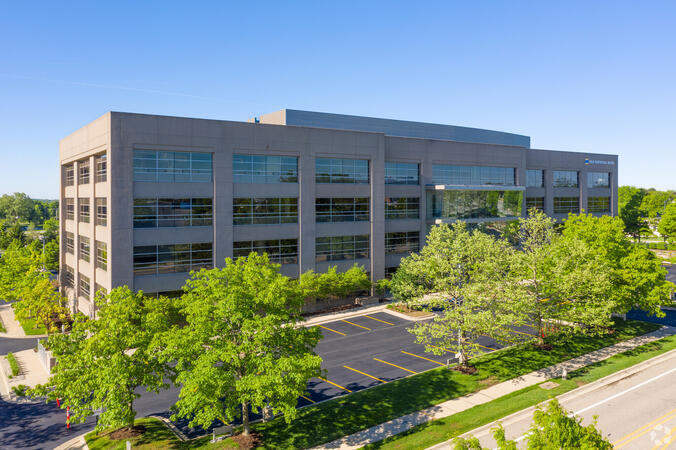
Ann Arbor, MI – Regus - South State Commons I
2723 S State St, Ann Arbor, United States, 48104
Regus South State Commons I is conveniently located off I‑94 via Exit 177 (State Street), with easy access to downtown Ann Arbor and surrounding suburbs. The building offers free on-site surface parking for guests. From Detroit Metropolitan Airport (DTW), the venue can be reached in approximately 20–25 minutes by taxi or rideshare via I‑94 West. Local public transit service (TheRide) operates Route 24 along South State Street, with a stop within a short 2-minute walk of the building.
Grand Rapids, MI - Regus – Calder Plaza
250 Monroe Ave NW, Grand Rapids, United States, 49503
The venue sits centrally at 250 Monroe Avenue NW in downtown Grand Rapids, easily accessed by car via US‑131 or I‑196—with connections via Monroe or Ottawa exits—and offers shared underground and surface parking. From Gerald R. Ford International Airport, take I‑96 East then I‑196 West into the city; the drive is about 20 minutes. Public transit through Rapid bus routes stops near Monroe or Ottawa Avenue, just a short walk from the Regus entrance; the downtown area is pedestrian-friendly.
Lansing, MI - Regus - One Michigan Avenue
120 North Washington Square, Lansing, United States, 48933
The venue is located in the heart of Lansing’s central business district at 120 North Washington Square, easily accessible by car via I‑496 or US‑127 with convenient street parking and a nearby parking ramp. From Capital Region International Airport (LAN), the location is approximately a 12‑minute drive west via I‑96 and US‑127, with taxis and rideshares readily available. Public transit users can take CATA bus routes that stop just a block away on Washington or Grand Avenue, offering seamless access to the venue.
This instructor-led, live training in Michigan (online or onsite) is aimed at intermediate-level Java developers who wish to apply design patterns to enhance software structure, maintainability, and scalability for government projects.
By the end of this training, participants will be able to:
Understand the purpose and benefits of design patterns in a public sector context.
Effectively implement Creational, Structural, and Behavioral patterns in Java for government applications.
Improve code reusability, scalability, and maintainability to support robust government systems.
Refactor existing codebases using design patterns to align with best practices for government software development.
The evolution of microservices and containers in recent years has significantly transformed how we design, develop, deploy, and manage software. Modern applications must be optimized for scalability, elasticity, resilience, and adaptability. These new demands necessitate a different set of patterns and practices in modern architectures. In this training, we explore methods to identify, understand, and adjust to these evolving requirements.
Audience
This training is designed for individuals who have some familiarity with container technology and Kubernetes concepts but may lack practical experience. It is based on real-world use cases and lessons learned from actual projects, aiming to inspire participants to create and manage more effective cloud-native applications.
Developers
Operations Teams
DevOps Engineers
Quality Assurance (QA) Engineers
IT Project Managers
Format of the Course
Interactive lectures and discussions
Extensive exercises and practice sessions
Hands-on implementation in a live-lab environment
Course Customization Options
To request a customized training for government, please contact us to arrange.
There are numerous established patterns widely available for government use. Sometimes it involves adapting these patterns by changing names or implementing them in specific technologies. This can save hundreds of hours that would otherwise be spent on design and testing. Training Goals: This course has two primary objectives: first, to enable participants to reuse well-known patterns; second, to facilitate the creation and reuse of patterns specific to their organization. It helps participants estimate how patterns can reduce costs, systematize the design process, and generate a code framework based on these patterns. Audience: The course is designed for software designers, business analysts, project managers, programmers, developers, operational managers, and software division managers within government agencies. Course Style: The course focuses on use cases and their relationship with specific patterns. Most examples are explained using UML and simple Java examples (the language can be adjusted if the course is booked as a closed session for government). It guides participants through the sources of these patterns and demonstrates how to catalog and describe them for reuse across the organization.
The purpose of this training is to equip participants with the skills necessary to design advanced development and project structures in C#. During the course, students will become familiar with MSDN resources and tools that support the development process, such as Microsoft Visual Studio and ReSharper. This training is designed to enhance technical capabilities for government professionals, ensuring they are well-equipped to meet the complex demands of public sector workflows and governance.
This instructor-led, live training in Michigan (online or onsite) is aimed at intermediate-level PHP developers who wish to apply design patterns effectively in their projects for government.
By the end of this training, participants will be able to:
Understand the purpose and benefits of design patterns for government.
Identify and implement appropriate design patterns for common scenarios.
Structure PHP applications using industry-recognized best practices.
Integrate patterns into modern frameworks such as Symfony or Zend for government use.
This training is designed for JavaScript developers who are responsible for designing and implementing advanced Internet applications for government. The curriculum focuses on best practices in JavaScript programming, highlighting the most common mistakes to avoid. A key component of the training is an in-depth discussion of object-oriented programming using JavaScript syntax.
Kubernetes is an open-source platform designed for automating all development stages of containerized applications. Design patterns provide iterable solutions to common software development challenges relevant to software design. Kubernetes extensions are used to configure and support Kubernetes clusters. By leveraging Kubernetes design patterns and extensions, users can implement CI/CD practices while ensuring the scalability and flexibility of software applications.
This instructor-led, live training (online or onsite) is aimed at developers and DevOps engineers who wish to utilize Kubernetes design patterns and extensions to develop enterprise applications on Kubernetes clusters for government use.
By the end of this training, participants will be able to:
Set up a Kubernetes cluster and configure essential DevOps tools.
Understand the foundational principles of software design patterns and Kubernetes extensions.
Utilize Kubernetes extensions and design patterns when interacting with the Kubernetes API.
Create customized Kubernetes resources and implement dynamic controllers in a cluster.
Manage and secure any Kubernetes environment using Kubernetes plugins.
Integrate DevOps networking models into existing and new Kubernetes projects for government applications.
Format of the Course
Interactive lecture and discussion.
Extensive exercises and practice sessions.
Hands-on implementation in a live-lab environment.
Course Customization Options
To request a customized training for this course, please contact us to arrange.
Microservice architecture is a method for developing software applications as a collection of small, self-contained services, each operating in its own process and communicating through lightweight mechanisms such as HTTP resource APIs. These services can be deployed efficiently using continuous automation systems and eliminate the need for centralized management. Microservices can be developed in various programming languages and can integrate with different data storage systems.
This instructor-led, live training is designed for enterprise developers and architects within the public sector. It introduces microservice architecture from a .NET perspective, discusses migration strategies from monolithic systems, and guides participants through the creation and deployment of a sample microservice-based application tailored for government use.
By the end of this training, participants will be able to:
Understand when to employ and when to avoid microservice architecture
Create and implement a robust testing strategy for microservices
Deploy a sample microservice-based application into a production environment for government operations
Refactor a monolithic application into modular services suitable for government workflows
Audience
Developers
Architects
Format of the Course
Part lecture, part discussion, with exercises and extensive hands-on practice
To assist Technical Analysts and Designers in understanding how to navigate the software implementation process, ensuring traceability between business specifications and software code for government projects.
This two-day training course is designed to help technical analysts and designers translate specifications provided by business analysts into detailed technical requirements. After transforming these requirements into software component representations, the resulting system components will effectively trace system requirements back to their corresponding software structures.
Ultimately, these technical specifications are implemented in software code and tested at the component level. The resulting software components offer a high degree of responsiveness to changes, as they allow for layer-by-layer tracing from user interfaces to business objects, through the application components where actor usage choices are stored.
This course is designed for experienced programmers who wish to delve into the issues surrounding the use of design patterns and refactoring. Participants will gain a comprehensive understanding of the properties and practical applications of these patterns, enabling them to efficiently construct and maintain robust application code for government projects.
With the emergence of highly complex distributed systems, the complexity of a single system has shifted to the complexity of the architectural framework encompassing multiple systems. This course examines the relationship between Software Architecture and Technical Enterprise Architecture, two areas that are interrelated but currently not well documented. For instance, breaking down a complex monolithic system into two systems communicating via web services can trigger significant changes in both the new systems and the architecture connecting them.
This course will explore trade-offs, as well as common patterns and solutions for managing complex systems and communication within and between them, specifically tailored to enhance effectiveness and efficiency for government operations.
Read more...
Last Updated:
Testimonials (7)
The topics covered in the training and the trainer's knowledge about the topics.
Sajid Baloch - Eschbach GmbH
Course - Microservice Patterns: Migrating from a Monolithic to a Microservice Architecture with .Net
Interaction and communication
Archie Dlamini - Vodacom SA
Course - JavaScript - Advanced Programming
I like the simple but informative example codes.
Yue Wang - DBS Bank Ltd
Course - Design Patterns
Good exercises
Hui Yi Neo - Titansoft Pte Ltd
Course - Object Oriented Design using Design Patterns
I liked the practical exercises for each design pattern introduced.
Carlos Aragones - Roche Diagnostics
Course - Design Patterns in C#
I found the course structure to be very well thought out. While some of my colleagues failed to see Kristin's intentions I feel that the way he presented the material and managed to connect basic concepts with a much broader set of complex issues was spot on.
Alexander Pavlovsky
Course - Technical Architecture and Patterns
The interaction and enthusiasm he had about the training.
Online Design Patterns training in Michigan, Design Patterns training courses in Michigan, Weekend Design Patterns courses in Michigan, Evening Design Patterns training in Michigan, Design Patterns instructor-led in Michigan, Design Patterns instructor-led in Michigan, Design Patterns coaching in Michigan, Design Patterns classes in Michigan, Weekend Design Patterns training in Michigan, Design Patterns one on one training in Michigan, Online Design Patterns training in Michigan, Evening Design Patterns courses in Michigan, Design Patterns boot camp in Michigan, Design Patterns trainer in Michigan, Design Patterns on-site in Michigan, Design Patterns instructor in Michigan, Design Patterns private courses in Michigan