NobleProg delivers specialized Natural Language Processing (NLP) training courses in Georgia, catering to professionals across the US Florida sales area. These sessions are designed to enhance technical expertise and leadership skills tailored to the local industry demands. By leveraging our extensive network, participants gain access to high-quality instruction and practical learning experiences within the region.
Instructor-led sessions, delivered either virtually or at a designated facility, provide practical instruction and guided exercises to demonstrate how to derive actionable insights from complex data sets. By leveraging programming environments such as Python and R, along with specialized Natural Language Processing (NLP) libraries, these programs integrate principles from computer science, artificial intelligence, and computational linguistics. This approach enables participants to interpret the semantic meaning of textual information. The curriculum guides learners through the systematic evaluation and implementation of appropriate algorithms to analyze data and articulate its significance, offering solutions designed for government.
Training is accessible via "online live" or "onsite live" formats. Online instruction is conducted through an interactive remote desktop environment. Onsite sessions may be hosted at customer facilities in Georgia or at NobleProg corporate training centers in Georgia.
NobleProg -- Your Local Training Provider
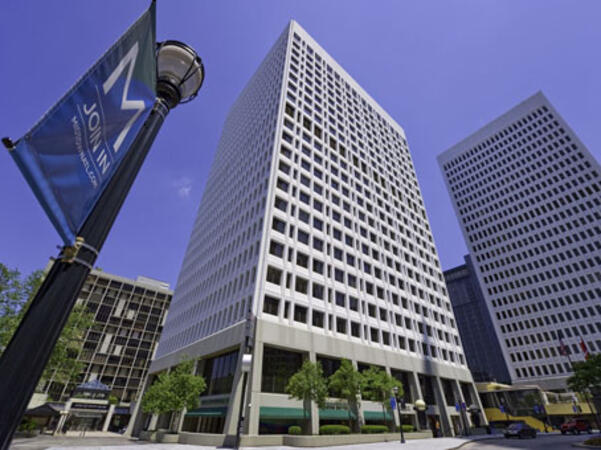
Atlanta, GA – Regus at Colony Squar
1201 Peachtree Street NE, Suite 200, Atlanta, United States, 30361
The venue is centrally located in Midtown Atlanta within the prominent Colony Square complex at 1201 Peachtree Street NE, easily accessed by car via I‑75/85 or GA‑400, with several parking garages nearby. From Hartsfield–Jackson Atlanta International Airport (ATL), around 15 miles south, a taxi or rideshare typically takes 20–30 minutes north along I‑75/85 N. Public transit users can take MARTA Rail to the Arts Center or Midtown stations (0.3–0.5 miles away) and walk easily, and numerous MARTA bus routes along Peachtree Street stop directly outside the entrance.
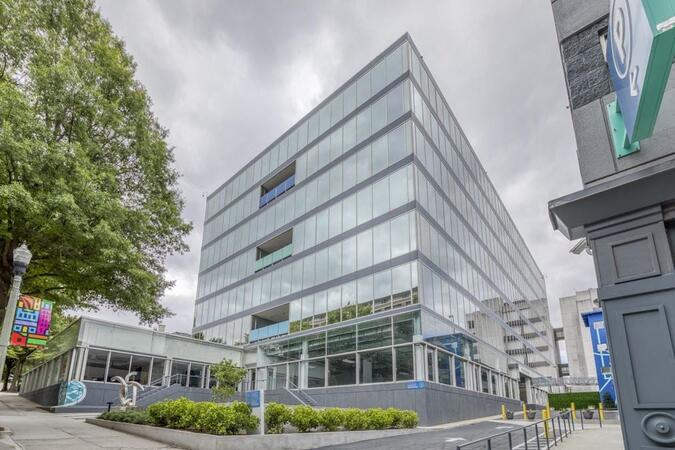
Atlanta, GA – The Proscenium
1170 Peachtree Street NE, Atlanta, United States, 30309
The venue is located in the heart of Midtown Atlanta in the Proscenium high–rise at 1170 Peachtree Street NE, easily accessible by car via I‑75/85 and GA‑400 with several parking garages nearby. Visitors arriving from Hartsfield–Jackson Atlanta International Airport (ATL), about 15 miles south, can expect a taxi or rideshare ride taking 20–30 minutes via I‑75/85 North. Public transit is seamless with MARTA Rail service; the Arts Center and Midtown stations are within walking distance (approximately 0.3–0.4 miles), and multiple MARTA bus routes also serve Peachtree Street.
Decatur, GA – Regus at One West Court Square
One West Court Square, Suite 750, Decatur, United States, 30030
The venue is located in the heart of downtown Decatur within One West Court Square, easily reached by car via I‑20 and I‑285, with several public parking decks directly adjacent. Travelers from Hartsfield–Jackson Atlanta International Airport (ATL), approximately 17 miles southwest, can expect a taxi or rideshare ride of around 25–30 minutes via I‑20 East. Public transit is particularly convenient: MARTA rail users can disembark at Decatur Station (about 0.15 miles away) and walk a few minutes to the building entrance. Local bus routes also serve Trinity Place and Swanton Way, putting the center within easy reach.
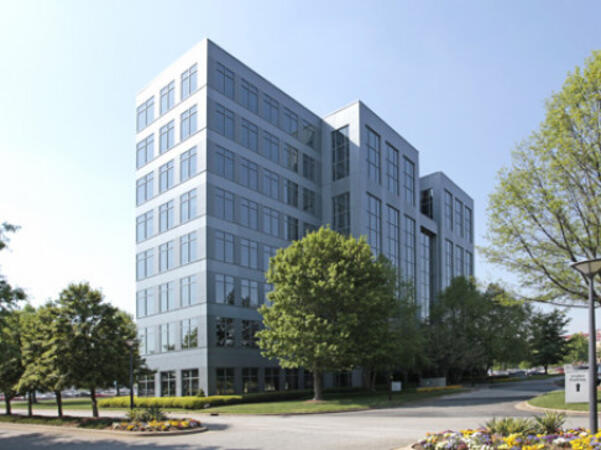
Atlanta, GA – Regus at One Hartsfield
100 Hartsfield Centre Parkway, Suite 500, Atlanta, United States, 30354
The venue is located in the One Hartsfield Center office building, adjacent to Hartsfield–Jackson Atlanta International Airport, easily reached by car via I‑75/I‑85 or GA‑138, with abundant on-site parking. Visitors arriving from ATL airport can walk or take a shuttle to the building, or opt for a quick 2–3‑minute taxi or rideshare ride. Public transit users can board MARTA from the Airport Station and ride one stop to College Park Station, then catch a connecting shuttle or enjoy a brief walk of about half a mile.
Atlanta, GA – Regus at Peachtree
260 Peachtree Street NW, Suite 2200, Atlanta, United States, 30303
The venue is situated in the iconic Coastal States Building at 260 Peachtree Street in downtown Atlanta, accessible by car via I‑75/85 or I‑20 with convenient parking garages nearby. From Hartsfield–Jackson Atlanta International Airport (ATL), about 12 miles south, a taxi or rideshare along I‑75/85 North takes approximately 15–20 minutes. For public transit, MARTA rail users can disembark at Five Points Station and walk 0.5 miles northeast, or exit at Peachtree Center Station and walk two blocks north—both routes offering easy access.
Augusta, GA – At Broad Street
823 Broad Street, Augusta, United States, 3090
The venue is located in the heart of downtown Augusta on Broad Street, easily accessible by car via I‑20 with several public parking garages nearby. From Augusta Regional Airport (AGS), about 9 miles west, taxis or rideshares typically take 15–20 minutes via I‑20. Public transit is available through Augusta Public Transit buses with routes along Broad Street, stopping within a few blocks of the venue, offering a convenient option for attendees without a car.
Savannah, GA – Regus at Bull Street
100 Bull St Downtown, Suite 200, Savannah, United States, 31401
The venue is located in the historic downtown area on Bull Street in the Altmayer Building, easily accessible by car via I‑16 and U.S. 17, with several public garages nearby. From Savannah/Hilton Head International Airport (SAV), about 12 miles west, taxis or rideshares typically take 15–20 minutes via U.S. 17 South. Public transit is available via Chatham Area Transit (CAT) buses, with frequent service along Bull and Broughton Streets; Johnson Square Station is just a couple minutes’ walk from the venue.
This instructor-led live training in Georgia provides finance practitioners and IT personnel with the skills to implement Ollama locally. Participants learn to deploy, configure, and integrate large language models into secure financial workflows, applying best practices for compliance and automation for government contexts.
Ollama is a lightweight platform designed for the local execution of large language models.
This live, instructor-led training, available online or onsite, is designed for intermediate-level healthcare practitioners and IT professionals tasked with deploying, customizing, and operationalizing Ollama-based artificial intelligence solutions within clinical and administrative settings for government.
Upon completion of this training, participants will be equipped to:
Install and configure Ollama to ensure secure usage in government healthcare environments.
Integrate local large language models into clinical workflows and administrative processes for government.
Adapt models to align with specialized healthcare terminology and operational tasks.
Implement best practices regarding data privacy, security, and regulatory compliance for government operations.
Course Format
Interactive lectures and facilitated discussions.
Practical demonstrations and guided exercises.
Application of concepts in a sandboxed healthcare simulation environment for government.
Course Customization Options
Contact the training provider to arrange customized instruction for government-specific requirements.
Ollama serves as a platform for executing large language and multimodal models in local environments, facilitating the implementation of governance controls and responsible artificial intelligence practices.
This live, instructor-led training, available remotely or on-site, is designed for intermediate to advanced professionals seeking to embed equity, transparency, and accountability into Ollama-based applications for government use.
Upon completion, participants will possess the capacity to:
Apply responsible AI principles within Ollama deployments for government contexts.
Execute strategies for content moderation and algorithmic bias mitigation.
Design governance workflows that support AI alignment and comprehensive auditability.
Establish monitoring and reporting structures to ensure regulatory compliance.
Instructional Methodology
Interactive seminars and guided discussions.
Practical laboratory sessions focused on designing governance workflows.
Analytical case studies and exercises emphasizing regulatory compliance.
Customization Provisions
For inquiries regarding tailored training curricula, please contact us to schedule a consultation.
Mistral AI provides a robust suite of open-source and enterprise-grade AI models designed for language, multimodal, and agentic applications.
This instructor-led training, available in online or onsite formats, targets intermediate to advanced professionals focused on building, deploying, and managing AI agents for government using Mistral’s Medium 3, Le Chat Enterprise, and Devstral models.
Upon completion, participants will be equipped to:
Analyze the architecture and capabilities of Mistral Medium 3, Le Chat Enterprise, and Devstral.
Architect and implement AI agents utilizing Mistral models for enterprise and developer use cases.
Integrate coding systems, connectors, and institutional data into agent workflows.
Enhance performance, manage costs, and ensure regulatory compliance for Mistral-driven agents.
Instructional Methodology
Interactive lectures and facilitated discussions.
Extensive exercises and practical drills.
Live-lab implementation sessions for hands-on experience.
Customization Options
Contact the provider to arrange a tailored training solution for this curriculum.
Ollama is a platform designed to execute large language and multimodal models locally, supporting robust secure deployment methods.
This instructor-led, live training course, available online or onsite, is intended for mid-level professionals seeking to deploy Ollama with rigorous data privacy and regulatory compliance standards for government.
Upon completion of this training, participants will be equipped to:
Securely deploy Ollama within containerized and on-premise infrastructure.
Utilize differential privacy techniques to protect sensitive information.
Establish secure logging, monitoring, and audit protocols.
Enforce data access controls in alignment with regulatory compliance obligations.
Course Structure
Interactive instruction and facilitated discussion.
Practical laboratory exercises focusing on secure deployment models.
Compliance-oriented case studies and applied problem-solving exercises.
Customization of Course Content
For organizations requiring a tailored training program for government, please contact our team to coordinate arrangements.
Claude AI is an advanced language model engineered to support complex analytical, strategic, and organizational tasks for government agencies.
This instructor-led, live training session, available online or on-site, is designed for project management and planning professionals at the entry level who seek to utilize Claude AI to enhance project design, documentation, communication, and long-term planning activities.
Upon completing this training, participants will possess the capability to:
Generate project documentation, including charters, briefs, and scopes, using Claude AI.
Analyze risks, constraints, and dependencies through AI-supported reasoning.
Develop stakeholder communications and reporting outputs tailored for diverse audiences.
Utilize Claude AI to facilitate sprint planning, prioritization, and roadmap refinement.
Format of the Course
Instructor-led explanations accompanied by guided demonstrations.
Mistral AI serves as an open platform that empowers organizations to develop and embed conversational assistants within both internal operations and external service delivery channels for government and enterprise environments.
This instructor-led, live training session—available in online or on-site formats—is designed for product managers, full-stack developers, and integration engineers at beginner to intermediate levels. The curriculum focuses on the strategic design, integration, and operationalization of conversational assistants utilizing Mistral’s connector and integration frameworks.
Upon completion of this training, participants will possess the capability to:
Integrate Mistral conversational models with enterprise-grade and SaaS infrastructure components.
Implement retrieval-augmented generation (RAG) to ensure grounded, fact-based responses.
Architect user experience patterns for both internal operational tools and external service points.
Deploy assistants into functional workflows to address specific operational requirements.
Training Delivery Format
Interactive instructional sessions and facilitated discussions.
Practical exercises focused on system integration.
Live laboratory sessions for the development of conversational prototypes.
Customization Availability
Organizations may request tailored training modules for government or specific operational needs by contacting the provider for scheduling.
Ollama serves as a platform facilitating the local execution of large language and multimodal models.
This instructor-led, live training session (available online or onsite) is designed for intermediate-level professionals seeking to master prompt engineering techniques to optimize Ollama outputs for government applications.
Upon completion of this training, participants will possess the capability to:
Construct effective prompts tailored to diverse operational scenarios.
Utilize techniques such as contextual priming and chain-of-thought structuring.
Deploy prompt templates and advanced context management strategies.
Develop multi-stage prompting pipelines for intricate workflow processes.
Instructional Format
Interactive lectures and facilitated discussions.
Practical exercises focused on prompt design.
Real-world application within a live laboratory environment.
Course Customization Options
To request a customized training program for this course, please contact our office to coordinate arrangements.
This instructor-led, live training in Georgia supports beginners in applying Claude AI to customer support and service operations. Participants will learn to automate triage processes, draft tone-consistent responses, and integrate AI into existing workflows using practical, hands-on exercises for government.
Master LangGraph for legal applications through this 35-hour instructor-led training for government in Georgia. Designed for intermediate to advanced professionals, this course covers workflow design, compliance controls, and human-in-the-loop approvals. Build auditable, production-ready LLM solutions that meet rigorous government standards.
Mistral AI operates as an open, enterprise-oriented platform designed to facilitate the secure, compliant, and responsible deployment of artificial intelligence solutions.
This instructor-led, live instructional session, available in either virtual or on-site formats, is tailored for mid-level compliance officers, security engineers, and legal/operational stakeholders. The objective is to implement responsible AI practices using Mistral by applying privacy safeguards, data residency controls, and enterprise-level governance mechanisms relevant for government and public sector operations.
Upon completion of this training, participants will demonstrate the ability to:
Deploy privacy-preserving methodologies within Mistral environments.
Execute data residency strategies to satisfy statutory and regulatory obligations.
Configure enterprise-grade security controls, including RBAC, SSO, and audit logging.
Assess vendor capabilities and deployment models for regulatory alignment.
Instructional Methodology
Facilitated instruction through lectures and collaborative discussion.
Analysis of compliance-centric scenarios and practical exercises.
Practical application of enterprise AI control frameworks.
Program Customization
Interested parties may contact the organization to discuss tailored training options for this course.
Ollama serves as a platform for executing large language and multimodal models in local and scaled environments.
This live, instructor-led course (available online or in-person) is designed for intermediate to advanced engineers responsible for scaling Ollama deployments to support multi-user, high-throughput, and cost-effective operations.
Upon completion of this training, participants will be equipped to:
Configure Ollama for distributed and multi-user workloads.
Optimize the allocation of GPU and CPU resources.
Implement strategies for autoscaling, batching, and latency reduction.
Monitor and refine infrastructure performance to ensure cost efficiency.
Course Delivery Format
Interactive lectures and group discussions.
Practical labs focused on deployment and scaling.
Live-environment exercises for performance optimization.
Customization for Government
Contact our team to arrange a customized training program tailored to specific organizational needs.
The Compute Architecture for Neural Networks (CANN) Software Development Kit offers robust mechanisms for the deployment and optimization of real-time artificial intelligence applications in computer vision and natural language processing, particularly on Huawei Ascend infrastructure.
This instructor-led, live training course, available in online or on-site formats, is designed for intermediate-level AI practitioners seeking to build, deploy, and optimize vision and language models using the CANN SDK for production use cases for government.
Upon completion of this training, participants will be equipped to:
Deploy and optimize CV and NLP models using CANN and AscendCL.
Leverage CANN tools to convert models and integrate them into live operational pipelines.
Enhance inference performance for tasks such as detection, classification, and sentiment analysis.
Construct real-time CV/NLP pipelines suitable for edge or cloud-based deployment scenarios for government.
Course Format
Interactive lectures and technical demonstrations.
Practical laboratory exercises focused on model deployment and performance profiling.
Design of live pipelines utilizing authentic CV and NLP use cases.
Customization Options
To request tailored training aligned with specific operational needs for government, please contact the program office to arrange.
This live Claude AI training in Georgia assists professionals in utilizing the tool for data analysis and BI tasks for government. It covers exploratory data analysis, SQL generation, and dashboard design through natural language prompting, aiming to streamline workflows and improve insight extraction from business data.
LangGraph serves as a framework for constructing stateful, multi-agent large language model (LLM) applications through composable graphs, featuring persistent state management and precise execution control.
This instructor-led, live training session (available online or on-site) is tailored for intermediate to advanced professionals seeking to design, implement, and manage LangGraph-based financial solutions with robust governance, observability, and compliance for government and regulated sectors.
Upon completion of this training, participants will be proficient in the following areas:
Designing financial workflows within LangGraph that adhere to regulatory and audit mandates.
Integrating financial data standards and ontologies into graph state management and operational tooling.
Implementing reliability, safety, and human-in-the-loop controls for critical financial processes.
Deploying, monitoring, and optimizing LangGraph systems to meet performance targets, cost efficiency, and service level agreements (SLAs).
Course Format
Interactive lectures and structured discussions.
Extensive practical exercises and skill-building activities.
Hands-on implementation within a live laboratory environment.
Course Customization Options
To request a customized training curriculum for this course, please contact the provider to coordinate arrangements.
Ollama provides a platform for executing and fine-tuning large language and multimodal models with local control, ensuring data sovereignty and operational security.
This instructor-led, live training (online or onsite) is designed for advanced machine learning engineers, AI researchers, and product developers seeking to build and deploy multimodal applications with Ollama for government operations.
Upon completion of this training, participants will be able to:
Configure and execute multimodal models using Ollama.
Integrate text, image, and audio inputs to support real-world governmental applications.
Construct document understanding and visual question answering systems.
Develop multimodal agents capable of cross-modality reasoning and decision support.
Course Structure
Interactive instruction and facilitated discussion.
Practical exercises utilizing real multimodal datasets.
Live laboratory implementation of multimodal pipelines using Ollama.
Customization Options
To request a customized training program aligned with specific agency requirements, please contact us to schedule a consultation.
Mistral models constitute open-source artificial intelligence technologies that have expanded into multimodal workflows, facilitating both linguistic and visual tasks for enterprise and research contexts.
This live, instructor-led training (available online or onsite) is designed for intermediate-level machine learning researchers, applied engineers, and product teams intending to develop multimodal applications using Mistral models, particularly those involving OCR and document comprehension pipelines.
Upon completion of this training, participants will possess the ability to:
Install and configure Mistral models for multimodal operations.
Implement OCR workflows and integrate them with NLP processing pipelines.
Architect document comprehension applications for enterprise operational needs.
Develop vision-text search functionalities and assistive user interface components.
Course Structure
Interactive instruction and facilitated discussion.
Practical coding exercises.
Live laboratory implementation of multimodal pipelines.
Customization Options for the Course
To request a customized training program for this course, please contact us to schedule.
This instructor-led, live training session in Georgia (online or onsite) is designed for intermediate-level data scientists and developers seeking to implement NLP techniques using Python within the Google Colab environment for government.
Upon completion of this training, participants will possess the ability to:
Demonstrate proficiency in the fundamental concepts of natural language processing.
Execute preprocessing and cleansing procedures on text data for NLP operations.
Conduct sentiment analysis using the NLTK and SpaCy libraries.
Manage text data utilizing Google Colab to support scalable and collaborative development initiatives.
Advanced Ollama Model Debugging & Evaluation is a specialized training program designed to master the diagnosis, testing, and performance measurement of model behaviors within local or private Ollama deployments.
This instructor-led, live training (available online or onsite) targets advanced AI engineers, MLOps professionals, and quality assurance practitioners. The objective is to ensure the reliability, fidelity, and operational readiness of Ollama-based models deployed in government environments.
Upon completion of this training, participants will possess the ability to:
Execute systematic debugging of Ollama-hosted models and consistently reproduce specific failure modes.
Design and implement robust evaluation pipelines utilizing both quantitative and qualitative performance metrics.
Establish observability frameworks (logs, traces, metrics) to monitor model health and detect drift in compliance with security standards.
Automate testing, validation, and regression checks integrated into CI/CD pipelines to ensure operational integrity.
Course Format
Interactive instruction and facilitated discussion.
Practical hands-on labs and debugging exercises utilizing Ollama deployments.
Analysis of case studies, collaborative troubleshooting sessions, and automation workshops.
Customization Options for Government
To request a customized training curriculum tailored for government needs, please contact us to arrange specific requirements.
This instructor-led, live training module, delivered in Georgia (online or onsite), is targeted at intermediate-level researchers, analysts, and knowledge professionals who intend to leverage Claude AI for managing large data volumes, synthesizing information, and automating research tasks for government.
Upon completion of this training, participants will be equipped to:
Apply Claude AI to literature reviews and research synthesis for government contexts.
Summarize official reports, research papers, and long-form documents.
Extract critical insights and trends from both structured and unstructured data sources.
Integrate Claude AI into established research and knowledge management workflows.
Devstral and Mistral models represent open-source artificial intelligence technologies engineered for flexible deployment, precise fine-tuning, and scalable integration within organizational infrastructure.
This instructor-led training, available in online or onsite formats, targets intermediate to advanced machine learning engineers, platform teams, and research professionals. The curriculum focuses on self-hosting, fine-tuning, and governing Mistral and Devstral models for production environments, with specific relevance to secure and accountable operations for government.
Upon completion, participants will be equipped to:
Configure and manage self-hosted environments for Mistral and Devstral models.
Execute fine-tuning processes to enhance domain-specific performance.
Deploy versioning, monitoring, and lifecycle governance frameworks.
Maintain security, compliance, and responsible usage protocols for open-source models for government.
Course Format
Interactive lectures facilitated by expert discussion.
Practical exercises focused on self-hosting and fine-tuning techniques.
Live-lab implementation of governance and monitoring pipelines.
Customization Availability
Prospective learners may contact our office to arrange customized training sessions for this course.
LangGraph facilitates stateful, multi-actor workflows leveraging Large Language Models (LLMs) with precise control over execution paths and state persistence. Within the public health sector, these capabilities are essential for ensuring regulatory compliance, achieving interoperability, and developing decision-support systems aligned with government medical operations.
This instructor-led, live training (available online or onsite) is designed for intermediate to advanced professionals seeking to design, implement, and manage LangGraph-based healthcare solutions for government, while addressing regulatory, ethical, and operational complexities.
Upon completion of this training, participants will be able to:
Design healthcare-specific LangGraph workflows with a focus on regulatory compliance and auditability.
Integrate LangGraph applications with medical ontologies and standards (FHIR, SNOMED CT, ICD) required for government data exchange.
Apply best practices for reliability, traceability, and explainability in sensitive public sector environments.
Deploy, monitor, and validate LangGraph applications in healthcare production settings for government use.
Format of the Course
Interactive lectures and facilitated discussions.
Hands-on exercises utilizing real-world public sector case studies.
Implementation practice in a live laboratory environment.
Course Customization Options
To request a customized training program tailored to specific government agency needs, please contact us to arrange details.
LangGraph serves as a framework for developing stateful, multi-actor LLM applications structured as composable graphs, featuring persistent state management and precise control over execution flows.
This instructor-led, live training session (available online or on-site) is designed for advanced AI platform engineers, DevOps professionals specializing in AI, and ML architects seeking to optimize, troubleshoot, monitor, and manage production-grade LangGraph systems for government environments.
Upon completion of this training, participants will be equipped to:
Design and refine complex LangGraph structures to enhance velocity, cost-efficiency, and scalability.
Implement robust reliability standards through retry mechanisms, timeout controls, idempotency, and checkpoint-based recovery.
Diagnose and trace graph executions, inspect internal states, and methodically replicate production anomalies.
Instrument systems with logging, metrics, and tracing capabilities, deploy to production, and monitor SLAs and associated costs.
Training Delivery Model
Interactive instructional sessions and facilitated discussions.
Extensive exercises and practical application tasks.
Real-time implementation within a live laboratory environment.
Customization Options
Interested parties may contact the provider to coordinate a tailored training program aligned with specific organizational needs.
This instructor-led, live training in Georgia (online or onsite) is targeted at beginner- to intermediate-level content creators, writers, and marketers seeking to leverage Claude AI for content generation, editing, and summarization to enhance blogs, reports, and marketing materials for government stakeholders.
By the conclusion of this training, participants will be able to:
Apply Claude AI for content brainstorming and idea expansion.
Enhance writing through AI-assisted editing and proofreading.
Generate summaries for long-form content and reports.
Streamline the creation of marketing copy for various platforms.
This instructor-led, live training in Georgia (online or onsite) is designed for advanced-level professionals seeking to fine-tune and customize AI models on Ollama to improve performance and support domain-specific applications for government and public sector contexts.
Upon completion of this training, participants will be equipped to:
Establish an efficient environment for fine-tuning AI models on Ollama.
Prepare datasets for supervised fine-tuning and reinforcement learning.
Optimize AI models for performance, accuracy, and efficiency.
Deploy customized models in production environments.
Evaluate model improvements and ensure robustness.
Develop expertise in cost-effective Mistral large language model architectures through this 14-hour live training conducted in Georgia. Acquire the skills to deploy, optimize, and scale Mistral Medium 3 for peak throughput and minimal cost, utilizing batching, quantization, and efficient serving strategies to support enterprise and government workloads.
This instructor-led, live training in Georgia (online or onsite) is aimed at advanced-level professionals who wish to implement secure and efficient AI-driven workflows using Ollama.
By the end of this training, participants will be able to:
Deploy and configure Ollama for private AI processing.
Integrate AI models into secure enterprise workflows.
Optimize AI performance while maintaining data privacy.
Automate business processes with on-premise AI capabilities.
Ensure compliance with enterprise security and governance policies.
This instructor-led live training in Georgia (delivered online or onsite) is tailored for intermediate-level software developers and AI engineers tasked with integrating Claude AI into public sector applications, developing AI-assisted communication tools, and improving software functionality through automated processes.
Upon completion, participants will be equipped to:
Implement the Claude AI API to embed intelligent features into public-facing applications.
Construct AI-driven communication interfaces and virtual assistants for citizen engagement.
Incorporate AI-powered automation and natural language processing to streamline government workflows.
Optimize and fine-tune Claude AI models to align with specific governmental operational requirements.
LangGraph serves as a graph-based orchestration framework that facilitates conditional, multi-step workflows involving large language models (LLMs) and external tools. This infrastructure is well-suited for the automation and customization of content pipelines for government operations.
This instructor-led, live training session, available in online or onsite formats, targets intermediate-level professionals, including content strategists and automation developers. The objective is to implement dynamic, branching email campaigns and automated content generation systems using LangGraph.
Upon completion of this training, participants will possess the ability to:
Design graph-structured content and email workflows incorporating conditional logic.
Integrate LLMs, application programming interfaces (APIs), and external data sources to drive automated personalization.
Manage state, memory, and contextual data across multi-step campaign executions.
Evaluate, monitor, and optimize workflow performance and final delivery outcomes.
Course Structure and Delivery Method
Interactive instructional sessions and facilitated group discussions.
Practical laboratory exercises focused on implementing email workflows and content pipelines.
Scenario-based assignments emphasizing personalization, audience segmentation, and branching logic.
Course Customization and Tailored Solutions
For inquiries regarding customized training solutions tailored to specific operational needs for government, please contact the appropriate administrative office.
Le Chat Enterprise serves as a private ChatOps solution that delivers secure, customizable, and governed conversational AI capabilities for organizations, specifically designed for government operations, with robust support for RBAC, SSO, connectors, and enterprise application integrations.
This instructor-led, live training program (available online or onsite) is designed for intermediate-level product managers, IT leads, solution engineers, and security/compliance teams seeking to deploy, configure, and govern Le Chat Enterprise within enterprise and government environments.
Upon completion of this training, participants will be equipped to:
Establish and configure Le Chat Enterprise for secure government deployments.
Activate RBAC, SSO, and compliance-driven control mechanisms.
Integrate Le Chat with enterprise applications and secure data stores for government use.
Develop and implement governance and administrative playbooks for ChatOps operations.
Course Delivery Format
Interactive lectures and structured discussions.
Extensive exercises and practical application tasks.
Hands-on implementation within a live laboratory environment.
Course Customization Options for Government
To request a tailored training program for this course, please contact us to arrange specific requirements.
Devstral is an open-source framework engineered for the development and deployment of coding agents. These agents interact with codebases, developer tools, and application programming interfaces to improve engineering efficiency and operational standards for government systems.
This instructor-led training, available online or on-site, targets intermediate to advanced machine learning engineers, developer tooling specialists, and site reliability engineers. The objective is to enable participants to design, implement, and optimize coding agents using Devstral within a formal operational context.
Upon completion of this training, participants will be capable of:
Installing and configuring Devstral for the development of coding agents.
Designing agentic workflows for codebase analysis and modification.
Integrating coding agents with developer tools and external APIs.
Applying best practices for the secure and efficient deployment of agents.
Instructional Methodology
Interactive lectures and facilitated discussions.
Extensive practical exercises and skill-building activities.
Hands-on implementation within a live laboratory environment.
Customization Options for Government
Contact our team to arrange a customized training session tailored to specific government requirements.
This instructor-led, live training held in Georgia (online or in-person) is targeted at entry-level professionals who intend to incorporate Claude AI into their daily operational routines to enhance efficiency and automation.
By the conclusion of this training program, participants will be equipped to:
Utilize Claude AI for the automation of repetitive duties and the streamlining of workflows.
Improve individual and collective productivity through AI-assisted automation.
Integrate Claude AI with current institutional tools and digital platforms.
Refine AI-driven decision-making processes and task management structures.
This instructor-led live training in Georgia (offered online or on-site) is designed for intermediate-level professionals seeking to deploy, optimize, and integrate LLMs using Ollama for government purposes.
Upon completion of this course, participants will be equipped to:
Configure and deploy LLMs using Ollama in a secure environment.
Optimize AI models to ensure peak performance and resource efficiency.
Utilize GPU acceleration to enhance inference speeds for operational needs.
Integrate Ollama into existing workflows and internal applications.
Establish monitoring protocols to maintain AI model performance over time.
This live online or on-site course in Georgia guides intermediate engineers in constructing dynamic LLM workflows using LangGraph. Participants will learn to design stateful graphs, implement branching logic, and integrate retrieval systems, APIs, and memory components to build robust, context-aware applications for government environments.
This instructor-led, live training in Georgia (online or on-site) is targeted at intermediate-level data scientists, AI developers, and AI enthusiasts seeking to utilize LLMs for performing diverse NLP tasks and creating novel, varied content for specific purposes.
Upon completion of this training, participants will be able to:
Establish a development environment utilizing LLMs and essential tools.
Proficiently perform NLU and NLI tasks using LLMs.
Effectively extract, infer, and apply knowledge graphs.
Generate and manage dialogues using LLMs for conversational applications.
Evaluate the quality and diversity of content generated by LLMs and generative AI.
Apply ethical principles to ensure fairness and responsible use of LLMs.
This facilitated, live training in Georgia (virtual or on-site) targets intermediate-level technical personnel aiming to enhance NLP projects via the systematic refinement of pre-trained language models.
Upon completion of this training, participants will be equipped to:
Comprehend the foundational principles of model adaptation for NLP operations.
Refine pre-trained architectures, including GPT, BERT, and T5, for targeted NLP applications.
Tune hyperparameters to enhance model accuracy and reliability.
Assess and implement refined models within production environments.
LangGraph serves as a specialized framework for constructing graph-based LLM applications, enabling advanced features such as strategic planning, conditional branching, tool utilization, persistent memory, and controlled execution environments.
This instructor-led, live training program, available online or onsite, is designed for junior-level developers, prompt engineers, and data professionals seeking to engineer robust, multi-step LLM workflows utilizing LangGraph.
Upon completion of this program, participants will possess the capability to:
Articulate fundamental LangGraph components (nodes, edges, state) and their applicable contexts.
Construct prompt chains that support branching, tool invocation, and memory retention.
Integrate retrieval mechanisms and external APIs into graph-based workflows for government use cases.
Test, debug, and assess LangGraph applications to ensure reliability and safety standards.
Instructional Methodology
Interactive lectures combined with facilitated group discussions.
Guided laboratory sessions and code analysis within a secure sandbox environment.
Scenario-driven exercises focused on architectural design, testing, and evaluation.
Customization Capabilities
To arrange a customized training program for government agencies, please contact our team for specific requirements.
Mistral Medium 3 is a high-performance, multimodal large language model engineered for production-grade implementation within enterprise and government sectors.
This instructor-led, live training session, available online or on-site, is designed for intermediate to advanced AI/ML engineers, platform architects, and MLOps teams seeking to deploy, optimize, and secure Mistral Medium 3 for critical enterprise and public sector applications.
Upon completion of this training, participants will be equipped to:
Deploy Mistral Medium 3 through API integrations and self-hosted infrastructure options.
Enhance inference performance while managing operational costs effectively.
Execute multimodal use cases leveraging Mistral Medium 3 capabilities.
Enforce security and compliance standards aligned with enterprise and governmental requirements.
Course Delivery Format
Interactive instructional sessions and facilitated discussions.
Extensive practical exercises and proficiency drills.
Hands-on implementation within a controlled live-lab environment.
Customization Options for Government Needs
To request a customized training curriculum tailored for government requirements, please contact the program office to coordinate scheduling and scope.
This instructor-led live training session in Georgia (online or onsite) is intended for entry-level professionals aiming to install, configure, and utilize Ollama for deploying AI models on local hardware.
Upon completion of this program, participants will be equipped to:
Comprehend the core functionalities and capabilities of Ollama.
Establish Ollama for the local execution of AI models.
Deploy and engage with LLMs utilizing the Ollama framework.
Enhance performance metrics and resource efficiency for AI workloads.
Investigate applicable use cases for local AI deployment across various sectors.
This course examines the fundamental principles of artificial intelligence, analyzing how intelligent technologies drive digital transformation, operational automation, and data-driven decision-making within public sector agencies. It provides a comprehensive overview of core domains, including the historical development of AI, structured problem-solving methods, logical knowledge representation, reasoning under uncertainty, and machine learning frameworks, along with capabilities for natural language processing, perception, and autonomous robotics. The curriculum is designed for government officials and technical leaders, offering insights into evaluating AI adoption opportunities, assessing technological trends, and integrating intelligent systems to enhance service delivery, accountability, and organizational efficiency for government operations.
A two-day professional development course designed for developers already utilizing AI coding tools such as Cursor, Claude Code, or Copilot. The curriculum focuses on delegating comprehensive tasks to autonomous agents, constructing the personalization framework (Rules, AGENTS.md, Skills, MCP, Agents), integrating and building MCP servers, executing parallel agent operations, and implementing structured agentic workflows. The instructional material is tool-agnostic. This course serves as a continuation of the Foundations module.
A two-day introductory course on AI-assisted software development designed for individuals new to these tools, including those with limited or no coding background. The curriculum addresses tool mechanics, prompt direction strategies, and application to standard tasks: constructing a small-scale project from inception, integrating with existing codebases, and conducting result review. The instructional material is tool-agnostic and applicable to Cursor, Claude Code, Copilot, and comparable platforms. This course serves as a prerequisite for the Agentic AI Development: Advanced Workflows training.
This two-stage training program is structured for software delivery teams seeking to incorporate AI-assisted engineering workflows into their routine operations using Claude Code.
This course Georgia provides comprehensive artificial intelligence training spanning data analysis, distributed machine learning, and natural language processing, designed to help developers build large-scale intelligent systems. It offers an in-depth exploration of practical methodologies for Spark MLlib, recommendation engines, Word2Vec-based semantic analysis, and RNN-LSTM architectures. By enabling professionals to transform raw data into automated decision-making pipelines suitable for production deployment, the course comprehensively enhances the core capabilities required for building sophisticated intelligent systems
This instructor-led, live training in Georgia (online or onsite) is designed for senior leaders and executives seeking to utilize Claude as a strategic business assistant for government contexts to enhance decision-making, expedite planning, and build institutional capability through AI-augmented leadership.
This intensive two-day program is designed for government professionals seeking to advance from casual AI interaction to strategic integration as a core digital work partner.
The curriculum combines strategic theoretical insights aligned with the 2026 AI ecosystem with a rigorous practical component, featuring nine hands-on exercises applied directly to real-world government business contexts.
Day 1 (In-Person): Mastery of the Anthropic Ecosystem. Focuses on advanced prompting techniques, profile personalization via Custom Instructions, and the utilization of persistent workspaces (Projects, Artifacts, Skills) to manage internal knowledge bases.
Day 2 (Online): Automation and Ecosystem Integration. Focuses on background automation via Cowork, the MCP (Model Context Protocol) ecosystem, and native integration with the Microsoft 365 suite (Word, Excel, PowerPoint, Teams, SharePoint, and OneDrive).
Claude Code functions as a terminal-native development agent rather than a simple code-completion utility. It reads codebases, plans multi-step modifications, executes tests, and drives tasks from a single instruction to a working result. This one-day workshop provides structured, hands-on training for government applications: configuring Claude Code for production projects, drafting delegations that yield reviewable results, utilizing CLAUDE.md as persistent project memory, and integrating internal tools via the Model Context Protocol.
This instructor-led live training in Georgia is tailored for intermediate-level developers aiming to progress a project from initial idea to a deployed, production-ready application using Claude Code.
By the conclusion of this training, participants will be able to:
Configure Claude Code and effectively guide its operations via a CLAUDE.md file.
Develop application scaffolding and integrate data sources and CMS components.
Create test suites and execute quality assurance tasks using subagents.
Establish automated deployment pipelines to Vercel or Cloud Run.
This instructor-led, live training session in Georgia (online or onsite) is tailored for software developers and engineering teams aiming to leverage Claude Code to optimize development cycles, enhance code integrity, and automate repetitive programming tasks.
By the conclusion of this training, participants will be able to install and configure Claude Code, edit multi-file codebases using natural language, apply authorization modes, and integrate with Git and CI/CD systems.
Natural Language Processing converts unstructured text into actionable intelligence, enhancing the capacity of automated systems to interpret human communication. This curriculum examines foundational techniques, including corpus analysis, syntactic parsing, preprocessing pipelines, and dimensionality reduction methods such as Singular Value Decomposition (SVD) and Non-negative Matrix Factorization (NMF). It provides practical instruction on implementing document clustering, topic modeling, sentiment analysis, and Named Entity Recognition using Python. The training equips personnel with the skills to develop robust text analytics capabilities, supporting automated content classification and information retrieval for government operations.
Ollama is an open-source framework designed for the local execution of large language models on consumer and enterprise hardware. It consolidates the processes of model quantization, GPU allocation, and API serving into a single command-line interface. This enables organizations to self-host LLMs such as Llama, Mistral, and Qwen for government use, thereby preventing the transmission of prompts and data to external entities like OpenAI, Anthropic, or Google.
Read more...
Last Updated:
Testimonials (4)
Getting people that never used AI some repetition in prompting and people that do use AI to consider different methods to using it.
Matthew Gay - Tarsus Pharmaceuticals
Course - Artificial Intelligence (AI) Overview
The course was very useful, and the trainer was clear, well-prepared, and engaging. I liked the fact that it was very practical with labs and real use cases.
Overall, it was a valuable training experience.
Mattia Dettori - MFM INVESTMENT Ltd Italian branch
Course - LLM Engineering Bootcamp
Examples and links excel repository
Olga - GE HealthCare
Course - Generative AI with Large Language Models (LLMs)
This is one of the best hands-on with exercises programming courses I have ever taken.
Laura Kahn
Course - Artificial Intelligence - the most applied stuff - Data Analysis + Distributed AI + NLP
Online Natural Language Processing (NLP) training in Georgia, NLP (Natural Language Processing) training courses in Georgia, Weekend NLP courses in Georgia, Evening Natural Language Processing (NLP) training in Georgia, Natural Language Processing instructor-led in Georgia, Natural Language Processing private courses in Georgia, NLP (Natural Language Processing) instructor-led in Georgia, Natural Language Processing (NLP) trainer in Georgia, NLP coaching in Georgia, Evening Natural Language Processing courses in Georgia, Online NLP training in Georgia, NLP (Natural Language Processing) classes in Georgia, Natural Language Processing boot camp in Georgia, NLP (Natural Language Processing) instructor in Georgia, NLP (Natural Language Processing) on-site in Georgia, Weekend Natural Language Processing training in Georgia, NLP (Natural Language Processing) one on one training in Georgia