Online or onsite, instructor-led live web development training courses illustrate through interactive discussion and hands-on practice how to execute web development tasks effectively.
Web development training is available as "online live training" or "onsite live training." Online live training (also known as "remote live training") is conducted via an interactive, remote desktop environment. Onsite live training can be conducted locally at customer premises in Virginia or in Govtra corporate training centers in Virginia.
Govtra -- Your Trusted Training Provider for Government
VA, Stafford - Quantico Corporate
800 Corporate Drive, Suite 301, Stafford, united states, 22554
The venue is located between interstate 95 and the Jefferson Davis Highway, in the vicinity of the Courtyard by Mariott Stafford Quantico and the UMUC Quantico Cororate Center.
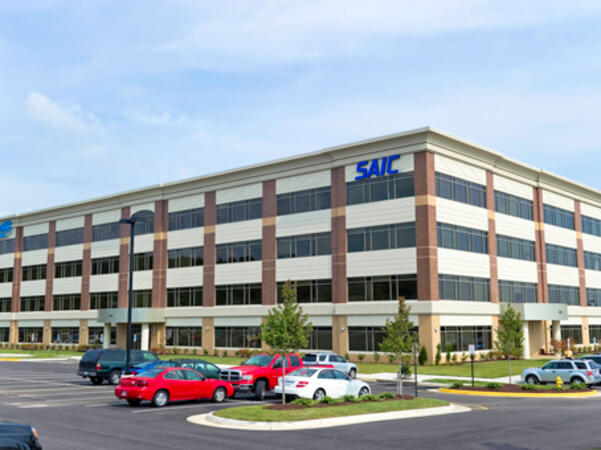
VA, Fredericksburg - Central Park Corporate Center
1320 Central Park Blvd., Suite 200, Fredericksburg, united states, 22401
The venue is located behind a complex of commercial buildings with the Bank of America just on the corner before the turn leading to the office.

VA, Richmond - Two Paragon Place
Two Paragon Place, 6802 Paragon Place Suite 410, Richmond, United States, 23230

The venue is located in bustling Richmond with Hampton Inn, Embassy Suites and Westin Hotel less than a mile away.
VA, Reston - Sunrise Valley
12020 Sunrise Valley Dr #100, Reston, United States, 20191

The venue is located just behind the NCRA and Reston Plaza Cafe building and just next door to the United Healthcare building.
VA, Reston - Reston Town Center I
11921 Freedom Dr #550, Reston, united states, 20190

The venue is located in the Reston Town Center, near Chico's and the Artinsights Gallery of Film and Contemporary Art.
VA, Richmond - Sun Trust Center Downtown
919 E Main St, Richmond , united states, 23219

The venue is located in the Sun Trust Center on the crossing of E Main Street and S to N 10th Street just opposite of 7 Eleven.
Richmond, VA – Regus at Two Paragon Place
6802 Paragon Place, Suite 410, Richmond, United States, 23230

The venue is located within the Two Paragon Place business campus off I‑295 and near Parham Road in North Richmond, offering convenient access by car with free on-site parking. Visitors arriving from Richmond International Airport (RIC), approximately 16 miles northwest, can expect a taxi or rideshare ride of around 20–25 minutes via I‑64 West and I‑295 North. Public transit is available via GRTC buses, with routes stopping along Parham Road and Quioccasin Road, just a short walk to the campus.
Virginia Beach, VA – Regus at Windwood Center
780 Lynnhaven Parkway, Suite 400, Virginia Beach, United States, 23452
The venue is situated within the Windwood Center along Lynnhaven Parkway, featuring modern concrete-and-glass architecture and ample on-site parking. Easily accessible by car via Interstate 264 and the Virginia Beach Expressway, the facility offers a hassle-free commute. From Norfolk International Airport (ORF), located about 12 miles northwest, a taxi or rideshare typically takes 20–25 minutes via VA‑168 South and Edenvale Road. For those using public transit, the HRT bus system includes stops at Lynnhaven Parkway and surrounding streets, providing convenient access by bus.
This instructor-led, live training (online or onsite) is designed for intermediate-level developers who wish to build Full-Stack applications using React 19, TypeScript, Next.js, Node.js, Prisma, PostgreSQL, and related DevOps practices.
By the end of this training, participants will be able to:
Develop responsive and scalable front-end applications using React 19 and TypeScript.
Implement automated testing with Jest and React Testing Library.
Construct and document RESTful APIs using Express, JWT, and Prisma with PostgreSQL.
Deploy applications utilizing Git and DevOps pipelines.
Gain an understanding of the role of Data Warehouses, Data Lakes, and AI integration in modern web ecosystems for government.
FrontEnd and BackEnd Development is the practice of constructing the user-facing and server-side components of web applications, ensuring they are fully functional, user-friendly, and maintainable.
This instructor-led, live training (online or onsite) is designed for intermediate-level developers and IT professionals who seek to gain a comprehensive understanding of web application development from front to back end.
By the end of this training, participants will be able to:
Design and build responsive web interfaces.
Implement server-side logic and data management.
Effectively integrate FrontEnd and BackEnd components.
Leverage modern tools and frameworks to enhance development efficiency.
Format of the Course
Interactive lectures and discussions.
Extensive exercises and practice sessions.
Hands-on implementation in a live-lab environment.
Course Customization Options for Government
To request a customized training for government agencies, please contact us to arrange.
This instructor-led, live training (online or onsite) is designed for intermediate to advanced full-stack developers who wish to leverage AWS Cloud9 to enhance their development workflows for government projects.
By the end of this training, participants will be able to:
- Configure and set up AWS Cloud9 for full-stack development.
- Develop and debug front-end applications using AWS Cloud9.
- Build and deploy back-end services utilizing AWS Cloud9.
- Integrate AWS Cloud9 with other AWS services for advanced deployments.
- Collaborate effectively with team members in a cloud-based development environment.
This instructor-led, live training (online or onsite) is aimed at advanced-level web developers who wish to design, build, and deploy complex web applications using advanced tools and practices for government.
By the end of this training, participants will be able to:
- Design scalable web architectures with advanced front-end and back-end patterns.
- Work with modern frameworks such as React, Angular, or Vue.
- Build secure, robust APIs using Node.js, Django, or PHP.
- Utilize Docker, CI/CD, and cloud-native tools for deployment.
- Explore emerging technologies like Progressive Web Applications (PWAs), Serverless, and WebAssembly.
This instructor-led, live training in Virginia (online or onsite) is designed for government developers at the beginner to intermediate level who wish to enhance their skills in updating front-end packages, managing dependencies effectively, and integrating the latest tools and features into web projects.
By the end of this training, participants will be able to:
- Understand the importance of package updates and dependency management in web projects for government.
- Update and manage front-end packages using npm and Yarn.
- Address compatibility issues and resolve conflicts during updates.
- Leverage modern front-end tools and frameworks to optimize workflows.
- Implement best practices for front-end project maintenance and version control.
In accordance with the latest OWASP GenAI Security Project guidance, participants will gain the skills to identify, assess, and mitigate AI-specific threats through practical exercises and real-world scenarios. This training is designed to enhance cybersecurity capabilities for government agencies, ensuring alignment with public sector workflows, governance, and accountability.
Spring WebFlux is a reactive programming module within the Spring Framework designed for building non-blocking, event-driven web applications.
This instructor-led, live training (online or onsite) is aimed at beginner-level to intermediate-level Java developers who wish to build scalable and responsive applications using Spring WebFlux.
By the end of this training, participants will be able to:
- Understand the fundamentals of reactive programming with Project Reactor.
- Build and test non-blocking RESTful APIs using Spring WebFlux.
- Integrate WebFlux with databases and external services.
- Apply reactive patterns to real-world application scenarios.
**Format of the Course**
- Interactive lecture and discussion.
- Extensive exercises and practice sessions.
- Hands-on implementation in a live-lab environment.
**Course Customization Options for Government**
To request a customized training for this course, tailored specifically to meet the needs of government agencies, please contact us to arrange.
JavaScript is a dynamic, high-level programming language extensively utilized in web, mobile, and desktop development. With the advancement of modern frameworks and TypeScript, JavaScript has become an essential component of full-stack application development.
This instructor-led, live training (online or onsite) is designed for government agencies and aimed at beginner to intermediate developers who wish to master JavaScript, TypeScript, and full-stack development using contemporary tools and practices.
By the end of this training, participants will be able to:
- Write clean and modern JavaScript and TypeScript code.
- Build interactive front-end applications with React.
- Develop scalable back-end APIs using Node.js and Express.
- Create desktop applications using Electron.
- Test, document, and deploy full-stack applications for government use.
**Format of the Course**
- Interactive lecture and discussion.
- Extensive exercises and practice sessions.
- Hands-on implementation in a live-lab environment.
**Course Customization Options**
To request a customized training for this course tailored to specific needs, please contact us to arrange.
This instructor-led, live training in Virginia (online or onsite) is designed for government developers at the beginner to intermediate level who wish to enhance their code editing skills using VS Code.
By the end of this training, participants will be able to:
Become proficient with the VS Code interface.
Utilize workspaces in VS Code effectively.
Manage keyboard shortcuts and settings within VS Code.
Work with various programming languages in VS Code.
This instructor-led, live training in [location] (online or onsite) is designed for beginner-level professionals who wish to develop functional and interactive websites using foundational web technologies.
By the end of this training, participants will be able to:
- Comprehend how the web functions, including client-server architecture, URLs, and browsers.
- Construct well-structured web pages using HTML5.
- Enhance the visual appeal of web pages with CSS.
- Integrate interactivity and logic through JavaScript.
- Manipulate the Document Object Model (DOM) to respond to user events.
This training is tailored to support professionals in building robust web applications, ensuring alignment with public sector workflows, governance, and accountability for government projects.
This instructor-led, live training in [location] (online or onsite) is designed for web developers and individuals interested in learning and utilizing WebRTC to develop applications that feature voice, video, and data sharing capabilities through the WebRTC API.
By the end of this training, participants will be able to:
- Understand the components and functionalities of WebRTC.
- Utilize straightforward JavaScript APIs to integrate voice, video, and data sharing over a peer-to-peer connection.
- Develop basic applications using the WebRTC API for government and other public sector workflows.
This course is designed for individuals seeking to learn the Python programming language, with a focus on both the core language and its libraries. It highlights the most valuable and relevant libraries developed by the Python community. Python is widely used in various sectors, including business and scientific research, making it one of the most popular programming languages.
The course can be delivered using the latest version of Python 3.x, incorporating practical exercises that leverage its full capabilities. These exercises are compatible with a variety of operating systems, including all versions of UNIX, Linux, Mac OS X, and Microsoft Windows.
Approximately 70% of the course time is dedicated to hands-on practical exercises, while 30% is allocated for demonstrations and presentations. Participants are encouraged to engage in discussions and ask questions throughout the course.
Note: The training can be customized to meet specific needs upon prior request ahead of the proposed course date, ensuring it aligns effectively with the requirements for government use.
Participants in this course will learn to develop websites that adhere to established standards, gaining insights into HTML/XHTML and CSS. They will acquire the skills necessary to publish a webpage on a server and register it with directories and search engines. Each participant will also receive a user-friendly manual prepared by the course author, facilitating both review and practical application of the knowledge gained for government use.
The training program prepares participants for professional web designer roles (occupation code: 213202, as defined by the Standards of Professional Qualifications) in the areas of "HTML and CSS in web design." The curriculum includes a programming problem utilizing JavaScript and PHP languages.
This program assumes that participants will be able to design and develop websites using HTML 4.0 and Cascading Style Sheets (CSS) 2.0. In building a website, participants will use HTML tags to place text, graphics, tables, and interactive forms on web pages, as well as links to other web pages and sites. Using CSS 2.0, they will format web content according to client requirements.
Upon completion of the course, graduates can seek employment in service companies involved in web design or start their own consulting services (self-employed). The training program covers the essential aspects of creating websites using HTML and CSS, with a focus on practical skills for government applications.
In this instructor-led, live training for government participants, attendees will learn how to implement advanced PHP programming tools and techniques.
By the end of this training, participants will be able to:
- Master advanced concepts in PHP programming.
- Establish consistency and address complex challenges using PHP programming.
- Discover additional methods to develop more adaptable software solutions using PHP.
This instructor-led, live training in Virginia (online or onsite) is aimed at developers who wish to leverage TypeScript's advanced features to create and build JavaScript applications for government use.
By the end of this training, participants will be able to:
Set up the necessary development environment to start developing TypeScript and Node.js applications tailored for government projects.
Utilize TypeScript's advanced capabilities to write clean, expressive code with fewer errors, enhancing software reliability for government systems.
Configure and use Webpack with TypeScript to build complex front-end user interfaces that meet the stringent requirements of public sector workflows.
Use custom data types (Union, Intersection, Tuple Types, etc.) to extend existing generic types, ensuring robust data management in government applications.
Implement asynchronous code patterns and APIs for error handling and validating responses, critical for maintaining high standards of governance and accountability in public sector software.
Deploy TypeScript and Node.js applications to production environments (AWS EC2, Heroku, etc.), ensuring compliance with government IT policies and security protocols.
Bootstrap is the leading HTML, CSS, and JavaScript framework designed for creating responsive, mobile-first websites.
Audience
This course is tailored for web developers who are looking to integrate Bootstrap into their projects, particularly those working in environments that require robust and standards-compliant solutions for government.
In this instructor-led, live training, participants will gain foundational programming skills as they work through the development of a web application.
By the end of this training, participants will be able to:
- Utilize newly acquired coding skills to create their own web application.
- Understand key software development concepts and technologies.
- Effectively communicate with programmers and engineers.
Audience:
- Non-programmers seeking to learn how to program for government roles.
Format of the course:
- A combination of lectures, discussions, hands-on exercises, and extensive practical application.
This course offers a comprehensive examination of the Software Development Life Cycle (SDLC) and its secure implementation through automation, integration, and adherence to best practices. Participants will acquire practical experience in incorporating DevOps and DevSecOps methodologies to bolster software security while ensuring operational efficiency. The curriculum also includes essential OWASP tools for threat modeling, SBOM integration, vulnerability tracking, and security testing within CI/CD pipelines, tailored to meet the unique requirements for government applications.
This world-class, cutting-edge, hands-on workshop immerses participants in the critical realities of modern CI/CD pipeline security. Tailored for government security professionals, DevOps engineers, and developers eager to master advanced pipeline breach defense, the training integrates live attack simulations with industry-leading tools and practical defense techniques, ensuring alignment with public sector workflows, governance, and accountability.
This instructor-led, live training in Virginia (online or onsite) is aimed at intermediate-level PHP developers who wish to effectively apply design patterns in their projects for government.
By the end of this training, participants will be able to:
- Understand the purpose and benefits of design patterns.
- Identify and implement appropriate design patterns for common scenarios.
- Structure PHP applications using industry-recognized best practices.
- Integrate patterns into modern frameworks such as Symfony or Zend.
This instructor-led, live training in [location] (online or onsite) is aimed at developers who wish to learn front-end development, acquire essential skills for a client-side developer, and enhance their web development practices for government.
By the end of this training, participants will be able to:
- Set up software platforms and utilize developer tools necessary for front-end development.
- Understand the underlying concepts and principles of client-side development for government.
- Reinforce their coding knowledge in HTML, CSS, JavaScript, and other practical front-end languages.
- Build dynamic web platforms and apply well-structured interface designs.
- Implement front-end development practices to optimize existing and future enterprise applications for government.
The Health Insurance Portability and Accountability Act of 1996 (HIPAA) is a United States legislation that establishes standards for data privacy and security in the handling and storage of medical information. These guidelines serve as an essential benchmark for developing health applications, regardless of geographic location. Applications that comply with HIPAA are widely recognized and trusted on a global scale.
In this instructor-led, live training (remote), participants will gain a comprehensive understanding of HIPAA through a series of hands-on exercises in a live-lab environment.
By the end of this training, participants will be able to:
- Understand the fundamental principles of HIPAA
- Develop health applications that adhere to HIPAA standards
- Utilize developer tools designed for achieving HIPAA compliance
**Audience**
- Developers
- Product Managers
- Data Privacy Officers
**Format of the Course**
- A blend of lecture, discussion, and extensive hands-on practice.
**Note**
- To request a customized training for government or other organizations, please contact us to arrange.
Participants in the training will acquire knowledge on:
- Creating pages using HTML5
- The primary benefits of HTML5
- The distinctions between HTML5 and HTML4
- The new elements and attributes introduced in HTML5
- Managing audio and video media within HTML5
- Developing forms
- Utilizing Web Storage for offline applications, ensuring data accessibility and reliability for government use
In this instructor-led, live training in Virginia, participants will gain an understanding of Go (Golang)'s core elements, syntax, and control structures as they work through the development and deployment of a sample web application for government use.
By the end of this training, participants will be able to:
Set up an optimal Go development environment for government projects.
Structure Go code to ensure maximum readability in public sector applications.
Optimize the performance of a Go application to meet government standards.
Test and debug a Go application to ensure reliability and security for government use.
Deploy a sample web application that aligns with government workflows and governance requirements.
This instructor-led, live training (online or onsite) is designed for government web and Java developers at beginner to intermediate levels who wish to learn how to develop and deploy custom applications on the Liferay platform.
By the end of this training, participants will be able to:
- Develop custom portlets and applications using Liferay’s Plugins SDK.
- Integrate Java portlets and leverage Liferay's service architecture.
- Customize the portal with hooks, themes, and layout templates.
- Utilize Liferay Developer Studio for development and deployment.
- Apply best practices in Liferay development to ensure efficient and maintainable applications for government use.
This instructor-led, live training (online or onsite) is aimed at developers, engineers, and architects seeking to secure their web apps and services for government.
By the end of this training, participants will be able to integrate, test, protect, and analyze their web apps and services using the OWASP testing framework and tools for government.
This instructor-led, live training (available online or on-site) is designed for government developers, engineers, and architects who wish to apply the Mobile Security Testing Guide (MSTG) principles, processes, techniques, and tools to enhance the security of their mobile applications and services.
By the end of this training, participants will be able to:
- Examine testing methodologies to develop a strategic approach to implementing effective security testing within the development lifecycle.
- Conduct testing procedures to identify and mitigate general vulnerabilities and risks in mobile applications.
- Execute various security testing processes to ensure the protection of their Android and iOS mobile applications for government use.
This instructor-led, live training in Virginia (online or onsite) is designed for government web developers and leaders who wish to explore and implement the OWASP Top 10 reference standard to enhance the security of their web applications.
By the end of this training, participants will be able to strategize, implement, secure, and monitor their web applications and services using the OWASP Top 10 document for government.
This instructor-led, live training in [location] (online or onsite) is aimed at developers, engineers, and architects who wish to apply the Web Security Testing Guide (WSTG) framework, principles, and techniques to secure their web applications and services for government.
By the end of this training, participants will be able to:
- Implement testing processes and techniques in the web development lifecycle using the WSTG.
- Explore various testing techniques to tailor the WSTG framework according to specific business needs.
- Conduct multiple security testing methods to safeguard web applications from risks and attacks.
- Generate an assessment report to document security testing findings and results.
This comprehensive training equips participants with the essential knowledge and skills needed to utilize Windows PowerShell for automating the administration of Windows-based systems. The competencies gained in this course are applicable across all Microsoft products that rely on Windows PowerShell for daily administrative tasks.
The training primarily emphasizes using Windows PowerShell as an interactive command-line interface, while also incorporating elements of scripting and programming to enhance participants' capabilities. This approach ensures that learners are well-prepared to manage and optimize IT operations efficiently, particularly in the context of government workflows and governance.
Gain an understanding of customer experience (CX) fundamentals and learn how to effectively implement and deliver CX excellence for government. Explore CX toolkits and examine real-world case studies that demonstrate best practices.
In this instructor-led, live training Virginia (onsite or remote), participants will learn how to develop their first Progressive Web App as they step through a series of hands-on exercises culminating in the creation and deployment of a functional PWA for government use.
JavaScript is a programming language designed for manipulating web pages. Bootstrap is the most widely used HTML, CSS, and JavaScript framework for developing responsive, mobile-first projects on the web. These tools are essential for enhancing digital services for government and ensuring that public sector websites are accessible and user-friendly.
This instructor-led, live training in Virginia (online or onsite) is aimed at developers who wish to utilize Python as the server-side language for creating web applications. Various techniques and frameworks will be explored to determine the most appropriate solution for a given challenge.
By the end of this training, participants will be able to:
Install and configure Python packages and frameworks necessary for government projects.
Set up an optimal development environment to enhance the coding process for government applications.
Write the code required to implement common functionalities expected by end users of a web application (forms, database queries, calculations, etc.).
Select from popular frameworks such as Django and Flask to automate repetitive tasks and reduce development time for government initiatives.
This instructor-led, live training in Virginia (online or onsite) is designed for government programmers who wish to develop web applications that are powerful, efficient, and modern.
By the end of this training, participants will be able to:
- Understand the fundamentals of the Qwik web framework.
- Set up a Qwik project and create web pages using HTML templates.
- Build more complex web pages utilizing Qwik's advanced features, such as server-side rendering, automatic code splitting, and lazy loading.
- Use TypeScript with Qwik to write reliable and maintainable code.
- Develop a complete single-page application using Qwik for government projects.
In this instructor-led, live training in [location], participants will gain a comprehensive understanding of React's capabilities and flexibility. The course includes a detailed comparison with alternative frameworks and guides attendees through the process of developing their own React application.
By the end of this course, participants will be able to:
- Comprehend React’s design philosophy.
- Determine when and where it is appropriate to use React, and when to reconsider traditional MVC models.
- Grasp key React concepts such as components, props, state, and lifecycle.
- Implement related technologies such as Babel, Webpack, and JSX.
- Build, test, and deploy an interactive web application for government use.
This training is designed to align with public sector workflows, governance, and accountability standards.
React Native is an open-source framework designed for building cross-platform mobile applications. Developed by Facebook, it allows developers to create apps that offer a native user experience on both Android and iOS platforms. React Native for Web extends the platform-agnostic components and APIs of React Native to web application development.
React Native provides a consistent developer experience based on JavaScript and the React library, enabling efficient rapid development across all platforms with the principle of “learn once, write anywhere.”
This instructor-led, live training is designed to help participants understand the fundamentals of React Native for Web. By the end of this training, participants will be able to:
Install and configure React Native developer tools
Understand the core principles of React Native for Web
Build, test, deploy, and troubleshoot an application that is compatible with iOS, Android, and the web using React Native for Web
Audience
Web developers
Mobile application developers
Format of the Course
Part lecture, part discussion, with exercises and extensive hands-on practice
Note
To request a customized training for government or any other specific needs, please contact us to arrange.
APIs (Application Programming Interfaces) enable applications to connect and interact with one another.
In this instructor-led, live training, participants will learn how to develop high-quality APIs as they build and secure a backend API server for government use.
By the end of this training, participants will be able to:
Select from various frameworks suitable for building APIs
Analyze and model the APIs published by companies such as Google and Facebook
Create and publish their own RESTful APIs for public consumption
Secure their APIs through token-based authentication methods
Audience
Developers
Format of the Course
Part lecture, part discussion, with exercises and extensive hands-on practice
Note
To customize this course for other programming languages, such as PHP or JavaScript, please contact us to arrange
This course provides an overview of secure coding concepts and principles using Java, aligned with the Open Web Application Security Project (OWASP) testing methodology. OWASP is a global online community dedicated to advancing the field of web application security by developing freely available articles, methodologies, documentation, tools, and technologies. The content is designed to enhance cybersecurity practices for government and other organizations, ensuring robust and secure software development processes.
This course provides an in-depth examination of secure coding concepts and principles using ASP.NET, aligned with the Open Web Application Security Project (OWASP) methodology. OWASP is a global online community dedicated to creating freely available articles, methodologies, documentation, tools, and technologies in the field of web application security.
The course delves into the security features of the .NET Framework and explores strategies for securing web applications. It is designed to equip participants with the knowledge and skills necessary to enhance security practices for government and other critical systems.
This instructor-led, live training in Virginia is designed to introduce participants to TypeScript’s key features and guide them through the development of a real-world JavaScript application for government use. The course emphasizes practical application and alignment with public sector workflows, ensuring that participants gain a comprehensive understanding of TypeScript's capabilities in a governmental context.
In this instructor-led, live training in Virginia (online or onsite), participants will learn how to leverage Vue JS’s incrementally adoptable architecture to develop a complex, single-page application (SPA) for government use.
By the end of this training, participants will be able to:
Create web applications that process and render data conditionally.
Design interactive web applications that respond efficiently to user events.
Write modular and reusable code for government projects.
Gradually evolve a view into a full-fledged single-page application.
Integrate Vue JS into an existing webpage for government.
Utilize Vue’s ecosystem to enhance the framework’s capabilities for government applications.
In this instructor-led, live training in Virginia (online or onsite), participants will learn the essential JavaScript skills needed to leverage Vue JS's incrementally adoptable architecture for building complex, single-page applications (SPAs) for government use.
By the end of this training, participants will be able to:
- Understand and utilize JavaScript and the VueJS framework to develop interactive web applications.
- Design responsive web apps that efficiently react to user events.
- Write modular and reusable code.
- Gradually evolve a view into a fully functional single-page application.
This instructor-led, live training in Virginia (online or onsite) is aimed at developers who wish to design, write, and build web APIs while leveraging existing technologies to develop high-value products for government.
By the end of this training, participants will be able to:
- Set up the necessary development environment to start developing web APIs.
- Understand the core concepts, architecture, and common uses of web APIs in public sector applications.
- Develop a strategic approach to creating highly valuable web APIs for government use.
- Learn how to define the web API architecture and specifications that align with public sector workflows.
- Apply best practices in API security, design, and scaling throughput to ensure compliance with government standards.
- Gain skills in building, testing, debugging, and publishing web APIs that meet the needs of government agencies.
For the last 20 years, JavaScript has been the de-facto standard for in-browser, client-side scripting. WebAssembly represents a new direction. Built into the browser, this binary format allows developers to compile and execute code written in any language from within the browser. WebAssembly is portable, small, and efficient. It enables fast loading times and can run on existing JavaScript platforms by translating its binary code to asm.js. More importantly, WebAssembly paves the way for executing newer, more intensive applications such as virtual reality and high-end gaming, among others, directly from within the browser.
In this instructor-led, live course, we cover the evolution of web programming, the current state of technology, and the potential that WebAssembly brings. The course will be both explanatory and practical, providing essential theory and guiding participants through the creation of their own WebAssembly program. This training is designed to enhance technical skills for government professionals.
This instructor-led, live training in Virginia (online or onsite) is aimed at beginners, programmers, and developers who wish to learn or improve their web development skills and knowledge for government.
By the end of this training, participants will be able to:
Learn various programming languages to build websites and web applications using HTML, CSS, and JavaScript.
Explore the basics of web design to create engaging, user-friendly, and visually appealing websites for government use.
Manage backend components such as servers, applications, and databases to establish a secure and efficient website or web application for government operations.
Utilize existing tools and technologies to enhance web development and management for government projects.
In this instructor-led, live training, participants will gain a foundational understanding of web development as they work through the creation and deployment of a sample application.
By the end of this training, participants will be able to:
- Design and implement new user-facing features for government applications.
- Optimize web applications to maximize speed and scale.
- Write client-side code for web-based applications.
- Create fast, easy-to-use, high-volume production applications and develop prototypes quickly.
**Audience**
- Beginner web developers
**Format of the Course**
- Part lecture, part discussion, exercises, and extensive hands-on practice.
The course is designed to acquaint participants with the PHP programming language and its seamless integration into the web environment. Participants will gain proficiency in creating dynamic web pages, developing database applications, and implementing security measures to safeguard applications from unauthorized access for government use.
This two-day WebRTC training provides a practical, step-by-step exploration of real-time browser-based communication. Participants will start by mastering the fundamentals of media device access, learning how to securely and effectively manage cameras, microphones, and permissions across various browsers. As the course advances, they will delve into core WebRTC concepts such as peer-to-peer video calling, signaling, and session negotiation, with hands-on exercises using tools like WebSocket and RTCPeerConnection. Throughout the training, practical use cases guide learners through recording, screen sharing, and real-time audio/video analysis. By the end of the course, attendees will be equipped to design and implement robust, production-ready WebRTC applications for government.
Gain hands-on experience with media device handling, browser permissions, and cross-browser compatibility using navigator.mediaDevices and getUserMedia.
Learn to develop peer-to-peer video communication systems with WebRTC and signaling protocols like WebSocket and Socket.IO.
Implement features such as media stream recording, waveform previews, screen sharing, and real-time audio/video statistics tracking.
Explore advanced topics including SDP negotiation, codec selection, live bitrate monitoring, and dynamic quality adaptation.
Ideal for developers aiming to integrate modern, browser-based communication features into real-world applications for government.
Read more...
Last Updated:
Testimonials (22)
I liked how Gunnar wrote pretty much all of the code on the fly as we were going through, but that there was plenty of pre-prepared material on the google drive that I can refer to after the training.
The code Gunnar wrote based on the sample data I provided beforehand was also extremely useful and also made the training relevant to our own datasets.
Ranvir - Schroders Personal Wealth
Course - Visual Studio Code
Multiple examples for each module and great knowledge of the trainer.
Sebastian - BRD
Course - Secure Developer Java (Inc OWASP)
Module3 Applications Attacks and Exploits, XSS, SQL injection
Module4 Servers Attacks and Exploits, DOS, BOF
Tshifhiwa - Vodacom
Course - How to Write Secure Code
The Trainor gives more samples which really helps a lot.
Course - Front-End Development from Basic to Advanced
Real-life examples.
Kristoffer Opdahl - Buypass AS
Course - Web Security with the OWASP Testing Framework
The trainer's subject knowledge was excellent, and the way the sessions were set out so that the audience could follow along with the demonstrations really helped to cement that knowledge, compared to just sitting and listening.
Jack Allan - RSM UK Management Ltd.
Course - Secure Developer .NET (Inc OWASP)
Trainer' style of teaching
Fatma Badi - Dubai Electricity and Water Authority
Course - Front End Developer
Piotr was very knowledgeable and related security issues to real world examples very well.
His preparation was brilliant.
Alex Boseley - Trakm8 Ltd
Course - OWASP Top 10
Console part in web environment it gives me ho to navigate and check the history, browser api. It explains well the proper functions every element in the templates.
Glenford Cataluna - Bureau of Fisheries and Aquatic Resources
Course - HTML5, JavaScript, and CSS3
Completing the labs to add new functionality (calculator & trading labs)
Darren White - DAS
Course - Vue.js
the architecture and explanations
Kim Loong Lee - Comreg
Course - Typescript
Having the ability to hands on the code and making our own page and also already provided materials and html helped in understanding
Geetanjali Bhojnagarwala - BCE Inc.
Course - Introduction to HTML 5
The trainer was very motivated and knowledgeable. The trainer was not only capable of information transfer, she also brought it with humor to lighten the dry theoretical training subject.
Marco van den Berg - ZiuZ Medical B.V.
Course - HIPAA Compliance for Developers
Flexibility of the trainer. Really catered the course to our specific needs.
Daniel Kurner - Daimler TSS
Course - Learning Go Programming
I was benefit from the step by step and in detail guidance of the trainer.
Tam Jia Jun
Course - Angular 4: Create single-page applications using HTML, CSS, and JavaScript
I like how the course was structured and presented in a basic to advance style.
Kolapo Abolarinwa
Course - React: Build highly-interactive web applications
The course content was very well organized, with demos, useful online links, and examples. The instructor was knowledgeable and humble person. I particularly noticed his genuine interest in tailoring the class (e.g., setting up a policy/timing for question and answer during the class) to meet our needs. Overall, I had a wonderful experience.
Mariana Miron
Course - Liferay Development
I preferred the exercise and learning about the nooks and crannies of Python.
Connor Brierley-Green
Course - Python Programming
The interaction and enthusiasm he had about the training.
Online Web Development training in Virginia, Web Development training courses in Virginia, Weekend Web Development courses in Virginia, Evening Web Development training in Virginia, Web Development instructor-led in Virginia, Web Development coaching in Virginia, Evening Web Development courses in Virginia, Web Development classes in Virginia, Web Development instructor in Virginia, Web Development boot camp in Virginia, Web Development instructor-led in Virginia, Web Development one on one training in Virginia, Weekend Web Development training in Virginia, Online Web Development training in Virginia, Web Development private courses in Virginia, Web Development on-site in Virginia, Web Development trainer in Virginia