NobleProg delivers specialized AI Agents training courses in Georgia, catering to professionals across the US Florida sales area. These sessions are designed to enhance technical expertise and leadership skills tailored to the local industry demands. By leveraging our extensive network, participants gain access to high-quality instruction and practical learning experiences within the region.
Instructor-led live AI Agents training courses, offered either online or onsite, utilize interactive, hands-on practice to illustrate how to leverage AI agents for task automation, intelligent decision-making, and user interaction across diverse applications. These programs are designed specifically for government entities.
AI Agents training is available as "online live training" or "onsite live training". Online live training (also known as "remote live training") is conducted via an interactive, remote desktop. Onsite live training can be delivered locally on customer premises in Georgia or at NobleProg corporate training centers in Georgia.
NobleProg -- Your Local Training Provider
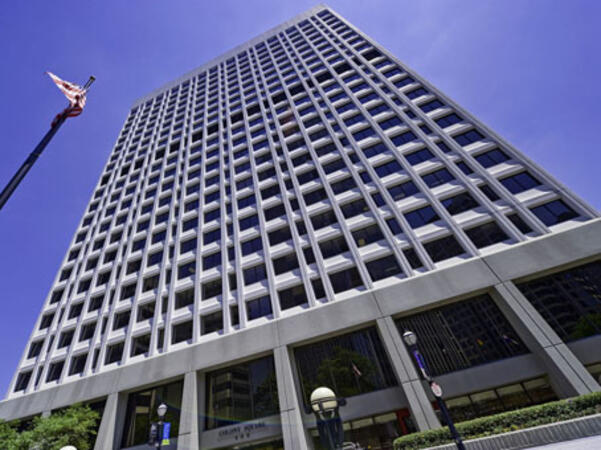
Atlanta, GA – Regus at Colony Squar
1201 Peachtree Street NE, Suite 200, Atlanta, United States, 30361
The venue is centrally located in Midtown Atlanta within the prominent Colony Square complex at 1201 Peachtree Street NE, easily accessed by car via I‑75/85 or GA‑400, with several parking garages nearby. From Hartsfield–Jackson Atlanta International Airport (ATL), around 15 miles south, a taxi or rideshare typically takes 20–30 minutes north along I‑75/85 N. Public transit users can take MARTA Rail to the Arts Center or Midtown stations (0.3–0.5 miles away) and walk easily, and numerous MARTA bus routes along Peachtree Street stop directly outside the entrance.
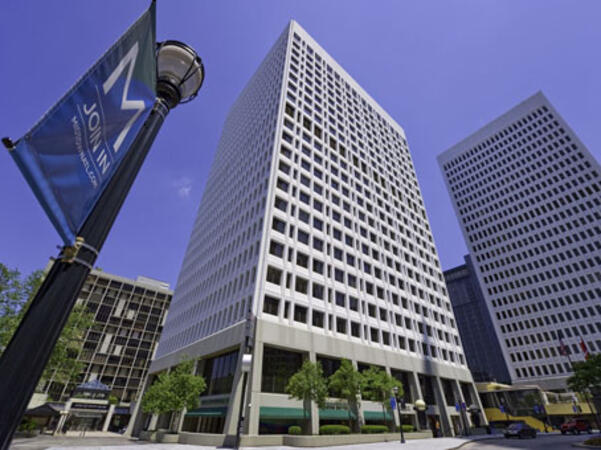
Atlanta, GA – The Proscenium
1170 Peachtree Street NE, Atlanta, United States, 30309
The venue is located in the heart of Midtown Atlanta in the Proscenium high–rise at 1170 Peachtree Street NE, easily accessible by car via I‑75/85 and GA‑400 with several parking garages nearby. Visitors arriving from Hartsfield–Jackson Atlanta International Airport (ATL), about 15 miles south, can expect a taxi or rideshare ride taking 20–30 minutes via I‑75/85 North. Public transit is seamless with MARTA Rail service; the Arts Center and Midtown stations are within walking distance (approximately 0.3–0.4 miles), and multiple MARTA bus routes also serve Peachtree Street.
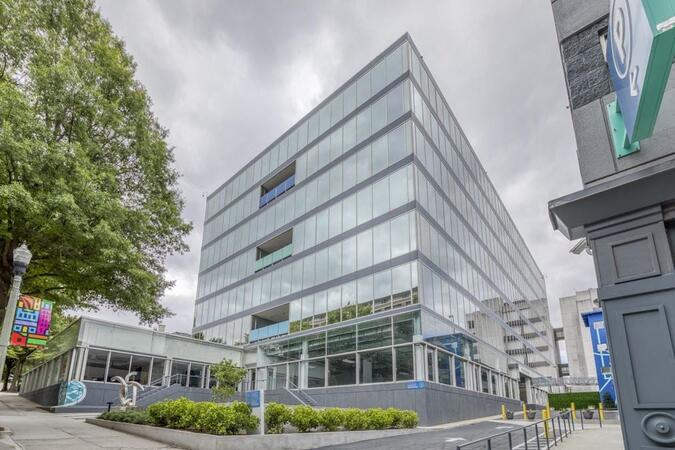
Decatur, GA – Regus at One West Court Square
One West Court Square, Suite 750, Decatur, United States, 30030
The venue is located in the heart of downtown Decatur within One West Court Square, easily reached by car via I‑20 and I‑285, with several public parking decks directly adjacent. Travelers from Hartsfield–Jackson Atlanta International Airport (ATL), approximately 17 miles southwest, can expect a taxi or rideshare ride of around 25–30 minutes via I‑20 East. Public transit is particularly convenient: MARTA rail users can disembark at Decatur Station (about 0.15 miles away) and walk a few minutes to the building entrance. Local bus routes also serve Trinity Place and Swanton Way, putting the center within easy reach.
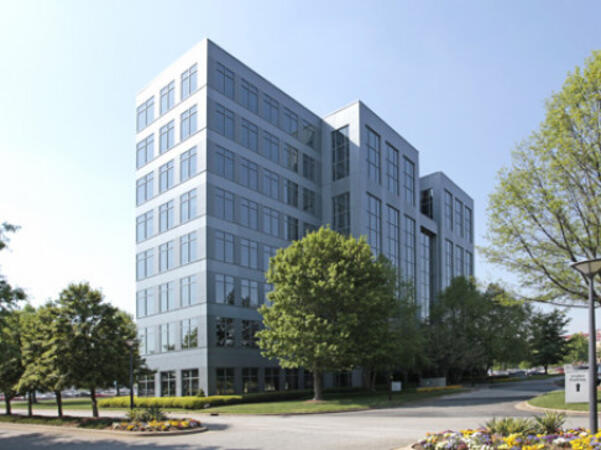
Atlanta, GA – Regus at One Hartsfield
100 Hartsfield Centre Parkway, Suite 500, Atlanta, United States, 30354
The venue is located in the One Hartsfield Center office building, adjacent to Hartsfield–Jackson Atlanta International Airport, easily reached by car via I‑75/I‑85 or GA‑138, with abundant on-site parking. Visitors arriving from ATL airport can walk or take a shuttle to the building, or opt for a quick 2–3‑minute taxi or rideshare ride. Public transit users can board MARTA from the Airport Station and ride one stop to College Park Station, then catch a connecting shuttle or enjoy a brief walk of about half a mile.
Atlanta, GA – Regus at Peachtree
260 Peachtree Street NW, Suite 2200, Atlanta, United States, 30303
The venue is situated in the iconic Coastal States Building at 260 Peachtree Street in downtown Atlanta, accessible by car via I‑75/85 or I‑20 with convenient parking garages nearby. From Hartsfield–Jackson Atlanta International Airport (ATL), about 12 miles south, a taxi or rideshare along I‑75/85 North takes approximately 15–20 minutes. For public transit, MARTA rail users can disembark at Five Points Station and walk 0.5 miles northeast, or exit at Peachtree Center Station and walk two blocks north—both routes offering easy access.
Augusta, GA – At Broad Street
823 Broad Street, Augusta, United States, 3090
The venue is located in the heart of downtown Augusta on Broad Street, easily accessible by car via I‑20 with several public parking garages nearby. From Augusta Regional Airport (AGS), about 9 miles west, taxis or rideshares typically take 15–20 minutes via I‑20. Public transit is available through Augusta Public Transit buses with routes along Broad Street, stopping within a few blocks of the venue, offering a convenient option for attendees without a car.
Savannah, GA – Regus at Bull Street
100 Bull St Downtown, Suite 200, Savannah, United States, 31401
The venue is located in the historic downtown area on Bull Street in the Altmayer Building, easily accessible by car via I‑16 and U.S. 17, with several public garages nearby. From Savannah/Hilton Head International Airport (SAV), about 12 miles west, taxis or rideshares typically take 15–20 minutes via U.S. 17 South. Public transit is available via Chatham Area Transit (CAT) buses, with frequent service along Bull and Broughton Streets; Johnson Square Station is just a couple minutes’ walk from the venue.
This instructor-led live training in Georgia (delivered online or on-site) is designed for advanced-level AI engineers, robotics developers, and automation specialists seeking to apply DeepSeek in the development of intelligent AI agents and autonomous systems.
Upon successful completion of this training, participants will demonstrate the ability to:
Analyze the architectural design and functional capabilities of DeepSeek AI models.
Integrate DeepSeek capabilities into AI agents to support decision-making and automation.
Implement reinforcement learning techniques to train and refine autonomous systems.
Deploy AI-driven autonomous agents in operational, real-world environments.
Autonomous artificial intelligence agents are increasingly embedded into critical decision-making processes across key sectors, including national defense, healthcare, financial services, and infrastructure management. As these systems achieve greater levels of independent operation, it is imperative to establish robust ethical frameworks, governance mechanisms, and regulatory oversight to ensure responsible design and deployment for government and other public-sector applications.
This instructor-led live training program, available in online or onsite formats, is designed for advanced professionals seeking to examine the ethical, societal, and regulatory implications of deploying autonomous AI agents in operational environments.
Upon completion of this training, participants will be equipped to:
Analyze the ethical risks and moral complexities inherent in autonomous AI agents.
Evaluate governance frameworks and regulatory models applicable to high-stakes AI deployment.
Assess mechanisms for accountability, explainability, and transparency within autonomous systems.
Formulate strategies to align AI agent behavior with legal, ethical, and societal standards.
Training Format
Interactive instruction and facilitated discussions.
Analytical case studies and role-playing simulations.
Practical analysis of governance models and ethical frameworks.
Customization Services
Contact the training provider to arrange customized curriculum for government or organizational needs.
In [0], this training assists intermediate professionals in developing AI-driven automation. It covers the design of no-code workflows, API integration, and the deployment of autonomous agents. The curriculum includes prompt chaining and intelligent data processing to create scalable, real-world operational systems for government.
This instructor-led, live training in Georgia (online or onsite) is designed for intermediate-level AI developers, security specialists, and compliance officers seeking to design and implement secure AI agents while addressing ethical considerations and system robustness.
Upon completion of this training, participants will be able to:
Comprehend the security risks and ethical challenges inherent in AI agent development.
Apply security-first design principles to AI model architecture.
Utilize adversarial robustness techniques to safeguard AI agents against attacks.
Ensure alignment with ethical AI guidelines and regulatory standards for government operations.
This practical course in Georgia provides a comprehensive guide for deploying agentic AI on resource-constrained devices. It covers the construction, optimization, and management of lightweight agents for local reasoning using Python, TensorFlow Lite, and PyTorch Mobile, thereby improving speed, privacy, and reliability for government applications.
This instructor-led, live training in Georgia (online or onsite) targets intermediate to advanced AI developers, researchers, and multimedia engineers responsible for building AI agents that understand and generate multi-modal content for government.
By the conclusion of this training, participants will be prepared to:
Develop AI agents that process and integrate text, image, and speech data.
Implement multi-modal models including GPT-4 Vision and Whisper ASR.
Optimize multi-modal AI pipelines for superior efficiency and accuracy.
Deploy multi-modal AI agents in real-world government applications.
This instructor-led, live training conducted in Georgia (online or onsite) is targeted at senior AI engineers, enterprise software developers, and business leaders seeking to customize and deploy LLM-based AI agents for government and enterprise applications.
Upon completion of this training, participants will be equipped to:
Comprehend the architectural components and functional capabilities of open-source LLMs.
Tailor and fine-tune LLMs to address specific government and enterprise use cases.
Deploy AI agents utilizing LangChain and Hugging Face technologies.
Integrate LLM-powered agents into established business and public service workflows.
This instructor-led, live training in Georgia (available online or onsite) is designed for advanced-level robotics engineers, AI researchers, and automation specialists seeking to develop AI-driven autonomous robotic systems for complex tasks and human-AI collaboration.
Upon completion of this training, participants will be prepared to:
Comprehend the function of AI agents in robotic decision-making and automation workflows.
Implement AI-driven navigation systems and obstacle avoidance protocols.
Design human-AI collaborative robotic systems for operational synergy.
Deploy AI-powered perception and control mechanisms within robotic platforms.
This live training in Georgia guides advanced professionals in designing and implementing multi-agent systems using Python. The curriculum covers agent coordination, reinforcement learning, and distributed computing with frameworks such as Mesa and Ray, concluding with a hands-on capstone project.
This instructor-led, live training in Georgia (online or onsite) is aimed at intermediate-level financial professionals, risk analysts, and AI engineers who wish to develop and deploy AI-driven solutions for financial automation and fraud detection.
By the end of this training, participants will be able to:
Understand the role of AI in financial automation and fraud detection.
Build AI models for detecting fraudulent transactions.
Leverage machine learning for real-time risk assessment.
This instructor-led, live training in Georgia (available online or onsite) is intended for entry-level to intermediate-level customer service professionals, chatbot developers, and automation teams aiming to implement AI-driven solutions for support services and operational automation.
Upon completion of this training, participants will be equipped to:
Comprehend the core principles of AI-powered customer support systems.
Develop and integrate AI chatbots to manage inquiries effectively.
Utilize NLP and machine learning to refine chatbot interactions.
Implement AI agents in practical service environments for government.
This instructor-led, live training program in Georgia (available online or onsite) is designed for intermediate to advanced healthcare professionals and AI developers seeking to implement AI-driven healthcare solutions.
Upon completion of this training, participants will be capable of:
Evaluating the function of AI agents in healthcare systems and diagnostic processes.
Constructing AI models for medical image analysis and predictive diagnostic capabilities.
Integrating AI capabilities with electronic health records (EHR) and clinical workflows.
Satisfying healthcare regulatory requirements and ethical AI governance standards.
This instructor-led, live training in Georgia (online or onsite) is aimed at beginner-level to intermediate-level AI developers and UI/UX designers who wish to learn how to build, optimize, and deploy AI-powered virtual assistants for government use.
By the end of this training, participants will be able to:
Design effective conversational AI workflows and UI/UX interfaces for government purposes.
Implement AI-driven natural language processing (NLP) models for government applications.
Integrate AI assistants with APIs and third-party platforms for government systems.
Deploy and maintain AI assistants for real-world government operations.
Mistral AI provides a robust suite of open-source and enterprise-grade AI models designed for language, multimodal, and agentic applications.
This instructor-led training, available in online or onsite formats, targets intermediate to advanced professionals focused on building, deploying, and managing AI agents for government using Mistral’s Medium 3, Le Chat Enterprise, and Devstral models.
Upon completion, participants will be equipped to:
Analyze the architecture and capabilities of Mistral Medium 3, Le Chat Enterprise, and Devstral.
Architect and implement AI agents utilizing Mistral models for enterprise and developer use cases.
Integrate coding systems, connectors, and institutional data into agent workflows.
Enhance performance, manage costs, and ensure regulatory compliance for Mistral-driven agents.
Instructional Methodology
Interactive lectures and facilitated discussions.
Extensive exercises and practical drills.
Live-lab implementation sessions for hands-on experience.
Customization Options
Contact the provider to arrange a tailored training solution for this curriculum.
Python serves as the primary programming language for developing and orchestrating autonomous AI agents. This course emphasizes practical implementation strategies using modern SDKs and frameworks, such as LangChain and AutoGen, to construct, connect, and manage agent workflows for government operations.
This instructor-led, live training program (available online or on-site) is designed for intermediate-level backend engineers, platform engineers, and ML engineers seeking to implement and orchestrate autonomous agents utilizing Python tooling and APIs in a government context.
Upon completion of this training, participants will be capable of:
Configuring Python-based environments specifically for agentic systems for government use.
Leveraging leading agent SDKs, such as LangChain and AutoGen, to develop functional agents.
Integrating tools and APIs to expand agent capabilities securely.
Orchestrating multi-agent workflows and standardized communication patterns.
Applying established best practices for debugging, testing, and maintaining agentic codebases with a focus on accountability.
Course Structure
Interactive lectures and facilitated discussions.
Hands-on programming exercises and live technical demonstrations.
Practical projects focused on building end-to-end agent workflows.
Customization Options for Government
To request a customized training curriculum for government agencies, please contact the appropriate office to arrange details.
This training program instructs participants in practical engineering methodologies for the design, development, testing, and deployment of agentic (autonomous) systems utilizing Python. The curriculum addresses the operational agent loop, tool integration, memory and state management, orchestration patterns, safety controls, and production environment considerations.
This instructor-led, live training session (available online or onsite) is designed for intermediate to advanced machine learning engineers, AI developers, and software engineers seeking to develop robust, production-ready autonomous agents using Python for government applications.
Upon completion of this training, participants will be equipped to:
Design and implement the agent loop and associated decision-making workflows.
Integrate external tools and APIs to expand the functional capabilities of agents.
Implement short-term and long-term memory architectures to support agent operations.
Coordinate multi-step orchestrations and ensure agent composability.
Apply best practices for safety, access control, and observability in deployed agent systems for government use.
Training Format
Interactive lectures and facilitated discussions.
Hands-on laboratory sessions for building agents using Python and widely adopted SDKs.
Project-based exercises resulting in deployable prototypes.
Course Customization Options
To request a customized training curriculum tailored for government requirements, please contact us to arrange details.
This instructor-led, live training, conducted in Georgia (online or onsite), is intended for advanced-level professionals aiming to acquire proficiency in the techniques necessary for deploying and managing AI agents in production environments for government operations.
Upon completion of this training, participants will be equipped to:
Architect and implement scalable deployment pipelines for AI systems.
Utilize containerization and orchestration tools, such as Docker and Kubernetes, to manage AI agents effectively.
Monitor performance metrics and optimize AI agents within production environments.
Establish and maintain CI/CD workflows for the systematic deployment of AI agents.
Ensure full compliance with established security protocols and data governance requirements.
This instructor-led, live training in Georgia (available online or onsite) is designed for advanced-level AI professionals seeking to master reinforcement learning methodologies and apply them for training AI agents to solve complex problems for government use.
Upon completion of this training, participants will be equipped to:
Comprehend the core principles of reinforcement learning and Markov Decision Processes (MDPs).
Design and implement RL algorithms such as Q-Learning, SARSA, and Deep Q-Networks (DQN).
Utilize frameworks such as OpenAI Gym and dedicated RL libraries for practical applications.
Train AI agents to address real-world, multi-step decision-making challenges.
Mitigate operational challenges including exploration-exploitation trade-offs and convergence issues in RL training.
This instructor-led, live training in Georgia (online or onsite) is aimed at intermediate-level AI developers and automation specialists who wish to integrate agentic capabilities into AI-powered applications.
By the end of this training, participants will be able to:
Understand the principles of agentic AI and autonomous decision-making.
Implement goal-driven AI agents with self-optimization techniques.
Integrate multi-agent collaboration for complex problem-solving.
Enhance AI-human interaction through adaptive user experiences.
Deploy agentic AI models in real-world applications.
This instructor-led, live training session in Georgia (online or onsite) targets advanced AI professionals seeking to master the design, construction, and deployment of MAS for government applications involving complex, real-world challenges.
Upon completion, participants will be able to:
Comprehend the architectural principles of multi-agent systems.
Implement effective strategies for communication, coordination, and decision-making in MAS.
Apply game theory to model agent interactions and resolve conflicts.
Utilize frameworks such as JADE to build scalable MAS solutions for government use.
Address critical challenges related to scalability, trust, and emergent behavior in MAS.
This instructor-led live training, conducted in Georgia (either online or on-site), targets advanced professionals aiming to build and optimize multi-agent systems leveraging Agentic AI frameworks.
By the conclusion of this program, participants will be equipped to:
Master the core principles of Agentic AI in multi-agent settings.
Construct AI-driven agents that operate and interact with autonomy.
Apply reinforcement learning to foster adaptive AI performance.
Refine multi-agent collaborative and competitive strategies.
Utilize Agentic AI in robotics, strategic gaming, and enterprise automation.
This instructor-led, live training in Georgia (online or onsite) is tailored for intermediate-level business analysts, RPA developers, and AI specialists seeking to leverage AI agents for process automation for government operations.
Upon completion, participants will be equipped to:
Comprehend the strategic role of AI agents in government business process automation.
Identify automation opportunities within key operational areas.
Design AI-driven solutions for citizen support, financial processes, and supply chain workflows.
Integrate AI agents with existing RPA and governmental business systems.
Assess and optimize AI automation strategies to enhance operational efficiency.
This instructor-led, live training in Georgia (online or in-person) is tailored for intermediate-level game developers and technical practitioners who require proficiency in integrating AI agents into gaming applications for government.
Upon completion, participants will possess the capability to:
Evaluate the functional role of AI agents within modern gaming infrastructure.
Engineer decision-making systems using decision trees and finite state machine architectures.
Deploy pathfinding algorithms, such as A*, to ensure efficient in-game navigation.
Apply reinforcement learning principles to develop adaptive AI behavioral models.
Optimize AI performance to sustain operational efficiency in real-time environments.
Large language models and autonomous agent frameworks, such as AutoGen and CrewAI, are transforming DevOps task automation—including change tracking, test creation, and alert triage—by emulating human collaborative decision-making processes.
This instructor-led, live training program (available online or onsite) is designed for advanced-level engineers seeking to architect and deploy DevOps automation workflows driven by large language models (LLMs) and multi-agent systems.
Upon completion of this training, participants will be equipped to:
Integrate LLM-based agents into CI/CD pipelines for intelligent automation.
Automate the generation of tests, analysis of commits, and synthesis of change summaries using agents.
Coordinate multiple agents for alert triage, response generation, and DevOps advisory functions.
Develop secure and sustainable agent-driven workflows utilizing open-source frameworks.
Instructional Methodology
Interactive lectures and facilitated discussions.
Extensive exercises and practical application.
Live-lab implementation of hands-on technical tasks.
Customization of Training Content
To request a tailored training curriculum for government or specific organizational needs, please contact us to arrange details.
This instructor-led, live training in Georgia (online or onsite) is targeted at advanced-level professionals who intend to utilize Agentic AI for decision-making in complex business and technical scenarios.
Following the completion of this training, participants will be capable of:
Grasping the core principles of autonomous decision-making within AI.
Engineering and deploying AI agents that operate with limited human intervention.
Incorporating Agentic AI into automation workflows and operational systems.
Refining AI-driven decision processes for improved efficiency and scalability.
Maintaining compliance, security, and ethical integrity in autonomous AI operations.
This instructor-led, live training session, conducted in Georgia (online or in-person), is designed for intermediate-level professionals aiming to deepen their expertise in the design and development of autonomous agents for practical public sector use.
Upon completion of this training, participants will be prepared to:
Grasp the fundamental concepts underpinning autonomous agents.
Examine real-world applications of autonomous AI agents in government contexts.
Develop, train, and implement agents leveraging reinforcement learning methods.
Integrate agents into current systems to support automation and strategic decision-making.
Address ethical implications and operational challenges related to the deployment of autonomous agents.
Devstral is an open-source framework engineered for the development and deployment of coding agents. These agents interact with codebases, developer tools, and application programming interfaces to improve engineering efficiency and operational standards for government systems.
This instructor-led training, available online or on-site, targets intermediate to advanced machine learning engineers, developer tooling specialists, and site reliability engineers. The objective is to enable participants to design, implement, and optimize coding agents using Devstral within a formal operational context.
Upon completion of this training, participants will be capable of:
Installing and configuring Devstral for the development of coding agents.
Designing agentic workflows for codebase analysis and modification.
Integrating coding agents with developer tools and external APIs.
Applying best practices for the secure and efficient deployment of agents.
Instructional Methodology
Interactive lectures and facilitated discussions.
Extensive practical exercises and skill-building activities.
Hands-on implementation within a live laboratory environment.
Customization Options for Government
Contact our team to arrange a customized training session tailored to specific government requirements.
This instructor-led, live training in Georgia (delivered online or onsite) is tailored for entry-level professionals aiming to understand the operational mechanics of AI agents and to build interactive chatbot systems for government applications.
By the conclusion of this training, participants will be capable of:
Understanding the foundational elements of AI agents and their sector-specific applications.
Exploring the underlying principles of natural language processing (NLP).
Designing efficient conversational flows for chatbot systems.
Developing a functional chatbot using Python and related technological tools.
Deploying the chatbot to enable interaction with real users.
This live instructor-led training, conducted in Georgia (either online or on-site), is tailored for entry-level professionals who intend to understand and develop basic AI agents for real-world government operations.
By the conclusion of this training, participants will be prepared to:
Grasp the fundamental concepts of AI agents.
Recognize distinct types of AI agents and their applicable uses.
Architect and execute basic AI agents for practical duties.
Leverage standard tools and frameworks for AI agent construction.
This instructor-led, live training session in Georgia (available online or on-site) is designed for entry-level to intermediate-level developers and cloud practitioners seeking to leverage Alibaba Cloud to build AI agents capable of automating tasks, answering inquiries, and integrating with business systems for government.
Upon completion of this training, participants will be equipped to: comprehend AI agent architecture on Alibaba Cloud, construct a basic agent workflow, connect an agent to enterprise knowledge and tools, and deploy and monitor an agent within a cloud environment.
This instructor-led live training, delivered either online or in person, targets entry-level professionals aiming to understand and develop basic AI agents for practical application in operational settings.
Upon completion of this training, participants will be equipped to:
Comprehend the foundational concepts underlying AI agents.
Distinguish between various types of AI agents and recognize their specific applications.
Design and implement elementary AI agents to address practical operational tasks.
Evaluate the available tools and frameworks suitable for AI agent construction.
Identify diverse use cases appropriate for the adoption of AI technologies.
This instructor-led, live training in Georgia (available online or onsite) is designed for observability and SRE engineers seeking to integrate large language models and AI into their monitoring, alerting, and incident analysis workflows.
This advanced practical seminar is tailored for software engineers, architects, technical leads, engineering managers, and delivery teams seeking to understand how Artificial Intelligence can expedite the entire software delivery lifecycle, from initial requirements analysis to production-ready code.
This instructor-led, live training in Georgia (delivered online or on-site) is designed for developers and technical professionals at beginner, intermediate, and advanced levels who intend to leverage Microsoft Azure to build, test, and deploy AI agents for business applications.
Upon completion of this training, participants will be equipped to: understand AI agent architecture on Azure, create and configure a functional agent, connect agents to business knowledge sources, and evaluate and prepare agents for deployment.
This instructor-led, live training course in Georgia (delivered online or onsite) is specifically designed for software developers and DevOps teams aiming to utilize the OpenAI Codex CLI for the automation of coding tasks, code review, and the execution of multi-step workflows from the terminal. The program is structured to support secure and accountable technology adoption for government workflows.
By the conclusion of the training, participants will have demonstrated the ability to install and configure the Codex CLI, execute tasks via natural language prompts, manage approval modes for operational safety, and integrate the tool with Git and CI pipelines.
This instructor-led live training in Georgia (online or onsite) is designed for developers aiming to utilize GitHub Copilot Agent Mode for autonomous feature development, test execution, and management of complex coding tasks.
Upon completion, participants will be able to activate Agent Mode, execute planning and iteration within the agent loop, perform terminal commands, and implement enterprise governance protocols.
This instructor-led, live training in Georgia (delivered online or onsite) is targeted at developers and engineering leaders seeking to leverage Cursor for accelerated feature development, multi-file refactoring, and the management of organization-wide AI workflows.
Upon completion of this training, participants will be proficient in navigating codebases using Composer and agent mode, targeting code with context-aware chat, deploying team workspaces, and integrating Cursor with version control systems.
This instructor-led, live training in Georgia (online or onsite) is intended for software developers and AI engineers who wish to leverage DeepSeek Harness to build, operate, and extend AI coding agents.
This instructor-led, live training in Georgia (online or onsite) is intended for intermediate-level solution architects, AI engineers, developers, and technical product teams aiming to utilize Tencent ADP for developing enterprise AI agents with RAG, workflow automation, and operational controls for government and public sector contexts.
Upon completion of this training, participants will be able to: design ADP-based agents, create knowledge pipelines, orchestrate workflows and multi-agent patterns, and apply production-level guardrails.
This instructor-led, live training in Georgia (delivered online or onsite) targets beginner, intermediate, and advanced developers and technical practitioners seeking to utilize Google Cloud to build AI agents for government that can automate tasks, leverage tools, and process business data.
Upon completion of this training, participants will be proficient in: explaining AI agent concepts, building agents with Vertex AI, connecting agents to external tools and data, and deploying agents for government business use cases.
This instructor-led, live training in Georgia (online or onsite) is tailored for developers and DevOps professionals aiming to employ Hermes Agent for automating development tasks, managing infrastructure, and constructing persistent AI workflows.
By the conclusion of this training, participants will have the proficiency to install and configure Hermes Agent, engage with it across multiple platforms, leverage 40+ built-in tools, and execute deployments on diverse backends.
This instructor-led, live training conducted in Georgia (online or on-site) is designed for business users, operational teams, and technical professionals seeking to utilize Hermes Agent to automate duties, establish reusable AI-driven processes, and enhance team productivity.
Upon completion of this training, participants will be able to: explain the fundamental mechanics of Hermes Agent, configure and utilize core features, construct practical workflows, and apply best operational practices.
This instructor-led, live training in Georgia (online or onsite) is targeted at developers seeking to utilize the Hermes Agent for the design and execution of secure local AI workflows for code assistance.
Upon completion of this training, participants will be capable of explaining Hermes Agent concepts, establishing secure local agent environments, constructing practical coding workflows, and applying safety and governance controls for government compliance.
This instructor-led, live training conducted in Georgia (online or on-site) is tailored for developers and technical teams aiming to build and operate private agentic AI solutions on internal infrastructure for government use.
By the conclusion of this training, participants will be able to install and configure Ollama, evaluate and execute open-source models locally, create agentic and retrieval-based workflows, and implement security and governance controls compliant with regulated environment standards.
This curriculum is structured to deliver a practical, application-focused methodology for developing local AI and LLM-powered applications utilizing LangChain and CrawAI. Participants will examine data analytics, machine learning, and model training methodologies prior to advancing to the development of LLM-based applications.
The program addresses critical technical domains, including multi-model AI architectures, no-code and low-code AI development, Retrieval-Augmented Generation (RAG), agentic AI, and process automation through CrawAI. Additionally, participants will learn to construct AI chatbots, AI-driven knowledge repositories, and offline or local AI models to ensure data privacy and operational efficiency.
This instructor-led, live training in Georgia (conducted online or onsite) is designed for backend developers seeking to construct MCP-compatible tool servers and integrate them with agent clients.
Upon completion of this training, participants will be able to implement MCP servers, connect them to Claude Code and OpenClaude, manage transport protocols, and maintain an internal tool registry for government use.
This instructor-led, live training in Georgia (delivered online or onsite) is tailored for AI professionals at the beginner, intermediate, or advanced level who seek to employ MCP to connect AI assistants with external tools, data, and enterprise services for government.
Upon completion, participants will be able to: explain MCP concepts, identify key architectural components, establish a basic integration, and apply security best practices.
This instructor-led, live training in Georgia (delivered online or onsite) is intended for beginner to intermediate developers and technical teams seeking to leverage OpenAI APIs to construct AI agents that can reason, utilize tools, and execute multi-step tasks for government.
By the conclusion of this training, participants will be able to: design agent workflows, integrate tools and external data sources, manage context and responses, and validate agents for operational use.
This instructor-led live training in Georgia (online or onsite) is targeted at intermediate to advanced developers and technical professionals aiming to use OpenClaw to develop and operate practical AI agents for workflow automation through chat and tool integrations.
By the conclusion of this training, participants will be able to: install and configure OpenClaw, connect an LLM provider, adapt skills for automation, and implement foundational security and operational guardrails.
This instructor-led, live training in Georgia (delivered online or onsite) is aimed at senior developers who require the ability to deploy lightweight, customizable terminal agent workflows for government.
Upon completion of this training, participants will be able to install Pi, extend it with TypeScript capabilities, adapt workflows to departmental standards, and distribute extensions via npm.
This instructor-led, live training session in Georgia, available online or on-site, is intended for developers who require the use of Pi Coding Agent to generate code, validate changes, and optimize terminal-based development workflows for government applications.
By the conclusion of this training, participants will be capable of: explaining the core concepts of Pi Coding Agent, configuring and operating the tool effectively, applying it to practical coding assignments, and adopting secure team workflows.
Read more...
Last Updated:
Testimonials (4)
It triggered awareness about working with complex topics and the way, how to start.
Victoria Schmid - Medeo Investment AG
Course - Getting Started with Manus AI
The mix of theory and practice and of high level and low level perspectives
Ion Mironescu - Facultatea S.A.I.A.P.M.
Course - Autonomous Decision-Making with Agentic AI
practical exercises
Daniel - Facultatea S.A.I.A.P.M.
Course - Agentic AI in Multi-Agent Systems
I liked that he constantly provided examples but also offered time for individual work on what he presented.
Iacob Giorgel
Course - Agentic AI Unleashed: Crafting LLM Applications with AutoGen
Online AI Agents training in Georgia, AI Agents training courses in Georgia, Weekend AI Agents courses in Georgia, Evening AI Agents training in Georgia, AI Agents instructor-led in Georgia, Online AI Agents training in Georgia, AI Agents trainer in Georgia, Evening AI Agents courses in Georgia, AI Agents coaching in Georgia, AI Agents one on one training in Georgia, AI Agents classes in Georgia, Weekend AI Agents training in Georgia, AI Agents private courses in Georgia, AI Agents boot camp in Georgia, AI Agents instructor-led in Georgia, AI Agents instructor in Georgia, AI Agents on-site in Georgia