Instructor-led live AI Agents training courses, available both online and onsite, provide hands-on practice to demonstrate how to utilize AI agents for automating tasks, making intelligent decisions, and engaging with users across a variety of applications. This training is designed to align with public sector workflows, governance, and accountability standards.
AI Agents training can be conducted as "online live training" or "onsite live training." Online live training, also known as "remote live training," is delivered through an interactive remote desktop environment. Onsite live training can be arranged at customer premises in Virginia or at NobleProg corporate training centers in Virginia.
NobleProg -- Your Local Training Provider for government and private sector needs.
VA, Stafford - Quantico Corporate
800 Corporate Drive, Suite 301, Stafford, united states, 22554
The venue is located between interstate 95 and the Jefferson Davis Highway, in the vicinity of the Courtyard by Mariott Stafford Quantico and the UMUC Quantico Cororate Center.
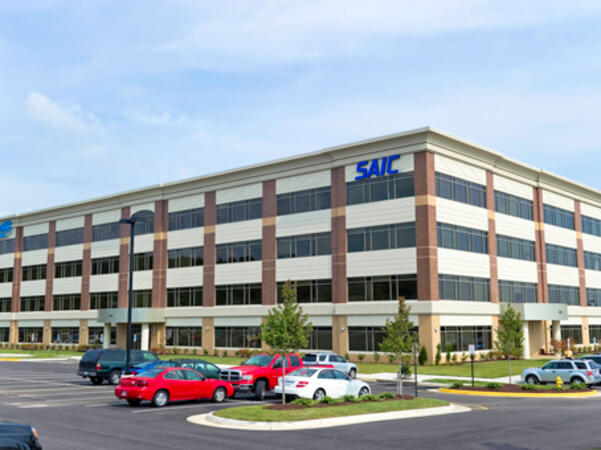
VA, Fredericksburg - Central Park Corporate Center
1320 Central Park Blvd., Suite 200, Fredericksburg, united states, 22401
The venue is located behind a complex of commercial buildings with the Bank of America just on the corner before the turn leading to the office.
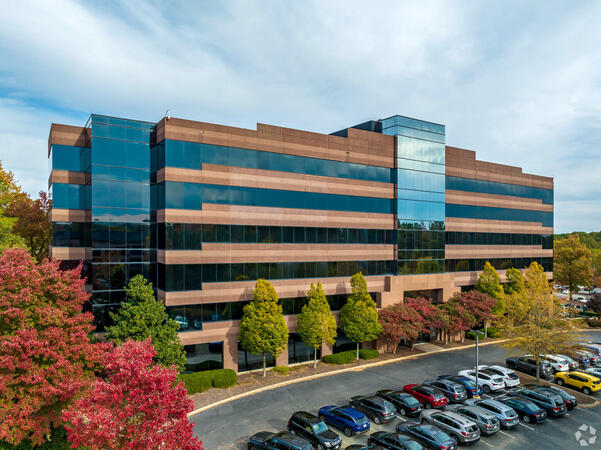
VA, Richmond - Two Paragon Place
Two Paragon Place, 6802 Paragon Place Suite 410, Richmond, United States, 23230
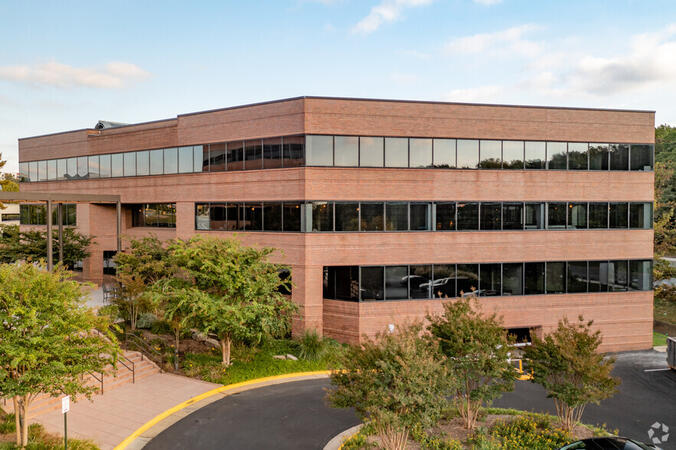
The venue is located in bustling Richmond with Hampton Inn, Embassy Suites and Westin Hotel less than a mile away.
VA, Reston - Sunrise Valley
12020 Sunrise Valley Dr #100, Reston, United States, 20191

The venue is located just behind the NCRA and Reston Plaza Cafe building and just next door to the United Healthcare building.
VA, Reston - Reston Town Center I
11921 Freedom Dr #550, Reston, united states, 20190

The venue is located in the Reston Town Center, near Chico's and the Artinsights Gallery of Film and Contemporary Art.
VA, Richmond - Sun Trust Center Downtown
919 E Main St, Richmond , united states, 23219
The venue is located in the Sun Trust Center on the crossing of E Main Street and S to N 10th Street just opposite of 7 Eleven.
Richmond, VA – Regus at Two Paragon Place
6802 Paragon Place, Suite 410, Richmond, United States, 23230

The venue is located within the Two Paragon Place business campus off I‑295 and near Parham Road in North Richmond, offering convenient access by car with free on-site parking. Visitors arriving from Richmond International Airport (RIC), approximately 16 miles northwest, can expect a taxi or rideshare ride of around 20–25 minutes via I‑64 West and I‑295 North. Public transit is available via GRTC buses, with routes stopping along Parham Road and Quioccasin Road, just a short walk to the campus.
Virginia Beach, VA – Regus at Windwood Center
780 Lynnhaven Parkway, Suite 400, Virginia Beach, United States, 23452
The venue is situated within the Windwood Center along Lynnhaven Parkway, featuring modern concrete-and-glass architecture and ample on-site parking. Easily accessible by car via Interstate 264 and the Virginia Beach Expressway, the facility offers a hassle-free commute. From Norfolk International Airport (ORF), located about 12 miles northwest, a taxi or rideshare typically takes 20–25 minutes via VA‑168 South and Edenvale Road. For those using public transit, the HRT bus system includes stops at Lynnhaven Parkway and surrounding streets, providing convenient access by bus.
This instructor-led, live training (available online or onsite) is designed for advanced-level AI engineers, robotics developers, and automation specialists who aim to utilize DeepSeek for developing intelligent AI agents and autonomous systems.
By the end of this training, participants will be able to:
Comprehend the architecture and capabilities of DeepSeek AI models.
Integrate DeepSeek into AI agents for enhanced decision-making and automation processes.
Implement reinforcement learning techniques to train autonomous systems effectively.
Deploy AI-driven autonomous agents in practical, real-world environments, ensuring alignment with public sector workflows and governance standards for government applications.
Autonomous AI agents are being increasingly integrated into decision-making processes across sectors such as defense, healthcare, finance, and infrastructure. As these systems gain greater independence and autonomy, there is an urgent need for robust ethical frameworks, governance mechanisms, and regulatory oversight to guide their design and deployment.
This instructor-led, live training (online or onsite) is designed for advanced-level professionals who wish to explore the ethical, societal, and regulatory implications of deploying autonomous AI agents in real-world environments.
By the end of this training, participants will be able to:
- Analyze the ethical risks and moral dilemmas posed by autonomous AI agents.
- Evaluate governance frameworks and regulatory models relevant to high-stakes AI deployment for government.
- Assess accountability, explainability, and transparency mechanisms in autonomous systems.
- Develop strategies for aligning AI agent behavior with legal, ethical, and societal values.
**Format of the Course**
- Interactive lecture and discussion.
- Case studies and role-playing simulations.
- Hands-on analysis of governance models and ethical frameworks.
**Course Customization Options**
- To request a customized training for this course, please contact us to arrange.
AI-powered automation integrates the adaptability of no-code platforms with the advanced capabilities of large language models and autonomous agents to develop scalable, intelligent systems.
This instructor-led, live training (available online or onsite) is designed for intermediate-level professionals who aim to design, build, and optimize automation pipelines enhanced with AI-driven decision-making, orchestration, and self-execution features.
By the end of this training, participants will be able to:
- Design no-code automation workflows augmented by AI interpretation and responses.
- Utilize prompt chaining, webhook triggers, and APIs to construct scalable logic flows.
- Develop intelligent applications that connect services and autonomously interpret data.
- Understand, design, and deploy AI agents capable of goal-oriented action planning and execution.
**Format of the Course**
- Interactive lecture and discussion
- Extensive exercises and practice sessions
- Hands-on implementation in a live-lab environment
**Course Customization Options for Government**
- To request a customized training program tailored to specific government needs, please contact us to arrange.
This instructor-led, live training in [location] (online or onsite) is designed for intermediate-level AI developers, security specialists, and compliance officers who aim to design and implement secure AI agents while addressing ethical concerns and robustness.
By the end of this training, participants will be able to:
- Understand the security risks and ethical challenges associated with AI agent development.
- Implement security-first design principles in AI models for government.
- Apply adversarial robustness techniques to prevent attacks on AI agents.
- Ensure compliance with ethical AI guidelines and regulatory standards.
The Edge & Lightweight Agents course is designed to provide practical training in deploying agentic artificial intelligence (AI) workloads on resource-constrained devices. Participants will learn to develop, optimize, and manage lightweight agents capable of performing local reasoning and inference, thereby enhancing speed, privacy, and reliability in distributed environments. The course places a strong emphasis on performance tuning, low-latency design, and the integration of hardware and software.
This instructor-led, live training (available both online and onsite) is tailored for intermediate-level professionals who are interested in implementing and optimizing on-device agentic systems using Python and edge AI frameworks.
By the end of this training, participants will be able to:
- Understand the architecture and challenges associated with running agentic AI on edge devices.
- Design lightweight agent loops that are suitable for environments with limited resources.
- Implement local inference capabilities using TensorFlow Lite, PyTorch Mobile, and ONNX.
- Integrate agents with sensors, actuators, and Internet of Things (IoT) platforms.
- Optimize performance, energy consumption, and latency to ensure real-time operation.
**Format of the Course**
- Interactive lectures and practical demonstrations.
- Hands-on development in local or emulated environments.
- Project-based learning and guided implementation exercises.
**Course Customization Options for Government**
To request a customized training program tailored to specific needs and requirements, please contact us to arrange. This option is particularly useful for government agencies looking to align the course content with their unique workflows, governance, and accountability standards.
This instructor-led, live training (available online or onsite) is designed for intermediate to advanced AI developers, researchers, and multimedia engineers who aim to build AI agents capable of understanding and generating multi-modal content.
By the end of this training, participants will be able to:
- Develop AI agents that process and integrate text, image, and speech data.
- Implement multi-modal models such as GPT-4 Vision and Whisper ASR.
- Optimize multi-modal AI pipelines for efficiency and accuracy.
- Deploy multi-modal AI agents in real-world applications, enhancing capabilities for government and other sectors.
This instructor-led, live training (online or onsite) is designed for government agencies and aimed at beginner to intermediate level developers and designers who wish to understand and build AI-powered personal assistants for various use cases.
By the end of this training, participants will be able to:
- Understand the core principles of AI-powered personal assistants.
- Learn the fundamentals of integrating language models with smart assistants.
- Build and customize a personal assistant using AI frameworks and tools.
- Deploy personal assistants for real-world applications in different sectors, including for government use.
This instructor-led, live training in [location] (online or onsite) is aimed at advanced-level artificial intelligence engineers, enterprise software developers, and business leaders who wish to customize and deploy large language model (LLM)-based AI agents for government and enterprise applications.
By the end of this training, participants will be able to:
- Understand the architecture and capabilities of open-source LLMs.
- Customize and fine-tune LLMs for specific use cases in government and enterprise environments.
- Deploy AI agents using LangChain and Hugging Face tools.
- Integrate LLM-powered agents into existing business workflows to enhance efficiency and decision-making.
This instructor-led, live training (available online or onsite) is designed for advanced-level robotics engineers, AI researchers, and automation specialists who aim to develop AI-driven autonomous robotic systems for complex tasks and human-AI collaboration.
By the end of this training, participants will be able to:
- Understand the role of AI agents in robotic decision-making and automation.
- Implement AI-driven navigation and obstacle avoidance techniques.
- Develop human-AI collaborative robotic systems for government and other sectors.
- Deploy AI-powered perception and control systems in robots.
This course delves into the design, coordination, and implementation of multi-agent systems (MAS) using Python. Participants will learn how to develop agents that can communicate, collaborate, and adapt to achieve shared goals in complex, dynamic environments.
This instructor-led, live training (online or onsite) is designed for advanced-level professionals who aim to create and implement multi-agent systems for government applications such as intelligent automation, simulation, and decision-making.
By the end of this training, participants will be able to:
- Understand the architecture and principles of multi-agent systems.
- Develop agents capable of communication, coordination, and negotiation.
- Implement distributed environments for agent interactions.
- Apply reinforcement learning and planning in multi-agent contexts.
- Simulate cooperative and competitive agent behaviors.
- Design hybrid workflows combining human and intelligent agent interactions.
**Format of the Course**
- Instructor-led lectures and live demonstrations.
- Hands-on exercises using open-source agent frameworks.
- Applied group project simulating a multi-agent scenario.
**Course Customization Options**
- To request a customized training for government, please contact us to arrange.
This instructor-led, live training (available online or onsite) is designed for intermediate-level financial professionals, risk analysts, and artificial intelligence engineers who aim to develop and deploy AI-driven solutions for financial automation and fraud detection.
By the end of this training, participants will be able to:
- Understand the role of AI in enhancing financial automation and fraud detection.
- Construct AI models to identify fraudulent transactions.
- Utilize machine learning techniques for real-time risk assessment.
- Implement AI-powered financial monitoring systems to improve operational efficiency and compliance for government.
This instructor-led, live training (offered online or onsite) is designed for government agencies and aimed at beginner to intermediate-level customer service professionals, chatbot developers, and automation teams who wish to implement AI-driven solutions for customer support and service automation.
By the end of this training, participants will be able to:
- Understand the fundamentals of AI-powered customer support.
- Develop and integrate AI chatbots for handling customer inquiries.
- Utilize natural language processing (NLP) and machine learning to improve chatbot interactions.
- Deploy AI agents in real-world customer service applications for government.
This instructor-led, live training (online or onsite) is designed for intermediate to advanced healthcare professionals and artificial intelligence developers who seek to implement AI-driven healthcare solutions for government and private sector applications.
By the end of this training, participants will be able to:
Understand the role of AI agents in enhancing healthcare and diagnostics.
Develop AI models for medical image analysis and predictive diagnostics.
Integrate AI technologies with electronic health records (EHR) and clinical workflows.
Ensure compliance with healthcare regulations and uphold ethical AI practices.
This instructor-led, live training in [location] (online or onsite) is aimed at beginner to intermediate level AI developers and UI/UX designers who wish to learn how to build, optimize, and deploy AI-powered virtual assistants for government use.
By the end of this training, participants will be able to:
- Design effective conversational AI workflows and user interfaces.
- Implement AI-driven natural language processing (NLP) models.
- Integrate AI assistants with APIs and third-party platforms.
- Deploy and maintain AI assistants for real-world applications in public sector environments.
Mistral AI is a robust suite of open-source and enterprise-ready artificial intelligence models designed for language, multimodal, and agentic applications.
This instructor-led, live training (available online or on-site) is tailored for intermediate to advanced professionals who aim to build, deploy, and manage AI agents using Mistral’s Medium 3, Le Chat Enterprise, and Devstral models.
By the end of this training, participants will be able to:
- Understand the architecture and capabilities of Mistral Medium 3, Le Chat Enterprise, and Devstral.
- Design and implement AI agents leveraging Mistral models for enterprise and developer use cases.
- Integrate coding systems, connectors, and enterprise data into agent workflows.
- Optimize performance, cost, and compliance for Mistral-powered agents.
**Format of the Course**
- Interactive lecture and discussion
- Extensive exercises and practice sessions
- Hands-on implementation in a live-lab environment
**Course Customization Options for Government**
To request a customized training for this course tailored to specific needs, please contact us to arrange.
Python serves as the foundational language driving the development and coordination of autonomous AI agents. This course emphasizes practical implementation using modern SDKs and frameworks such as LangChain and AutoGen to construct, connect, and manage agent workflows.
This instructor-led, live training (online or onsite) is designed for intermediate-level backend engineers, platform engineers, and ML engineers who aim to implement and coordinate autonomous agents using Python tooling and APIs.
By the end of this training, participants will be able to:
- Set up and configure Python-based environments for agentic systems.
- Utilize popular agent SDKs like LangChain and AutoGen to develop functional agents.
- Integrate tools and APIs to enhance agent capabilities.
- Orchestrate multi-agent workflows and communication patterns.
- Apply best practices for debugging, testing, and maintaining agentic codebases.
**Format of the Course**
- Interactive lecture and discussion.
- Hands-on programming exercises and live demonstrations.
- Practical projects building end-to-end agent workflows.
**Course Customization Options**
- To request a customized training for government or other specific needs, please contact us to arrange.
This course provides practical engineering techniques for designing, building, testing, and deploying autonomous systems using Python. It covers key topics such as the agent loop, tool integrations, memory and state management, orchestration patterns, safety controls, and production considerations.
This instructor-led, live training (available online or onsite) is designed for intermediate to advanced ML engineers, AI developers, and software engineers who wish to develop robust, production-ready autonomous agents using Python.
By the end of this training, participants will be able to:
- Design and implement the agent loop and decision-making workflows.
- Integrate external tools and APIs to enhance agent capabilities.
- Implement short-term and long-term memory architectures for agents.
- Coordinate multi-step orchestrations and ensure agent composability.
- Apply safety, access control, and observability best practices for deployed agents.
**Format of the Course**
- Interactive lecture and discussion
- Hands-on labs building agents with Python and popular SDKs
- Project-based exercises that produce deployable prototypes
**Course Customization Options for Government**
- To request a customized training tailored to specific needs, please contact us to arrange.
This instructor-led, live training in [location] (online or onsite) is designed for advanced-level professionals who wish to master the techniques for deploying and managing AI agents in production environments for government.
By the end of this training, participants will be able to:
- Design and implement scalable AI deployment pipelines.
- Utilize tools such as Docker and Kubernetes to containerize and orchestrate AI agents.
- Monitor and optimize AI agents in production environments.
- Implement continuous integration and continuous deployment (CI/CD) workflows for AI agent deployments.
- Ensure compliance with security and data governance requirements.
This instructor-led, live training (online or onsite) is designed for advanced-level AI professionals who aim to master reinforcement learning techniques and apply them for government in training AI agents to solve complex problems.
By the end of this training, participants will be able to:
- Understand the fundamental principles of reinforcement learning and Markov Decision Processes (MDPs).
- Design and implement RL algorithms such as Q-Learning, SARSA, and Deep Q-Networks (DQN).
- Utilize frameworks like OpenAI Gym and RL libraries for practical applications.
- Train AI agents to address real-world, multi-step decision-making challenges.
- Manage issues such as exploration-exploitation trade-offs and convergence in RL training.
This instructor-led, live training (offered online or onsite) is designed for intermediate-level AI developers and automation specialists who aim to integrate agentic capabilities into AI-powered applications for government.
By the end of this training, participants will be able to:
- Understand the principles of agentic AI and autonomous decision-making.
- Implement goal-driven AI agents with self-optimization techniques.
- Integrate multi-agent collaboration for complex problem-solving.
- Enhance AI-human interaction through adaptive user experiences.
- Deploy agentic AI models in real-world applications, ensuring alignment with public sector workflows and governance.
This instructor-led, live training (online or onsite) is aimed at advanced-level artificial intelligence professionals who wish to master the skills necessary to design, build, and deploy multi-agent systems (MAS) that solve complex, real-world problems for government.
By the end of this training, participants will be able to:
- Understand the principles of multi-agent system architectures.
- Implement strategies for communication, coordination, and decision-making within MAS.
- Apply game theory to model agent interactions and resolve conflicts.
- Leverage frameworks like JADE to create scalable MAS solutions.
- Address challenges such as scalability, trust, and emergent behavior in MAS.
This instructor-led, live training (available online or onsite) is designed for advanced-level professionals who seek to develop and optimize multi-agent systems using Agentic AI frameworks.
By the end of this training, participants will be able to:
- Understand the principles of Agentic AI in multi-agent environments.
- Develop AI-driven agents capable of autonomous interaction.
- Implement reinforcement learning techniques to enhance adaptive AI behavior.
- Optimize collaboration and competition among multiple agents.
- Apply Agentic AI solutions in areas such as robotics, gaming, and enterprise automation for government.
This instructor-led, live training in [location] (online or onsite) is aimed at intermediate-level business analysts, RPA developers, and AI professionals who wish to leverage the capabilities of AI agents for government process automation.
By the end of this training, participants will be able to:
- Understand the role of AI agents in enhancing process automation within government operations.
- Identify opportunities for automation in key public sector domains.
- Develop AI-driven solutions for customer support, financial management, and supply chain workflows in government agencies.
- Integrate AI agents with existing RPA and business systems used by government entities.
- Evaluate and optimize AI automation strategies to improve efficiency and accountability in government services.
Vertex AI Agent Builder is a no-code/low-code environment designed for creating grounded agents that integrate generative models with retrieval-augmented generation (RAG). This enables teams to swiftly develop agents capable of providing accurate and context-aware responses by leveraging enterprise data and search capabilities.
This instructor-led, live training (available online or onsite) is tailored for intermediate-level practitioners who aim to design, configure, and deploy intelligent agents using Vertex AI Agent Builder and RAG methodologies.
By the end of this training, participants will be able to:
- Design grounded agent workflows using Agent Builder.
- Implement RAG pipelines incorporating search and vector stores.
- Securely integrate enterprise data sources for effective retrieval.
- Evaluate and refine agent behavior through testing and performance metrics.
**Format of the Course:**
- Interactive lectures and discussions.
- Hands-on labs utilizing Vertex AI Agent Builder and RAG components.
- Project-based exercises to construct and enhance agents.
**Course Customization Options:**
- To request a customized training for government or other specific needs, please contact us to arrange.
This instructor-led, live training (available online or onsite) is designed for intermediate-level game developers and AI enthusiasts who aim to effectively integrate AI agents into gaming applications.
By the end of this training, participants will be able to:
- Understand the role of AI agents in modern gaming.
- Develop decision-making systems using decision trees and finite state machines.
- Implement pathfinding algorithms such as A* for in-game navigation.
- Apply reinforcement learning techniques to create adaptive AI behaviors.
- Optimize AI performance for real-time gaming environments, ensuring alignment with public sector workflows and governance standards for government applications.
Large Language Models (LLMs) and autonomous agent frameworks such as AutoGen and CrewAI are transforming how DevOps teams automate tasks like change tracking, test generation, and alert triage by simulating human-like collaboration and decision-making processes.
This instructor-led, live training (available online or onsite) is designed for advanced-level engineers who aim to design and implement DevOps automation workflows powered by LLMs and multi-agent systems for government applications.
By the end of this training, participants will be able to:
Integrate LLM-based agents into CI/CD workflows to enhance smart automation capabilities.
Automate test generation, commit analysis, and change summaries using these advanced agents.
Coordinate multiple agents for effective alert triaging, response generation, and DevOps recommendations.
Build secure and maintainable agent-powered workflows utilizing open-source frameworks.
Format of the Course
Interactive lectures and discussions.
Extensive exercises and practical activities.
Hands-on implementation in a live-lab environment.
Course Customization Options
To request a customized training for government, please contact us to arrange.
This instructor-led, live training (available online or onsite) is designed for advanced-level professionals who seek to utilize Agentic AI for decision-making in complex business and technical scenarios.
By the end of this training, participants will be able to:
- Comprehend the principles of autonomous decision-making in artificial intelligence.
- Develop and deploy AI agents that function with minimal human oversight.
- Incorporate Agentic AI into automation workflows and business systems for government.
- Enhance AI-driven decision processes for greater efficiency and scalability.
- Address compliance, security, and ethical considerations in AI autonomy.
This instructor-led, live training in [location] (online or onsite) is aimed at intermediate-level professionals who wish to deepen their understanding of the design and development of autonomous agents for practical applications.
By the end of this training, participants will be able to:
- Comprehend the foundational concepts of autonomous agents.
- Examine real-world applications of autonomous AI agents.
- Design, train, and implement agents using reinforcement learning techniques.
- Integrate these agents into existing systems to enhance automation and decision-making processes.
- Address ethical considerations and challenges associated with deploying autonomous agents for government and other public sector workflows.
Devstral is an open-source framework designed for building and running coding agents that can interact with codebases, developer tools, and APIs to enhance engineering productivity.
This instructor-led, live training (online or onsite) is aimed at intermediate to advanced-level ML engineers, developer-tooling teams, and SREs who wish to design, implement, and optimize coding agents using Devstral for government applications.
By the end of this training, participants will be able to:
- Set up and configure Devstral for coding agent development.
- Design agentic workflows for codebase exploration and modification.
- Integrate coding agents with developer tools and APIs.
- Implement best practices for secure and efficient agent deployment in alignment with public sector standards.
**Format of the Course**
- Interactive lecture and discussion.
- Extensive exercises and practice sessions.
- Hands-on implementation in a live-lab environment.
**Course Customization Options**
- To request a customized training for this course, please contact us to arrange.
This instructor-led, live training in Virginia (online or onsite) is designed for government professionals at a beginner level who wish to gain an understanding of how AI agents operate and build their own interactive chatbot systems.
By the end of this training, participants will be able to:
- Comprehend the fundamental principles of AI agents and their various applications.
- Examine the core concepts of natural language processing (NLP).
- Create a conversational flow for a chatbot tailored to specific needs.
- Develop a functional chatbot using Python and associated tools.
- Deploy the chatbot to engage with real users, enhancing efficiency and service delivery for government operations.
This instructor-led, live training in Virginia (online or onsite) is designed for government professionals at the beginner level who wish to gain a foundational understanding of creating simple artificial intelligence (AI) agents for real-world applications.
By the end of this training, participants will be able to:
Comprehend the core principles of AI agents.
Recognize various types of AI agents and their practical uses.
Develop and implement basic AI agents for specific tasks.
Investigate tools and frameworks available for building AI agents, tailored for government use.
This instructor-led, live training (online or onsite) is designed for beginner, intermediate, and advanced developers and cloud practitioners who wish to utilize Alibaba Cloud to develop AI agents capable of automating tasks, answering questions, and integrating with business systems.
By the end of this training, participants will be able to: comprehend the architecture of AI agents on Alibaba Cloud, construct a basic agent workflow, link an agent to enterprise knowledge and tools, and deploy and monitor an agent in a cloud environment for government.
This instructor-led, live training (online or onsite) is designed for government professionals at the beginner level who wish to understand and create simple artificial intelligence (AI) agents for real-world applications.
By the end of this training, participants will be able to:
- Understand the fundamental concepts of AI agents.
- Identify various types of AI agents and their applications.
- Design and implement basic AI agents for practical tasks.
- Explore tools and frameworks for building AI agents.
- Investigate different use cases that are suitable for learning AI for government.
This advanced practical seminar is tailored for software engineers, architects, technical leads, engineering managers, and delivery teams who seek to comprehend how Artificial Intelligence can enhance the entire software delivery lifecycle, from requirements analysis to the deployment of production-ready code. The seminar aligns with the needs of professionals working in complex environments, particularly for government agencies, where efficiency and innovation are paramount.
This instructor-led, live training in Virginia (online or onsite) is aimed at beginner-level, intermediate-level, and advanced-level developers and technical professionals who wish to utilize Microsoft Azure to build, test, and deploy AI agents for business applications.
By the end of this training, participants will be able to understand the architecture of AI agents on Azure, create and configure a functional agent, integrate agents with business knowledge sources, and evaluate and prepare agents for deployment in a government context.
This instructor-led, live training (online or onsite) is designed for software developers and DevOps teams who wish to leverage OpenAI Codex CLI to automate coding tasks, conduct code reviews, and execute multi-step workflows directly from the terminal.
Upon completion of this training, participants will be able to install and configure Codex CLI, perform tasks using natural language prompts, manage approval processes, and integrate the tool with Git and continuous integration (CI) pipelines for government use.
This instructor-led, live training in Virginia (online or onsite) is designed for developers who aim to utilize GitHub Copilot Agent Mode to autonomously build features, run tests, and manage larger coding tasks.
By the end of this training, participants will be able to activate Agent Mode, plan and iterate within the agent loop, execute terminal commands, and implement enterprise governance for government workflows.
This instructor-led, live training in Virginia (online or onsite) is designed for developers and leaders who aim to utilize Cursor to accelerate feature development, refactor code across files, and manage AI workflows for government teams.
Upon completion of this training, participants will be able to effectively navigate using Composer and agent mode, leverage context-aware chat for targeted code modifications, deploy team workspaces, and integrate Cursor with version control systems.
This instructor-led, live training in Virginia (online or onsite) is designed for intermediate-level solution architects, AI engineers, developers, and technical product teams who wish to utilize Tencent ADP to build enterprise AI agents with RAG, workflow automation, and operational guardrails.
Upon completion of this training, participants will be equipped to: design ADP-based agents, develop knowledge pipelines, orchestrate workflows and multi-agent patterns, and implement production guardrails. This comprehensive training ensures alignment with best practices for government and industry standards.
This instructor-led, live training in Virginia (online or onsite) is designed for beginner, intermediate, and advanced developers and technical professionals who aim to utilize Google Cloud for government to build AI agents that can automate tasks, integrate with tools, and manage business data.
By the end of this training, participants will be able to: explain AI agent concepts, construct agents using Vertex AI, link agents to external tools and datasets, and deploy agents for various business use cases.
This instructor-led, live training in Virginia (online or onsite) is designed for developers and DevOps professionals who aim to utilize the Hermes Agent to automate development tasks, manage infrastructure, and construct persistent AI workflows for government.
By the end of this training, participants will be able to install and configure the Hermes Agent, engage with it across multiple platforms, leverage over 40 built-in tools, and deploy it on various backends.
This instructor-led, live training in Virginia (online or onsite) is designed for government business users, operations teams, and technical professionals who seek to leverage Hermes Agent to automate tasks, develop reusable AI-driven processes, and enhance team productivity.
Upon completion of this training, participants will be able to: articulate the fundamental concepts of Hermes Agent, configure and utilize its core functionalities, construct practical workflows, and implement best operational practices for government use.
This instructor-led, live training in Virginia (online or onsite) is aimed at developers who wish to utilize the Hermes Agent to design and execute secure local AI workflows for code assistance.
By the end of this training, participants will be able to: articulate Hermes Agent concepts, configure secure local agent environments, construct practical coding workflows, and implement safety and governance controls for government use.
This instructor-led, live training in Virginia (online or onsite) is aimed at developers and technical teams who wish to use Ollama and open models to build and run private agentic AI solutions on internal infrastructure for government.
By the end of this training, participants will be able to: install and configure Ollama, evaluate and run open models locally, create simple agentic and retrieval-based workflows, and apply security and governance controls suitable for regulated environments.
This course is designed to provide a practical, hands-on approach to building local AI and LLM-powered applications using LangChain and CrawAI for government. Participants will delve into data analytics, machine learning, and model training techniques before advancing to the development of LLM-based applications.
The curriculum covers essential topics such as multi-model AI applications, no/low-code AI development, Retrieval-Augmented Generation (RAG), agentic AI, and AI automation with CrawAI. Attendees will also gain skills in building AI chatbots, AI-powered knowledge bases, and offline/local AI models to ensure privacy and efficiency, all tailored to meet the needs of public sector workflows and governance.
This instructor-led, live training in Virginia (online or onsite) is designed for backend developers who aim to construct Multi-Client Protocol (MCP)-compatible tool servers and integrate them with agent clients.
Upon completion of this training, participants will be able to deploy MCP servers, establish connections with Claude Code and OpenClaude, switch between different transport methods, and manage an internal tool registry for government use.
This instructor-led, live training in Virginia (online or onsite) is designed for government AI professionals at beginner, intermediate, and advanced levels who aim to utilize MCP to connect AI assistants with external tools, data, and enterprise services.
By the end of this training, participants will be able to: explain MCP concepts, identify key architectural components, set up a basic integration, and apply best practices for security in a government context.
This instructor-led, live training in Virginia (online or onsite) is designed for government developers and technical teams at the beginner to intermediate level who are interested in utilizing OpenAI APIs to develop AI agents capable of reasoning, using tools, and executing multi-step tasks.
Upon completion of this training, participants will be able to design agent workflows, integrate tools and external data sources, manage context and responses, and conduct thorough testing of agents for business applications for government.
This instructor-led, live training in Virginia (online or onsite) is designed for intermediate to advanced developers and technical professionals who seek to utilize OpenClaw to develop and deploy practical AI agents that automate tasks through chat and tool integrations.
Upon completion of this training, participants will be able to install and configure OpenClaw, integrate an LLM provider, adapt and use skills for automation, and implement basic security and operational safeguards. This training is tailored to enhance the capabilities of government professionals in leveraging AI technologies for government operations.
This instructor-led, live training in Virginia (online or onsite) is designed for senior developers who aim to utilize Pi to construct lightweight, customizable terminal agent workflows for government.
By the conclusion of this training, participants will be capable of installing Pi, enhancing it with TypeScript skills, tailoring workflows to meet team standards, and distributing extensions through npm.
This instructor-led, live training in Virginia (online or onsite) is aimed at developers who wish to utilize Pi Coding Agent to generate code, review changes, and enhance terminal-based development processes for government.
By the end of this training, participants will be able to: articulate key Pi Coding Agent concepts, configure and effectively use the tool, apply it to practical coding tasks, and implement secure team workflows.
Read more...
Last Updated:
Testimonials (4)
It triggered awareness about working with complex topics and the way, how to start.
Victoria Schmid - Medeo Investment AG
Course - Getting Started with Manus AI
The mix of theory and practice and of high level and low level perspectives
Ion Mironescu - Facultatea S.A.I.A.P.M.
Course - Autonomous Decision-Making with Agentic AI
practical exercises
Daniel - Facultatea S.A.I.A.P.M.
Course - Agentic AI in Multi-Agent Systems
I liked that he constantly provided examples but also offered time for individual work on what he presented.

Iacob Giorgel
Course - Agentic AI Unleashed: Crafting LLM Applications with AutoGen
Online AI Agents training in Virginia, AI Agents training courses in Virginia, Weekend AI Agents courses in Virginia, Evening AI Agents training in Virginia, AI Agents instructor-led in Virginia, AI Agents coaching in Virginia, AI Agents private courses in Virginia, Evening AI Agents courses in Virginia, AI Agents boot camp in Virginia, Online AI Agents training in Virginia, Weekend AI Agents training in Virginia, AI Agents trainer in Virginia, AI Agents on-site in Virginia, AI Agents one on one training in Virginia, AI Agents instructor-led in Virginia, AI Agents classes in Virginia, AI Agents instructor in Virginia