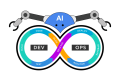
Predictive Build Optimization with Machine Learning Training Course
Predictive build optimization involves leveraging machine learning to examine build operations and enhance dependability, velocity, and resource efficiency.
This facilitated live training, available either online or on-site, targets mid-level engineering specialists seeking to refine build pipelines through automation, forecasting, and intelligent caching using machine learning methods.
Upon finishing this course, participants will possess the capability to:
- Utilize ML methods to evaluate build performance trends.
- Identify and forecast build failures utilizing past build records.
- Deploy ML-based caching strategies to decrease build times.
- Incorporate predictive analytics into current CI/CD processes.
Course Structure
- Instructor-led presentations and collaborative dialogue.
- Practical tasks centered on analyzing and modeling build data.
- Applied implementation within a simulated CI/CD setting.
Course Modification Options
- To tailor this training to specific toolchains or environments, please contact us to adapt the program for government operations.
Course Outline
Principles of Predictive Build Enhancement
- Analysis of build system constraints
- Origins of build performance metrics
- Identifying machine learning applications in CI/CD
Machine Learning in Build Assessment
- Preprocessing build log data
- Extracting features from build indicators
- Selecting suitable machine learning models
Forecasting Build Failures
- Recognizing critical failure signals
- Developing classification models
- Assessing predictive accuracy
Enhancing Build Efficiency via ML
- Modeling build duration trends
- Projecting resource needs
- Minimizing variability to increase predictability
Advanced Caching Strategies
- Identifying reusable build outputs
- Creating ML-informed cache protocols
- Oversight of cache expiration
Embedding ML in CI/CD Workflows
- Incorporating prediction phases into build processes
- Guaranteeing repeatability and auditability
- Implementing models for ongoing enhancement
Surveillance and Ongoing Feedback
- Gathering build telemetry
- Automating performance assessment cycles
- Refining models with updated datasets
Expanding Predictive Build Optimization
- Oversight of extensive build environments
- Resource projection using ML
- Integration with multi-cloud build services
Conclusion and Subsequent Actions
Requirements
- Knowledge of software build pipelines
- Proficiency with CI/CD tools
- Understanding of fundamental machine learning principles
Intended Audience
- Build and release engineers
- DevOps professionals
- Platform engineering teams
Runs with a minimum of 4 + people. For 1-to-1 or private group training, request a quote.
Predictive Build Optimization with Machine Learning Training Course - Booking
Predictive Build Optimization with Machine Learning Training Course - Enquiry
Predictive Build Optimization with Machine Learning - Consultancy Enquiry
Upcoming Courses
Related Courses
AI-Driven Deployment Orchestration & Auto-Rollback
14 HoursAI-driven deployment orchestration is a structured approach that employs machine learning and automation to guide rollout strategies, detect operational anomalies, and initiate automatic rollbacks when necessary.
This instructor-led, live training program (available online or onsite) is designed for intermediate-level professionals seeking to optimize deployment pipelines with AI-powered decision-making and resilience capabilities. The curriculum is tailored for government professionals requiring robust, accountable system management.
Upon completion of this training, participants will be able to:
- Implement AI-assisted rollout strategies to ensure safer and more reliable deployments.
- Predict deployment risk by leveraging machine learning–driven insights.
- Integrate automated rollback workflows triggered by advanced anomaly detection.
- Enhance observability frameworks to support intelligent orchestration and oversight.
Course Format
- Instructor-led demonstrations incorporating detailed technical analyses.
- Hands-on scenarios focused on deployment experimentation and validation.
- Practical labs simulating real-world orchestration challenges for government environments.
Customization Options
- Customized integrations, toolchain support, or workflow alignment can be arranged upon request to meet specific operational needs.
AI for DevOps: Integrating Intelligence into CI/CD Pipelines
14 HoursAI for Feature Flag & Canary Testing Strategy
14 HoursAI-augmented release control represents a methodology that leverages machine learning, pattern recognition, and adaptive decision-making frameworks to enhance feature flag management and canary testing procedures.
This instructor-led, live instruction session, available remotely or on-site, is designed for intermediate-level engineers and technical leadership seeking to strengthen release integrity and refine feature exposure strategies through AI-driven analytics.
By the conclusion of this training, participants will be equipped to:
- Utilize AI-based assessment models to evaluate the operational risks associated with new feature releases.
- Streamline canary analysis processes by utilizing performance, behavioral, and operational data.
- Incorporate intelligent scoring mechanisms into existing feature flag platforms.
- Formulate release strategies that dynamically respond to real-time data inputs.
Instructional Methodology
- Facilitated dialogues grounded in practical, real-world case studies.
- Practical exercises focused on AI-enhanced deployment techniques.
- Application of concepts within a simulated feature flag and canary testing environment.
Curriculum Tailoring Options
- To customize content or incorporate agency-specific tooling, please reach out to the training provider.
AI-Driven Observability: From Logs to LLM-Powered Insights
14 HoursThis instructor-led, live training in US (available online or onsite) is designed for observability and SRE engineers seeking to integrate large language models and AI into their monitoring, alerting, and incident analysis workflows.
AIOps Foundation – Accredited Training
35 HoursAIOps is a rapidly advancing domain that addresses the requirements of modern, complex IT environments—specifically those functioning within cloud-based architectures. The AIOps Foundation course provides a thorough introduction to the concepts, technologies, and best practices associated with leveraging artificial intelligence in IT operations for government.
This program examines the background of AIOps, its underlying principles, applicable tools, and the organizational challenges encountered by IT teams implementing these methodologies.
The training is concluded with an examination. Successful completion results in the globally recognized AIOps Foundation certification, which remains valid for a period of three years.
Intended Audience
This course is tailored for professionals and managers engaged in the following areas:
IT operations
DevOps and Site Reliability Engineering (SRE)
Cloud architecture
Data analysis and Data Science
Software development
IT security
Product and project management
AIOps in Action: Incident Prediction and Root Cause Automation
14 HoursAIOps (Artificial Intelligence for IT Operations) is increasingly being used to predict incidents before they occur and automate root cause analysis (RCA) to minimize downtime and accelerate resolution.
This instructor-led, live training (online or onsite) is aimed at advanced-level IT professionals who wish to implement predictive analytics, automate remediation, and design intelligent RCA workflows using AIOps tools and machine learning models.
By the end of this training, participants will be able to:
- Build and train ML models to detect patterns leading to system failures.
- Automate RCA workflows based on multi-source log and metric correlation.
- Integrate alerting and remediation processes into existing platforms.
- Deploy and scale intelligent AIOps pipelines in production environments.
Format of the Course
- Interactive lecture and discussion.
- Lots of exercises and practice.
- Hands-on implementation in a live-lab environment.
Course Customization Options
- To request a customized training for this course, please contact us to arrange.
AIOps Advanced
21 HoursThe Advanced AIOps course builds upon foundational principles to deliver practical experience with industry-standard tools, advanced machine learning techniques, automation workflows, and operational design patterns. It equips participants to construct, configure, optimize, and extend AIOps pipelines and integrations for government contexts.
This instructor-led, live training (online or onsite) targets intermediate to advanced IT professionals who aim to design and implement robust AIOps ecosystems, conduct advanced analytics, and automate operational workflows for government using real-world tools.
Upon completion, participants will be able to:
- Correlate and standardize diverse operational data sources.
- Design and refine anomaly detection and root cause analysis models.
- Integrate AIOps with ITSM and DevOps pipelines.
- Establish closed-loop automation and predictive incident workflows.
Course Format
- Advanced lectures and architecture discussions.
- Hands-on labs with industry tools and platforms.
- Case studies and optimization exercises.
AIOps Foundation
14 HoursAIOps (Artificial Intelligence for IT Operations) represents the strategic application of machine learning, advanced analytics, and automation to optimize and enhance IT service delivery. It enables agencies to automate incident detection, correlate complex events, and elevate the quality of operational decision-making for government purposes.
This instructor-led, live training program (delivered online or onsite) is designed for entry-level IT professionals seeking to comprehend the fundamentals of leveraging AI and big data in IT operations to bolster observability, performance metrics, and incident management within public sector environments.
Upon completion of this training, participants will be equipped to:
- Articulate the historical progression and strategic significance of AIOps.
- Elucidate core technologies, including big data and machine learning, within the context of AIOps for government.
- Recognize critical operational metrics and applicable use cases for AIOps.
- Evaluate organizational impacts, implementation methodologies, and associated challenges.
Course Format
- Interactive instruction and facilitated discussion.
- Analysis of case studies and scenario-based deliberation.
- Practical exercises involving AIOps concepts and tools for government application.
AIOps Fundamentals: Monitoring, Correlation, and Intelligent Alerting
14 HoursBuilding an AIOps Pipeline with Open Source Tools
14 HoursAutonomous Operations with AI Agents
14 HoursThis instructor-led, live training in US, available online or on-site, is designed for SRE and DevOps engineers tasked with designing, building, and securely deploying AI agents for autonomous IT operations for government use.
Enterprise AIOps with Splunk, Moogsoft, and Dynatrace
14 HoursEnterprise AIOps platforms, such as Splunk, Moogsoft, and Dynatrace, deliver robust capabilities for anomaly detection, alert correlation, and response automation within large-scale IT environments.
This instructor-led live training program, available online or on-site, is designed for intermediate-level enterprise IT teams seeking to integrate AIOps tools into their existing observability stacks and operational workflows.
Upon completion of this training, participants will be capable of:
- Configuring and integrating Splunk, Moogsoft, and Dynatrace into a cohesive AIOps architecture.
- Correlating metrics, logs, and events across distributed systems using AI-driven analytical methods.
- Automating incident detection, prioritization, and response using both built-in and custom workflows.
- Enhancing performance, reducing Mean Time to Resolution (MTTR), and improving operational efficiency at the enterprise level.
Course Format
- Interactive lectures and facilitated discussions.
- Extensive exercises and practical application.
- Hands-on implementation within a live laboratory environment.
Customization Options for Government
- To arrange customized training for this course, please contact us.
Implementing AIOps with Prometheus, Grafana, and ML
14 HoursPrometheus and Grafana are extensively adopted tools for infrastructure observability, while machine learning enhances these capabilities by providing predictive and intelligent insights to automate operational decision-making.
This instructor-led training program (delivered online or onsite) is designed for intermediate-level observability professionals seeking to modernize monitoring infrastructure for government through the integration of AIOps practices using Prometheus, Grafana, and machine learning techniques.
Upon completion of this training, participants will be proficient in:
- Configuring Prometheus and Grafana for comprehensive observability across systems and services.
- Collecting, storing, and visualizing high-fidelity time series data.
- Applying machine learning models for the purposes of anomaly detection and forecasting.
- Constructing intelligent alerting rules derived from predictive analytics.
Course Format
- Interactive lectures and facilitated discussions.
- Extensive exercises and practical application.
- Hands-on implementation within a live laboratory environment.
Course Customization Options
- For requests regarding customized training for government, please contact the relevant office to arrange specific details.
LLMOps: Production LLM Operations and Governance
14 HoursThis instructor-led, live training in US (online or onsite) is intended for machine learning engineers and platform teams tasked with building robust operational pipelines for LLM-powered applications at scale for government.
ML Security and AI Red Teaming
14 HoursThis instructor-led, live training in US (online or onsite) is designed for security and ML engineers who must identify, test for, and defend against attacks on ML models and LLM-powered applications.