Online or onsite, instructor-led live Large Language Models (LLMs) training courses demonstrate through interactive hands-on practice how to use Large Language Models for various natural language tasks.
LLMs training is available as "online live training" or "onsite live training." Online live training (also known as "remote live training") is conducted via an interactive, remote desktop. Onsite live training can be conducted locally at customer premises in Florida or in Govtra corporate training centers in Florida.
Govtra also offers bespoke Large Language Models (LLMs) consultancy services in Florida. Our consultants have assisted hundreds of clients around the world with their most challenging issues. Clients value our highly personalized consulting approach and find it well-suited for complex long-term projects, short-term assignments requiring niche expertise, urgent problem-solving, critical knowledge transfer, and team coaching and support. For more information about our past consultancy engagements, please review our consultancy case studies.
If your organization requires personnel for continuous projects, Govtra can provide a full range of staffing solutions. Whether your needs are for medium-term or long-term assignments, entry-level or highly skilled expertise, single-person or multi-person teams, our interim staffing and staff augmentation services can supply the talent needed to complete your most demanding projects. Contact us for more information.
Govtra -- Your Local Training Provider for government
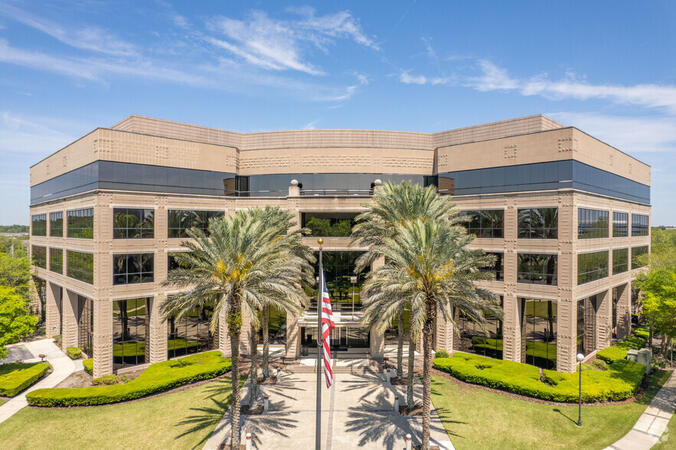
Jacksonville, FL – Deerwood Park
10151 Deerwood Park Blvd 200, Suite 250, Jacksonville, United States, 32256
The venue is nestled in the Deerwood Park campus at 10151 Deerwood Park Boulevard, just off J. Turner Butler Boulevard (JTB) and I‑295, with free on-site parking and adjacent lots. From Jacksonville International Airport (JAX), approximately 18 miles north, a taxi or rideshare takes about 25 minutes via I‑95 South and JTB West. Public transit is available via Jacksonville’s JTA bus routes stopping within walking distance, making the landscaped campus—complete with fountains, cafes, and scenic walkways—easily accessible for attendees without a car.

Miami, FL – Regus at Waterford at Blue Lagoon
6303 Blue Lagoon Drive, Suite 400, Miami, United States, 33126
The venue is set within the Waterford business park at 6303 Blue Lagoon Drive, just minutes from Miami International Airport. It’s accessible by car via I‑95, Florida Turnpike, 826, or Dolphin Expressway, with abundant covered and surface parking on-site. From Miami International Airport (MIA), a taxi or rideshare takes approximately 10 minutes via the Dolphin Expressway. Public transit options include TheBus routes and nearby Tri-Rail stations, with the property a short walk from bus stops—making it convenient even for attendees without a car.

Tampa, FL – Regus at Wells Fargo Center
100 S. Ashley Drive, Suite 600, Tampa, United States, 33602
The venue is located in the 22-story Wells Fargo Center in downtown Tampa, easily accessible by car via I‑275, I‑4, I‑75, or the Selmon Expressway, with covered garage parking (610+ spaces) directly connected to the building. From Tampa International Airport (TPA), a taxi or rideshare takes about 15 minutes via I‑275 East and Ashley Drive. Public transit is excellent with the Downtown Tampa Station (NFTA Metro Rail) just a block away and several bus routes running along Ashley and Brorein Streets, making it ideal for attendees arriving without cars.
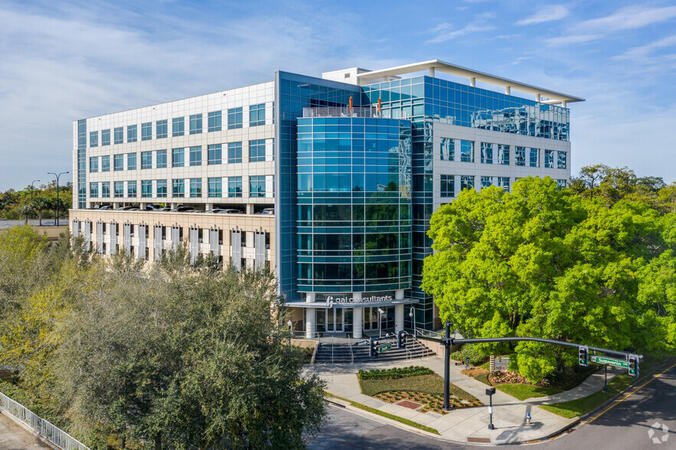
FL, Orlando – GAI Building
618 E. South Street Suite 500, Orlando, United States, 32801
The venue is located in the GAI Building with the CNS Healthcare logo at the front.
FL, Jacksonville - Bank of America Tower
50 N. Laura Street Suite 2500, Jacksonville, United States, 32202
The office is located in a premier office tower in Downtown Jacksonville on the 42nd floor. This Class A LEED Certified building is situated in the Northbank Office Market Preeminent location that provides commanding views. Downtown Trolley and Bus stops are located just across the street on Forsyth with easy access to I-95 leading to I-10 and I-295. Convenient to Jacksonville International Airport, the building is also just minutes to Everbank Field, Jacksonville Landing, Times Union Performing Arts Center, Jacksonville Veterans Memorial Arena and Jacksonville Public Library. Spectacular views of the St John's River in Jacksonville, Florida are one of many features that make the Bank of America Tower office space stand out. The office space occupies a blue granite tower in the heart of the city's central business district. The iconic tower is one of the best-known business premises in the southeastern United States and includes a statement lobby and class-A workspace. Businesses of all kinds appreciate Jacksonville's location at the crossroads of three major railroads and three interstates, and its international airport.
FL, Tallahassee – Alliance Center
113 South Monroe Street 1st Floor, Tallahassee, united states, 32301
The venue is located in the Alliance Center across the street from FUBA and the Florida Optometric Association.
FL, West Palm Beach - Philips Point
777 South Flagler Drive, West Palm Beach, United States, 33401
The venue is located in the Philips Point building just off the Royal Park Bridge.
FL, Aventura - Corporate Center
20801 Biscayne Blvd., Miami, united states, 33180
The venue is located in the Grove Bank & Trust building just off Biscayne Blvd.
FL, Fort Lauderdale - Corporate Center
Corporate Center, 110 East Broward Blvd., Fort Lauderdale, United States, 33301
The venue is located in the Corporate Center across the street from the Uniform Advantage Corporate Office and just next door to Colliers International.
Miami Beach, FL – Regus at Meridian Center
1688 Meridian Avenue, Suites 600/700, Miami Beach, United States, 33139
The venue is located on the corner of Meridian Avenue and 17th Street in Miami Beach’s vibrant City Center district, accessible by car via I‑195 and the MacArthur Causeway with underground and street parking nearby. From Miami International Airport (MIA), taxis or rideshares typically take 15–20 minutes via I‑195 East and Biscayne Boulevard. Public transit is seamless: several Metrobus routes serve Meridian Avenue, and the nearby 17th Street trolley stop makes it easy to reach without a car. The central location places the venue steps from the Miami Beach Convention Center, Lincoln Road Mall, restaurants, galleries, and retail.
Tampa, FL - Regus - One Urban Centre at Westshore
4830 W Kennedy Blvd #600, Tampa, United States, 33609
The venue is located in the Westshore business district at 4830 West Kennedy Boulevard, seamlessly accessible by car via I‑275 or I‑75 with secure underground and surface parking on-site. From Tampa International Airport (TPA), take Memorial Highway to I‑275 South and exit at West Kennedy Boulevard—taxi or rideshare typically takes about 15–20 minutes. Public transit users can reach the venue via HART bus routes (such as Route 2 or 32) stopping nearby, followed by a short walk into the building lobby.
This instructor-led, live training in Florida (online or onsite) is designed for senior management professionals who wish to understand the capabilities of large language models (LLMs), explore their potential impact on business operations, and evaluate practical uses of AI tools such as ChatGPT, Microsoft Copilot, or Grok for real-world tasks like content creation, data summarization, and decision support.
By the end of this training, participants will be able to:
Understand what LLMs are and how tools like ChatGPT and Copilot operate.
Utilize prompt techniques to achieve practical, reliable results from LLMs.
Assess real use cases such as email drafting, document summarization, and productivity automation.
Identify investment opportunities and strategic applications for AI adoption in the public sector for government operations.
This instructor-led, live training in [location] (online or onsite) is aimed at senior management teams who wish to understand the strategic value of Large Language Models (LLMs) and enterprise AI tools. Participants will explore how to integrate these tools into high-level workflows for government, draft better prompts, and evaluate opportunities for increased productivity and return on investment (ROI) through AI adoption.
By the end of this training, participants will be able to:
- Understand how LLMs function and how tools like ChatGPT and Copilot apply them.
- Use prompt-based interactions to automate and accelerate tasks.
- Apply AI tools to real scenarios such as email drafting, report summarization, and agreement review for government.
- Evaluate strategic benefits, limitations, and licensing considerations for LLM adoption.
This instructor-led, live training in Florida (online or onsite) is designed for intermediate to advanced AI researchers, data scientists, and developers who seek to understand, fine-tune, and implement Meta AI's Large Language Models for various NLP applications.
By the end of this training, participants will be able to:
Comprehend the architecture and functionality of Meta AI's Large Language Models.
Configure and fine-tune Meta AI LLMs for specific use cases.
Develop LLM-based applications, including text summarization, chatbots, and sentiment analysis.
Optimize and deploy large language models efficiently to support various public sector workflows for government.
This instructor-led, live training, available either Florida (online or onsite), targets intermediate-level AI professionals, business analysts, and technology leaders seeking to comprehend the foundational principles of generative AI and the application of Large Language Models (LLMs) in commercial contexts. The curriculum covers transformer architectures, prompt engineering strategies, and ethical guidelines necessary for implementing these models in practical solutions. Upon completion, participants will be equipped to:
* Demonstrate a thorough understanding of the core concepts governing generative AI and LLMs.
* Execute the implementation and fine-tuning of LLMs tailored to specific enterprise requirements.
* Utilize advanced prompt engineering techniques to ensure optimal model performance.
* Identify ethical implications and effectively manage risks associated with the deployment of LLMs for government and public sector use.
This instructor-led, live training is available online or at an onsite location within Florida. The curriculum is designed for intermediate-level professionals in artificial intelligence, data science, and engineering, as well as policy makers and stakeholders who require a comprehensive understanding of the ethical dimensions associated with Large Language Models. This program provides critical insights for government entities and other public sector organizations seeking to establish robust governance frameworks for AI technologies.
Upon completion of this training, participants will be equipped to:
Identify ethical issues and challenges associated with LLMs.
Apply ethical frameworks and principles to LLM deployment.
Assess the societal impact of LLMs and mitigate potential risks.
Develop strategies for responsible AI development and usage.
This instructor-led, live training (online or onsite) is designed for intermediate-level natural language processing practitioners, data scientists, content creators, translators, and government entities who wish to utilize large language models (LLMs) for language translation and creating multilingual content.
By the end of this training, participants will be able to:
- Understand the principles of cross-lingual learning and translation with LLMs.
- Implement LLMs for translating content between various languages.
- Create and manage multilingual datasets for training LLMs.
- Develop strategies for maintaining consistency and quality in translation, ensuring alignment with public sector workflows and governance standards.
This instructor-led, live training (conducted either online or onsite) is designed for intermediate-level financial analysts, data scientists, and investment professionals who aim to leverage large language models (LLMs) for financial market analysis and prediction.
By the end of this training, participants will be able to:
- Understand the application of LLMs in financial market analysis.
- Utilize LLMs to process financial news, reports, and data to gain market insights.
- Develop predictive models for stock prices, market trends, and economic indicators.
- Integrate LLM-generated insights into investment decision-making processes, enhancing the accuracy and efficiency of financial strategies for government and private sector applications.
This instructor-led, live training (offered online or onsite) is designed for intermediate-level environmental scientists and researchers, data analysts, and policymakers and environmental advocates who wish to leverage large language models (LLMs) for environmental modeling and analysis.
By the end of this training, participants will be able to:
- Understand the application of LLMs in environmental science.
- Utilize LLMs to analyze and model environmental data.
- Interpret LLM outputs for environmental impact assessments.
- Communicate findings effectively to inform policy and conservation efforts for government and public sector initiatives.
This instructor-led, live training, available both online and onsite, is designed for intermediate-level VR and AR developers, game designers, and AI engineers who are interested in integrating Large Language Models (LLMs) into their VR and AR applications to enhance user engagement and responsiveness.
By the end of this training, participants will be able to:
- Comprehend the role of LLMs in developing immersive VR and AR experiences.
- Create VR and AR applications that leverage LLMs for interactive dialogues and dynamic content generation.
- Integrate LLMs with VR and AR development tools to improve user interaction and engagement.
- Implement best practices for designing AI-driven narratives and interactions in virtual environments, ensuring alignment with public sector workflows and governance standards for government.
This instructor-led, live training in Florida (online or onsite) is aimed at intermediate-level data scientists, machine learning engineers, and software developers who wish to apply Large Language Models (LLMs) to multimodal data for advanced AI applications for government.
By the end of this training, participants will be able to:
- Understand the principles of multimodal learning with LLMs.
- Implement LLMs to process and analyze text, image, and audio data.
- Develop applications that leverage the strengths of multimodal data integration.
- Evaluate the performance of multimodal LLM systems.
This instructor-led, live training (available online or onsite) is designed for intermediate-level cybersecurity professionals and data scientists who wish to leverage Large Language Models (LLMs) to enhance cybersecurity measures and threat intelligence for government.
By the end of this training, participants will be able to:
- Understand the role of LLMs in enhancing cybersecurity.
- Implement LLMs for threat detection and analysis.
- Utilize LLMs for security automation and response.
- Integrate LLMs with existing security infrastructure for government.
This instructor-led, live training (offered online or onsite) is designed for intermediate-level data scientists and business analysts who wish to leverage large language models (LLMs) to predict trends and behaviors across various sectors.
By the end of this training, participants will be able to:
- Understand the foundational principles of LLMs and their application in predictive analytics.
- Implement LLMs to analyze and forecast data in diverse industries.
- Assess the effectiveness of predictive models utilizing LLMs.
- Integrate LLMs with existing data processing workflows for government and other organizations.
This instructor-led, live training (online or onsite) is designed for intermediate-level data scientists who aim to achieve a thorough understanding and practical skills in both Large Language Models (LLMs) and Reinforcement Learning (RL).
By the end of this training, participants will be able to:
- Comprehend the components and functionality of transformer models.
- Optimize and fine-tune LLMs for specific tasks and applications.
- Grasp the core principles and methodologies of reinforcement learning.
- Understand how reinforcement learning techniques can improve the performance of LLMs for government use.
This instructor-led, live training in [location] (online or onsite) is designed for intermediate-level content creators, marketers, and educational technologists who aim to leverage the power of Large Language Models (LLMs) for generating high-quality, diverse, and engaging content across various domains.
By the end of this training, participants will be able to:
- Understand the capabilities of LLMs and their application in content generation.
- Set up and use LLMs for producing a variety of content types.
- Apply best practices for prompting and fine-tuning LLMs to achieve desired outputs.
- Evaluate the quality of AI-generated content and refine it for specific audiences.
- Explore advanced techniques for creative and multi-modal content generation with LLMs, ensuring alignment with public sector workflows and governance standards for government.
This instructor-led, live training (available online or onsite) is aimed at educators, EdTech professionals, and researchers with varying levels of experience who wish to leverage large language models (LLMs) for creating personalized educational experiences.
By the end of this training, participants will be able to:
- Understand the architecture and capabilities of LLMs.
- Identify opportunities for personalization in educational content using LLMs.
- Design adaptive learning platforms that utilize LLMs for content personalization.
- Implement LLM-driven strategies for enhancing student engagement and learning outcomes.
- Evaluate the effectiveness of LLMs in educational settings and make data-driven decisions for government and institutional improvement.
This instructor-led, live training, available either online or at an on-site location Florida, is designed for intermediate-level machine learning practitioners and AI developers who need to customize and implement open-weight models, including LLaMA, Mistral, and Qwen, for specific organizational or internal applications.
By the conclusion of this training, participants will be equipped to:
- Analyze the open-source LLM landscape and distinguish between various model architectures.
- Prepare datasets and configure fine-tuning parameters for models such as LLaMA, Mistral, and Qwen.
- Implement fine-tuning workflows utilizing Hugging Face Transformers and PEFT frameworks.
- Assess, store, and deploy customized models within secure, controlled environments for government and public sector use cases.
This instructor-led, live training (available online or onsite) is designed for beginner to intermediate software developers and data scientists who are interested in implementing large language models (LLMs) in speech recognition and synthesis systems for government applications.
By the end of this training, participants will be able to:
- Understand the role of LLMs in speech technologies.
- Implement LLMs to enhance the accuracy of speech recognition and produce natural-sounding speech synthesis.
- Integrate LLMs with existing speech recognition engines and speech synthesizers.
- Evaluate and improve the performance of speech systems using LLMs.
- Stay informed about current trends and future directions in speech technologies for government use.
This instructor-led, live training in Florida (online or onsite) is designed for government customer support and IT professionals at the beginner to intermediate level who wish to implement Large Language Models (LLMs) to create responsive and intelligent customer support chatbots.
By the end of this training, participants will be able to:
- Understand the fundamentals and architecture of LLMs.
- Design and integrate LLMs into government customer support systems.
- Enhance the responsiveness and user experience of chatbots for government use.
- Address ethical considerations and ensure compliance with industry standards.
- Deploy and maintain an LLM-based chatbot for real-world applications in a government context.
This instructor-led program, available via online or onsite delivery at Florida, targets intermediate-level data scientists and AI engineers seeking to optimize the cost and efficiency of large language model fine-tuning through techniques such as Low-Rank Adaptation (LoRA), Adapter Tuning, and Prefix Tuning.
Upon completion of this curriculum, participants will be equipped to:
* Analyze the theoretical frameworks governing parameter-efficient fine-tuning methodologies.
* Execute LoRA, Adapter Tuning, and Prefix Tuning implementations utilizing Hugging Face PEFT libraries.
* Evaluate the comparative performance metrics and cost implications of parameter-efficient methods against full fine-tuning approaches.
* Deploy and scale fine-tuned large language models while minimizing computational and storage resources, tailored for government applications.
This instructor-led, live training (online or onsite) is aimed at intermediate to advanced machine learning engineers, AI developers, and data scientists who wish to learn how to use QLoRA to efficiently fine-tune large models for specific tasks and customizations.
By the end of this training, participants will be able to:
- Understand the theory behind QLoRA and quantization techniques for large language models.
- Implement QLoRA in fine-tuning large language models for domain-specific applications.
- Optimize fine-tuning performance on limited computational resources using quantization methods.
- Deploy and evaluate fine-tuned models efficiently in real-world scenarios, ensuring alignment with public sector workflows and governance standards for government.
This instructor-led, live training (online or onsite) is designed for intermediate-level data and marketing professionals who aim to apply large language models (LLMs) to analyze and interpret public sentiment from various text sources such as social media posts, product reviews, and customer feedback.
By the end of this training, participants will be able to:
- Understand the principles of sentiment analysis and its application using LLMs.
- Preprocess and prepare datasets for sentiment analysis.
- Train and fine-tune LLMs to accurately reflect sentiment in text.
- Analyze sentiment in real-time from social media and other text sources.
- Integrate sentiment analysis findings into business strategies and decision-making processes, ensuring alignment with public sector workflows, governance, and accountability for government.
This instructor-led, live training (online or onsite) is designed for intermediate-level software developers and technical writers who wish to leverage Large Language Models (LLMs) to enhance their coding workflow and produce detailed, comprehensive documentation.
By the end of this training, participants will be able to:
- Understand the role of LLMs in automating code generation and software documentation.
- Utilize LLMs to create accurate and efficient code snippets and documentation.
- Integrate LLMs into their software development lifecycle for improved productivity.
- Maintain high-quality documentation standards using automated tools.
- Address ethical considerations and best practices for using AI in software development, ensuring alignment with public sector workflows and governance for government.
This instructor-led, live training (available online or onsite) is designed for intermediate-level business professionals and data analysts who wish to leverage the power of Large Language Models (LLMs) for extracting valuable business insights.
By the end of this training, participants will be able to:
- Understand the foundational concepts and applications of LLMs in the context of business intelligence.
- Apply LLMs to analyze extensive datasets and derive actionable insights.
- Integrate LLM-driven analytics into strategic decision-making processes for government and private sector operations.
- Evaluate the ethical considerations and best practices associated with using LLMs in a business environment.
- Anticipate future trends in artificial intelligence and prepare for the evolving landscape of business intelligence.
This instructor-led, live training (online or onsite) is designed for intermediate to advanced developers and data scientists who wish to master LlamaIndex for developing innovative language model-powered applications for government.
By the end of this training, participants will be able to:
- Set up and configure LlamaIndex for use with language models.
- Index and query custom datasets using LlamaIndex to enhance language model functionality.
- Design and develop sophisticated applications that utilize LlamaIndex and language models.
- Understand and apply best practices for working with language models and LlamaIndex.
- Navigate the ethical considerations involved in deploying language model-powered applications.
This instructor-led, live training (online or onsite) is designed for intermediate-level AI researchers, machine learning professionals, and data scientists who aim to leverage LlamaIndex to enhance the capabilities of AI models, making them more accurate and reliable for various applications.
By the end of this training, participants will be able to:
- Understand the principles and components of LlamaIndex.
- Ingest and structure data for use with large language models (LLMs).
- Implement context augmentation to improve AI model performance.
- Integrate LlamaIndex into existing AI systems and workflows for government.
This instructor-led, live training (online or onsite) is designed for intermediate-level professionals who aim to harness the capabilities of prompt engineering and few-shot learning to enhance the performance of large language models (LLMs) for real-world applications for government and other sectors.
By the end of this training, participants will be able to:
Understand the foundational principles of prompt engineering and few-shot learning.
Create effective prompts tailored for a variety of natural language processing (NLP) tasks.
Utilize few-shot techniques to adapt LLMs with minimal data requirements.
Optimize LLM performance to meet the demands of practical applications.
LangGraph is a framework designed for building stateful, multi-actor language model applications as composable graphs with persistent state and precise control over execution.
This instructor-led, live training (available online or onsite) is aimed at intermediate to advanced-level professionals who wish to design, implement, and operate LangGraph-based solutions for government with the necessary compliance, traceability, and governance controls.
By the end of this training, participants will be able to:
- Design legal-specific LangGraph workflows that ensure auditability and compliance.
- Integrate legal ontologies and document standards into graph state and processing.
- Implement guardrails, human-in-the-loop approvals, and traceable decision paths.
- Deploy, monitor, and maintain LangGraph services in production with observability and cost controls.
**Format of the Course**
- Interactive lecture and discussion.
- Extensive exercises and practice sessions.
- Hands-on implementation in a live-lab environment.
**Course Customization Options**
- To request a customized training for this course, please contact us to arrange.
This instructor-led, live training (online or onsite) is designed for advanced-level engineers, AI specialists, and localization leads who aim to implement large language model (LLM) systems for automated translation, quality evaluation, and enterprise governance.
By the end of this training, participants will be able to:
- Construct enterprise-grade LLM localization pipelines that integrate both open and proprietary models.
- Implement automated quality assurance workflows and metrics to ensure consistent translations.
- Establish governance and approval frameworks for the production of multilingual content.
- Deploy scalable, auditable LLM-based localization systems in secure environments, ensuring compliance with standards for government.
AI for SQL is the application of artificial intelligence and large language models (LLMs) to automate, optimize, and enhance the way SQL queries are generated, executed, and interpreted within enterprise data environments.
This instructor-led, live training (online or onsite) is aimed at intermediate-level data engineers and technical leads who wish to integrate AI capabilities into SQL workflows to enable natural language querying, intelligent optimization, and automated data analysis for government and other public sector entities.
By the end of this training, participants will be able to:
- Integrate LLMs such as GPT, DeepSeek, LLaMA, Qwen, and Mistral into SQL environments.
- Build natural-language-to-SQL pipelines for conversational data access.
- Implement AI-driven query optimization and error detection.
- Design secure, auditable AI-SQL workflows for enterprise use.
**Format of the Course**
- Interactive lecture and discussion.
- Extensive exercises and practice sessions.
- Hands-on implementation in a live-lab environment.
**Course Customization Options**
- To request a customized training for government or other specific needs, please contact us to arrange.
LangGraph is a framework designed for building stateful, multi-actor language model applications as composable graphs with persistent state and control over execution.
This instructor-led, live training (online or onsite) is aimed at intermediate to advanced-level professionals who wish to design, implement, and operate LangGraph-based solutions in the finance sector, ensuring proper governance, observability, and compliance for government and private entities.
By the end of this training, participants will be able to:
- Design finance-specific LangGraph workflows aligned with regulatory and audit requirements.
- Integrate financial data standards and ontologies into graph state and tooling.
- Implement reliability, safety, and human-in-the-loop controls for critical processes.
- Deploy, monitor, and optimize LangGraph systems for performance, cost, and service level agreements (SLAs).
**Format of the Course**
- Interactive lecture and discussion.
- Extensive exercises and practice sessions.
- Hands-on implementation in a live-lab environment.
**Course Customization Options**
- To request a customized training for government or private sector needs, please contact us to arrange.
Vertex AI delivers robust infrastructure for developing multimodal large language model workflows, unifying text, audio, and visual data within a cohesive operational pipeline. By leveraging long-context capabilities and specific Gemini API configurations, this platform facilitates sophisticated applications involving strategic planning, complex reasoning, and cross-modal intelligence. This instructor-led session, available through online or onsite delivery models, targets intermediate to advanced practitioners seeking to design, construct, and optimize multimodal AI systems within the Vertex AI environment.
Upon completion of this training, participants will demonstrate the ability to:
* Utilize Gemini models to process and generate multimodal inputs and outputs.
* Deploy long-context workflows to support intricate reasoning tasks.
* Architect pipelines that seamlessly integrate text, audio, and image analysis.
* Tune Gemini API parameters to maximize performance and ensure cost-effective resource allocation.
**Course Format**
* Interactive instruction coupled with structured discussion.
* Practical laboratory exercises focused on multimodal workflow implementation.
* Applied project-based assignments to address real-world multimodal use cases.
**Course Customization**
Organizations requiring specialized instruction tailored to specific operational needs may contact the provider to arrange customized training services. This curriculum is designed to support the specific requirements of federal agencies and is intended for government use.
LangGraph enables stateful, multi-actor workflows powered by LLMs with precise control over execution paths and state persistence. In healthcare, these capabilities are essential for compliance, interoperability, and building decision-support systems that align with medical workflows.
This instructor-led, live training (online or onsite) is aimed at intermediate to advanced professionals who wish to design, implement, and manage LangGraph-based healthcare solutions while addressing regulatory, ethical, and operational challenges for government and private sector applications.
By the end of this training, participants will be able to:
- Design healthcare-specific LangGraph workflows with compliance and auditability in mind.
- Integrate LangGraph applications with medical ontologies and standards (FHIR, SNOMED CT, ICD).
- Apply best practices for reliability, traceability, and explainability in sensitive environments.
- Deploy, monitor, and validate LangGraph applications in healthcare production settings.
**Format of the Course**
- Interactive lecture and discussion.
- Hands-on exercises with real-world case studies.
- Implementation practice in a live-lab environment.
**Course Customization Options**
- To request a customized training for this course, please contact us to arrange.
This instructor-led, live training (online or onsite) is designed for intermediate-level AI developers and localization engineers who are interested in creating scalable, automated translation pipelines using both proprietary and open-source large language models (LLMs).
By the end of this training, participants will be able to:
- Design and deploy translation workflows utilizing modern LLM frameworks and APIs.
- Integrate open-source and commercial models into robust translation systems.
- Enhance translation quality through fine-tuning, prompt engineering, and automation.
- Implement cost-effective and compliant translation infrastructure for enterprise environments, ensuring alignment with public sector workflows and governance for government.
LangGraph is a framework designed for building stateful, multi-actor language model applications as composable graphs with persistent state and control over execution.
This instructor-led, live training (online or onsite) is aimed at advanced-level AI platform engineers, DevOps professionals for government, and ML architects who wish to optimize, debug, monitor, and operate production-grade LangGraph systems.
By the end of this training, participants will be able to:
- Design and optimize complex LangGraph topologies for speed, cost, and scalability.
- Engineer reliability through retries, timeouts, idempotency, and checkpoint-based recovery.
- Debug and trace graph executions, inspect state, and systematically reproduce production issues.
- Instrument graphs with logs, metrics, and traces, deploy to production, and monitor SLAs and costs.
**Format of the Course**
- Interactive lecture and discussion.
- Extensive exercises and practice sessions.
- Hands-on implementation in a live-lab environment.
**Course Customization Options**
- To request a customized training for this course, please contact us to arrange.
This instructor-led, live training in [location] (online or onsite) is designed for intermediate-level developers who wish to learn how to utilize generative artificial intelligence with large language models for various tasks and domains.
By the end of this training, participants will be able to:
- Define what generative AI is and explain its mechanisms.
- Describe the transformer architecture that underpins large language models.
- Utilize empirical scaling laws to optimize large language models for different tasks and constraints.
- Apply state-of-the-art tools and methods to train, fine-tune, and deploy large language models.
- Discuss the opportunities and risks of generative AI for government and business.
This training aligns with public sector workflows, governance, and accountability, ensuring that participants are well-equipped to leverage these technologies effectively and responsibly.
Large language models and autonomous agent frameworks, including AutoGen and CrewAI, are transforming DevOps operations by enabling the automation of change management, test creation, and incident response through simulated collaborative decision-making. This instructor-led program, available in online or onsite formats, is designed for senior engineers seeking to architect and deploy DevOps automation workflows driven by large language models and multi-agent architectures.
Upon completion of this training, participants will be equipped to:
* Incorporate large language model agents into continuous integration and continuous delivery pipelines to enhance automation capabilities.
* Utilize agents to automate test case generation, commit analysis, and the production of change summaries.
* Orchestrate multiple agents to triage alerts, generate appropriate responses, and deliver technical recommendations for DevOps improvement.
* Develop secure and maintainable workflows using open-source agent frameworks, ensuring alignment with organizational standards for government operations.
**Course Format**
* Interactive instruction and facilitated discussion.
* Extensive practical exercises and skill reinforcement.
* Applied implementation within a live laboratory environment.
**Customization**
Organizations requiring tailored training solutions should contact our office to arrange specific program modifications.
Postgres is an advanced open-source relational database that can serve as a foundation for AI-powered systems and data intelligence applications.
This instructor-led, live training (online or onsite) is aimed at intermediate-level database professionals and developers who wish to integrate, manage, and optimize AI capabilities directly within Postgres for government use.
By the end of this training, participants will be able to:
- Set up and configure Postgres extensions for AI workloads.
- Implement embeddings and similarity search using pgvector.
- Integrate open source and proprietary LLMs with Postgres for real-time insights.
- Optimize Postgres for handling AI-driven queries and workflows.
**Format of the Course**
- Interactive lecture and discussion.
- Extensive exercises and practice sessions.
- Hands-on implementation in a live-lab environment.
**Course Customization Options**
- To request a customized training for this course, please contact us to arrange.
This instructor-led, live training, available online or onsite at Florida, is designed for intermediate to advanced AI developers, architects, and product managers responsible for identifying and mitigating risks in LLM-powered applications. The curriculum addresses critical threats such as prompt injection, data leakage, and unfiltered output, while implementing security controls including input validation, human-in-the-loop oversight, and output guardrails.
Upon completion of this program, participants will be equipped to:
* Analyze the fundamental vulnerabilities inherent in LLM-based systems.
* Apply secure design principles to the architecture of LLM applications.
* Utilize tools such as Guardrails AI and LangChain for validation, filtering, and safety assurance.
* Integrate techniques such as sandboxing, red teaming, and human-in-the-loop review into production-grade pipelines for government and public sector environments.
This instructor-led instructional program, available via online or onsite delivery at Florida, is designed for intermediate and advanced professionals seeking to adapt pre-trained models for specific operational tasks and datasets. Upon successful completion of this training, participants will be equipped to:
* Comprehend the foundational principles of fine-tuning and its practical applications for government workflows.
* Prepare structured datasets for the fine-tuning of pre-trained models.
* Execute fine-tuning procedures on large language models (LLMs) for natural language processing (NLP) requirements.
* Optimize model performance metrics and resolve common technical challenges.
LangGraph serves as a framework designed for constructing graph-based workflows utilizing large language models (LLMs), enabling branching logic, tool integration, memory management, and controlled execution. This instructor-led session, available via online or onsite delivery, targets intermediate engineers and product development teams seeking to leverage LangGraph’s logic alongside LLM agent loops. The curriculum focuses on developing dynamic, context-aware applications, including customer support systems, decision trees, and information retrieval infrastructure.
Upon completion of this training, participants will be capable of:
* Designing graph-based workflows that effectively coordinate LLM agents, external tools, and memory states.
* Implementing conditional routing, automated retries, and fallback mechanisms to ensure robust execution.
* Integrating retrieval systems, APIs, and structured outputs within agent loops.
* Evaluating, monitoring, and securing agent behavior to enhance reliability and safety standards.
**Course Format**
* Interactive lectures and facilitated discussions.
* Guided laboratory exercises and code walkthroughs conducted in a sandbox environment.
* Scenario-based design activities and peer review sessions.
**Course Customization**
To request customized training for this course, please contact us to arrange the necessary accommodations. This instructional approach is tailored for government entities seeking specialized technical capacity building.
The course titled "LLMs for Code Understanding, Refactoring, and Documentation" provides technical instruction on leveraging large language models to enhance software integrity, mitigate technical debt, and streamline documentation processes within development teams. This live, instructor-led program, available in virtual or on-site formats, is designed for intermediate to advanced software professionals seeking to utilize generative AI tools to analyze, modernize, and document complex or legacy code repositories with greater efficiency.
Upon completion of this training, participants will possess the capability to:
* Employ large language models to clarify code structure, dependencies, and logic within unfamiliar systems.
* Detect and correct anti-patterns while enhancing overall code readability.
* Automatically produce and sustain inline comments, README documentation, and API references.
* Incorporate AI-driven analytics into established continuous integration and deployment pipelines and code review protocols.
**Program Delivery Structure**
* Interactive lectures and group discussions.
* Extensive practical exercises and skill-building activities.
* Practical application within a live-lab environment tailored for government and public sector workflows.
**Customization Services**
For government entities requiring specialized curriculum adjustments, please contact our support team to coordinate a customized training arrangement.
This instructor-led, live training in [location] (online or onsite) is designed for intermediate-level data scientists, AI developers, and AI enthusiasts who aim to utilize large language models (LLMs) to perform various natural language processing tasks and create innovative and diverse content for different applications.
By the end of this training, participants will be able to:
- Set up a development environment with LLMs and essential tools.
- Proficiently execute natural language understanding (NLU) and natural language inference (NLI) tasks using LLMs.
- Effectively extract, infer, and utilize knowledge graphs.
- Generate and manage dialogues with LLMs for conversational applications.
- Assess the quality and diversity of content generated by LLMs and generative AI.
- Apply ethical principles to ensure fairness and responsible use of LLMs, aligning with standards for government.
LangGraph serves as a robust framework for developing graph-structured large language model applications that facilitate planning, branching, tool utilization, memory management, and controlled execution. This instructor-led, live training, available in online or onsite formats, is designed for beginner-level developers, prompt engineers, and data practitioners seeking to design and construct reliable, multi-step LLM workflows using LangGraph. Upon completion of this instruction, participants will be equipped to:
* Articulate fundamental LangGraph concepts, including nodes, edges, and state, and determine appropriate application scenarios.
* Develop prompt chains capable of branching logic, invoking tools, and retaining context.
* Incorporate retrieval mechanisms and external APIs into graph-based workflows.
* Conduct testing, debugging, and evaluation of LangGraph applications to ensure operational reliability and safety standards.
**Training Format**
* Interactive lectures and facilitated discussions.
* Guided laboratory exercises and code walkthroughs within a sandbox environment.
* Scenario-based exercises focused on design, testing, and evaluation methodologies.
**Customization Options**
For government entities requiring tailored instruction, please contact the provider to arrange customized training services.
This instructor-led, live training (online or onsite) is designed for government developers at beginner to intermediate levels who wish to utilize Large Language Models for various natural language tasks.
By the end of this training, participants will be able to:
- Set up a development environment that includes a popular LLM.
- Create and fine-tune a basic LLM on a custom dataset.
- Apply LLMs to different natural language tasks such as text summarization, question answering, text generation, and more.
- Debug and evaluate LLMs using tools like TensorBoard, PyTorch Lightning, and Hugging Face Datasets.
This training is tailored to enhance the capabilities of government developers in leveraging advanced technologies for government applications.
This instructor-led, live training in Florida (online or onsite) is designed for intermediate-level engineers and architects who aim to utilize Tencent Hunyuan to deploy large-scale and MoE models with reduced latency, enhanced throughput, and improved cost control.
By the end of this training, participants will be able to explain Hunyuan production deployment patterns, optimize inference performance, implement batching and quantization strategies, and plan scalable serving operations for government and other public sector applications.
This instructor-led, live training (available online or on-site) is designed for intermediate-level developers, technical product teams, and AI practitioners who aim to utilize Hunyuan models to develop multimodal applications for image, 3D, and video generation and delivery.
Upon completion of this training, participants will be able to construct prompt-based workflows, generate and evaluate multimodal assets, deliver outputs through applications or APIs, and integrate Hunyuan capabilities into enterprise product stacks. This training is tailored to enhance skills for government and industry professionals alike.
Upon completion of this course, participants will be able to:
- Gain a comprehensive understanding of the architecture and functionality of modern Large Language Models (LLMs).
- Create structured and robust technical prompts for styling, testing, refactoring, and automated quality assurance.
- Develop AI-aware wrappers and microservices that integrate seamlessly within enterprise development ecosystems for government.
- Implement comprehensive Retrieval-Augmented Generation (RAG) pipelines for organizational knowledge retrieval.
- Manage the security, privacy, and audit aspects of AI-driven code and data interactions.
This instructor-led, live training in Florida (online or onsite) is designed for government AI professionals at beginner, intermediate, and advanced levels who aim to utilize MCP to connect AI assistants with external tools, data, and enterprise services.
By the end of this training, participants will be able to: explain MCP concepts, identify key architectural components, set up a basic integration, and apply best practices for security in a government context.
This instructor-led, live training in Florida (online or onsite) is aimed at intermediate-level enterprise architects who wish to utilize the Model Context Protocol to design secure, scalable, and governable agent integration platforms for government and enterprise environments.
By the end of this training, participants will be able to: explain the architecture and enterprise patterns of the Model Context Protocol, design secure integration platforms, implement governance and access controls, and assess deployment and scaling options.
This instructor-led, live training in Florida (online or onsite) is designed for intermediate-level developers, architects, and platform engineers who aim to utilize MCP to construct reliable servers and clients for government enterprise deployment and operations.
By the end of this training, participants will be able to: articulate the practical application of MCP architecture, develop production-ready integrations, deploy and monitor MCP services, and implement versioning, resilience, and support patterns.
This instructor-led, live training in Florida (online or onsite) is designed for intermediate-level IT leaders, compliance professionals, security teams, and enterprise architects who seek to implement sovereign AI principles and governance practices. The training aims to help participants design AI environments that safeguard sensitive data, comply with localization requirements, and minimize vendor lock-in.
By the end of this training, participants will be able to explain sovereign AI concepts, assess various hosting and governance options, establish controls for prompts and logs, and develop a practical adoption roadmap for government use.
Read more...
Last Updated:
Testimonials (2)
The course was very useful, and the trainer was clear, well-prepared, and engaging. I liked the fact that it was very practical with labs and real use cases.
Overall, it was a valuable training experience.
Mattia Dettori - MFM INVESTMENT Ltd Italian branch
Course - LLM Engineering Bootcamp
Examples and links excel repository
Olga - GE HealthCare
Course - Generative AI with Large Language Models (LLMs)
Online LLMs training in Florida, LLMs (Large Language Models) training courses in Florida, Weekend Large Language Models (LLMs) courses in Florida, Evening LLMs (Large Language Models) training in Florida, Large Language Models instructor-led in Florida, Large Language Models (LLMs) trainer in Florida, LLMs boot camp in Florida, LLMs (Large Language Models) private courses in Florida, LLMs (Large Language Models) on-site in Florida, Online Large Language Models (LLMs) training in Florida, Large Language Models (LLMs) one on one training in Florida, LLMs classes in Florida, Evening Large Language Models (LLMs) courses in Florida, LLMs (Large Language Models) instructor-led in Florida, LLMs instructor in Florida, LLMs (Large Language Models) coaching in Florida, Weekend LLMs training in Florida