NobleProg offers comprehensive Large Language Models (LLMs) training courses tailored to the dynamic professional landscape of Virginia. Our programs are designed to empower organizations in this region with cutting-edge skills and strategic insights, driving innovation and operational excellence. By leveraging our local expertise, we ensure that participants receive high-quality education relevant to the specific needs of the Virginia market.
Instructor-led sessions, delivered either virtually or at designated facilities, utilize interactive, hands-on exercises to demonstrate the application of Large Language Models (LLMs) across a variety of natural language processing tasks. These educational offerings are designed specifically for government personnel and public sector professionals.
Training options include "online live instruction" or "onsite live instruction." Online sessions facilitate remote desktop-based interaction, as detailed at remote desktop. Onsite programs may be conducted at client facilities in Virginia or at NobleProg corporate training centers located in Virginia.
NobleProg also provides customized Large Language Models (LLMs) advisory services within Virginia. Our experts have assisted numerous global clients in resolving operational challenges. Stakeholders appreciate our tailored consulting methodology, which is particularly effective for complex long-term initiatives, short-term engagements requiring specialized skills, urgent resolution efforts, critical knowledge transfer, and team development. To review examples of previous advisory work, please consult our consultancy case studies.
For organizations requiring ongoing project support, NobleProg supplies comprehensive staffing solutions. Whether the requirement involves medium- to long-term assignments, entry-level to expert-level competencies, or individual to team-based personnel, our interim staffing and augmentation services deliver the necessary talent to execute demanding projects. Please contact us for additional details.
NobleProg -- Your Local Training Provider
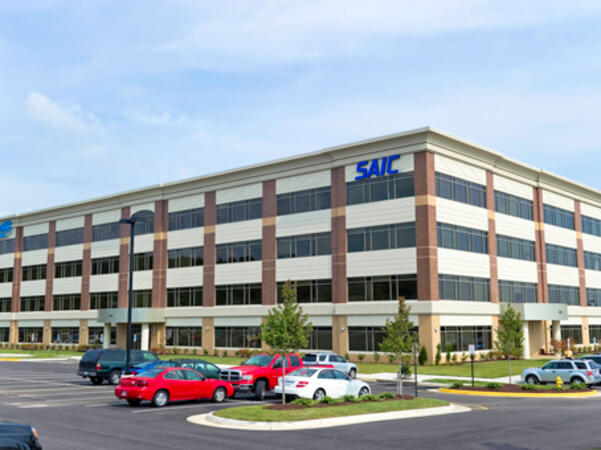
VA, Stafford - Quantico Corporate
800 Corporate Drive, Suite 301, Stafford, united states, 22554
The venue is located between interstate 95 and the Jefferson Davis Highway, in the vicinity of the Courtyard by Mariott Stafford Quantico and the UMUC Quantico Cororate Center.
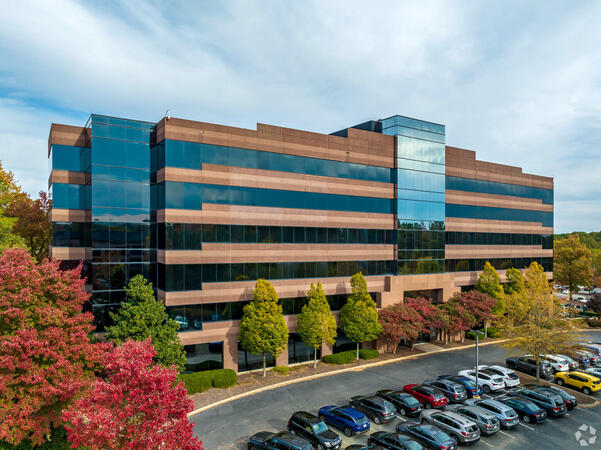
VA, Fredericksburg - Central Park Corporate Center
1320 Central Park Blvd., Suite 200, Fredericksburg, united states, 22401
The venue is located behind a complex of commercial buildings with the Bank of America just on the corner before the turn leading to the office.
VA, Richmond - Two Paragon Place
Two Paragon Place, 6802 Paragon Place Suite 410, Richmond, United States, 23230
The venue is located in bustling Richmond with Hampton Inn, Embassy Suites and Westin Hotel less than a mile away.
VA, Reston - Sunrise Valley
12020 Sunrise Valley Dr #100, Reston, United States, 20191
The venue is located just behind the NCRA and Reston Plaza Cafe building and just next door to the United Healthcare building.
VA, Reston - Reston Town Center I
11921 Freedom Dr #550, Reston, united states, 20190
The venue is located in the Reston Town Center, near Chico's and the Artinsights Gallery of Film and Contemporary Art.
VA, Richmond - Sun Trust Center Downtown
919 E Main St, Richmond , united states, 23219
The venue is located in the Sun Trust Center on the crossing of E Main Street and S to N 10th Street just opposite of 7 Eleven.
Richmond, VA – Regus at Two Paragon Place
6802 Paragon Place, Suite 410, Richmond, United States, 23230
The venue is located within the Two Paragon Place business campus off I‑295 and near Parham Road in North Richmond, offering convenient access by car with free on-site parking. Visitors arriving from Richmond International Airport (RIC), approximately 16 miles northwest, can expect a taxi or rideshare ride of around 20–25 minutes via I‑64 West and I‑295 North. Public transit is available via GRTC buses, with routes stopping along Parham Road and Quioccasin Road, just a short walk to the campus.
Virginia Beach, VA – Regus at Windwood Center
780 Lynnhaven Parkway, Suite 400, Virginia Beach, United States, 23452
The venue is situated within the Windwood Center along Lynnhaven Parkway, featuring modern concrete-and-glass architecture and ample on-site parking. Easily accessible by car via Interstate 264 and the Virginia Beach Expressway, the facility offers a hassle-free commute. From Norfolk International Airport (ORF), located about 12 miles northwest, a taxi or rideshare typically takes 20–25 minutes via VA‑168 South and Edenvale Road. For those using public transit, the HRT bus system includes stops at Lynnhaven Parkway and surrounding streets, providing convenient access by bus.
This instructor-led, live training in Virginia (online or onsite) is designed for senior management professionals seeking to comprehend LLMs, assess their potential impact on public sector operations, and evaluate the practical application of AI tools for government, including ChatGPT, Microsoft Copilot, or Grok, in tasks such as content creation, data summarization, and decision support.
Upon completion of this training, participants will be able to:
Understand the definition of LLMs and the operational mechanics of tools like ChatGPT and Copilot.
Apply prompt engineering techniques to achieve practical and reliable outcomes from LLMs.
Evaluate real-world use cases for government, including drafting electronic correspondence, summarizing documents, and automating productivity tasks.
Identify investment opportunities and strategic applications for adopting AI within the public sector.
This instructor-led, live training in Virginia (online or onsite) is designed for senior management teams seeking to grasp the strategic value of LLMs and enterprise AI solutions. Participants will examine the integration of these tools into high-level workflows, refine prompting techniques, and assess opportunities for enhanced productivity and ROI through AI adoption for government.
Upon completion of this training, participants will be equipped to:
Comprehend the functional mechanics of LLMs and their application in tools like ChatGPT and Copilot.
Leverage prompt-based interactions to automate and expedite operational tasks.
Utilize AI tools for practical scenarios, including email drafting, report summarization, and contract review.
Evaluate the strategic advantages, inherent limitations, and licensing implications associated with LLM adoption for government.
This instructor-led, live training in Virginia (online or onsite) is aimed at intermediate-level to advanced-level AI researchers, data scientists, and developers who wish to understand, fine-tune, and implement Meta AI's Large Language Models for various NLP applications.
By the end of this training, participants will be able to:
Understand the architecture and functioning of Meta AI's Large Language Models.
Set up and fine-tune Meta AI LLMs for specific use cases.
Implement LLM-based applications such as text summarization, chatbots, and sentiment analysis.
Optimize and deploy large language models efficiently.
This instructor-led, live training in Virginia (online or onsite) is tailored for intermediate-level AI professionals, business analysts, and technology leaders who require a deep understanding of generative AI principles and the practical application of LLMs in government settings. Participants will develop expertise in transformer architectures, prompt engineering, and the ethical governance required for deploying these models in real-world operational contexts.
Upon completion of this training, participants will be able to:
Understand the foundational mechanics of generative AI and large language models.
Implement and fine-tune LLMs for specific public sector applications.
Apply prompt engineering techniques to ensure optimal and accurate model outputs.
Recognize ethical risks and establish robust management protocols for LLM deployment.
This live, instructor-led training in Virginia (available online or in-person) is designed for intermediate-level AI professionals, ethicists, data scientists, engineers, and policy makers who require a comprehensive understanding of the ethical landscape surrounding LLMs.
Upon completion of this training, participants will be equipped to:
Identify specific ethical issues and challenges related to LLMs.
Implement established ethical frameworks and principles in the deployment of LLMs.
Evaluate the societal effects of LLMs and implement measures to mitigate associated risks.
Develop actionable strategies for responsible AI development and usage for government contexts.
This instructor-led, live instructional program, available in either online or on-site formats, is designed for intermediate-level natural language processing practitioners, data scientists, content specialists, and translators, as well as global entities seeking to leverage LLMs for language translation and the creation of multilingual content.
Upon completion of this training, participants will demonstrate the ability to:
Articulate the foundational principles of cross-lingual learning and translation mechanisms within LLMs.
Deploy LLMs to facilitate the translation of content across multiple language systems.
Construct and curate multilingual datasets for the purpose of LLM model training.
Formulate robust strategies to ensure consistency and quality standards in translation outputs.
This instructor-led, live training in Virginia (delivered online or onsite) is specifically designed for intermediate-level financial analysts, data scientists, and investment professionals who intend to leverage Large Language Models (LLMs) for sophisticated financial market analysis and prediction.
By the conclusion of this training, participants will be equipped to:
Understand the strategic application of LLMs in financial market analysis.
Employ LLMs to process financial news, reports, and data to generate actionable market insights.
Construct predictive models for stock prices, market trends, and economic indicators.
Integrate LLM-derived insights into investment decision-making workflows.
This instructor-led live training in Virginia (online or onsite) is designed for intermediate-level environmental scientists, researchers, data analysts, and policy makers seeking to leverage Large Language Models (LLMs) for environmental modeling and analysis.
Upon completion, participants will be able to:
Understand the application of LLMs in environmental science.
Utilize LLMs to analyze and model environmental data.
Interpret LLM outputs for environmental impact assessments.
Communicate findings effectively to inform policy and conservation efforts for government.
This instructor-led, live training in Virginia (delivered online or onsite) targets intermediate-level VR and AR developers, game designers, and AI engineers aiming to integrate LLMs into VR and AR applications to foster more engaging and responsive environments.
By the conclusion of this training, participants will be able to:
Comprehend the strategic role of LLMs in constructing immersive VR and AR experiences.
Engineer VR and AR applications that utilize LLMs for interactive dialogues and content generation.
Combine LLMs with VR and AR development tools to optimize user engagement.
Apply standardized best practices for designing AI-driven narratives and interactions in virtual domains.
This instructor-led, live training in Virginia (online or onsite) is designed for intermediate-level data scientists, machine learning engineers, and software developers seeking to apply Large Language Models (LLMs) to multimodal data for advanced AI applications for government.
By the end of this training, participants will be able to:
Understand the principles of multimodal learning with LLMs.
Implement LLMs to process and analyze text, image, and audio data.
Develop applications that leverage the strengths of multimodal data integration.
Evaluate the performance of multimodal LLM systems.
This instructor-led, live training, conducted in Virginia (online or onsite), is tailored for intermediate-level cybersecurity professionals and data scientists aiming to utilize LLMs to enhance cybersecurity measures and threat intelligence.
By the conclusion of this training, participants will be able to:
Understand the role of LLMs in cybersecurity.
Implement LLMs for threat detection and analysis.
Utilize LLMs for security automation and response.
Integrate LLMs with existing security infrastructure.
This instructor-led live training, delivered in Virginia (online or in person), is tailored for intermediate-level data scientists and business analysts aiming to utilize large language models (LLMs) to forecast trends and behaviors across various sectors, including for government operations.
Upon completion of this training, participants will be equipped to:
Comprehend the core mechanics of LLMs and their function in predictive analytics.
Apply LLMs to analyze and forecast data across diverse industries.
Assess the efficacy of predictive models that utilize LLMs.
Incorporate LLMs into established data processing workflows.
This instructor-led, live training in Virginia (online or onsite) is tailored for intermediate-level data scientists seeking a comprehensive understanding and practical skills in Large Language Models (LLMs) and Reinforcement Learning (RL), with a focus on applications relevant to public sector operations.
By the end of this training, participants will be able to:
Understand the components and functionality of transformer models for government applications.
Optimize and fine-tune LLMs for specific tasks and applications.
Understand the core principles and methodologies of reinforcement learning.
Learn how reinforcement learning techniques can enhance the performance of LLMs in official contexts.
This instructor-led, live training in Virginia (online or on-site) is designed for intermediate-level communications professionals, policy experts, and educational technology specialists who intend to utilize LLMs for generating high-quality, diverse, and engaging content across various operational domains.
Upon completion of this training, participants will be able to:
Assess the capabilities of LLMs and their application in content generation for government.
Configure and utilize LLMs to generate various forms of official content.
Implement best practices for prompt engineering and model fine-tuning to achieve precise outputs.
Evaluate the integrity of AI-generated material and refine it to meet specific audience requirements.
Apply advanced techniques for creative and multi-modal content production using LLMs.
This instructor-led, live training program, conducted in Virginia (online or in person), targets educators, EdTech professionals, and researchers seeking to leverage LLMs for creating personalized educational experiences.
Upon completion, participants will be able to:
Understand the underlying architecture and operational capabilities of LLMs.
Identify opportunities to personalize educational content utilizing LLM frameworks.
Design adaptive learning platforms that employ LLMs for content personalization.
Implement LLM-driven strategies to boost student engagement and optimize learning outcomes.
Evaluate the efficacy of LLMs in educational environments and inform decisions based on data.
This instructor-led, live training in Virginia (delivered online or onsite) is designed for intermediate-level ML practitioners and AI developers who require expertise in fine-tuning and deploying open-weight models, including LLaMA, Mistral, and Qwen, for specific business or internal applications.
Upon completion of this training, participants will be equipped to:
Comprehend the ecosystem and distinguish between various open-source LLM architectures.
Construct datasets and configure fine-tuning parameters for models such as LLaMA, Mistral, and Qwen.
Implement fine-tuning workflows utilizing Hugging Face Transformers and PEFT.
Assess, persist, and deploy fine-tuned models within secure environments.
This instructor-led, live training in Virginia (available online or onsite) is designed for beginner- to intermediate-level software developers and data scientists seeking to integrate LLMs into speech recognition and synthesis systems for government operations.
Upon completion of this training, participants will be able to:
Comprehend the functional role of LLMs in speech technologies.
Implement LLMs to achieve accurate speech recognition and natural-sounding speech synthesis.
Integrate LLMs with existing speech recognition engines and synthesizers.
Evaluate and optimize the performance of speech systems utilizing LLMs.
Maintain awareness of current trends and future directions in speech technologies for government use.
This instructor-led, live training in Virginia (online or in person) is tailored for entry-level to mid-level customer support and IT professionals aiming to implement LLMs for developing responsive and intelligent support chatbots.
By the conclusion of this training, participants will be able to:
Understand the fundamental principles and structural architecture of Large Language Models (LLMs).
Design and integrate LLM capabilities into customer support systems.
Improve chatbot responsiveness and enhance the overall user experience.
Navigate ethical considerations and ensure compliance with established industry standards.
Deploy and maintain LLM-based chatbots for operational use in real-world scenarios.
This instructor-led, live training in Virginia (online or onsite) is designed for intermediate-level data scientists and AI engineers seeking to fine-tune large language models with enhanced affordability and efficiency, utilizing methods such as LoRA, Adapter Tuning, and Prefix Tuning for government use.
Upon completion of this training, participants will be equipped to:
Comprehend the theoretical underpinnings of parameter-efficient fine-tuning approaches.
Implement LoRA, Adapter Tuning, and Prefix Tuning using the Hugging Face PEFT library.
Analyze the performance and cost implications of PEFT methods relative to full fine-tuning.
Deploy and scale fine-tuned LLMs with minimized compute and storage expenditures for government systems.
This instructor-led, live training in Virginia (online or onsite) is designed for intermediate to advanced machine learning engineers, AI developers, and data scientists seeking to apply QLoRA for efficient fine-tuning of large models for specific operational tasks and customizations for government applications.
Upon completion of this training, participants will be equipped to:
Comprehend the theoretical underpinnings of QLoRA and quantization techniques applicable to LLMs.
Implement QLoRA in the fine-tuning of large language models for domain-specific applications.
Optimize fine-tuning performance under limited computational resources using quantization strategies.
Deploy and evaluate fine-tuned models efficiently in real-world operational contexts.
This instructor-led, live training in Virginia (online or onsite) is designed for intermediate-level data and communications professionals seeking to apply LLMs to analyze and interpret public sentiment from diverse text sources, including social media posts, product reviews, and citizen feedback.
Upon completion of this training, participants will be able to:
Apply the principles of sentiment analysis and their implementation using LLMs for government contexts.
Preprocess and structure datasets for effective sentiment analysis.
Train and fine-tune LLMs to accurately interpret sentiment within textual data.
Conduct real-time sentiment analysis from social media and other informational sources.
Integrate sentiment analysis outcomes into strategic planning and decision-making processes for government agencies.
This instructor-led, live training session in Virginia (online or onsite) is designed for intermediate-level software developers and technical writers seeking to leverage LLMs to optimize coding workflows and produce comprehensive, detailed documentation.
Upon completion of this training, participants will possess the ability to:
Understand the function of LLMs in automating code generation and software documentation processes.
Utilize LLMs to develop precise and efficient code snippets and technical documentation.
Integrate LLMs into the software development lifecycle to enhance operational productivity.
Maintain rigorous documentation standards through the use of automated tools.
Address ethical considerations and adhere to best practices for AI deployment in software development for government contexts.
This instructor-led, live training in Virginia (online or onsite) is tailored for intermediate-level professionals and data analysts who aim to utilize LLMs for extracting insights relevant to government operations.
Upon completion of this training, participants will be equipped to:
Comprehend the foundational principles and applications of LLMs within business and government intelligence contexts.
Apply LLMs to analyze extensive datasets and derive meaningful insights for public administration.
Integrate LLM-driven analytics into strategic decision-making processes for government.
Evaluate ethical considerations and best practices for deploying LLMs in business and public service.
Anticipate future trends in artificial intelligence and prepare for the evolving landscape of public intelligence.
This instructor-led, live training program, conducted at Virginia (online or on-site), is designed for intermediate to advanced developers and data scientists seeking to master LlamaIndex for the creation of innovative LLM-powered applications for government.
Upon completion of this training, participants will demonstrate the ability to:
Configure and initialize LlamaIndex for seamless integration with LLMs.
Implement indexing and query mechanisms for custom datasets to extend LLM capabilities.
Architect and build complex applications leveraging both LlamaIndex and LLM technologies.
Apply established best practices for the management and operation of LLMs with LlamaIndex.
Evaluate and manage the ethical considerations associated with deploying LLM-driven applications.
This instructor-led, live training in Virginia (online or onsite) is aimed at intermediate-level AI researchers, machine learning professionals, and data scientists who wish to use LlamaIndex to enhance the capabilities of AI models, making them more accurate and reliable for various applications.
By the end of this training, participants will be able to:
Understand the principles and components of LlamaIndex.
Ingest and structure data for use with LLMs.
Implement context augmentation to improve AI model performance.
Integrate LlamaIndex into existing AI systems and workflows.
This instructor-led, live training session, conducted in Virginia (either online or on-site), is targeted at intermediate-level professionals who intend to utilize prompt engineering and few-shot learning strategies to enhance LLM performance for operational applications for government.
Upon completion of this training, participants will be competent to:
Analyze and apply the core principles of prompt engineering and few-shot learning.
Develop effective prompts suitable for a variety of NLP operational tasks.
Implement few-shot techniques to adapt LLMs using minimal data resources.
Fine-tune LLM performance for specific practical applications.
This live, instructor-led training—offered online or onsite—targets senior engineers, AI specialists, and language adaptation leads implementing large language model systems for automated translation, quality evaluation, and enterprise governance.
By the conclusion of this program, participants will be able to:
Build enterprise-grade language adaptation pipelines integrating open and proprietary models.
Implement automated QA workflows and quality metrics for translation consistency.
Establish governance and approval frameworks for multilingual content production.
Deploy scalable, auditable LLM-based adaptation systems in secure environments.
This instructor-led, live training in Virginia provides data engineers with the technical skills necessary to integrate Large Language Models (LLMs) into SQL environments. Participants will develop natural language processing pipelines, implement AI-driven optimization techniques, and design secure, auditable enterprise workflows to support automated data analysis and governance for government and other public sector entities.
LangGraph serves as a framework for constructing stateful, multi-agent large language model (LLM) applications through composable graphs, featuring persistent state management and precise execution control.
This instructor-led, live training session (available online or on-site) is tailored for intermediate to advanced professionals seeking to design, implement, and manage LangGraph-based financial solutions with robust governance, observability, and compliance for government and regulated sectors.
Upon completion of this training, participants will be proficient in the following areas:
Designing financial workflows within LangGraph that adhere to regulatory and audit mandates.
Integrating financial data standards and ontologies into graph state management and operational tooling.
Implementing reliability, safety, and human-in-the-loop controls for critical financial processes.
Deploying, monitoring, and optimizing LangGraph systems to meet performance targets, cost efficiency, and service level agreements (SLAs).
Course Format
Interactive lectures and structured discussions.
Extensive practical exercises and skill-building activities.
Hands-on implementation within a live laboratory environment.
Course Customization Options
To request a customized training curriculum for this course, please contact the provider to coordinate arrangements.
Vertex AI offers robust infrastructure for developing multimodal Large Language Model workflows that consolidate text, audio, and image data into unified processing streams. Through support for extensive context windows and specialized Gemini API parameters, it facilitates advanced capabilities in strategic planning, logical reasoning, and cross-modal intelligence.
This live, instructor-led training (available online or in person) is designed for intermediate to advanced practitioners seeking to design, construct, and refine multimodal AI workflows within Vertex AI.
Upon completion of this training, participants will be equipped to:
Utilize Gemini models for processing diverse multimodal inputs and generating outputs.
Deploy long-context workflows to support complex reasoning tasks.
Construct pipelines that synthesize text, audio, and image analysis.
Optimize Gemini API parameters to enhance operational efficiency and cost management.
Instructional Format
Engaging lectures and facilitated discussions.
Practical labs focused on multimodal workflow execution.
Scenario-based exercises targeting applied multimodal use cases.
Customization Opportunities
For tailored training programs aligned with this curriculum, please contact the appropriate division to coordinate scheduling.
This instructor-led, live training (available online or onsite) is designed for intermediate-level AI developers and localization engineers seeking to architect scalable, automated translation pipelines using both proprietary and open-source LLMs.
Upon completion of this training, participants will possess the capability to:
Design and deploy translation workflows utilizing modern LLM frameworks and API services.
Integrate open-source and commercial models into scalable translation systems.
Optimize translation quality through fine-tuning, prompt engineering, and automation strategies.
Implement cost-efficient and compliant translation infrastructure suitable for enterprise environments for government.
LangGraph serves as a framework for developing stateful, multi-actor LLM applications structured as composable graphs, featuring persistent state management and precise control over execution flows.
This instructor-led, live training session (available online or on-site) is designed for advanced AI platform engineers, DevOps professionals specializing in AI, and ML architects seeking to optimize, troubleshoot, monitor, and manage production-grade LangGraph systems for government environments.
Upon completion of this training, participants will be equipped to:
Design and refine complex LangGraph structures to enhance velocity, cost-efficiency, and scalability.
Implement robust reliability standards through retry mechanisms, timeout controls, idempotency, and checkpoint-based recovery.
Diagnose and trace graph executions, inspect internal states, and methodically replicate production anomalies.
Instrument systems with logging, metrics, and tracing capabilities, deploy to production, and monitor SLAs and associated costs.
Training Delivery Model
Interactive instructional sessions and facilitated discussions.
Extensive exercises and practical application tasks.
Real-time implementation within a live laboratory environment.
Customization Options
Interested parties may contact the provider to coordinate a tailored training program aligned with specific organizational needs.
This instructor-led live training session, conducted in Virginia (either online or on-site), is tailored for intermediate-level technical professionals who aim to master the application of generative AI and LLMs across diverse functional areas and domains for government.
Upon completion of this training, participants will demonstrate the ability to:
Define generative AI and explain its underlying operational principles.
Detail the transformer architecture that serves as the basis for LLM functionality.
Utilize empirical scaling laws to refine LLM performance according to specific task requirements and resource limitations.
Employ current best-practice tools and techniques for the training, fine-tuning, and deployment of LLMs.
Evaluate the strategic advantages and associated risks of generative AI for societal and institutional objectives.
Large language models and autonomous agent frameworks, such as AutoGen and CrewAI, are transforming DevOps task automation—including change tracking, test creation, and alert triage—by emulating human collaborative decision-making processes.
This instructor-led, live training program (available online or onsite) is designed for advanced-level engineers seeking to architect and deploy DevOps automation workflows driven by large language models (LLMs) and multi-agent systems.
Upon completion of this training, participants will be equipped to:
Integrate LLM-based agents into CI/CD pipelines for intelligent automation.
Automate the generation of tests, analysis of commits, and synthesis of change summaries using agents.
Coordinate multiple agents for alert triage, response generation, and DevOps advisory functions.
Develop secure and sustainable agent-driven workflows utilizing open-source frameworks.
Instructional Methodology
Interactive lectures and facilitated discussions.
Extensive exercises and practical application.
Live-lab implementation of hands-on technical tasks.
Customization of Training Content
To request a tailored training curriculum for government or specific organizational needs, please contact us to arrange details.
Achieve proficiency in AI integration within PostgreSQL through this instructor-led live training in Virginia. Participants will learn to configure necessary extensions, implement pgvector embeddings, and connect LLMs for real-time analytical insights. This program emphasizes query optimization and the construction of intelligent systems within a hands-on live-lab environment, tailored for government.
This instructor-led, live training session in Virginia (available online or onsite) is tailored for intermediate to advanced AI developers, architects, and product managers. The objective is to identify and mitigate risks associated with LLM-powered applications, including prompt injection, data leakage, and unfiltered output, while incorporating security controls like input validation, human-in-the-loop oversight, and output guardrails.
Upon completion of this training, participants will be able to:
Comprehend the core vulnerabilities of LLM-based systems
Apply secure design principles to LLM application architecture
Leverage tools such as Guardrails AI and LangChain for validation, filtering, and safety measures
Integrate techniques such as sandboxing, red teaming, and human-in-the-loop review into production-grade pipelines
This instructor-led, live training in Virginia (available via remote or in-person delivery) is designed for mid-level to senior technical professionals seeking to tailor pre-trained models to meet precise functional and dataset requirements.
Upon completion of this training, participants will be capable of the following:
Comprehending the fundamental principles of model refinement and its operational applications.
Preparing and validating data sets for the adaptation of pre-trained models.
Refining Large Language Models (LLMs) for targeted natural language processing tasks.
Optimizing model performance metrics and resolving standard technical challenges.
LLMs for Code Understanding, Refactoring, and Documentation is a specialized technical curriculum designed to apply large language models (LLMs) for enhancing code quality, mitigating technical debt, and automating documentation tasks within software organizations.
This instructor-led, live training session (available online or onsite) is tailored for intermediate-to-advanced software professionals seeking to utilize LLMs, such as GPT, to analyze, refactor, and document complex or legacy codebases more effectively.
Upon completion of this training, participants will be able to:
Employ LLMs to clarify code logic, dependencies, and workflows within unfamiliar repositories.
Identify and remediate design anti-patterns to improve overall code readability.
Automate the generation and maintenance of inline comments, README files, and API documentation.
Integrate LLM-driven insights into existing CI/CD pipelines and code review workflows.
Course Delivery Format
Interactive instruction and facilitated discussion.
Extensive exercises and practical application.
Hands-on implementation within a live-lab environment.
Customization Options
For organizations requiring a customized training program tailored to specific operational needs, please contact us to arrange a solution.
This instructor-led, live training in Virginia (online or on-site) is targeted at intermediate-level data scientists, AI developers, and AI enthusiasts seeking to utilize LLMs for performing diverse NLP tasks and creating novel, varied content for specific purposes.
Upon completion of this training, participants will be able to:
Establish a development environment utilizing LLMs and essential tools.
Proficiently perform NLU and NLI tasks using LLMs.
Effectively extract, infer, and apply knowledge graphs.
Generate and manage dialogues using LLMs for conversational applications.
Evaluate the quality and diversity of content generated by LLMs and generative AI.
Apply ethical principles to ensure fairness and responsible use of LLMs.
LangGraph serves as a specialized framework for constructing graph-based LLM applications, enabling advanced features such as strategic planning, conditional branching, tool utilization, persistent memory, and controlled execution environments.
This instructor-led, live training program, available online or onsite, is designed for junior-level developers, prompt engineers, and data professionals seeking to engineer robust, multi-step LLM workflows utilizing LangGraph.
Upon completion of this program, participants will possess the capability to:
Articulate fundamental LangGraph components (nodes, edges, state) and their applicable contexts.
Construct prompt chains that support branching, tool invocation, and memory retention.
Integrate retrieval mechanisms and external APIs into graph-based workflows for government use cases.
Test, debug, and assess LangGraph applications to ensure reliability and safety standards.
Instructional Methodology
Interactive lectures combined with facilitated group discussions.
Guided laboratory sessions and code analysis within a secure sandbox environment.
Scenario-driven exercises focused on architectural design, testing, and evaluation.
Customization Capabilities
To arrange a customized training program for government agencies, please contact our team for specific requirements.
This instructor-led, live training session in Virginia (available online or onsite) is tailored for developers with beginner to intermediate experience who aim to implement Large Language Models for operational natural language tasks.
Upon completion of this training, participants will be able to:
Establish a development environment equipped with a widely adopted LLM.
Construct a basic LLM and perform fine-tuning on custom datasets.
Utilize LLMs for various natural language tasks, including text summarization, question answering, and text generation.
Debug and assess LLM performance using tools such as TensorBoard, PyTorch Lightning, and Hugging Face Datasets.
This instructor-led, live training in Virginia (available online or onsite) is designed for observability and SRE engineers seeking to integrate large language models and AI into their monitoring, alerting, and incident analysis workflows.
This instructor-led, live training in Virginia (conducted online or onsite) is directed at IT support professionals who seek to utilize AI tools and automation platforms to streamline support processes, standardize responses, and reduce manual documentation effort.
This instructor-led, live training in Virginia (online or onsite) is intended for intermediate-level engineers and architects seeking to deploy large and MoE models with reduced latency, enhanced throughput, and superior cost control.
Upon completion, participants will be able to: explain Hunyuan production deployment patterns, optimize inference performance, implement batching and quantization strategies, and plan scalable serving operations.
This instructor-led, live training in Virginia (online or onsite) is designed for intermediate-level developers, technical product teams, and AI practitioners who intend to leverage Hunyuan models to build multimodal applications for image, 3D, and video generation and delivery for government.
Upon completion, participants will be able to: establish prompt-based workflows, generate and evaluate multimodal assets, provide outputs through applications or APIs, and align Hunyuan capabilities with enterprise product architectures.
Course objectives to transform software and AI engineers into legal engineers — professionals who can build AI solutions for legal work such as eDiscovery, review, and investigations.
In two days, participants build the full core stack: ingest and extract messy real-world legal data, search and retrieve it, add retrieval-augmented generation (RAG) with citations, keep it private on a local model and prove it, run a defensible AI review with court-ready metrics, and package the result for deployment.
This instructor-led, live training in Virginia (delivered online or onsite) is tailored for AI professionals at the beginner, intermediate, or advanced level who seek to employ MCP to connect AI assistants with external tools, data, and enterprise services for government.
Upon completion, participants will be able to: explain MCP concepts, identify key architectural components, establish a basic integration, and apply security best practices.
This instructor-led, live training in Virginia (online or onsite) is aimed at intermediate-level enterprise architects who wish to use Model Context Protocol to design secure, scalable, and governable agent integration platforms for enterprise environments.
By the end of this training, participants will be able to: explain MCP architecture and enterprise patterns, design secure integration platforms, apply governance and access controls, and evaluate deployment and scaling options.
This instructor-led, live training in Virginia (delivered online or on-site) is designed for intermediate-level developers, architects, and platform engineers aiming to leverage MCP to build secure, reliable servers and clients suitable for enterprise deployment and operational oversight.
By the conclusion of this training, participants will be proficient in: explaining MCP architectural principles in practice, constructing production-ready integrations, deploying and observing MCP services, and applying versioning, resilience, and support patterns for government and enterprise use.
This instructor-led, live training in Virginia (available online or on-site) targets intermediate-level IT leaders, compliance officers, security personnel, and enterprise architects seeking to apply sovereign AI principles and governance frameworks for government to design AI environments that safeguard sensitive data, meet localization requirements, and mitigate vendor dependency.
Upon completion of this training, participants will be able to: explain sovereign AI concepts, evaluate hosting and governance options, define controls for prompts and logs, and develop a practical adoption roadmap.
Read more...
Last Updated:
Testimonials (6)
Learning how to prompt Claude and use it to digest all of the data I have available.
Mike Hartleroad - Furniture Row
Course - Claude AI for Data Analysis and Business Intelligence
how to engage with the Office environment and set up repetitive tasks
Matthew Wallace - Group CBS
Course - Claude AI for Workflow Automation and Productivity
Using Claude Code in a more efficient way
Virgil Trif - Frequentis
Course - Claude Code: Agentic AI Development · 1-Day
"I learned the potential of the tool and gained sufficient skills to start using it for my work right away
Angelo Moro
Course - Claude AI for Developers: Building AI-Powered Applications
The course was very useful, and the trainer was clear, well-prepared, and engaging. I liked the fact that it was very practical with labs and real use cases.
Overall, it was a valuable training experience.
Mattia Dettori - MFM INVESTMENT Ltd Italian branch
Course - LLM Engineering Bootcamp
Examples and links excel repository
Olga - GE HealthCare
Course - Generative AI with Large Language Models (LLMs)
Online Large Language Models training in Virginia, LLMs training courses in Virginia, Weekend Large Language Models (LLMs) courses in Virginia, Evening LLMs training in Virginia, Large Language Models instructor-led in Virginia, Large Language Models (LLMs) private courses in Virginia, Large Language Models (LLMs) instructor-led in Virginia, LLMs (Large Language Models) trainer in Virginia, Evening Large Language Models courses in Virginia, LLMs instructor in Virginia, Weekend Large Language Models training in Virginia, LLMs (Large Language Models) on-site in Virginia, LLMs classes in Virginia, LLMs (Large Language Models) boot camp in Virginia, Large Language Models one on one training in Virginia, LLMs (Large Language Models) coaching in Virginia, Online LLMs training in Virginia