



Online or onsite, instructor-led live OMG (Object Management Group) training courses demonstrate through interactive discussion and hands-on practice how to apply OMG modeling standards to enable the visual design, execution, and maintenance of software and other processes for government.
OMG training is available as "online live training" or "onsite live training." Online live training (also known as "remote live training") is conducted via an interactive remote desktop. Onsite live training can be arranged at customer premises in Georgia or in Govtra corporate training centers in Georgia.
Govtra -- Your Local Training Provider
Atlanta, GA – Regus at Colony Squar
1201 Peachtree Street NE, Suite 200, Atlanta, United States, 30361
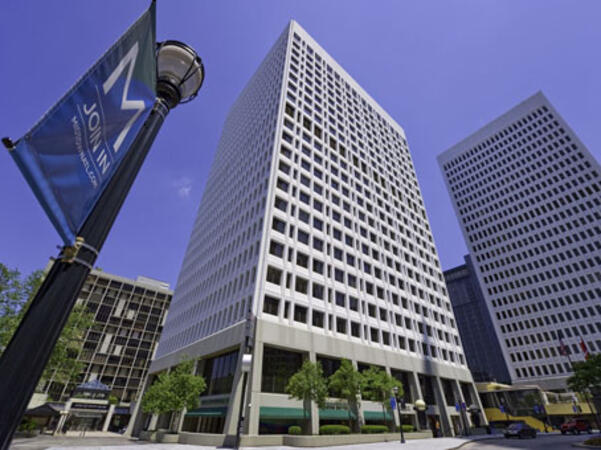
The venue is centrally located in Midtown Atlanta within the prominent Colony Square complex at 1201 Peachtree Street NE, easily accessed by car via I‑75/85 or GA‑400, with several parking garages nearby. From Hartsfield–Jackson Atlanta International Airport (ATL), around 15 miles south, a taxi or rideshare typically takes 20–30 minutes north along I‑75/85 N. Public transit users can take MARTA Rail to the Arts Center or Midtown stations (0.3–0.5 miles away) and walk easily, and numerous MARTA bus routes along Peachtree Street stop directly outside the entrance.

Atlanta, GA – The Proscenium
1170 Peachtree Street NE, Atlanta, United States, 30309
The venue is located in the heart of Midtown Atlanta in the Proscenium high–rise at 1170 Peachtree Street NE, easily accessible by car via I‑75/85 and GA‑400 with several parking garages nearby. Visitors arriving from Hartsfield–Jackson Atlanta International Airport (ATL), about 15 miles south, can expect a taxi or rideshare ride taking 20–30 minutes via I‑75/85 North. Public transit is seamless with MARTA Rail service; the Arts Center and Midtown stations are within walking distance (approximately 0.3–0.4 miles), and multiple MARTA bus routes also serve Peachtree Street.
Decatur, GA – Regus at One West Court Square
One West Court Square, Suite 750, Decatur, United States, 30030
The venue is located in the heart of downtown Decatur within One West Court Square, easily reached by car via I‑20 and I‑285, with several public parking decks directly adjacent. Travelers from Hartsfield–Jackson Atlanta International Airport (ATL), approximately 17 miles southwest, can expect a taxi or rideshare ride of around 25–30 minutes via I‑20 East. Public transit is particularly convenient: MARTA rail users can disembark at Decatur Station (about 0.15 miles away) and walk a few minutes to the building entrance. Local bus routes also serve Trinity Place and Swanton Way, putting the center within easy reach.
Atlanta, GA – Regus at One Hartsfield
100 Hartsfield Centre Parkway, Suite 500, Atlanta, United States, 30354
The venue is located in the One Hartsfield Center office building, adjacent to Hartsfield–Jackson Atlanta International Airport, easily reached by car via I‑75/I‑85 or GA‑138, with abundant on-site parking. Visitors arriving from ATL airport can walk or take a shuttle to the building, or opt for a quick 2–3‑minute taxi or rideshare ride. Public transit users can board MARTA from the Airport Station and ride one stop to College Park Station, then catch a connecting shuttle or enjoy a brief walk of about half a mile.
Atlanta, GA – Regus at Peachtree
260 Peachtree Street NW, Suite 2200, Atlanta, United States, 30303
The venue is situated in the iconic Coastal States Building at 260 Peachtree Street in downtown Atlanta, accessible by car via I‑75/85 or I‑20 with convenient parking garages nearby. From Hartsfield–Jackson Atlanta International Airport (ATL), about 12 miles south, a taxi or rideshare along I‑75/85 North takes approximately 15–20 minutes. For public transit, MARTA rail users can disembark at Five Points Station and walk 0.5 miles northeast, or exit at Peachtree Center Station and walk two blocks north—both routes offering easy access.
Augusta, GA – At Broad Street
823 Broad Street, Augusta, United States, 3090
The venue is located in the heart of downtown Augusta on Broad Street, easily accessible by car via I‑20 with several public parking garages nearby. From Augusta Regional Airport (AGS), about 9 miles west, taxis or rideshares typically take 15–20 minutes via I‑20. Public transit is available through Augusta Public Transit buses with routes along Broad Street, stopping within a few blocks of the venue, offering a convenient option for attendees without a car.
Savannah, GA – Regus at Bull Street
100 Bull St Downtown, Suite 200, Savannah, United States, 31401
The venue is located in the historic downtown area on Bull Street in the Altmayer Building, easily accessible by car via I‑16 and U.S. 17, with several public garages nearby. From Savannah/Hilton Head International Airport (SAV), about 12 miles west, taxis or rideshares typically take 15–20 minutes via U.S. 17 South. Public transit is available via Chatham Area Transit (CAT) buses, with frequent service along Bull and Broughton Streets; Johnson Square Station is just a couple minutes’ walk from the venue.
Modeling and Documentation for Business Analysis is a practical course designed to equip participants with the standard modeling languages and tools necessary to capture, visualize, and validate business requirements and processes. This training is particularly suited for professionals in the public sector who have limited or no experience in modeling but wish to apply industry-standard techniques such as UML, BPMN, and wireframing tools to enhance clarity and communication in their projects.
By the end of this instructor-led, live training (available online or onsite), participants will be able to:
Utilize UML diagrams to effectively represent functional requirements and system behavior.
Model business processes using BPMN standards to ensure alignment with public sector workflows.
Create clear and structured use case diagrams and documentation for government projects.
Design wireframes and interactive prototypes using tools like Figma and Balsamiq to support user interface development.
Format of the Course
Interactive lectures and discussions focused on best practices for government.
Hands-on use of modeling tools in sample project scenarios relevant to public sector initiatives.
Guided exercises centered on process, requirements, and user interface (UI) modeling for government applications.
Course Customization Options
To request a customized training for this course based on your organization’s specific standards or preferred toolset, please contact us to arrange. We can tailor the content to better align with your agency's needs and objectives.
This instructor-led, live training in [location] (online or onsite) is aimed at programmers or anyone who wishes to learn and use OCL and OWL for expressing a wide range of model query, manipulation, and specification requirements.
By the end of this training, participants will be able to:
- Gain a better understanding of OCL and OWL architecture.
- Utilize OCL and OWL to articulate model transformations effectively, enhancing capabilities for government projects.
This is a two-day course focused on simulating SysML models.
This instructor-led, live training (on-site or remote) is designed for individuals who wish to use the Cameo Simulation Toolkit to effectively create and run SysML diagrams and models.
By the end of this training, participants will be able to:
Prepare and configure SysML diagrams for simulation.
Execute Activity diagrams.
Execute State Machine diagrams.
Execute Parametric diagrams.
Execute Sequence diagrams.
To attend this course, participants should meet the prerequisites and have a strong understanding of SysML diagrams.
Format of the Course
Interactive lecture and discussion.
Extensive exercises and practice sessions.
Hands-on implementation in a live-lab environment.
Course Customization Options
To request a customized training for government, please contact us to arrange.
The training in "Object-Oriented Analysis and Design using UML" is addressed to analysts, designers, programmers, testers and project managers, offering an introduction to system modeling using UML. Through case studies, participants gain skills in modeling requirements, business processes, as well as documentation of functional and non-functional requirements. The next stages of training include the analytical model, design phases - both static and dynamic, and practical use of the modeling tool Enterprise Architect. The training provides a solid basis for effective modeling of processes in enterprises, using UML at all stages of software development.
The course enhances existing knowledge of UML, with a focus on the practical application of this object-oriented analysis language for government workflows. Participants will gain hands-on experience in utilizing UML to improve project management and system design processes, ensuring alignment with public sector governance and accountability standards.
Business Analysis is the process of examining, understanding, and defining business needs to develop solutions that meet those needs. It is a key element in the process of managing organizational changes and designing new business solutions. Business analysis ensures that technological, process-related, or organizational solutions meet business goals and needs. It is crucial for the effectiveness of projects and organizational changes by ensuring that the introduced solutions are appropriate, feasible, and fully aligned with business requirements.
This instructor-led, live training (online or onsite) is designed for professionals who wish to leverage AI to enhance their systems and software engineering work. If you are seeking ways to use AI to significantly accelerate your systems engineering processes, this class is tailored for you.
Participants will model a Scanning Electron Microscope (both hardware and software) as part of their lab exercise, learning how to formulate effective questions to receive AI assistance in constructing the model.
By the end of this 3-day course, participants will:
- Understand how to utilize AI as a "subject matter expert" in defining system/software models.
- Be familiar with "the four pillars of SysML" (Requirements, Structure, Behavior, and Parametrics).
- Know how to structure their SysML models to accommodate software components, including:
- Generating User Interface Code from Behavior Models
- Generating Database Code from Structure Models
- Generating Microcontroller Code from State Machines
This training is aligned with best practices for government, ensuring that participants can apply these skills effectively within public sector workflows and governance frameworks.
The course is structured to provide a comprehensive overview of the Systems Modeling Language (SysML), its practical application using MagicDraw/Cameo software, essential Model-Based Systems Engineering (MBSE) simulation methods, and recommended best practices for government. This curriculum ensures that participants gain a solid foundation in SysML and MBSE, aligning with the standards and workflows required for effective project management and system development in the public sector.
The Business Process Model and Notation (BPMN), Decision Model and Notation (DMN), and Case Management Model and Notation (CMMN) are three Object Management Group (OMG) standards designed for process, decision, and case modeling. This course offers an introduction to these standards and provides guidance on when each should be utilized in the context of operations for government agencies.
This 3-day training covers the principles of modeling, UML, SysML, and the use of MagicDraw or Cameo, following a case study that demonstrates a typical model-based systems engineering approach for government.
The course:
Includes lectures and hands-on practice in using MagicDraw or Cameo for systems modeling using SysML;
Explains key SysML concepts and diagrams;
Provides practical experience in building system model examples;
Demonstrates how to trace model elements across different views;
Details efficient use of MagicDraw features;
Is based on a consistent modeling case study.
Audience:
System architects, system engineers, software architects, and other stakeholders who will create and use models in government contexts.
Presentations, discussions, and case study-based practical assignments tailored for government applications.
Course Materials:
Slides, a case study model, and descriptions of practical assignments designed to meet the needs of government participants.
Certificates:
Each participant receives a NobleProg certificate indicating their attendance at the training for government professionals.
This training course is designed to assist business analysts in effectively modeling their business processes using BPMN, as well as managing the resources utilized by these processes. Conducted within an agile enterprise framework, participants will learn to utilize appropriate BPMN notations and business extensions of UML to address their "business requirements" and guide underlying design activities coherently. This course is tailored to enhance the capabilities of business analysts in aligning with public sector workflows, governance, and accountability for government operations.
This training will teach you how to use SysML, the modeling language for systems engineering. In particular, you will learn about block diagrams for structural modeling of complex systems. You will deepen your understanding of sequence diagrams, state diagrams, and activity diagrams for dynamic modeling.
You will also learn how to use specific SysML diagrams such as the requirements diagram and the parametric diagram, as well as the concept of allocation. We will emphasize the need to define a modeling approach that is adapted to the business context and the type of system being studied, ensuring alignment with public sector workflows, governance, and accountability for government.
The practice will be conducted using the Cameo Systems Modeler (MagicDraw) modeling tool from NoMagic.
Teaching Method
Theoretical presentation illustrated with real-world examples
50% practical work with Cameo Systems Modeler on a case study throughout the training
There are numerous established patterns widely available for government use. Sometimes it involves adapting these patterns by changing names or implementing them in specific technologies. This can save hundreds of hours that would otherwise be spent on design and testing. Training Goals: This course has two primary objectives: first, to enable participants to reuse well-known patterns; second, to facilitate the creation and reuse of patterns specific to their organization. It helps participants estimate how patterns can reduce costs, systematize the design process, and generate a code framework based on these patterns. Audience: The course is designed for software designers, business analysts, project managers, programmers, developers, operational managers, and software division managers within government agencies. Course Style: The course focuses on use cases and their relationship with specific patterns. Most examples are explained using UML and simple Java examples (the language can be adjusted if the course is booked as a closed session for government). It guides participants through the sources of these patterns and demonstrates how to catalog and describe them for reuse across the organization.
This introductory course on Enterprise Architect is tailored for individuals who plan to utilize Sparx Systems' UML modeling tool, Enterprise Architect, for their modeling tasks but lack familiarity with its features, functionalities, and applications. The training aims to equip participants with the necessary skills to effectively leverage Enterprise Architect in their professional workflows, ensuring alignment with public sector standards and best practices for government use.
This course provides a comprehensive overview of building and maintaining an Enterprise Architecture (EA) using the Unified Architecture Framework (UAF) version 1.2, through a combination of lectures, demonstrations, and interactive labs. The curriculum is designed to equip participants with the essential knowledge and skills necessary for government professionals to effectively implement and manage EA initiatives in alignment with public sector workflows, governance, and accountability standards.
The course is designed to provide foundational instruction on the Systems Modeling Language (SysML), its application through the MagicDraw/Cameo software, and basic Model-Based Systems Engineering (MBSE) simulation techniques. It also covers best practices in MBSE for government use. Participants will learn how to create templates and generate reports within the MagicDraw/Cameo tool suite. Additionally, the course delves into the functionality of macros and scripts within MagicDraw, including their various applications.
The course is structured to instruct participants in the foundational elements of the Systems Modeling Language (SysML), its practical application using MagicDraw/Cameo software, essential Model-Based Systems Engineering (MBSE) simulation techniques, and recommended best practices in MBSE. This training is also intended to equip professionals with an understanding of architectural simulation principles, an overview of the Simulation Toolkit plugin, the ability to simulate various diagram types, and the methodology for integrating these simulations to automate the architecture. The content is tailored to enhance skills and knowledge for government professionals involved in systems engineering and modeling.
The course is designed to provide a comprehensive understanding of the Systems Modeling Language (SysML), its practical application through the MagicDraw/Cameo software, and foundational Model-Based Systems Engineering (MBSE) simulation techniques. It also covers best practices in MBSE for government use. Participants will learn the essential concepts and features of validation rules, validation suites, and model metrics, as well as how to develop and utilize model queries effectively within the MagicDraw/Cameo environment.
The course is designed to instruct participants on the fundamentals of the Systems Modeling Language (SysML), its practical application using the MagicDraw/Cameo software, and foundational Model-Based Systems Engineering (MBSE) simulation techniques. Additionally, this training covers best practices in MBSE and offers a basic introduction to the core concepts and features of CATIA No Magic’s Teamwork Cloud for government use. Participants will also gain an understanding of Domain Specific Languages (DSL) within the context of MagicDraw.
This course provides instruction on designing and implementing decisions using the OMG DMN (Decision Model and Notation) standard, tailored for government applications. Participants will learn to apply this standard to enhance decision-making processes, ensuring alignment with public sector workflows, governance, and accountability.
Objective: This course is designed to assist participants in understanding how to effectively implement the UAF and NAF enterprise architecture frameworks for government.
Comprehending the concepts of UAF 1.1 within the context of the NATO NAF v4 Architecture Framework is highly beneficial. The Domain Meta-model (DMM) of UAF outlines various stakeholder concerns related to a system, such as security, information, and measurements, through a series of predefined viewpoints. These viewpoints are then mapped to corresponding views in NAF v4.
The Architecture Stages outlined in the NATO NAFv4 Methodology provide insight into how to efficiently utilize UAF views to ensure coherence and completeness. This approach also facilitates traceability from high-level objectives down to the personal and physical resources required for their implementation.
Throughout the course, participants will apply these concepts and techniques through an end-to-end case study and a variety of exercises.
Format of the Course:
Interactive lectures and discussions.
Extensive exercises and practical applications.
Hands-on implementation in a live laboratory environment.
Course Customization Options:
To request a customized training for this course, please contact us to arrange.
Govtra has official OMG OCEB 2 Content Developer status, which means that our course outlines and training materials were developed by the same experts who prepared questions for OCEB 2 exams.
This course prepares you for the OMG Certified Expert in BPM (OCEB v2) Fundamental Examination.
After this course, you can practice using our testing engine on over 200 sample questions, ensuring readiness and alignment with standards for government use.
The OCSMP Model Builder – Fundamental examination evaluates the knowledge and skills necessary to develop a basic SysML model of a system. This exam covers key areas such as model concepts and organization, fundamental requirements capture and management, structure and behavior models, parametric models, allocation relationships, and the use of stereotypes. With the knowledge and skills assessed at this level, along with proficiency in a suitable SysML modeling tool, individuals holding the OCSMP Model Builder – Fundamental Certification should be effective contributors to modeling tasks undertaken by Systems Engineering teams using a model-based systems engineering approach with SysML.
The OCSMP Model Builder – Fundamental Certification is a prerequisite for the program’s two advanced levels and requires the OCSMP Model User Certification as its own prerequisite. This examination, along with others in the OCSMP series, assesses your ability to apply the knowledge and skills listed here within the context of a system model. As you prepare, it is important to extend your understanding beyond each individual diagram to grasp how modeled aspects can influence or affect elements represented in other diagram types, ensuring comprehensive and integrated modeling for government applications.
The OCSMP Model Builder – Intermediate examination evaluates the knowledge and skills necessary to develop system models using the comprehensive SysML feature set. This capability facilitates more detailed and precise modeling of requirements, structure, behavior, and parametric constraints compared to those addressed at the Fundamental level. Additionally, this certification ensures that engineers have the understanding required to organize complex models, define inter-relationships among model elements and diagrams, and assess various aspects of model quality, including adherence to language and method constraints. The knowledge level tested by this certification, combined with a corresponding expertise in model-based systems engineering methods and tools, is suitable for a System Modeling Lead on a project or for top-tier team members who contribute independently to the model or system, such as a Lead Systems Engineer. The OCSMP Model Builder – Intermediate Certification is a prerequisite for the program’s highest certification, OCSMP Model Builder – Advanced, and requires the OCSMP Model Builder – Fundamental certification as its prerequisite. This certification aligns with the needs and standards for government projects, ensuring that model-based systems engineering practices meet rigorous public sector requirements.
This course equips participants with the necessary skills and knowledge to pursue the OMG Certified Systems Modeling Professional (OCSMP) certification, aligning with standards and best practices for government. For more information, please visit: OMG OCSMP Certification.
Automation Using Macros & Scripting in MagicDraw is a course designed to instruct participants on how macros and scripts function within the MagicDraw environment and their various applications. This training program combines module-based lectures with live, hands-on demonstrations led by experienced instructors who are adept at balancing theoretical knowledge with practical application.
Takeaways: Participants will gain a foundational understanding of the capabilities and best practices for using macros and scripting in MagicDraw, enhancing efficiency and accuracy in model-driven engineering processes for government projects.
Developing Domain Specific Languages in MagicDraw is an advanced course designed to introduce participants to the core concepts and features of Domain Specific Languages (DSL) within the MagicDraw environment. This course combines module-based lectures with live, hands-on, instructor-led demonstrations. Our trainers are experienced practitioners who effectively balance theoretical knowledge with practical application.
Take-Aways: Participants will gain a foundational understanding of the capabilities and best practices for developing DSLs in MagicDraw, which can be directly applied to enhance efficiency and precision in modeling tasks for government projects.
This course provides a comprehensive overview of building and maintaining an Enterprise Architecture (EA) using the Unified Architecture Framework (UAF) version 1.2. Through a combination of lectures, demonstrations, and interactive labs, participants will gain a solid foundation in the principles and practices essential for government applications. The curriculum is designed to align with public sector workflows, governance, and accountability standards.
This course consists of lectures and interactive demonstrations designed to instruct participants on querying MagicDraw models using Structured Expressions. The curriculum is tailored to enhance the skills necessary for government professionals to effectively utilize these tools in their workflows, ensuring alignment with public sector governance and accountability standards.
The full-day session will provide an in-depth overview and demonstration of the essential features of Teamwork Cloud for government and Magic Collaboration Studio. Topics covered include user roles, model management, collaborative modeling, and project architecture. This training is designed to enhance efficiency and collaboration within public sector workflows while ensuring alignment with governance and accountability standards.
This course provides a comprehensive understanding of all aspects of the OMG United Architecture Framework. It does not concentrate on a specific view or function, enabling participants to easily locate additional information in the documentation and understand it clearly.
Throughout the course, participants will engage in simple exercises and answer questions designed to reinforce their learning.
Sparx Enterprise Architect is typically utilized during the course; however, any other suitable tools can be employed as alternatives. This approach ensures that the training aligns with the needs of various public sector workflows for government.
To assist analysts and designers in the System Engineering domain in effectively gathering requirements and progressing through the embedded software design implementation based on system specifications using UML 2 and SysML.
This three-day training is designed to support system analysts in clearly articulating their needs and enabling designers to create appropriate architectural designs for government systems based on these requirements.
The resulting system architecture enhances agility in the embedded system software, making it more adaptable to changes. It ensures coherent traceability from the business rules encapsulated in system functions to the usage choices (use cases) of end-users, all the way down to the software implementation level for government applications.
This course is offered in two variants to provide a practical understanding of how systems can be modeled using the latest version of OMG's Systems Modeling Language (SysML) specification. The notation and underlying semantics of SysML are explained in a manner that enables students to apply what they learn to any suitable system modeling method or tool for government use.
This instructor-led, live training in Georgia (online or onsite) is aimed at project managers, architects, and system engineers who wish to model and evaluate systems using SysML V2 features and capabilities for government projects.
By the end of this training, participants will be able to specify, analyze, design, and verify complex systems using SysML V2 in alignment with public sector workflows and governance requirements.
In this instructor-led, live training in Georgia (online or onsite), participants will learn how to utilize SysML as implemented in Enterprise Architect (EA) for conducting system requirements analysis and modeling.
By the end of this training, participants will be able to:
- Understand and apply SysML to Systems Engineering projects using a Model-Based Systems Engineering (MBSE) approach.
- Identify system requirements based on use case models.
- Design and analyze system architecture, ensuring alignment with public sector workflows and governance for government.
This practical training will demonstrate how to efficiently use the SysML modeling language for government. You will explore block diagrams for structural modeling of complex systems. The course will delve into sequence diagrams, state diagrams, and activity diagrams for dynamic modeling. Additionally, you will learn to utilize specific SysML diagrams such as requirements diagrams and parametric diagrams, along with the crucial concept of allocation. We will also emphasize the importance of defining a modeling approach tailored to the context of the organization and the type of system being studied. Finally, we will review the current state of the art in SysML modeling tools for government.
Audience:
Project managers, architects, and system engineers who need to model complex systems that encompass both software and hardware components for government.
Teaching Method:
Theoretical presentation with examples
Case study on paper (demonstration of a SysML tool by the trainer)
This course is structured to provide instruction on Systems Modeling Language (SysML) from the viewpoint of a reviewer, alongside an introduction to the Cameo Collaborator tool. It is tailored to enhance the skills and knowledge necessary for government professionals who are involved in system design and review processes.
The course is designed for analysts, designers, developers, testers, and project managers in the public sector. This workshop focuses on problem analysis, design, and documentation systems using UML and Enterprise Architect from Sparx Systems. Throughout the training, participants will explore advanced capabilities of the program, such as MDA, profiles, and XMI, along with best practices that can significantly simplify and accelerate modeling processes for government.
Since the training emphasizes the use of the Enterprise Architect tool, it is essential that participants already have a foundational knowledge of UML modeling. For those who need to learn UML, we offer dedicated training sessions specifically designed for this purpose.
The Training Method
The training method consists of 10% lecture and 90% hands-on workshop activities.
One of the fastest-growing roles in the IT industry is that of the IT Business Analyst. These professionals are essential members of IT teams across various organizations, including those in the public sector.
This course offers a clear and structured guide to help Business Analysts effectively carry out their responsibilities using advanced object-oriented technology. It is designed to enhance skills and ensure alignment with best practices for government and other organizational contexts.
This course has been developed for Subject Matter Experts who are required to model their data using UML. It covers consistent modeling techniques without delving into implementation details, ensuring alignment with best practices for government workflows and governance.
The Unified Profile for DoDAF and MODAF (UPDM) is an initiative led by the Object Management Group (OMG) to develop a comprehensive modeling standard. This standard supports both the United States Department of Defense Architecture Framework (DoDAF) and the United Kingdom Ministry of Defence Architecture Framework (MODAF). The UPDM aims to enhance interoperability and consistency in architecture modeling, ensuring that it aligns with the needs and requirements for government use.
This course is designed for government business analysts, managers, team leads, and process owners to equip them with the necessary competencies for developing use case diagrams and scenarios. These tools are essential for eliciting, analyzing, documenting, and communicating functional requirements within public sector workflows. Participants will practice creating use cases in the Unified Modeling Language (UML) to visually represent the interactions between use cases and actors, ensuring alignment with government standards for governance and accountability.
This course is designed to prepare participants for the OMG Certified Expert in BPM 2 (OCEB v2) Intermediate Exam, ensuring they are equipped with the necessary knowledge and skills for government and industry applications.
NobleProg holds official OMG OCUP 2 Content Developer status for government, indicating that our course outlines and training materials were developed by the same experts who prepared questions for OCUP 2 exams.
Audience
This program is designed for developers, programmers, business analysts, project managers, software architects, testers, individuals responsible for documentation, or anyone involved in the software development process within government agencies and public sector organizations.
Objectives
The course aims to:
Equip participants with the skills to work effectively with the most commonly encountered UML elements.
Teach participants how to create simple UML models.
Prepare participants to serve as members of a UML Development Team within government projects.
This course is designed for developers, programmers, business analysts, project managers, software architects, testers, and individuals responsible for documentation, or anyone involved in the software development process for government.
Objectives:
Equips participants with the skills to work effectively with a wide array of UML elements.
Provides comprehensive training on creating complex UML models.
Prepares participants to become qualified senior members of a UML Development Team, enhancing their contributions to projects for government and beyond.
Audience: Developers, programmers, business analysts, project managers, software architects, testers, and individuals responsible for documentation or anyone involved in the software development process. Objectives: Prepares participants to work with a broad range of UML elements. Teaches the skills necessary to create complex UML models. Equips attendees to become qualified senior members of a UML Development Team, enhancing their capabilities for government projects.
This course is designed for government managers who wish to understand BPMN diagrams, as well as business consultants, business analysts, business process engineers, system analysts, and any other professionals involved in analyzing and planning business processes using standardized, unified modeling notation.
Course Goals:
Produce high-quality process diagrams for government
Model in the BPMN process notation
Capture as-is process information
Implement optimized process flows for people-intensive processes
Simplify complex process definitions and break them into more manageable pieces
The trainer shared his knowledge and led great atmosphere.
Agnieszka Dubanska - Narodowy Fundusz Zdrowia
Course - Modelowanie procesów biznesowych z wykorzystaniem UML i BPMN
complete, subject-focused, with multiple exercises and examples
Grzegorz Sposob - ASSECO POLAND S.A.
Course - OCUP2 UML Certification - Preparing for the UML2 Intermediate exam.
The explanations and interactivity of the trainer, he really brought the subject well; and even-though I was probably not experienced enough, I did learn a lot from it!
Pieter Bruynseels - Spot Buy Center BV
Course - Design Patterns
Labs and pace were great
Morgan - NSWCDD Dam Neck
Course - Applying SysML with MagicDraw/Cameo
- trainer's knowledge
- trainers laid-back style
Maciej - EY GLOBAL SERVICES (POLAND) SP Z O O
Course - OCEB2 OMG Certified Expert in BPM - BPM 2 Fundamental Exam Preparation
This class presents material that will be disruptive to industry. Those who do not adopt will miss out.
Mark
Course - AI Assisted MBSE with SysML
The direct correlation with our work subject in the examples
Online OMG training in Georgia, OMG training courses in Georgia, Weekend OMG courses in Georgia, Evening OMG training in Georgia, OMG instructor-led in Georgia, OMG boot camp in Georgia, OMG trainer in Georgia, OMG instructor-led in Georgia, OMG coaching in Georgia, OMG private courses in Georgia, Weekend OMG training in Georgia, OMG instructor in Georgia, OMG on-site in Georgia, OMG classes in Georgia, OMG one on one training in Georgia, Evening OMG courses in Georgia, Online OMG training in Georgia