

NobleProg delivers specialized AI for Robotics training courses in Georgia, catering to professionals across the US Florida sales area. These sessions are designed to enhance technical expertise and leadership skills tailored to the local industry demands. By leveraging our extensive network, participants gain access to high-quality instruction and practical learning experiences within the region.
Artificial Intelligence for Robotics defines the intersection of cognitive processing and mechanical movement — where computational models process information, sensor arrays gather environmental data, and autonomous systems execute targeted actions. This field represents the critical domain where raw information translates into physical capability, enabling the development of advanced automated solutions, manufacturing robotics, and sophisticated operational machinery.
Through these instructor-led live training programs, participants examine how artificial intelligence integrates with robotic platforms to create adaptive and continuously improving systems. Via practical application exercises, attendees engage with perception algorithms, trajectory planning, reinforcement learning methodologies, and AI-centric control frameworks that enhance machine responsiveness and precision.
Remote participants access a simulated laboratory environment that replicates the tempo of professional research facilities — progressing methodically through real-time demonstrations and collaborative coding activities via an interactive remote desktop. Each module functions as a collaborative analysis of logic and dynamics, rather than a passive presentation.
For organizations seeking to develop and validate systems collaboratively, on-site live training in Georgia — conducted at client facilities or within NobleProg corporate learning centers — shifts the educational focus toward applied experimentation. In these practical settings, theoretical concepts are integrated with physical hardware and coding frameworks.
Also referred to as Robotics AI or Intelligent Robotics, our curriculum supports professionals in integrating software engineering with mechanical systems — developing platforms that sense environments, make determinations, and execute actions with growing autonomy and accuracy for government and enterprise applications.
NobleProg — Your Local Training Provider
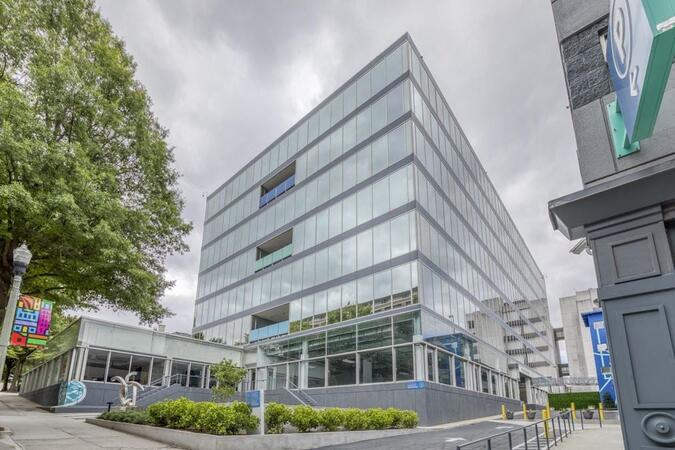
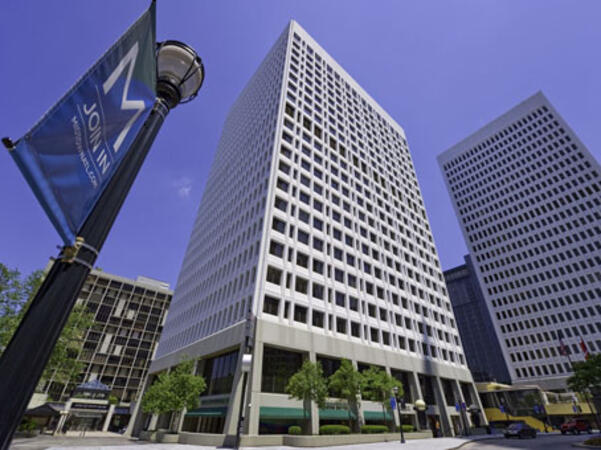
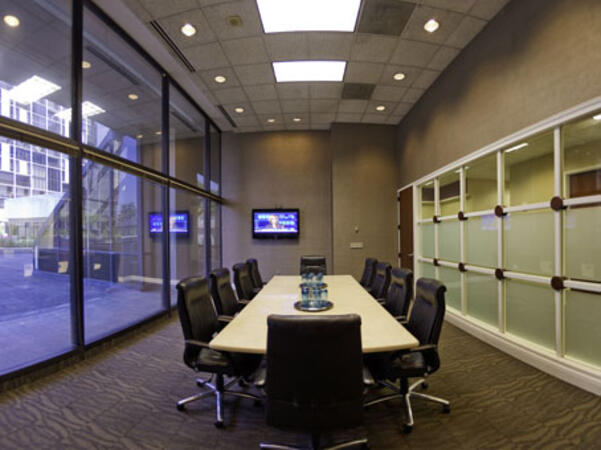
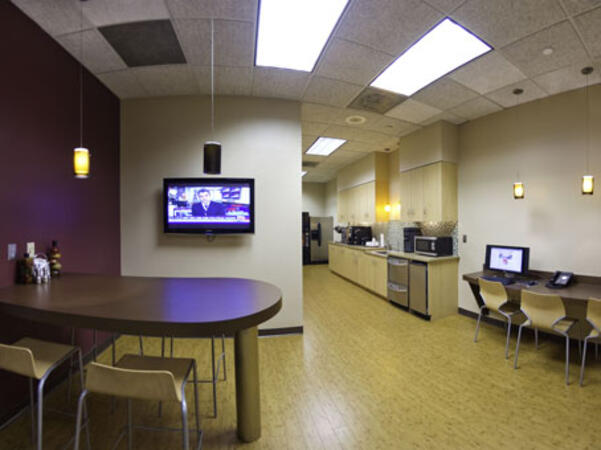
Atlanta, GA – Regus at Colony Squar
1201 Peachtree Street NE, Suite 200, Atlanta, United States, 30361
The venue is centrally located in Midtown Atlanta within the prominent Colony Square complex at 1201 Peachtree Street NE, easily accessed by car via I‑75/85 or GA‑400, with several parking garages nearby. From Hartsfield–Jackson Atlanta International Airport (ATL), around 15 miles south, a taxi or rideshare typically takes 20–30 minutes north along I‑75/85 N. Public transit users can take MARTA Rail to the Arts Center or Midtown stations (0.3–0.5 miles away) and walk easily, and numerous MARTA bus routes along Peachtree Street stop directly outside the entrance.
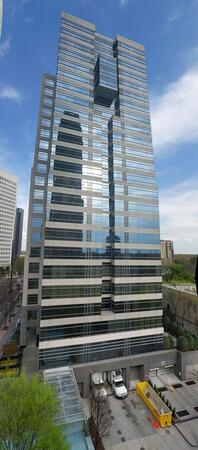
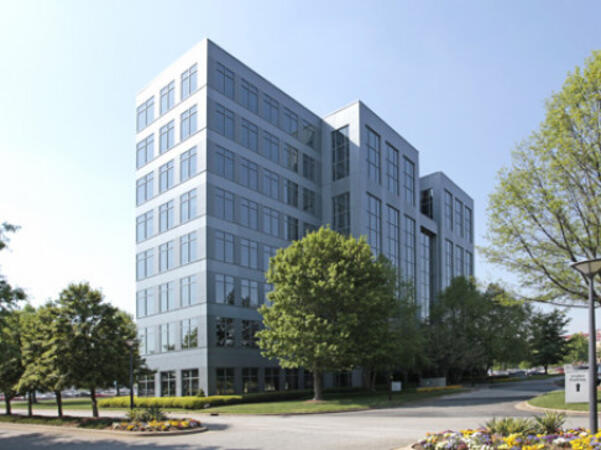
Atlanta, GA – The Proscenium
1170 Peachtree Street NE, Atlanta, United States, 30309
The venue is located in the heart of Midtown Atlanta in the Proscenium high–rise at 1170 Peachtree Street NE, easily accessible by car via I‑75/85 and GA‑400 with several parking garages nearby. Visitors arriving from Hartsfield–Jackson Atlanta International Airport (ATL), about 15 miles south, can expect a taxi or rideshare ride taking 20–30 minutes via I‑75/85 North. Public transit is seamless with MARTA Rail service; the Arts Center and Midtown stations are within walking distance (approximately 0.3–0.4 miles), and multiple MARTA bus routes also serve Peachtree Street.
Decatur, GA – Regus at One West Court Square
One West Court Square, Suite 750, Decatur, United States, 30030
The venue is located in the heart of downtown Decatur within One West Court Square, easily reached by car via I‑20 and I‑285, with several public parking decks directly adjacent. Travelers from Hartsfield–Jackson Atlanta International Airport (ATL), approximately 17 miles southwest, can expect a taxi or rideshare ride of around 25–30 minutes via I‑20 East. Public transit is particularly convenient: MARTA rail users can disembark at Decatur Station (about 0.15 miles away) and walk a few minutes to the building entrance. Local bus routes also serve Trinity Place and Swanton Way, putting the center within easy reach.
Atlanta, GA – Regus at One Hartsfield
100 Hartsfield Centre Parkway, Suite 500, Atlanta, United States, 30354
The venue is located in the One Hartsfield Center office building, adjacent to Hartsfield–Jackson Atlanta International Airport, easily reached by car via I‑75/I‑85 or GA‑138, with abundant on-site parking. Visitors arriving from ATL airport can walk or take a shuttle to the building, or opt for a quick 2–3‑minute taxi or rideshare ride. Public transit users can board MARTA from the Airport Station and ride one stop to College Park Station, then catch a connecting shuttle or enjoy a brief walk of about half a mile.
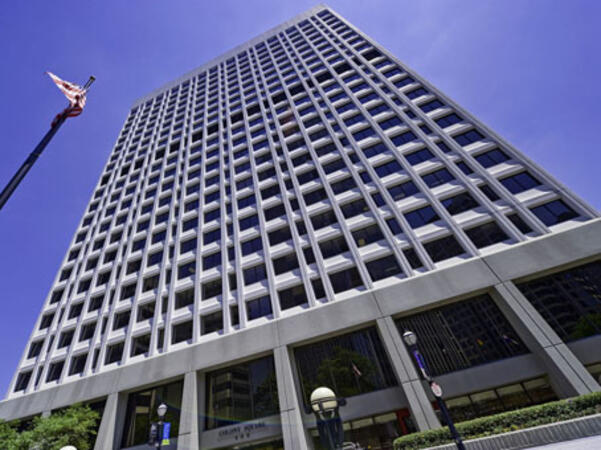
Atlanta, GA – Regus at Peachtree
260 Peachtree Street NW, Suite 2200, Atlanta, United States, 30303
The venue is situated in the iconic Coastal States Building at 260 Peachtree Street in downtown Atlanta, accessible by car via I‑75/85 or I‑20 with convenient parking garages nearby. From Hartsfield–Jackson Atlanta International Airport (ATL), about 12 miles south, a taxi or rideshare along I‑75/85 North takes approximately 15–20 minutes. For public transit, MARTA rail users can disembark at Five Points Station and walk 0.5 miles northeast, or exit at Peachtree Center Station and walk two blocks north—both routes offering easy access.
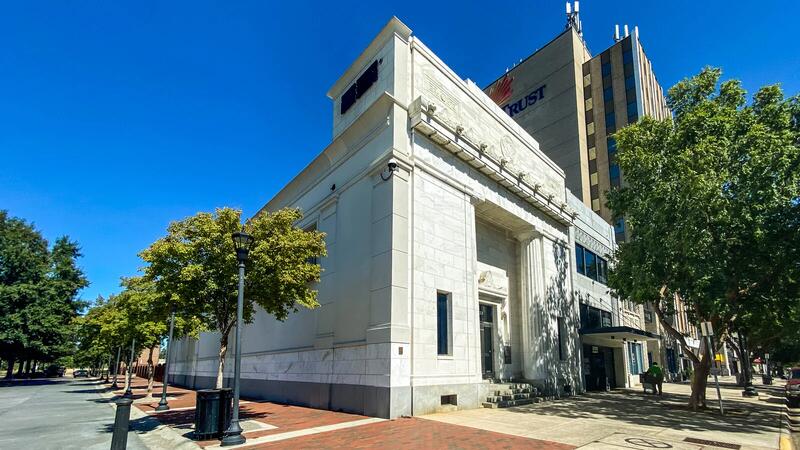
Augusta, GA – At Broad Street
823 Broad Street, Augusta, United States, 3090
The venue is located in the heart of downtown Augusta on Broad Street, easily accessible by car via I‑20 with several public parking garages nearby. From Augusta Regional Airport (AGS), about 9 miles west, taxis or rideshares typically take 15–20 minutes via I‑20. Public transit is available through Augusta Public Transit buses with routes along Broad Street, stopping within a few blocks of the venue, offering a convenient option for attendees without a car.
Savannah, GA – Regus at Bull Street
100 Bull St Downtown, Suite 200, Savannah, United States, 31401
The venue is located in the historic downtown area on Bull Street in the Altmayer Building, easily accessible by car via I‑16 and U.S. 17, with several public garages nearby. From Savannah/Hilton Head International Airport (SAV), about 12 miles west, taxis or rideshares typically take 15–20 minutes via U.S. 17 South. Public transit is available via Chatham Area Transit (CAT) buses, with frequent service along Bull and Broughton Streets; Johnson Square Station is just a couple minutes’ walk from the venue.
Practical Rapid Prototyping for Robotics with ROS 2 & Docker is an experiential instructional program designed to equip developers with the competencies necessary to construct, validate, and operationalize robotic solutions effectively. Attendees will acquire skills in containerizing robotics workspaces, integrating ROS 2 components, and engineering modular robotic architectures utilizing Docker to ensure reproducibility and scalability. The curriculum prioritizes agile methodologies, version control protocols, and collaborative frameworks appropriate for innovation teams engaged in early-stage development.
This instructor-led live training, available via online or onsite delivery modes, targets beginner to intermediate professionals seeking to optimize robotics development workflows through the integration of ROS 2 and Docker technologies. The program is tailored for public sector entities requiring specialized technical capabilities for government operations.
Upon completion of this training, participants will demonstrate proficiency in:
Configuring ROS 2 development environments within Docker containers.
Constructing and validating robotic prototypes using modular and reproducible configurations.
Utilizing simulation tools to verify system performance prior to physical deployment.
Facilitating effective collaboration through containerized robotics project management.
Implementing continuous integration and deployment principles within robotic engineering pipelines.
Course Format
Interactive lectures complemented by technical demonstrations.
Practical exercises involving ROS 2 and Docker environments.
Agencies seeking tailored instruction for this course are invited to contact the training provider to arrange customized scheduling and content delivery.
The curriculum titled Human-Robot Interaction (HRI): Voice, Gesture & Collaborative Control provides practical instruction on the architecture and deployment of intuitive interfaces for human–robot communication. This educational program synthesizes theoretical frameworks, design standards, and programming application to establish responsive interaction systems utilizing speech recognition, gesture detection, and shared control methodologies. Attendees will acquire proficiency in integrating perception modules, constructing multimodal input architectures, and engineering robotic systems that ensure secure collaboration with personnel. Designed for federal and state agencies seeking advanced capabilities for government
This instructor-led, live training (available online or onsite) targets beginner to intermediate-level practitioners who aim to design and implement human–robot interaction systems to improve usability, safety, and operational efficiency.
Upon completion of this training, participants will be able to:
Comprehend the foundational concepts and design principles governing human–robot interaction.
Engineer voice-based control and response mechanisms for robotic platforms.
Industrial Robotics Automation: ROS-PLC Integration & Digital Twins is an experiential program designed to connect industrial automation practices with contemporary robotic frameworks. Participants will acquire the expertise to synchronize ROS-based robotic systems with PLCs and utilize digital twin environments for simulating, monitoring, and optimizing production workflows. This training prioritizes interoperability, real-time control capabilities, and predictive analysis through the use of digital replicas of physical infrastructure.
Offered as an instructor-led, live session via online or onsite delivery, this program targets intermediate-level professionals seeking to develop practical competencies in linking ROS-controlled robots with PLC environments and deploying digital twins to enhance manufacturing and automation efficiency. Designed specifically for government agencies and public sector entities, the curriculum ensures alignment with federal operational standards.
Upon completion of this training, participants will be able to:
Analyze communication protocols facilitating interaction between ROS and PLC systems.
Deploy real-time data exchange mechanisms between robotic units and industrial controllers.
Construct digital twins for purposes of monitoring, testing, and process simulation.
Integrate sensors, actuators, and robotic manipulators within established industrial workflows.
Design and validate industrial automation systems utilizing hybrid simulation environments.
Format of the Course
Interactive lectures and architectural walkthroughs.
Practical exercises focused on integrating ROS and PLC systems.
Implementation of simulation and digital twin projects.
Course Customization Options
To request customized training for this course, please contact us to arrange.
Deep Learning for Robotic Manipulation and Grasping is an advanced curriculum that integrates robotic control mechanisms with contemporary machine learning methodologies. Participants will examine how deep learning algorithms improve perception, motion planning, and dexterous grasping capabilities within robotic systems. Through a combination of theoretical instruction, simulation, and practical coding assignments, the course facilitates the transition from perception-based control to end-to-end policy learning for manipulation tasks.
This instructor-led live training, available in online or onsite formats, targets advanced professionals seeking to apply deep learning techniques to achieve intelligent, adaptable, and precise robotic manipulation. The content is designed specifically for government applications, ensuring alignment with public sector technology standards and for government operational needs.
Upon completion of this training, participants will be capable of:
Designing perception models for object recognition and pose estimation.
Training neural networks to facilitate grasp detection and motion planning.
Integrating deep learning modules with robotic controllers using ROS 2.
Simulating and evaluating grasping and manipulation strategies within virtual environments.
Deploying and optimizing learned models on physical or simulated robotic arms.
Course Format
Expert-led lectures and algorithmic deep dives.
Hands-on coding and simulation exercises.
Project-based implementation and testing.
Course Customization Options
To request a customized training for this course, please contact us to arrange.
The Multi-Robot Systems and Swarm Intelligence curriculum provides advanced instruction on the architecture, coordination, and control of robotic collectives modeled after biological swarm behaviors. Attendees will acquire skills in modeling agent interactions, executing distributed decision-making processes, and optimizing collaborative performance across multiple nodes. This program integrates theoretical frameworks with practical simulation exercises to prepare personnel for operational deployments within logistics, national defense, search and rescue, and autonomous exploration sectors.
This instructor-led, live training session, available in online or onsite formats, is designed for senior professionals seeking to develop, simulate, and deploy multi-robot and swarm-based systems utilizing open-source frameworks and algorithms. The content is tailored for government applications and public sector needs.
Upon completion of this training, participants will be able to:
Analyze the principles governing swarm intelligence and cooperative robotics dynamics.
Develop communication protocols and coordination strategies for multi-robot networks.
Execute distributed decision-making mechanisms and consensus algorithms.
Simulate collective behaviors, including formation control, flocking dynamics, and area coverage.
Apply swarm-based methodologies to real-world operational scenarios and optimization challenges.
Format of the Course
Advanced lectures featuring algorithmic analysis.
Practical coding exercises and simulation using ROS 2 and Gazebo environments.
TinyML constitutes a methodology for executing machine learning algorithms on resource-constrained microcontrollers and embedded systems utilized within robotic and autonomous applications.
This instructor-facilitated live training, available via online or onsite delivery, targets advanced professionals seeking to embed TinyML-driven perception and decision-making functions into autonomous robots, unmanned aerial vehicles, and intelligent control architectures tailored for government operations.
Upon successful completion of this curriculum, participants will demonstrate the ability to:
Engineer optimized TinyML models specifically for robotic applications.
Execute on-device perception pipelines to support real-time autonomous functions.
Incorporate TinyML capabilities into established robotic control frameworks.
Deploy and validate lightweight artificial intelligence models on embedded hardware.
Course Delivery Format
Technical instruction integrated with interactive dialogue.
Practical laboratory sessions centered on embedded robotics tasks.
Safe & Explainable Robotics provides a rigorous curriculum centered on the safety protocols, verification processes, and ethical governance frameworks essential for robotic systems. This program integrates theoretical foundations with practical application by examining safety case methodologies, hazard analysis techniques, and explainable AI strategies that enhance transparency and trustworthiness in robotic decision-making. Participants will acquire the skills necessary to ensure regulatory compliance, validate system behaviors, and document safety assurance in accordance with international standards specifically for government applications.
This instructor-led training, available via online or onsite delivery, targets intermediate-level professionals seeking to implement verification, validation, and explainability principles to guarantee the secure and ethical deployment of robotic technologies.
Upon completion of this program, participants will be capable of:
Developing and documenting comprehensive safety cases for robotic and autonomous systems.
Implementing verification and validation methodologies within simulation environments.
Analyzing explainable AI frameworks to inform robotics decision-making processes.
Integrating safety and ethical principles into system design and operational workflows.
Communicating safety and transparency requirements effectively to relevant stakeholders.
Course Structure
Interactive lectures and facilitated discussions.
Practical exercises involving simulation and safety analysis.
Review of case studies derived from real-world robotics implementations.
Customization Availability
To request customized training aligned with specific organizational requirements, please contact the program administration to make arrangements.
Edge AI facilitates the execution of artificial intelligence models directly on embedded or resource-constrained hardware, thereby decreasing latency and energy usage while enhancing operational autonomy and data privacy within robotic systems.
This instructor-led training program, available in online or onsite formats, is designed for intermediate-level embedded developers and robotics engineers seeking to apply machine learning inference and optimization strategies on robotic hardware through TinyML and edge AI frameworks. This specialized instruction is intended for government
Upon completion of this training, participants will be equipped to:
Comprehend the core principles of TinyML and edge AI as applied to robotics.
Transform and deploy artificial intelligence models for on-device inference.
Enhance model performance regarding speed, memory footprint, and energy efficiency.
Integrate edge AI solutions into robotic control systems.
Assess system accuracy and performance in operational environments.
Instructional Format
Interactive lectures and technical discussions.
Practical application of TinyML and edge AI toolchains.
Applied exercises on embedded and robotic hardware platforms.
Customization Opportunities
To arrange customized training for this course, please contact the program administrators.
This guided, live instructional program delivered via Georgia (remote or on-site) is designed for mid-level professionals seeking to examine the function of collaborative robotics and human-centered artificial intelligence within contemporary work environments.
Upon completion of this course, participants will be capable of:
Grasping the foundational concepts of Human-Centric Physical AI and its practical implementations.
Evaluating how collaborative robots contribute to improved workplace efficiency.
Recognizing and mitigating obstacles associated with human-machine interfaces.
Developing operational workflows that enhance cooperation between personnel and automated systems.
Fostering an organizational environment characterized by innovation and responsiveness for government
Reinforcement learning constitutes a computational approach in which autonomous agents acquire optimal decision-making strategies through continuous interaction with their operational environment. Within the robotics sector, this methodology empowers systems to establish adaptive control mechanisms and analytical capabilities by leveraging empirical data and performance feedback.
This guided instruction session, available via remote or on-premises delivery, targets senior machine learning professionals, robotics scientists, and software engineers committed to engineering, executing, and deploying reinforcement learning frameworks for robotic solutions designed specifically for government
Upon completion of this instructional module, participants will possess the capability to:
Articulate the foundational concepts and mathematical theories underpinning reinforcement learning.
Code reinforcement learning architectures, including Q-learning, DDPG, and PPO methodologies.
Facilitate integration between reinforcement learning models and robotic simulation platforms utilizing OpenAI Gym and ROS 2.
Enable robotic systems to execute complex missions autonomously through iterative trial-and-error processes.
Enhance computational efficiency by applying deep learning libraries such as PyTorch.
Instructional Format
Participatory lectures and technical discussions.
Practical application of concepts using Python, PyTorch, and OpenAI Gym.
Applied exercises within simulated or tangible robotic testbeds.
Customization Availability
Organizations seeking tailored training curricula should contact the administration to coordinate arrangements.
OpenCV serves as an open-source computer vision library facilitating real-time image processing, whereas deep learning frameworks like TensorFlow supply the necessary tools for intelligent perception and decision-making capabilities within robotic systems.
This instructor-led, live training course, available online or onsite, targets robotics engineers, computer vision specialists, and machine learning professionals at the intermediate level who seek to apply computer vision and deep learning methodologies to enhance robotic perception and autonomy. This curriculum is designed for government agencies seeking advanced technical capabilities.
Upon completion of this training, participants will be able to:
This instructor-led, live training in Georgia (delivered online or onsite) is designed for advanced robotics engineers and AI researchers who intend to leverage Multimodal AI to integrate diverse sensory inputs, thereby developing more autonomous and efficient robotic systems capable of visual, auditory, and tactile interaction. This program provides essential resources for government agencies seeking to enhance their technological capabilities for government applications.
Upon completion of this training, participants will be equipped to:
Deploy multimodal sensing architectures within robotic platforms.
Engineer artificial intelligence algorithms for sensor fusion and strategic decision-making.
Design robotic systems capable of executing complex operations in dynamic environments.
Resolve challenges related to real-time data processing and actuation mechanisms.
Smart Robotics involves the incorporation of artificial intelligence into robotic frameworks to enhance perceptual capabilities, decision-making processes, and autonomous operational control.
This instructor-led training program, available in online or onsite formats, is designed for advanced robotics engineers, systems integrators, and automation directors seeking to deploy AI-driven perception, planning, and control mechanisms within smart manufacturing settings tailored for government operations.
Upon completion of this curriculum, participants will be able to:
Analyze and implement artificial intelligence methodologies for robotic perception and sensor data fusion.
Engineer motion planning algorithms suitable for both collaborative and industrial robotic applications.
Implement learning-based control strategies to facilitate real-time decision-making capabilities.
Integrate intelligent robotic systems into established smart factory operational workflows.
Course Structure and Delivery
Facilitated lectures accompanied by structured discussion.
Comprehensive exercises and practical application sessions.
Practical implementation within a live laboratory environment.
Training Customization Availability
For inquiries regarding customized training arrangements for this program, please contact the provider directly to coordinate schedules and requirements.
ROS 2 (Robot Operating System 2) serves as an open-source framework engineered to facilitate the creation of complex and scalable robotic systems. These capabilities are specifically designed to meet the rigorous requirements of government applications for government.
This instructor-led training, available through online or onsite delivery methods, targets robotics engineers and developers at the intermediate proficiency level who seek to implement autonomous navigation and Simultaneous Localization and Mapping (SLAM) utilizing ROS 2.
Upon completion of this instructional program, participants will be equipped to:
Establish and configure ROS 2 infrastructure for autonomous navigation systems.
Deploy SLAM algorithms to enable precise mapping and localization functions.
Integrate sensor inputs, including LiDAR and visual cameras, with the ROS 2 environment.
Execute simulation and testing protocols for autonomous navigation within Gazebo.
This instructor-led, live training in Georgia (online or onsite) is aimed at intermediate-level participants who wish to enhance their skills in designing, programming, and deploying intelligent robotic systems for automation and beyond.
By the end of this training, participants will be able to:
Understand the principles of Physical AI and its applications in robotics and automation.
Design and program intelligent robotic systems for dynamic environments.
Implement AI models for autonomous decision-making in robots.
Leverage simulation tools for robotic testing and optimization.
Address challenges such as sensor fusion, real-time processing, and energy efficiency.
The integration of Artificial Intelligence (AI) with robotics leverages machine learning algorithms, control theory, and sensor data fusion to develop autonomous systems capable of environmental perception, cognitive processing, and independent action. By utilizing established frameworks such as ROS 2, TensorFlow, and OpenCV, technical personnel can engineer robotic solutions that effectively navigate, plan trajectories, and engage with complex operational settings.
This instructor-led program, available in online or on-site formats, is designed for intermediate-level engineers seeking to develop, train, and deploy AI-enabled robotic systems using contemporary open-source technologies. The curriculum aligns with for government modernization efforts to enhance technical capacity in automated systems.
Upon completion of this training, participants will be equipped to:
Utilize Python and ROS 2 to construct and simulate robotic behaviors.
Implement Kalman and Particle Filters for precise localization and tracking.
Apply computer vision methodologies via OpenCV for perceptual tasks and object detection.
Employ TensorFlow for motion prediction and learning-based control mechanisms.
Integrate SLAM (Simultaneous Localization and Mapping) protocols to enable autonomous navigation.
Develop reinforcement learning models to enhance robotic decision-making processes.
Course Structure
Interactive lectures and technical discussions.
Practical implementation exercises using ROS 2 and Python.
Applied work within simulated and physical robotic environments.
Customization Opportunities
To arrange customized training aligned with specific agency requirements, please contact the administration team directly.
A bot, or chatbot, functions as an automated digital assistant designed to streamline user interactions across diverse messaging channels. This technology enables efficient task completion without requiring direct human intervention.
This instructor-led live training provides participants with a comprehensive foundation for building bots. Attendees will navigate the development lifecycle by constructing sample chatbots through the application of specialized frameworks and development tools.
Upon completing this course, participants will be able to:
Analyze the distinct applications and use cases for automated bots
Navigate the end-to-end bot development process
Evaluate various tools and platforms utilized in bot construction
Develop a functional sample chatbot for Facebook Messenger
Create a sample chatbot utilizing the Microsoft Bot Framework
Audience
Software developers seeking to build custom bots for government
Format of the course
A structured blend of lectures, interactive discussions, and intensive hands-on exercises
This instructor-led, live training in Georgia (online or onsite) is designed for engineers seeking to understand the application of artificial intelligence within mechatronic systems.
Upon completion of this session, participants will be equipped to:
Acquire a comprehensive understanding of artificial intelligence, machine learning, and computational intelligence frameworks.
Comprehend the principles of neural networks and various learning methodologies.
Select appropriate artificial intelligence strategies to address complex practical challenges.
Deploy AI solutions within mechatronic engineering workflows for government and public sector applications.
Read more...
Last Updated:
Testimonials (2)
Supply of the materials (virtual machine) to get straight into the excersises, and the explanation of the Ros2 core. Why things work a certain way.
Arjan Bakema
Course - Autonomous Navigation & SLAM with ROS 2
its knowledge and utilization of AI for Robotics in the Future.
Ryle - PHILIPPINE MILITARY ACADEMY
Course - Artificial Intelligence (AI) for Robotics
Online Intelligent Robotics training in Georgia, Robotics AI training courses in Georgia, Weekend Robotics AI courses in Georgia, Evening AI for Robotics training in Georgia, Intelligent Robotics instructor-led in Georgia, Robotics AI instructor-led in Georgia, Robotics AI private courses in Georgia, AI for Robotics classes in Georgia, Robotics AI on-site in Georgia, Online AI for Robotics training in Georgia, Robotics AI trainer in Georgia, Weekend Intelligent Robotics training in Georgia, Intelligent Robotics instructor in Georgia, AI for Robotics boot camp in Georgia, AI for Robotics coaching in Georgia, Robotics AI one on one training in Georgia, Evening Intelligent Robotics courses in Georgia