Thank you for sending your enquiry! One of our team members will contact you shortly.
Thank you for sending your booking! One of our team members will contact you shortly.
Duration 4 hours
Course Outline
Design Thinking Frameworks and the Innovation Context
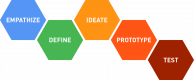
- Core Stages: A comprehensive examination of Empathize, Define, Ideate, Prototype, and Test.
- Innovation Theory: Analyzing the connections among Design Thinking, disruptive innovation, and entrepreneurial principles.
- Problem Domain: Identifying patterns and refining problem definitions to prioritize the correct challenge over immediate solutions.
- Collaborative Exercise: Distinguishing between “Why” and “How” to establish a complex, real-world problem for sustained resolution.
Empathy, Stakeholder Research, and Problem Articulation
- Empathy Mapping: Strategies for uncovering user pain points, underlying needs, and behavioral motivations.
- Stakeholder Analysis: Identifying affected parties and developing engagement strategies.
- User Personas: Developing representative archetypes of the target audience.
- Problem Definition: Crafting precise Problem Statements (Point-of-View) and “How Might We” (HMW) questions to structure the challenge.
- Workshop Session: Developing personas and formal problem statements for the selected case study.
Ideation and Divergent Thinking
- Idea Generation: Techniques to overcome creative barriers, including SCAMPER, structured brainstorming, and the Worst Possible Idea method.
- Idea Selection: Protocols for filtering and prioritizing concepts using Dot Voting and the Impact/Effort Matrix.
- Agile Estimation: Introduction to foundational techniques for assessing the viability of proposed ideas.
- Collaborative Exercise: Executing a rapid ideation sprint to produce solutions for the defined problem.
Prototyping and Rapid Failure Analysis
- Prototyping Principles: Best practices for rapid prototyping using paper, cardboard, storyboarding, and role-play.
- Testing Protocols: Methods for establishing test plans and securing actionable feedback.
- Iterative Development: Applying the “Build-Measure-Learn” cycle to utilize failure as a mechanism for learning.
- Visual Tools: Introduction to Customer Journey Maps and Service Blueprints to visualize solution architectures.
- Workshop Session: Constructing low-fidelity prototypes for the highest-priority solutions.
Testing, Evaluation, and Refinement
- Test Execution: Best practices for presenting prototypes and formulating effective inquiry questions.
- Feedback Analysis: Distinguishing between constructive criticism and subjective preferences.
- Model Drift: Recognizing when a solution diverges from core user requirements.
- Collaborative Exercise: Conducting peer testing of prototypes and refining solutions based on gathered data.
Scaling Impact and Leadership Competency
- Business Model Innovation: Aligning solutions with the Business Model Canvas.
- Critical Thinking and Leadership: Integrating the Design Thinking mindset into daily operations and decision-making processes.
- Cultural Integration: Mitigating resistance to change and establishing a culture of psychological safety.
- Final Reflection: Reviewing key takeaways, formulating personal action plans, and concluding the learning process.
Requirements
Target Audience
- Professionals aiming to enhance creative problem-solving and innovation competencies for government operations.
- Leaders seeking to cultivate a culture of empathy and strategic foresight within their teams.
- Individuals interested in disruptive innovation, product design, or process improvement within the public sector.