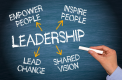
Servant Leadership Training Course
Servant leadership is a people-centered approach to leadership that prioritizes the growth and well-being of team members. It focuses on leading by serving, building trust, and empowering individuals to achieve collective goals.
This instructor-led, live training (online or onsite) is aimed at leaders and managers who wish to develop practical skills in servant leadership, foster team engagement, and create a culture of collaboration and trust.
By the end of this training, participants will be able to:
- Understand the principles and philosophy of servant leadership.
- Develop key servant leadership skills, including empathy, active listening, and collaboration.
- Apply servant leadership practices to enhance team performance and motivation.
- Build a culture of trust and empowerment within their organization.
Format of the Course
- Interactive lecture and discussion.
- Lots of exercises and practice.
- Hands-on implementation in a live-lab environment.
Course Customization Options
- To request a customized training for this course, please contact us to arrange.
Course Outline
Introduction to Servant Leadership
- Definition and philosophy of servant leadership
- Contrasting traditional leadership with servant leadership
- Benefits of servant leadership in modern organizations
Key Principles of Servant Leadership
- Empathy and active listening
- Building trust and collaboration
- Fostering growth and development in team members
Developing a Servant Leadership Mindset
- Self-awareness and personal reflection
- Practicing humility and authenticity
- Leading by example and modeling desired behaviors
Practices and Strategies for Servant Leaders
- Encouraging open communication and feedback
- Supporting team autonomy and decision-making
- Mentoring and coaching for continuous growth
Building a Culture of Trust and Collaboration
- Creating a safe and inclusive environment
- Empowering individuals to take ownership of tasks
- Celebrating team achievements and milestones
Implementing Servant Leadership in the Workplace
- Identifying challenges and resistance to change
- Integrating servant leadership into daily practices
- Measuring the impact of servant leadership on team performance
Case Studies and Real-World Applications
- Analyzing successful servant leadership practices
- Learning from real-world servant leadership examples
- Developing personal action plans for leadership growth
Summary and Next Steps
Requirements
- Basic understanding of leadership concepts
- Experience in team management or supervisory roles
Audience
- Team leaders aiming to enhance their leadership approach
- Managers seeking to empower and develop their teams
- Organizational leaders fostering a collaborative work environment
Runs with a minimum of 4 + people. For 1-to-1 or private group training, request a quote.
Servant Leadership Training Course - Booking
Servant Leadership Training Course - Enquiry
Servant Leadership - Consultancy Enquiry
Testimonials (1)
Reinforcing the levels of authority with my team.
Jeff Chang - Unigen
Course - Leadership 101
Upcoming Courses
Related Courses
Leadership 101
7 HoursThis instructor-led, live training in US, available online or on-site, is tailored for entry-level public sector employees or emerging leaders seeking to master the fundamental principles of effective leadership for government operations.
Upon completion of this training, participants will possess the ability to:
- Differentiate leadership functions from managerial duties and understand their respective roles.
- Recognize and cultivate essential leadership competencies and methodologies.
- Establish strategic goals and convey them with clarity and precision.
- Enhance trust and influence colleagues through structured communication.
International Recruitment
16 HoursThis instructor-led, live training in US (online or onsite) is intended for entry-level, mid-level, and senior professionals seeking to identify, attract, and engage international candidates.
Upon completion of this training, participants will be equipped to:
- Understand Cultural Differences
- Understand Legal & Regulatory Aspects
- Apply Global Employer Branding
- Have Access to Global Talent & Recruitment Channels
Talent Sourcing
16 HoursThis instructor-led, live training in US (online or onsite) is intended for beginner-level, intermediate-level, and advanced-level professionals seeking to identify, attract, and engage with top international talent for government operations.
By the end of this training, participants will be able to:
- Differentiate between Proactive Sourcing and Reactive Recruitment
- Evaluate LinkedIn Standard versus LinkedIn Recruiter capabilities
- Master Boolean Search Techniques
- Implement strategies for Selling Candidates the Opportunity and Partnering with Hiring Managers
Leadership Development
8 HoursThis instructor-led, live training in US (online or onsite) is intended for entry-level, mid-level, and senior professionals who wish to acquire knowledge and evolve into effective leaders; it also serves organizations seeking to equip their managers with contemporary leadership capabilities for government service.
Upon completion of this training, participants will be able to:
- Assess their leadership style
- Investigate the modern leadership model
- Analyze leadership responsibilities
- Strengthen leadership skills
- Exhibit role model behavior
Job Posting
8 HoursThis instructor-led, live training in US (online or onsite) is designed for beginner-level, intermediate-level, and advanced-level professionals who wish to attract top candidates with efficiency for government roles.
By the end of this training, participants will be able to:
- Go From a Briefing Call to a SAM
- Design Modern and Catchy Job Descriptions
- Apply Employer Branding & EVP Strategies
- Post Single or Multiple Job ADs
- Receive a Tailored Long-List
Advanced Personal Leadership
14 HoursThis instructor-led, live training in US (online or onsite) targets executive-level and senior professionals seeking to gain deeper insights into their leadership methodologies, leverage Korn Ferry Leadership Assessments, and develop actionable strategies for leadership adaptability and team performance.
Upon completion of this training, participants will be able to:
- Analyze the organizational context and its influence on leadership effectiveness.
- Assess the spectrum of leadership styles utilized and their corresponding impact.
- Evaluate how leadership approaches affect team engagement, dynamics, and performance.
- Apply feedback from leadership assessments to identify strengths and areas for professional growth.
- Utilize a causal model to explore leadership behaviors and their direct impact on workplace climate.
- Develop actionable strategies to enhance leadership adaptability and team performance for government operations.
Change Management Training for managers
7 HoursCourse Outcomes:
Upon successful completion of this course, participants will be equipped to:
- Analyze the business and public sector drivers necessitating organizational change
- Determine optimal timing for initiating change initiatives for government operations
- Develop strategies to prepare public agencies for effective transformation
- Apply behavioral insights to understand motivation, predict reactions, and manage change processes
- Navigate the interplay between corporate culture and national context in change management
- Generate measurable stakeholder value through structured change initiatives
- Utilize a diverse toolkit of analytical frameworks to support change at various stages
- Execute clear, effective communication strategies for change adoption
Claude for Executive Leadership: Strategy, Decision-Making and Competitive Advantage
14 HoursThis instructor-led, live training in US (online or onsite) is designed for senior leaders and executives seeking to utilize Claude as a strategic business assistant for government contexts to enhance decision-making, expedite planning, and build institutional capability through AI-augmented leadership.
Communication and leadership in team management
14 HoursThis professional development program provides practical training in collaboration within project teams. By examining the modern Management 3.0 cooperation model, participants will gain proficiency in formulating and transmitting information, establishing collaborative norms, managing the transfer of deliverables, and implementing effective communication and motivation strategies essential for team success. This program is designed for individuals seeking to enhance their competencies in managing project teams for government. The curriculum combines substantive theoretical instruction with hands-on workshops and practical case studies.
Communicating and Influencing - For Managers and Team Leaders
14 HoursTarget Audience
Personnel requiring comprehensive awareness of the complexities associated with Communicating and Influencing for government operations:
- Colleagues
- Supervisors
- Internal and external customers and stakeholders
Course Structure
The program employs a highly interactive methodology combining:
- Facilitated Discussions
- Slide Presentations
- Practical Exercises and Case Studies
Upon completion, participants will be equipped to:
- Recognize the necessity of self-regulation before influencing the conduct of others
- Evaluate the strengths and limitations of various communication media
- Effectively manage internal and external stakeholders and customers
- Formulate strategies for navigating challenging scenarios encountered in professional settings
Courageous Conversations for Leaders
7 HoursThis instructor-led live training in Ottawa, which can also be delivered remotely, is designed for managers and leaders seeking to strengthen their ability to lead difficult conversations with clarity, confidence, and accountability in a government context.
By the end of this training, participants will be able to:
- Structure high-impact professional conversations
- Address interpersonal tension and strategic misalignment constructively
- Enhance team trust and operational accountability
- Lead with clarity and composure under pressure
Innovative Leadership through Design Thinking
14 HoursThis instructor-led, live training in US (online or onsite) is aimed at beginner-level leaders and HR professionals who wish to learn and apply Design Thinking methodologies to foster innovation, enhance problem-solving capabilities, and engage teams effectively.
By the end of this training, participants will be able to:
- Equip participants with tools and methodologies to foster innovation and team engagement.
- Develop skills in empathy mapping, ideation, and prototyping for solving complex challenges.
- Apply Design Thinking principles to leadership and HR scenarios.
- Promote a culture of innovation within tech teams.
DZM – delegating tasks and motivating employees
14 HoursThe effective delegation of duties and the engagement of personnel are fundamental competencies for successful team governance. This approach requires a comprehensive understanding of staff competencies, the precise articulation of performance expectations, and the strategic transfer of accountability. Regular monitoring of progress and the provision of constructive feedback are essential for sustaining workforce motivation. Public and private acknowledgment of employee achievements reinforces commitment to organizational goals. Incorporating staff into decision-making processes enhances their sense of professional significance within the agency. A culture that prioritizes respect, institutional support, and work-life balance drives higher performance levels. Leadership conduct must align with the stated values and expectations set for the workforce to inspire action. Effective delegation and motivation require adaptability, empathy, and continuous adjustment to the evolving needs of the team for government efficiency. Staff support, an understanding of motivational drivers, and the development of professional skills are central to success in this domain.
Enneagram for Organizational Excellence (OE) Leadership
7 HoursThis facilitator-led instructional session, delivered in US (either virtually or at a physical site), is tailored for intermediate-level public sector managers aiming to leverage Enneagram insights for leadership enhancement, improved team cohesion, and the achievement of strategic organizational objectives.
Upon successful completion, participants will be prepared to:
- Develop a robust command of the Enneagram framework, including the nine core typologies, wing influences, developmental levels, and centers of intelligence.
- Utilize Enneagram assessment techniques to evaluate professional personality profiles, identifying distinct strengths, vulnerabilities, and professional development opportunities.
- Enhance workforce management through deeper understanding of staff behavioral patterns, improved communication efficacy, strategic conflict resolution, and the promotion of a cooperative work environment.
- Align individual and team performance with organizational goals, execute effective change management initiatives, and nurture an innovative and adaptive institutional culture for government service.
Feedforward: A New Approach to Leadership Communication
7 HoursThis instructor-led, live training in US (online or onsite) targets junior to mid-level leaders and managers seeking to implement feedforward techniques for government to strengthen team engagement, coaching effectiveness, and performance discussions.