Thank you for sending your enquiry! One of our team members will contact you shortly.
Thank you for sending your booking! One of our team members will contact you shortly.
Duration 14 hours
Course Outline
SELECTED MODELS AND TOOLS FOR GOVERNMENT APPLICATION:
- The Stairway to Heaven Model, outlining a structured sequence for effective communication: attunement, contact, contract, dialogue, influence, arrangements, and bridging to the future.
- Principles for establishing clear contracts and professional boundaries, grounded in Carl Rogers’ theories, to prevent involvement in the drama triangle and counterproductive power dynamics.
- Identification of power games and drama triangle roles (savior, persecutor, victim) within organizational contexts, along with strategies for disengaging from such cycles.
- Dynamics of emotional escalation and models for constructive confrontation, based on Marshall Rosenberg’s Nonviolent Communication (NVC) framework.
- The ABCD model for understanding emotions, incorporating practical techniques for self-regulation and managing difficult situations and relationships, derived from Rational Behavioral Therapy.
- Management of internal factors (“blind spots” via the Johari Window and “flashpoints”) and external leadership actions, transforming conflict into constructive interaction through authentic self-expression.
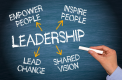
- Versatile Leadership: a comprehensive model addressing four dimensions of internal self-awareness and four dimensions of external management of self and relationships.
- The 3 E Fair Process framework.
- Outcome-Based Thinking: focusing on desired results in communication, leadership, and management processes for government entities.
- Analyzing the counterpart’s decision-making process, including challenges, personal interests, business goals, and stage-specific objections, to develop a logical, rational business case with measurable return on investment. This includes applying cause-and-effect reasoning enriched by emotional arguments, utilizing the fast and slow processing systems described by Nobel Laureate Daniel Kahneman, to influence beliefs and actions.
- The Situational Leadership Model according to Blanchard.
Requirements
No prior knowledge is required for this training.
Testimonials (1)
Tips such as, asking my team What else can I say to you so you are successful. Be a better leader by learning to trust the team and hold them accountable.