Online or onsite, instructor-led live Robotics training courses provide hands-on practice to demonstrate both the fundamentals and advanced concepts of Robotics.
Robotics training is offered as "online live training" or "onsite live training." Online live training, also known as "remote live training," is conducted through an interactive remote desktop. Onsite live training can be arranged at customer premises in Georgia or in Govtra corporate training centers in Georgia.
Govtra -- Your Training Provider for Government
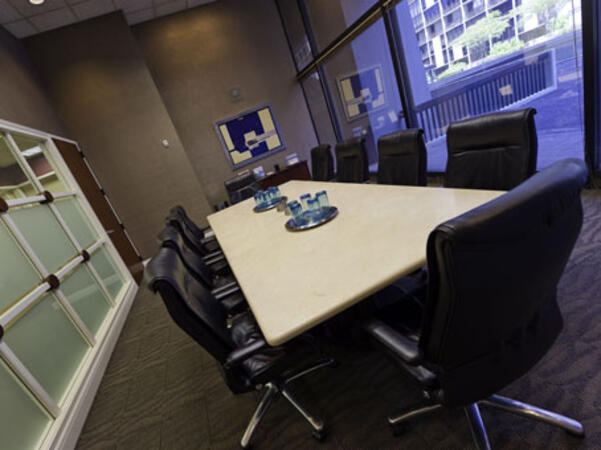
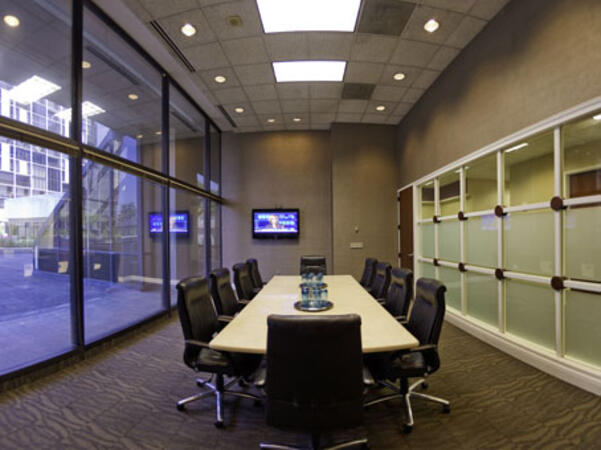
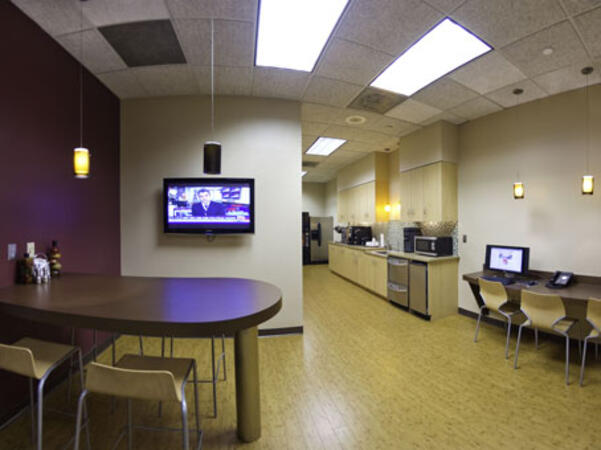
Atlanta, GA – Regus at Colony Squar
1201 Peachtree Street NE, Suite 200, Atlanta, United States, 30361
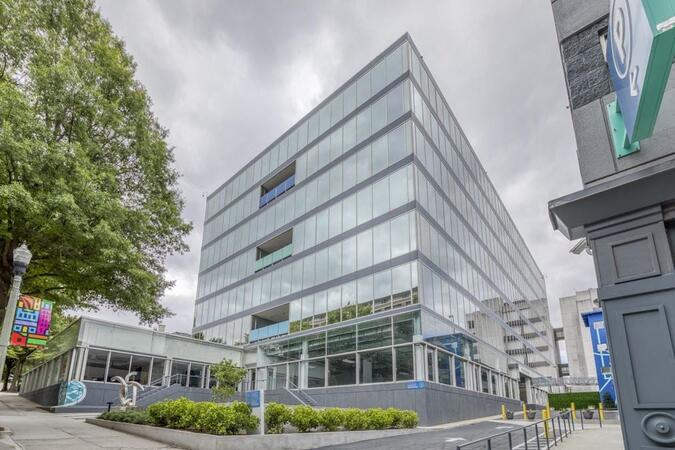
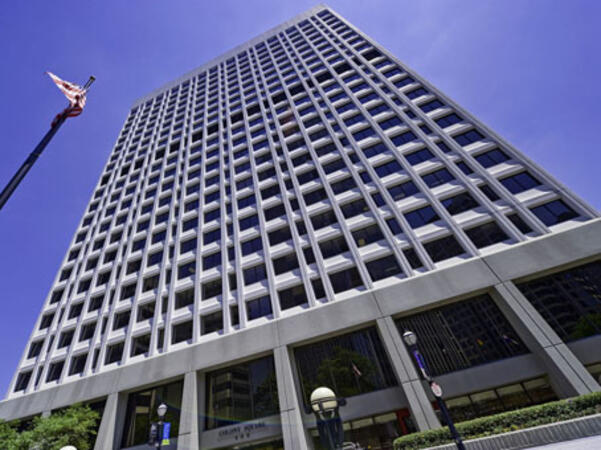
The venue is centrally located in Midtown Atlanta within the prominent Colony Square complex at 1201 Peachtree Street NE, easily accessed by car via I‑75/85 or GA‑400, with several parking garages nearby. From Hartsfield–Jackson Atlanta International Airport (ATL), around 15 miles south, a taxi or rideshare typically takes 20–30 minutes north along I‑75/85 N. Public transit users can take MARTA Rail to the Arts Center or Midtown stations (0.3–0.5 miles away) and walk easily, and numerous MARTA bus routes along Peachtree Street stop directly outside the entrance.
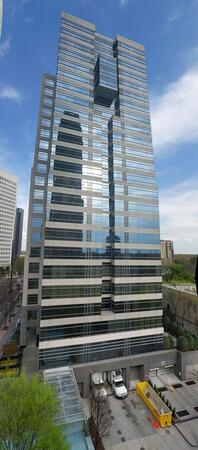
Atlanta, GA – The Proscenium
1170 Peachtree Street NE, Atlanta, United States, 30309
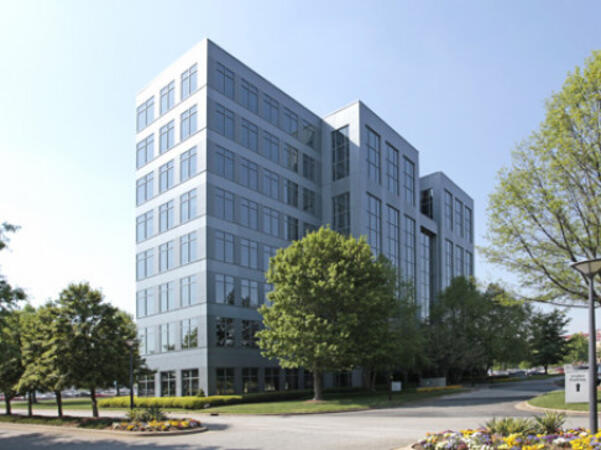
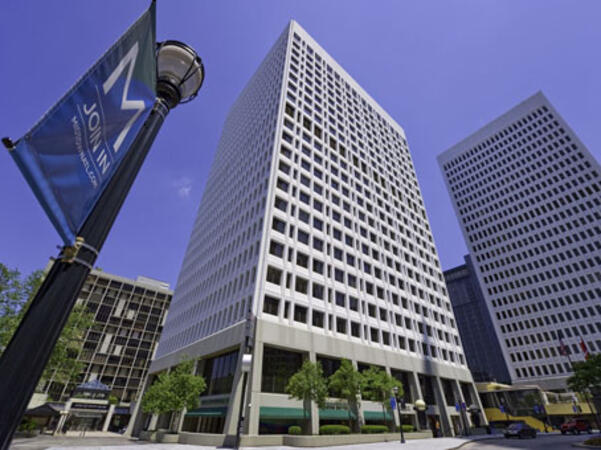
The venue is located in the heart of Midtown Atlanta in the Proscenium high–rise at 1170 Peachtree Street NE, easily accessible by car via I‑75/85 and GA‑400 with several parking garages nearby. Visitors arriving from Hartsfield–Jackson Atlanta International Airport (ATL), about 15 miles south, can expect a taxi or rideshare ride taking 20–30 minutes via I‑75/85 North. Public transit is seamless with MARTA Rail service; the Arts Center and Midtown stations are within walking distance (approximately 0.3–0.4 miles), and multiple MARTA bus routes also serve Peachtree Street.
Decatur, GA – Regus at One West Court Square
One West Court Square, Suite 750, Decatur, United States, 30030
The venue is located in the heart of downtown Decatur within One West Court Square, easily reached by car via I‑20 and I‑285, with several public parking decks directly adjacent. Travelers from Hartsfield–Jackson Atlanta International Airport (ATL), approximately 17 miles southwest, can expect a taxi or rideshare ride of around 25–30 minutes via I‑20 East. Public transit is particularly convenient: MARTA rail users can disembark at Decatur Station (about 0.15 miles away) and walk a few minutes to the building entrance. Local bus routes also serve Trinity Place and Swanton Way, putting the center within easy reach.
Atlanta, GA – Regus at One Hartsfield
100 Hartsfield Centre Parkway, Suite 500, Atlanta, United States, 30354
The venue is located in the One Hartsfield Center office building, adjacent to Hartsfield–Jackson Atlanta International Airport, easily reached by car via I‑75/I‑85 or GA‑138, with abundant on-site parking. Visitors arriving from ATL airport can walk or take a shuttle to the building, or opt for a quick 2–3‑minute taxi or rideshare ride. Public transit users can board MARTA from the Airport Station and ride one stop to College Park Station, then catch a connecting shuttle or enjoy a brief walk of about half a mile.
Atlanta, GA – Regus at Peachtree
260 Peachtree Street NW, Suite 2200, Atlanta, United States, 30303
The venue is situated in the iconic Coastal States Building at 260 Peachtree Street in downtown Atlanta, accessible by car via I‑75/85 or I‑20 with convenient parking garages nearby. From Hartsfield–Jackson Atlanta International Airport (ATL), about 12 miles south, a taxi or rideshare along I‑75/85 North takes approximately 15–20 minutes. For public transit, MARTA rail users can disembark at Five Points Station and walk 0.5 miles northeast, or exit at Peachtree Center Station and walk two blocks north—both routes offering easy access.
Augusta, GA – At Broad Street
823 Broad Street, Augusta, United States, 3090
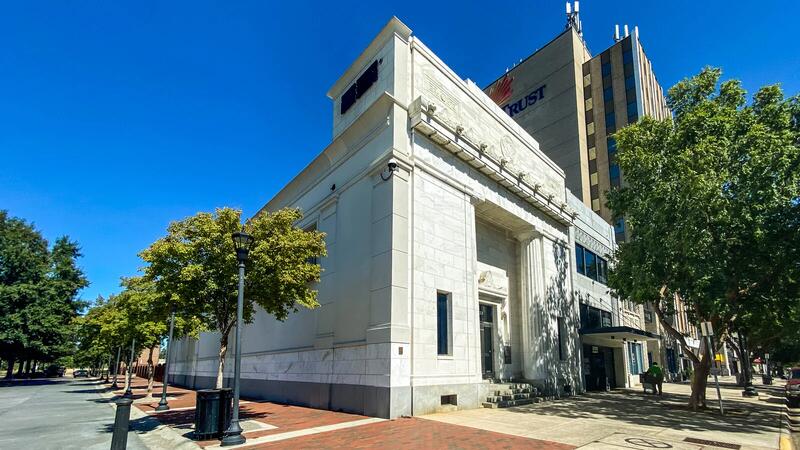
The venue is located in the heart of downtown Augusta on Broad Street, easily accessible by car via I‑20 with several public parking garages nearby. From Augusta Regional Airport (AGS), about 9 miles west, taxis or rideshares typically take 15–20 minutes via I‑20. Public transit is available through Augusta Public Transit buses with routes along Broad Street, stopping within a few blocks of the venue, offering a convenient option for attendees without a car.
Savannah, GA – Regus at Bull Street
100 Bull St Downtown, Suite 200, Savannah, United States, 31401
The venue is located in the historic downtown area on Bull Street in the Altmayer Building, easily accessible by car via I‑16 and U.S. 17, with several public garages nearby. From Savannah/Hilton Head International Airport (SAV), about 12 miles west, taxis or rideshares typically take 15–20 minutes via U.S. 17 South. Public transit is available via Chatham Area Transit (CAT) buses, with frequent service along Bull and Broughton Streets; Johnson Square Station is just a couple minutes’ walk from the venue.
Practical Rapid Prototyping for Robotics with ROS 2 and Docker is a hands-on course designed to assist developers in building, testing, and deploying robotic applications efficiently. Participants will learn how to containerize robotics environments, integrate ROS 2 packages, and prototype modular robotic systems using Docker for reproducibility and scalability. The course emphasizes agility, version control, and collaboration practices suitable for early-stage development and innovation teams within the public sector.
This instructor-led, live training (online or onsite) is aimed at beginner to intermediate level participants who wish to accelerate robotics development workflows using ROS 2 and Docker for government projects.
By the end of this training, participants will be able to:
Set up a ROS 2 development environment within Docker containers.
Develop and test robotic prototypes in modular, reproducible setups.
Use simulation tools to validate system behavior before hardware deployment.
Collaborate effectively using containerized robotics projects.
Apply continuous integration and deployment concepts in robotics pipelines for government applications.
Format of the Course
Interactive lectures and demonstrations.
Hands-on exercises with ROS 2 and Docker environments.
Mini-projects focused on real-world robotic applications for government use cases.
Course Customization Options
To request a customized training for this course, please contact Govtra to arrange.
This engaging, hands-on course introduces children to the exciting world of robotics through interactive and educational activities designed to foster creativity and learning.
This instructor-led, live training (onsite or online) is aimed at beginner-level children who wish to learn how to design, build, and program simple robots while developing logical thinking and teamwork skills.
By the end of this training, participants will be able to:
Understand what robots are and how they function.
Construct simple robots using LEGO® Education SPIKE™ Prime kits.
Utilize block-based programming (Scratch) to control robot movements, lighting, and sensor responses.
Collaborate effectively to solve engaging robotic challenges.
Format of the Course
Interactive discussion and demonstration.
Hands-on group projects and guided builds.
Creative challenges and friendly competitions.
Course Customization Options for Government
To request a customized version of this training, please contact us to arrange.
This instructor-led, live training in Georgia (online or onsite) is aimed at intermediate to advanced engineers and technicians who wish to learn how to program, operate, and optimize Fanuc and Epson robotic systems for government industrial applications.
By the end of this training, participants will be able to:
Comprehend the architecture and functionalities of Fanuc and Epson robots.
Develop robot movements, logic, and sensor integrations.
Implement safety protocols and troubleshooting procedures.
Enhance robotic workflows for increased efficiency.
The FIFISH V6 Expert is a professional-grade underwater remotely operated vehicle (ROV) designed for inspection, exploration, and the assessment of submerged structures.
This instructor-led, live training (available online or onsite) is tailored for intermediate-level technical personnel who aim to operate and maneuver the FIFISH V6 Expert safely and effectively during underwater inspections.
By completing this training, participants will acquire the skills to:
Configure, calibrate, and maintain the FIFISH V6 Expert system for government use.
Navigate the ROV in both open water and confined underwater environments.
Perform submerged structural inspection tasks using onboard sensors and tools.
Capture, manage, and analyze underwater video and data.
Format of the Course
Instructor-guided demonstrations and practical briefings.
Hands-on exercises using real equipment or simulator environments.
Field operation practice with supervised piloting scenarios.
Course Customization Options
Training content can be adapted to specific inspection environments, mission profiles, or operator competency requirements for government operations.
This instructor-led, live training in Georgia (online or onsite) is aimed at beginner-level to intermediate-level marine engineers, technicians, and offshore operations personnel who wish to gain proficiency in operating and maintaining ROVs for government underwater tasks.
By the end of this training, participants will be able to:
Understand the history, types, and applications of ROVs for government use.
Identify and explain the components and systems of an ROV used in public sector operations.
Navigate and communicate effectively with ROVs during underwater missions.
Pilot ROVs with precision in various underwater scenarios relevant to government tasks.
Perform routine maintenance and troubleshoot common issues for government-owned equipment.
Apply safety protocols during underwater operations conducted by government agencies.
This instructor-led, live training in Georgia (online or onsite) is aimed at beginner-level robotics engineers who wish to thoroughly understand operating and programming the ABB IRB 2600ID robot for welding tasks for government applications.
By the end of this training, participants will be able to:
Understand how robotics is applied in welding for government projects.
Develop proficiency in programming the ABB IRB 2600ID robot for various welding tasks relevant to public sector operations.
Learn to safely and effectively operate the ABB IRB 2600ID robot in alignment with public sector workflows.
Understand the safety standards and procedures pertinent to robotic welding operations for government use.
The Evo Max 4T is a professional-grade drone designed for advanced aerial operations, inspections, and data collection for government and other public sector applications.
This instructor-led, live training (online or onsite) is aimed at beginner-level to intermediate-level operators who wish to safely and effectively use the Evo Max 4T for professional applications and prepare for official certification.
By the end of this training, participants will be able to:
Understand the technical specifications and operation of the Evo Max 4T drone.
Apply operational safety procedures in aerial activities for government use.
Comply with current AAC and local drone regulations.
Implement best practices for efficient and safe drone operations for government agencies.
Prepare for certification/licensing through theoretical and practical training.
Format of the Course
Interactive lecture and discussion.
Hands-on practice with drone equipment and simulators.
Practical exercises and real flight scenarios for government applications.
Course Customization Options
To request a customized training for this course, please contact Govtra to arrange.
Drones and photogrammetry have become essential tools in high-precision infrastructure supervision. By integrating advanced geodesy principles, real-time modeling, and high-accuracy drone mapping, professionals can achieve deeper insights, enhanced accuracy, and increased productivity in construction environments for government.
This instructor-led, live training (online or onsite) is designed for intermediate to advanced-level professionals who wish to apply advanced drone and photogrammetry workflows, including geodetic controls and high-precision mapping techniques, to complex infrastructure projects for government.
By the end of this training, participants will be able to:
Apply advanced photogrammetric methods, such as RTK/PPK workflows and ground control calibration.
Integrate geodetic reference systems and projections for large-scale infrastructure sites for government.
Design precision flight missions tailored to complex terrain and infrastructure geometry for government.
Analyze photogrammetry data with GIS software for structural health, deformation, and compliance tracking in public sector projects.
Format of the Course
Interactive lecture and discussion.
Advanced exercises and real-world case studies relevant to government applications.
Hands-on implementation with drone data and modeling tools for government projects.
Course Customization Options
To request a customized training for this course, please contact us to arrange.
This instructor-led, live training in Georgia (online or onsite) is aimed at electrical engineers or anyone interested in gaining a deeper understanding of semiconductors for government applications.
By the end of this training, participants will be able to:
Comprehend the principles of energy and conduction band diagrams.
Understand the internal structure and functionality of diodes.
Acquire a detailed knowledge of intrinsic and extrinsic semiconductors.
This instructor-led, live training in Georgia (online or onsite) is designed for beginner to intermediate-level participants who wish to learn how to utilize drones and photogrammetry techniques for infrastructure oversight in construction projects for government.
By the end of this training, participants will be able to:
Comprehend the foundational principles of drones and photogrammetry.
Create and implement drone flight plans for construction sites.
Conduct photogrammetry tracking and generate detailed maps and 3D models.
Leverage photogrammetry data for infrastructure oversight and issue identification.
Deploy drone technology to enhance construction site safety and efficiency.
This instructor-led, live training in Georgia (online or onsite) is aimed at beginner to intermediate-level, and potentially advanced-level robotics developers who wish to learn how to use ROS to program mobile robots using Python for government applications.
By the end of this training, participants will be able to:
Set up a development environment that includes ROS, Python, and a mobile robot platform suitable for government use.
Create and run ROS nodes, topics, services, and actions using Python in a government context.
Utilize ROS tools and utilities to monitor and debug ROS applications for government projects.
Leverage ROS packages and libraries to perform common tasks for mobile robots in public sector environments.
Integrate ROS with other frameworks and tools used in government workflows.
Troubleshoot and debug ROS applications to ensure reliability and compliance with government standards.
This instructor-led, live training in Georgia (online or onsite) is aimed at electrical engineers and other professionals interested in gaining a foundational understanding of semiconductors and their applications for government innovation across various fields.
By the end of this training, participants will be able to:
Understand how electronic devices such as diodes and transistors function.
Analyze carrier statistics in semiconductors.
Comprehend the carrier dynamics of semiconductors and their impact on conduction properties.
This instructor-led, live training in Georgia (online or onsite) is designed for engineers and developers who wish to design, develop, and test unmanned aerial vehicles by exploring various concepts and tools related to aerial robotics.
By the end of this training, participants will be able to:
Gain a comprehensive understanding of the fundamentals of aerial robotics for government applications.
Model and design unmanned aerial vehicles (UAVs) and quadrotors for government use.
Acquire knowledge of flight control and motion planning principles.
Utilize different simulation tools to enhance the development and testing of aerial robotics systems for government.
ArduPilot is an open-source autopilot software suite designed for drones, rovers, and other unmanned vehicles. It offers advanced capabilities such as autonomous navigation, real-time communication with ground stations, and integration with robotics middleware like ROS2.
This instructor-led, live training (online or onsite) is aimed at intermediate-level developers and technical professionals who wish to design, program, and test unmanned aerial vehicles (UAVs) using ArduPilot for government applications.
By the end of this training, participants will be able to:
Set up a comprehensive development environment for ArduPilot.
Configure firmware, middleware, and MAVLink APIs for UAV control.
Utilize SITL simulation to test and debug drone behavior safely.
Extend ArduPilot with ROS2 and integrate it with external tools or sensors.
Develop autonomous flight logic and execute end-to-end UAV missions.
Format of the Course
Interactive lecture and discussion.
Extensive exercises and practice.
Hands-on implementation in a live-lab environment.
Course Customization Options
This training is based on the open-source autopilot software ArduPilot. To request a customized training for government use, please contact us to arrange.
This instructor-led, live training in Georgia (online or onsite) is aimed at developers who wish to install, configure, and manage AWS RoboMaker capabilities to create, simulate, and deploy applications for robots and autonomous vehicles and devices for government use.
By the end of this training, participants will be able to use AWS RoboMaker to build, simulate, deploy, manage, test, and monitor robot applications in alignment with public sector workflows and governance requirements.
In this instructor-led, live training, participants will learn how to build a robot using Arduino hardware and the Arduino (C/C++) language for government applications.
By the end of this training, participants will be able to:
Build and operate a robotic system that integrates both software and hardware components
Understand key concepts in robotic technologies
Assemble motors, sensors, and microcontrollers into a functional robot
Design the mechanical structure of a robot for government use
Audience
Developers
Engineers
Hobbyists
Format of the Course
Part lecture, part discussion, with exercises and extensive hands-on practice
Note
Hardware kits will be specified by the instructor before the training, but will generally include the following components:
Arduino board
Motor controller
Distance sensor
Bluetooth module
Prototyping board and cables
USB cable
Vehicle kit
Participants will need to purchase their own hardware.
If you wish to customize this training, please contact us to arrange.
This instructor-led, live training in Georgia (online or onsite) is aimed at individuals who wish to understand the basics of unmanned aerial systems (UAS) and apply drone technology for government planning, operations, management, and analysis across various sectors.
By the end of this training, participants will be able to:
Acquire fundamental knowledge of unmanned aerial vehicles (UAVs) and drones.
Learn about different classifications and applications of drones to identify suitable UAVs that meet specific needs for government operations.
Evaluate delivery options and regulatory requirements to ensure the efficient and compliant operation of drones for government use.
Understand the risks and ethical considerations associated with the deployment of drone technology in public sector activities.
Explore future advancements and capabilities of UAVs, including their integration with other emerging technologies for government applications.
This instructor-led, live training in Georgia (online or onsite) is aimed at agriculture technicians, researchers, and engineers who wish to apply aerial robotics for optimizing data collection and analysis for government use in the agricultural sector.
By the end of this training, participants will be able to:
Understand drone technology and the regulatory framework governing its use.
Deploy drones to collect, process, and analyze crop data to enhance farming and agricultural practices for government applications.
This classroom-based training session will explore natural language processing (NLP) techniques in conjunction with the application of artificial intelligence (AI) and robotics for government. Participants will undertake computer-based exercises and case study-solving activities using Python.
This in-person training session will delve into Robotics and Robotic Process Automation (RPA) for government. Participants will engage in computer-based exercises and case studies to enhance their understanding of these technologies.
In this instructor-led, live training in Georgia, participants will learn how to start utilizing the Robot Operating System (ROS) for their robotics projects through the application of robotics visualization and simulation tools.
By the end of this training, participants will be able to:
Understand the fundamentals of ROS.
Learn how to develop a basic robotics project using ROS.
Acquire skills in using various tools for robotics, including simulation and visualization tools, for government applications.
ROS-Industrial (ROS-I) is an open-source project that builds on ROS. It extends the capabilities of ROS to manufacturing automation and robotics for government applications.
In this instructor-led, live training, participants will learn how to start developing with ROS-Industrial for government use cases.
By the end of this training, participants will be able to:
Install and configure ROS-Industrial for government systems
Implement motion and path planning on ROS-I using tools such as MoveIt! and Descartes for government applications
Create simple ROS-I applications tailored for government needs
Build, test, deploy, and troubleshoot a new robot with ROS-I in a government environment
Audience
Programmers
Developers
Engineers
Format of the course
Part lecture, part discussion, exercises, and extensive hands-on practice
Note
To request a customized training for this course tailored to government requirements, please contact us to arrange.
This instructor-led, live training in Georgia (online or onsite) is aimed at technical personnel who wish to set up or extend an RPA system with more advanced capabilities for government use.
By the end of this training, participants will be able to:
Install and configure UiPath IPA for government applications.
Enable robots to manage other robots effectively within public sector workflows.
Apply computer vision to accurately locate screen objects in government systems.
Enable robots that can detect language patterns and perform sentiment analysis on unstructured content, enhancing governance and accountability.
Read more...
Last Updated:
Testimonials (2)
I feel I get the core skills I need to understand how the ROS fits together, and how to structure projects in it.
Dan Goldsmith - Coventry University
Course - ROS: Programming for Robotics
Robotics sounds very complex etc, and Richard help us see this in a more friendly way and the possibilities the tool has.
Rolando Barquero - GLAXOSMITHKLINE PHARMACEUTICALS COSTA RICA
Online Robotics training in Georgia, Robotics training courses in Georgia, Weekend Robotics courses in Georgia, Evening Robotics training in Georgia, Robotics instructor-led in Georgia, Robotics instructor in Georgia, Robotics boot camp in Georgia, Online Robotics training in Georgia, Robotics coaching in Georgia, Robotics trainer in Georgia, Robotics on-site in Georgia, Evening Robotics courses in Georgia, Robotics classes in Georgia, Robotics instructor-led in Georgia, Robotics private courses in Georgia, Robotics one on one training in Georgia, Weekend Robotics training in Georgia