




Online or onsite, instructor-led live Scrum training courses illustrate through discussion and hands-on practice how to understand, plan, and implement a Scrum strategy within a software organization for government.
Scrum training is available as "online live training" or "onsite live training." Online live training (also known as "remote live training") is conducted via an interactive, remote desktop. Onsite live training can be conducted locally on customer premises in Georgia or in Govtra corporate training centers in Georgia.
Govtra -- Your Local Training Provider for government
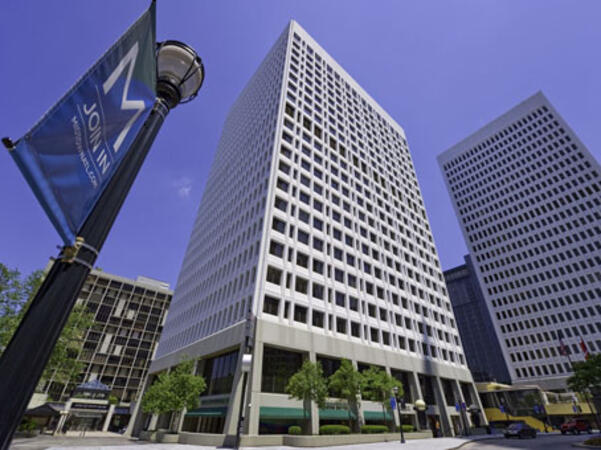
Atlanta, GA – Regus at Colony Squar
1201 Peachtree Street NE, Suite 200, Atlanta, United States, 30361
The venue is centrally located in Midtown Atlanta within the prominent Colony Square complex at 1201 Peachtree Street NE, easily accessed by car via I‑75/85 or GA‑400, with several parking garages nearby. From Hartsfield–Jackson Atlanta International Airport (ATL), around 15 miles south, a taxi or rideshare typically takes 20–30 minutes north along I‑75/85 N. Public transit users can take MARTA Rail to the Arts Center or Midtown stations (0.3–0.5 miles away) and walk easily, and numerous MARTA bus routes along Peachtree Street stop directly outside the entrance.

Atlanta, GA – The Proscenium
1170 Peachtree Street NE, Atlanta, United States, 30309
The venue is located in the heart of Midtown Atlanta in the Proscenium high–rise at 1170 Peachtree Street NE, easily accessible by car via I‑75/85 and GA‑400 with several parking garages nearby. Visitors arriving from Hartsfield–Jackson Atlanta International Airport (ATL), about 15 miles south, can expect a taxi or rideshare ride taking 20–30 minutes via I‑75/85 North. Public transit is seamless with MARTA Rail service; the Arts Center and Midtown stations are within walking distance (approximately 0.3–0.4 miles), and multiple MARTA bus routes also serve Peachtree Street.
Decatur, GA – Regus at One West Court Square
One West Court Square, Suite 750, Decatur, United States, 30030
The venue is located in the heart of downtown Decatur within One West Court Square, easily reached by car via I‑20 and I‑285, with several public parking decks directly adjacent. Travelers from Hartsfield–Jackson Atlanta International Airport (ATL), approximately 17 miles southwest, can expect a taxi or rideshare ride of around 25–30 minutes via I‑20 East. Public transit is particularly convenient: MARTA rail users can disembark at Decatur Station (about 0.15 miles away) and walk a few minutes to the building entrance. Local bus routes also serve Trinity Place and Swanton Way, putting the center within easy reach.
Atlanta, GA – Regus at One Hartsfield
100 Hartsfield Centre Parkway, Suite 500, Atlanta, United States, 30354
The venue is located in the One Hartsfield Center office building, adjacent to Hartsfield–Jackson Atlanta International Airport, easily reached by car via I‑75/I‑85 or GA‑138, with abundant on-site parking. Visitors arriving from ATL airport can walk or take a shuttle to the building, or opt for a quick 2–3‑minute taxi or rideshare ride. Public transit users can board MARTA from the Airport Station and ride one stop to College Park Station, then catch a connecting shuttle or enjoy a brief walk of about half a mile.
Atlanta, GA – Regus at Peachtree
260 Peachtree Street NW, Suite 2200, Atlanta, United States, 30303
The venue is situated in the iconic Coastal States Building at 260 Peachtree Street in downtown Atlanta, accessible by car via I‑75/85 or I‑20 with convenient parking garages nearby. From Hartsfield–Jackson Atlanta International Airport (ATL), about 12 miles south, a taxi or rideshare along I‑75/85 North takes approximately 15–20 minutes. For public transit, MARTA rail users can disembark at Five Points Station and walk 0.5 miles northeast, or exit at Peachtree Center Station and walk two blocks north—both routes offering easy access.
Augusta, GA – At Broad Street
823 Broad Street, Augusta, United States, 3090
The venue is located in the heart of downtown Augusta on Broad Street, easily accessible by car via I‑20 with several public parking garages nearby. From Augusta Regional Airport (AGS), about 9 miles west, taxis or rideshares typically take 15–20 minutes via I‑20. Public transit is available through Augusta Public Transit buses with routes along Broad Street, stopping within a few blocks of the venue, offering a convenient option for attendees without a car.
Savannah, GA – Regus at Bull Street
100 Bull St Downtown, Suite 200, Savannah, United States, 31401
The venue is located in the historic downtown area on Bull Street in the Altmayer Building, easily accessible by car via I‑16 and U.S. 17, with several public garages nearby. From Savannah/Hilton Head International Airport (SAV), about 12 miles west, taxis or rideshares typically take 15–20 minutes via U.S. 17 South. Public transit is available via Chatham Area Transit (CAT) buses, with frequent service along Bull and Broughton Streets; Johnson Square Station is just a couple minutes’ walk from the venue.
PSPO II is an advanced-level certification course offered by Scrum.org, designed to enhance professional product ownership skills in complex environments.
This instructor-led, live training (available online or onsite) is targeted at advanced-level Product Owners, product managers, and Agile leaders who aim to maximize product value and excel in contemporary product management practices for government.
By the end of this training, participants will be able to:
- Understand and apply advanced Product Owner roles and responsibilities.
- Utilize stakeholder management and product strategy to optimize value delivery.
- Implement evidence-based management (EBM) to drive outcome-focused product development.
- Prepare effectively for the PSPO II certification assessment.
**Format of the Course**
- Interactive lectures and discussions.
- Case studies and scenario-based exercises.
- Practical group activities and role-playing sessions.
**Course Customization Options**
- To request a customized training program tailored to specific organizational needs, please contact us to arrange.
This instructor-led, live training in [location] (online or onsite) is designed for government professionals at beginner to intermediate levels who wish to gain a deeper understanding of Scrum and prepare for the Certified Scrum Master (CSM) certification exam.
By the end of this training, participants will be able to:
- Understand and apply the fundamental concepts and principles of Scrum.
- Develop core competencies to manage internal and external distractions in project development for government.
- Master all Scrum ceremonies and their implementation.
- Gain proficiency in executing Scrum methodologies effectively.
- Approach the Certified Scrum Master (CSM) Certification Exam with confidence.
The training "Scrum for Advanced Scrum Masters + Preparation for PSM II" is aimed at experienced Scrum Masters who want to expand their competencies, gain a deeper understanding of how Scrum works, and become true leaders in an agile approach. The course covers the interpretation of the Scrum Guide according to the vision of Scrum.org, which is crucial for the PSM II exam. Participants gain practical knowledge about comprehensiveness, empirical approaches, Scrum values, and the role of the Scrum Master as a leader. Additionally, the course prepares participants for the PSM II exam, based on the latest version of the Scrum Guide.
This two-day course is designed for IT professionals interested in utilizing the Waterfall model and exploring traditional methods to address its limitations, including various Agile approaches. On the first day, participants will receive an overview of these methodologies to help them determine which approach may be most suitable for their specific environment. The second day focuses on project management techniques and best practices derived from Agile methodologies that can be effectively applied in both Waterfall and Agile contexts, enhancing efficiency and effectiveness for government projects.
Business Analysis is the process of examining, understanding, and defining business needs to develop solutions that meet those needs. It is a key element in the process of managing organizational changes and designing new business solutions. Business analysis ensures that technological, process-related, or organizational solutions meet business goals and needs. It is crucial for the effectiveness of projects and organizational changes by ensuring that the introduced solutions are appropriate, feasible, and fully aligned with business requirements.
This course is designed to equip professionals with the skills necessary for success in the role of a business analyst on Agile projects for government. Participants will learn effective collaboration techniques with team members, product owners, scrum masters, and customers to streamline the development process. The curriculum includes a simulated project where participants can practice common scenarios, ensuring they are well-prepared for real-world challenges.
This two-day course is designed for IT professionals who are interested in implementing Iterative Agile and Scrum methodologies to manage software development. It is particularly appropriate for project managers, team leaders, developers, and stakeholders in the software development process, including those from government agencies looking to enhance their project management practices for government.
This course has been developed for government test managers, quality assurance staff, testers, software developers, project managers, and management to explain how Agile project management frameworks, notably SCRUM, address testing. By the end of the course, each participant will design and execute a test plan for a sample application, which can be an actual client application if available. This training aims to enhance skills in alignment with public sector workflows, governance, and accountability for government professionals.
This two-day course offers an introductory overview of Agile software testing. It covers fundamental testing concepts within the context of Agile (Scrum) development methodologies, utilizing Crispin & Gregory’s Agile Testing Quadrants model as a framework to explore modern principles and practices in Agile testing.
### Intended Audience
This course is designed for development teams seeking to enhance their testing practices within an Agile environment. It is also appropriate for individuals aiming to pursue a career in testing and serves as a suitable prerequisite for the iSQI Certified Agile Tester course, aligning with the needs of professionals working in or supporting government agencies.
The Certified Scrum Master training course is designed to enhance your understanding of Scrum methodology and its practical implementation. This program for government professionals will equip you with the knowledge and skills necessary to become a certified ScrumMaster, as recognized by the Scrum Alliance. Upon completion of the CSM training and successful examination, you will join a global network of professionals who have earned this prestigious certification.
The Certified Scrum Product Owner (CSPO) training provides a comprehensive understanding of various elements essential for guiding product owners in their roles. This includes managing and prioritizing business value as well as adopting industry best practices. With the support of the CSPO course, participants are better prepared to scale Scrum projects effectively, ensuring alignment with public sector workflows and governance standards for government.
Training provides participants with the knowledge, techniques, tools, and practices necessary for managing projects using the Scrum framework. This includes an understanding of the underlying philosophy, the organization of project workflows, team roles, and methods for creating business value that aligns with client needs. Participants will also gain insight into various aspects of Agile in practice through hands-on workshops and simulations. These sessions cover a range of tools and techniques such as Kanban boards, retrospective methods, working with registries, and requirements formulation.
This training is designed for individuals interested in implementing Agile methodologies within their organization, those currently involved in projects, and project managers who are either implementing or planning to adopt Agile approaches in their projects. The program includes a comprehensive theoretical component, interactive workshops, and practical examples to ensure a well-rounded learning experience for government professionals.
JIRA Software is a robust tool designed for project management, often leading users to focus more on its functionalities than on the methodologies it supports. This instructor-led, live training introduces participants to the capabilities of Jira and Confluence, demonstrating how these tools can work together to enhance team efficiency in delivering successful projects or products. Participants will learn how to effectively use these tools for managing user requirements, testing, communication, and centralizing information in one platform.
The training covers various aspects such as JIRA projects, Confluence spaces, workflows, boards (Kanban and Scrum), planning and dependencies, linkage between Jira and Confluence, reporting, important fields and custom fields, issue types, screens, and filtering.
By the end of this training, participants will be able to:
- Create a Scrum or Kanban project.
- Configure Jira to effectively manage the project.
- Manage issues with precision.
- Design screens tailored to handle specific issue types.
- Develop workflows and boards, understanding their interaction.
- Conduct both basic and advanced searches and analysis.
- Generate and review reports essential for team and management oversight.
This training is specifically designed to align with public sector workflows, governance, and accountability, ensuring that participants are well-equipped to utilize Jira and Confluence for government projects.
Training for government allows participants to acquire the knowledge, techniques, tools, and practices necessary for managing projects using the Scrum framework from the perspective of a Scrum Master. The Scrum Master is responsible for understanding and effectively applying the Scrum methodology.
This training is designed for individuals interested in implementing Agile approaches within their organization, as well as those who are involved in projects or project managers planning to adopt Agile methodologies in their work.
The program includes theoretical instruction, interactive workshops, and practical examples to ensure a comprehensive learning experience. Participants will also be prepared for certification as a PeopleCert Scrum Master through a practice exam and will have the opportunity to take the certification exam.
Key details of the certification exam:
- Passing score: 70%
- Time limit: 60 minutes
- Number of questions: 40
- Format: Multiple choice
All participants who complete the Professional Scrum Master course for government will receive a password to attempt the Professional Scrum Master I (PSM I) assessment. The PSM I certification, which is recognized across the industry, requires a minimum passing score of 85%. Participants in the PSM class who take the PSM I assessment within 14 days of receiving their free password and do not achieve at least 85% will be granted a second attempt at no additional cost. Additionally, those who successfully pass the PSM I assessment are eligible for a discount on the PSM II assessment.
The Professional Scrum Master II for Government (PSM II) course is a 2-day advanced program designed to support experienced Scrum Masters in their professional development. This course combines instruction with facilitated exercises, focusing on the challenges that Scrum Masters encounter and how the principles and values of Scrum can be applied to effectively address these situations.
This training is designed to help participants gain a comprehensive understanding of project management practices within the Scrum framework, from the perspective of the Scrum Master. The Scrum Master plays a crucial role in ensuring the effective application and optimization of Scrum methodologies.
This course is ideal for individuals interested in adopting Agile approaches within their organizations, as well as those currently involved in projects or project managers who are either implementing or planning to implement Agile practices.
The training includes a theoretical component, interactive workshops, and practical examples. Participants will be prepared for the Scrum Master certification through a practice exam and have the opportunity to take the official certification exam.
Training language: English
Exam language: English
This training is tailored to support the needs and objectives of public sector professionals for government, ensuring alignment with best practices in project management and Agile methodologies.
This training is designed for individuals within government agencies who are interested in implementing Agile methodologies in their organizations. It is also suitable for those involved in projects, as well as project managers who are either currently implementing or planning to adopt Agile approaches in their projects for government.
This two-day course teaches the Lean-Agile principles and practices of the Scaled Agile Framework® (SAFe®) for government.
You will learn how to execute and release value through Agile Release Trains, build an Agile Portfolio, and lead a Lean-Agile transformation at enterprise scale. The curriculum is tailored to align with public sector workflows, governance, and accountability requirements.
This training will provide you with a comprehensive understanding of the Lean-Agile mindset and how to apply SAFe principles and practices to support Agile teams, programs, program portfolio management, and coordinate large Value Streams in a government context. Attending this class prepares you to take the exam and become a certified SAFe® Agilist (SA). Associated Certification: SAFe Agilist (SA)
This two-day course is designed to equip current Scrum Masters with the leadership skills necessary to facilitate Agile team, program, and enterprise success within a SAFe® implementation. The curriculum covers the facilitation of cross-team interactions to support program execution and continuous improvement. It expands on the Scrum framework by introducing scalable engineering and DevOps practices, the application of Kanban to enhance value flow, and effective engagement with architects, product management, and other key stakeholders in broader program and enterprise contexts. The course provides practical tools for building high-performing teams and addresses common Agile and Scrum anti-patterns in the enterprise environment. By attending this class, participants will be prepared to take the exam and become a certified SAFe® Advanced Scrum Master (ASM), enhancing their capabilities for government and organizational success.
This two-day course is designed to equip teams that are part of an Agile Release Train (ART) with the skills necessary to operate effectively in an Agile environment using methodologies such as Scrum, Kanban, and XP. Participants will gain a comprehensive understanding of how to transition into Agile Teams, develop their backlogs, and plan and execute iterations. The course also delves into the broader context of the ART, including the team's role within it, and provides strategies for planning, executing, and continuously improving alongside other teams.
This class prepares participants to manage a Program Increment (PI) effectively, covering all relevant meetings at both the Team and Program levels with a particular emphasis on upcoming PI planning. By attending this course, participants will be well-prepared to take the exam and achieve certification as a SAFe® Practitioner (SP), enhancing their capabilities for government and organizational success.
Upon completion of this course, you will be able to:
Implement SAFe principles to scale Lean and Agile development within your organization
Understand the composition and role of your team within the Agile Release Train
Identify other teams on the train, their roles, and the dependencies between them
Plan and execute iterations effectively
Demonstrate value through iteration demos and refine your processes for continuous improvement
Plan and coordinate Program Increments
Collaborate and integrate with other teams on the train
The Scrum Practitioner training is designed to introduce agile methodologies and practices in a classroom setting through a blend of lectures, exercises, and interactive activities that embody the principle of "learning by doing." Throughout the course, participants will have the opportunity to apply these techniques using a pre-prepared simulation, which will reinforce their understanding and skills. This training is tailored to enhance the capabilities of professionals working for government agencies, ensuring they are equipped with the tools necessary to improve project management and service delivery.
Scrum employs an evidence-based framework designed to enhance the team's capacity to respond to evolving requirements, deliver value rapidly, and adapt to changing market conditions. The primary objective of this methodology is to effectively address and meet customer needs in a timely fashion while managing any unforeseen challenges that may arise, for which a sequential approach would be inadequate for government operations.
Training provides participants with the knowledge, techniques, tools, and practices necessary for managing projects using the "Scrum framework" from the perspective of a Developer. This role involves collaborating with the Scrum team to deliver business value, preparing and monitoring the Sprint Backlog, which is the Sprint plan, and ensuring quality delivery.
This training is designed for individuals interested in implementing Agile methodologies within their organization, as well as those currently participating in projects or project managers who are either implementing or planning to implement Agile approaches in their projects.
The training includes a comprehensive theoretical component, interactive workshops, and practical examples to ensure a well-rounded learning experience.
As part of the training, participants will be prepared for certification as a Scrum Developer through a practice exam. They will also have the opportunity to take the official certification exam, enhancing their expertise and credentials for government and organizational projects.
This course is structured with a workshop approach to provide participants the opportunity to practice Scrum and Agile methodologies. The hands-on environment ensures that attendees can apply these techniques effectively, aligning with best practices for government projects.
Training for government provides participants with the knowledge, techniques, tools, and practices necessary to manage projects using the Scrum framework. This includes understanding the philosophy, organizing project workflows, defining team roles, and creating business value aligned with client needs. Participants will also explore selected aspects of Agile methodologies in practice. Through workshops and simulations, attendees can learn and apply various Agile tools and techniques, such as Kanban boards, retrospective methods, working with registries, and requirements formulation.
This training is designed for government employees interested in implementing Agile approaches within their organizations, individuals involved in projects, and project managers who are either currently using or planning to adopt Agile methodologies. The program includes a comprehensive content section, interactive workshops, practical examples, and a simulation of Scrum practices through a "Lego game" exercise.
This course is also known as SCRUM awareness training.
Who should attend?
This course has been designed for government managers, executives, and other decision-makers who wish to understand how to calculate the benefits of implementing the methodology or gain insight into their team's activities.
It is also suitable for stakeholders in software development projects who are interested in having a more informed role in the development process for government initiatives.
The Scrum Master role is an essential component of any Agile/Scrum team. This course trains participants in key aspects of the Scrum framework and prepares them to take the online Scrum.org Professional Scrum Master (PSM1) exam.
Audience:
This course is designed for individuals who are currently serving as, or plan to serve as, a Scrum Master. It is also beneficial for others working in a Scrum environment who require an in-depth understanding of Scrum principles and practices for government.
Upon completion of this course, you will be able to:
Understand the origins of Agile methods.
Apply the core values and principles of Agile methods.
Distinguish between defined processes and empirical processes used in Agile methodologies.
Comprehend Scrum roles, artifacts, events, and practices.
Be fully prepared to sit for the Professional Scrum Master (PSM1) exam.
This course is designed for: Product owners, managers, or anyone interested in Agile planning and estimating techniques for government.
The Scrum Product Owner (SPO) course employs a blend of presentations, discussions, and hands-on exercises to explain and demonstrate the role of an Agile team. It covers all facets of a product owner's engagement in the life cycle of an Agile product, including rapid requirement gathering, writing user stories, estimating story points, tracking progress, release planning, reporting, forecasting, scaling, and more. This comprehensive approach ensures participants are well-prepared to apply these methodologies effectively in their respective roles for government.
Training enhances your ability to apply knowledge, techniques, and tools in managing projects from the perspective of the Scrum Product Owner, a role responsible for ensuring a high return on investment (ROI) in projects and processes. This role involves achieving a balance between needs, technology, and quality while effectively managing projects within the organization. The daily responsibilities of a Product Owner primarily focus on managing the Product Backlog, which is a register of requirements. This training equips participants with the tools and techniques necessary to define and deliver the business value of a project or process, including effective and flexible planning, identifying customers and end users, understanding their needs, defining business value and quality criteria, and preventing the creation of unnecessary quality and functionality. A key component of the training is a workshop that provides hands-on experience in working with the "product backlog" step by step. This training is designed for individuals interested in developing Product Owner competencies and implementing approaches to effectively manage the delivery of business value for government. The training includes a substantive section, practical workshops, and real-world examples.
Scrum is a popular method for managing projects within the Agile approach. Scrum is a framework that enables teams working on a project to deliver a valuable product in a flexible and efficient manner. The main features of Scrum are transparency, inspection, and adaptation. Scrum allows for quick responses to changes, flexible adaptation to client needs, and an iterative product development process, which often leads to better quality and client satisfaction. Roles within the team: Product Owner: A person representing the client's interests and defining task priorities in the product. Scrum Master: A person supporting the Scrum team, ensuring the process is followed and removing obstacles. Development Team: A team responsible for delivering the product.
Read more...
Last Updated:
Testimonials (9)
workshops, practical cases
Joanna Nowak - LKQ Polska Sp. z o. o.
Course - Introduction to Agile Testing
Jim's real life experience was evident and the fact that he is still working with teams keeps him current with the problems encountered. The activities were interesting and we appreciated the frequency of breaks. Delivery of the course was confident and good humoured too.
Leanne - Welsh Revenue Authority
Course - Professional Scrum Master I | PSM I (accredited training course with Scrum.org exam and certification)
team exercises
Dan
Course - SAFe® for Teams
Friendly, plenty of breaks to think about what we have learnt and lovely guy.
Leanne - Welsh Revenue Authority
Course - Agile Business Analysis
I really enjoyed the mix of practical with theory.
The trainer was also exteremly knowledgable and answered all our questions perfectly
Kelly - Department of Information Technology Technological University of the Shannon
Course - Effective Agile Project Management with Jira & Confluence
I enjoyed Craig's enthusiasm and open-mindeness . He brought good vibes explaining a complex topic and I gained value for my current job from this training.
Alexei Starostine - EY GLOBAL SERVICES (POLAND) SP Z O O
Course - Professional Scrum Product Owner I | PSPO I (accredited training course with Scrum.org exam and certification)
the way the trainer explained the methodology and immediately moved to examples of using it
Antonio
Course - Scrum for Managers and Executives
The insights from Scrum and how they can be adapted to the work the do.
Andile - RGA Americas Reinsurance Company, Ltd., South Africa Branch
Online Scrum training in Georgia, Scrum training courses in Georgia, Weekend Scrum courses in Georgia, Evening Scrum training in Georgia, Scrum instructor-led in Georgia, Scrum classes in Georgia, Evening Scrum courses in Georgia, Scrum trainer in Georgia, Online Scrum training in Georgia, Scrum on-site in Georgia, Scrum boot camp in Georgia, Scrum instructor in Georgia, Weekend Scrum training in Georgia, Scrum coaching in Georgia, Scrum one on one training in Georgia, Scrum instructor-led in Georgia, Scrum private courses in Georgia