NobleProg offers comprehensive BPMN training courses tailored to professionals across Michigan. Whether you are in Detroit, Ann Arbor, or Grand Rapids, our expert-led programs provide the skills needed to thrive in today's competitive landscape. Discover how NobleProg can help your organization succeed with targeted BPMN education.
Instructor-led BPMN (Business Process Model and Notation) courses, delivered either virtually or in person, utilize interactive discussion and practical exercises to guide participants through the comprehension, strategic planning, and deployment of BPMN frameworks within their respective agencies. NobleProg actively supports the OMG OCEB 2 certification initiative.
BPMN instruction is offered via "online live" or "onsite live" modalities. Online sessions are facilitated remotely using an interactive remote desktop environment. Onsite training can be conducted at local agency facilities in Michigan or at NobleProg’s dedicated training centers in Michigan, ensuring specialized solutions for government entities.
NobleProg -- Your Local Training Provider
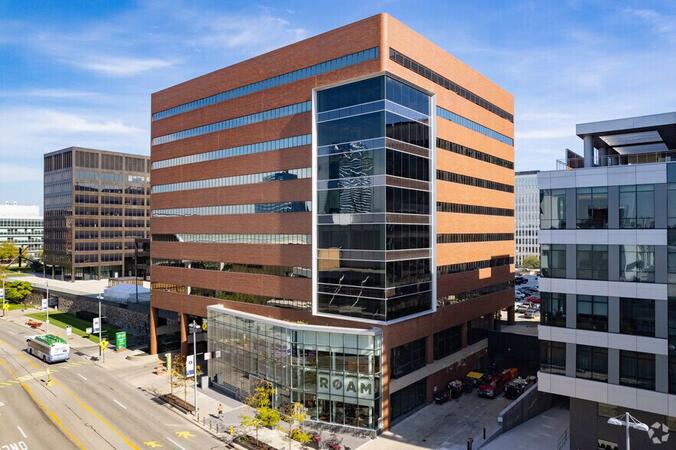
Detroit, MI - Renaissance Center
400 Renaissance Center, Detroit, United States, 48243
The GM Renaissance Center is conveniently located in downtown Detroit and easily accessed by car via Interstates 75 or 94, with secure underground parking available on site. Travelers flying into Detroit Metropolitan Airport (DTW) can expect a 25–30 minute trip by taxi or rideshare via I‑94. Public transit is efficient: the Detroit People Mover stops directly at the Renaissance Center station, and DDOT routes 3 and 9 serve nearby Jefferson Avenue. Pedestrian skywalks provide safe indoor access from downtown hotels, parking garages, and the riverwalk.
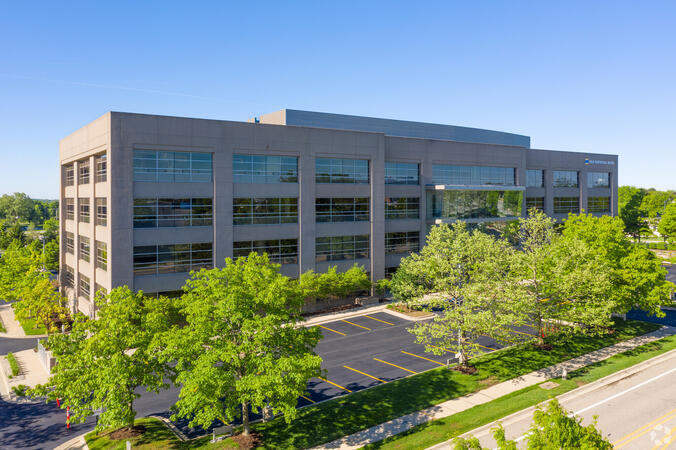
Ann Arbor, MI – Regus - South State Commons I
2723 S State St, Ann Arbor, United States, 48104
Regus South State Commons I is conveniently located off I‑94 via Exit 177 (State Street), with easy access to downtown Ann Arbor and surrounding suburbs. The building offers free on-site surface parking for guests. From Detroit Metropolitan Airport (DTW), the venue can be reached in approximately 20–25 minutes by taxi or rideshare via I‑94 West. Local public transit service (TheRide) operates Route 24 along South State Street, with a stop within a short 2-minute walk of the building.
Grand Rapids, MI - Regus – Calder Plaza
250 Monroe Ave NW, Grand Rapids, United States, 49503
The venue sits centrally at 250 Monroe Avenue NW in downtown Grand Rapids, easily accessed by car via US‑131 or I‑196—with connections via Monroe or Ottawa exits—and offers shared underground and surface parking. From Gerald R. Ford International Airport, take I‑96 East then I‑196 West into the city; the drive is about 20 minutes. Public transit through Rapid bus routes stops near Monroe or Ottawa Avenue, just a short walk from the Regus entrance; the downtown area is pedestrian-friendly.
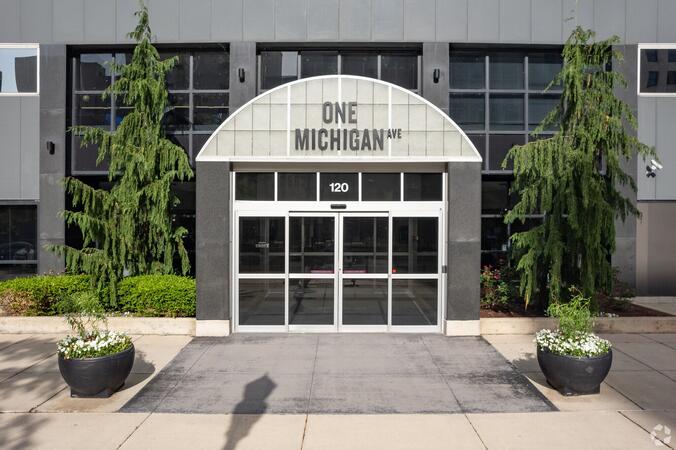
Lansing, MI - Regus - One Michigan Avenue
120 North Washington Square, Lansing, United States, 48933
The venue is located in the heart of Lansing’s central business district at 120 North Washington Square, easily accessible by car via I‑496 or US‑127 with convenient street parking and a nearby parking ramp. From Capital Region International Airport (LAN), the location is approximately a 12‑minute drive west via I‑96 and US‑127, with taxis and rideshares readily available. Public transit users can take CATA bus routes that stop just a block away on Washington or Grand Avenue, offering seamless access to the venue.
This module on Modeling and Documentation for Business Analysis provides a practical approach to standard modeling languages and tools used to capture, visualize, and validate business requirements and operational processes.
This instructor-led live training, available online or on-site, is designed for professionals with limited or no modeling experience who seek to apply industry-standard techniques, such as UML, BPMN, and wireframing tools, to enhance clarity and communication in business analysis projects for government operations.
Upon completion of this training, participants will be able to:
Utilize UML diagrams to represent functional requirements and system behaviors.
Model business processes in accordance with BPMN standards.
Develop clear, structured use case diagrams and accompanying documentation.
Create wireframes and interactive prototypes using Figma and Balsamiq.
Training Format
Interactive lectures and facilitated discussions.
Practical application of modeling tools within sample project scenarios.
Guided exercises emphasizing process, requirements, and UI modeling.
Customization Options
To request a customized training program for government aligned with your organization’s standards or preferred toolset, please contact us to coordinate arrangements.
This instructor-led, live training in Michigan (online or onsite) is tailored for project managers at all levels who aim to attain Green Belt certification knowledge in BPMN. The program is designed to streamline project workflows, enhance process efficiency, and ensure adherence to business standards relevant to government operations.
Upon completion of this training, participants will be able to:
Understand the foundational concepts and components of BPMN 2.0.
Construct and analyze BPMN diagrams to document business processes.
Enhance workflow performance by applying BPMN best practices.
Detect and rectify operational inefficiencies within business processes.
Incorporate BPMN into project management frameworks and process improvement efforts.
This training program is designed for business analysts engaged in government operations who require comprehensive proficiency in BPMN 2.0. It addresses practical applications and standard implementations for government workflows. The curriculum consists of concise instructional segments followed by applied exercises. Participants will analyze English-language problem scenarios and develop corresponding process diagrams. Subsequently, these diagrams will undergo group evaluation and professional assessment. Please note that this course does not address the execution layer of BPMN; instead, it prioritizes the analysis and process design aspects essential for government process improvement. This focus ensures that the instructional content aligns with the needs of government stakeholders by emphasizing analytical rigor and design best practices.
This hands-on Business Process Management training for government professionals in Michigan focuses on the design, implementation, and analysis of operational processes. Participants will develop proficiency in BPMN modeling, governance strategies, and the alignment of IT infrastructure with business objectives through practical exercises and applied scenarios.
This curriculum is designed for government stakeholders responsible for modeling business processes in compliance with BPMN 2.0 standards.
The instruction emphasizes the practical application of BPMN 2.0 specifications and the implementation of established operational patterns.
The training comprises brief instructional modules followed by applied exercises. Participants will receive problems described in English and are required to develop appropriate diagrams to address each scenario. Subsequently, these diagrams will be reviewed and evaluated collectively by the group and the instructor.
This course prioritizes the interpretation of BPMN diagrams for government use while also covering fundamental aspects of BPMN execution.
This practical instruction for government introduces the core principles of BPMN 2.0 for analysts and designers. The curriculum addresses flow objects, gateways, events, and structural pools, fostering essential modelling proficiency through hands-on exercises. A concluding workshop applies this knowledge to real-world process examples.
The Object Management Group (OMG) has established three primary standards for modeling processes, decisions, and cases: Business Process Model and Notation (BPMN), Decision Model and Notation (DMN), and Case Management Model and Notation (CMMN). This curriculum provides a comprehensive introduction to each framework, clarifying the specific operational contexts in which each standard is most effectively applied for government operations.
The Camunda for Analysts curriculum at Michigan provides comprehensive instruction in BPMN and DMN modeling and business process analysis for government. Participants acquire expertise in process engine operations, version control, and token management, while applying practical skills in error diagnosis and workflow optimization through supervised exercises.
The "Camunda for Developers (EZD RP)" curriculum is a comprehensive technical program designed for software professionals seeking to master the modeling, implementation, and integration of business processes within the EZD RP framework using Camunda. This training for government applications equips participants with the following competencies: ✅ BPMN and DMN Notations – A thorough review of key syntactic elements and their execution logic within the Camunda engine. ✅ Camunda Process Engine – Operational applications, EZD RP integration protocols, and governance best practices. ✅ Camunda Modeler – Advanced process modeling techniques, specialized features, and Spring Boot integration. ✅ Camunda API and Messaging – Classification of message types and correlation mechanisms for process coordination. ✅ Process Data Management – Data modeling standards, serialization methods, and variable scope management. ✅ Error Handling and Debugging – Incident analysis, transactional consistency, and comprehensive process testing. ✅ Camunda Cockpit – System monitoring, error diagnostics, and token lifecycle management. ✅ Process Versioning – Strategies for version transitions and their operational impact on the EZD RP environment. ✅ Application Implementation – Practical configuration and deployment of process-handling applications within EZD RP. ✅ Camunda Configuration – Architectural decisions for embedded versus standalone modes and large-scale optimization. ✅ Historical Data Reporting – Management of data archives via Custom History Backends and the History API. This program for government stakeholders integrates theoretical principles with hands-on practice, enabling participants to design and deploy operational business processes within the EZD RP environment. Through supervised workshops in distinct operational settings, participants will acquire the skills necessary to debug, monitor, and optimize process performance in distributed systems.
This instructor-led, live training in Michigan (delivered online or onsite) is designed for process department personnel and operations team members seeking to master practical process improvement techniques using Six Sigma principles and BPMN 2.0 modeling.
Administrative leaders seeking proficiency in BPMN diagrams, business consultants, business analysts, business process engineers, system analysts, and professionals engaged in the analysis and planning of business processes for government using standardized, unified modeling notations.
Course Goals:
Generate high-quality process diagrams
Apply the BPMN process notation standard
Document current-state process information
Implement optimized process flows for human-centric operations
Simplify complex process definitions into manageable components
This course provides practical BPMN modeling knowledge and foundational skills for government operations.
The intended audience is business users, IT systems personnel, or business analysts who document and analyze processes for government applications and organizational functions.
The training consists of moderated discussion (40%) and computer workshop (60%). A key component of the laboratory involves translating business scenarios into BPMN diagrams for government use.
This is an intensive, practical course that focuses on application rather than theoretical considerations of BPMN.
Read more...
Last Updated:
Testimonials (7)
Being able to breakdown a process and visualize it
Mecca Irino - QBench
Course - BPMN Green Belt for Project Managers
treatment of certain aspects of my work
Keagile Ramokolo - 8111095637085
Course - Business Process Management
the practical part
Daniela Mirevska
Course - Business Process Modelling in BPMN 2.0
The trainer shared his knowledge and led great atmosphere.
Agnieszka Dubanska - Narodowy Fundusz Zdrowia
Course - Modelowanie procesów biznesowych z wykorzystaniem UML i BPMN
Richard is a great teacher
Federico - Circle spa
Course - BPMN 2.0 for Business Analysts
the Trainer tailored the session to our organisation and help us understand what we could be improving on.
Christopher - Department of Training & Workforce Dev.
Course - BPMN 2.0 Fundamentals and Workshop
The pace was good, with a nice mixture of knowledge sharing, demonstrations and practical work. Filip was very engaging and provided the energy to get through the course. It was good that there was a lot of 1:1 tuition, with Filip going through individual training exercises.
Colin - Worldpay
Course - BPMN, DMN, and CMMN - OMG standards for process improvement
Online BPMN (Business Process Model and Notation) training in Michigan, Business Process Model and Notation (BPMN) training courses in Michigan, Weekend Business Process Model and Notation courses in Michigan, Evening BPMN training in Michigan, Business Process Model and Notation instructor-led in Michigan, Business Process Model and Notation instructor in Michigan, Online BPMN (Business Process Model and Notation) training in Michigan, Business Process Model and Notation private courses in Michigan, BPMN (Business Process Model and Notation) one on one training in Michigan, Evening Business Process Model and Notation (BPMN) courses in Michigan, Business Process Model and Notation boot camp in Michigan, BPMN trainer in Michigan, BPMN (Business Process Model and Notation) coaching in Michigan, Business Process Model and Notation (BPMN) instructor-led in Michigan, Weekend BPMN (Business Process Model and Notation) training in Michigan, BPMN (Business Process Model and Notation) classes in Michigan, Business Process Model and Notation (BPMN) on-site in Michigan