



Online or onsite, instructor-led live BPMN (Business Process Model and Notation) training courses demonstrate through discussion and hands-on practice how to understand, plan, implement BPMN software and practices within an organization. Govtra is a contributor to the OMG BPMN certification program (OCEB 2).
BPMN training is available as "online live training" or "onsite live training." Online live training (also known as "remote live training") is conducted via an interactive, remote desktop. Onsite live training can be conducted locally on customer premises in Georgia or in Govtra corporate training centers in Georgia.
Govtra -- Your Local Training Provider for government.
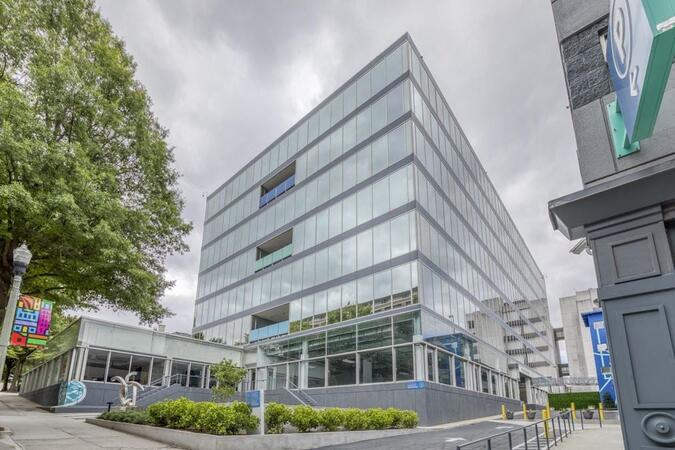
Atlanta, GA – Regus at Colony Squar
1201 Peachtree Street NE, Suite 200, Atlanta, United States, 30361
The venue is centrally located in Midtown Atlanta within the prominent Colony Square complex at 1201 Peachtree Street NE, easily accessed by car via I‑75/85 or GA‑400, with several parking garages nearby. From Hartsfield–Jackson Atlanta International Airport (ATL), around 15 miles south, a taxi or rideshare typically takes 20–30 minutes north along I‑75/85 N. Public transit users can take MARTA Rail to the Arts Center or Midtown stations (0.3–0.5 miles away) and walk easily, and numerous MARTA bus routes along Peachtree Street stop directly outside the entrance.

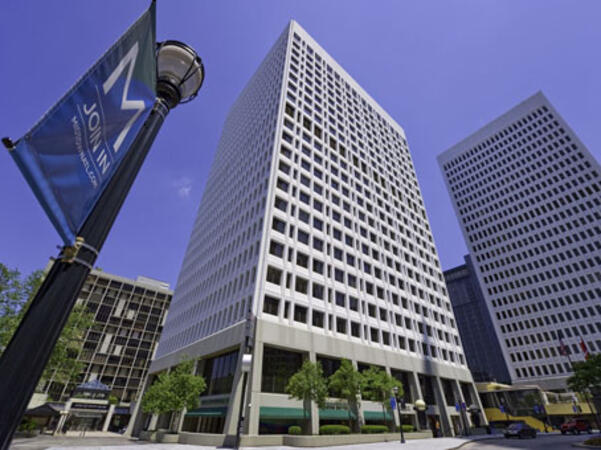
Atlanta, GA – The Proscenium
1170 Peachtree Street NE, Atlanta, United States, 30309
The venue is located in the heart of Midtown Atlanta in the Proscenium high–rise at 1170 Peachtree Street NE, easily accessible by car via I‑75/85 and GA‑400 with several parking garages nearby. Visitors arriving from Hartsfield–Jackson Atlanta International Airport (ATL), about 15 miles south, can expect a taxi or rideshare ride taking 20–30 minutes via I‑75/85 North. Public transit is seamless with MARTA Rail service; the Arts Center and Midtown stations are within walking distance (approximately 0.3–0.4 miles), and multiple MARTA bus routes also serve Peachtree Street.
Decatur, GA – Regus at One West Court Square
One West Court Square, Suite 750, Decatur, United States, 30030
The venue is located in the heart of downtown Decatur within One West Court Square, easily reached by car via I‑20 and I‑285, with several public parking decks directly adjacent. Travelers from Hartsfield–Jackson Atlanta International Airport (ATL), approximately 17 miles southwest, can expect a taxi or rideshare ride of around 25–30 minutes via I‑20 East. Public transit is particularly convenient: MARTA rail users can disembark at Decatur Station (about 0.15 miles away) and walk a few minutes to the building entrance. Local bus routes also serve Trinity Place and Swanton Way, putting the center within easy reach.
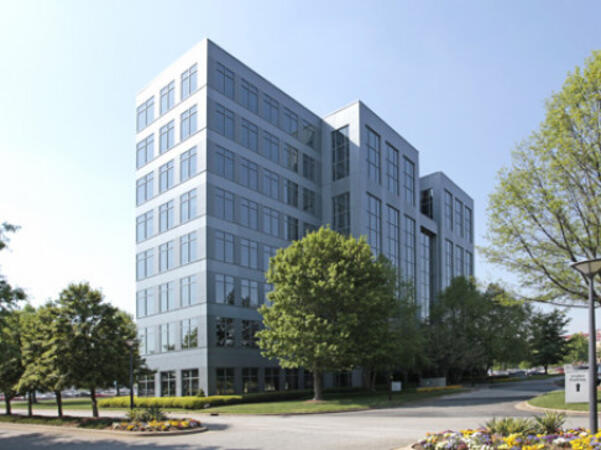
Atlanta, GA – Regus at One Hartsfield
100 Hartsfield Centre Parkway, Suite 500, Atlanta, United States, 30354
The venue is located in the One Hartsfield Center office building, adjacent to Hartsfield–Jackson Atlanta International Airport, easily reached by car via I‑75/I‑85 or GA‑138, with abundant on-site parking. Visitors arriving from ATL airport can walk or take a shuttle to the building, or opt for a quick 2–3‑minute taxi or rideshare ride. Public transit users can board MARTA from the Airport Station and ride one stop to College Park Station, then catch a connecting shuttle or enjoy a brief walk of about half a mile.
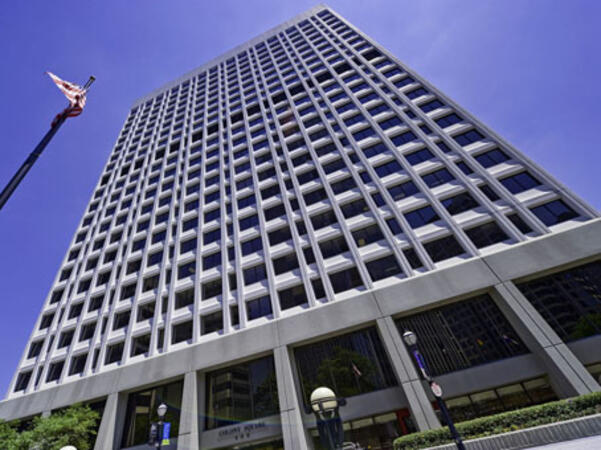
Atlanta, GA – Regus at Peachtree
260 Peachtree Street NW, Suite 2200, Atlanta, United States, 30303
The venue is situated in the iconic Coastal States Building at 260 Peachtree Street in downtown Atlanta, accessible by car via I‑75/85 or I‑20 with convenient parking garages nearby. From Hartsfield–Jackson Atlanta International Airport (ATL), about 12 miles south, a taxi or rideshare along I‑75/85 North takes approximately 15–20 minutes. For public transit, MARTA rail users can disembark at Five Points Station and walk 0.5 miles northeast, or exit at Peachtree Center Station and walk two blocks north—both routes offering easy access.
Augusta, GA – At Broad Street
823 Broad Street, Augusta, United States, 3090
The venue is located in the heart of downtown Augusta on Broad Street, easily accessible by car via I‑20 with several public parking garages nearby. From Augusta Regional Airport (AGS), about 9 miles west, taxis or rideshares typically take 15–20 minutes via I‑20. Public transit is available through Augusta Public Transit buses with routes along Broad Street, stopping within a few blocks of the venue, offering a convenient option for attendees without a car.
Savannah, GA – Regus at Bull Street
100 Bull St Downtown, Suite 200, Savannah, United States, 31401
The venue is located in the historic downtown area on Bull Street in the Altmayer Building, easily accessible by car via I‑16 and U.S. 17, with several public garages nearby. From Savannah/Hilton Head International Airport (SAV), about 12 miles west, taxis or rideshares typically take 15–20 minutes via U.S. 17 South. Public transit is available via Chatham Area Transit (CAT) buses, with frequent service along Bull and Broughton Streets; Johnson Square Station is just a couple minutes’ walk from the venue.
Modeling and Documentation for Business Analysis is a practical course designed to equip participants with standard modeling languages and tools used to capture, visualize, and validate business requirements and processes for government.
This instructor-led, live training (online or onsite) is aimed at professionals with limited or no experience in modeling who wish to apply industry-standard techniques like UML, BPMN, and wireframing tools to enhance clarity and communication in business analysis projects within the public sector.
By the end of this training, participants will be able to:
Use UML diagrams to represent functional requirements and system behavior for government initiatives.
Model business processes using BPMN standards to align with public sector workflows and governance.
Create clear and structured use case diagrams and documentation to support accountability in project management.
Design wireframes and interactive prototypes using Figma and Balsamiq to enhance user interface design for government applications.
Format of the Course
Interactive lecture and discussion focused on best practices for government.
Hands-on use of modeling tools in sample project scenarios relevant to public sector needs.
Guided exercises centered on process, requirements, and UI modeling tailored for government workflows.
Course Customization Options
To request a customized training for this course based on your organization’s standards or preferred toolset, please contact us to arrange.
This instructor-led, live training in Georgia (online or onsite) is aimed at all-level project managers who wish to gain Green Belt certification knowledge in BPMN to streamline project workflows, enhance process efficiency, and ensure compliance with business standards for government.
By the end of this training, participants will be able to:
Understand the core concepts and components of BPMN 2.0.
Create and interpret BPMN diagrams to accurately represent business processes.
Optimize workflows using best practices in BPMN modeling for government.
Identify and eliminate inefficiencies in business processes within public sector operations.
Integrate BPMN into project management and process improvement initiatives to support governance and accountability.
This course has been created for business analysts in federal agencies who want to use BPMN 2.0 extensively in their projects.
It focuses on the practical aspects of the entire BPMN 2.0 specification, as well as the implementation of common patterns for government.
The course is structured as a series of short lectures followed by exercises. Participants will be presented with problems described in English and will need to create appropriate diagrams for each problem. These diagrams will then be discussed and assessed by both the group and the trainer.
This course does not cover the execution aspects of BPMN; it focuses on the analysis and process design components of BPMN 2.0.
This course is designed to bridge the gap between administration and Information Technology, integrating tools and techniques for designing, implementing, controlling, and analyzing Operational Business Processes. This typically involves individuals, organizations, and software applications.
The course includes practical assignments. Participants will be introduced to key topics during theory sessions, which will be complemented by hands-on exercises.
What will you learn?
1. The Fundamentals of BPM
2. BPM Implementation Strategies
3. Process Modeling, Analysis, and Design
4. Governance and Business Strategies for Government
5. Modeling a Process with BPMN
6. Business Rules
This training is designed for government managers who are responsible for making decisions related to Business Process Management (BPM), as well as business consultants, business analysts, business process engineers, system analysts, and any other individuals involved in the analysis and planning of business processes for government operations.
This course has been developed for government professionals responsible for modeling processes in BPMN 2.0.
The focus is on practical aspects of the BPMN 2.0 specification, as well as the implementation of common patterns for government workflows.
The course consists of a series of short lectures followed by exercises. Participants will be presented with problems described in English and will be required to create appropriate diagrams for each problem. These diagrams will then be discussed and assessed by both the group and the trainer.
This course emphasizes understanding BPMN diagrams, but also covers basic elements of the execution phase of BPMN for government applications.
Delegates who have an interest in Process Modeling will benefit from attending this Business Process Model and Notation (BPMN) training course, designed for government professionals including:
Business and Process Analysts
Process Designers and Implementers
Project and Program Managers
Anyone involved with business change and transformation efforts for government.
This course has been designed for individuals who wish to utilize BPMN 2.0 extensively in their projects. It emphasizes the practical aspects of the entire BPMN 2.0 specification, as well as the implementation of common patterns.
The course does not cover the execution phase of BPMN; instead, it focuses on analysis and process design elements of BPMN 2.0.
Course Format
Interactive lectures and discussions.
Extensive exercises and practice using Camunda Modeler.
Hands-on implementation in a live-lab environment for government.
Business Process Model and Notation (BPMN), Decision Model and Notation (DMN), and Case Management Model and Notation (CMMN) are three Object Management Group (OMG) standards designed for process, decision, and case modeling. This course provides an introduction to these standards and guides participants on when to use each one, ensuring alignment with best practices for government workflows, governance, and accountability.
This training course is designed to assist business analysts in effectively modeling their business processes using BPMN, as well as the resources managed by their activities. Conducted within an agile enterprise framework, business analysts will learn how to utilize appropriate BPMN notations and the business extensions of UML to address their "business requirements" and guide underlying design level activities coherently. This course is tailored for government professionals to enhance their capabilities in process modeling and resource management.
Bonita BPM is an open-source business process management and workflow suite comprised of three key components: Bonita Studio, Bonita BPM Engine, and Bonita Portal. This toolset is frequently utilized in projects that necessitate intricate workflows, such as Supply Chain Management, e-Government initiatives, Human Resources processes, and Contract Management.
Format of the Course
The course emphasizes hands-on practice to ensure practical application of skills.
Concepts will be taught through examples, exercises, and hands-on development, tailored specifically for government use cases.
This course is designed for individuals who will be responsible for executing processes using Activity, ensuring alignment with public sector workflows and governance standards for government.
ProcessMaker is an open-source Business Process Management (BPM) software application. It is a lightweight, fully web-based tool written in PHP, designed to provide functionality comparable to expensive enterprise solutions for government.
This course provides detailed instruction on implementing process management using ProcessMaker, with a focus on creating process definitions, defining roles, groups, and users, and initiating processes from external applications.
This course is designed to prepare participants to execute business processes using BPMN. It covers the graphical representation as well as the commonly used attributes of BPMN 2 elements, ensuring alignment with public sector workflows and governance for government.
Technology
This course is not platform-specific; it focuses on elements and attributes covered by the OMG specification. By default, it uses jBPM, but any other tool can be used as long as it supports BPMN 2.0, ensuring flexibility and compliance with government standards.
Class Format
Participants will follow example use cases, followed by hands-on exercises to enable them to execute their processes effectively for government operations.
Process mining, or Automated Business Process Discovery (ABPD), is a technique that applies algorithms to event logs to analyze business processes. Process mining goes beyond mere data storage and analysis; it bridges data with processes and provides insights into the trends and patterns that impact process efficiency.
Format of the Course for Government
The course begins with an overview of the most commonly used techniques for process mining. We will discuss various process discovery algorithms and tools used to discover and model processes based on raw event data. Real-life case studies are examined, and data sets are analyzed using the ProM open-source framework.
This training course is designed to assist business analysts in effectively modeling their business processes using BPMN, as well as the resources managed by their activities. Conducted within an agile enterprise framework, business analysts will learn how to utilize appropriate BPMN notations and business extensions of UML to address their "business requirements" and coherently guide underlying design level activities. This course is tailored for government professionals to enhance their capabilities in process modeling and resource management, ensuring alignment with public sector workflows, governance, and accountability.
This course is designed for government managers who wish to understand BPMN diagrams, as well as business consultants, business analysts, business process engineers, system analysts, and any other professionals involved in analyzing and planning business processes using standardized, unified modeling notation.
Course Goals:
Produce high-quality process diagrams for government
Model in the BPMN process notation
Capture as-is process information
Implement optimized process flows for people-intensive processes
Simplify complex process definitions and break them into more manageable pieces
The course aims to provide practical knowledge and advanced BPMN modeling skills at both Intermediate and Advanced levels for government professionals.
The ideal participant is a business analyst responsible for discovering, identifying, gathering, and analyzing user requirements for systems. This also includes advanced computer application developers and system architects interested in the creation of business processes, system, and custom drivers for government use.
The course does not address issues at the Executable BPMN level.
Training is conducted primarily through hands-on computer exercises (approximately 90%), during which participants will translate real business situations into Business Process Diagrams (BPD). They will also assess the practical utility of these diagrams.
This is an intensive, practical course that focuses strictly on applying BPMN in a real-world context. The training does not delve into theoretical considerations of BPMN.
The course aims to teach practical knowledge of BPMN modeling and basic skills for government.
The ideal student is an individual who analyzes and documents processes as a model, either as a business user, IT system professional, or business analyst collaborating with stakeholders within a specific organizational function in the public sector.
The training is conducted through a combination of moderated discussions (40%) and computer workshops (60%). A significant portion of the laboratory work involves translating business situations into BPMN diagrams.
This course is an intensely practical program, strictly focused on hands-on application. The training does not delve into theoretical considerations of BPMN, ensuring that participants can immediately apply their skills in real-world scenarios for government workflows.
This course has been designed for government managers, business analysts, process designers, developers, and subject matter experts who wish to design, validate, and simulate processes using jBPM. It also covers writing unit tests for these processes.
The course typically utilizes the latest stable version of the community jBPM project. Previous versions of jBPM may also be used, with approval required before booking.
Although Service-Oriented Architecture (SOA) is not specific to Business Process Management (BPM) software, there are several natural synergies between BPM and SOA. Perhaps the most evident of these is the separation of business process management as an independent function, which allows processes to be designed independently of any single application and leveraged as shared business logic. This approach enhances flexibility and reusability, aligning well with the needs for government workflows and governance.
Read more...
Last Updated:
Testimonials (13)
exercises made with the comments of trainer
Ewa Korol - Narodowy Fundusz Zdrowia
Course - Modelowanie procesów biznesowych z wykorzystaniem UML i BPMN
The pace was good, with a nice mixture of knowledge sharing, demonstrations and practical work. Filip was very engaging and provided the energy to get through the course. It was good that there was a lot of 1:1 tuition, with Filip going through individual training exercises.
Colin - Worldpay
Course - BPMN, DMN, and CMMN - OMG standards for process improvement
Open discussion with trainer
Tomek Danowski - GE Medical Systems Polska Sp. Z O.O.
Course - Process Mining
The trainer had a great connection with the trainees, understood our expectations and conducted the training in a perfect manner. The training was packed with a lot of new and important information but the knowledge was shared in a very understandable and enjoyable way. The trainer was very patient, knew whenever the trainees required additional examples shown or when to repeat a set of information.The trainer was well prepared, and the materials were prepared in a way that allowed us to practice process modeling, first to understand the language of BPMN and then to work on our processes to deepen the knowledge even further. Overall, I am very satisfied with how the training was conducted.
Natalia Gasior - WABCO Polska Sp. z o.o.
Course - BPM and Process Control
Any did not shut down our ideas or thoughts into concepts. He took time to understand one's thoughts and corrected us in a polite manner.
Ofentse Khoza - FNB
Course - BPMN 2.0 in Camunda Modeler
Mat was very friendly and accommodating. he explained the content well.
Rob McDonald - BC Pension Corporation
Course - Business Process Modelling in BPMN 2.0
extensive knowledge cover many things.
metab alanazi - Saudi Arabian Monetary Authority
Course - Enabling SOA with BPM and BPMN
I mostly liked the exercises and examples.
Natalia Rodriguez Ucles
Course - Business Process Modeling using BPMN and UML
The ability to do practical labs and the flexibility of the trainer.
marco perestrelo
Course - Activiti for Process Developers
I enjoyed the exercises, The training room, Tea kitchen.
Alisher Khaydarov
Course - BPMN 2 Fundamentals and Workshop
I really was benefit from the trainers subject matter expertise.
Simon
Course - Business Process Management
I gained a good overview of the process editors, business rules and BPMS tools landscape. I highly recommend the practical BPMN for Business Analysts course, even for experienced analysts, with its excellent process scenarios and modeling practice it will position you a cut above the rest!.
Anees Baig
Course - BPMN 2.0 for Business Analysts
I mostly liked the knowledge of the Trainer.
Sripal S
Course - Understanding Business Process Modeling with BPMN 2.0
Online BPMN training in Georgia, BPMN (Business Process Model and Notation) training courses in Georgia, Weekend Business Process Model and Notation courses in Georgia, Evening BPMN training in Georgia, Business Process Model and Notation (BPMN) instructor-led in Georgia, BPMN trainer in Georgia, BPMN (Business Process Model and Notation) classes in Georgia, BPMN (Business Process Model and Notation) instructor in Georgia, Evening Business Process Model and Notation (BPMN) courses in Georgia, Business Process Model and Notation (BPMN) boot camp in Georgia, Online Business Process Model and Notation training in Georgia, Weekend Business Process Model and Notation (BPMN) training in Georgia, BPMN (Business Process Model and Notation) one on one training in Georgia, BPMN (Business Process Model and Notation) instructor-led in Georgia, BPMN (Business Process Model and Notation) on-site in Georgia, Business Process Model and Notation (BPMN) private courses in Georgia, Business Process Model and Notation coaching in Georgia