NobleProg delivers specialized BPM training courses in Georgia, catering to professionals across the US Florida sales area. These sessions are designed to enhance technical expertise and leadership skills tailored to the local industry demands. By leveraging our extensive network, participants gain access to high-quality instruction and practical learning experiences within the region.
Instructor-led Business Process Management (BPM) training, available through online or onsite delivery formats, utilizes hands-on exercises to demonstrate the processes for understanding, planning, and implementing BPM within an organizational framework. Our curriculum integrates theoretical foundations, case study analysis, and practical application in live lab settings, designed to assist participants in enhancing operational efficiency and achieving strategic governance objectives for government entities.
BPM instruction is offered as either "online live training" or "onsite live training." Online live training (also referred to as remote live training) is conducted via an interactive, remote desktop connection. Onsite live training may be delivered locally at customer facilities in Georgia or at NobleProg corporate training centers in Georgia.
NobleProg -- Your Local Training Provider
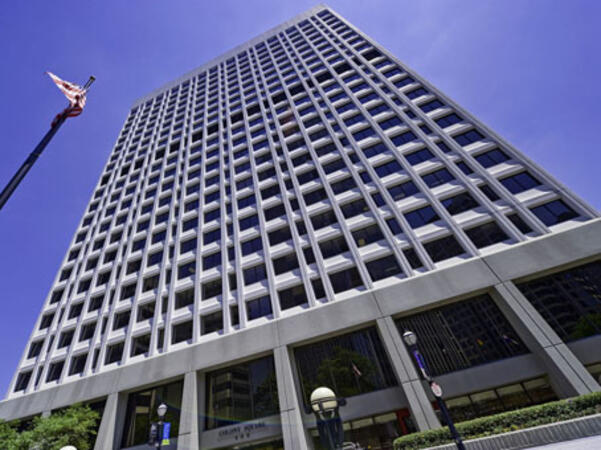
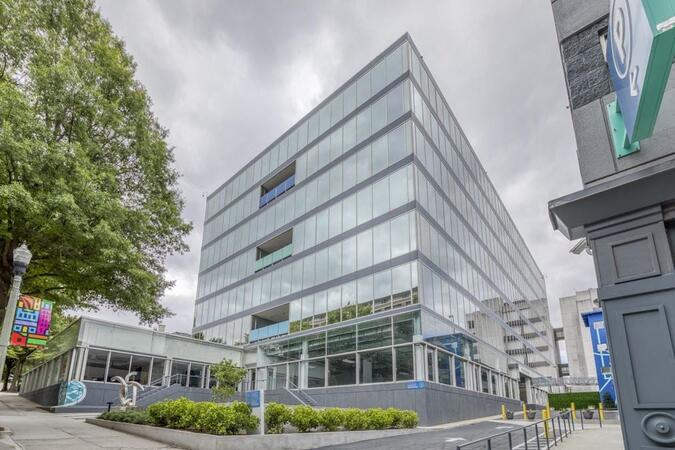
Atlanta, GA – Regus at Colony Squar
1201 Peachtree Street NE, Suite 200, Atlanta, United States, 30361
The venue is centrally located in Midtown Atlanta within the prominent Colony Square complex at 1201 Peachtree Street NE, easily accessed by car via I‑75/85 or GA‑400, with several parking garages nearby. From Hartsfield–Jackson Atlanta International Airport (ATL), around 15 miles south, a taxi or rideshare typically takes 20–30 minutes north along I‑75/85 N. Public transit users can take MARTA Rail to the Arts Center or Midtown stations (0.3–0.5 miles away) and walk easily, and numerous MARTA bus routes along Peachtree Street stop directly outside the entrance.
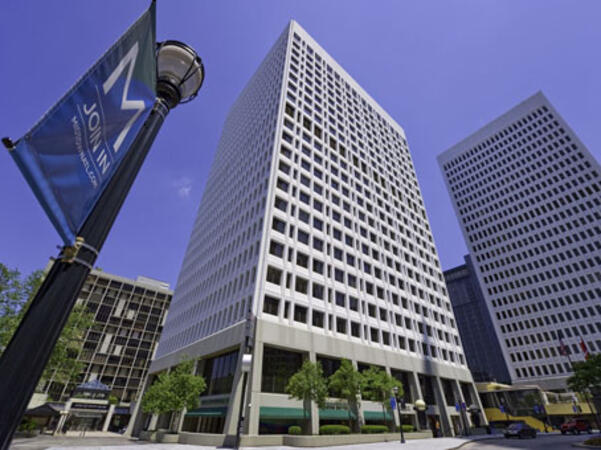
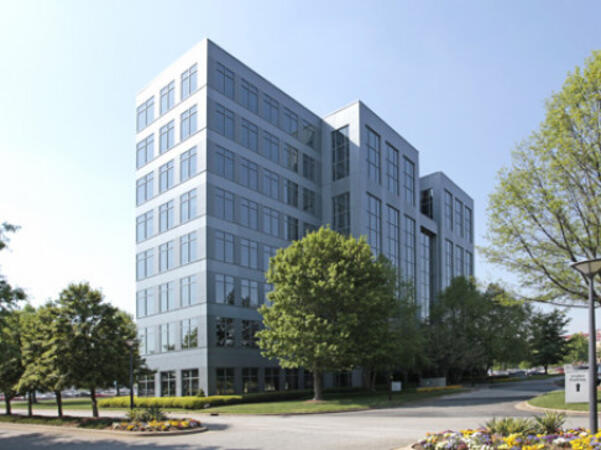
Atlanta, GA – The Proscenium
1170 Peachtree Street NE, Atlanta, United States, 30309
The venue is located in the heart of Midtown Atlanta in the Proscenium high–rise at 1170 Peachtree Street NE, easily accessible by car via I‑75/85 and GA‑400 with several parking garages nearby. Visitors arriving from Hartsfield–Jackson Atlanta International Airport (ATL), about 15 miles south, can expect a taxi or rideshare ride taking 20–30 minutes via I‑75/85 North. Public transit is seamless with MARTA Rail service; the Arts Center and Midtown stations are within walking distance (approximately 0.3–0.4 miles), and multiple MARTA bus routes also serve Peachtree Street.
Decatur, GA – Regus at One West Court Square
One West Court Square, Suite 750, Decatur, United States, 30030
The venue is located in the heart of downtown Decatur within One West Court Square, easily reached by car via I‑20 and I‑285, with several public parking decks directly adjacent. Travelers from Hartsfield–Jackson Atlanta International Airport (ATL), approximately 17 miles southwest, can expect a taxi or rideshare ride of around 25–30 minutes via I‑20 East. Public transit is particularly convenient: MARTA rail users can disembark at Decatur Station (about 0.15 miles away) and walk a few minutes to the building entrance. Local bus routes also serve Trinity Place and Swanton Way, putting the center within easy reach.
Atlanta, GA – Regus at One Hartsfield
100 Hartsfield Centre Parkway, Suite 500, Atlanta, United States, 30354
The venue is located in the One Hartsfield Center office building, adjacent to Hartsfield–Jackson Atlanta International Airport, easily reached by car via I‑75/I‑85 or GA‑138, with abundant on-site parking. Visitors arriving from ATL airport can walk or take a shuttle to the building, or opt for a quick 2–3‑minute taxi or rideshare ride. Public transit users can board MARTA from the Airport Station and ride one stop to College Park Station, then catch a connecting shuttle or enjoy a brief walk of about half a mile.
Atlanta, GA – Regus at Peachtree
260 Peachtree Street NW, Suite 2200, Atlanta, United States, 30303
The venue is situated in the iconic Coastal States Building at 260 Peachtree Street in downtown Atlanta, accessible by car via I‑75/85 or I‑20 with convenient parking garages nearby. From Hartsfield–Jackson Atlanta International Airport (ATL), about 12 miles south, a taxi or rideshare along I‑75/85 North takes approximately 15–20 minutes. For public transit, MARTA rail users can disembark at Five Points Station and walk 0.5 miles northeast, or exit at Peachtree Center Station and walk two blocks north—both routes offering easy access.
Augusta, GA – At Broad Street
823 Broad Street, Augusta, United States, 3090
The venue is located in the heart of downtown Augusta on Broad Street, easily accessible by car via I‑20 with several public parking garages nearby. From Augusta Regional Airport (AGS), about 9 miles west, taxis or rideshares typically take 15–20 minutes via I‑20. Public transit is available through Augusta Public Transit buses with routes along Broad Street, stopping within a few blocks of the venue, offering a convenient option for attendees without a car.
Savannah, GA – Regus at Bull Street
100 Bull St Downtown, Suite 200, Savannah, United States, 31401
The venue is located in the historic downtown area on Bull Street in the Altmayer Building, easily accessible by car via I‑16 and U.S. 17, with several public garages nearby. From Savannah/Hilton Head International Airport (SAV), about 12 miles west, taxis or rideshares typically take 15–20 minutes via U.S. 17 South. Public transit is available via Chatham Area Transit (CAT) buses, with frequent service along Bull and Broughton Streets; Johnson Square Station is just a couple minutes’ walk from the venue.
The combined use of Drools 8 and jBPM facilitates the development of rule-based workflows that automate operational processes and enhance decision-making accuracy.
This instructor-led, live training program (delivered online or onsite) is designed for advanced-level participants seeking to integrate Drools 8 with jBPM to design, execute, and optimize business workflows and processes.
Upon completion of this training, participants will be able to:
Configure Drools 8 and jBPM environments for development purposes.
Define and govern complex business rules within Drools 8.
Design and deploy workflows using jBPM.
Integrate Drools rules into jBPM processes to support dynamic decision-making.
Optimize and troubleshoot rule-driven workflow operations.
Course Delivery Methodology
Interactive lectures and facilitated discussions.
Extensive practical exercises and skill reinforcement.
Hands-on implementation within a live laboratory environment.
Customization Options for the Course
To request a customized training program for government use, please contact us to arrange suitable provisions.
Drools 8 serves as a robust business rule management system (BRMS) designed to automate decision-making and procedural workflows. Within this ecosystem, Domain-Specific Languages (DSLs) facilitate the creation and management of rules by business analysts using straightforward, accessible terminology.
This instructor-led training program, available in both online and on-site formats, is tailored for entry-level to mid-level business analysts seeking to leverage DSLs in Drools 8. The objective is to define, administer, and optimize business rules for government operations without a heavy reliance on advanced technical programming proficiency.
Upon completion of this curriculum, participants will possess the ability to:
Comprehend the fundamental principles and architectural structure of Drools 8.
Construct DSLs that simplify rule definitions for non-technical stakeholders.
Effectively manage, test, and sustain rules using the Drools Workbench.
Coordinate with technical teams to deploy and refine business rule logic.
Implement best practices for rule optimization and lifecycle governance.
Instructional Methodology
Interactive instruction and facilitated discussion.
Extensive practical exercises and skill reinforcement.
Live implementation within a controlled laboratory environment.
Customization Provisions
Requests for customized training modules may be submitted directly to the provider for arrangement.
Drools serves as a robust business rule management system (BRMS) that supports the implementation of sophisticated decision-making workflows and system integrations in public sector environments.
This instructor-led, live training, available online or onsite, is designed for advanced-level participants seeking to optimize rule execution, integrate Drools with enterprise systems, and deploy advanced features such as decision tables and domain-specific languages (DSLs).
Upon completion, participants will be prepared to:
Enhance the performance of complex rule execution for government applications.
Leverage advanced Drools features, including decision tables, DSLs, and rule templates.
Integrate Drools effectively with enterprise applications and external systems.
Implement robust version control and collaboration mechanisms for rule development.
Design and deploy scalable Drools-based solutions to meet enterprise needs.
Instructional Format
Interactive lectures and facilitated discussions.
Extensive exercises and practical application.
Hands-on implementation within a live-lab environment.
Customization Options
To request a customized training for government, please contact the provider to arrange specific details.
Drools is a sophisticated business rule management platform designed to facilitate the construction and execution of complex operational rules and workflows.
This facilitated, live training program, available either online or in-person, is designed for intermediate-level professionals seeking to construct and administer intricate business rules, optimize execution efficiency, and manage rule dependencies within the Drools 8 environment.
Upon completion of this training, participants will be equipped to:
Develop advanced business rules and maintain their interdependencies.
Deploy decision-making logic through Drools rule groups and agenda structures.
Enhance the operational performance of rule execution processes.
Leverage advanced Drools Workbench capabilities for rule governance.
Integrate Drools with external data sources and systemic interfaces.
Instructional Methodology
Interactive briefing and discussion sessions.
Extensive exercises and practical applications.
Real-time implementation within a live laboratory environment.
Customization Services
To request a tailored training program for this curriculum, please contact the designated office to coordinate arrangements.
This module on Modeling and Documentation for Business Analysis provides a practical approach to standard modeling languages and tools used to capture, visualize, and validate business requirements and operational processes.
This instructor-led live training, available online or on-site, is designed for professionals with limited or no modeling experience who seek to apply industry-standard techniques, such as UML, BPMN, and wireframing tools, to enhance clarity and communication in business analysis projects for government operations.
Upon completion of this training, participants will be able to:
Utilize UML diagrams to represent functional requirements and system behaviors.
Model business processes in accordance with BPMN standards.
Develop clear, structured use case diagrams and accompanying documentation.
Create wireframes and interactive prototypes using Figma and Balsamiq.
Training Format
Interactive lectures and facilitated discussions.
Practical application of modeling tools within sample project scenarios.
Guided exercises emphasizing process, requirements, and UI modeling.
Customization Options
To request a customized training program for government aligned with your organization’s standards or preferred toolset, please contact us to coordinate arrangements.
This instructor-led, live training in Georgia (online or onsite) is tailored for project managers at all levels who aim to attain Green Belt certification knowledge in BPMN. The program is designed to streamline project workflows, enhance process efficiency, and ensure adherence to business standards relevant to government operations.
Upon completion of this training, participants will be able to:
Understand the foundational concepts and components of BPMN 2.0.
Construct and analyze BPMN diagrams to document business processes.
Enhance workflow performance by applying BPMN best practices.
Detect and rectify operational inefficiencies within business processes.
Incorporate BPMN into project management frameworks and process improvement efforts.
This instructor-led, live training session, conducted in Georgia (either online or onsite), is designed for entry-level business analysts seeking to acquire practical proficiency in Celonis for process mining, optimization, and automation. The objective is to empower professionals to enhance operational efficiency and business performance.
Upon completion of this training, participants will be capable of the following:
Understanding the fundamentals of process mining and applying Celonis with proficiency.
Integrating data sources, discovering process flows, and visualizing operational pathways.
Analyzing processes using defined KPIs and comparative benchmarks.
Automating workflows and utilizing the Celonis Action Engine for task execution.
Building and customizing dashboards and reports to support real-time monitoring.
Drools serves as a robust business rule management system for the definition, deployment, and maintenance of operational rules.
This live, instructor-led training (available online or on-site) is designed for entry-level personnel seeking to master the fundamentals of Drools 8, including setup and the creation of simple business rules for enhanced decision-making and automation for government purposes.
Upon completion, participants will be equipped to:
Comprehend the objectives and advantages of utilizing Drools 8.
Configure the Drools environment and integrate it with existing applications.
Develop, test, and deploy elementary business rules.
Leverage the Drools Workbench for rule administration and decision table construction.
Implement Drools in practical scenarios to automate decision processes.
Training Delivery Format
Interactive lectures and facilitated discussions.
Extensive exercises and practical drills.
Live-lab implementation and hands-on application.
Curriculum Customization
Contact the training provider to arrange a tailored curriculum for this course.
This training program is designed for business analysts engaged in government operations who require comprehensive proficiency in BPMN 2.0. It addresses practical applications and standard implementations for government workflows. The curriculum consists of concise instructional segments followed by applied exercises. Participants will analyze English-language problem scenarios and develop corresponding process diagrams. Subsequently, these diagrams will undergo group evaluation and professional assessment. Please note that this course does not address the execution layer of BPMN; instead, it prioritizes the analysis and process design aspects essential for government process improvement. This focus ensures that the instructional content aligns with the needs of government stakeholders by emphasizing analytical rigor and design best practices.
This hands-on Business Process Management training for government professionals in Georgia focuses on the design, implementation, and analysis of operational processes. Participants will develop proficiency in BPMN modeling, governance strategies, and the alignment of IT infrastructure with business objectives through practical exercises and applied scenarios.
This curriculum is designed for government stakeholders responsible for modeling business processes in compliance with BPMN 2.0 standards.
The instruction emphasizes the practical application of BPMN 2.0 specifications and the implementation of established operational patterns.
The training comprises brief instructional modules followed by applied exercises. Participants will receive problems described in English and are required to develop appropriate diagrams to address each scenario. Subsequently, these diagrams will be reviewed and evaluated collectively by the group and the instructor.
This course prioritizes the interpretation of BPMN diagrams for government use while also covering fundamental aspects of BPMN execution.
This practical instruction for government introduces the core principles of BPMN 2.0 for analysts and designers. The curriculum addresses flow objects, gateways, events, and structural pools, fostering essential modelling proficiency through hands-on exercises. A concluding workshop applies this knowledge to real-world process examples.
The Object Management Group (OMG) has established three primary standards for modeling processes, decisions, and cases: Business Process Model and Notation (BPMN), Decision Model and Notation (DMN), and Case Management Model and Notation (CMMN). This curriculum provides a comprehensive introduction to each framework, clarifying the specific operational contexts in which each standard is most effectively applied for government operations.
This instructor-led, live training in Georgia (online or on-site) is intended for individuals at beginner, intermediate, or advanced levels seeking to develop skills in business and process modeling for a deeper understanding of organizational structures, products, and dependencies among processes, data, and stakeholders. This training is specifically relevant for government contexts.
Upon completion of this training, participants will be able to:
Understand the role of models as primary communication instruments in business analysis.
Select the appropriate modeling method (BPMN, UML, SIPOC, Business Model Canvas) for specific business objectives.
Break down complex business processes into clear, standardized diagrams.
Identify key interaction points between processes, data, and system actors.
Assess the validity and effectiveness of created business models.
The Camunda for Analysts curriculum at Georgia provides comprehensive instruction in BPMN and DMN modeling and business process analysis for government. Participants acquire expertise in process engine operations, version control, and token management, while applying practical skills in error diagnosis and workflow optimization through supervised exercises.
The "Camunda for Developers (EZD RP)" curriculum is a comprehensive technical program designed for software professionals seeking to master the modeling, implementation, and integration of business processes within the EZD RP framework using Camunda. This training for government applications equips participants with the following competencies: ✅ BPMN and DMN Notations – A thorough review of key syntactic elements and their execution logic within the Camunda engine. ✅ Camunda Process Engine – Operational applications, EZD RP integration protocols, and governance best practices. ✅ Camunda Modeler – Advanced process modeling techniques, specialized features, and Spring Boot integration. ✅ Camunda API and Messaging – Classification of message types and correlation mechanisms for process coordination. ✅ Process Data Management – Data modeling standards, serialization methods, and variable scope management. ✅ Error Handling and Debugging – Incident analysis, transactional consistency, and comprehensive process testing. ✅ Camunda Cockpit – System monitoring, error diagnostics, and token lifecycle management. ✅ Process Versioning – Strategies for version transitions and their operational impact on the EZD RP environment. ✅ Application Implementation – Practical configuration and deployment of process-handling applications within EZD RP. ✅ Camunda Configuration – Architectural decisions for embedded versus standalone modes and large-scale optimization. ✅ Historical Data Reporting – Management of data archives via Custom History Backends and the History API. This program for government stakeholders integrates theoretical principles with hands-on practice, enabling participants to design and deploy operational business processes within the EZD RP environment. Through supervised workshops in distinct operational settings, participants will acquire the skills necessary to debug, monitor, and optimize process performance in distributed systems.
This instructor-led, live training in Georgia (online or onsite) is directed at intermediate-level system administrators and developers seeking to configure, manage, and deploy Java applications on the JBoss platform for government use.
By the conclusion of this training, participants will be able to:
Install and configure the JBoss Application Server and its core components.
Customize JBoss AS services for monitoring, database connectivity, and transaction management.
Develop and deploy EJB 3 session beans and web applications.
Utilize the JBoss Messaging Service to deploy and manage JMS applications.
Manage JBoss AS through the Java Management Extension and the Administration Console.
Implement JBoss Drools for business rules management and utilize the Guvnor tool for rule development and testing.
NobleProg holds official OMG OCEB 2 Content Developer status, indicating that course outlines and instructional materials for government audiences have been developed by the same experts responsible for creating questions for OCEB 2 examinations.
This course is designed to prepare participants for the OMG Certified Expert in BPM (OCEB v2) Fundamental Examination.
Upon completion, participants may utilize the testing engine to practice with over 200 sample questions.
This course on Georgia focuses on efficient data handling in Python using the Pandas and NumPy libraries. Participants learn the fundamentals of analysis, code optimization, and the automation of reports and charts in Excel, integrating various data sources into a seamless analytical process.
This instructor-led live training program, conducted in Luxembourg, is targeted at engineers, technicians, and automation professionals with beginner to intermediate experience. The course is designed to equip these professionals with the skills to utilize Python for resolving technical issues, automating routine tasks, and processing industrial data.
Upon completion of this training, participants will be equipped to:
Compose clear and structured Python scripts for specific technical requirements
Apply programming logic to solve engineering-focused challenges
Process data extracted from CSV files, system logs, and text documents using Python
Automate repetitive engineering and automation workflows for efficient operations
This instructor-led, live training in Georgia (online or onsite) is tailored for beginner to intermediate-level professionals aiming to learn how to manage and optimize business processes using Signavio.
Upon completion, participants will be able to:
Utilize drag-and-drop functionality to create consistent, readable models that map an organization’s operations.
Collaborate on the documentation, optimization, and simulation of business processes.
Employ Signavio to assist in ensuring process compliance for government.
Leverage Signavio to optimize business performance.
This instructor-led, live training in Georgia (delivered online or onsite) is designed for process department personnel and operations team members seeking to master practical process improvement techniques using Six Sigma principles and BPMN 2.0 modeling.
Administrative leaders seeking proficiency in BPMN diagrams, business consultants, business analysts, business process engineers, system analysts, and professionals engaged in the analysis and planning of business processes for government using standardized, unified modeling notations.
Course Goals:
Generate high-quality process diagrams
Apply the BPMN process notation standard
Document current-state process information
Implement optimized process flows for human-centric operations
Simplify complex process definitions into manageable components
This course provides practical BPMN modeling knowledge and foundational skills for government operations.
The intended audience is business users, IT systems personnel, or business analysts who document and analyze processes for government applications and organizational functions.
The training consists of moderated discussion (40%) and computer workshop (60%). A key component of the laboratory involves translating business scenarios into BPMN diagrams for government use.
This is an intensive, practical course that focuses on application rather than theoretical considerations of BPMN.
Read more...
Last Updated:
Testimonials (7)
Being able to breakdown a process and visualize it
Mecca Irino - QBench
Course - BPMN Green Belt for Project Managers
treatment of certain aspects of my work
Keagile Ramokolo - 8111095637085
Course - Business Process Management
the practical part
Daniela Mirevska
Course - Business Process Modelling in BPMN 2.0
The most think i like about training was professional way to share the knowledge from trainer.
Mateusz Jezowicz vel Jezewski - Viessmann
Course - Signavio Process Manager
What I like the most about the training was the detailed discussion and the Exercises.
Kevin Roi Rimpos - Century Pacific Food Inc.
Course - Business Process Re-engineering for Competitive Advantage
The trainer shared his knowledge and led great atmosphere.
Agnieszka Dubanska - Narodowy Fundusz Zdrowia
Course - Modelowanie procesów biznesowych z wykorzystaniem UML i BPMN
- trainer's knowledge
- trainers laid-back style
Maciej - EY GLOBAL SERVICES (POLAND) SP Z O O
Course - OCEB2 OMG Certified Expert in BPM - BPM 2 Fundamental Exam Preparation
Online BPM training in Georgia, BPM (Business Process Management) training courses in Georgia, Weekend Business Process Management courses in Georgia, Evening BPM training in Georgia, Business Process Management (BPM) instructor-led in Georgia, BPM (Business Process Management) classes in Georgia, BPM (Business Process Management) instructor-led in Georgia, Business Process Management (BPM) boot camp in Georgia, Online Business Process Management training in Georgia, Business Process Management (BPM) private courses in Georgia, BPM (Business Process Management) on-site in Georgia, Weekend Business Process Management (BPM) training in Georgia, BPM trainer in Georgia, BPM (Business Process Management) one on one training in Georgia, Business Process Management coaching in Georgia, BPM (Business Process Management) instructor in Georgia, Evening Business Process Management (BPM) courses in Georgia