Online or onsite, instructor-led live BPM (Business Process Management) training courses illustrate through hands-on practice how to understand, plan, and implement BPM within an organization. Our BPM courses for government include theory, case study discussions, and practical application of the concepts learned in a live lab environment, all aimed at helping participants enhance the operational efficiency of their organizations.
BPM training is available as "online live training" or "onsite live training." Online live training (also known as "remote live training") is conducted through an interactive, remote desktop. Onsite live training can be conducted locally on customer premises in Virginia or in Govtra corporate training centers in Virginia.
Govtra -- Your Local Training Provider for government
VA, Stafford - Quantico Corporate
800 Corporate Drive, Suite 301, Stafford, united states, 22554
The venue is located between interstate 95 and the Jefferson Davis Highway, in the vicinity of the Courtyard by Mariott Stafford Quantico and the UMUC Quantico Cororate Center.
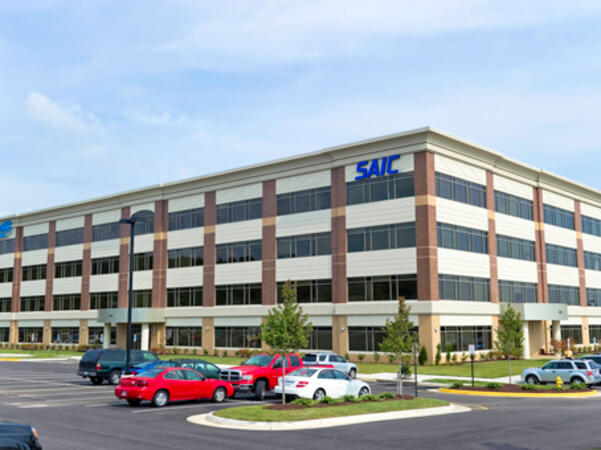
VA, Fredericksburg - Central Park Corporate Center
1320 Central Park Blvd., Suite 200, Fredericksburg, united states, 22401
The venue is located behind a complex of commercial buildings with the Bank of America just on the corner before the turn leading to the office.

VA, Richmond - Two Paragon Place
Two Paragon Place, 6802 Paragon Place Suite 410, Richmond, United States, 23230

The venue is located in bustling Richmond with Hampton Inn, Embassy Suites and Westin Hotel less than a mile away.
VA, Reston - Sunrise Valley
12020 Sunrise Valley Dr #100, Reston, United States, 20191

The venue is located just behind the NCRA and Reston Plaza Cafe building and just next door to the United Healthcare building.
VA, Reston - Reston Town Center I
11921 Freedom Dr #550, Reston, united states, 20190

The venue is located in the Reston Town Center, near Chico's and the Artinsights Gallery of Film and Contemporary Art.
VA, Richmond - Sun Trust Center Downtown
919 E Main St, Richmond , united states, 23219
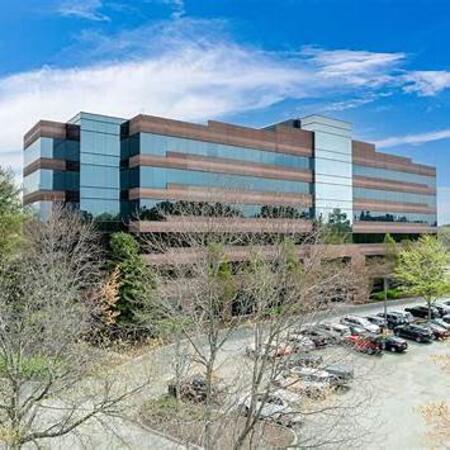
The venue is located in the Sun Trust Center on the crossing of E Main Street and S to N 10th Street just opposite of 7 Eleven.
Richmond, VA – Regus at Two Paragon Place
6802 Paragon Place, Suite 410, Richmond, United States, 23230

The venue is located within the Two Paragon Place business campus off I‑295 and near Parham Road in North Richmond, offering convenient access by car with free on-site parking. Visitors arriving from Richmond International Airport (RIC), approximately 16 miles northwest, can expect a taxi or rideshare ride of around 20–25 minutes via I‑64 West and I‑295 North. Public transit is available via GRTC buses, with routes stopping along Parham Road and Quioccasin Road, just a short walk to the campus.
Virginia Beach, VA – Regus at Windwood Center
780 Lynnhaven Parkway, Suite 400, Virginia Beach, United States, 23452
The venue is situated within the Windwood Center along Lynnhaven Parkway, featuring modern concrete-and-glass architecture and ample on-site parking. Easily accessible by car via Interstate 264 and the Virginia Beach Expressway, the facility offers a hassle-free commute. From Norfolk International Airport (ORF), located about 12 miles northwest, a taxi or rideshare typically takes 20–25 minutes via VA‑168 South and Edenvale Road. For those using public transit, the HRT bus system includes stops at Lynnhaven Parkway and surrounding streets, providing convenient access by bus.
This instructor-led, live training in Virginia (online or onsite) is aimed at advanced-level participants who wish to integrate Drools 8 with jBPM to design, execute, and optimize business workflows and processes for government.
By the end of this training, participants will be able to:
Set up Drools 8 and jBPM environments for development in a public sector context.
Define and manage complex business rules using Drools 8, ensuring alignment with governmental processes.
Design and execute workflows using jBPM, tailored to meet the needs of government operations.
Integrate Drools rules into jBPM processes for dynamic decision-making in a government setting.
Optimize and troubleshoot rule-driven workflows to enhance efficiency and accountability in public sector workflows.
This instructor-led, live training in Virginia (online or onsite) is aimed at beginner-level to intermediate-level business analysts who wish to use Domain-Specific Languages (DSLs) in Drools 8 to define, manage, and optimize business rules without heavily relying on technical programming skills.
By the end of this training, participants will be able to:
Understand the core concepts of Drools 8 and its architecture for government applications.
Create DSLs to simplify business rule definitions for non-technical users in public sector environments.
Manage, test, and maintain rules effectively using Drools Workbench for government workflows.
Collaborate with technical teams to implement and refine business rules that align with public sector governance and accountability standards.
Apply best practices for rule optimization and lifecycle management for government operations.
This instructor-led, live training in Virginia (online or onsite) is designed for advanced-level participants who aim to optimize rule execution, integrate Drools with enterprise systems, and leverage advanced features such as decision tables and domain-specific languages (DSLs).
By the end of this training, participants will be able to:
Enhance the performance of complex rule execution for government applications.
Utilize advanced Drools features including decision tables, DSLs, and rule templates.
Seamlessly integrate Drools with enterprise applications and external systems for government use.
Implement robust version control and collaboration mechanisms for rule development in a public sector context.
Design and deploy scalable Drools-based solutions to meet the needs of government enterprises.
This instructor-led, live training in Virginia (online or onsite) is designed for intermediate-level participants who aim to build and manage complex business rules, optimize rule execution, and effectively handle rule dependencies using Drools 8 for government applications.
By the end of this training, participants will be able to:
Create advanced business rules and manage their interdependencies.
Implement decision-making logic through the use of Drools rule groups and agendas.
Enhance the performance of rule execution in Drools.
Leverage advanced features of Drools Workbench for rule management.
Integrate Drools with external data sources and systems to support government workflows.
This instructor-led, live training in Virginia (online or onsite) is aimed at beginner-level business analysts who wish to gain practical knowledge of Celonis for process mining, optimization, and automation, empowering them to unlock efficiencies and enhance performance for government operations.
By the end of this training, participants will be able to:
Understand the fundamentals of process mining and how to use Celonis effectively in a public sector context.
Integrate data sources, discover, and visualize processes relevant to government workflows.
Gain expertise in analyzing processes using key performance indicators (KPIs) and benchmarks for government.
Automate workflows and leverage the Celonis Action Engine for task automation in government settings.
Build and customize dashboards and reports for real-time monitoring of government operations.
This instructor-led, live training in Virginia (online or onsite) is aimed at beginner-level participants who wish to learn the basics of Drools 8, set it up, and create simple business rules for improved decision-making and automation for government.
By the end of this training, participants will be able to:
Understand the purpose and benefits of using Drools 8 in public sector environments.
Set up the Drools environment and integrate it with government applications.
Create, test, and deploy simple business rules to enhance operational efficiency.
Use Drools Workbench for rule management and decision tables to support governance and accountability.
Implement Drools in real-world scenarios to automate decisions and streamline workflows for government.
This course has been created for business analysts in federal agencies who want to use BPMN 2.0 extensively in their projects.
It focuses on the practical aspects of the entire BPMN 2.0 specification, as well as the implementation of common patterns for government.
The course is structured as a series of short lectures followed by exercises. Participants will be presented with problems described in English and will need to create appropriate diagrams for each problem. These diagrams will then be discussed and assessed by both the group and the trainer.
This course does not cover the execution aspects of BPMN; it focuses on the analysis and process design components of BPMN 2.0.
This instructor-led, live training in Virginia (online or onsite) is aimed at beginner-level participants who wish to learn essential concepts in probability, statistics, programming, and machine learning, and apply these to AI development for government.
By the end of this training, participants will be able to:
Understand basic concepts in probability and statistics, and apply them to real-world scenarios for government.
Write and understand procedural, functional, and object-oriented programming code for government applications.
Implement machine learning techniques such as classification, clustering, and neural networks for government projects.
Develop AI solutions using rules engines and expert systems for problem-solving in the public sector.
This course will provide a comprehensive overview of all major BPEL initiatives currently in the market, tailored specifically for government professionals.
You will gain insight into the potential applications and benefits of this technology for government operations.
By the end of the course, you should be able to:
Understand the key concepts of the BPEL 1.1 specification
Learn the syntax and semantics of BPEL
Understand the relationship between BPEL and WSDL
Gain practical experience using BPEL by building a complex application for government use
Identify which BPEL constructs are most appropriate for specific scenarios in government workflows
Learn best practices for developing applications using BizTalk or Oracle JDeveloper, with a focus on efficiency and compliance for government projects
This course is designed to bridge the gap between administration and Information Technology, integrating tools and techniques for designing, implementing, controlling, and analyzing Operational Business Processes. This typically involves individuals, organizations, and software applications.
The course includes practical assignments. Participants will be introduced to key topics during theory sessions, which will be complemented by hands-on exercises.
What will you learn?
1. The Fundamentals of BPM
2. BPM Implementation Strategies
3. Process Modeling, Analysis, and Design
4. Governance and Business Strategies for Government
5. Modeling a Process with BPMN
6. Business Rules
Managers who are responsible for decision-making related to Business Process Management (BPM), Business Consultants, Business Analysts, Business Process Engineers, System Analysts, and any individuals involved in analyzing and planning business processes.
Course Goals:
To enhance productivity and effectiveness within organizational workflows
To improve business process compliance and governance for government operations
To increase the agility of business processes to facilitate adaptability to change
To enhance the ability to scale best practices across a dynamic organization
To improve communication, cooperation, and coordination among teams
To increase visibility into the process pipeline
To make operational forecasts more accurate
To increase process throughput
To minimize input costs by guiding process actors through established procedures and reducing reliance on high-cost, specialized staff
To accelerate new hire ramp-up by ensuring adherence to detailed business process documentation
This training is designed for government managers who are responsible for making decisions related to Business Process Management (BPM), as well as business consultants, business analysts, business process engineers, system analysts, and any other individuals involved in the analysis and planning of business processes for government operations.
This BPM training will teach you how to automate and manage a broad range of business workflows for government. We will examine the automation steps within a typical process in which work items are passed from one participant to another for action, according to a set of business rules. You will obtain firsthand guidance on automated monitoring best practices as well as tips and tricks for efficient governance practices.
At course completion, you will be able to:
Understand the key terms and concepts in BPM
Use major methodologies and techniques for implementing BPM for government
Define the various technologies that support BPM for government
Learn to discriminate between process and rules requirements
Map written business cases into process areas and rule sets
Understand variations in strategies between rules-centric and process-centric approaches
Develop business intelligence from process descriptions and rule sets
This course has been developed for government professionals responsible for modeling processes in BPMN 2.0.
The focus is on practical aspects of the BPMN 2.0 specification, as well as the implementation of common patterns for government workflows.
The course consists of a series of short lectures followed by exercises. Participants will be presented with problems described in English and will be required to create appropriate diagrams for each problem. These diagrams will then be discussed and assessed by both the group and the trainer.
This course emphasizes understanding BPMN diagrams, but also covers basic elements of the execution phase of BPMN for government applications.
Delegates who have an interest in Process Modeling will benefit from attending this Business Process Model and Notation (BPMN) training course, designed for government professionals including:
Business and Process Analysts
Process Designers and Implementers
Project and Program Managers
Anyone involved with business change and transformation efforts for government.
Business Process Model and Notation (BPMN), Decision Model and Notation (DMN), and Case Management Model and Notation (CMMN) are three Object Management Group (OMG) standards designed for process, decision, and case modeling. This course provides an introduction to these standards and guides participants on when to use each one, ensuring alignment with best practices for government workflows, governance, and accountability.
This course is designed for government enterprise architects, business and systems analysts, and managers who seek to apply business rules to their solutions. Using Drools, participants can articulate business rules in a near-natural language, thereby bridging the gap between business and IT for government.
Join the three-day ICP-BAF certification course to gain a deep understanding of customer-focused concepts, principles, and techniques for Business Agility. Embrace a new mindset, skills, and approaches necessary in a dynamic environment where change is constant, teamwork is essential, and innovation is paramount. The current business landscape demands a shift from traditional methods, requiring an Agile mindset to maximize business value. Overcome organizational and individual behaviors by adopting new skills and thinking patterns. This experiential course, aligned with ICAgile's Business Agility Foundation certification, accelerates transformation towards a responsive, value-driven reality for government. Take the first step towards becoming an expert in ICAgile's Business Agility track.
This instructor-led, live training in Virginia (online or onsite) is aimed at intermediate-level developers who wish to gain a solid introduction to Drools 6 and use it to implement business rules within their applications for government.
By the end of this training, participants will be able to:
Understand the core concepts and benefits of rule engines like Drools for government.
Use the Drools Workbench and Eclipse for rule authoring and testing in a public sector context.
Create, organize, and execute business rules with the Drools rule engine to support government workflows.
Apply advanced features like decision tables, ruleflows, and DSLs to enhance governance and accountability.
This three-day course is designed to introduce Drools 7 to Business Analysts who are responsible for writing tests and rules. The course emphasizes the creation of pure logic, enabling analysts to develop tests and logical constructs that can be seamlessly integrated into business applications by developers. This training aligns with the needs of public sector workflows and governance, ensuring that analysts are equipped with the skills necessary for government operations.
This three-day course is designed to introduce Drools 7 to developers. The course does not cover Drools integration, performance, or any other advanced topics. It is tailored to provide a foundational understanding of the tool for government professionals who are new to this technology.
This three-day course is designed to introduce Drools 6 to Business Analysts responsible for writing tests and rules. The course emphasizes the creation of pure logic, enabling analysts to write tests and logic that can be seamlessly integrated into business applications by developers. This training supports enhanced decision-making processes and ensures alignment with public sector workflows and governance standards for government.
This course has been prepared for government professionals who are involved in administering knowledge assets (rules, processes) such as system administrators, system integrators, and application server administrators. We are using the newest stable community version of Drools to run this course, but older versions can also be accommodated if agreed upon before booking for government use.
This instructor-led, live training in Virginia (online or onsite) is designed for intermediate-level system administrators and developers who wish to configure, manage, and deploy Java applications on the JBoss platform for government use.
By the end of this training, participants will be able to:
Install and configure JBoss Application Server and its core components for government environments.
Customize JBoss AS services for monitoring, database connections, and transaction management in alignment with public sector workflows.
Develop and deploy EJB 3 session beans and web applications suitable for government applications.
Utilize the JBoss Messaging Service to deploy and manage JMS applications in a secure and compliant manner.
Manage JBoss AS through the Java Management Extension and Administration Console, ensuring governance and accountability.
Implement JBoss Drools for business rules management and utilize the Guvnor tool for rule development and testing, tailored to government requirements.
This instructor-led, live training in Virginia (online or onsite) is aimed at developers and business analysts who wish to build a management suite using jBPM for government applications.
By the end of this training, participants will be able to:
Detail business goals using flow charts with precision.
Standardize processes to bridge the gap between design and implementation.
Adhere to standardized business process model and notation (BPMN).
Collaborate by exchanging BPMN definitions with other team members for government projects.
This course provides comprehensive instruction on designing and executing decisions using the OMG DMN (Decision Model and Notation) standard, tailored specifically for government professionals. The training emphasizes alignment with public sector workflows, governance, and accountability to ensure effective decision-making processes for government operations.
Govtra has official OMG OCEB 2 Content Developer status, which means that our course outlines and training materials were developed by the same experts who prepared questions for OCEB 2 exams.
This course prepares you for the OMG Certified Expert in BPM (OCEB v2) Fundamental Examination.
After this course, you can practice using our testing engine on over 200 sample questions, ensuring readiness and alignment with standards for government use.
IBM ODM (also known as WebSphere Operational Decision Manager) is a Business Rule Management System (BRMS). It features a central repository and automation engine that enable the creation, management, testing, and governance of business rules and events. Rules and events are stored in this central repository, where they can be accessed and modified by individuals and software applications without the need to rebuild any code.
In this instructor-led, live training, participants will learn how to create, manage, and execute business rules, as well as how to deploy and manage an instance of IBM ODM Decision Management in a live environment for government use.
By the end of this training, participants will be able to:
Manage ODM components, including IBM Decision Center and IBM Decision Server
Manage and execute business rules and events
Reduce the testing cycle by enabling other software applications to detect and apply changes to rules
Combine decision-making and change detection tools to facilitate adaptation, auditing, tracing, and testing for government workflows
Separate business rules from business applications to enhance flexibility and maintainability
Build easy-to-maintain business rule client applications for government use
Use Event Designer to build business event projects tailored for government needs
Deploy and test business event applications in a government context
Construct a customized dashboard for monitoring business events in government operations
Facilitate collaboration among architects, developers, and administrators for developing and maintaining decision services for government
Enable business analysts, policy managers, and rule authors to develop and maintain an application's decision logic for government applications
Audience
Developers
Project Managers
Format of the Course
Part lecture, part discussion, exercises, and extensive hands-on practice
This course employs a practical approach to instructing participants in the use of OptaPlanner, equipping them with the necessary tools to execute its essential functions for government. The curriculum is designed to align with public sector workflows and governance, ensuring that participants can effectively apply their knowledge in a professional setting.
This course provides an introduction to the Python programming language for government professionals. Upon completion of this class, participants will be equipped to develop substantial Python programs that address a broad range of subject matter domains relevant to public sector workflows. The curriculum covers essential topics such as language components, working with professional integrated development environments (IDEs), control flow constructs, string manipulation, input/output operations, collections, classes, modules, and regular expressions. The course is enhanced with numerous hands-on labs, solutions, and code examples designed to reinforce learning and practical application.
After completing the course, students will be able to demonstrate knowledge and understanding of Python security principles for government use.
In this instructor-led, live training in Virginia (online or onsite), participants will learn how to identify key process variables and connect them as they step through the creation of a business flow using RPA Express for government.
By the end of this training, participants will be able to:
Install and configure RPA Express for government use.
Identify the steps and actions to be recorded by RPA Express in government processes.
Use RPA Express to map out a business flow aligned with public sector workflows.
Create bots to capture and repeat events on websites, desktops, or terminals, enhancing efficiency for government operations.
Plan a process automation strategy that supports governance and accountability in the public sector.
In this instructor-led, live training in Virginia (onsite or remote), participants will learn how to use Python skope-rules to automatically generate rules based on existing data sets for government applications.
By the end of this training, participants will be able to:
Utilize skope-rules to extract rules from available data.
Apply skope-rules to perform classification tasks, which are particularly useful in supervised anomaly detection and imbalanced classification scenarios.
Generate rules for classifying new incoming data efficiently.
Tailor rules to address real-world challenges such as fraud detection, predictive maintenance, intrusion detection, insurance application approvals, and more, specifically within the context of government operations.
This instructor-led, live training in Virginia (online or onsite) is aimed at beginner-level to intermediate-level professionals who wish to learn how to manage and optimize business processes using Signavio for government applications.
By the end of this training, participants will be able to:
Create consistent, readable models that map an organization’s operations using drag-and-drop functionality.
Collaboratively document, optimize, and simulate business processes within a secure environment.
Ensure process compliance through the use of Signavio for government workflows.
Optimize business performance by leveraging Signavio's tools and features for government use.
In January 2022, the Ministry of Finance announced that it would introduce a federal Corporate Tax (CT) on the net profits of businesses. The new corporate tax system is anticipated to take effect by July 1, 2023, or January 1, 2024. This tax will be applicable across all emirates in the UAE. The Govtra Corporate Tax Course for government covers the requirements for filing returns, registrations, payment of tax, and the methodology for computing taxes, using several case studies to enhance understanding.
This course prepares you for the OMG Certified Expert in BPM 2 (OCEB v2) Intermediate Exam, providing comprehensive training and resources designed to enhance your skills and knowledge for government workflows and processes.
Bonita BPM is an open-source business process management and workflow suite comprised of three key components: Bonita Studio, Bonita BPM Engine, and Bonita Portal. This toolset is frequently utilized in projects that necessitate intricate workflows, such as Supply Chain Management, e-Government initiatives, Human Resources processes, and Contract Management.
Format of the Course
The course emphasizes hands-on practice to ensure practical application of skills.
Concepts will be taught through examples, exercises, and hands-on development, tailored specifically for government use cases.
This course is designed for government enterprise architects, business and system analysts, technical managers, and developers who aim to apply business rules to their solutions.
The course includes numerous hands-on exercises during which participants will create functional rules. For those seeking only an overview of Drools, please refer to our other courses.
This course is typically delivered using the latest stable version of Drools and jBPM; however, for government-specific bespoke courses, it can be tailored to a particular version as required.
This course is designed for individuals who will be responsible for executing processes using Activity, ensuring alignment with public sector workflows and governance standards for government.
Activiti is an open-source workflow engine and Business Process Management (BPM) platform designed to support the needs of business professionals, developers, and system administrators for government. This tool facilitates efficient process management and alignment with public sector workflows, governance, and accountability requirements.
ProcessMaker is an open-source Business Process Management (BPM) software application. It is a lightweight, fully web-based tool written in PHP, designed to provide functionality comparable to expensive enterprise solutions for government.
This course provides detailed instruction on implementing process management using ProcessMaker, with a focus on creating process definitions, defining roles, groups, and users, and initiating processes from external applications.
This course is designed to prepare participants to execute business processes using BPMN. It covers the graphical representation as well as the commonly used attributes of BPMN 2 elements, ensuring alignment with public sector workflows and governance for government.
Technology
This course is not platform-specific; it focuses on elements and attributes covered by the OMG specification. By default, it uses jBPM, but any other tool can be used as long as it supports BPMN 2.0, ensuring flexibility and compliance with government standards.
Class Format
Participants will follow example use cases, followed by hands-on exercises to enable them to execute their processes effectively for government operations.
Process mining, or Automated Business Process Discovery (ABPD), is a technique that applies algorithms to event logs to analyze business processes. Process mining goes beyond mere data storage and analysis; it bridges data with processes and provides insights into the trends and patterns that impact process efficiency.
Format of the Course for Government
The course begins with an overview of the most commonly used techniques for process mining. We will discuss various process discovery algorithms and tools used to discover and model processes based on raw event data. Real-life case studies are examined, and data sets are analyzed using the ProM open-source framework.
This training course is designed to assist business analysts in effectively modeling their business processes using BPMN, as well as the resources managed by their activities. Conducted within an agile enterprise framework, business analysts will learn how to utilize appropriate BPMN notations and business extensions of UML to address their "business requirements" and coherently guide underlying design level activities. This course is tailored for government professionals to enhance their capabilities in process modeling and resource management, ensuring alignment with public sector workflows, governance, and accountability.
This course is designed for government managers who wish to understand BPMN diagrams, as well as business consultants, business analysts, business process engineers, system analysts, and any other professionals involved in analyzing and planning business processes using standardized, unified modeling notation.
Course Goals:
Produce high-quality process diagrams for government
Model in the BPMN process notation
Capture as-is process information
Implement optimized process flows for people-intensive processes
Simplify complex process definitions and break them into more manageable pieces
The course aims to provide practical knowledge and advanced BPMN modeling skills at both Intermediate and Advanced levels for government professionals.
The ideal participant is a business analyst responsible for discovering, identifying, gathering, and analyzing user requirements for systems. This also includes advanced computer application developers and system architects interested in the creation of business processes, system, and custom drivers for government use.
The course does not address issues at the Executable BPMN level.
Training is conducted primarily through hands-on computer exercises (approximately 90%), during which participants will translate real business situations into Business Process Diagrams (BPD). They will also assess the practical utility of these diagrams.
This is an intensive, practical course that focuses strictly on applying BPMN in a real-world context. The training does not delve into theoretical considerations of BPMN.
The course aims to teach practical knowledge of BPMN modeling and basic skills for government.
The ideal student is an individual who analyzes and documents processes as a model, either as a business user, IT system professional, or business analyst collaborating with stakeholders within a specific organizational function in the public sector.
The training is conducted through a combination of moderated discussions (40%) and computer workshops (60%). A significant portion of the laboratory work involves translating business situations into BPMN diagrams.
This course is an intensely practical program, strictly focused on hands-on application. The training does not delve into theoretical considerations of BPMN, ensuring that participants can immediately apply their skills in real-world scenarios for government workflows.
This course has been designed for process developers and software developers who want to understand how to manage, manipulate, and develop processes with jBPM. It covers the components of jBPM and elements of BPMN 2 implemented in jBPM, including managing signals and events, programming gateways, injecting process data, and running parallel activities. Govtra aims to run this course on the latest version of the open-source jBPM for government, but older versions or beta versions may be requested.
This course has been designed for government managers, business analysts, process designers, developers, and subject matter experts who wish to design, validate, and simulate processes using jBPM. It also covers writing unit tests for these processes.
The course typically utilizes the latest stable version of the community jBPM project. Previous versions of jBPM may also be used, with approval required before booking.
Although Service-Oriented Architecture (SOA) is not specific to Business Process Management (BPM) software, there are several natural synergies between BPM and SOA. Perhaps the most evident of these is the separation of business process management as an independent function, which allows processes to be designed independently of any single application and leveraged as shared business logic. This approach enhances flexibility and reusability, aligning well with the needs for government workflows and governance.
Read more...
Last Updated:
Testimonials (25)
Learning more about the subject matter
Darvie Dabu - Century Pacific Food Inc.
Course - Business Process Re-engineering for Competitive Advantage
exercises made with the comments of trainer
Ewa Korol - Narodowy Fundusz Zdrowia
Course - Modelowanie procesów biznesowych z wykorzystaniem UML i BPMN
the Labs
Frank Mhlongo - Standard Bank of South Africa
Course - JBoss
The pace was good, with a nice mixture of knowledge sharing, demonstrations and practical work. Filip was very engaging and provided the energy to get through the course. It was good that there was a lot of 1:1 tuition, with Filip going through individual training exercises.
Colin - Worldpay
Course - BPMN, DMN, and CMMN - OMG standards for process improvement
The training definitely backfilled some of the gaps in my knowledge left by reading the OptaPlanner userguide.
It gave me a good broad understanding of how to approach using OptaPlanner in our projects going forward.
Terry Strachan - Exel Computer Systems plc
Course - OptaPlanner in Practice
Shared examples of every function and/or operators are all well explained.
Brian Amlon - Thakral One, Inc.
Course - Introduction to Drools 7 for Developers
Doing hands-on and/or use case activities.
Brian A - Thakral One, Inc.
Course - jBPM and Drools
I liked how the trainer was very eager to answer all of our questions
Matthew Nelson Manuel - Thakral One, Inc.
Course - jBPM for Developers
Open discussion with trainer
Tomek Danowski - GE Medical Systems Polska Sp. Z O.O.
Course - Process Mining
The trainer had a great connection with the trainees, understood our expectations and conducted the training in a perfect manner. The training was packed with a lot of new and important information but the knowledge was shared in a very understandable and enjoyable way. The trainer was very patient, knew whenever the trainees required additional examples shown or when to repeat a set of information.The trainer was well prepared, and the materials were prepared in a way that allowed us to practice process modeling, first to understand the language of BPMN and then to work on our processes to deepen the knowledge even further. Overall, I am very satisfied with how the training was conducted.
Natalia Gasior - WABCO Polska Sp. z o.o.
Course - BPM and Process Control
Any did not shut down our ideas or thoughts into concepts. He took time to understand one's thoughts and corrected us in a polite manner.
Ofentse Khoza - FNB
Course - BPMN 2.0 in Camunda Modeler
Accurately reflected the advertised Outcomes - i.e. being well prepared for the certification exam. Very focussed on that.
Chris Tredwin - Swiss Re Management Ltd
Course - OCEB2 OMG Certified Expert in BPM - Business Intermediate Exam Preparation
Mat was very friendly and accommodating. he explained the content well.
Rob McDonald - BC Pension Corporation
Course - Business Process Modelling in BPMN 2.0
a lot of practices are very welcome, many try and learn cases are embedded
Nadia Ivaniuk - Credit Suisse (Poland) Sp.z o.o.
Course - Modelling Decision and Rules with OMG DMN
It was very hands on and the trainer provided us with all the clarification. And he also provided us with a lot of documents which is amazing.
Alok Roy - Carter Bank & Trust
Course - WorkFusion RPA Express for Intelligent Automation
extensive knowledge cover many things.
metab alanazi - Saudi Arabian Monetary Authority
Course - Enabling SOA with BPM and BPMN
Practical application to daily work, equipping me for job advancement.
Chris Copeland - Lansing Board of Water and Light
Course - OCEB 2 Certified Expert in BPM - Business Advanced Exam Preparation
Exercises and solving problems in groups when the problems were more difficult.
Randy Comer Comer - Sandia National Labs
Course - Drools 7 and DSL for Business Analysts
I was benefit from the energy and enthusiasm of the trainer.
Jason Milton
Course - OCEB2 OMG Certified Expert in BPM - Fundamental Exam Preparation
I mostly liked the exercises and examples.
Natalia Rodriguez Ucles
Course - Business Process Modeling using BPMN and UML
The ability to do practical labs and the flexibility of the trainer.
marco perestrelo
Course - Activiti for Process Developers
I enjoyed the exercises, The training room, Tea kitchen.
Alisher Khaydarov
Course - BPMN 2 Fundamentals and Workshop
I really enjoyed the good atmosphere.
Martin Jesterschawek
Course - Business Rule Management (BRMS) with Drools
I really was benefit from the trainers subject matter expertise.
Simon
Course - Business Process Management
I gained a good overview of the process editors, business rules and BPMS tools landscape. I highly recommend the practical BPMN for Business Analysts course, even for experienced analysts, with its excellent process scenarios and modeling practice it will position you a cut above the rest!.
Online Business Process Management (BPM) training in Virginia, Business Process Management training courses in Virginia, Weekend BPM courses in Virginia, Evening Business Process Management training in Virginia, Business Process Management (BPM) instructor-led in Virginia, BPM (Business Process Management) trainer in Virginia, Online Business Process Management training in Virginia, Evening Business Process Management (BPM) courses in Virginia, BPM (Business Process Management) coaching in Virginia, BPM (Business Process Management) boot camp in Virginia, Business Process Management classes in Virginia, Weekend Business Process Management (BPM) training in Virginia, Business Process Management instructor in Virginia, BPM (Business Process Management) on-site in Virginia, Business Process Management (BPM) one on one training in Virginia, BPM private courses in Virginia, BPM instructor-led in Virginia