NobleProg offers comprehensive Docker training courses tailored to professionals across Michigan. Whether you are in Detroit, Ann Arbor, or Grand Rapids, our expert-led programs provide the skills needed to thrive in today's competitive landscape. Discover how NobleProg can help your organization succeed with targeted Docker education.
Instructor-led live sessions, delivered either remotely or at customer facilities, utilize interactive dialogue and practical exercises to instruct participants on configuring Docker for the development and deployment of containerized solutions.
Instruction is offered as remote live training or onsite live training. Remote live instruction utilizes an interactive remote desktop environment. Onsite live instruction may be conducted at client locations in Michigan or at NobleProg corporate facilities in Michigan. These programs are designed for government and enterprise audiences seeking standardized technical competencies.
The curriculum encompasses the configuration and administration of Docker containers, including scaling strategies and orchestration via Kubernetes.
NobleProg -- Your Local Training Provider
Detroit, MI - Renaissance Center
400 Renaissance Center, Detroit, United States, 48243
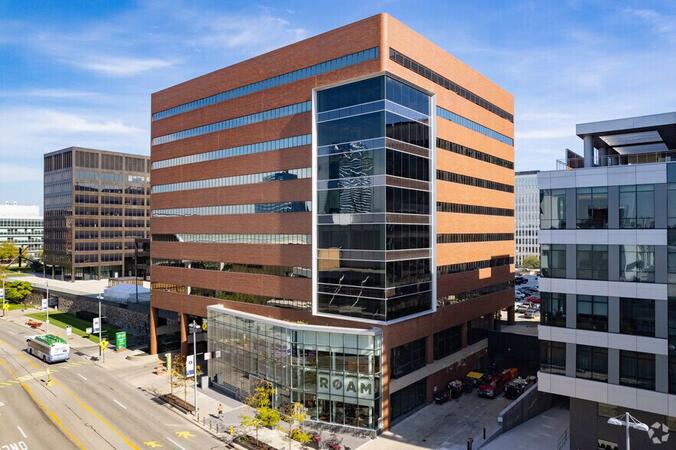
The GM Renaissance Center is conveniently located in downtown Detroit and easily accessed by car via Interstates 75 or 94, with secure underground parking available on site. Travelers flying into Detroit Metropolitan Airport (DTW) can expect a 25–30 minute trip by taxi or rideshare via I‑94. Public transit is efficient: the Detroit People Mover stops directly at the Renaissance Center station, and DDOT routes 3 and 9 serve nearby Jefferson Avenue. Pedestrian skywalks provide safe indoor access from downtown hotels, parking garages, and the riverwalk.
Ann Arbor, MI – Regus - South State Commons I
2723 S State St, Ann Arbor, United States, 48104
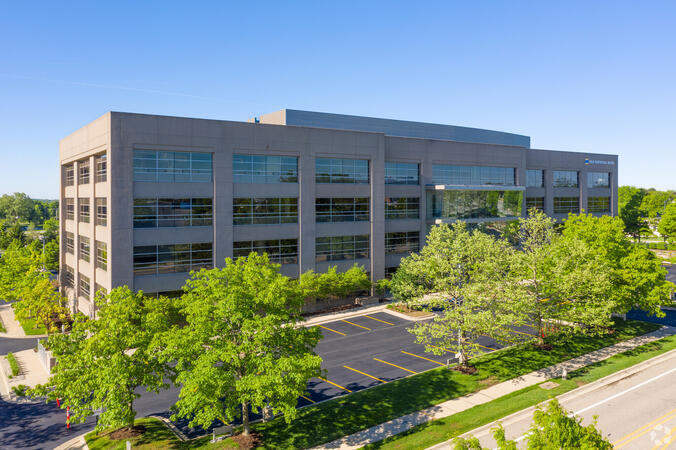
Regus South State Commons I is conveniently located off I‑94 via Exit 177 (State Street), with easy access to downtown Ann Arbor and surrounding suburbs. The building offers free on-site surface parking for guests. From Detroit Metropolitan Airport (DTW), the venue can be reached in approximately 20–25 minutes by taxi or rideshare via I‑94 West. Local public transit service (TheRide) operates Route 24 along South State Street, with a stop within a short 2-minute walk of the building.
Grand Rapids, MI - Regus – Calder Plaza
250 Monroe Ave NW, Grand Rapids, United States, 49503
The venue sits centrally at 250 Monroe Avenue NW in downtown Grand Rapids, easily accessed by car via US‑131 or I‑196—with connections via Monroe or Ottawa exits—and offers shared underground and surface parking. From Gerald R. Ford International Airport, take I‑96 East then I‑196 West into the city; the drive is about 20 minutes. Public transit through Rapid bus routes stops near Monroe or Ottawa Avenue, just a short walk from the Regus entrance; the downtown area is pedestrian-friendly.
Lansing, MI - Regus - One Michigan Avenue
120 North Washington Square, Lansing, United States, 48933
The venue is located in the heart of Lansing’s central business district at 120 North Washington Square, easily accessible by car via I‑496 or US‑127 with convenient street parking and a nearby parking ramp. From Capital Region International Airport (LAN), the location is approximately a 12‑minute drive west via I‑96 and US‑127, with taxis and rideshares readily available. Public transit users can take CATA bus routes that stop just a block away on Washington or Grand Avenue, offering seamless access to the venue.
Continuous Integration and Continuous Delivery (CI/CD) for AI represents a systematic methodology for automating model packaging, testing, containerization, and deployment via integrated pipelines.
This instructor-led live training, available online or on-site, targets intermediate-level professionals seeking to automate comprehensive AI model delivery workflows using Docker and CI/CD platforms.
Upon completion, participants will be equipped to:
Develop automated pipelines for constructing and testing AI model containers.
Enforce version control and reproducibility standards across model lifecycles.
Incorporate automated deployment strategies for AI services for government operations.
Apply CI/CD best practices aligned with machine learning operations requirements.
Course Delivery Format
Instructor-led presentations and technical discourse.
Practical laboratories and hands-on implementation exercises.
Simulations of realistic CI/CD workflows within a controlled environment.
Course Customization Opportunities
For organizations requiring bespoke pipeline workflows or platform integrations, contact us to tailor this course.
Hybrid AI implementation involves executing AI inference across cloud, on-premise, and edge domains through standardized container-based procedures.
This instructor-led, live training module (available online or on-site) is designed for senior-level professionals seeking to architect and implement distributed AI inference systems across diverse environments.
Upon completion of this course, participants will possess the ability to:
Develop secure and scalable containerized AI services for multi-site environments.
Deploy AI inference workloads to cloud platforms, local servers, and edge devices using Docker.
Integrate coordination tools to automate distributed AI operations for government purposes.
Enhance inference speed, dependability, and system resilience across varied infrastructure.
Course Delivery Structure
Structured presentations and expert-facilitated dialogue.
Substantial hands-on practice and applied laboratory exercises.
Practical experimentation within a controlled, live laboratory environment.
Course Adaptation Options
To modify this course to align with specific organizational infrastructure or operational use cases, please contact us to customize the training for government requirements.
Docker is a containerization platform employed to establish portable, isolated, and secure deployment environments for AI inference services.
This live, instructor-led training, available online or onsite, is designed for technical professionals with beginner to intermediate proficiency who intend to develop secure, portable AI inference microservices that can be deployed consistently across local workstations, servers, or cloud virtual machines.
Upon completion of this course, participants will be equipped to:
Construct lightweight inference containers suitable for local and cloud environments.
Apply best-practice security measures to containerized AI services.
Establish portable microservice workflows for environmental consistency.
Deploy AI inference endpoints across varied infrastructure architectures.
Instructional Format
Structured lectures accompanied by practical demonstrations.
Practical exercises to reinforce deployment and security protocols.
Interactive laboratory sessions for constructing and executing portable inference services.
Customization Options for Government
To adapt this training to specific infrastructure or AI tooling requirements, please contact the provider for coordination.
This instructor-led, live training is conducted in Michigan (available onsite or remotely). The curriculum focuses on deploying sample server applications within containers, followed by the automation, scaling, and management of these workloads within a Kubernetes cluster. The course addresses advanced operational topics, guiding participants through the critical processes of securing, networking, and monitoring Kubernetes clusters.
Upon completion, participants will be capable of:
Initializing and operating Docker containers.
Deploying containerized databases and server applications.
Establishing and configuring Docker and Kubernetes clusters.
Utilizing Kubernetes to manage distinct operational environments within a unified cluster.
Implementing security measures, scaling protocols, and monitoring systems for Kubernetes clusters.
GPU acceleration is a critical component for executing high-performance deep learning workloads with scalable and efficient resource management.
This instructor-led, live training program (available online or on-site) is designed for intermediate-level technical professionals tasked with configuring, optimizing, and executing GPU-enabled AI workloads within Docker containers for government use.
Upon completion of this course, participants will be equipped to:
Construct and execute GPU-enabled containers for both training and inference phases.
Configure CUDA, system drivers, and runtime libraries for containerized AI workflows.
Optimize resource allocation and enforce isolation protocols for GPU-intensive applications.
Deploy scalable, containerized deep learning services within production environments.
Course Delivery Format
Interactive instruction reinforced by practical, real-world demonstrations.
Exercise-based practice centered on GPU-enabled development standards.
Hands-on implementation conducted in a secure live-lab environment.
Course Customization Options
For tailored training aligned with specific infrastructure or GPU stack requirements, please contact us to arrange a schedule.
Docker serves as a containerization technology enabling the creation of consistent, portable, and scalable environments for machine learning systems in the public sector.
This instructor-led training session, available remotely or in person, targets intermediate to advanced technical staff seeking to containerize and operationalize full-scale machine learning pipelines for government use.
Upon successfully completing this course, participants will be equipped to:
Encapsulate machine learning training, validation, and inference tasks.
Design and manage comprehensive machine learning workflows using Docker and complementary tools.
Establish version control, reproducibility, and CI/CD practices for machine learning components.
Deploy, oversee, and scale machine learning services within containerized frameworks.
Course Format
Interactive instruction accompanied by practical application demonstrations.
Practical exercises centered on developing functional machine learning pipeline elements.
Live laboratory sessions for executing end-to-end containerized operations.
Customization Opportunities
To align training with specific government machine learning infrastructure requirements, please contact the provider for detailed options.
This instructor-led training in Michigan provides intermediate professionals with the skills to containerize AI and ML workloads using Docker. Participants will acquire the knowledge to build optimized images, manage dependencies, and deploy reliable pipelines, developing hands-on competencies for consistent and portable production environments.
This instructor-led, live training in Michigan (online or onsite) is directed at intermediate-level developers and DevOps engineers seeking to build, deploy, and manage microservices using Spring Cloud and Docker.
Upon completion of this training, participants will be capable of:
Developing microservices using Spring Boot and Spring Cloud frameworks.
Containerizing applications with Docker and Docker Compose.
Implementing service discovery, API gateways, and inter-service communication mechanisms.
Monitoring and securing microservices in production environments.
Deploying and orchestrating microservices using Kubernetes.
In this instructor-led training session held in Michigan (onsite or remote), participants will acquire the technical proficiency to create and manage Docker containers, including the deployment of representative applications. The curriculum further instructs on the automation, scaling, and governance of containerized applications within a Kubernetes cluster. The training concludes with advanced topics, guiding participants through the rigorous processes of securing, scaling, and monitoring Kubernetes clusters to meet operational standards.
Upon completion of this training, participants will possess the following capabilities:
Initialization and execution of Docker containers.
Deployment of containerized server and web application stacks.
Construction and administration of Docker image repositories.
Configuration of Docker and Kubernetes cluster infrastructures.
Application of Kubernetes to deploy and oversee clustered web services.
Enforcement of security protocols, scaling adjustments, and continuous monitoring of Kubernetes clusters.
The Certified Kubernetes Administrator (CKA) program is established by The Linux Foundation and the Cloud Native Computing Foundation (CNCF).
Kubernetes has emerged as a predominant platform for container orchestration.
NobleProg has provided Docker and Kubernetes training since 2015. With over 360 successfully completed training engagements, the organization is recognized globally for its expertise in containerization.
Since 2019, NobleProg has supported clients in validating their technical proficiency within Kubernetes environments by facilitating preparation for the CKA and CKAD examinations.
This instructor-led, live training session (available online or onsite) is designed for System Administrators and Kubernetes practitioners who seek to validate their competencies through the CKA examination.
Furthermore, the curriculum emphasizes practical experience in Kubernetes administration; therefore, participation is recommended for individuals seeking to enhance operational capabilities, irrespective of their intent to pursue CKA certification for government initiatives.
Course Format
Interactive instructional sessions and discussions.
Extensive exercises and practical application.
Hands-on implementation within a live-lab environment.
Course Customization Options
Requests for customized training programs for this course may be directed to NobleProg for scheduling.
Detailed information regarding CKA certification is available at: https://training.linuxfoundation.org/certification/certified-kubernetes-administrator-cka
Learn how to build, deploy, and administer containerized environments using Docker, Kubernetes, and OpenShift. This five-day, hands-on training covers container images, Kubernetes workloads, cluster networking, storage, security, monitoring, and practical OpenShift administration. Participants gain the skills needed to operate modern container platforms for government and troubleshoot applications across development and production environments.
This instructor-led CKAD training in Michigan prepares developers for the Certified Kubernetes Application Developer examination through practical laboratory exercises. It covers the design, development, and security of cloud-native applications for government use, utilizing core Kubernetes concepts, deployment strategies, and networking fundamentals.
This instructor-led, live training course for government in Michigan offers an overview of Rancher and demonstrates, through practical exercises, the deployment and management of a Kubernetes cluster.
The "Advanced Docker and Kubernetes" instruction offers a thorough analysis of the Kubernetes platform and its surrounding ecosystem. Tailored for participants with varied levels of technical proficiency, the curriculum covers a complete spectrum of fundamental and advanced features. The course addresses essential concepts including Pods, Labels, Controllers, Services, Secrets, Persistent Data Volumes, Claims, Namespaces, and Resource Quotas. It further examines the Container Networking Model, Service Discovery, Scaling mechanisms, and Load Balancing strategies. Additional topics include Cluster Management, Kubernetes installation procedures, security protocols for cluster protection, access control frameworks, High Availability of the Control Plane, monitoring and logging standards, automatic application scaling, advanced scheduling logic, microservices-based application architectures, specific application design patterns, and the deployment of applications and services on a Kubernetes cluster for government use.
This instructor-led, live training conducted in Michigan (either online or on-site) is designed for engineers aiming to deepen their expertise in Docker to support the deployment of applications at scale while maintaining robust control.
Upon completion of this training, participants will be equipped to:
Construct custom Docker images.
Deploy and manage large-scale Docker applications.
Evaluate diverse container orchestration solutions to determine the most suitable framework.
Implement continuous integration workflows for Docker applications.
Integrate Docker applications into existing continuous tool integration processes.
Enhance the security posture of Docker applications.
Docker is an open-source platform designed to automate the construction, distribution, and execution of applications within containerized environments.
This instructor-led, live training (conducted online or on-site) is intended for engineers seeking to utilize Docker for the deployment and administration of software as containers, replacing traditional standalone software models for government use.
Upon completion of this training, participants will be capable of the following:
Installation and configuration of Docker environments.
Implementation of software containerization strategies.
Management of Docker-based applications.
Networking of Docker applications and system components.
Interpretation and modification of Docker registries.
Training Delivery Format
Interactive instruction and facilitated discussion.
Extensive exercises and practical application.
Hands-on implementation within a live laboratory environment.
Customization Options for Training
To request a customized training curriculum for this course, please contact the relevant office for coordination.
To access additional information regarding Docker, please visit: https://www.docker.com
In this instructor-led, live training session conducted in Michigan, participants will acquire the essential skills for constructing microservices utilizing Spring Cloud and Docker. Learning outcomes are validated through rigorous exercises and the systematic development of sample microservice components.
Upon completion of this program, participants will be capable of:
Analyzing the core principles of microservice architecture.
Employing Docker to engineer containerized environments for microservice applications.
Implementing and deploying containerized microservices using Spring Cloud and Docker frameworks.
Establishing integration between microservices, discovery services, and the Spring Cloud API Gateway.
Conducting comprehensive end-to-end integration testing via Docker Compose.
OpenShift is a prominent Kubernetes-based platform for the deployment and management of containerized applications within cloud, hybrid, and on-premises environments.
This practical training provides participants with the skills to install, administer, and troubleshoot OpenShift clusters while adhering to security, networking, and storage standards. Through applied exercises, participants acquire the capabilities necessary to confidently manage production-grade OpenShift environments for government.
Read more...
Last Updated:
Testimonials (4)
As i said before , for a person like me (no exp. ) this was a gateway to understanding features and functions with these programs/tools & etc. .
Patrick V. Duylovski - UBB + DZI (KBC GROUP)
Course - Docker and Kubernetes
multi-tiered, structured course programme.
Bert Paelinckx - Cube SoftwareSolutions
Course - Introduction to Docker
The training met expectations with its clear explanations, real-world examples, and hands-on labs that made complex topics easy to understand. It provided valuable insights into container orchestration, security, scaling and many other advanced topics.
Online Docker training in Michigan, Docker training courses in Michigan, Weekend Docker courses in Michigan, Evening Docker training in Michigan, Docker instructor-led in Michigan, Docker classes in Michigan, Docker private courses in Michigan, Docker trainer in Michigan, Docker instructor-led in Michigan, Docker instructor in Michigan, Docker boot camp in Michigan, Weekend Docker training in Michigan, Online Docker training in Michigan, Docker one on one training in Michigan, Docker on-site in Michigan, Docker coaching in Michigan, Evening Docker courses in Michigan