Whether delivered online or onsite, instructor-led live 3D Modeling training courses provide a comprehensive overview of both fundamental and advanced concepts through interactive, hands-on practice.
3D Modeling training is offered as "online live training" or "onsite live training." Online live training (also known as "remote live training") is conducted via an interactive remote desktop. Onsite live training can be conducted at the client's premises in Virginia or at Govtra corporate training centers in Virginia.
Govtra -- Your Local Training Provider for government and public sector organizations.
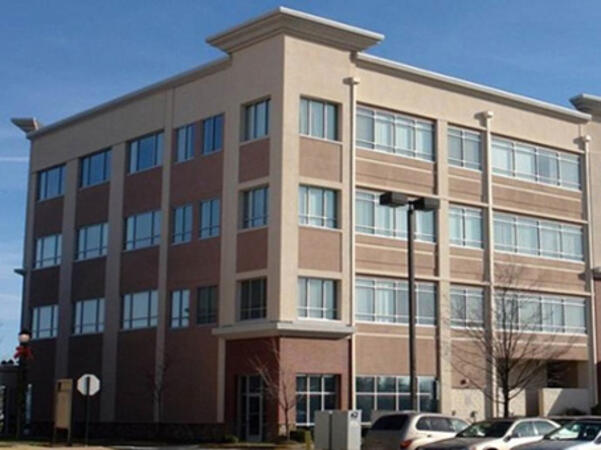
VA, Stafford - Quantico Corporate
800 Corporate Drive, Suite 301, Stafford, united states, 22554
The venue is located between interstate 95 and the Jefferson Davis Highway, in the vicinity of the Courtyard by Mariott Stafford Quantico and the UMUC Quantico Cororate Center.
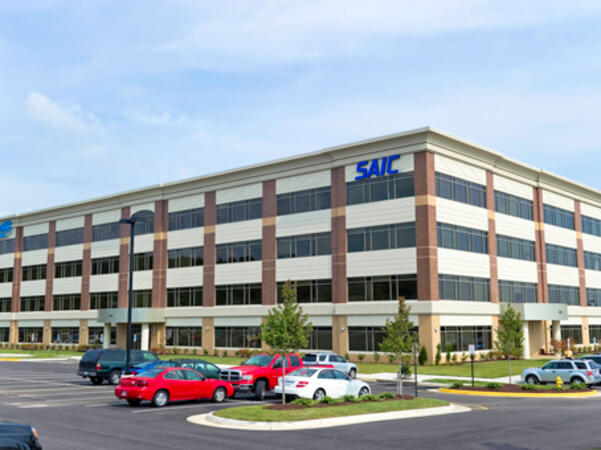
VA, Fredericksburg - Central Park Corporate Center
1320 Central Park Blvd., Suite 200, Fredericksburg, united states, 22401
The venue is located behind a complex of commercial buildings with the Bank of America just on the corner before the turn leading to the office.
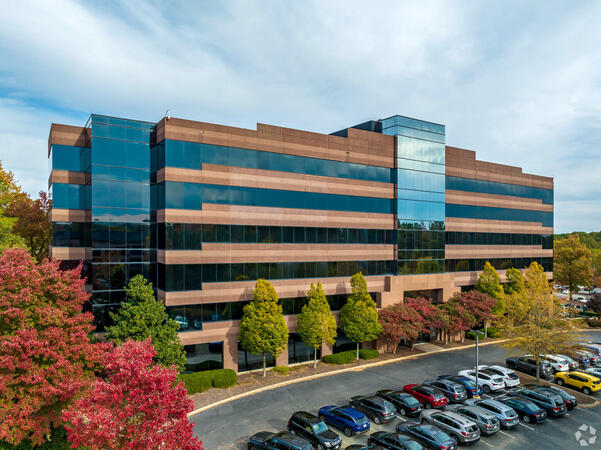
VA, Richmond - Two Paragon Place
Two Paragon Place, 6802 Paragon Place Suite 410, Richmond, United States, 23230
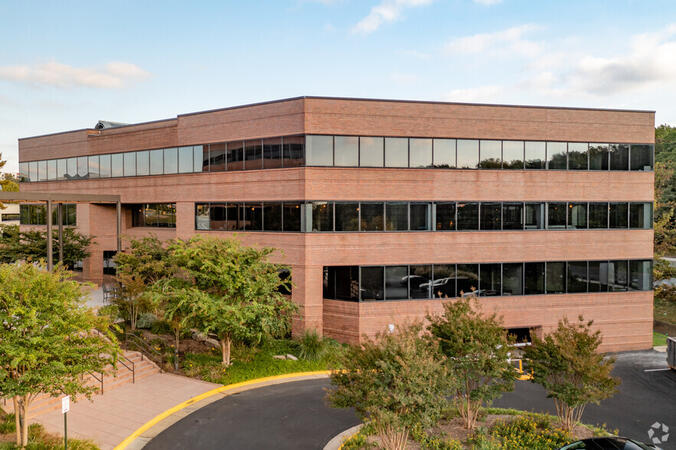
The venue is located in bustling Richmond with Hampton Inn, Embassy Suites and Westin Hotel less than a mile away.
VA, Reston - Sunrise Valley
12020 Sunrise Valley Dr #100, Reston, United States, 20191

The venue is located just behind the NCRA and Reston Plaza Cafe building and just next door to the United Healthcare building.
VA, Reston - Reston Town Center I
11921 Freedom Dr #550, Reston, united states, 20190

The venue is located in the Reston Town Center, near Chico's and the Artinsights Gallery of Film and Contemporary Art.
VA, Richmond - Sun Trust Center Downtown
919 E Main St, Richmond , united states, 23219
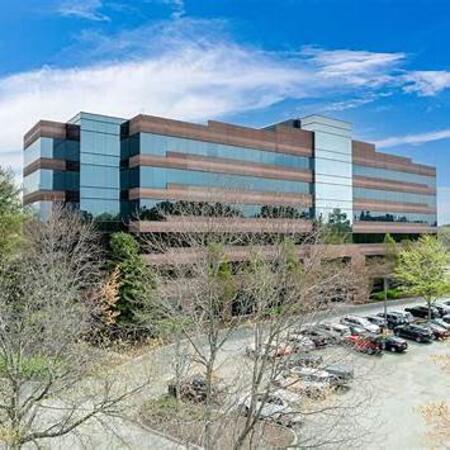
The venue is located in the Sun Trust Center on the crossing of E Main Street and S to N 10th Street just opposite of 7 Eleven.
Richmond, VA – Regus at Two Paragon Place
6802 Paragon Place, Suite 410, Richmond, United States, 23230

The venue is located within the Two Paragon Place business campus off I‑295 and near Parham Road in North Richmond, offering convenient access by car with free on-site parking. Visitors arriving from Richmond International Airport (RIC), approximately 16 miles northwest, can expect a taxi or rideshare ride of around 20–25 minutes via I‑64 West and I‑295 North. Public transit is available via GRTC buses, with routes stopping along Parham Road and Quioccasin Road, just a short walk to the campus.
Virginia Beach, VA – Regus at Windwood Center
780 Lynnhaven Parkway, Suite 400, Virginia Beach, United States, 23452
The venue is situated within the Windwood Center along Lynnhaven Parkway, featuring modern concrete-and-glass architecture and ample on-site parking. Easily accessible by car via Interstate 264 and the Virginia Beach Expressway, the facility offers a hassle-free commute. From Norfolk International Airport (ORF), located about 12 miles northwest, a taxi or rideshare typically takes 20–25 minutes via VA‑168 South and Edenvale Road. For those using public transit, the HRT bus system includes stops at Lynnhaven Parkway and surrounding streets, providing convenient access by bus.
ArchiCAD is a professional Building Information Modeling (BIM) software developed by Graphisoft, widely utilized for architectural design, documentation, and collaboration.
This instructor-led, live training (online or onsite) is designed for intermediate to advanced architecture and BIM professionals who wish to master complex modeling techniques, automate workflows, and enhance collaboration using ArchiCAD’s advanced features for government projects.
By the end of this training, participants will be able to:
Utilize ArchiCAD’s advanced modeling and documentation tools efficiently.
Customize templates, attributes, and standards for large-scale public sector projects.
Leverage teamwork, BIMcloud, and IFC workflows for multi-user collaboration in government settings.
Integrate automation, visualization, and performance optimization tools within ArchiCAD to support government initiatives.
Format of the Course
Interactive lecture and discussion.
Extensive exercises and practice sessions.
Hands-on implementation in a live-lab environment.
Course Customization Options
To request a customized training for government, please contact us to arrange.
AutoCAD Plant 3D is a specialized CAD application designed for the creation and management of process plant facilities. This tool offers comprehensive features for piping, equipment, and structural modeling, as well as the production of isometric and orthographic deliverables.
This instructor-led, live training (available online or onsite) is tailored for intermediate to advanced-level CAD professionals who seek to develop customized libraries and templates, integrate mechanical and structural elements, and implement advanced interference checking and conflict resolution workflows for government projects.
By the end of this training, participants will be able to:
Create and maintain customized templates for parts, equipment, and repetitive tasks.
Modify and extend component libraries to align with project standards and workflows.
Generate isometric and orthogonal drawings and optimize templates for efficiency.
Conduct advanced interference checking and document conflicts and resolutions effectively.
Format of the Course
Interactive lecture and demonstration sessions.
Hands-on exercises in a lab environment using real project files.
Practical workshops focused on template creation, library editing, and clash management.
Course Customization Options
To request a customized training for this course, please contact Govtra to arrange.
This instructor-led, live training in Virginia (online or onsite) is designed for intermediate-level architects who wish to utilize ArchiCAD for architectural design, building information modeling (BIM), and advanced construction documentation for government projects.
By the end of this training, participants will be able to:
Create, modify, and manage both 2D and 3D views within their projects.
Understand and manipulate objects, components, and libraries in ArchiCAD to align with public sector workflows.
Generate detailed building sections, elevations, and component details for government use.
Analyze and optimize building energy performance using ArchiCAD’s energy analysis tools to meet governmental sustainability standards.
Develop photorealistic renderings and animations for presentations to stakeholders in the public sector.
Automate building processes and run performance simulations to enhance efficiency and accountability in government projects.
This instructor-led, live training in Virginia (online or onsite) is aimed at intermediate-level to advanced-level SolidWorks users who wish to enhance their modeling skills, master advanced features, and improve design efficiency and accuracy for government applications.
By the end of this training, participants will be able to:
Create complex parts, assemblies, and configurations with greater efficiency.
Utilize advanced modeling tools such as sweeps, lofts, and surfaces.
Implement design tables, equations, and parametric controls.
Conduct simulations and motion studies to validate designs.
This instructor-led, live training in Virginia (online or onsite) is aimed at beginner-level electrical engineers and designers who wish to use AutoCAD Electrical to create professional electrical drawings and documentation for government projects.
By the end of this training, participants will be able to:
Understand the fundamentals of electrical design and drafting using AutoCAD Electrical.
Learn to develop and manage electrical schematics, panel layouts, and wiring diagrams.
Leverage AutoCAD Electrical's advanced tools and features to improve productivity.
Implement best practices for electrical design and documentation in alignment with public sector workflows and governance requirements.
This instructor-led, live training in Virginia (online or onsite) is aimed at beginner-level users who wish to explore the core functionalities of SolidWorks PDM and its applicability for government design file management requirements.
By the end of this training, participants will be able to:
Understand the key features and benefits of SolidWorks PDM for government use.
Navigate the SolidWorks PDM interface and workflows effectively.
Perform basic end-user tasks such as file check-in/check-out, versioning, and searching within a government context.
Explore administrative functionalities, including vault configuration, user permissions, and workflow customization for government operations.
Assess the potential implementation of SolidWorks PDM across multiple government sites to enhance data management and collaboration.
This instructor-led, live training in Virginia (online or onsite) is aimed at intermediate-level mechanical engineers and CAD designers who wish to utilize SolidWorks for the design and implementation of industrial automation systems for government.
By the end of this training, participants will be able to:
Install and configure SolidWorks to support automation design for government applications.
Design, simulate, and analyze industrial automation components and systems in alignment with public sector workflows.
Export designs for real-world implementation in industrial settings, ensuring compliance with governmental standards and regulations.
This instructor-led, live training in Virginia (online or onsite) is aimed at advanced-level AutoCAD Plant 3D users who wish to utilize AutoCAD Plant 3D effectively for complex plant design projects for government.
By the end of this training, participants will be able to:
Apply AutoCAD Plant 3D to intricate and detailed plant design projects for government.
Comprehend the advanced features of AutoCAD Plant 3D, including custom component creation, sophisticated data management, and complex routing.
Manage large-scale projects and collaborate efficiently with teams using various software tools.
Customize the software and automate repetitive tasks to meet specific project requirements for government.
This instructor-led, live training in Virginia (online or onsite) is aimed at artists, game developers, or complete beginners who wish to use Blender to create 3D models for interactive applications, video games, animated films, and other media.
By the end of this training, participants will be able to:
Learn how to create animations and visual effects using Blender.
Add curves, surfaces, metaballs, and hair particles to simulate realistic 3D motions.
Gain an introduction to non-destructive modeling and animation techniques.
Export 3D models and assets for use in game engines, 3D printers, or other software applications, ensuring compatibility and efficiency for government projects.
This instructor-led, live training in Virginia (online or onsite) is aimed at beginner to intermediate professionals in plant design and engineering who wish to gain and enhance their skills in using AutoCAD Plant 3D for government applications.
By the end of this training, participants will be able to:
Set up a development environment that includes AutoCAD Plant 3D.
Create detailed 3D plant models and layouts for government projects.
Generate accurate isometric and orthographic drawings for government specifications.
Effectively document and collaborate on plant designs in alignment with public sector workflows.
Debug common issues in AutoCAD Plant 3D to ensure project integrity and compliance.
This instructor-led, live training in Virginia (online or onsite) is aimed at beginner-level engineers who wish to use Autodesk InfoDrainage for storm and foul network design, both as a standalone tool and integrated with Civil 3D for government applications.
By the end of this training, participants will be able to:
Create, edit, and analyze both storm and foul drainage networks in InfoDrainage.
Conduct 1D and 2D simulations to evaluate drainage system performance.
Understand how to integrate data between Civil 3D and InfoDrainage efficiently for government projects.
Design sustainable drainage solutions (SuDS) that align with public sector standards.
This instructor-led, live training in Virginia (online or onsite) is designed for government artists, game developers, or complete beginners who wish to use Blender to create 3D models for interactive applications, video games, animated films, and other digital media for government.
By the end of this training, participants will be able to:
Understand the principles and core concepts of 3D modeling for government use.
Explore a variety of modes and tools for modeling and editing 3D meshes in a public sector context.
Utilize the tools for UV mapping/unwrapping, sculpting, and painting 3D models to meet specific requirements for government applications.
This instructor-led, live training in Virginia (online or onsite) is aimed at intermediate to advanced mechatronics, mechanical, electrical, and electronics engineers who wish to enhance their SolidWorks knowledge for government applications by mastering advanced part modeling and other sophisticated shaping capabilities of the software.
By the end of this training, participants will be able to:
Utilize multi-body solids, sweeping and lofting features, and other advanced SolidWorks functionalities.
Leverage the assembly modeling capabilities of SolidWorks for government projects.
Master the advanced modeling features of SolidWorks for enhanced design and engineering tasks.
This instructor-led, live training in Virginia (online or onsite) is designed for beginner-level graphic designers and artists who wish to learn the fundamentals of 3ds Max and how to create 3D models, animations, and renderings for various purposes.
By the end of this training, participants will be able to:
Set up a development environment that includes 3ds Max software, a computer meeting the system requirements, and Visual Studio Code, optimized for government use.
Create a basic 3ds Max project and navigate the user interface and tools.
Utilize 3ds Max tools and modifiers to design and modify 3D objects, including primitives, shapes, meshes, and splines.
Apply materials and maps in 3ds Max to add colors, textures, and effects to 3D objects.
Configure 3ds Max lights and cameras to set up scenes with appropriate lighting and perspective.
Leverage 3ds Max animation tools and controllers to animate 3D objects, create keyframes, curves, and trajectories.
Use 3ds Max rendering tools and settings to produce final images or videos from the scene.
This instructor-led, live training in Virginia (online or onsite) is aimed at web designers who wish to program in Python for automation within Blender for government use.
By the end of this training, participants will be able to:
This instructor-led, live training in Virginia (online or onsite) is aimed at beginner to intermediate web designers who wish to learn how to use CATIA V5 for collaborative product creation and product data management for government.
By the end of this training, participants will be able to:
Understand the CATIA V5 interface and navigation.
Create 2D sketches and transform them into 3D models.
Develop assemblies to combine multiple components.
This instructor-led, live training in Virginia (online or onsite) is aimed at intermediate-level geospatial professionals who wish to utilize Rhinoceros 6 and Agisoft Metashape for creating, refining, and integrating detailed 3D models for government applications.
By the end of this training, participants will be able to:
Comprehend the fundamentals of 3D design and photogrammetry for government use.
Navigate and effectively use Rhinoceros 6 to create and refine 3D models for government projects.
Apply NURBS modeling techniques in Rhinoceros 6 and conduct photogrammetric processing using Agisoft Metashape for government workflows.
Complete and present a comprehensive 3D project suitable for government requirements.
This instructor-led, live training in Virginia (online or onsite) is aimed at intermediate to advanced mechatronics, mechanical, electrical, and electronics engineers who wish to enhance their SolidWorks knowledge for government applications by mastering advanced part modeling and other sophisticated features and shaping capabilities of SolidWorks.
By the end of this training, participants will be able to:
Utilize multi-body solids, sweeping and lofting features, and other advanced SolidWorks functionalities.
Leverage the assembly modeling capabilities of SolidWorks for government projects.
Master the advanced modeling features of SolidWorks for enhanced design and engineering tasks.
This instructor-led, live training in Virginia (online or onsite) is aimed at advanced-level web designers who wish to learn how to manage complex drawings using AutoCAD for government projects.
By the end of this training, participants will be able to:
Understand the challenges associated with large-scale drawings and implement strategies for efficient file organization in a public sector context.
Apply techniques to enhance drawing performance and manage regenerations effectively, ensuring compliance with government standards and workflows.
This instructor-led, live training in Virginia (online or onsite) is aimed at artists, game developers, or complete beginners who wish to use Blender to create 3D models for interactive applications, video games, and animated films.
By the end of this training, participants will be able to:
Understand the principles and core concepts of 3D modeling for government projects.
Explore a variety of modes and tools for modeling and editing 3D meshes in alignment with public sector workflows.
Learn how to create animations and visual effects with Blender, ensuring compliance with governance standards.
Add curves, surfaces, metaballs, and hair particles to simulate realistic 3D motions suitable for government applications.
Utilize the tools for UV mapping/unwrapping, sculpting, and painting 3D models to meet public sector requirements.
Export 3D models and assets to a game engine, 3D printer, or other software, ensuring compatibility with government systems.
This instructor-led, live training in Virginia (online or onsite) is aimed at beginner-level to intermediate-level web designers who wish to learn how to use CATIA V5 for collaborative product creation and data management for government.
By the end of this training, participants will be able to:
Understand the CATIA V5 interface and navigation.
Create 2D sketches and convert them into 3D models.
Develop assemblies to integrate multiple components.
This instructor-led, live training in Virginia (online or onsite) is aimed at individuals who wish to learn how to utilize Digital Twin technology for monitoring and analyzing products and processes before building and deploying the actual product.
By the end of this training, participants will be able to:
Gain a comprehensive understanding of the fundamental concepts of Digital Twin.
Comprehend the various types and life cycle stages of Digital Twins.
Leverage Digital Twin technology to effectively manage research data and design models for government applications.
SketchUp Pro is a 3D modeling software utilized in architectural, interior design, and product visualization that enables users to create, modify, and present detailed spatial models efficiently.
This instructor-led, live training (online or onsite) is designed for intermediate-level interior designers and design professionals who wish to master SketchUp Pro for iPad to create, visualize, and refine interior design concepts such as rooms, furniture, and layout compositions.
Upon completion of this training, participants will be able to:
Set up and navigate SketchUp Pro on iPad efficiently.
Create and modify interior models including walls, furniture, and spatial layouts.
Apply textures, materials, and lighting for realistic visualizations.
Export and share models for presentation and collaboration.
Format of the Course
Interactive lecture and guided demonstrations.
Hands-on exercises and modeling practice on iPad.
Live project work with feedback and Q&A sessions.
Course Customization Options for Government
To request a customized training for this course, please contact us to arrange.
This instructor-led, live training in Virginia (online or onsite) is aimed at beginner-level developers and architects who wish to learn the basics of Navisworks and how to use it for BIM (Building Information Modeling) project delivery for government.
By the end of this training, participants will be able to:
Set up and utilize Navisworks for 3D model review and coordination in public sector projects.
Create and visualize a composite BIM model incorporating various design disciplines.
Communicate and annotate issues and feedback within the model, ensuring clear documentation for government workflows.
Perform clash detection and resolution between 3D files to enhance project accuracy and efficiency.
Simulate and control construction schedules and costs to align with public sector governance and accountability requirements.
This instructor-led, live training in Virginia (online or onsite) is aimed at designers, mechanical engineers, and other professionals who wish to learn how to create 3D models suitable for construction or 3D printing.
By the end of this training, participants will be able to:
Develop printable 3D models that meet precise specifications.
Utilize geometric transformations to construct intricate 3D shapes.
Model in a non-interactive manner using concise lines of code, enhancing efficiency and accuracy for government projects.
This instructor-led, live training in Virginia (online or onsite) is aimed at mechatronics, mechanical, electrical, and electronics engineers who wish to use SolidWorks to sketch and produce detailed drawings of their ideas and concepts for government applications.
By the end of this training, participants will be able to:
Comprehend the foundational principles of SolidWorks.
Design and create parts, assemblies, and 3D models using SolidWorks.
Unity, Blender, and Visual Studio together provide a robust toolkit for creating and programming industrial virtual environments. Unity facilitates interactive simulation and visualization, Blender offers advanced 3D modeling capabilities, and Visual Studio serves as the programming foundation for integrating control systems and industrial logic.
This instructor-led, live training (online or onsite) is designed for government professionals at beginner to intermediate levels who wish to design, model, and program industrial environments for simulation, training, and integration purposes.
By the end of this training, participants will be able to:
Design and model industrial equipment and scenarios using Blender.
Import and optimize 3D models in Unity for visualization.
Program system logic and integration workflows in Visual Studio.
Create interactive industrial virtual environments with control system connections.
Format of the Course
Interactive lecture and discussion.
Hands-on 3D modeling and environment development.
Programming and integration exercises with live demonstrations.
Course Customization Options
To request a customized training for government, please contact us to arrange.
This course is tailored to provide a comprehensive understanding of the Systems Modeling Language (SysML), its implementation using MagicDraw/Cameo software, foundational Model-Based Systems Engineering (MBSE) simulation methods, and best practices in MBSE for government applications. The curriculum is designed to align with public sector workflows, governance, and accountability standards.
This instructor-led, live training in Virginia (online or onsite) is aimed at web designers who wish to create precise 2D models using AutoCAD for government projects.
By the end of this training, participants will be able to:
Create and update AutoCAD drawings, plans, and layouts that align with public sector standards.
Manage various style dimensions for advanced styling in accordance with governmental guidelines.
Master the Cartesian coordinate system to ensure accurate and dynamic input for government applications.
This instructor-led, live training in Virginia (online or onsite) is aimed at web designers who wish to create 3D and/or 2D models with Autodesk Revit for government projects.
By the end of this training, participants will be able to:
Incorporate datum elements, such as levels and grids, for advanced modeling in public sector workflows.
Generate models that are ready for analysis and design, ensuring compliance with governmental standards.
Import CAD files and link Revit files to enhance collaboration and data integrity for government projects.
The Boundary Element Method (BEM) is a numerical computational technique used for solving various engineering and physical problems. BEM offers a promising alternative to the Finite Element Method (FEM) by eliminating the requirement for a 3D finite element mesh of an entire space.
In this instructor-led, live training, participants will gain a comprehensive understanding of the theory and benefits of using BEM as they apply these techniques to solving engineering design challenges related to complex three-dimensional structures. The mathematical principles underlying BEM are thoroughly explained and reinforced through coding exercises throughout the training.
Audience
Developers
Engineers
Format of the course for government
Part lecture, part discussion, exercises, and extensive hands-on practice
Blender is an open-source 3D computer graphics toolkit designed for creating animated movies, visual effects, art, 3D printed models, interactive 3D applications, and video games.
During the workshop, participants will learn how to create 3D models for various applications, including video games, 3D printing, and architectural design.
What skills can you expect to gain after completing this training?
Understand the principles of 3D modeling
Manage animations, particle effects, 3D graphics, UV mapping, and unwrapping
Export models and assets to game engines, 3D printers, or other software solutions.
Who is this training for?
Artists
Game Developers
Beginners in the field of 3D graphics
This training, provided by Govtra, is tailored to enhance skills and knowledge for government professionals seeking to leverage advanced 3D modeling techniques in their work.
This instructor-led, live training in Virginia (online or onsite) is aimed at web designers who wish to use CATIA to develop and design 2D and 3D models for government applications.
By the end of this training, participants will be able to:
Support multiple stages of product development for government, including design, manufacturing, and engineering.
Facilitate the design of various systems, such as fluid systems, for government projects.
Apply CATIA to a wide variety of industries and industrial equipment relevant to government operations.
Cortona3D is publication software designed for generating web-based 3D/2D documentation from existing CAD and BOM data.
In this instructor-led, live training, participants will learn how to set up and operate the various Cortona3D components as they create enhanced technical documentation for a sample project.
By the end of this training, participants will be able to use Cortona3D to publish various types of 3D-animated materials, including catalogs, documentation, and training resources, which are essential for government operations.
Audience
Engineers
Designers
Technical publication professionals
Format of the Course
Part lecture, part discussion, exercises, and extensive hands-on practice
FreeCAD is an open-source, customizable, multi-platform, scriptable, and extensible parametric 3D modeler designed for creating real-life objects.
In this instructor-led, live training, participants will learn how to model an object for subsequent construction or 3D printing.
By the end of this training, participants will be able to:
Utilize FreeCAD’s tools and workflows to replace commercial CAD or BIM modeling software
Export models in various formats such as STEP, IGES, STL, SVG, DXF, OBJ, IFC, DAE, etc.
Extend FreeCAD's functionality using Python scripting
Automate FreeCAD processes, develop modules, and integrate FreeCAD into existing applications
Audience
Designers
Developers
Mechanical Engineers
Format of the Course
A combination of lectures, discussions, exercises, and extensive hands-on practice to ensure a comprehensive learning experience for government professionals.
The "Inventor - Level I" course aims to introduce participants to the basics of Autodesk Inventor CAD software. The program covers fundamental principles, such as template overview, project creation rules, and familiarity with the program interface. Participants will gain knowledge about sketching tools, solid and surface modeling, assembly creation, sheet metal design, welded structures, and technical documentation. This course is suitable for individuals who want to acquire basic skills in using Autodesk Inventor for computer-aided design.
This course is designed to provide a comprehensive understanding of the Systems Modeling Language (SysML) and its practical application using the MagicDraw/Cameo software. It covers essential Model-Based Systems Engineering (MBSE) simulation techniques and best practices, tailored specifically for government professionals. Participants will learn how to create templates and generate reports within the MagicDraw/Cameo tool suite, as well as gain insights into the functionality of macros and scripts in MagicDraw and their various applications. This training is aimed at enhancing the skills necessary for effective systems engineering in a public sector environment.
This course is designed to teach the fundamentals of the Systems Modeling Language (SysML) and its application through the MagicDraw/Cameo software, along with basic Model-Based Systems Engineering (MBSE) simulation techniques and best practices in MBSE for government. The training covers core concepts and features such as validation rules, validation suites, and model metrics. Additionally, it introduces participants to the essential aspects of developing and utilizing model queries in MagicDraw/Cameo.
This instructor-led, live training in Virginia (online or onsite) is aimed at investigators who wish to use Mesa to create Agent-Based Models in a Python environment for government.
By the end of this training, participants will be able to:
Install and configure the development environment required to start modeling in Python.
Rapidly develop an agent-based model utilizing Mesa's core components.
Increase the complexity of the model as needed.
Visualize agent activity in real-time through a web browser interface.
Analyze the results of the model interactively using advanced Python data analysis tools.
Integrate the model with other Python systems, such as machine learning applications, to enhance public sector workflows.
This instructor-led, live training (online or onsite) is aimed at mechanical engineers and designers who wish to learn how to use the Modelica modeling language to model industrial systems for government applications.
Modelica is a modeling language designed for complex systems that involve mechanical, electrical, electronic, hydraulic, thermal, control, electric power, or process-oriented subcomponents.
By the end of this training, participants will be able to:
Select from various open source platforms for developing Modelica models
Understand real-world applications and implementation details of Modelica in public sector workflows
Model real-world industrial systems involving electrical and mechanical components for government use
Implement Modelica libraries and create their own classes to support governmental projects
Integrate algorithms into existing government systems and applications
Format of the Course
Interactive lecture and discussion tailored to government audiences
Extensive exercises and practice sessions
Hands-on implementation in a live-lab environment for government-specific scenarios
Course Customization Options
This training utilizes various open source platforms for running Modelica (JModelica.org, Openmodelica, etc.), tailored to meet the needs of government agencies.
To request a specific implementation for this course, please contact us to arrange.
This instructor-led, live training in Virginia (online or onsite) is aimed at investigators who wish to use NetLogo to create Agent Based Models (ABM) for government applications.
By the end of this training, participants will be able to:
Install NetLogo on their systems.
Develop an agent-based model tailored for government workflows.
Visualize agent activity and interactions effectively.
Analyze the results of the model to inform decision-making processes.
Test and document the agent-based simulation model to ensure governance and accountability.
This instructor-led, live training in Virginia (online or onsite) is designed for government design engineers or industrial designers who wish to utilize NVIDIA Omniverse to create realistic simulations while collaborating on a single platform.
By the end of this training, participants will be able to:
Install and configure Omniverse components and applications for government use.
Create and render 3D simulations that accurately replicate physical environments and workflows for government projects.
Simplify the process of building and rendering complex workflows by integrating various design tools and applications on a single platform, enhancing efficiency and collaboration for government tasks.
A course designed for government professionals focusing on utilizing the Cameo Simulation Toolkit to model behaviors, conduct trade studies, and automate architectural processes. Additional modules cover requirements verification, the Action Language Helper, and user-friendly graphical interfaces for simulation tasks.
Printed Circuit Board (PCB) Circuit Design involves the process of designing, etching, and printing circuits on a signal board layout. EAGLE is a freely available desktop application designed for creating PCBs.
This instructor-led, live training session will guide participants through the use of Eagle software to create PCB circuit boards. The course begins with an examination of existing schematics, followed by the creation of an original circuit in Eagle. The training covers the entire process of designing the circuit board and discusses the manufacturing process (the physical manufacturing of the boards is not included in this course).
By the end of this training, participants will be able to:
Create a Printed Circuit Board (PCB) from any schematic
Develop schematics and design circuit boards using Eagle
Export industry-standard files for the construction of the circuit board
Audience
Engineers
Technicians
Format of the Course
Part lecture, part discussion, with exercises and extensive hands-on practice
Notes
To request a customized training for government, please contact us to arrange.
Printed Circuit Board (PCB) Circuit Design involves the process of designing, etching, and printing circuits on signal board layouts. Altium Designer is a freely available desktop application used for creating PCBs.
In this instructor-led, live training, participants will learn how to use Altium software to design PCB circuit boards. The course begins with an examination of existing schematics, followed by the creation of an original circuit using Altium. The training covers the entire process from design to manufacturing of the circuit board.
By the end of this training, participants will be able to:
Create a Printed Circuit Board (PCB) from any schematic
Develop schematics and design circuit boards using Altium
Print and etch a physical circuit board
Export industry-standard files for large-scale manufacturing
Audience
Engineers
Technicians
Format of the Course
Part lecture, part discussion, with exercises and extensive hands-on practice
Notes
To request a customized training for government, please contact us to arrange.
This instructor-led, live training in Virginia (online or onsite) is aimed at design engineers, architects, and developers who wish to use Pixar USD to create, build, and share common 3D scenes or assets while working collaboratively from different graphics tools.
By the end of this training, participants will be able to:
Set up the necessary development environment to start building 3D graphics and workflows for government projects.
Understand the basic USD composition and apply modifications to enhance 3D assets and scenes.
Share, combine, and transform multiple assets using the supported USD plugins for third-party applications (Maya, Katana, and Houdini).
This instructor-led, live training in Virginia (online or onsite) is aimed at design engineers, architects, or video game developers who wish to use RealityCapture for government projects to create 3D models for gaming, architecture, or other visualization initiatives.
By the end of this training, participants will be able to:
Set up the necessary development environment to begin creating 3D models with RealityCapture for government use.
Learn how to implement the photogrammetry workflow for producing and reconstructing realistic 3D models for government applications.
Export and upload 3D models to VR and AR content platforms, such as Unreal Engine, Sketchfab, and Cesium ion, for use in government projects.
The Repast Suite is a family of advanced, free, and open source agent-based modeling and simulation libraries that have collectively been under continuous development for over 10 years. This four-day course in Virginia (online or onsite) explains in detail how to create simulations for agent-based systems using the Repast environment, tailored specifically for government applications.
Course Objectives
Introduce participants to the principles and concepts of agent-based modeling and simulation for government use.
Develop participants’ capacity to read and understand agent modeling programming code, enhancing their skills for government projects.
Equip participants with knowledge to understand the importance of accurate and precise modeling in a public sector context.
Increase participants’ understanding of their own systems using agent-based simulation, aligned with government workflows and governance.
Develop a better capacity to use and code agent-based systems using Repast and reLogo, ensuring alignment with government standards and accountability.
This instructor-led, live training in Virginia (online or onsite) is aimed at architects who wish to create 3D models for architectural designs using SketchUp for government projects.
By the end of this training, participants will be able to:
Utilize SketchUp to develop 3D models of buildings, landscapes, scenes, furniture, and other elements.
Apply various materials to the interior and exterior surfaces of a 3D structure.
Geolocate modeled structures to incorporate realistic features, such as shadows, for accurate mapping in government applications.
Read more...
Last Updated:
Testimonials (7)
Anil was very understanding and explained the course content in detail. With more time the outcome of the course would be better instead of rushing the content, but over all Anil is very familiar with the software CATIA and is a great trainer,
Jaydon - GRI Towers South Africa
Course - Learning CATIA
Learning about the software
Peter - Coleg Cambria
Course - Blender: 3D Modeling Fundamentals
Many things. But most of all tasks.
Daniel Klosowicz - Daniel Klosowicz, BUGLO Play Sp. z o.o.
Course - 3D Modeling with Blender
Learning all the things that I wasn't understand it.
Anonymous
Course - SolidWorks
LIPS knowledge
Ion Jeman - Orange Moldova
Course - AutoCAD: Beginner to Advanced
The trainer well prepared the course material beforehand and the session was very flexible and arranged to meet the trainee's interests. The management staffs were also around during the course to help us. The project was well managed in a friendly atmosphere throughout.
Kikuko Shoyama
Course - Repast - Agent Based Modeling and Simulation (ABMS)
Basic steps that are very useful when in schematic/ PCB workspace and presented Advanced features, actual demos to follow
hedda david - Allegro Microsystems Philippines, Inc.
Online 3D Modeling training in Virginia, 3D Modeling training courses in Virginia, Weekend 3D Modeling courses in Virginia, Evening 3D Modeling training in Virginia, 3D Modeling instructor-led in Virginia, Online 3D Modeling training in Virginia, Weekend 3D Modeling training in Virginia, 3D Modeling on-site in Virginia, 3D Modeling instructor-led in Virginia, 3D Modeling instructor in Virginia, 3D Modeling classes in Virginia, 3D Modeling one on one training in Virginia, 3D Modeling coaching in Virginia, Evening 3D Modeling courses in Virginia, 3D Modeling private courses in Virginia, 3D Modeling boot camp in Virginia, 3D Modeling trainer in Virginia